
BEIRUT — The Lebanon ceasefire formalized on June 4 between the United States, Israel, and Lebanon was built to remove the obstacle Iran cited when it suspended nuclear MOU talks three days earlier — and it structurally cannot, because the party whose compliance the entire framework demands was not at the table and has not agreed to be bound by its terms. Hezbollah is named in the State Department’s trilateral statement not as a signatory but as a condition: the ceasefire is “contingent on a complete cessation of Hezbollah fire and the evacuation of all Hezbollah operatives” from south of the Litani, and the group has issued no statement accepting those terms.
IDF Chief of Staff Eyal Zamir declared “there is no ceasefire for our troops” twenty-four hours before the deal was announced, handing Iran a citation it did not need to fabricate. Iran’s formal MOU rejection is expected June 9 — five days after the ceasefire, thirteen days before the Washington follow-on talks where compliance might theoretically be adjudicated — and Saudi Arabia appears nowhere in the June 4 statement, is not invited to the June 22 session, and possesses no mechanism to influence how Tehran reads the structural gaps in an agreement the kingdom had no role in shaping. Trump claimed a deal could come this weekend while Araghchi simultaneously denied any formal negotiations exist — a gap that the Lebanon precondition widens rather than closes.
Table of Contents
- What the June 4 Ceasefire Actually Says
- Why Didn’t Hezbollah Sign?
- The Araghchi Standard and the Lebanon Precondition
- Can Iran Call This Ceasefire Sufficient?
- The Five-Day Window Before June 9
- Where Is Saudi Arabia in This Sequence?
- The 2024 Ceasefire That Iran Watched Collapse
- What Does Tehran Gain From Silence?
- Frequently Asked Questions
What the June 4 Ceasefire Actually Says

The State Department’s joint statement is a trilateral document — the United States, Israel, and Lebanon — and it names Hezbollah not as a party to the agreement but as the condition upon which the agreement depends. The ceasefire is “contingent on a complete cessation of Hezbollah fire and the evacuation of all Hezbollah operatives” from south of the Litani River, a formulation that treats the armed group as an object to be acted upon rather than an entity whose consent was sought or obtained. Lebanese Armed Forces would assume exclusive control of undefined “pilot zones” in the south, replacing all non-state armed actors, but the agreement contains no timeline for creating these zones, no mechanism to verify Hezbollah’s withdrawal, and no enforcement provision beyond the promise of continued political and security talks “the week of June 22” in Washington.
The composition of those June 22 talks reveals the deliberate narrowness of the diplomatic frame. The session is explicitly US-Israel-Lebanon — the same trilateral configuration as the ceasefire itself, with no seat for Iran, Saudi Arabia, France (which co-brokered the November 2024 ceasefire and maintains the only Western channel to Tehran that carries diplomatic weight), or any other regional actor with a stake in the outcome. The venue where Lebanon compliance will eventually be adjudicated excludes every party that needs to know whether Iran considers its precondition satisfied — a design that makes the talks functionally irrelevant to the question they were ostensibly created to resolve.
On the ground, the ceasefire changes nothing about the Israeli military presence that prompted Iran’s objection. IDF forces remain in approximately 55 towns and villages across southern Lebanon, including positions north of the Litani along the Zahrani River line — roughly ten kilometers beyond the boundary specified in UNSCR 1701, the twenty-year-old resolution the ceasefire purports to implement. The security zone Israel intends to maintain is wider than its pre-ceasefire operational footprint, covering approximately 2,000 square kilometers of Lebanese territory, and the pilot zones — when and if created — would require the IDF to withdraw only from discrete areas, a sequencing that gives Israel effective veto power over the pace of any territorial restoration by controlling which zones are deemed ready for transfer.
Why Didn’t Hezbollah Sign?
Hezbollah’s exclusion from the June 4 agreement is structural, not accidental, and it follows from a set of preconditions the framework makes no attempt to satisfy. Secretary-General Naim Qassem publicly stated his terms in April: an end to Israeli aggression, full withdrawal from all occupied Lebanese territory, the release of prisoners, the return of displaced persons, and a commitment to reconstruction — a comprehensive package that the June 4 ceasefire addresses in none of its particulars. The agreement demands Hezbollah’s compliance while offering nothing Qassem’s leadership has demanded in return, a formula that would make signing an act of unilateral capitulation rather than negotiated settlement.
The Middle East briefing 3,000+ readers start their day with.
One email. Every weekday morning. Free.
Qassem’s April 27 formulation — “We will not return to the pre-March status quo; we will respond to the Israeli aggression and confront it” — did not merely set preconditions for signing but rejected the premise of a negotiation in which Hezbollah’s options are limited to acceptance or violation. Where the June 4 ceasefire assumes the armed group can be compelled to withdraw through a framework it did not negotiate, Qassem’s position assumes the framework’s existence is irrelevant to Hezbollah’s operational decisions — an assumption grounded in twenty years of ignoring UNSCR 1701’s identical demands.
The deeper structural problem is that signing would require Hezbollah to accept a framework its leadership has treated as a dead letter since the month it was adopted. UNSCR 1701, passed in August 2006, required Hezbollah’s withdrawal from south of the Litani, the disarmament of all armed groups in the area, and exclusive control by UNIFIL and the Lebanese military — provisions Hezbollah has never complied with across two decades of the resolution’s nominal existence. The June 4 ceasefire restates those parameters with a new “pilot zones” mechanism grafted on top, and signing would amount to endorsing a framework that Hezbollah’s entire political and military posture has been built around contesting.
There is a narrower sub-arrangement operating beneath the formal ceasefire — a limited, tacit understanding in which Israeli strikes on Dahiyeh cease and Hezbollah refrains from direct attacks on Israeli territory — but this is distinct from and considerably narrower than the government-to-government agreement the State Department announced on June 4. The sub-deal is unwritten, contingent on a military balance that shifts with every Israeli incursion north of the Litani, and cannot bear the weight of a nuclear-track precondition that Iran has defined in terms of verified operational cessation across all fronts.
The Araghchi Standard and the Lebanon Precondition
Iran did not improvise Lebanon as a precondition in June — the linkage was formalized months earlier and hardened through a sequence of diplomatic exchanges that makes it structurally load-bearing rather than rhetorical. Iran’s March 25, 2026 five-point counter-proposal demanded an “end to US-Israeli attacks on Iran and pro-Iranian forces in Lebanon and Iraq” as a condition for any nuclear agreement, language that was reiterated during the April Pakistan-brokered talks, embedded in the late-May MOU draft text that Netanyahu privately called “a very big problem” (Axios, approximately May 24), and explicitly invoked as the grounds for suspending MOU talks on June 1.
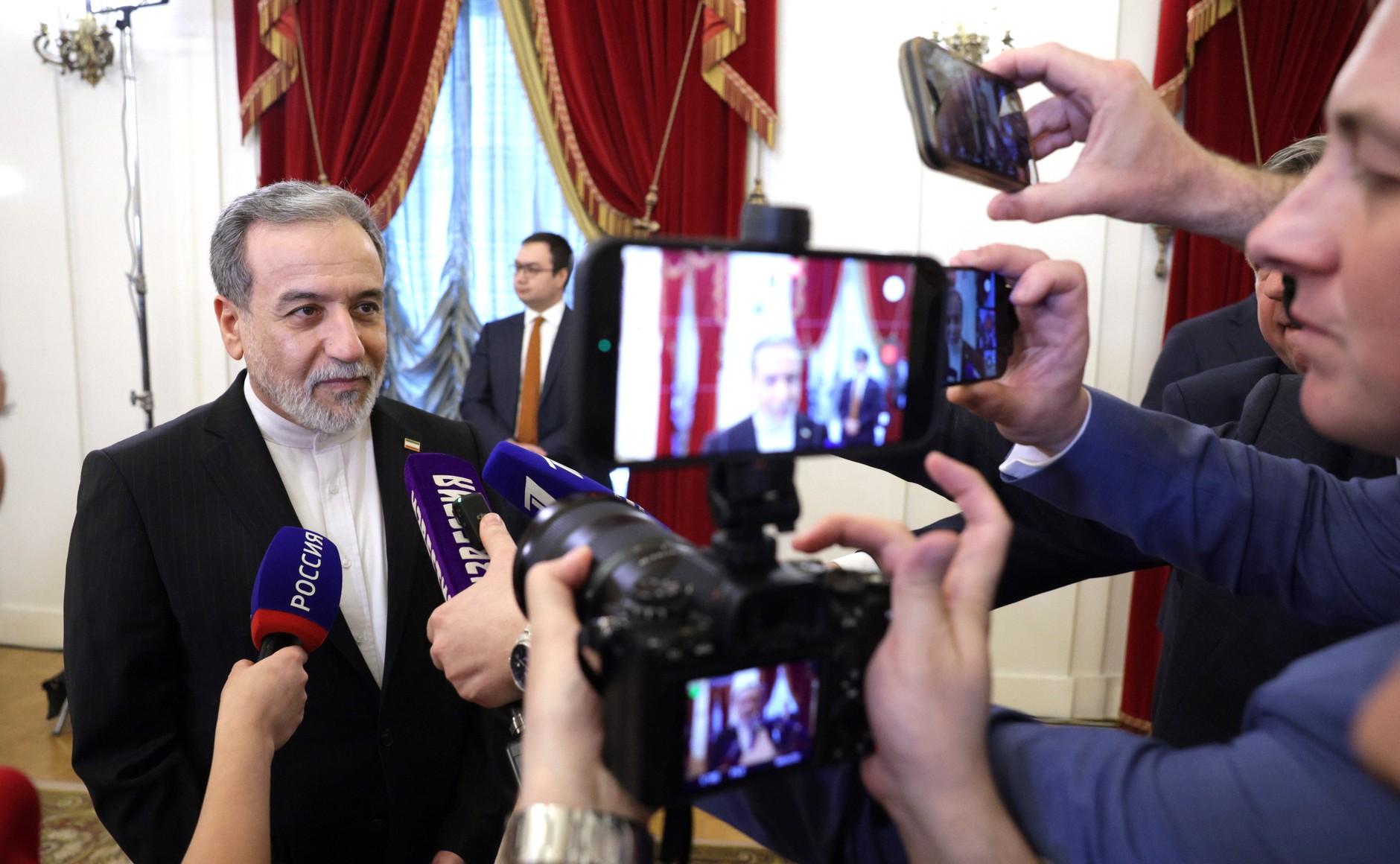
The cease-fire between Iran and the U.S. is unequivocally a cease-fire on all fronts, including in Lebanon. Its violation on one front is a violation of the ceasefire on all fronts.
Abbas Araghchi, Iranian Foreign Minister, June 1, 2026
The formula Araghchi established does not require a separate Lebanon ceasefire agreement — it requires the absence of violations, a standard that converts any Israeli military operation in Lebanese territory into a breach of the nuclear negotiating track regardless of what Washington and Beirut formalize on paper. The distinction between a ceasefire agreement and a ceasefire reality is the gap through which Iran’s entire negotiating position passes, and the June 4 trilateral statement — signed by governments while the armed group that controls the ground remains uncommitted — widens rather than closes it.
Ghalibaf raised the threshold further, with language that explicitly tied Lebanon’s fate to the continuation of nuclear talks: “If these crimes continue, we will not only suspend the negotiation process, but we will also stand against the Zionist regime.” Separately: “If an agreement is reached to end the war between Iran and the United States, it will include a halt to attacks on all fronts, especially in Lebanon.” The word “especially” elevates Lebanon from one front among several to the front whose resolution determines all others — a hierarchy that the June 4 ceasefire, with its absent timelines and unsigned compliance demands, cannot satisfy even by its own terms.
The MOU’s phasing made this problem worse. Phase 1 — Hormuz opening, no sanctions relief — was never supposed to require resolving Lebanon in the original US draft; Iran’s counter-proposal collapsed the phasing, making Lebanon a precondition to Phase 1 entry. This structural revision means that even the most limited initial agreement — one that asks nothing about Iran’s nuclear program and demands only that the Strait of Hormuz reopen to commercial traffic — cannot proceed without a Lebanon resolution that Iran’s own negotiators have defined in terms of verified cessation of hostilities, not a trilateral announcement from Washington.
Can Iran Call This Ceasefire Sufficient?
The June 4 ceasefire arrived carrying a contradiction that Iran does not need to construct — it was delivered pre-built, by the officials who negotiated it. IDF Chief of Staff Eyal Zamir, speaking at Haifa Naval Base on June 3 (the day before the ceasefire’s formalization), stated: “There is no ceasefire for our troops; we are working to maximize the operational freedom granted to us and will seize every opportunity to remove threats to Israeli civilians and our troops.” Defence Minister Israel Katz used nearly identical language that same day: “There is no ceasefire in Lebanon.” The State Department formalized the ceasefire approximately twenty-four hours later — a sequence that produces a diplomatic text contradicted by the military and political leadership of one of its three signatories before the ink was dry.
There is no ceasefire for our troops; we are working to maximize the operational freedom granted to us and will seize every opportunity to remove threats to Israeli civilians and our troops.
Lt. Gen. Eyal Zamir, IDF Chief of Staff, Haifa Naval Base — June 3, 2026, one day before the ceasefire was formalized
For Iran’s negotiators, the four-way contradiction embedded in the June 1-to-June 4 sequence is an asset rather than an ambiguity to be resolved. Trump claimed a ceasefire on June 1; Katz said there was no ceasefire in Lebanon on June 1; Zamir said there was no ceasefire for Israeli forces on June 3; the State Department formalized a ceasefire on June 4. Iran can cite any of the first three statements to establish US-Israeli bad faith without engaging with the fourth — as Tehran already demonstrated when it used the Trump-Katz contradiction to freeze MOU talks on June 1. The June 4 agreement adds a fourth data point to a pattern Iran was already exploiting, rather than resolving the incoherence that gave the pattern its diplomatic utility in the first place.
As of June 4, no Iranian official or state media outlet had issued a statement characterizing the Lebanon ceasefire as satisfying Iran’s precondition — a silence that, in Tehran’s diplomatic grammar, functions as provisional rejection dressed in courtesy. Iranian state media (IRNA, PressTV) covered the formalization in factual terms, reporting the trilateral agreement’s existence without characterizing it as meeting Iran’s nuclear-track demands. The omission tracks with the CSIS assessment that the ceasefire is “less a resolution than a pause in a conflict whose underlying drivers remain not only intact but, in some cases, intensified.”
The Five-Day Window Before June 9
The timing surrounding the ceasefire makes its insufficiency almost mechanical. Iran’s formal rejection of the MOU — conveyed through spokesman Baghaei’s anticipated “not acceptable” determination — is expected June 9, five days after the ceasefire formalization and thirteen days before the June 22 Washington talks where Lebanon compliance monitoring might theoretically begin. The ceasefire cannot produce verifiable compliance evidence in five days because it has not defined what compliance looks like: the pilot zones have no boundaries, no timeline for establishment, and no monitoring mechanism to demonstrate that Hezbollah has withdrawn from areas that have not yet been designated.
Consider what the ceasefire would need to demonstrate by June 9 to satisfy the Araghchi standard. Hezbollah would need to have evacuated operatives south of the Litani — from territory it has controlled continuously since 2006 — in a verifiable manner, with no verification mechanism yet in place. The IDF would need to have ceased operations that Zamir publicly stated would continue, and pilot zones would need boundaries, a Lebanese Armed Forces deployment plan, and at least preliminary implementation — none of which has been initiated, let alone completed, in the hours since the ceasefire was announced. The gap between what the Araghchi standard requires and what five days can produce is not a matter of diplomatic interpretation but of physical and institutional impossibility.
This five-day window is not an accident of scheduling but a consequence of two diplomatic tracks that were never synchronized. Iran has been preparing its formal MOU rejection since at least early June, with Reuters reporting that Tehran was “preparing to decline” — language harder than suspension — before the Lebanon ceasefire was even under active negotiation. The June 9 date was set by Iran’s internal decision-making timeline and the 72-hour courier window through which Mojtaba Khamenei’s underground command structure processes diplomatic communications, not by any assessment of whether Lebanon conditions had been met. The ceasefire arrived after the rejection was already in motion, and cannot function as the obstacle-removal it was designed to be because the obstacle was already being invoked as grounds for a decision that preceded it.
Iran’s negotiators now face a choice that is structurally costless in either direction. They can reject the MOU on June 9 citing the Hezbollah signature gap, IDF non-withdrawal, and Zamir’s own statement as evidence that their Lebanon precondition remains unmet — a principled position supported by the ceasefire’s own text. Or they can reject the MOU on separate grounds entirely (the HEU transfer demands, the Hormuz sovereignty question, the institutional void left by Pezeshkian’s diminished authority) and hold Lebanon in reserve as additional justification for a future round — an approach that preserves the precondition as reusable rather than spent.
Where Is Saudi Arabia in This Sequence?
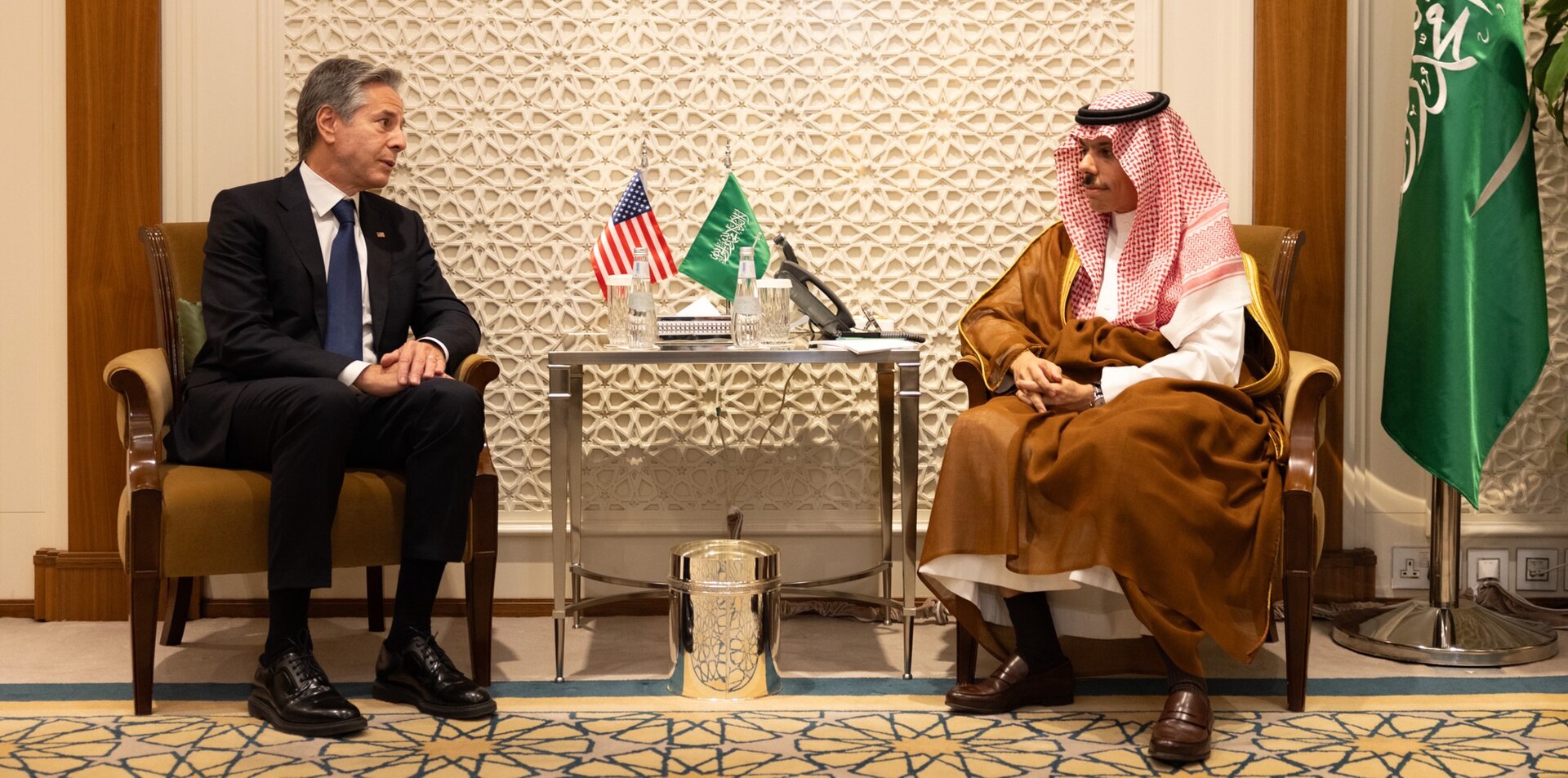
Saudi Arabia’s name does not appear in the June 4 State Department joint statement, will not appear in the June 22 Washington follow-on talks, and has not appeared in any formal diplomatic communication related to the Lebanon ceasefire negotiations. The kingdom’s Ministry of Foreign Affairs has maintained silence for more than ten consecutive days on the Iran nuclear track — a posture that reflects not diplomatic caution but structural exclusion from every venue where the decisions Saudi Arabia’s economy depends upon are being made.
The exclusion is comprehensive, and it operates across every track simultaneously. Saudi Arabia has no seat in the US-Iran MOU negotiations (conducted through Pakistani and Omani intermediaries it does not control), no role in the Lebanon ceasefire framework (a trilateral US-Israel-Lebanon arrangement), no presence at the June 22 Washington talks (where compliance will be adjudicated), and no channel to Iran that carries the weight needed to shape Tehran’s reading of the Hezbollah gap. France carries the Hormuz message Saudi Arabia cannot send because Macron maintains both a Tehran channel and a Hormuz coalition co-lead; Riyadh has neither. The private de-escalation track the kingdom built with Tehran remains Saudi Arabia’s only direct diplomatic instrument — and the MOU’s approaching death makes that bilateral channel simultaneously more important and less likely to produce results, since Iran’s negotiating position strengthens with every day the Strait of Hormuz remains contested and Brent sits $13-16 per barrel below the kingdom’s $108-111 fiscal breakeven. What Saudi Arabia could not say in any official channel, Lebanese President Aoun said on CNN on June 5 — that Iran is using Lebanon as a bargaining chip, that Lebanon’s interests do not coincide with Iran’s, and that the Lebanese people are paying for a war fought for Iranian purposes rather than their own.
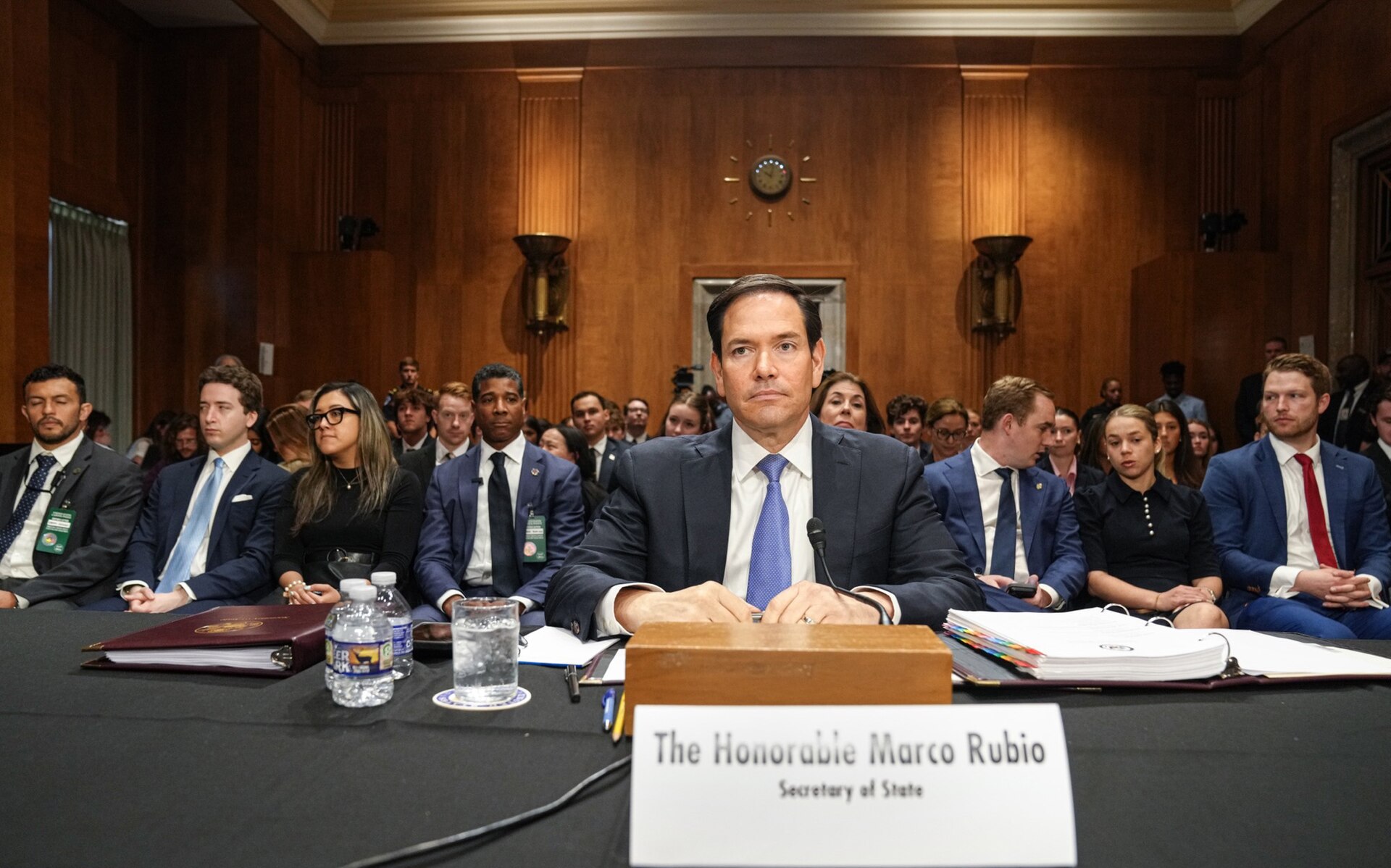
The consequences of exclusion compound through time in a sequence the kingdom cannot interrupt. If Iran rejects the MOU on June 9, Saudi Arabia will have no input into the rejection rationale and no role in whatever counteroffer emerges. If the June 22 talks produce a revised Lebanon compliance framework, Saudi Arabia will not be in the room where those parameters are drawn. If Iran interprets the Hezbollah gap as grounds to extend the MOU suspension indefinitely — converting a tactical pause into a permanent negotiating position — Saudi Arabia will absorb the fiscal consequences (a revenue shortfall of $153-180 million per day at current Brent levels) while possessing zero influence over the diplomatic sequence generating those losses. Rubio named the counterparty and the price at the Senate Foreign Relations Committee on June 2; Saudi Arabia can respond to neither, and the Lebanon ceasefire’s structural deficiencies ensure that Iran retains the optionality to set the timeline.
Chatham House assessed the broader dynamic with precision: “Israel’s insistence that its military action in Lebanon is not part of the agreement reveals a key vulnerability and shows the limits of the US ability to manage its allies.” For Saudi Arabia, the vulnerability is compounded — the US cannot manage Israel, Saudi Arabia cannot manage the US, and the result is a chain of influence in which the kingdom sits at the terminal node, bearing the highest financial exposure with the least agency over the decisions that determine it.
That exclusion extended to the IAEA’s response to Iran’s nuclear verification blackout. IAEA Director General Grossi completed a four-country Gulf tour on June 3 — ending in Riyadh — and convened an emergency Board of Governors session in Vienna on June 5. Saudi Arabia entered that Board session as the state that had opened its doors to IAEA inspectors; Iran, 93 days into a self-imposed verification blackout, had shut them — a contrast Grossi’s Riyadh visit made explicit and his Board session made a matter of international record.
The 2024 Ceasefire That Iran Watched Collapse
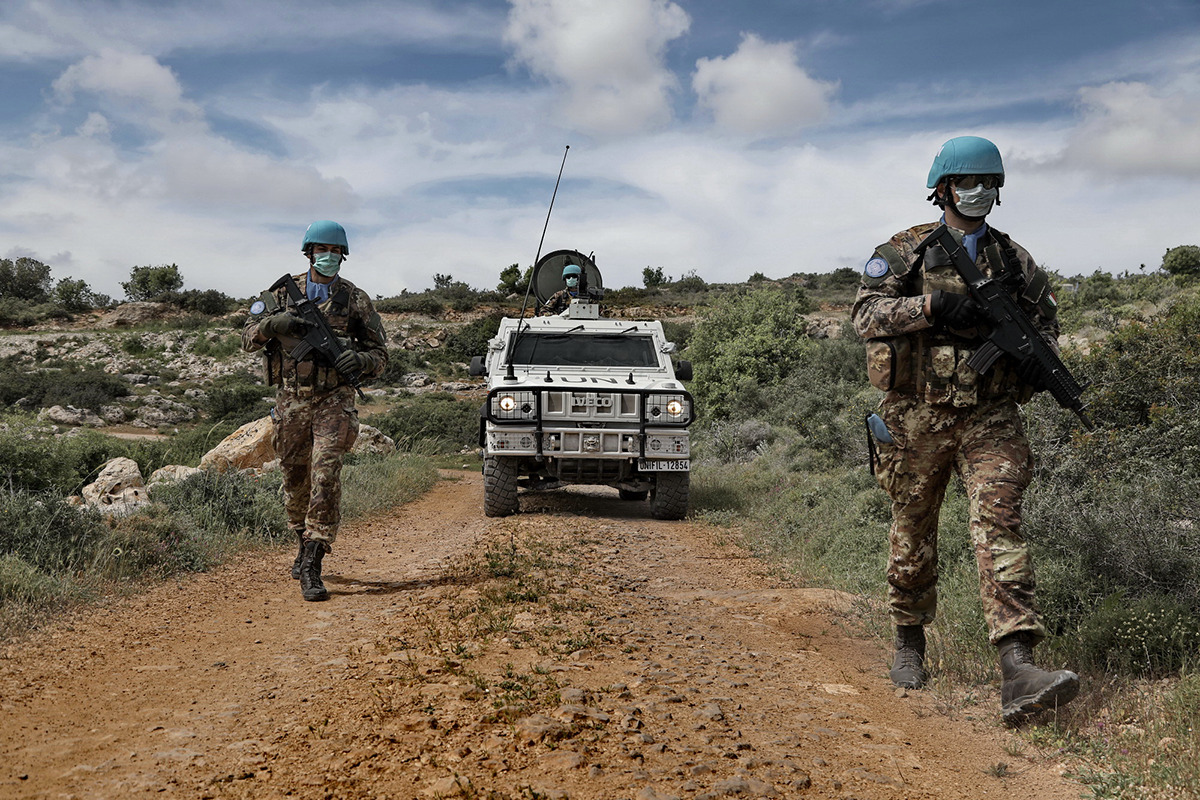
The November 27, 2024 ceasefire between Israel and Lebanon — brokered by the United States and France, based on UNSCR 1701, and requiring Hezbollah’s withdrawal north of the Litani — carried the same structural feature as the June 4 agreement: Hezbollah was not a formal signatory. Naim Qassem “approved the deal” without signing it, a distinction that preserved Hezbollah’s ability to resume operations without violating an agreement it had never formally accepted. The ceasefire held for approximately fifteen months before collapsing in March 2026, when Hezbollah launched strikes following the assassination of Supreme Leader Khamenei — a lifespan that establishes the empirical baseline for how long unsigned Lebanon ceasefires survive contact with the armed group whose compliance they demand.
Iran’s negotiators were present for that collapse, watched the identical diplomatic architecture produce the identical outcome, and can now point to the 2024 precedent as evidence that unsigned ceasefires with Hezbollah have a demonstrated failure rate of one hundred percent — structural collapse guaranteed, only the timeline uncertain. The argument requires no speculation about what Hezbollah might do — only a citation of what Hezbollah already did, under nearly identical terms, eighteen months ago. For a diplomatic establishment that builds positions on precedent and textual analysis, the 2024-to-2026 sequence provides both in a form that is difficult to contest and impossible to ignore.
The structural lesson extends beyond Hezbollah’s reliability to the enforcement mechanism itself. UNSCR 1701 required Hezbollah’s disarmament and withdrawal from southern Lebanon in 2006; twenty years later, neither condition has been met, and the resolution’s enforcement has consisted entirely of periodic restatements of its requirements by parties with no capacity or apparent willingness to impose them. The June 4 ceasefire restates those requirements with new vocabulary (“pilot zones,” “exclusive LAF control”) layered on top, but the enforcement gap — the distance between what the text demands and what any signatory can compel — is identical to the gap that Iran can point to when arguing that unsigned, unenforced agreements do not constitute the operational cessation its negotiators have defined as the threshold for returning to MOU talks.
What Does Tehran Gain From Silence?
The most revealing feature of Iran’s response to the June 4 ceasefire is the absence of one. No Iranian official has welcomed the agreement as satisfying the Lebanon precondition, condemned it as insufficient, or issued any formal characterization of its relationship to the suspended MOU talks — a posture that preserves the maximum range of future positions by committing to none of them now, extracting diplomatic value from the mere possibility of engagement without bearing any of its costs.
Tehran’s optionality at this moment is functionally complete. Iran can, at any point, welcome the ceasefire as a constructive first step while noting that further progress depends on implementation — a formulation that reopens channels without conceding the precondition is met. Iran can equally reject the ceasefire as cosmetic, citing Zamir’s statement, Hezbollah’s non-signature, and the absence of withdrawal timelines — a formulation that sustains the MOU suspension indefinitely on grounds the ceasefire text itself supports. Or Tehran can maintain silence through June 9, issue its formal MOU rejection on entirely separate grounds, and hold the Lebanon question in reserve as ammunition for a future round — an approach that preserves the precondition as reusable rather than spent. Which path Iran chooses depends less on the ceasefire’s content than on calculations — oil price trajectory, Hormuz positioning, Mojtaba Khamenei’s assessment of US domestic political pressure — that no external observer can predict with confidence and no Lebanese or American diplomat can influence.
Each of these paths leads to the same structural outcome for Saudi Arabia. Whether Iran engages, rejects, or stays silent on the Lebanon ceasefire, the kingdom remains excluded from the decision, exposed to the fiscal consequences, and dependent on actors over whom it exercises no influence and to whom it has issued no credible threat. The Hormuz closure continues, and Aramco’s $21.89 billion dividend — payable June 9, the same day as Iran’s expected MOU rejection — exceeds free cash flow at a ratio of 0.85x, a number that measures the distance between what Saudi Arabia needs the world to be and what it is.
Trump’s own assessment suggests the gap between diplomatic text and operational reality may persist well beyond any compliance review: he told the New York Post that the Hormuz blockade could last until Labor Day (September 7), describing the scenario as “unlikely” but not ruling it out — a concession, from the president who formalized the ceasefire, that the agreement he signed has not altered the trajectory he privately expects. The ceasefire removed a word from the diplomatic vocabulary without removing the condition from the ground, and Iran — which constructed the precondition, controls the interpretation, and faces no deadline or consequence for silence — is the only party in the sequence with the luxury of deciding what happens next.
Frequently Asked Questions
Has Hezbollah issued any official response to the June 4 ceasefire?
As of June 4, Hezbollah has not issued a formal statement accepting or rejecting the trilateral ceasefire terms. Al-Manar, Hezbollah’s media arm, covered the State Department announcement factually but carried no official party position on the agreement’s implications for the group’s military posture south of the Litani. The last substantive Hezbollah statement on ceasefire terms was Qassem’s April 27 rejection, which predated the June 4 framework by more than five weeks. Hezbollah’s military council operates on a decision timeline distinct from both the Lebanese government’s political track and Iran’s MOU calendar, and historically takes days to weeks before issuing formal positions on internationally brokered agreements — a lag that functionally extends Iran’s optionality window by preventing the question of Hezbollah’s compliance from receiving a definitive answer. Update: On June 4, Secretary-General Naim Qassem broke that silence with an explicit, televised rejection — calling the deal “surrender” and “a roadmap to annihilate part of the Lebanese people.” IRGC Quds Force commander Qaani co-signed via Tasnim the same day. The analysis of how the named rejection locked Iran’s June 9 MOU position is in Hezbollah Rejected the Ceasefire Out Loud. The IRGC Needed It To..
What is the legal basis for the “pilot zones” in the ceasefire?
The pilot zones are a mechanism without precedent in previous Lebanon ceasefires or in UNSCR 1701 itself, and they appear to be an ad hoc creation of the June 4 trilateral framework designed to allow graduated IDF withdrawal from discrete areas where the Lebanese Armed Forces can demonstrate exclusive security control. No enabling legislation, ministerial order, or geographic specification has been issued as of the ceasefire’s announcement. The legal authority for drawing pilot zone boundaries would presumably rest with the Lebanese government and the committee established by the ceasefire, though the composition and mandate of that committee remain undefined. UNIFIL, which has operated in southern Lebanon since 1978 with approximately 10,000 peacekeepers, is not referenced in the pilot zone mechanism — an omission that raises the question of whether the peacekeeping force’s reporting mandate, historically the primary source of ceasefire violation data, intersects with or is superseded by the new framework.
Could Iran use the Lebanon ceasefire to reopen MOU talks rather than reject them?
Technically yes, and the possibility is precisely what gives Iran’s silence its diplomatic value. If Tehran chose to characterize the June 4 ceasefire as meeting its Lebanon precondition, it could reenter MOU negotiations on Phase 1 (Hormuz opening) without conceding anything on Phase 2 (nuclear), extracting the Strait’s reopening as a standalone concession while preserving maximum negotiating room on enrichment and HEU. This would, however, require Iran to accept a ceasefire that Hezbollah has not signed, that IDF leadership has publicly described as non-binding on Israeli forces, and that contains no withdrawal timeline — a characterization that would undermine Tehran’s credibility with Hezbollah’s military council and weaken the “all fronts” framework Araghchi established on June 1. The reputational cost within Iran’s axis of aligned groups makes reopening on these specific terms more expensive than continued suspension, which is the structural reason the silence persists even though the diplomatic door technically remains open.
What role does UNIFIL play under the June 4 ceasefire framework?
UNIFIL is not referenced in the June 4 trilateral statement despite operating across the same territory the pilot zones would cover. The force’s area of operations overlaps entirely with the proposed pilot zones, creating an unaddressed coordination problem: whether the Lebanese Armed Forces’ assumption of “exclusive control” in designated areas means UNIFIL’s patrolling and monitoring functions are suspended, modified, or simply unmentioned in the new framework. UNIFIL reporting has historically served as the primary independent source of ceasefire violation data in southern Lebanon, and its omission from the June 4 agreement raises the question of what evidentiary standard will be used to assess compliance — a gap Iran’s negotiators can exploit by arguing that no credible monitoring mechanism exists to verify the conditions the Araghchi standard requires.
Has the US Congress addressed the Lebanon ceasefire in relation to Iran nuclear diplomacy?
The Senate Foreign Relations Committee hearing on June 2, at which Secretary Rubio testified on the FY2027 budget and Iran negotiations, predated the June 4 ceasefire by two days, and no congressional hearing is currently scheduled to assess the ceasefire’s implications for the MOU track. The House’s passage of H.Con.Res.38 — the War Powers Resolution that cleared 215-208 on June 3, the first WPR resolution to pass either chamber on final vote since the conflict began — adds a separate constitutional dimension that intersects with but has not been formally connected to the Lebanon ceasefire’s diplomatic consequences. Congress is asserting its authority over US military operations against Iran through the WPR at the same moment the executive branch is formalizing ceasefire agreements that implicitly define the conflict’s geographic scope — a jurisdictional gap that neither branch has addressed and that gives both Iran and Saudi Arabia reason to doubt the US government’s Lebanon policy represents a unified position rather than an interagency improvisation.
The ceasefire’s structural incompleteness — Hezbollah not a signatory, IDF operations continuing — ultimately became the predicate for Iran’s next escalatory declaration: on June 7, Khatam al-Anbiya announced Operation True Promise 5 as a conditional strike threat against Israel, explicitly conditioned on Israel’s continuation of Beirut strikes that the US-brokered ceasefire had failed to halt. Israel acted on that predicate the same day, striking Dahiyeh under the same ceasefire gap — with Ghalibaf’s response naming PSAB and American bases across the region as legitimate targets.