RIYADH — OPEC+ will add 188,000 barrels per day to global supply on Sunday, June 7 — a pre-committed increase Saudi Arabia cannot reverse, arriving at a Brent price of ~$95.25/bbl that already sits $13–16 below the kingdom’s $108–111 fiscal breakeven.
Saudi actual production has collapsed to roughly 7.25 million barrels per day — more than 3 million b/d below its stated quota of 10.291M b/d — because the Strait of Hormuz remains closed. The +62,000 b/d Saudi tranche announced for June is notional; the barrels cannot physically reach market. But the price signal is real. Brent fell roughly 3% on June 4–5 alone on diplomatic optimism that Iran’s Foreign Minister Abbas Araghchi publicly contradicted the same day, telling Tasnim that “no tangible progress has been made in the negotiation process.”
Table of Contents
- The Quota Is Fiction. The Price Signal Is Not.
- What Did OPEC+ Commit to on June 7?
- Saudi Arabia’s Q1 Deficit Already Consumed Three-Quarters of the Annual Target
- Why Can’t OPEC+ Simply Pause the Increase?
- The Diplomatic Arbitrage Cycle
- Can Aramco Cover Its Dividend on June 9?
- Three Deadlines in 48 Hours
- The IMF Made Saudi Recovery Conditional on a Strait Saudi Arabia Does Not Control
- What Does OPEC+ Look Like Without the UAE?
- Frequently Asked Questions
The Quota Is Fiction. The Price Signal Is Not.
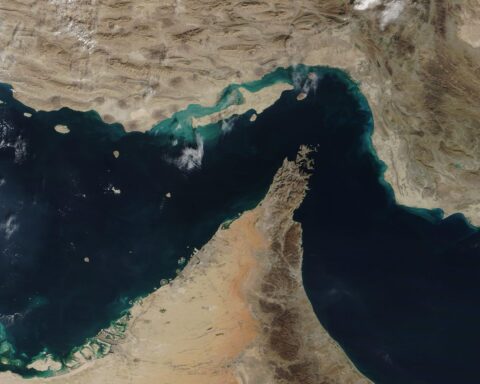
Saudi Arabia’s June 2026 production quota stands at 10.291 million barrels per day after the +62,000 b/d tranche takes effect. Actual production is approximately 6.879–7.25M b/d, according to CNBC (April 13, 2026). The gap — 3.0 to 3.4 million barrels per day — is not a compliance choice. It is the physical consequence of the Strait of Hormuz closure, which has shut Saudi Arabia out of its primary export route since early March.
Aramco CEO Amin Nasser told CNBC on May 11 that “the oil market will lose 100 million barrels of supply every week Hormuz is closed.” The East-West pipeline to Yanbu on the Red Sea has a theoretical capacity of 7M b/d but actual throughput of roughly 4M b/d — the bottleneck that sets Saudi Arabia’s production ceiling regardless of what Vienna announces.
The EIA estimated in its May 2026 Short-Term Energy Outlook that Gulf producers collectively shut in approximately 10.5 million barrels per day in April due to the Hormuz disruption. Saudi Arabia accounts for roughly 3M b/d of that figure. Kuwait, also Hormuz-dependent, is producing below its own quota for the same reason. The production collapse is regional, not national — but the fiscal exposure is concentrated in Riyadh because no other OPEC+ member carries a $108–111 breakeven.
Al Jazeera described the OPEC+ increase on May 3 as “symbolic.” A symbolic increase that depresses prices is not symbolic for the country absorbing the price decline. Every OPEC+ headline announcing additional supply reinforces the market’s expectation that barrels are coming — even when they are not — and accelerates the erosion of the war premium Saudi Arabia’s budget requires.
The Middle East briefing 3,000+ readers start their day with.
One email. Every weekday morning. Free.
What Did OPEC+ Commit to on June 7?
The June 7 ministerial carries a pre-approved increase of 188,000 barrels per day, the third consecutive monthly tranche from the April 2023 additional voluntary adjustment schedule. Seven members share the increase: Saudi Arabia (+62K), Russia (~63K), Iraq (+26K), Kuwait (+16K), Kazakhstan (+10K), Algeria (+6K), and Oman (+5K), per OPEC.org Press Release #602 (May 3, 2026).
The May 3 communiqué retains “full flexibility to increase, pause or modify” the schedule. OPEC+ paused production increments in February and March 2026 — announced January 4, per Rigzone — when the war began, establishing precedent that a freeze is operationally available. But exercising that option on Sunday requires consensus from members whose interests have structurally diverged from Riyadh’s.
| Member | June Tranche (b/d) | Quota After Increase | Compliance Status |
|---|---|---|---|
| Saudi Arabia | +62,000 | 10.291M | ~3M b/d below quota (involuntary — Hormuz) |
| Russia | ~+63,000 | ~10.47M | Approximate compliance |
| Iraq | +26,000 | ~4.43M | Chronic overproduction |
| Kuwait | +16,000 | ~2.69M | Below quota (Hormuz-constrained) |
| Kazakhstan | +10,000 | ~1.60M | ~322K b/d over quota |
| Algeria | +6,000 | ~1.01M | Approximate compliance |
| Oman | +5,000 | ~0.77M | Approximate compliance |
The combined OPEC+ compliance debt stands at 4.779 million barrels per day — a figure that reveals the organization’s enforcement mechanism as inoperative. Kazakhstan alone overproduces by roughly 322,000 b/d against its 1.599M b/d quota, driven by the Tengiz field where Chevron’s $48.5B Future Growth Project expansion has made output physically irreversible. Kazakhstan Energy Minister Yerlan Akkenzhenov told OilPrice.com that “the republic has no right to enforce production cuts” on foreign operators like Chevron and ExxonMobil.
Saudi Arabia’s Q1 Deficit Already Consumed Three-Quarters of the Annual Target
Saudi Arabia ran a SAR 125.7 billion ($33.5B) budget deficit in the first quarter of 2026, consuming approximately 76% of the full-year deficit target in 90 days, according to Gulf News and Saudi Gazette. Oil revenues fell 3% year-on-year despite war-elevated prices. Government spending surged 20% YoY, with military expenditure alone reaching SAR 64.7B in Q1 — a 26% increase over the same period in 2025.
At approximately 7.25M b/d actual production and Brent near $95.25, the revenue shortfall against Saudi Arabia’s $108–111 fiscal breakeven runs to roughly $94–116 million per day. That gap has persisted for weeks. Chatham House noted in May 2026 that “the US–Israel war against Iran has presented many challenges for Saudi Arabia, including the Strait of Hormuz closure, a deepening rift with the UAE, and the latter’s exit from the oil cartel OPEC. The Iran war has slowed the kingdom’s decision making process as the leadership reassesses its long-term strategy.”
The EIA’s May 2026 Short-Term Energy Outlook forecast Brent averaging ~$106/bbl for May–June, estimating Q2 global inventory draws of 8.5M b/d due to Hormuz disruption. The market has moved against that forecast. Each diplomatic headline from Washington compresses the war premium further, opening a gap between the EIA’s supply-disruption model and the price traders are willing to pay.
The fiscal damage operates on two tracks simultaneously. The volume track — lost production from the Hormuz closure — is structural and persists regardless of price. The price track — the war premium being arbitraged away by diplomatic theatre — compounds it. Wood Mackenzie’s “Quick Peace” scenario projects Brent falling to $80/bbl with a $65 floor in 2027 if a deal holds, because the war premium would disappear while surplus capacity returns to market. At those levels, Saudi Arabia’s revenue shortfall from breakeven would exceed $300 million per day at current production volumes. The kingdom faces a trap where war is expensive and peace is more expensive. The only price level that works is the one embedded in a conflict that simultaneously prevents Saudi Arabia from producing enough barrels to capitalise on it.
Why Can’t OPEC+ Simply Pause the Increase?
OPEC+ can technically pause the June tranche — it did so twice this year, freezing the schedule in February and March when the Iran war began. The mechanism exists. The consensus does not.
Kazakhstan cannot vote for a pause because its overproduction is structural. The 322,000 b/d excess above quota is driven by Chevron and ExxonMobil contracts at Tengiz that Astana has stated it will not penalise. A pause would spotlight that non-compliance — currently tolerated in silence — and force a confrontation Astana has no incentive to provoke.
Iraq has its own compliance deficit. Russia’s interests diverge from Saudi Arabia’s on price — Moscow needs volume for budget revenue and has limited ability to redirect seaborne exports. The Washington Post reported on May 3 that Iran “retains chokehold on key Strait of Hormuz,” framing the OPEC+ production decision as subordinate to Iranian strategic control. The supply increase is real as a market signal and fictional as a supply event.
Saudi Arabia’s former primary enforcement ally is no longer in the room. The UAE exited OPEC+ in May 2026. Sunday’s ministerial is the first without Abu Dhabi — removing the one member that historically backed Saudi-led production discipline with credible compliance.
Iran benefits from OPEC+ dysfunction without participating in it. Tehran is not an OPEC+ signatory to the voluntary adjustment schedule and holds no quota under the current framework. But Iran retains the chokepoint that makes every other member’s quota fictional. Structurally, every OPEC+ supply increase announcement simultaneously signals institutional weakness and depresses Brent toward Saudi Arabia’s fiscal floor — outcomes that align with Iranian strategic objectives whether or not Tehran coordinates them.
The Diplomatic Arbitrage Cycle
Brent dropped roughly 3% in a single session on June 4–5. The trigger was the same pattern that has governed oil prices since March: a US diplomatic statement implying progress with Iran, followed by an Iranian denial that fails to fully recover the lost premium.
The cycle is now structural. Goldman Sachs estimates a $14/bbl war premium is embedded in current Brent. Every Trump statement suggesting a deal is imminent shaves that premium; every Iranian rejection partially rebuilds it. The net direction is down. Brent fell more than 19% in May 2026 — the worst monthly performance since March 2020’s COVID crash, per CNBC (May 29).
“Communications with the Americans have not been cut off, and messages have been exchanged regarding the need to stop aggression against Beirut, but no tangible progress has been made in the negotiation process.” — Abbas Araghchi, Iranian Foreign Minister, Tasnim News Agency (cited Bloomberg, June 4, 2026)
Araghchi’s statement landed the same day the market sold off. The contradiction is the mechanism: Washington signals peace to domestic audiences and markets; Tehran denies progress to domestic audiences and proxies. Both statements are partially true. Neither controls the price. But the net effect is a systematic erosion of the war premium Saudi Arabia’s budget depends on.
The Financial Times investigation documented the phenomenon’s sharpest edge: $580 million in suspicious bets on falling oil prices placed 15 minutes before Trump’s Iran talks statement on March 23, and $950 million in similar bets ahead of the April 7 policy shift (FT, cited NBC News/Al Jazeera). Sophisticated actors are front-running the diplomatic cycle. The war premium is not simply fading — it is being actively traded against.
Goldman Sachs’s post-ceasefire base case projects Brent at $80–90/bbl in Q3–Q4 2026. If a deal materialises, the $14 war premium vanishes and Saudi Arabia’s breakeven gap widens from $13–16/bbl to $18–31/bbl. The Hormuz volume constraint persists regardless of a diplomatic resolution, because the supply recovery is measured in months, not days — as Nasser detailed in May.
Can Aramco Cover Its Dividend on June 9?
Aramco’s Q1 2026 results showed $21.89 billion in dividends payable on June 9 against free cash flow of $18.6 billion — a $3.3 billion shortfall. The Saudi state, which holds a ~98% stake, depends on this dividend to fund a budget already running a Q1 deficit of $33.5 billion.
The dividend is not optional in any practical sense. Aramco’s base dividend has been maintained through every oil cycle since the 2019 IPO, functioning as a fiscal transfer mechanism rather than a shareholder return in the conventional sense. Cutting it would signal fiscal distress to the same credit markets Saudi Arabia needs to fund PIF commitments and Vision 2030 projects already under strain.
The 0.85x dividend-to-FCF ratio means Aramco is paying out more than it earns in cash. At current production levels (~7.25M b/d) and Brent near $95, that ratio will worsen in Q2 unless prices recover or Hormuz reopens. Neither condition is under Saudi control.
The PIF’s cash position has fallen to $15 billion — a six-year low — limiting the sovereign wealth fund’s capacity to backstop government finances or absorb Aramco’s cash shortfall. Before the war, PIF was the primary vehicle for Vision 2030 capital deployment: NEOM, The Line, Qiddiya, the entertainment and tourism mega-projects. That function is now subordinated to fiscal survival. Aramco’s dividend is not a return on investment; it is the transmission mechanism through which oil revenue reaches a government spending 20% more than a year ago while earning 3% less.
Three Deadlines in 48 Hours
The 48 hours after Sunday’s OPEC+ ministerial carry three convergent deadlines, each compounding the others:
June 7 (Sunday): OPEC+ 41st ministerial meeting. The +188,000 b/d increase takes effect. The price signal hits Monday’s Asian open regardless of what physical barrels do.
June 9 (Tuesday): Aramco’s $21.89B dividend payment date. The cash must move. The $3.3B gap between the dividend and Q1 FCF is already locked in; the question is whether Q2 cash generation — running below Q1 rates at current prices — forces a draw on reserves or debt issuance.
June 9 (Tuesday): Iran’s expected formal rejection of the Trump MOU proposal. The Omani counteroffer is confirmed for the same date. A formal rejection would eliminate the diplomatic overhang currently suppressing Brent — potentially recovering some war premium — but simultaneously eliminating the market’s hope for a near-term Hormuz reopening.
The IAEA Board of Governors special session, underway since June 5 in Vienna, adds a fourth variable. Iran’s 93-day safeguards blackout and 440.9 kilograms of unverified highly enriched uranium remain on the agenda. Any IAEA escalation — a censure resolution, a referral recommendation — would interact with Sunday’s oil market dynamics in unpredictable directions.
The Iran rejection introduces a paradox of its own. A formal MOU rejection is bearish for peace prospects — which should be bullish for oil, recovering some war premium. But a rejection also signals that Hormuz remains closed indefinitely, confirming that Saudi production will stay at ~7.25M b/d regardless of what the quota says. The market must simultaneously price in a higher geopolitical risk premium and a longer Saudi production deficit. These two forces do not resolve cleanly into a single price direction.
OPEC+ on Sunday signals supply. Aramco on Tuesday demands cash. Iran on Tuesday may remove the diplomatic overhang in one direction or the other. Each event narrows the fiscal corridor Saudi Arabia occupies.
The IMF Made Saudi Recovery Conditional on a Strait Saudi Arabia Does Not Control
The IMF’s Article IV review of Saudi Arabia (PR 26181, June 3) stated that the kingdom’s economic recovery is “contingent on Hormuz normalising” — the first time the Fund has inserted chokepoint conditionality into any Gulf state’s Article IV consultation. The language transforms Hormuz from a geopolitical risk factor into a formal macroeconomic dependency in the IMF’s institutional assessment.
The practical effect is credit-market signalling. IMF Article IV language shapes sovereign rating agency assessments, bond pricing, and institutional investor mandates. “Contingent on Hormuz normalising” tells Moody’s, S&P, and Fitch that Saudi Arabia’s growth trajectory depends on an outcome Riyadh cannot unilaterally deliver. It tells bond investors that the fiscal arithmetic has external dependencies beyond oil prices and production discipline.
The IMF cut Saudi 2026 growth to 3.1% — a 1.4 percentage point downward revision. Goldman Sachs projects a 6.6% GDP deficit. The fiscal position that was already deteriorating before the Hormuz closure is now formally classified as dependent on Iranian strategic decisions for its recovery path.
Riyadh has historically used OPEC+ production adjustments as a fiscal management tool — cutting supply to raise prices, adding supply to defend market share. Saudi Arabia cannot cut production it is not producing. It cannot raise prices through supply discipline when the supply disruption is external. The IMF’s conditionality formalises that constraint in the language sovereign analysts use to set credit outlooks.
What Does OPEC+ Look Like Without the UAE?
The UAE’s exit from OPEC+ in May 2026 removed the only member that consistently aligned with Saudi production discipline. Abu Dhabi’s departure was driven by its own capacity expansion ambitions — the UAE wanted to produce more, not less — but the structural consequence falls on Riyadh.
Saudi Arabia built OPEC+ around a Saudi-Russian axis with UAE enforcement credibility. Without the UAE, the June 7 ministerial operates with a seven-member core where Kazakhstan is structurally non-compliant, Iraq is chronically over-producing, and Russia’s price interests diverge from Saudi Arabia’s. CNBC reported on May 3 that the June meeting is the first ministerial without Abu Dhabi.
That Saudi-Russian axis extends beyond OPEC+ production schedules: Saudi Arabia sent more than two hundred officials to Russia’s St. Petersburg economic forum as Vladimir Putin’s guest of honor on the same day the OPEC+ increase was approved — signing thirty bilateral cooperation agreements while depending entirely on American production lines for the interceptors defending its cities.
The enforcement deficit compounds the price problem. A cartel that cannot enforce its own quotas while simultaneously announcing supply increases sends a contradictory signal: more barrels are nominally coming, but existing commitments are already unenforced. The market reads the headline (more supply) and ignores the footnote (no compliance). Saudi Arabia absorbs the price impact of both.
The pause that froze the schedule at war’s outset came when member solidarity was high and the Hormuz closure was days old. Three months later, Kazakhstan’s Tengiz output is higher, Iraq’s compliance is worse, and the UAE — the member most likely to enforce discipline — is gone. The conditions for a second pause have deteriorated at every level.
“If the Strait of Hormuz opens today, it will still take months for the market to rebalance, and if its opening is delayed by a few more weeks, then normalization will last into 2027.” — Amin Nasser, CEO Saudi Aramco, CNBC (May 11, 2026)
Nasser’s statement frames the trap’s temporal dimension. Even in the best case — Hormuz reopens, a deal holds, tankers resume transit — the supply recovery is measured in months, not days. Saudi Arabia’s fiscal damage accumulates in real time while the remedy operates on a geological-logistics timeline. The OPEC+ meeting on Sunday sets a price floor for a market that has already moved below Saudi Arabia’s survival threshold, and the mechanisms for raising that floor — production discipline, enforcement credibility, chokepoint resolution — are each controlled by actors other than Riyadh.
Frequently Asked Questions
How does the OPEC+ increase affect oil prices if Saudi Arabia can’t actually produce the barrels?
Oil futures markets trade on expectations, not current physical flows. The +188,000 b/d headline enters algorithmic trading models and forward curve pricing regardless of whether Saudi Arabia can deliver its 62,000 b/d share. Commodity trading advisors (CTAs) and systematic funds — which held net short positions of approximately 180,000 contracts in Brent futures as of late May, per CFTC data — respond to OPEC+ supply signals mechanically. The physical barrels matter for inventories over quarters; the announcement matters for prices within hours.
Could Saudi Arabia unilaterally withdraw from OPEC+ to stop the price damage?
Withdrawal would eliminate the quota framework entirely, signalling to markets that all OPEC+ members are free to produce at maximum capacity. Russia, Iraq, and Kazakhstan would accelerate output. The resulting price collapse — potentially to $60–70/bbl based on pre-war surplus capacity estimates — would damage Saudi Arabia far more than the current arrangement. Riyadh’s calculus is that a dysfunctional cartel producing modest price headwinds is preferable to no cartel producing a price freefall. Saudi Arabia last tested unilateral action in the 2020 price war with Russia; Brent hit $19/bbl within weeks.
What is the significance of the FT’s finding on suspicious oil trading ahead of Trump statements?
The SEC and CFTC have not announced formal investigations as of June 5. If the pattern is confirmed as insider trading, it would indicate that diplomatic signals are being monetised before they reach the public — meaning the war premium is being extracted by informed actors before Saudi Arabia can react to the price movement. The CFTC’s Division of Enforcement has jurisdiction over futures manipulation; the SEC covers equity derivatives. Parallel investigations would be typical in cases of this scale, but US enforcement agencies have historically taken 12–24 months to charge market manipulation cases of comparable complexity.
What happens to Saudi Arabia’s credit rating if Hormuz stays closed through Q3?
The IMF’s June 3 Article IV language — recovery “contingent on Hormuz normalising” — gives rating agencies formal cover to revise Saudi Arabia’s outlook. Moody’s currently rates Saudi Arabia A1 (stable); S&P rates it A/A-1 (stable). A Q1 deficit of $33.5B extrapolated forward implies a full-year deficit exceeding $100B — roughly 10% of GDP. Sovereign downgrades typically follow when deficit-to-GDP ratios breach single digits for two consecutive quarters, and the PIF’s $15B cash position — a six-year low — limits the government’s capacity to draw on wealth fund reserves as a buffer against an outlook change.
Is there any scenario where Sunday’s OPEC+ meeting helps Saudi Arabia?
A surprise pause — technically available under the May 3 communiqué’s flexibility clause — would send a bullish price signal and partially offset the June 4–5 sell-off. But a pause requires consensus from members who benefit from the current arrangement: Kazakhstan avoids scrutiny of its overproduction; Iraq avoids compliance enforcement; Russia prefers volume over price at current fiscal margins. The most plausible Saudi-positive outcome is not a pause but a sufficiently hawkish post-meeting statement that signals willingness to cut in July — but even that would only slow the price decline, not reverse the structural gap between $95 Brent and $108–111 breakeven.