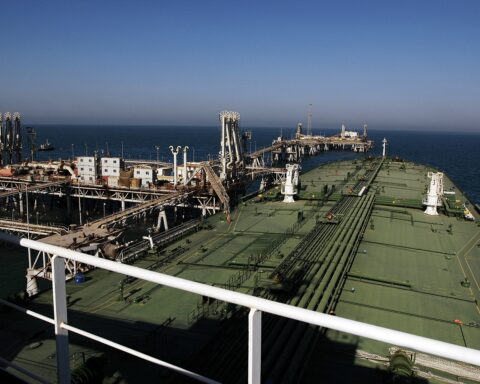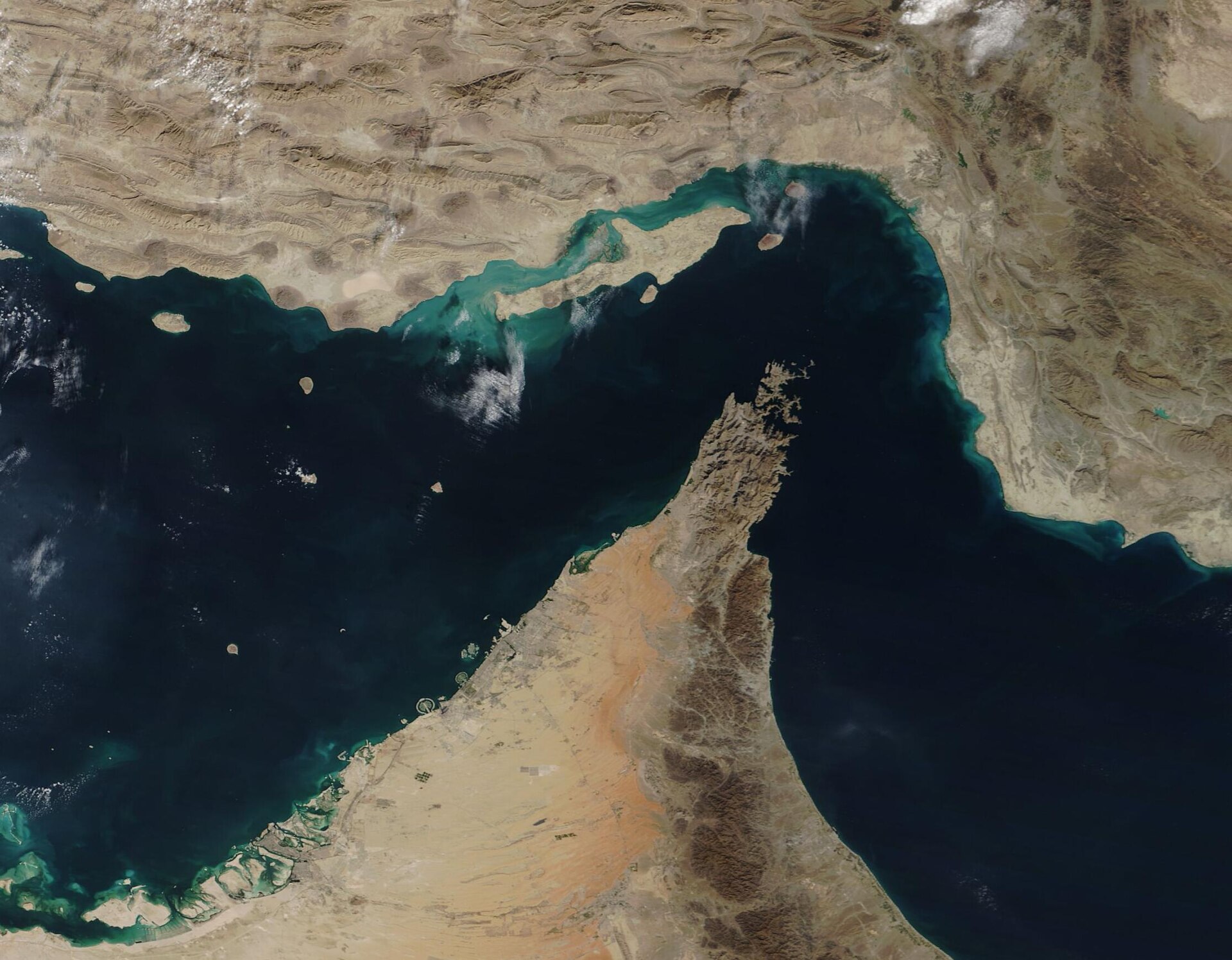

DUBAI — Iran’s Islamic Revolutionary Guard Corps said on Wednesday evening that a vessel carrying liquefied natural gas exploded and caught fire after striking a naval mine in the Strait of Hormuz, the latest in a series of IRGC mine-strike claims that now extends to gas carriers as well as crude tankers. The IRGC Navy also claimed two oil tankers hit mines off the southern and eastern coasts of the strait, with fires breaking out in their engine rooms, according to the Times of Israel. A separate Mehr News Agency dispatch filed minutes earlier reported a third oil tanker catching fire east of the strait, though it was unclear whether this was one of the same two vessels or an additional incident.
No independent monitoring agency had confirmed any vessel being struck as of Wednesday night, CBS News reported. The IRGC provided no vessel names, flag states, operators, cargo destinations or crew details for any of the four claimed incidents. U.S. Central Command has repeatedly called IRGC mine-strike claims false, stating in its standing position that all internationally recognized transit routes through the strait “have been cleared of sea mines by U.S. forces and remain so,” according to Gulf News. No specific CENTCOM statement in response to the November 25 claims was confirmed at the time of reporting.
The House of Saud Daily Briefing
Saudi Arabia's news in 3 minutes, every morning. Free. See today's issue
Table of Contents
What the IRGC Claimed on November 25
The IRGC Navy’s statement about the LNG carrier was carried by Mehr News Agency at approximately 20:16 Tehran time on Wednesday. According to Mehr, the vessel had switched off its positioning systems and was navigating what the IRGC described as “a US-Israeli-fabricated route.” The IRGC said the carrier was operating in the strait without authorization and characterized its navigation as “a major risk,” Mehr reported. No crew status, vessel name, flag state or cargo destination was disclosed.
The two oil tanker claims, reported by the Times of Israel, described fires breaking out in the engine rooms of vessels that the IRGC said were attempting to transit “routes unauthorized by Iran.” A third oil tanker was the subject of a separate Mehr News article filed at 18:33 Tehran time — roughly two hours before the LNG carrier statement — under the headline “Violating oil tanker catches fire east of Strait of Hormuz.” Whether this was one of the two tankers subsequently claimed or a distinct vessel could not be established from the available reporting. The Free Press Journal summarized the evening’s claims as “3 oil tankers + 1 LNG carrier hit mines.”
TASS, the Russian state news agency, carried the LNG carrier claim. Newsquawk, the financial-news relay service, reported that “Iran’s IRGC Navy says a vessel carrying LNG exploded and caught fire after striking a naval mine in the Strait of Hormuz while travelling through an unauthorised route with its positioning systems switched off, Mehr reports.”
CENTCOM Rejects Mine-Strike Claims
CENTCOM’s standing position, as reported by Gulf News, was unequivocal. “All internationally recognized primary transit routes through the Strait of Hormuz have been cleared of sea mines by U.S. forces and remain so,” the command stated. CENTCOM has in prior statements called IRGC mine-strike announcements false. No CENTCOM statement specifically responding to the November 25 claims was confirmed at the time of reporting.
The language echoed CENTCOM’s response to earlier IRGC claims. On November 23, when the IRGC said three oil tankers had struck mines while under U.S. military air escort, CENTCOM had also denied that any commercial vessels had been struck, according to Gulf News. The November 23 IRGC statement, carried by Iran International and the Jerusalem Post, had added that “military cover and escort by the US military will not serve as a substitute” for complying with what Iran calls its maritime regulations in the strait.
CBS News reported that no independent monitoring agency had confirmed the November 25 claims. The pattern — IRGC announcement, CENTCOM denial, no third-party verification — has repeated across dozens of claimed incidents since the Iran war disrupted Hormuz transit flows earlier this year.
Why Does an LNG Carrier Claim Matter?
The Wednesday LNG carrier claim was not the first such assertion by the IRGC — a similar claim involving a gas carrier appeared in news aggregators on November 13, attributed to the IRGC. But the claims have drawn attention because of the distinct hazard profile of LNG cargoes. A Reuters explainer published via Al-Monitor in July noted that “there has never been a catastrophic LNG cargo-tank explosion on a commercial LNG carrier at sea.” The main danger from an LNG breach is not a conventional explosion but a large release of gas forming a flammable cloud. Modern LNG carriers use multiple layers of containment, and a fire in an engine room — the scenario the IRGC described — does not automatically compromise the cargo system, according to the Reuters analysis.
The first confirmed attack on an LNG carrier during the current war was the MV Al Rekayyat, a Marshall Islands-flagged, Qatari-operated vessel struck by a drone on July 6 off the Omani coast, according to a Wikipedia list of ships attacked during the conflict. That incident caused a fire in the engine room with no LNG tank breach and no casualties. It was a drone strike, not a mine. The IRGC’s November claims, by contrast, attribute the damage to naval mines on routes the vessels chose voluntarily — a framing that positions Iran as enforcing maritime regulations rather than initiating attacks.
LNG traffic through the strait had been running at elevated levels. Gas shipments continued through October, sustained even as crude tanker traffic faced mounting disruption.
A Week of Escalating Claims in the Strait
The November 25 claims followed a dense week of reported incidents. On November 24, the United Kingdom Maritime Trade Operations centre reclassified its Warning 219-26 as three separate attacks on eastbound tankers — covering an incident that occurred on November 22 — then issued Warnings 220-26 and 221-26 confirming those strikes, according to the Operation Lowcountry Wildfire Intelligence substack. JMIC assessed the regional threat level as SEVERE.
Three Sinokor-operated very large crude carriers — Bahrain Prosperity, Cameroon Prosperity and Romania Prosperity, all Liberian-flagged — were struck within a 17-minute window between 20:25 and 20:42 UTC on November 22, Riviera maritime news reported. Shipuniverse described them as supertankers. The IRGC claimed mines; CENTCOM denied it.
On November 23, the IRGC said three oil tankers struck mines while under U.S. military air escort, according to Iran International and the Jerusalem Post. The IRGC’s statement, carried by Iran International, said the tankers “suffered severe explosions and fires after striking naval mines.” That claim introduced a new element: the assertion that U.S. escort operations were themselves insufficient to protect commercial traffic through what Iran considers unauthorized routes.
Iran’s Army General Chief had ordered the strait to be closed further each day until conditions were met on November 24. The mine campaign appears to function as Iran’s primary instrument for maintaining pressure on the strait while the diplomatic track remains stalled.
How Has Strait Traffic Responded?
Despite the claims, traffic through the Strait of Hormuz has not halted. UKMTO counted approximately 325 combined transits in the week of 10 November, which the organization described as “below normal, but not stalled,” Gulf News reported. Weekly counts fell further in the following two weeks, reaching 263 transits for the week to 18 November, according to published UKMTO figures. Both figures sit well below the pre-war baseline of 138 transits per day reported by the Joint Maritime Information Center.
The gap between Iran’s claims and independently verified damage has been a persistent feature of the strait’s disruption. IRGC statements have consistently described mine-strike incidents as self-inflicted — the result of vessels choosing routes that violate Iran’s declared maritime authority. CENTCOM has consistently denied that any commercial vessels have struck mines on recognized transit lanes. The IRGC’s Hormuz Traffic Control Center warned in a previous statement that “American officials’ lies do not drag them into the explosion and fire of naval mines.”
The commercial effect, regardless of the disputed facts, has been measurable. Hormuz oil flows fell as November attacks mounted, and Brent crude posted its third consecutive weekly loss. Insurance premiums for Hormuz transits have risen sharply since JMIC designated the regional threat level SEVERE.
Background: The Stalled Diplomatic Track
Iran’s Foreign Minister Araghchi presented a seven-day roadmap to the United Nations in New York on September 25 via Qatari mediators, under which Hormuz would reopen in exchange for the U.S. lifting its blockade, releasing approximately $12 billion in frozen assets and granting sanctions waivers, Al Jazeera reported. Trump rejected the plan, according to The National, reporting on October 8.
The mine campaign has escalated since. The IRGC chief declared that Iran controls waters 500 kilometers beyond the strait. The IRGC claimed vessels hit mines on November 19. A spoofed AIS signal posed as an Iranian tanker on November 24, the same day Trump warned that ships would be sunk. And the U.S. and Iran exchanged strikes near the strait, with the U.S. hitting Iranian launchers.
The Wednesday evening claims arrived into this backdrop — a strait where IRGC announcements, CENTCOM denials and UKMTO warnings have become a near-daily cycle, and where the route the IRGC calls unauthorized is the same corridor CENTCOM says it has cleared of mines.
FAQ
Has any independent agency confirmed the November 25 mine strikes?
No. CBS News reported that the IRGC provided no further information and that there was no immediate report from independent monitoring agencies of a vessel being hit on Wednesday. UKMTO had not issued a specific advisory for November 25 as of the time of reporting. The IRGC has not released vessel names, flag states, operators, cargo capacity or crew status for any of the claimed incidents.
What is the difference between the IRGC’s claimed route and CENTCOM’s cleared route?
The IRGC describes vessels as navigating “unauthorized” routes — corridors the Guard says violate Iran’s declared maritime regulations in the strait. CENTCOM says the internationally recognized primary transit routes through the strait have been cleared of sea mines by U.S. forces. The route the IRGC calls unauthorized and the corridor CENTCOM says is mine-free appear to be the same shipping lanes — the established Traffic Separation Scheme that most commercial traffic uses to transit the strait.
How many IRGC mine-strike claims have been made in November 2026?
The IRGC has made mine-strike claims on multiple dates throughout November, including November 2, 6, 13, 16, 19, 22, 23 and 25, according to news monitoring services and the events log. The claims have covered oil tankers, large crude carriers and, since at least November 13, LNG carriers. CENTCOM has denied every claim. The frequency has increased in the final week of the month, with the November 22 Sinokor VLCC incidents, the November 23 three-tanker-under-escort claim, and the November 25 combined oil-and-gas carrier claims arriving in rapid succession.
The House of Saud Daily Briefing
Saudi Arabia's news in 3 minutes, every morning. Free. See today's issue