TEHRAN — On the same Sunday morning Pakistan’s foreign ministry handed Washington Iran’s formal response to the war-ending memorandum, drones were already burning over three Gulf states. A cargo ship bound for Mesaieed Port took a hit twenty-three nautical miles northeast of Doha, Kuwait’s army quietly confirmed “hostile drones” had entered its airspace at dawn, and the UAE shot down two more and named Iran outright.
This is not a contradiction between hardliners and moderates inside Tehran. It is the doctrine. Iran’s Foreign Ministry codified a three-stage diplomatic framework that defers nuclear talks to a thirty-day window after the war ends and Hormuz is resolved, while the IRGC Aerospace Force announced its missiles and drones had “locked onto American targets in the region and the enemy aggressor’s ships” — awaiting only the order to fire. The MOU response tells Washington a diplomatic track exists. The strikes tell the IRGC’s own constituency, the Gulf monarchies, and the 23,500 US personnel scattered across Qatar and Kuwait that none of that changes anything Iran is actually doing on the water or in the sky.
Donald Trump lands in Riyadh on Tuesday. The pincer was timed for him.
Table of Contents
- What did Iran actually send in its MOU response?
- Why did Iran strike Qatar and Kuwait on the same day it submitted its peace offer?
- The authorization ceiling is not a malfunction — it is the weapon
- Qatar’s paradox: mediator, host, and target on the same Sunday
- What does the May 10 pincer mean for Trump’s Riyadh visit?
- The Tanker War precedent — Iran has fought this fight before
- Frequently asked questions
What did Iran actually send in its MOU response?
Iran’s response, hand-carried to Washington through Pakistan on May 10, is structured as a three-stage framework: formally end the war first, resolve the Strait of Hormuz crisis second, then open a thirty-day window for broader negotiations including the nuclear file. The text is not a yes or a no. It is a counter-proposal that excises the issue Washington built the original draft around.
The framing was not invented for the May 10 reply. On April 30, Foreign Ministry spokesman Esmaeil Baghaei told reporters in Tehran the position bluntly: “At this stage, we do not have nuclear negotiations.” What the MOU response does is convert that line from talking-point to treaty draft. Iran is now telling the United States, in writing and via a friendly intermediary, that the 60-percent-enriched uranium accumulated through 2025 — the 440.9 kilograms the IAEA last verified before access was terminated on February 28 — is off the current table.
IRNA, the state news agency, framed the response as oriented toward “ending all fronts of the war, especially Lebanon.” The Iranian read is that Lebanon is the easiest concession to win because it costs the IRGC nothing operationally — Hezbollah’s missile inventories are already degraded, and a Lebanon de-escalation buys Tehran the framing of “war ended” without surrendering any of the leverage it has built since February 28. Hormuz, by contrast, comes second only because it is the larger prize.
The Middle East briefing 3,000+ readers start their day with.
One email. Every weekday morning. Free.
The strategic purpose of that IRNA broadcast — releasing Iran’s terms publicly before Washington could respond — is analyzed in depth in Iran’s Peace Proposal Wasn’t Designed to Be Accepted. Broadcasting the $270 billion reparations demand and Hormuz sovereignty claim on state television was the negotiating move: it locked Pezeshkian out of any subsequent compromise by making concession a publicly witnessed act of capitulation.
Ebrahim Rezaei, the spokesman for Iran’s Parliament Foreign Policy and National Security Committee, told reporters the American draft Pakistan had carried in was “more of an American wish-list than a reality.” Trump’s social-media reply called Iran’s counter “playing games” and warned Tehran “will laugh no longer.” Two governments, separated by an intermediary and a nuclear-armed mediator, are no longer pretending to negotiate the same document.
The substance of the Iranian text is structurally telling in one more way. By placing the thirty-day broader-talks window after Hormuz, Iran has built in a sequencing trap: the United States cannot reach the nuclear file without first conceding language on Strait of Hormuz transit that the IRGC’s own twelve-article sovereignty bill, currently moving through the Majlis under deputies Ahmadi and Rezayi Kouchi, would codify as Iranian territorial authority. Any Iranian foreign minister who signed a Hormuz settlement weaker than that statute would be acting unconstitutionally under Iranian domestic law. Tehran has made the IRGC’s operational position a treaty floor.
Three days before Trump’s plane touches down in Saudi Arabia, that is the document on his desk. Iran submitted its peace response and issued its Hormuz threats on the same day because the threats are the response. Saudi Arabia’s response to those strikes — a condemnation that named Iran but not the IRGC, invoked solidarity but not Article 51, and called for diplomacy without referencing Project Freedom — is analysed in full here.
Why did Iran strike Qatar and Kuwait on the same day it submitted its peace offer?
The May 10 strikes on Qatar, Kuwait, and the UAE are compellence, not contradiction. Iran is telling two audiences at once — the IRGC’s own commanders and Gulf hosts of US bases — that its operational posture is unchanged regardless of what Foreign Minister Araghchi signs. Striking new GCC targets the same day the MOU is delivered makes the threat structurally credible and the diplomatic concession structurally limited.
Compellence theory, in the formulation Thomas Schelling set out in Arms and Influence, draws a hard line between deterrence — convincing an adversary not to start — and compellence, convincing an adversary already in motion to stop or change course. Iran is practicing the coercive variant. The strikes do not have to destroy Al Udeid or Camp Arifjan to do their work. They have to demonstrate that Iran can reach them, that interception is not guaranteed, and that the political cost of continued US basing climbs every day the war continues.
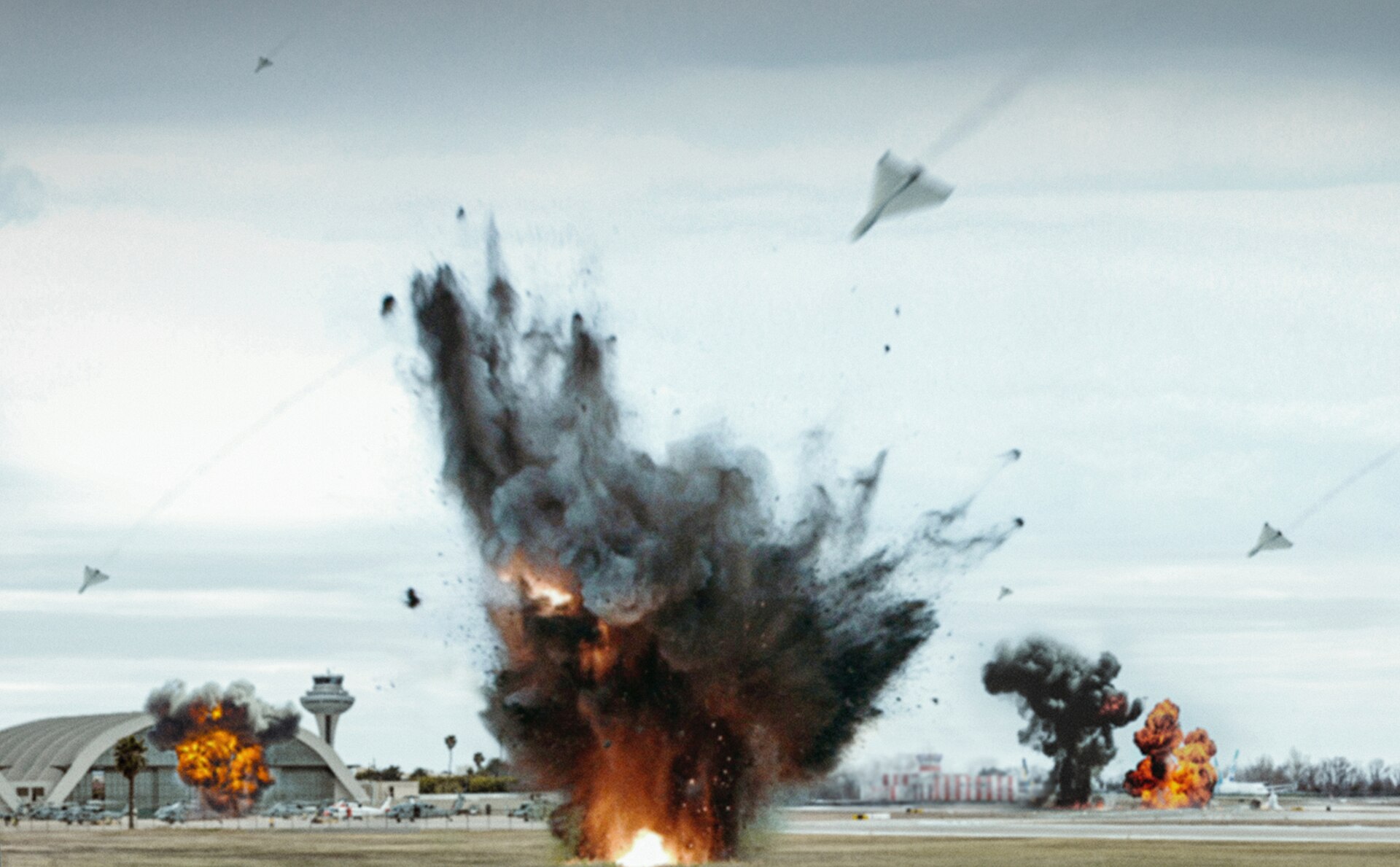
The cargo vessel struck twenty-three nautical miles northeast of Doha was outbound from Abu Dhabi. The fire was contained, no one died, and the ship limped into Mesaieed under its own power. Read on a casualty ledger, the strike looks like a failure. Read as signalling, it is exact. Doha and Abu Dhabi were named together in a single Iranian drone’s flight path, on the same morning Kuwait’s army was admitting that more drones had crossed into Kuwaiti airspace at dawn. Three GCC states, three intrusions, one Sunday.
The Stimson Center’s reading of Iran’s Gulf campaign is that damage to GCC infrastructure “is intended to put pressure on them, spread the cost of the war and expose the limits of US capabilities and will.” The Small Wars Journal analysis published on March 30 went further, framing operations across the IRGC’s “Epic Fury” and “Roaring Lion” campaigns as “elements of a unified coercive strategy” combining military degradation, economic threat, and leadership pressure “without requiring occupation.”
The most useful single quote on Tehran’s negotiating mindset arrived in late April, from an E-International Relations piece that read the regime’s calculus through Iranian sources: “Iran has entered renewed negotiations with Washington convinced that only the perception that it is ready to fight — not to make concessions — can produce a durable diplomatic outcome.” May 10 is that conviction in physical form.
IRGC Aerospace Force missiles and drones have locked onto American targets in the region and the enemy aggressor’s ships. We are awaiting the order to fire.
IRGC Aerospace Force statement, May 10, 2026 (via Islam Times, Tribune India)
The statement carries weight beyond its words because the IRGC Aerospace Force is the branch that controls Iran’s medium-range ballistic missiles and the bulk of its long-range drone fleet. When that command says it is “awaiting the order to fire,” it is announcing a posture that is technically passive — no shots authorised — and operationally one button away. It is the same firebreak Iran has used since 1979: the foreign ministry speaks; the IRGC waits. The IRGC’s “missiles locked” declaration is aimed at Tehran, not Washington, in the sense that its first audience is the regime’s own constituency — the bazaar, the seminaries, the families of the Aerospace Force martyrs — telling them that the men with the launchers have not surrendered to the men with the briefcases.
The authorization ceiling is not a malfunction — it is the weapon
Western analysts have spent six weeks calling Iran’s foreign-ministry-versus-IRGC gap an “authorization ceiling,” as if it were a defect in the negotiating apparatus. It is not a defect. It is the architecture. Under Article 110 of the Iranian constitution, the president has zero direct authority over the IRGC. Operational decisions route from Vahidi as IRGC commander, through Khatam al-Anbiya’s commander Abdollahi, into the Supreme National Security Council under secretary Mohammad Bagher Zolghadr, and only then to Khamenei for ratification.
Khamenei has not been seen in public for more than forty-four days. Mojtaba Khamenei, his son and informal regent, has issued only audio communications. The ratification step at the top of the chain has been functionally suspended since late March, which means the SNSC and the IRGC senior command have been operating without constitutional override during the most consequential diplomatic month of the war.
The April 14 episode established this firebreak as deliberate operating procedure. After the Islamabad round, Zolghadr filed a report to the IRGC complaining that Foreign Minister Araghchi had “deviated from the delegation’s mandate.” Tehran walked Araghchi back from Pakistan two days later. The leak of the Zolghadr complaint — published by Iran International on April 14 — was not a slip. It was a memorandum to every future foreign minister and every future Western interlocutor that the diplomat in the room is not the man with the authority to sign.
Iranian president Masoud Pezeshkian publicly named Vahidi and Abdollahi as the men obstructing the ceasefire on April 4, with one Iranian outlet reporting his words as a direct accusation. He did this because under Article 110 he has no other tool. When Pezeshkian went to Mojtaba Khamenei to try to stop the IRGC, he came out carrying their demands — Mojtaba’s office reportedly listened, then handed the president a list of operational red lines authored by the same generals he had gone in to constrain. The presidency is not weak by accident. It is weak by design. That same architecture explains why, at Muscat Round 4, Iran could table a regional enrichment consortium proposal — a sovereignty trap for Arab states — without any visible authorization from the presidency: the proposal was authored above Araghchi’s level, and below Pezeshkian’s reach.
This matters for the May 10 framework because it tells Washington something specific about what an MOU signed by Araghchi would actually obligate. The text would bind the foreign ministry. It would not bind the Aerospace Force, the Navy, the Quds Force, or Khatam al-Anbiya. The Tanker War in the 1980s ran the same way — Rafsanjani’s diplomats spoke to the Reagan administration through Swiss channels while IRGC fast boats mined the Persian Gulf. The two tracks were not failures of coordination. They were Iran’s coercive offer.
Ahmad Vahidi, the current IRGC commander, faces a personal incentive structure that reinforces the institutional one. He is on an INTERPOL red notice for the 1994 AMIA bombing in Buenos Aires. Western analysts who have profiled him say plainly that he “is not going to keep power if he’s seen as weakening in any way in negotiations with the U.S.” Any Iranian deal that constrains Vahidi’s force structure costs Vahidi personally. May 10 is the man’s career resisting the diplomats’ best efforts.
The structural durability of this gap is what Washington’s MOU draft refused to engage with. Iran’s counter-proposal addresses it directly: by sequencing nuclear talks behind Hormuz, Tehran is telling Washington that the only deal Vahidi can survive is one in which the IRGC’s existing operational footprint becomes the negotiated baseline. Washington’s apparent willingness to consider a Hormuz-first sequencing hands the IRGC a structural veto over the nuclear track, because once Hormuz authority is codified, the men who control Hormuz become parties to every subsequent step.
Qatar’s paradox: mediator, host, and target on the same Sunday
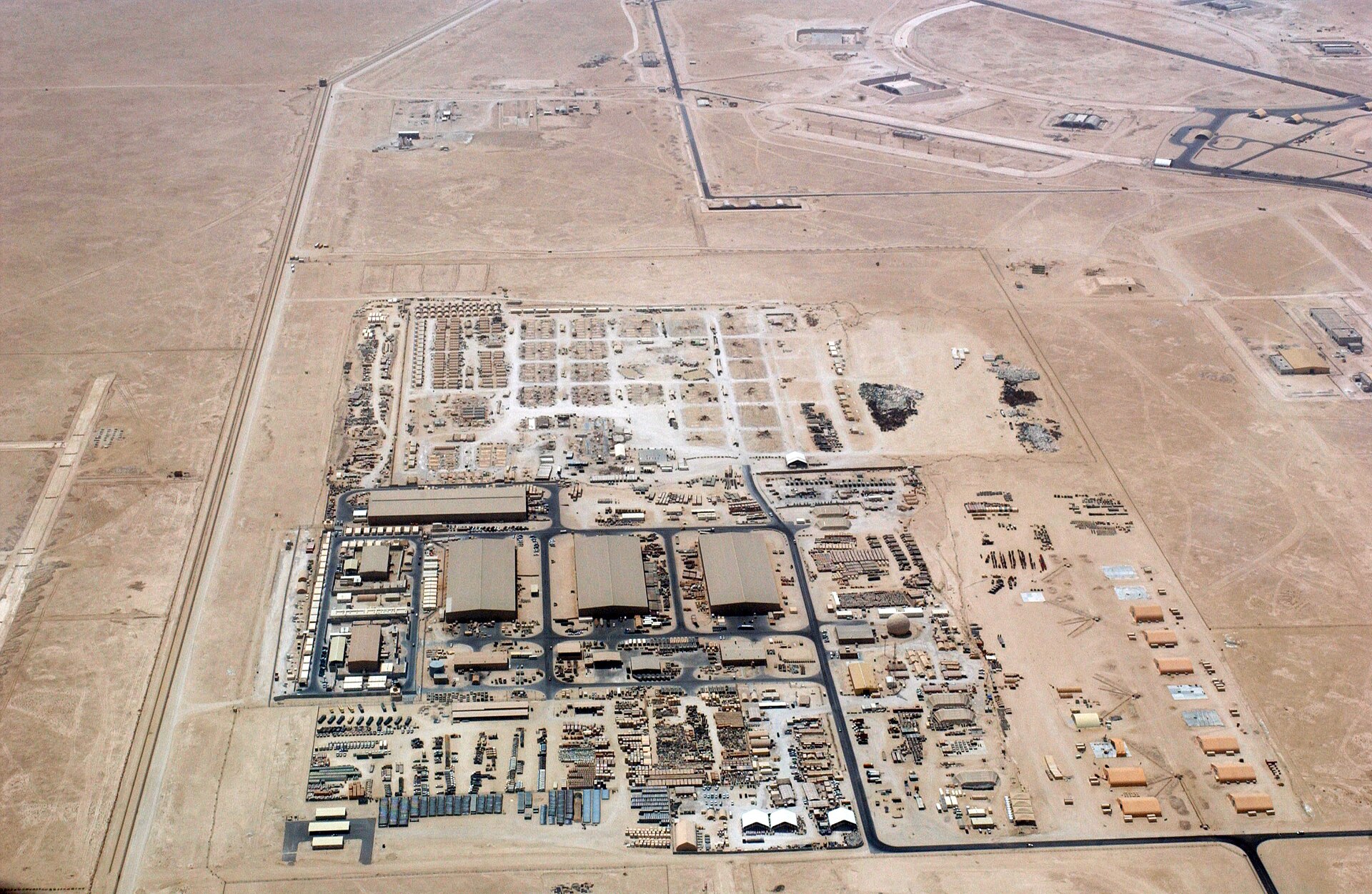
Al Udeid Air Base sits twenty miles southwest of Doha and houses approximately ten thousand US troops alongside coalition personnel from seventeen partner nations. It is the forward headquarters of US Central Command, the home of the Combined Air Operations Center that directs every air operation from the Levant to the Hindu Kush, and the operating base of the 379th Air Expeditionary Wing. In January, CENTCOM activated the Middle Eastern Air Defense — Combined Defense Operations Cell, the MEAD-CDOC, at Al Udeid. The cell is supposed to be the interception node for exactly the kind of drone-and-missile cocktail Iran fired on May 10.
Qatar has spent two decades selling Washington and Tehran a single proposition: that hosting the largest US military base in the Middle East is compatible with mediating between the United States and the region’s hardest revisionist regimes. The Doha back-channel has carried messages between Washington and Hamas, between Washington and the Taliban, between Washington and the Houthis, and — most consequentially this year — between Washington and the Islamic Republic. Until May 10, the implicit Iranian acknowledgement of Qatar’s mediator role was that Iran did not target Qatar.
That implicit deal is now publicly broken. Between February 28 and March 18 alone, IISS counted 203 missiles and 87 drones fired at Qatari soil, plus two fighter jets attempting to penetrate Qatari airspace. The first eighteen days of the war took out an estimated seventeen percent of Qatar’s LNG export capacity, a loss the International Institute for Strategic Studies estimated could take three to five years to rebuild. The Sunday drone strike on the cargo vessel northeast of Doha resumed Qatari targeting after a ceasefire pause that was supposed to hold through Trump’s visit.
| Host state | US personnel | Key installations | Documented Iranian strikes (Feb 28 onward) |
|---|---|---|---|
| Qatar | ~10,000 | Al Udeid Air Base, CAOC, MEAD-CDOC, 379th AEW, CENTCOM forward HQ | 203 missiles, 87 drones, 2 fighter incursions (Feb 28–Mar 18); cargo vessel struck 23 nm NE of Doha May 10 |
| Kuwait | ~13,500 | Camp Arifjan (ARCENT fwd), Ali Al Salem Air Base (386th AEW), Camp Buehring, Shuaiba Port command node | 6 US Army Reserve KIA at Shuaiba (Mar 1); 15 wounded at Ali Al Salem (Apr 6); airspace incursions May 10 |
| UAE | ~3,500 | Al Dhafra Air Base (380th AEW, F-35A and F-22 deployments) | Multiple ballistic and drone strikes since Feb 28; 2 drones shot down May 10, UAE formally blamed Iran |
| Bahrain | ~9,000 | NSA Bahrain, US Fifth Fleet HQ, NAVCENT | SATCOM terminal complex destroyed Feb 28; airspace closed since Feb 28; reduced surface fleet presence |
Doha’s structural paradox is sharper than any of the other Gulf hosts because the operational logic of the May 10 strike was specifically to puncture the mediator-shield assumption. Iran is telling Qatar — and through Qatar, telling the State Department, which has spent a year routing its most sensitive Iran traffic through Sheikh Mohammed bin Abdulrahman — that hosting CENTCOM’s air war and brokering peace are no longer separable. The price of one is exposure to the other.
The Qatari response, so far, has been technical: the energy ministry confirmed Mesaieed Port operations continued; the foreign ministry called the strike “an unacceptable violation of Qatari sovereignty.” There has been no Qatari attribution to Iran. That silence is itself a data point. Doha is preserving the mediator role at the cost of public clarity, which is exactly the calculation Tehran wanted Doha to be forced to make.
What does the May 10 pincer mean for Trump’s Riyadh visit in 72 hours?
Trump arrives in Saudi Arabia on May 13 for a US–Saudi investment forum, followed by a GCC summit on May 14. The May 10 strike pattern is timed to shape his negotiating posture before he lands: Gulf hosts are now under fresh attack, the MOU is publicly a “wish-list,” and Iran’s IRGC is “awaiting the order” to escalate. Tehran is buying domestic political pressure on Trump from the people sitting next to him at the summit table.
The Riyadh agenda was already loaded. The US–Saudi Investment Forum opens Tuesday with BlackRock’s Larry Fink, Palantir, IBM, and Alphabet leading the corporate delegation. The headline numbers Riyadh has been preparing — a defence procurement package, a civil-nuclear cooperation framework, an AI partnership shell that may or may not include Section 1245 export controls on advanced chips — are all calibrated to produce a Trump second-term Gulf legacy on a Saudi schedule. The Saudis wrote the script before Trump’s plane took off.
Inside that script is a hard ask. According to US officials briefing the Times of Israel, Saudi Arabia and the UAE have been privately urging Trump to continue the war until Iran is “decisively defeated.” The Gulf calculus is that a partial settlement preserves the IRGC’s regional infrastructure — Hezbollah residual missiles, Houthi maritime reach, Quds Force networks in Iraq and Syria — and that anything short of regime collapse leaves the same security problem on the same coastline three years from now. Mohammed bin Salman in particular has reportedly told American interlocutors that a deal Tehran can survive is a deal Riyadh cannot.
The May 10 strikes complicate that argument on every axis. Saudi Arabia has roughly four hundred PAC-3 MSE interceptors left in country, by Western analyst estimates — about fourteen percent of the pre-war inventory. The Pentagon is already rationing Patriot rounds across Saudi Arabia, the UAE, and Qatar. The Iranian message of May 10 is that Iran can keep generating threats that consume interceptors faster than the United States can replace them, and that the four hundred remaining rounds have to defend Hajj pilgrims arriving in Saudi Arabia for the Day of Arafah on May 26 — thirty thousand of them Iranian — as well as the bases.
Qatar, meanwhile, has economic incentives running the opposite direction from Riyadh. Seventeen percent of its LNG capacity is offline. Three to five years of rebuild time is three to five fiscal years of foregone revenue at gas prices that have already absorbed Russia’s withdrawal from European markets. Doha will be the GCC capital pressing hardest for the deal Saudi Arabia is privately urging Trump to reject. Kuwait — six American dead at Shuaiba on March 1, fifteen wounded at Ali Al Salem on April 6, and unspecified May 10 intrusions still being investigated — will be somewhere in between, depending on whether the Kuwaiti emir believes the next strike kills more Americans on his soil.
Trump arrives, then, into a fractured GCC. His public posture on May 10 — calling Iran’s MOU response “playing games” and warning Tehran “will laugh no longer” — was tabled with Riyadh’s preferred line. But the Iranian counter-text on his desk is not a yes or a no, and the men who escorted his Navy through Hormuz last week are the same men whose smokestacks Iran has been promising to put on the bottom. The arithmetic at the summit will be brutal: if Trump endorses Saudi Arabia’s preferred prosecution-until-collapse posture, Iran’s next move is not a counter-offer; it is the order to fire that the IRGC Aerospace Force has been openly waiting for.
Inside the war’s seventy-second day, that is the conversation Riyadh wants Trump to have with Mohammed bin Salman, and the conversation Tehran wants Mohammed bin Salman to have with Trump.
The Tanker War precedent — Iran has fought this fight before
Iran’s posture on May 10 is not improvisation. It is doctrine refined in the Persian Gulf between 1984 and 1988, the years the Iran–Iraq War spilled onto the water and onto the back-channels. The Tanker War established the modern Iranian template: maximum maritime pressure conducted by the IRGC’s fast-attack arm, conducted simultaneously with diplomatic contact through European and Asian intermediaries, with the explicit understanding that the contact and the pressure are not separable tracks.
Operation Praying Mantis on April 18, 1988 — the day the US Navy sank or destroyed half the operational Iranian navy in a single afternoon, including the frigate Sahand — followed roughly eighteen months of covert US–Iran communication, much of it routed through Oman and Switzerland. The contact did not stop after Praying Mantis. The contact intensified. Three months later, in July 1988, Khomeini accepted UN Security Council Resolution 598 in a speech he called “drinking the poisoned chalice.” Iran took the ceasefire from a position of demonstrable military weakness, not strategic patience. WION News, summarising the period this spring, observed plainly that “sea clashes and peace talks are not mutually exclusive — they may simply be two sides of the same negotiation.”
The May 10 architecture is the same template, with two structural differences that favour Iran. The first is the nuclear program. In 1988 Iran had no enrichment capacity and no leverage beyond its conventional reach. In 2026 it has 440.9 kilograms of 60-percent-enriched uranium and an IR-6 cascade that Western analysts estimate at twenty-five days per device from breakout. The Hormuz-first sequencing in the MOU response converts that stockpile from a negotiating chip into a sequencing trap: the United States cannot get to the chip without first conceding Hormuz.
The second difference is the multipolar mediator. In 1988 Iran’s diplomatic interlocutors with Washington were Switzerland and Oman, both small neutral states with no enforcement power. In 2026 the mediator is Pakistan — a nuclear-armed regional power, formal Saudi security partner under the September 2025 Strategic Mutual Defence Agreement, and Iran’s protecting power in the United States since 1992. The IRGC’s maritime rules around the Strait are designed to outlast any MOU precisely because the next round of negotiations runs through an Islamabad whose army chief has reasons to want the talks to continue and ceiling-level reasons not to push Tehran past it.
What the Tanker War precedent tells the Trump White House — and what State Department’s Iran desk has reportedly been arguing internally for two months — is that Iranian compellence campaigns generally end when the cost-curve crosses an Iranian internal threshold, not when an American deadline arrives. Khomeini swallowed the poison in 1988 because the IRGC’s fast-boat fleet had been halved, the Iranian economy was in collapse, and the war had become a generational drain. Iran in May 2026 has not reached any of those three thresholds. The fast-boat fleet has been augmented since 2022 with Chinese-derived drone and missile systems. The economy is in 180-percent inflation but has not yet collapsed in the way Iranian Central Bank memoranda were predicting in early April. The war is two and a half months old.
Until those thresholds move, the MOU response and the drone strikes will continue to arrive on the same day, signed by the same regime, addressed to the same Washington.
Three days from Riyadh, the timeline is the message
The cargo ship that took the drone hit northeast of Doha on Sunday morning was carrying chemicals from Abu Dhabi to Mesaieed. It will be repaired. The fifteen Americans wounded at Ali Al Salem on April 6 are mostly back on duty. The six soldiers killed at Shuaiba on March 1 are not. CENTCOM’s blockade has redirected fifty-seven commercial vessels and disabled four (CENTCOM, May 8), the most recent two — Sea Star III and Sevda — taken out by 500-pound laser-guided bombs dropped by F/A-18 Super Hornets off the USS George H.W. Bush into the ships’ smokestacks. Iran’s response to that operation, on May 7, was a sustained IRGC barrage against the USS Truxtun, the USS Rafael Peralta, and the USS Mason (Stars and Stripes / CENTCOM, May 7). None of them was hit.
Trump’s plane lands in Riyadh in seventy-two hours. The Iranian text in his briefing book says nuclear talks come after Hormuz. The IRGC Aerospace Force statement in his intelligence summary says missiles are locked. The Saudi crown prince across the table will want him to keep fighting; the Qatari emir on the periphery will want him to take the deal. Inside that summit, the only person whose schedule was already set when the May 10 drones flew was Iran’s. The pincer is the negotiating position. The GCC’s formal institutional response to the May 10 strikes — Al-Budaiwi’s seventh consecutive use of “treacherous” with Article 51 deliberately stripped — confirms that the body conditioned to absorb Iranian strikes has reached its rhetorical ceiling.
Frequently asked questions
Did Iran formally claim responsibility for the May 10 drone strikes on Qatar, Kuwait, and the UAE?
No. Iran has not officially claimed any of the May 10 attacks, and none of the three GCC governments has issued a final attribution document. The UAE was the most direct, publicly blaming Iran. Qatar called the strike on the cargo vessel a “sovereignty violation” without naming an attacker. Kuwait’s army said only that drones were “dealt with in accordance with established procedures.” The pattern of non-attribution is consistent with Iranian deniability architecture going back to the 2019 Aramco strikes — the IRGC operates within an explicit doctrine of plausible deniability that lets the foreign ministry keep claiming a parallel diplomatic track.
How does Iran’s “thirty-day window” stage in the MOU response actually work?
The third stage of Iran’s counter-proposal opens a thirty-day negotiating window after the war ends and Hormuz is resolved. Inside that window, Iran proposes to discuss the broader regional file, including nuclear safeguards, sanctions architecture, and prisoner exchanges. The structural catch is that the window is contingent on Stage 1 and Stage 2 being completed first, which means the United States must concede ceasefire terms and Hormuz language before the window opens. If either prior stage fails, the window never opens, and the nuclear file remains where Foreign Minister Baghaei left it on April 30: “At this stage, we do not have nuclear negotiations.”
What is the MEAD-CDOC at Al Udeid and why does it matter for the Qatar strike?
The Middle Eastern Air Defense — Combined Defense Operations Cell was activated at Al Udeid Air Base in January 2026 as CENTCOM’s integrated air-and-missile-defence coordination hub for the entire region. It is the cell that fuses Patriot, THAAD, F-35 sensor, and naval Aegis data into a single interception picture across Qatar, Saudi Arabia, the UAE, Bahrain, Kuwait, and Iraq. Iran’s May 10 drone strike off Doha tested the MEAD-CDOC’s coverage of maritime approaches to Qatari ports — an area the cell was not optimised for in its January configuration. The drone reaching the cargo vessel suggests a gap CENTCOM will now have to close while continuing to defend land-side bases against the IRGC’s larger inventory.
How does Iran’s 12-article Hormuz sovereignty law tie into the MOU sequencing?
The bill currently advancing through the Iranian Majlis — sponsored by deputies Ahmadi and Rezayi Kouchi — would codify IRGC operational authority over the Strait of Hormuz in Iranian domestic statute. If passed before any negotiation outcome, the law would make any Iranian foreign minister’s concession on Hormuz transit constitutionally void. The timing is not accidental. By placing Hormuz as Stage 2 of the MOU framework and accelerating the sovereignty bill in parallel, Tehran is constructing a legal floor below which Araghchi cannot negotiate. The text on Trump’s desk is therefore a counter-offer whose ceiling is set in the Majlis, not the Foreign Ministry.
What happens if Trump refuses Iran’s three-stage framework at the GCC summit?
The IRGC Aerospace Force’s May 10 statement — “awaiting the order to fire” — is calibrated to that decision point. A Trump rejection at the May 14 GCC summit would remove the diplomatic cover Tehran has built since the April 8 ceasefire and authorise the SNSC and IRGC senior command to expand the target set beyond the constrained Sunday strikes. The compellence logic points toward a specific next tier: a saturation combination of drones and missiles against Al Udeid, Camp Arifjan, and Al Dhafra simultaneously, timed to consume the four hundred remaining PAC-3 MSE interceptors faster than Patriot rounds can be airlifted in. That scenario — not the constrained Sunday strikes — is what Trump has to absorb if he sides with Riyadh’s preferred prosecution path.
The drone and missile compellence on May 10 was not the only IRGC operation against GCC territory that day. Kuwait revealed on May 12 that four uniformed IRGC officers had physically infiltrated Bubiyan Island on May 1 — eleven days before Kuwait’s announcement, eight days before the May 9 Axios ceasefire report that coincided with the drone strikes. The compellence doctrine Iran ran on May 10 operates on two tracks simultaneously: a kinetic track that is publicly claimed and a clandestine track that is physically executed but never acknowledged. Bubiyan was the clandestine track made visible by Kuwaiti detention. Kuwait’s diplomatic response followed on May 13: a formal summons invoking Article 51, reserving the right to further action, and stopping precisely short of exercising it.