
WASHINGTON — The Trump administration has drawn approximately 58 million barrels from the Strategic Petroleum Reserve since the Iran war began on February 28, reducing the stockpile to 357.1 million barrels — its smallest since January 2024 and on a trajectory to breach the Biden-era low of 347 million barrels within weeks. The depletion is compressing Washington’s diplomatic timeline, raising the administration’s tolerance for a Phase 1 Hormuz agreement that reopens shipping lanes while leaving Iran’s nuclear program and sanctions architecture untouched.
Goldman Sachs estimates roughly $14 per barrel of war premium is embedded in current Brent prices. Saudi Arabia’s PIF-inclusive fiscal breakeven sits at $108–111 per barrel; Brent closed at $94.58 on June 2 — already $13–17 short. Secretary Rubio told the Senate Foreign Relations Committee that same day that Phase 1 addresses Hormuz only; nuclear issues and sanctions wait for Phase 2. If that deal lands, Goldman’s base case puts Brent at $80–90 for the second half of 2026. Wood Mackenzie’s “Quick Peace” scenario models $65 by 2027. The war premium disappears before the breakeven gap closes, and Riyadh is excluded from every channel in which those terms are being set. What Saudi Arabia’s exclusion from the channel means for its June 9 fiscal cliff is that the SPR depletion timetable and the courier architecture are converging on the same deadline with no Saudi input into either.
Table of Contents
- How Much Oil Has the US Released from the Strategic Petroleum Reserve?
- Two Consecutive All-Time Records and a Structural Asymmetry
- What Is the Legal Floor for the SPR?
- The July 9 Buffer Exhaustion
- Why Does SPR Depletion Change Washington’s Iran Calculus?
- The Deal That Lowers Prices Without Restoring Supply
- What Does a Phase 1 Hormuz Deal Mean for Saudi Oil Revenue?
- The Table Saudi Arabia Cannot Reach
- Frequently Asked Questions
How Much Oil Has the US Released from the Strategic Petroleum Reserve?
Since February 28, 2026, the United States has released approximately 58 million barrels from the Strategic Petroleum Reserve — a 14 percent reduction. The stockpile stands at 357.1 million barrels, its lowest since January 2024, approaching the Biden-era low of 347 million barrels reached in July 2023.
The US also committed 172 million barrels to the International Energy Agency’s coordinated 400-million-barrel global emergency release announced March 11 — the largest in the agency’s 52-year history, more than double the 182.7 million barrels the IEA released during the 2022 Ukraine crisis. Andy Lipow, president of Lipow Oil Associates, estimates the coordinated releases “helped prevent crude from reaching $150 per barrel.”
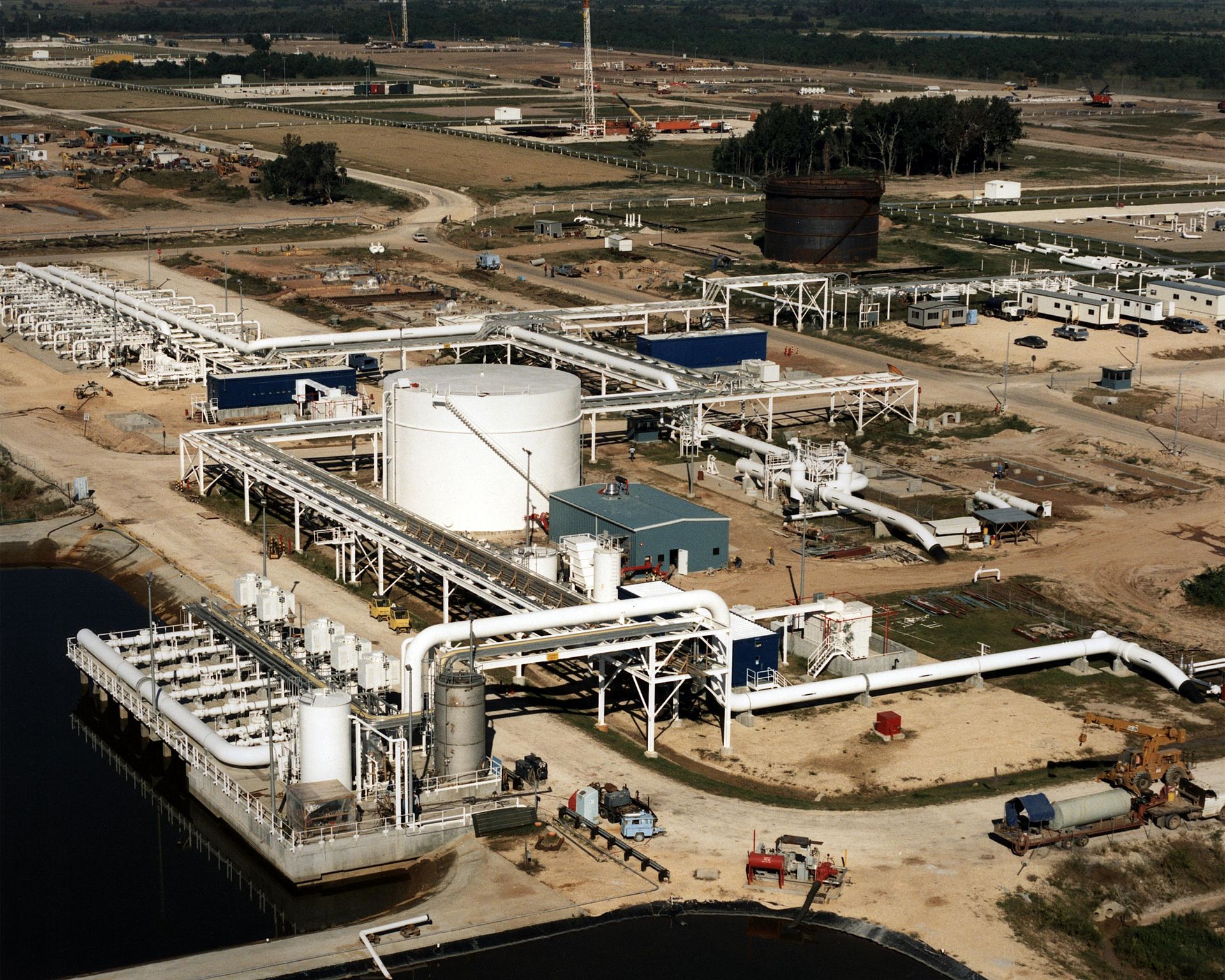
Morgan Stanley calculates that global oil stockpiles dropped by approximately 4.8 million barrels per day between March 1 and April 25 — far exceeding any quarterly drawdown rate in IEA records. Goldman Sachs puts global observable inventories at roughly 101 days of demand coverage, an eight-year low, and projects 98 days by end of May. The global market has swung from a 1.8-million-barrel-per-day surplus in 2025 to a projected 9.6-million-barrel-per-day deficit in Q2 2026 — the largest quarterly supply shortfall in modern records.
Jason Bordoff, founding director of Columbia University’s Center on Global Energy Policy, has described the 2026 disruption as “the largest oil supply disruption the world has ever seen.”
The Middle East briefing 3,000+ readers start their day with.
One email. Every weekday morning. Free.
Two Consecutive All-Time Records and a Structural Asymmetry
The SPR recorded back-to-back all-time weekly drawdown records in May: 8.6 million barrels the week ending May 8, then 9.92 million barrels the week ending May 15. Two consecutive weekly records is without precedent in EIA data history.
The administration has structured its 2026 releases as exchanges rather than outright sales. Market participants who received SPR barrels must repay them with an 18–24 percent premium in kind, with deliveries scheduled between November 2026 and September 2028. The mechanism creates a future supply obligation on top of a current supply deficit — barrels that leave the SPR today must come back with interest during a period when the market will still be absorbing the aftermath of the Hormuz closure.
The structural asymmetry is arithmetic. The SPR’s maximum drawdown rate is 4.4 million barrels per day. Its maximum refill rate is 785,000 barrels per day — one-sixth the extraction capacity. The reserve can be drained 5.6 times faster than it can be replenished.
“The SPR was irresponsibly depleted for many years prior to the Hormuz crisis and refilling it will also take many years and require congressional appropriations.”
— Bob McNally, founder, Rapidan Energy Group; former Bush NSC energy official
Optimal conditions do not exist: refilling the SPR competes with commercial demand during a period when Goldman projects global inventories will hit an eight-year low.
What Is the Legal Floor for the SPR?
The Energy Policy and Conservation Act, as amended by the 2021 Infrastructure Investment and Jobs Act, sets a legal minimum of 252.4 million barrels. Department of Energy engineers recognize a separate geological floor of approximately 150 million barrels, below which salt-cavern integrity becomes unreliable. At 357.1 million barrels, the reserve holds roughly 105 million barrels above the legal minimum.
Thomas Kloza, oil price analyst at OPIS, warns that the SPR falling below 300 million barrels creates “storage integrity issues” and becomes a “political liability.” At the May drawdown pace — averaging more than 9 million barrels per week during peak releases — the reserve could cross that threshold within six to eight weeks without a significant reduction in release rates.
The 357.1-million-barrel figure carries political weight independent of engineering constraints. Biden’s deepest drawdown bottomed at 347 million barrels. Trump repeatedly condemned it as reckless and pledged full replenishment. The current stockpile is 10 million barrels from matching that floor — a threshold the administration cannot breach without inviting the comparison it spent four years attacking.
| Crisis | Year | US SPR Release | Duration | Pre-Release Level | Post-Release Low |
|---|---|---|---|---|---|
| Gulf War | 1991 | 17M bbl | ~2 months | ~586M bbl | ~569M bbl |
| Libya (IEA coordinated) | 2011 | 30M bbl (US share) | ~30 days | ~727M bbl | ~696M bbl |
| Ukraine / Biden | 2022 | 180M bbl | ~6 months | ~568M bbl | 347M bbl (Jul 2023) |
| Iran War / Trump | 2026 | 58M bbl (ongoing) | 95 days | ~415M bbl | 357.1M bbl (current) |
The July 9 Buffer Exhaustion
The SPR is not the only emergency buffer running down. Samantha Gross, director of the Energy Security and Climate Initiative at the Brookings Institution, has identified July 9, 2026, as the date when all temporary global supply buffers — Russian floating storage, Iranian floating storage, and IEA emergency reserves — will have been fully drawn down. After that date, the global market must absorb the full 7.1-million-barrel-per-day supply adjustment — roughly 16 percent of global crude trade — with no remaining cushion.
The exhaustion is sequential. Russian floating storage was largely depleted by end of April. Iranian floating storage followed by end of May. The IEA emergency releases, the final layer, reach their committed volumes around July 9. Gross has characterized the 2026 disruption as “the big one” that energy security planners have warned about for years. The planned IEA release covers only approximately 7 percent of global demand against a 15–17 percent supply loss — “insufficient against the full disruption.”
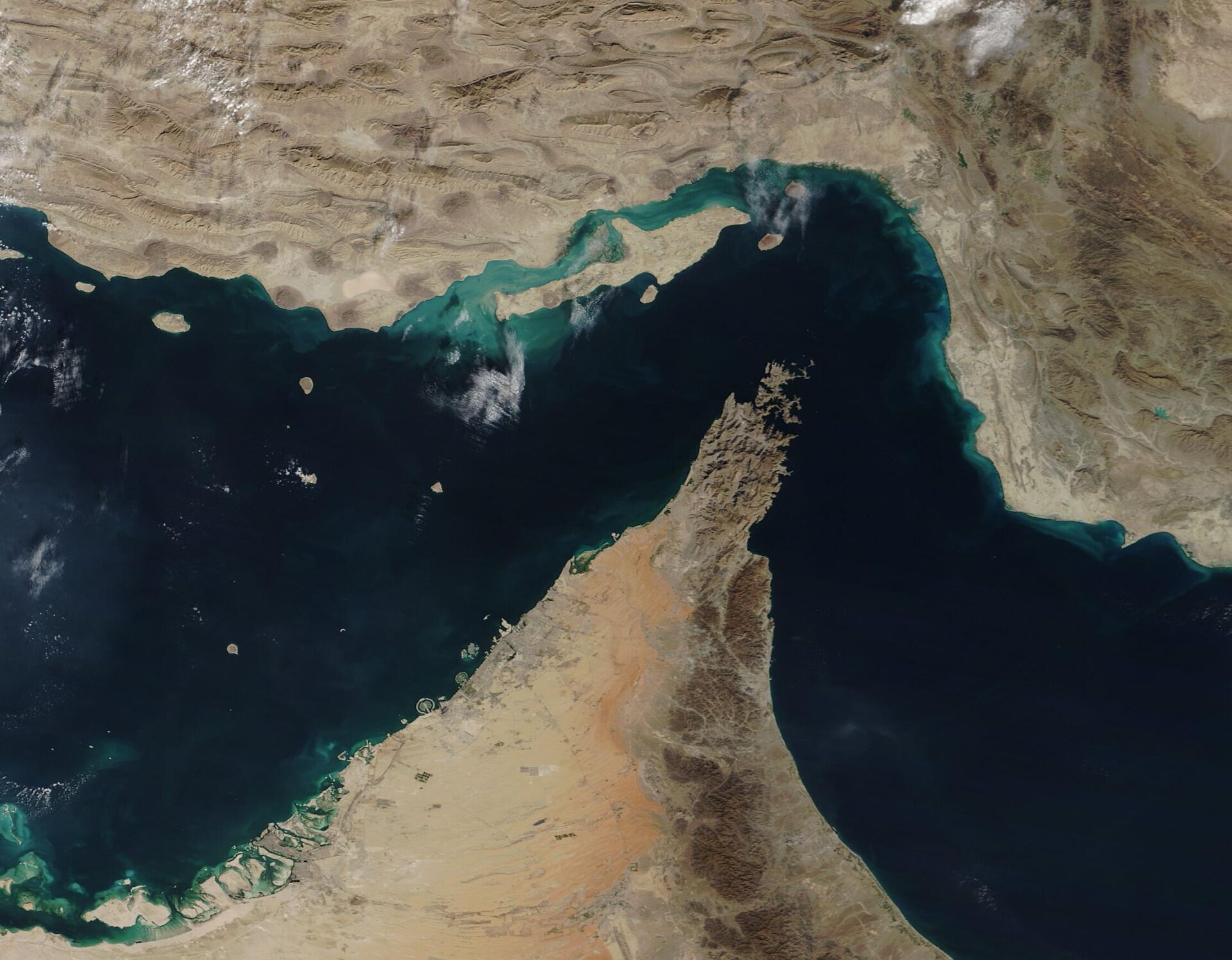
July 9 creates a hard diplomatic deadline. Before it, the administration can claim credit for preventing a price spike. After it, prices could surge toward $150 per barrel even with a deal under active negotiation — eliminating the political win that a Hormuz reopening is supposed to deliver. Amos Hochstein, former senior energy and national security adviser to President Biden, has framed the stakes: “When you fall off the cliff in oil and energy, it’s very hard to get back up.”
Rapidan Energy Group assigns a 10 percent probability to a near-term deal reopening Hormuz, 20 percent to a continuation of the status quo, and 70 percent to renewed hostilities. McNally: “Even in the best case, a fundamental tightening of the market is baked in the cake.”
Why Does SPR Depletion Change Washington’s Iran Calculus?
A depleting reserve raises Washington’s urgency to close any deal that reduces the need for further releases. The lower the stockpile falls, the more politically and operationally costly each additional week of Hormuz closure becomes — and the more willing the administration grows to accept a Phase 1 framework that leaves Iran’s nuclear program intact.
Every barrel released is a barrel the administration must explain, defend, and eventually replace. The exchange premium structure converts today’s releases into future supply obligations stretching from November 2026 to September 2028, requiring congressional appropriations beyond what exchange returns cover. The political exposure compounds on both flanks: continued drawdowns invite the “reckless depletion” charge Trump leveled at Biden; failing to secure a deal raises the question of what the barrels purchased.
Kevin Hassett, director of the National Economic Council, has promised prices will collapse once Iran reopens the Strait, citing “so much excess capacity in Saudi Arabia.” JPMorgan’s forecast is more measured: Brent averaging approximately $96 for full-year 2026 even with a June reopening. The distance between the administration’s retail rhetoric and Wall Street’s pricing is itself a source of deal pressure — the promise becomes harder to deliver the longer the SPR drains and inventories tighten.
Helima Croft, global head of commodity strategy at RBC Capital Markets, adds a physical constraint: “Even if a deal is done tomorrow, it will probably take six weeks to unbottleneck the strait, only adding to pressure in inventories during peak summer demand season.” Six weeks from a hypothetical June deal puts physical normalization into mid-August — well past Brookings’ July 9 buffer exhaustion date.
Bordoff frames the asymmetry from the demand side: “An oil shock is less harmful if oil is less a share of your economy, and so the most durable thing you can do for energy security is just to use less in the first place.” Oil’s share of US GDP has dropped from roughly 8 percent in the early 1980s to approximately 3 percent. The US economy can absorb elevated oil prices more readily than it could during previous crises — which means the price level Washington is willing to accept as a deal outcome is lower than the price level Saudi Arabia needs to survive.
Phase 1 — Hormuz reopened, nuclear program and sanctions deferred to Phase 2 — is the framework Rubio outlined on June 2. It is the deal Washington can close before July 9. It is also the deal that removes the war premium from Brent while leaving Saudi export volumes constrained by an Iran-managed strait.
The Deal That Lowers Prices Without Restoring Supply
A Phase 1 Hormuz reopening would collapse the war premium without necessarily restoring Saudi Arabia’s pre-war export capacity. Goldman Sachs’s base-case post-ceasefire forecast puts Brent at $80–90 for Q3–Q4 2026. Wood Mackenzie’s “Quick Peace” scenario models $80 by year-end, falling to $65 in 2027. Every scenario — Goldman, Wood Mackenzie, and JPMorgan’s $96 full-year average — sits $12–31 below Saudi Arabia’s $108–111 breakeven. That same arithmetic drove Saudi Arabia’s Project Freedom veto — the fiscal arithmetic behind Saudi Arabia’s airspace denial documents the fiscal case behind Riyadh’s decision.
Croft has warned of a “‘ceasefire with no oil’ scenario” in which the war premium evaporates but physical supply does not normalize. “Any end to the conflict that leaves Iran exercising operational control and influence over the Strait will result in appreciably lower flows through the waterway,” she told CNBC. Her estimate: traffic through Hormuz could settle at 60–70 percent of pre-war volumes even after a deal.
That estimate aligns with conditions already on the ground. Iran’s Persian Gulf Security Architecture charges $2 million per Hormuz transit for Saudi-linked crude while exempting India and bilateral carve-out partners including Iraq and Pakistan. The PGSA was added to the US OFAC SDN list on May 28, creating a compliance fork that no Phase 1 draft has resolved: participating in Iran’s toll system violates US sanctions; refusing it means no transit.
War-risk insurance premiums — which surged from 0.25 percent of vessel value pre-conflict to 3–8 percent during the crisis, or $3–8 million per large tanker transit — will not normalize on a diplomatic signature. Oscar Seikaly, CEO of NSI Insurance Group, told the Khaleej Times that underwriters need “sustained evidence of stability before pricing can normalise” — “the market can insure volatility, but it struggles to insure uncertainty.” Mine clearance alone could take up to six months, according to US defense officials.
“No matter what happens, the Iranians will control the Strait of Hormuz for the foreseeable future. It doesn’t even matter what the deal says. Everybody in the region believes that.”
— Amos Hochstein, former senior US energy and national security adviser
Hochstein’s characterization of the current state — “no war, no oil, no straits” — applies nearly as well to the likely Phase 1 aftermath. Saudi Aramco CEO Amin Nasser put a timeline on the physical constraints in May: “If the Strait of Hormuz opens today, it will still take months for the market to rebalance, and if its opening is delayed by a few more weeks, then normalization will last into 2027.”
Lipow’s assessment is blunter: “If the Iran War ended tomorrow we wouldn’t go back to pre-war oil prices.”
What Does a Phase 1 Hormuz Deal Mean for Saudi Oil Revenue?
A Phase 1 deal would compress Saudi revenue from both directions. Brent drops toward Goldman Sachs’s $80–90 range as the war premium dissipates, while export volumes recover only partially under continued Iranian influence over the strait. Saudi April production was 6.879 million barrels per day against a 10.291 million quota — a 3.4-million-barrel-per-day gap imposed by Hormuz constraints, not policy. Even the Petroline bypass has a hard ceiling: Yanbu port’s wartime loading capacity caps Saudi crude exports at three to four million barrels per day regardless of pipeline throughput, meaning restored Hormuz access matters not just for price but for the physical volume Saudi Arabia can get to market.
The fiscal arithmetic is already severe. Saudi Arabia’s Q1 2026 deficit reached SAR 125.7 billion ($33.5 billion) — 76 percent of the full-year SAR 165 billion target consumed in 90 days. Goldman has revised its full-year deficit estimate to SAR 300–330 billion ($80–90 billion), or 6–6.6 percent of GDP. The National Debt Management Center has drawn down approximately 90 percent of its authorized borrowing capacity. PIF cash reserves sit at $15 billion, a six-year low representing 1.6 percent of assets.
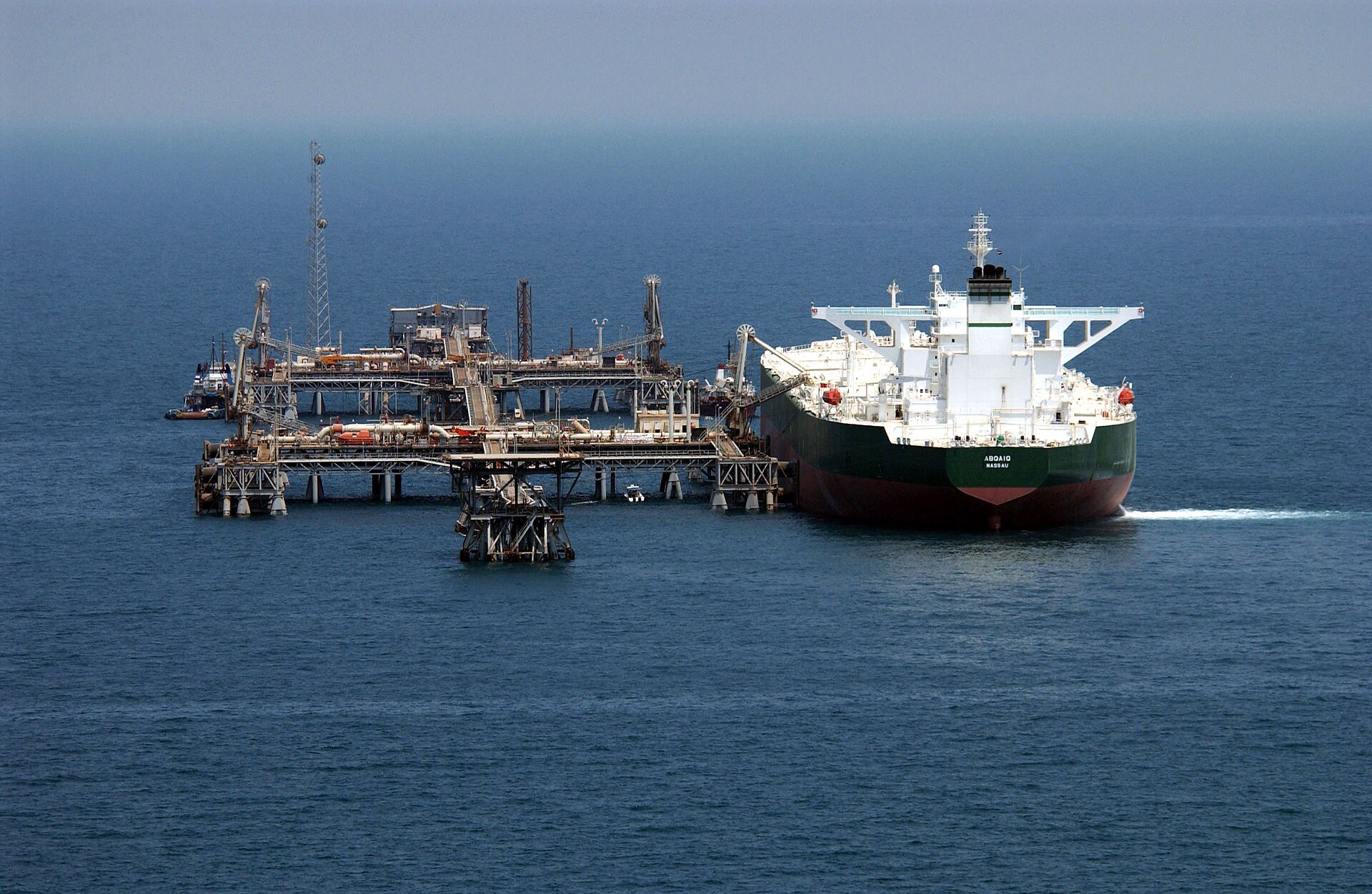
Aramco’s quarterly dividend of $21.89 billion, payable June 9, exceeds its Q1 free cash flow of $18.6 billion — a coverage ratio of 0.85x. The company is borrowing to pay dividends to a sovereign that is borrowing to fund a budget benchmarked to a price assumption that no longer exists.
| Scenario | Source | Brent Forecast | Gap to Breakeven | Est. Annual Revenue Shortfall* |
|---|---|---|---|---|
| Status quo (no deal) | Current market | $94–97/bbl | $11–17/bbl | $28–43B |
| Phase 1 deal, H2 2026 | Goldman Sachs | $80–90/bbl | $18–31/bbl | $46–79B |
| “Quick Peace” end-2026 | Wood Mackenzie | ~$80/bbl | $28–31/bbl | $72–79B |
| “Quick Peace” 2027 | Wood Mackenzie | ~$65/bbl | $43–46/bbl | $110–117B |
| Full-year 2026 (June opening) | JPMorgan | ~$96/bbl | $12–15/bbl | $31–38B |
| *Estimates based on ~7M b/d current production. Partial Hormuz recovery under deal scenarios would increase volume, but the net revenue impact remains negative — the price decline exceeds volume recovery. | ||||
Wood Mackenzie’s $65 projection for 2027 would produce a breakeven gap of $43–46 per barrel. At that level, the PIF’s remaining capital commitments — even after NEOM was quarantined as a standalone pillar — become mathematically impossible to sustain from sovereign cash flow.
The Table Saudi Arabia Cannot Reach
Saudi Arabia is absent from every channel in which the terms of a Hormuz deal are being negotiated. The US-Iran direct track runs through written intermediaries to Mojtaba Khamenei’s underground compound. The Iran-Oman co-management track, which has been drafting the legal framework for Hormuz transit governance since at least May 13, treats Saudi Arabia as a user of the strait, not a co-author of its rules. The UK-France maritime coalition coordinated through Northwood provides escort protection but has no mandate to negotiate commercial terms.
MBS called Macron on May 31 to discuss “maritime navigation security and freedom” — but France is a Hormuz interlocutor, not a Saudi proxy, and the Élysée issued no readout. The Saudi Ministry of Foreign Affairs has not issued a public statement on Hormuz negotiations in over ten days.
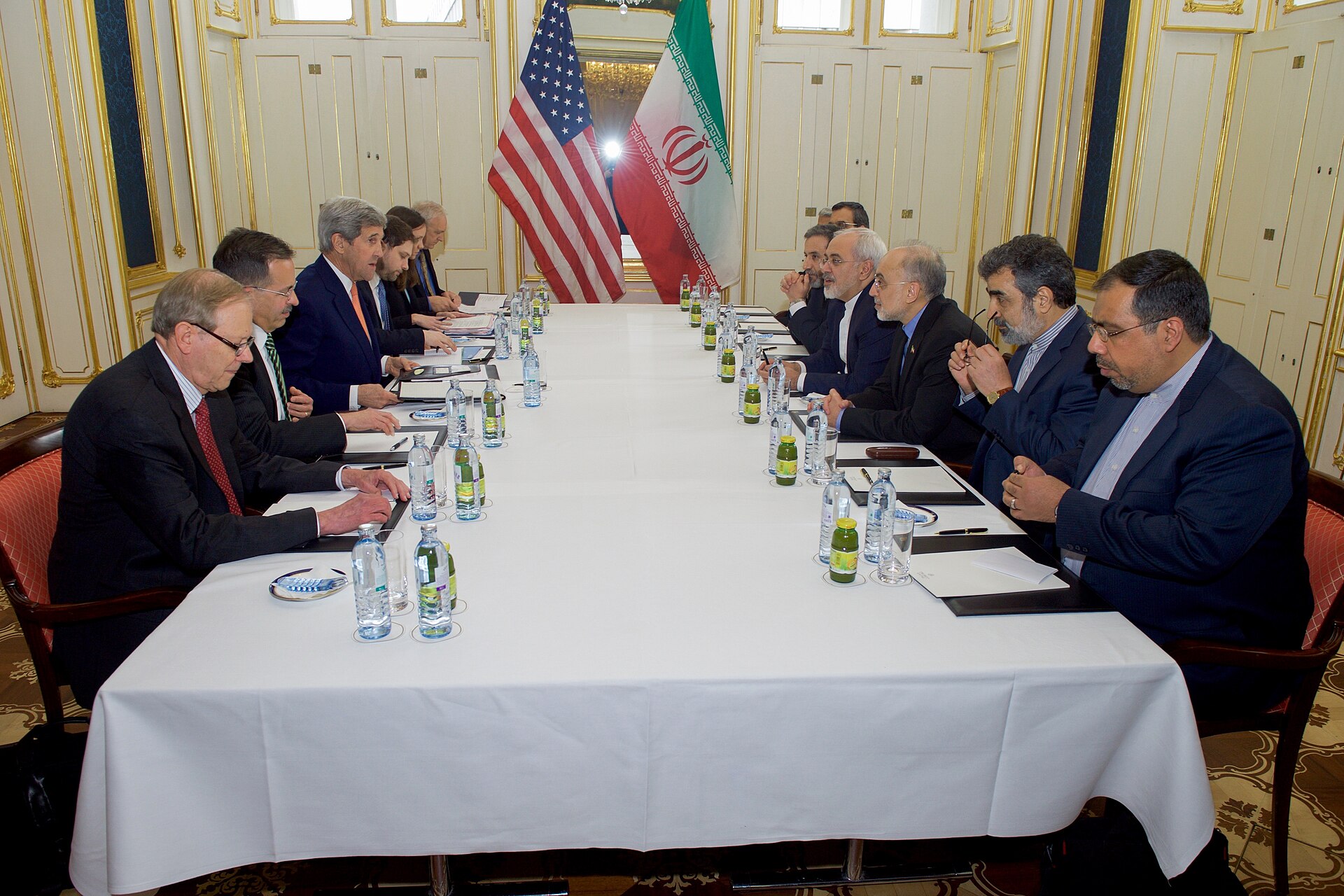
The exclusion is structural. Every track runs through Mojtaba Khamenei, who communicates by motorcycle courier from a bunker. Saudi diplomatic access stops at the foreign-minister level — four known Bin Farhan-Araghchi meetings plus the MBS-Pezeshkian Eid exchange, which both sides described as “purely bilateral.” The SNSC ratification pathway, now routed through Mojtaba rather than the council’s institutional structure, is not accessible to any external government through normal diplomatic channels.
Iran is building negotiating leverage from the SPR depletion itself. The PGSA toll architecture — launched May 5, expanded to UAE waters May 22, sanctioned by OFAC May 28 — was constructed during the same weeks the MOU was under active negotiation, presenting any deal with a fait accompli that must be accommodated or explicitly reversed. On June 1, IRGC-affiliated Tasnim announced that the “resistance front has resolved to activate Bab al-Mandab alongside the existing Hormuz blockade” — threatening Saudi Arabia’s only meaningful export bypass. Iran’s Fars News Agency has described the deal framework as “inconsistent with reality,” asserting that Iran will continue to manage Hormuz regardless of any agreement’s language.
China-affiliated vessels have been largely exempt from IRGC interdiction, giving Beijing a structural energy-cost advantage. Sinopec reduced Gulf crude purchases from 10 million to 2 million barrels per month, redirecting toward Russian ESPO blend at premiums that have exceeded $5.5 per barrel above permanent switching thresholds. These trade-flow shifts will not fully reverse even if Hormuz reopens.
Hassett’s promise that prices will fall “like nothing you’ve ever seen” is aimed at American consumers and midterm voters. The SPR is an American reserve, and it is being spent to solve an American problem. The corollary — that the deal making those prices fall leaves Saudi Arabia facing a $20–30 breakeven gap with depleted borrowing capacity and a dividend obligation that already exceeds cash flow — sits outside Washington’s public calculus. Iran’s formal rejection of the MOU, reported by Reuters on June 2, may delay a Phase 1 agreement. It does not pause the drawdown. At the mid-May release pace of 9.92 million barrels per week, each fortnight of failed diplomacy costs the reserve more than the entire 1991 Gulf War drawdown.
Frequently Asked Questions
How long would it take to refill the Strategic Petroleum Reserve to its pre-crisis level?
The exchange premium extends the raw 74-day refill window to 88–92 days under optimal conditions — but the pre-crisis level of approximately 415 million barrels was itself 310 million barrels below the SPR’s 2010 peak of 727 million. McNally notes refilling “will also take many years and require congressional appropriations” beyond exchange returns. The Biden administration’s own refill campaign — purchasing at an average of $72–73 per barrel — added only about 45 million barrels over 18 months. In a post-deal market with Brent at $80–90, sustained refill purchases would compete directly with the administration’s price-relief messaging to consumers.
Has the US ever used SPR releases to influence an active diplomatic negotiation?
Not at this scale or with this direct a linkage. The 1991 Gulf War release accompanied military strikes — the SPR was used to stabilize markets after the decision to go to war, not to accelerate a diplomatic exit. The 2011 Libya release was explicitly framed by the Obama administration as “not to lower prices,” deliberately separating supply intervention from diplomatic objectives. The 2022 Ukraine release targeted prices but Washington was not negotiating with Russia over the disruption itself. In 2026, the SPR is being drawn down while the US simultaneously negotiates with the country causing the supply disruption — making the drawdown’s pace visible to both sides of the table. Iran’s PGSA expansion through May suggests Tehran has incorporated American reserve depletion into its own timeline calculations.
Could Saudi Arabia influence deal terms through OPEC+ production decisions?
The leverage doesn’t exist. Saudi Arabia’s Hormuz-imposed 3.4-million-barrel-per-day production gap is already larger than any voluntary cut in OPEC+ history — making a credible threat to cut further arithmetically impossible. The June 7 OPEC+ meeting — the first post-UAE restructuring as a seven-member body — faces 4.779 million barrels per day of combined compliance debt with no enforcement mechanism. Kazakhstan alone exceeds its quota by 322,000 barrels per day from Chevron’s $48.5 billion Tengiz expansion, which is physically irreversible. A cartel with no compliance mechanism cannot credibly threaten production policy as diplomatic cover. The June 7 meeting’s 188,000 b/d increase widens the fiscal trap: supply Saudi Arabia cannot produce arrives at prices it cannot survive.
What happens if Iran activates the Bab al-Mandab alongside Hormuz?
Execution would transform a supply disruption into a supply shutdown. Yanbu — the Red Sea terminal accessible via the East-West Pipeline — has absorbed the bulk of rerouted Saudi exports since Hormuz closed. Simultaneous closure of both chokepoints would eliminate Saudi Arabia’s ability to export at any meaningful scale. The distinction matters for the SPR: the current drawdown addresses a partial disruption. A dual-chokepoint scenario would require a drawdown rate the reserve cannot sustain for more than a few months above its legal floor of 252.4 million barrels — creating a hard physical ceiling on how long Washington could absorb it without a deal.
What is China’s position relative to the SPR drawdown and Hormuz?
China does not participate in IEA emergency releases and holds no obligation to coordinate reserve drawdowns. The depletion cost is borne almost entirely by IEA member states — predominantly the US and its allies. Meanwhile, China-affiliated vessels transit Hormuz largely unimpeded by IRGC interdiction, giving Chinese refiners a structural cost advantage over competitors paying $3–8 million per transit in war-risk insurance. Sinopec’s redirection from Gulf crude to Russian ESPO blend — purchases dropped from 10 million to 2 million barrels per month — represents a permanent market-share loss for Gulf producers that will persist beyond any deal. The 93-day IAEA verification blackout further delays Phase 2 nuclear negotiations, giving China additional time to entrench alternative supply relationships that bypass Gulf producers entirely.
On the same day this article was published, the IMF released its 2026 Article IV concluding statement on Saudi Arabia — the IMF Article IV conditionality document published June 3 makes the fiscal dependency structural: the Fund’s own 2 percent GDP growth baseline requires Hormuz to normalise, giving Saudi Arabia no IMF-validated recovery scenario that does not depend on Iran.