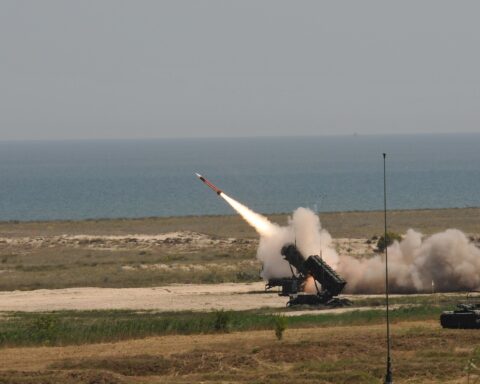
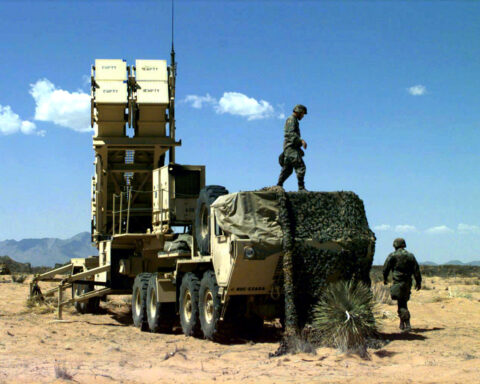
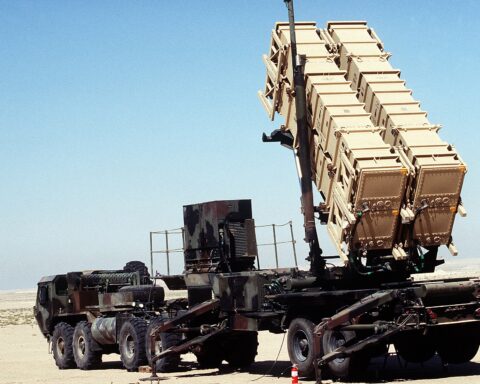
RIYADH — Saudi-led coalition spokesman Maj. Gen. Turki al-Maliki announced on Friday, November 6, that air defences had intercepted and destroyed a drone over the Riyadh region, in the latest unattributed intercept announcement from above the Saudi capital. His statement on X gave no launcher, no launch direction, no intended target, and no drone type — only that debris had fallen in a designated area and that no injuries were reported, according to Anadolu Agency and the Global Arab Network.
The announcement came hours after the same coalition had explicitly named the Houthi group as the source of two ballistic missiles intercepted over the southern province of Najran, according to Bernama and Anadolu Agency — yet in the Riyadh statement, al-Maliki said nothing about who had sent the drone. On the same day, Qatar formally submitted a two-stage, 48-hour de-escalation plan to the United States and Iran that neither side had accepted by Friday evening, according to Investing.com and Streamlinefeed, adding a diplomatic dimension to the coalition’s conspicuous silence about the origins of a drone that reached airspace above the Saudi capital.
The House of Saud Daily Briefing
Saudi Arabia's news in 3 minutes, every morning. Free. See today's issue
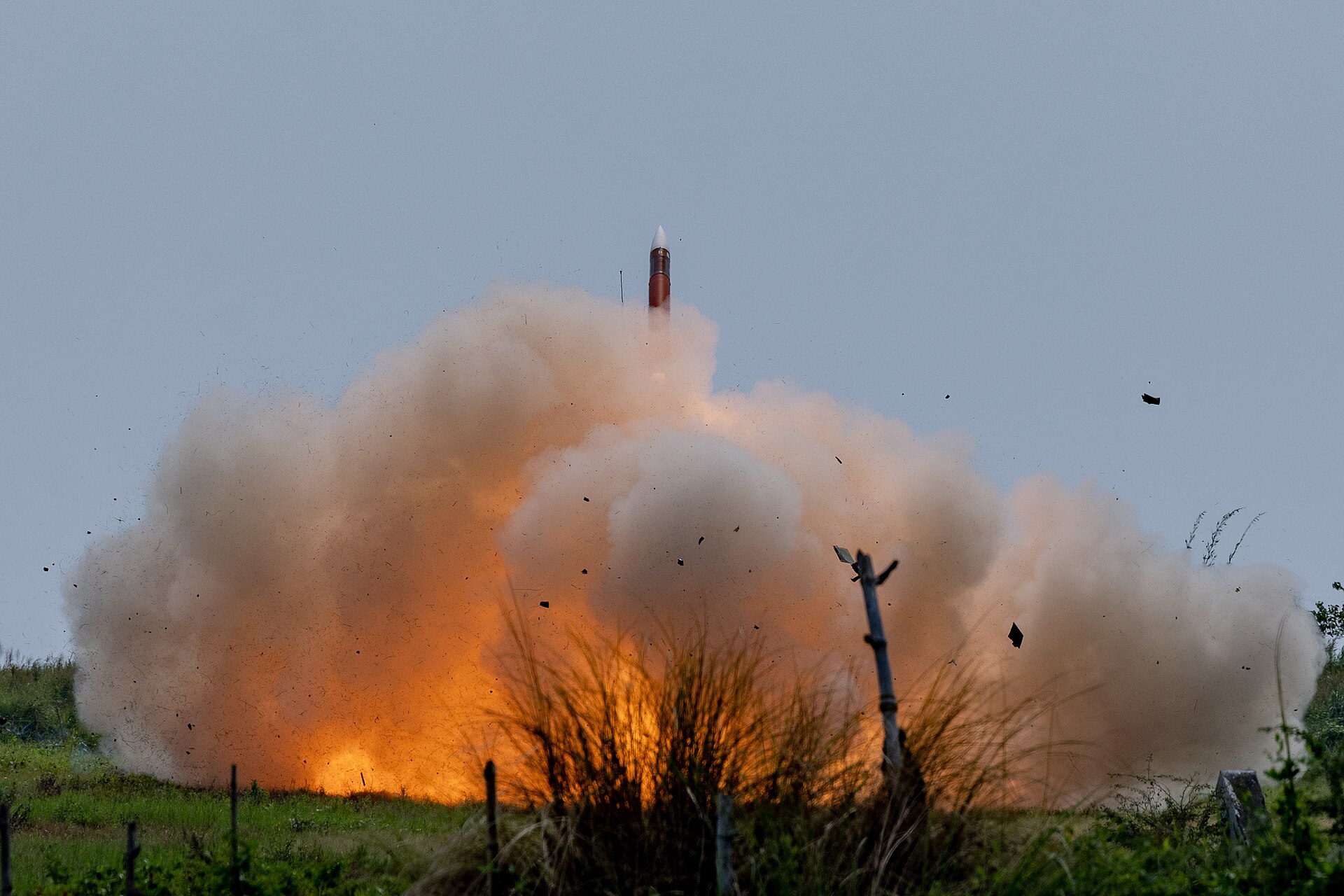
Table of Contents
- What Did the Coalition Say?
- A Pattern of Silence Across Saudi Airspace
- Why Name Houthis in Najran but Not Over Riyadh?
- Qatar’s 48-Hour Plan and the Diplomatic Cost of Attribution
- What Happens When the Coalition Does Name a Launcher?
- Background: Yemen’s Renewed Conflict and the Drone Threat
- Frequently Asked Questions
What Did the Coalition Say?
Al-Maliki’s announcement, timestamped at 11:28 PM local time on Friday, was terse even by coalition standards, according to Anadolu Agency. Air defences had intercepted and destroyed “a hostile drone that had penetrated the airspace over the Riyadh region,” the Global Arab Network reported, paraphrasing the statement. Debris fell within a designated area, no injuries were reported, and no property damage was disclosed.
What was absent told a larger story than what was present. The statement did not identify a launching party, a launch direction, a point of origin, or the type of drone — details that coalition announcements for border-region intercepts routinely include. It did not specify where in the Riyadh region the interception occurred or name the intended target. The earlier same-day announcement covering the Makkah drone and the Najran missiles explicitly attributed the missiles to the Houthis but left the Makkah drone unattributed, according to Bernama and Anadolu Agency — meaning that even within a single press release, the coalition made a distinction between what it would and would not name.
No Houthi claim for the Riyadh drone appeared on November 6 or in the hours that followed, based on a review of Al-Masira, Houthi military spokesman Yahya Sare’e’s X account, and Iranian state media outlets including IRNA and Tasnim. No Iranian-aligned group claimed it either. A drone entered the airspace above the Saudi capital, was destroyed, and nobody — not the coalition, not any armed group — publicly said who had sent it.
A Pattern of Silence Across Saudi Airspace
The Riyadh announcement fits a documented pattern of non-attribution for drone intercepts over central and eastern Saudi Arabia. On October 31, the coalition announced the interception of a “hostile drone” over Riyadh with no attribution, according to Al Arabiya, with debris falling and no injuries reported. On November 2, two drones were downed in the Riyadh area, again without a named launcher, according to Gulf News and QNA.
On November 5, a drone was intercepted over the Eastern Province with no named origin. In each case, the coalition confirmed the interception and noted the absence of casualties, but offered no identification of the launching group.
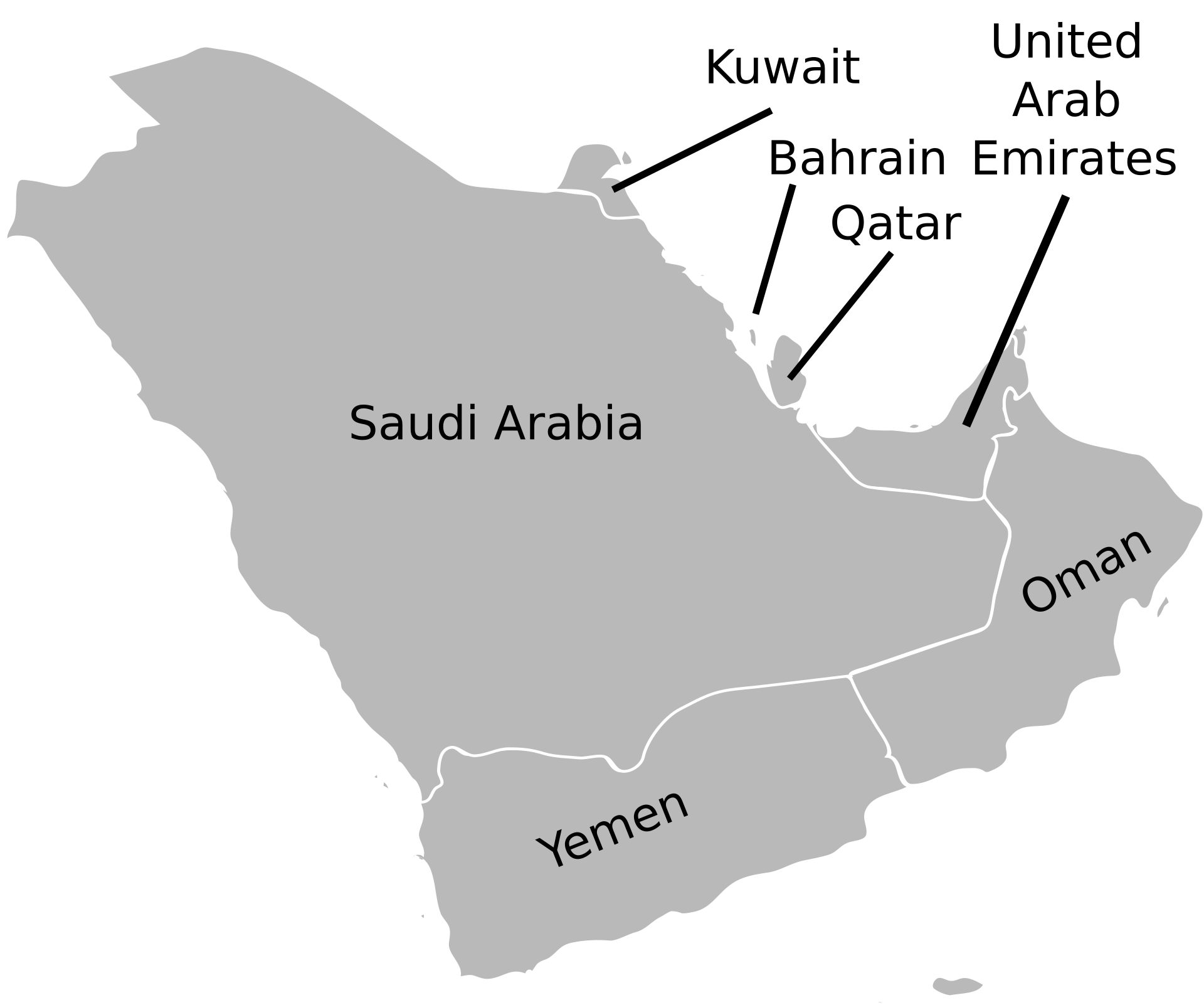
The contrast with how the coalition handles border-region intercepts is consistent and telling. When missiles or drones are shot down over Najran, Jizan, or the southern provinces, al-Maliki’s statements routinely name the Houthi group in the same announcement. The two ballistic missiles intercepted over Najran on November 6 were attributed to the Houthis, but a drone intercepted over the Makkah region in the same announcement was not, according to Bernama and Anadolu Agency. A missile over the Medina region on November 5 was also attributed to the Houthis, prompting diplomatic condemnations from four Arab states.
When the threat reaches central Saudi Arabia — Riyadh, the Eastern Province, and increasingly the Makkah region — the coalition’s language strips out the attribution. The pattern has held across multiple announcements in the past week, and it raises an obvious question: if the coalition knows who is sending these drones, why will it not say?
Why Name Houthis in Najran but Not Over Riyadh?
Two explanations circulate among analysts tracking the coalition’s information operations, and both may be correct simultaneously. The first is geographic ambiguity: drones reaching Riyadh could plausibly have been launched from Yemen, Iraq, or even Iran, and identifying the wrong party would create a diplomatic problem difficult to walk back. Saudi air defences have tracked drones entering from Iraqi airspace on at least one occasion in 2026, according to Arab News, and al-Maliki warned that the kingdom would respond to sovereignty violations regardless of the launch direction. Naming the Houthis for a drone that may not have been theirs would risk a diplomatic incident with Baghdad, or with Tehran directly.
The second explanation is more calculated, and the October 30 episode illustrates why it matters. When the coalition attributed a Makkah-region drone to the Houthis on that date, Houthi military spokesman Yahya Sare’e responded within hours by denying the coalition’s account as false, saying the group had not carried out any operation targeting Saudi territory, according to Reuters. The denial was amplified across international wire services, consumed a full news cycle, and forced both the coalition and the Houthis to harden public positions — the kind of rhetorical escalation that makes diplomatic back-channels harder to operate.
Allison Minor, a senior fellow in the CSIS Middle East Program, framed Saudi Arabia’s broader dilemma in an October 16 podcast: the kingdom faces “a critical choice” between “further military degradation of Houthi capabilities,” which “risks disproportionate asymmetric retaliation against civilian and economic infrastructure,” and seeking “an elusive off-ramp,” she said on the CSIS State of Play podcast. The non-attribution pattern may represent the diplomatic side of that off-ramp — keeping the door open to negotiations by refusing to publicly name what the intelligence may already show privately.
Qatar’s 48-Hour Plan and the Diplomatic Cost of Attribution
The drone reached Riyadh airspace on the same day Qatar formally submitted its two-stage, 48-hour reciprocal de-escalation plan to Washington and Tehran, according to Investing.com and Streamlinefeed. The plan called for simultaneous reciprocal actions from both sides in two sequential 24-hour windows; neither the United States nor Iran had accepted it when al-Maliki’s Riyadh statement was published. The Qatari framework was a concrete diplomatic proposal to emerge from the Hormuz crisis, though its reception in both capitals remained uncertain.
Naming a drone launcher in a public military communique on the day a de-escalation plan sat on both governments’ desks carried obvious diplomatic costs. Blaming the Houthis would feed into Tehran’s narrative that Riyadh uses Houthi attribution as a proxy argument to avoid confronting Iran directly over its support for armed groups across the region. Blaming Iran or Iran-backed groups in Iraq would effectively declare that Iranian proxies were reaching the Saudi capital — an escalation that could collapse the Qatari mediation before it began. Staying silent kept both diplomatic paths open, and it avoided handing ammunition to either side’s propagandists at the worst possible moment.
Saudi Arabia is also operating within a shrinking window before a new US Congress takes office on January 3, with the Democrats’ midterm victories shifting the war-powers calculus toward restraint. A more cautious Congress may constrain US military support for the kingdom’s operations, intensifying pressure on Riyadh to resolve the crisis diplomatically rather than on the battlefield. Michael Ratney, a senior adviser at CSIS and former US ambassador, characterised the Saudi position bluntly on PBS NewsHour: “There’s no real good options at this point,” he said. “So I think for the moment the Saudi options are take the gloves off, and they’re doing that with some concerted airstrikes against the Houthis.”
What Happens When the Coalition Does Name a Launcher?
The October 30 episode offers a case study in what attribution triggers. Once the coalition named the Houthis for a drone targeting the Makkah region, Sare’e’s denial was immediate and categorical, and it was picked up by international wire services within hours, according to Reuters. The claim-and-counter-claim cycle consumed a full news cycle and forced both parties to stake out public positions they could not easily retreat from — a dynamic that did not occur when the coalition simply declined to assign blame. The non-attribution approach sidestepped precisely this outcome: by withholding a name, the coalition also withheld the ammunition for a public counter-argument.
Amberin Zaman, writing in Al-Monitor, described Saudi Arabia’s broader approach as “hedged deterrence” and argued it was “proving a dead end” as aerial attacks from Iran-backed groups continued through September 2026. Zaman also reported that Saudi Arabia pulled out at the last minute from an Omani-brokered Hormuz safe passage deal after Iran asserted that the strait “is not an international waterway.” The pattern of approaching a deal and then backing away shows a leadership managing multiple escalation pressures at once rather than resolving any single one of them — a posture that the non-attribution tactic fits neatly into.
An unnamed analyst at South24, a Yemen-focused research centre, put the calculus in material terms: “So far, Riyadh has absorbed the Houthi attacks because they have not caused structural damage capable of disrupting the supply chain or bringing strategic interests to a complete halt,” the analyst told South24. “However, Saudi patience could run out at any moment.” Non-attribution may be part of what sustains that patience, because declining to name a perpetrator publicly reduces the domestic political pressure that comes with an identified, named enemy attacking the capital.
Background: Yemen’s Renewed Conflict and the Drone Threat
The drone interceptions over Riyadh are taking place against the backdrop of Yemen’s renewed conflict, which has killed more than 1,600 people and displaced over 290,000 since fighting resumed in July 2026, according to United Nations figures cited by Anadolu Agency. The coalition has maintained sustained air defence operations across the kingdom since mid-October, when CSIS described a Houthi strike on October 10 as “the deadliest in Saudi Arabia in over a decade,” according to the CSIS State of Play podcast. The escalation has placed Saudi Arabia in the position of simultaneously running offensive operations in Yemen and defending its own cities from aerial attack — a two-front reality with no clear end in sight.
The Riyadh drones represent one thread in a wider pattern of aerial threats targeting Saudi cities and airports. On November 4, the Houthis claimed a ballistic missile strike on King Khalid International Airport that Saudi Arabia did not confirm. The coalition’s own offensive operations have drawn condemnation: on November 6, Houthi officials said Saudi airstrikes killed 30 people at a market in Taiz, a claim the Saudi government denied. The parallel streams of offensive and defensive operations on the same day illustrated the dual nature of the Saudi-led campaign in this phase of the conflict.
The dual reality of Saudi Arabia conducting airstrikes in Yemen while intercepting drones above its own capital exposes the asymmetric nature of the conflict: the coalition holds conventional military superiority, but it cannot prevent drones from reaching its most sensitive airspace. That asymmetry helps explain the non-attribution approach. Naming a launcher invites the public to ask why the drone was not prevented, why the launcher was not destroyed, why the capital remains exposed — while not naming one turns the interception into a successful defence story that holds only as long as the drones keep missing their targets and the debris keeps falling without casualties.
Frequently Asked Questions
Has any group claimed responsibility for the November 6 Riyadh drone?
No claim appeared on Al-Masira (the Houthi-run media outlet), on Houthi military spokesman Yahya Sare’e’s X account, or on Iranian state media including IRNA and Tasnim, based on a review conducted on November 7. Iran’s public messaging on November 6 centred on the Strait of Hormuz crisis and the Qatari mediation effort rather than on drone operations over Saudi Arabia. The absence of a claim paralleled the coalition’s own silence: neither the defender nor any potential attacker publicly acknowledged the drone’s origin.
How much time separated the two coalition intercept announcements on November 6?
The earlier announcement, covering the Makkah drone and two Najran ballistic missiles, carried a timestamp of 7:48 PM Istanbul time (approximately 16:48 UTC), according to Bernama. The Riyadh drone announcement was timestamped at 11:28 PM local time (approximately 20:28 UTC), according to Anadolu Agency. The gap of roughly four hours, combined with distinct attribution treatment — Houthi attribution for the Najran missiles, none for the Riyadh drone — suggests the coalition assessed these as separate threat events, possibly from different sources.
What did the coalition say about the drone’s intended target?
Al-Maliki’s statement identified no target and did not specify where in the Riyadh region the interception took place, according to the Global Arab Network. The Riyadh region includes the capital city, its surrounding governorates, and key economic and military infrastructure. Without a stated target, it is not possible to determine from public information whether the drone was aimed at a government facility, a military installation, or civilian infrastructure.
Does the coalition disclose where debris from interceptions falls?
The coalition described the November 6 debris as falling within “a designated area” and confirmed no injuries or property damage, according to the Global Arab Network. The specific location was not disclosed, a practice consistent across coalition intercept announcements, which note whether debris caused harm but do not publicise the fall zone. The absence of disclosed coordinates is standard: most air defence operators withhold intercept geometry data to avoid giving launch planners actionable intelligence.
Has any non-Houthi group previously launched drones toward Saudi Arabia?
Saudi air defences have tracked drones entering Saudi airspace from Iraqi territory on at least one occasion in 2026, according to Arab News. Al-Maliki responded with a statement warning that the kingdom would act against sovereignty violations from any direction. The precedent partly explains why attribution for drones reaching central Saudi Arabia requires more diplomatic care than attribution for missiles launched from known Houthi positions in northern Yemen, where the origin and the responsible group are both well established.
The House of Saud Daily Briefing
Saudi Arabia's news in 3 minutes, every morning. Free. See today's issue