

Best Regions: Tabuk, Hail, Riyadh outskirts, Asir
Best Vehicle: Toyota Land Cruiser 200/300, Nissan Patrol
Best Season: October–March
Visa Required: Yes — tourist e-visa
Self-Drive: Possible with experience and convoy
Avoid: Solo remote off-roading without recovery gear
Saudi Arabia is one of the most rewarding destinations on earth for serious 4×4 off-road adventure. The Kingdom stretches across 2.15 million square kilometres of terrain that ranges from towering volcanic escarpments and crimson sandstone canyons to the world’s largest continuous sand desert. For drivers willing to deflate their tyres and leave the tarmac behind, the rewards are extraordinary: ancient wadi routes that Nabataean traders once navigated by camel, lunar-landscape highlands where no other vehicles have left tracks for weeks, and the spine-tingling silence of the Empty Quarter at dusk. This guide covers the country’s best 4×4 tracks, the vehicles that thrive here, what recovery gear you genuinely need, and how to connect with the communities and operators who know these routes best. It sits within our broader Saudi Arabia Travel Guide for context on logistics, visas, and the wider adventure tourism landscape that Vision 2030 has dramatically opened up.
Why Saudi Arabia for Off-Roading?
The Kingdom has always been 4×4 country. Before highways existed, the Toyota Land Cruiser and Nissan Patrol were everyday transport across the interior, and that culture of vehicular self-sufficiency never disappeared. What changed after 2017 is that the government began actively welcoming foreign visitors to experience it. Tourist e-visas are now issued on arrival or online in minutes. National parks have opened access roads and camping areas. Tour operators have multiplied. And social media has lit up with footage of convoys cresting thousand-metre dunes and descending into sandstone gorges that most of the world had never heard of.
The terrain diversity is unmatched anywhere in the Arabian Peninsula. In Tabuk Province in the northwest you have Jordan-scale sandstone wadi systems, volcanic lava fields, and coastal mountain ridges. In Hail, the Great Nefud Desert offers crimson dune corridors flanked by granite massifs. Around Riyadh, the dramatic Tuwaiq Escarpment drops hundreds of metres into open steppe, with the famous Edge of the World among the most photographed off-road destinations in the Middle East. And in the south, the Empty Quarter — the Rub al Khali — is a full expedition environment, demanding expedition-grade vehicles, experienced guides, and multi-day logistics.
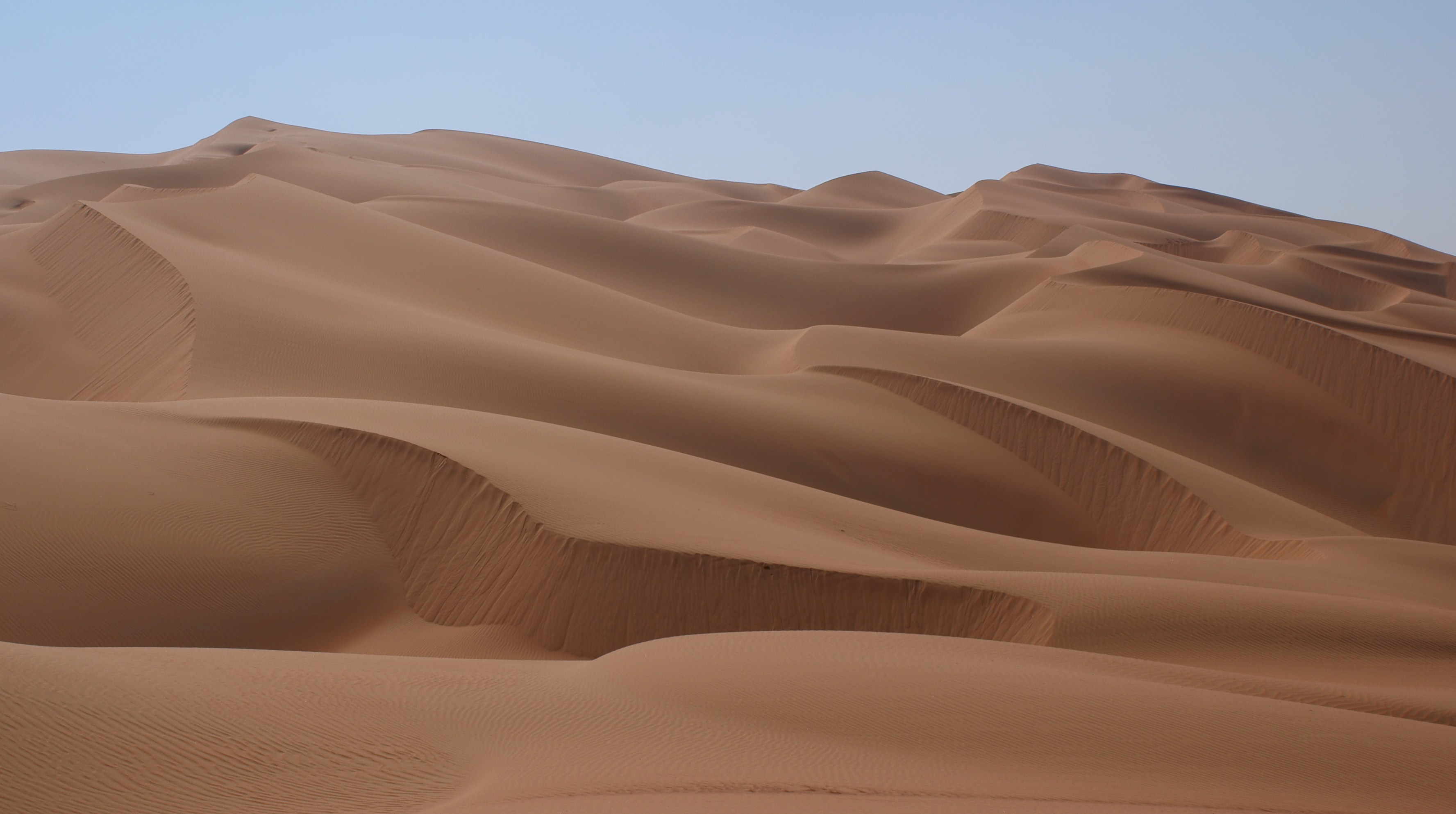
Best 4×4 Regions and Tracks
Tabuk Province: Wadi Systems and Volcanic Highlands
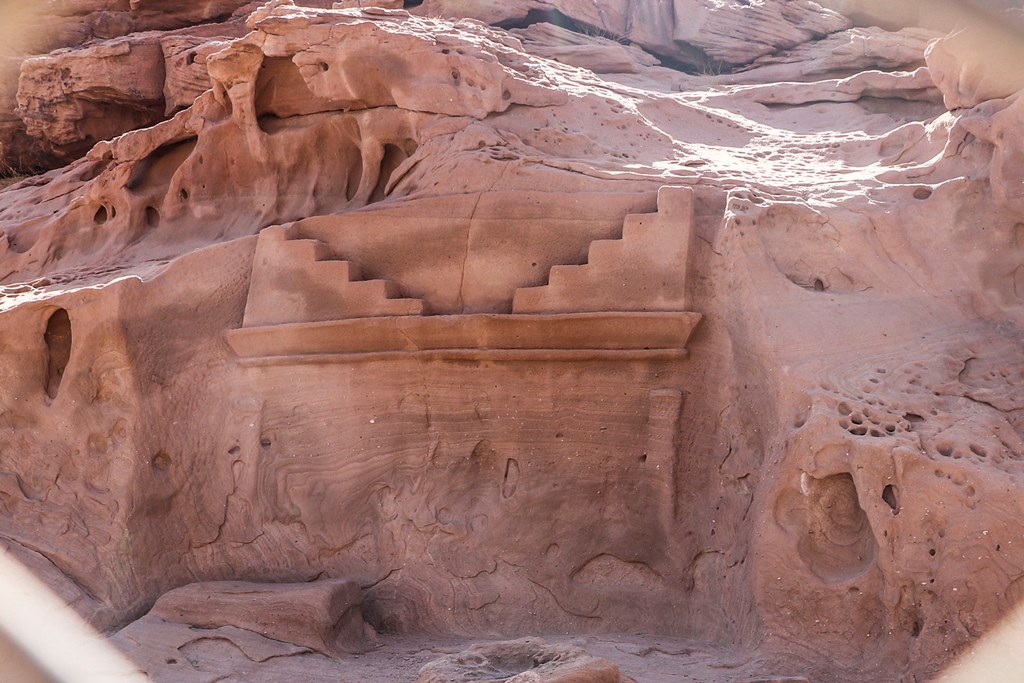
Tabuk is the single most varied off-road region in Saudi Arabia and the natural starting point for international visitors arriving via Tabuk International Airport. The centrepiece is Wadi al-Disah, approximately 250 kilometres south of Tabuk city via Route 8900. The paved road ends at the village of Al Disah, at which point you are committed to a narrow 4×4 track threading between sheer red sandstone cliffs, palm groves fed by underground springs, and shallow seasonal stream crossings. The track is not technically extreme — moderate experience is sufficient — but it absolutely requires a 4×4 with reasonable clearance and reduced tyre pressure (around 1.6 bar / 24 psi for a Land Cruiser). The full drive through the wadi takes 45 minutes to an hour without stops; most drivers take two to three hours exploring Nabataean inscriptions, rock art, and the ancient tomb facades carved into the canyon walls. If you want to extend into a full Tabuk adventure, our dedicated Tabuk and Wadi Disah guide covers access routes, camping spots, and permit requirements in detail.
Jebel Qaraqir (The Black Mountains) near the Tabuk-Haql corridor is a striking volcanic field where dark basalt rock has been sculpted by erosion into surreal formations. The tracks here are rocky and corrugated, demanding good suspension and a vehicle with a locking rear differential engaged. Navigation requires GPS — there are no marked trails. North of the city, the Mahajah area sits on the southeastern edge of Tabuk Province near the Nefud al-Kebir dunes, where sandstone mesa formations rise above a plain of orange sand. The remoteness here is genuine: carry enough fuel for 400km beyond your last fill-up point, and do not attempt it without a convoy of at least two vehicles.
Hail Region: The Great Nefud and Jabal Shammar
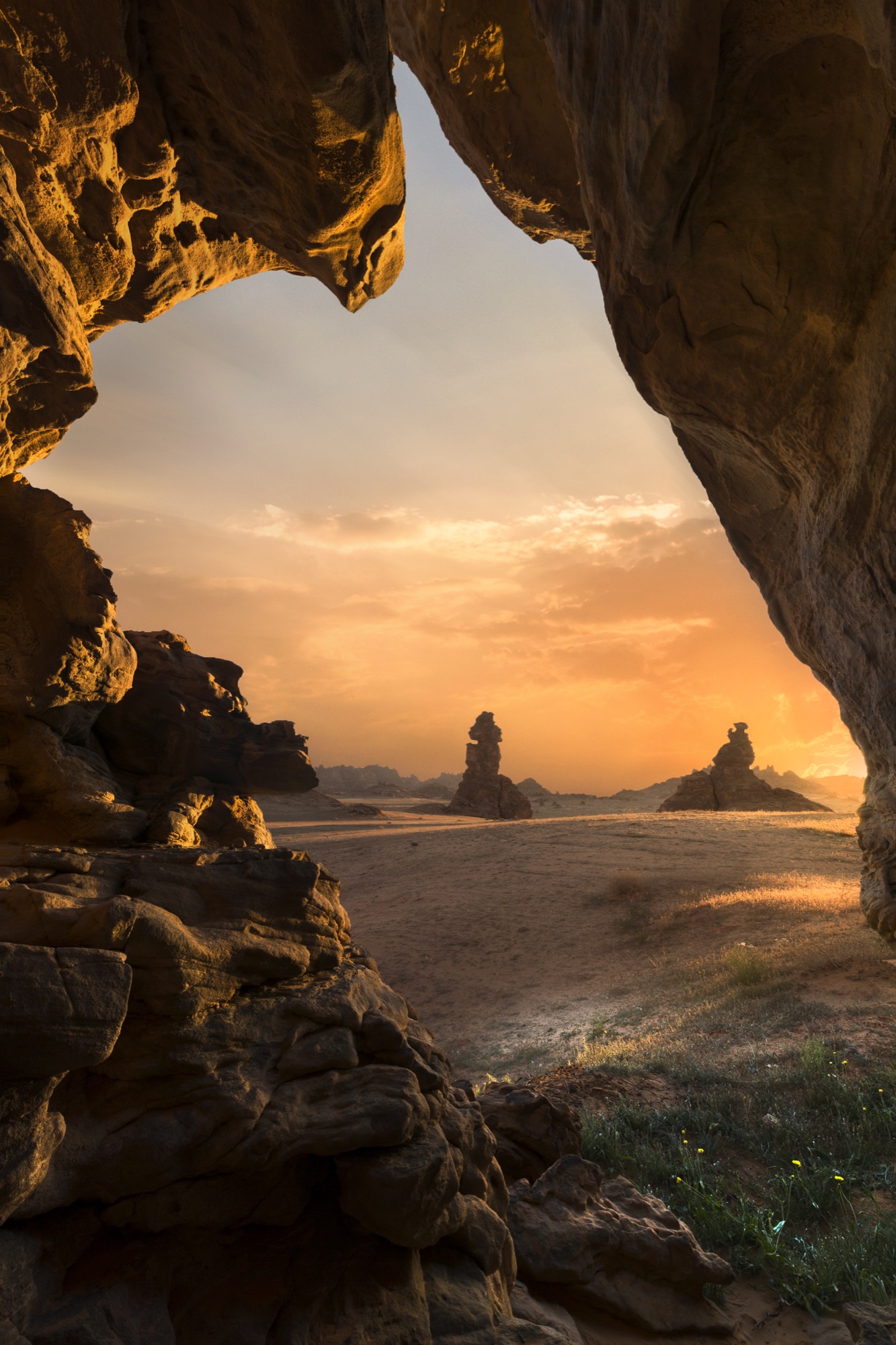
Ha’il sits at the intersection of two entirely different landscapes, and that contrast is what makes it such compelling 4×4 territory. To the east stretches the Nefud al-Kebir — the Great Nefud Desert — a 103,600 square kilometre arc of sand that runs from Tayma in the west to Ha’il in the east before connecting south toward the Empty Quarter. The Nefud’s dunes are not as high as the Empty Quarter’s mega-dunes, but the crimson and orange colouring is extraordinary, particularly at sunrise and golden hour. A standard Nefud circuit from Ha’il involves roughly 60km of sand-driving followed by 30km on gravel and occasional tarmac — a full day’s serious off-roading requiring proper sand-driving technique and recovery equipment.
To the north of the city rises Jabal Shammar, a granite massif where hidden green wadis cut between rocky ridges. The elevation brings a cooler microclimate and seasonal vegetation, making it a different proposition entirely from the sand work to the east. Northwest of Ha’il, the town of Jubbah — a 90-minute drive through the Great Nefud — is an ancient site with Neolithic rock art UNESCO-listed in 2015, accessible via a combination of desert tracks and graded sand roads. For the full context on what Ha’il Province offers beyond the dunes, see our Hail Region travel guide.
Riyadh Outskirts: The Edge of the World and Thumamah
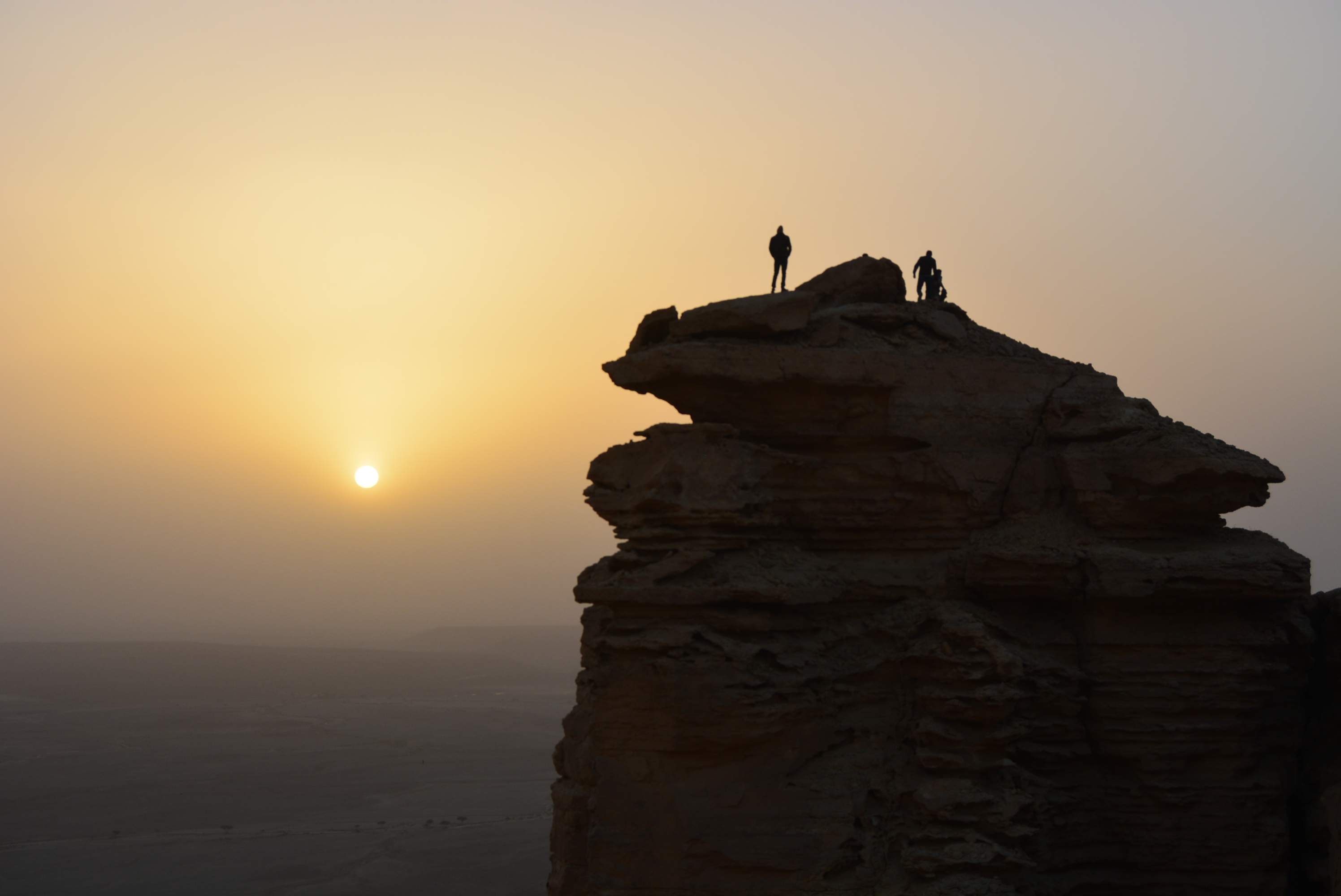
The capital’s hinterland offers some of the most accessible serious off-roading in the Kingdom, which is why Riyadh has one of the country’s most active 4×4 communities. The undisputed centrepiece is Jebel Fihrayn, universally known as the Edge of the World (Jebel Tuwaiq Escarpment). Situated roughly 75 kilometres northwest of the city, the escarpment drops hundreds of metres in a sheer vertical wall, revealing a panorama that genuinely feels like standing at the rim of the earth. The route to the viewpoint involves a rocky track that requires a capable 4×4 — steep climbs, loose gravel descents, and sections where differential locks should be engaged. Allow two to three hours from Riyadh, including the short walk to the cliff edge itself. The site is free to enter, extremely popular with local enthusiasts at weekends, and best visited at sunrise or in the cooler months between October and March.
Thumamah National Park, approximately 35 kilometres north of Riyadh’s King Khalid International Airport, offers a more forgiving introduction. A standard car can manage the main gravel tracks, but a 4×4 unlocks the full range of dunes and backcountry routes in the northeast section where the terrain transitions from gravel to soft sand. Entry is free. The park is a weekend favourite for families and beginning off-roaders, and the flat open terrain makes it an excellent place to practice sand-driving technique — correct tyre deflation, momentum management, and recovery procedures — before tackling more remote destinations.
Further afield from Riyadh, the Abu Jifan Fort trail leads to a historic mud-brick fort atop an escarpment via steep gravel climbs and loose rock sections that demand a locked differential. It rewards the effort with sweeping views across the Najd plateau and is typically quiet compared to the Edge of the World crowds.
The Empty Quarter (Rub al Khali): Expedition Territory
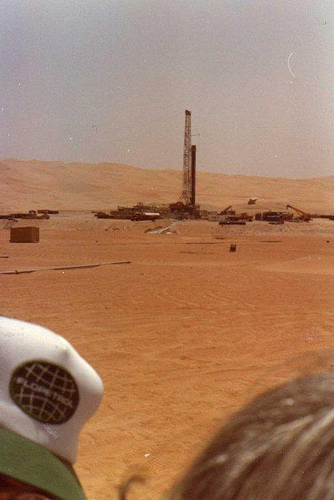
The Rub al Khali is in a category of its own. At roughly 650,000 square kilometres, it is the largest continuous sand desert on the planet — larger than France and larger than Texas. The dunes in the heart of the Saudi portion, particularly around Shaybah in the Eastern Province, reach heights of 250 metres and above. This is not a destination for an afternoon outing; it is a multi-day expedition requiring meticulous planning, a minimum convoy of three vehicles (ideally five or more), satellite communication, and either professional guide support or serious personal experience in deep-desert navigation.
Access points into the Saudi Empty Quarter include Najran in the southwest — which serves as a gateway to the northwestern fringe dunes — and the Eastern Province, where the vast Shaybah oil field road provides a paved artery deeper into the sand sea than anywhere else in the Kingdom. The northwestern edge of the Empty Quarter, accessible from Najran or Al Wadj, offers dune corridors that are challenging but manageable for well-prepared intermediate drivers. The deep interior, however, should only be attempted with a licensed guide or as part of an organised expedition.
Asir and the Southern Highlands
The Asir region in Saudi Arabia’s southwest is a counterpoint to every desert stereotype. Sitting at elevations above 2,000 metres — with Jebel Sawda reaching an officially recognised 3,015 metres above sea level, the highest point in the Kingdom — Asir receives monsoon rainfall that supports juniper forest, terraced agricultural land, and a landscape more reminiscent of the Ethiopian Highlands than the Arabian interior. For 4×4 drivers, Asir offers high-altitude mountain tracks, rocky switchback climbs, and wadi routes through narrow gorges thick with vegetation. The climate is the other great draw: the region rarely exceeds 35°C even in peak summer, making it the only part of Saudi Arabia that offers year-round off-road driving. The tracks around Abha — the regional capital — range from intermediate graded dirt roads suitable for stock SUVs to technical rock-crawling routes in Asir National Park’s interior. For walkers who want to combine their driving with boots-on-ground exploration, our Saudi Arabia wadi walks guide covers the best foot routes in the region.
Choosing Your Vehicle
Saudi Arabia’s off-road culture has a short answer to every vehicle question: Land Cruiser or Patrol. The Toyota Land Cruiser 200 Series and the newer 300 Series are the dominant vehicles on every serious Saudi off-road convoy. They combine the power, ground clearance, multi-terrain electronics, and spare-parts availability that long-distance desert travel demands. The V8 diesel engine in the 200 Series is particularly prized for its torque at low revs — essential for hauling through soft sand or ascending loose rocky inclines without wheel-spin. The 300 Series brings a more sophisticated terrain management system and better fuel consumption, at the cost of a slightly higher floor price on the local used market.
The Nissan Patrol Y62 is the main rival, with an equally dedicated community in Saudi Arabia. Its V8 petrol engine produces substantial power, and its Crawl Control system handles technical terrain with minimal driver intervention. For those who prefer a more modified, purpose-built approach, the Toyota Land Cruiser 70 Series — the workhorse pickup variant — remains available new in Saudi Arabia and is the vehicle of choice for serious desert expedition work. Its mechanical simplicity means less to go wrong hundreds of kilometres from any workshop. The Ford Bronco and Jeep Wrangler have both gained followings in the Kingdom since Saudi tourism opened up, but spare parts availability outside Riyadh and Jeddah can be limited, which is worth considering before committing to a remote route.
Stock vehicles can manage Thumamah, the Edge of the World approach road, and Wadi al-Disah without modification. For the Nefud, Jabal Shammar tracks, or any Empty Quarter work, consider: an after-market suspension lift (50–75mm is typical), all-terrain or mud-terrain tyres, a roof rack for carrying extra fuel jerry cans, and a bullbar with a winch rated to at least 1.5 times your vehicle’s kerb weight. The 4×4.sa workshop in Riyadh is well regarded for quality fitment work and has deep experience building convoy-ready Land Cruisers for extended Saudi desert expeditions.
Essential Recovery Gear
Saudi Arabia’s remote desert terrain is unforgiving, and a breakdown or getting stuck without adequate equipment is not merely inconvenient — in summer heat or in the Empty Quarter it can become life-threatening. The following kit is considered baseline for any serious off-road trip beyond the Riyadh day-trip zone:
Sand ladders / traction boards (at least two per vehicle) are the single most-used item on a Saudi desert trip. When a wheel breaks through a dune crest into soft sand beneath, shovel a channel and slide the boards under the driven wheels. MaxTrax and similar products are widely sold in Riyadh and Jeddah 4×4 accessory shops. A collapsible shovel works alongside traction boards to clear sand from around the tyres and level the approach angle before driving onto the boards.
Recovery straps and shackles: A kinetic recovery rope rated to at least 2x your vehicle’s gross weight, plus two rated bow shackles. If you are in a convoy, a snatch block allows multi-vehicle recovery setups and vector-angle pulls. A high-lift jack with a base board (to prevent the jack sinking into sand) completes the basic stuck-vehicle recovery toolkit.
Tyre pressure management is fundamental. Sand driving requires deflating to 20–25 PSI; on hard corrugated tracks you run standard pressures. A reliable portable air compressor — the ARB Twin and Bushranger units are popular in Saudi Arabia — lets you reinflate quickly when transitioning back to tarmac. Running at sand pressure on a paved road at highway speed overheats tyres dangerously.
Communication and navigation: A GPS device loaded with offline maps for the region you are visiting. Mobile coverage outside major towns and highways in Saudi Arabia is sparse; in the Empty Quarter it may be non-existent for days. A satellite communicator (Garmin inReach or SPOT) is strongly recommended for any remote trip, both for emergency SOS capability and for sharing your GPS track with someone back home. Carry physical maps as backup.
Water and survival supplies: Carry a minimum of 5 litres of drinking water per person per day beyond what you expect to need. In summer this should be significantly more. A first aid kit, reflective emergency blanket, and a basic vehicle toolkit — including a spare drive belt, fuses, and tyre puncture repair kit — complete the non-negotiable list.
For drivers focused on active dune-bashing rather than route exploration, our Saudi dune bashing guide covers specific techniques, locations, and tour experiences. For powered alternatives to full 4×4 vehicles, see also our Saudi quad biking guide.
Off-Road Clubs and Communities
Saudi Arabia has a deeply embedded 4×4 culture, and connecting with local communities is one of the best ways to access route knowledge, convoy partners, and insider advice on conditions.
Adv4x4 KSA (adventurer4x4ksa.com) is the most prominent structured off-road training and community organisation in the Kingdom. It runs workshops for all experience levels — beginner courses through to advanced techniques including deep-sand recovery, rock crawling, and winch operation — and provides a network of experienced drivers for convoy formation on longer routes. Based in Riyadh, they run regular group trips to Thumamah, the Edge of the World, and further afield into the Nefud.
KSA OFFROAD (Instagram: @ksa_offroad) is a widely followed UTV and 4×4 community with an active WhatsApp group for organising convoy trips, sharing track condition updates, and connecting local and expat drivers. The community runs primarily through social media and messaging apps rather than a formal website, which is typical of Saudi off-road culture where WhatsApp group convoys are the standard organisational unit.
KAUST Offroad Exploration Club serves the KAUST academic community on the Red Sea coast, organising trips into the Hejaz mountains, coastal escarpments, and the lower Asir highlands. The team at 4 Wheel Station in Riyadh — profiled by Overland Journal — also carries deep knowledge of regional routes and can advise on vehicle preparation specific to the terrain you are planning to tackle.
Tour Operators for Guided Expeditions
For visitors who want guided off-road experiences with vehicles and logistics provided, Saudi Arabia now has a credible range of options at different price and expedition levels.
Latitude Expeditions (latitude4x4.com), operated by Husaak Adventures, offers Saudi-specific 4×4 itineraries with fully-equipped Land Cruisers, camping gear, and on-call recovery support. Their flagship Saudi itinerary — the “Caravan Route to Coast” — runs from Riyadh to Ha’il to AlUla to Al Wajh over eight days, covering desert, volcanic highland, and coastal terrain. They provide unlimited mileage and 24-hour towing if needed.
WadiTrip (waditrip.sa) is a Saudi-licensed operator specialising in Empty Quarter expeditions and multi-day desert tours. Their Empty Quarter packages depart from Najran and include guides with deep Rub al Khali experience and full vehicle recovery support. For visitors without desert-expedition experience, booking with an operator like WadiTrip is the responsible approach to the deep interior.
Husaak Adventures (husaak.com) runs organised group adventures throughout Saudi Arabia including Asir, with guided off-road experiences in the southern highlands that combine 4×4 access with hiking and wildlife components. For day-trip experiences near Riyadh — including Edge of the World tours with vehicle and guide included — multiple operators list on Viator and GetYourGuide starting from approximately $20–$30 per person.
When to Go and Practical Logistics
October to March is the universally recommended window for 4×4 off-roading in Saudi Arabia. Daytime temperatures in the desert interior typically range from 20°C to 32°C across this period, with cool nights in the highlands. April and May are a shoulder window — temperatures are rising but still manageable before 9am and after 4pm. June through September is off-limits for serious desert expedition work due to temperatures exceeding 45°C in the Rub al Khali. Asir alone maintains year-round viability thanks to its altitude.
Visas: Most nationalities can obtain a Saudi Arabia tourist e-visa online or on arrival. Our Saudi Arabia visa guide covers the application process, fees, duration, and eligible nationalities in full.
Fuel: Saudi Arabia has extremely low fuel prices by international standards. However, in remote areas — the Empty Quarter, deep Nefud, and the Tabuk-Haql coastal range — petrol stations can be 200km or more apart. Carry additional fuel in rated jerry cans and plan your fuel stops before departure.
Protected areas and permits: The King Salman Royal Reserve in the Hail Region and several protected zones near the Empty Quarter require advance permission. Check the Saudi National Center for Wildlife website or contact your tour operator before entering marked protected areas.
Plan Your Off-Road Adventure
Saudi Arabia’s best off-road destinations are rarely standalone excursions. The Tabuk region pairs naturally with an exploration of AlUla — see our Wadi al-Disah and Tabuk guide for a complete northwestern itinerary. The Ha’il dunes connect logically with the UNESCO-listed rock art at Jubbah and the ancient city of Tayma. Asir’s mountain tracks complement the wadi walk routes in the same region. And for drivers who want a lighter desert thrill alongside their 4×4 work, the dune bashing and quad biking experiences available near Riyadh and in the Eastern Province offer a different energy entirely.
The Saudi off-road world rewards preparation and patience. Routes that look straightforward on a map reveal unexpected wadi crossings, sand traps, and navigation puzzles in the field. Travel in convoy. Carry more water than you think you need. Tell someone your route and expected return time. And then go — because the landscape that opens up beyond Saudi Arabia’s highways is among the most dramatic, least-visited terrain on the planet.