WASHINGTON — Scott Bessent did not sanction Iran on May 28. He sanctioned the one diplomatic instrument Iran could not field alone — and named the country that fielded it. The Treasury Secretary placed Iran’s Persian Gulf Strait Authority on the SDN list under IRGC counterterrorism authorities, the broadest secondary-sanction net Treasury can deploy, then posted a public warning that did something the 2016 Bank Muscat carve-out had never done: it named Oman by name.
“Oman, in particular, should know that the U.S. Treasury will aggressively target any actors involved — directly or indirectly — in facilitating tolls for the Strait and any willing partners will be penalized,” Bessent wrote on X. The Omani ambassador called the same day. He cited two hundred years of good relations. He said there were no plans to toll the Strait. He did not, on the public record, say anything about the back-channel — the one institutional asset that has kept Muscat indispensable to every US-Iran negotiation since 2012, and that Saudi Arabia has no mechanism to enter or to shape.
Table of Contents
- What Bessent actually did on May 28
- Why did Bessent name Oman by name?
- What does the 2016 Bank Muscat carve-out tell us?
- What did the Omani ambassador actually promise?
- The correspondent banking pressure point
- Where do the Bloomberg-reported permanent-toll talks stand?
- Why can’t Saudi Arabia shape the outcome?
- Operation Economic Fury and the Epic Fury sequel framing
- The binary choice Muscat is being forced into
- Frequently Asked Questions
What Bessent actually did on May 28
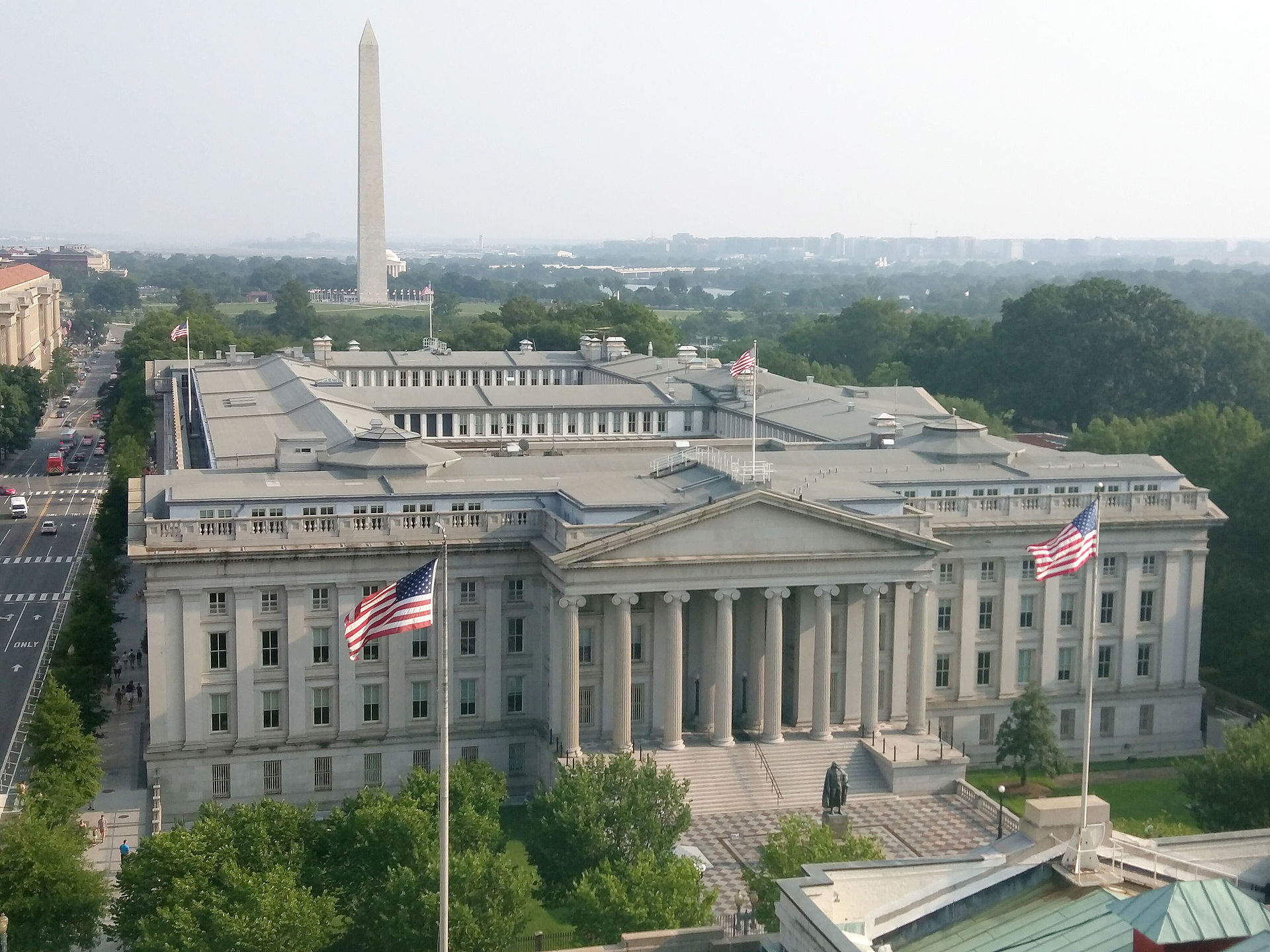
The designation went on under IRGC counterterrorism authorities — a deliberate choice. Iran-program sanctions cover cash payments and conventional banking. IRGC-CT sanctions reach digital assets, in-kind swaps, charitable donations, and informal offsets. The PGSA has been collecting roughly $2 million per vessel since May 18, reportedly in Chinese yuan, with the option of barter and tanker swaps available to any operator unwilling to touch the dollar system. The CT designation closes those side doors. Seatrade Maritime reported the scope explicitly: anyone facilitating “significant transactions” with the PGSA — including foreign banks and shipping companies with no US nexus — is exposed.
Bessent’s accompanying X statement called the PGSA “a joke.” The framing matters less than the legal hook. By placing the entity inside the IRGC-CT regime rather than the broader Iran-program one, Treasury made the toll-collection mechanism transactionally untouchable for any institution that clears dollars, holds correspondent relationships in New York, or accepts wire instructions denominated in yuan that originate from PGSA accounts. The chokepoint Iran built to extract rent from Hormuz now carries the same handling risk as a Quds Force procurement front. The IRGC confirmed the enforcement posture the same day: warning shots fired at four commercial vessels near Hormuz on May 28, the same day as the SDN listing, underscored that the PGSA’s toll regime operates as a complement to kinetic interdiction — not a replacement for it.
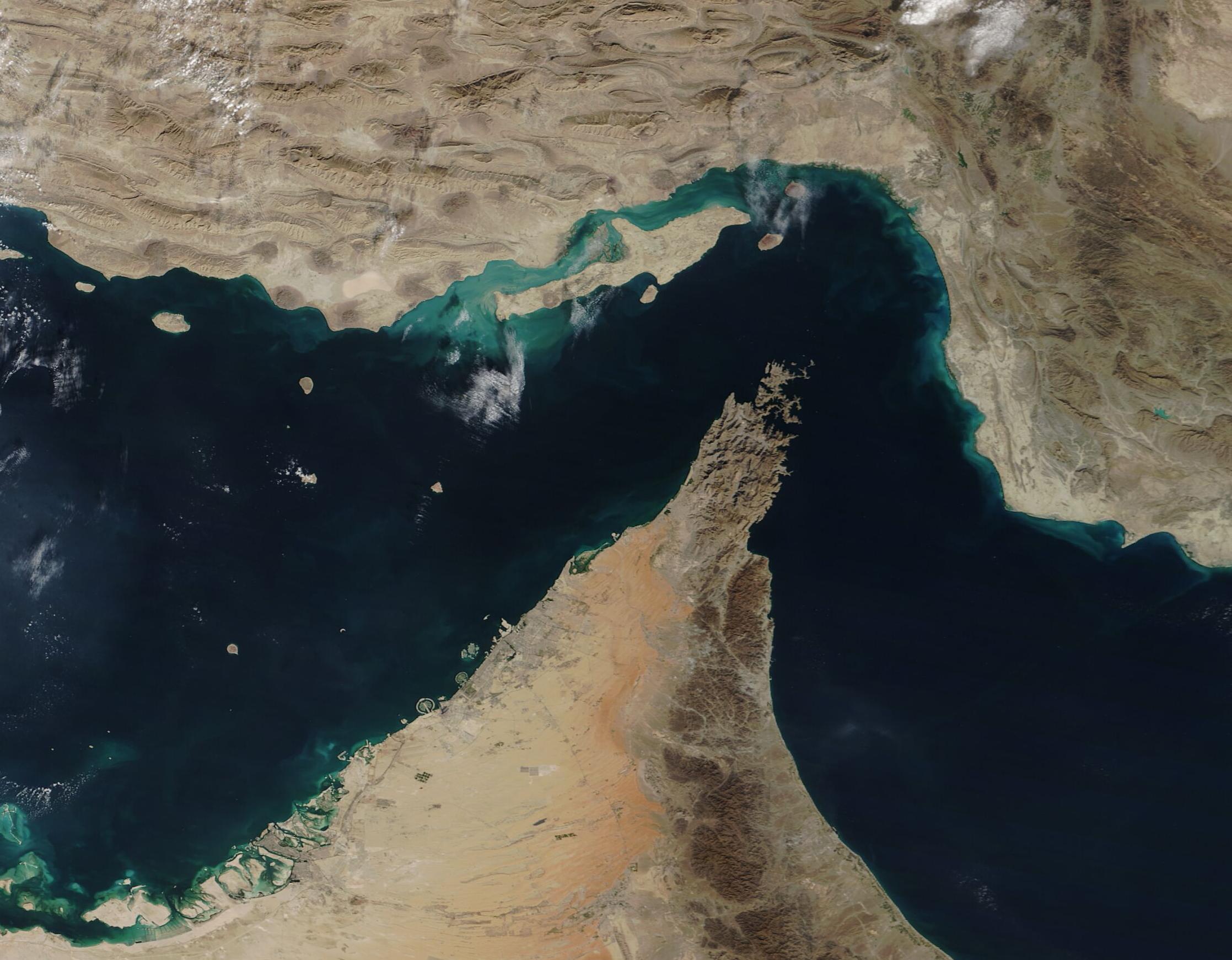
The PGSA itself is a wartime improvisation that has, over ten days, hardened into an institution. It collects from vessels transiting the Strait of Hormuz under Iranian assertion of co-sovereignty over the inbound traffic separation scheme — the lane that, under the 1974 Iran-Oman maritime boundary treaty, lies inside Omani territorial waters. The legal architecture of the toll system therefore rests on a treaty Iran cannot enforce without Omani acquiescence. The Gharibabadi visit to Muscat on May 24, four days before the sanction, was the operational expression of that dependency.
Why did Bessent name Oman by name?
Because no other country could host the toll system. The IRGC can demand payment from a tanker. It cannot, on its own, make those payments clear through a banking system the global shipping industry recognizes. Bloomberg reported on May 21 that Iran was in active talks with Oman about a permanent toll architecture — disclosed by Iran’s ambassador to France, Mohammad Amin-Nejad. That report, more than the toll itself, is what Bessent’s X post answered.
The Middle East briefing 3,000+ readers start their day with.
One email. Every weekday morning. Free.
Oman is the sole non-signatory to IMO Circular Letter 5028, the May 20 international maritime safety advisory on Hormuz transit that 173 other flag states endorsed. Oman’s deliberate non-signature of IMO CL 5028 was not a procedural oversight. It was a sovereignty assertion — the predicate for any permanent toll role. Tehran read the same signal.
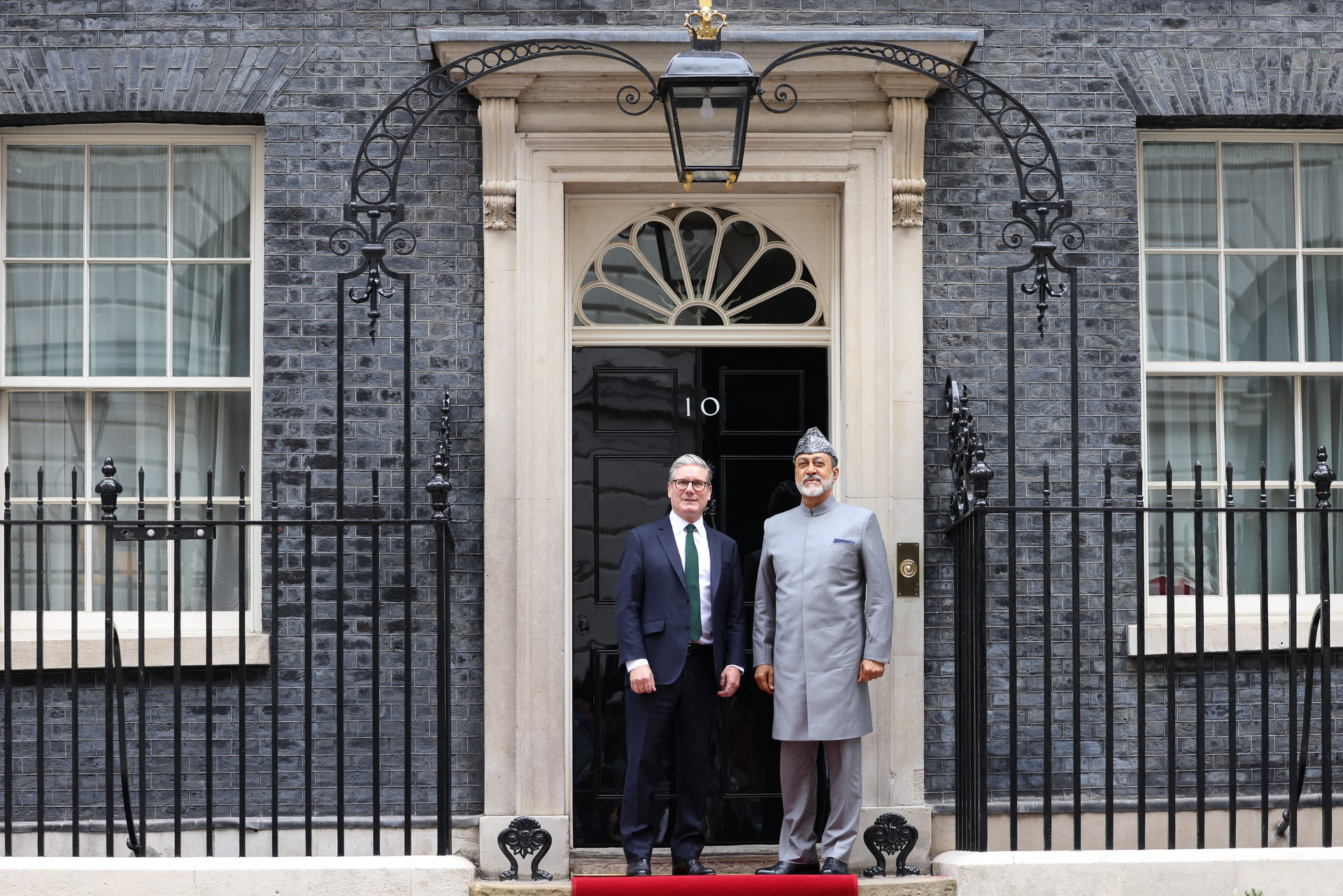
Four days before the sanction, Kazem Gharibabadi — Iran’s deputy foreign minister for legal and international affairs and Supreme National Security Council Secretary — flew to Muscat. The SNSC is the constitutional body that must approve any Hormuz governance MOU; Gharibabadi’s portfolio is the legal architecture of such agreements. His visit was not a courtesy call. The named warning followed it.
“Oman, in particular, should know that the U.S. Treasury will aggressively target any actors involved — directly or indirectly — in facilitating tolls for the Strait and any willing partners will be penalized.”
Scott Bessent, Treasury Secretary, X, May 28 2026
What does the 2016 Bank Muscat carve-out tell us?
In 2016, US Treasury secretly licensed Bank Muscat to convert $5.7 billion in Iranian overseas reserves from Omani rials to euros via US dollars — a transaction the Senate Permanent Subcommittee on Investigations later documented as a clear deviation from the prevailing Iran sanctions architecture. The carve-out existed because Treasury valued the Muscat back-channel more than it valued the rule it bent.
The historical record matters because it sets the baseline. For more than a decade, every Iran-Oman financial transaction that touched a US compliance officer’s desk was processed under the working assumption that Treasury would, eventually, grant Muscat the carve-out it needed. The November 2013 Joint Plan of Action and the July 2015 JCPOA both depended on this assumption. William Burns documented Oman’s role; John Kerry publicly credited Sultan Qaboos with securing the deal. Bank Muscat handled the rial conversion. No one was sanctioned.
The May 28 named warning ends that assumption. It does not formally revoke any prior license. It instead establishes a public benchmark — Bessent’s own words — that any Treasury official considering a future Muscat carve-out will have to defend on the record. The 2016 transaction was discreet because the back-channel required discretion. The May 28 X post made discretion structurally unavailable.
What did the Omani ambassador actually promise?
Less than the headlines suggested. The same-day phone call to Bessent, reported by gcaptain.com and Tribune India, contained three elements: an assurance that “there were no plans for tolling the strait,” a reference to “200 years of good relations,” and an explicit request that Omani individuals and financial institutions not be sanctioned. That is the public record.
What the ambassador did not say is at least as important. He made no commitment on the broader back-channel. He did not address the Bloomberg-reported permanent-toll negotiations directly — he addressed only the immediate question of Oman tolling the Strait itself. He did not commit to refusing to host future US-Iran indirect talks. He did not commit to terminating Gharibabadi’s May 24 conversations or their follow-on. Albusaidi’s February 6 indirect-talks mediation and his House of Commons statement that a deal was “within our reach” remain on the record, unretracted, as of the date of the ambassador’s call.
| Statement | What Oman conceded | What Oman preserved |
|---|---|---|
| “No plans for tolling the strait” | No Omani-flagged or Omani-port-based toll-collection role | Silence on permanent-system facilitation through banking, vessel registration, or port logistics |
| “200 years of good relations” | Acknowledgment of long-standing US ties | No commitment on current back-channel architecture |
| “Did not want Omani individuals or financial institutions sanctioned” | Implicit acceptance of Treasury’s pressure mechanism | No undertaking on Bank Muscat-Iran reserve arrangements |
FM Badr Albusaidi told a House of Commons inquiry in February that he was “confident” a peace deal was “within our reach” with “substantial” progress. The February 6 indirect US-Iran talks in Muscat, mediated by Albusaidi personally, were the most concrete current-cycle product of that confidence. The ambassador’s phone call to Bessent on Tuesday did not retract any of it.
The correspondent banking pressure point
The reason the ambassador called the same day is published in US Trade.gov country profiles. Bank Muscat — Oman’s largest commercial bank — holds correspondent banking relationships with J.P. Morgan Chase. National Bank of Oman clears through Wells Fargo. Bank Dhofar uses both. A secondary sanction targeting any of these correspondent links would not require a formal severance order from Riyadh or a multilateral coalition. It would require one OFAC determination that the bank engaged in a “significant transaction” with the PGSA.
Omani banks do not have a viable backup. There is no Chinese or Russian correspondent arrangement that replaces dollar clearing for a sovereign whose oil exports — Oman produces roughly 1 million barrels per day — are priced in dollars and whose sovereign wealth fund holdings are dollar-denominated. The sanction Bessent named is the sanction that ends the Omani banking sector’s access to the financial system its economy is built on.
Bank Muscat in 2016 was treated as too valuable to sanction. Bank Muscat in 2026 is being told, on public record, that it is no longer too valuable to sanction. The shift is documented in Bessent’s own X post — a Secretary-level statement that no Treasury official reviewing a future Muscat carve-out request can now ignore.
Where do the Bloomberg-reported permanent-toll talks stand?
Bloomberg’s May 21 report — sourced to Iranian ambassador to France Mohammad Amin-Nejad — described “active talks” between Tehran and Muscat over a permanent toll architecture. The report did not specify revenue-sharing percentages, port-throughput arrangements, or vessel-screening protocols. It described an ongoing negotiation, not a signed instrument.
Gharibabadi’s framing in the same window — “we are now in a state of war, and wartime conditions cannot be governed by peacetime rules” — provided Tehran’s legal predicate. The PGSA, in Iranian state-media coverage, is presented as a legitimate wartime exercise of co-sovereignty under the 1974 boundary treaty. The framing gives Muscat rhetorical cover to separate itself from the toll collection while continuing the diplomatic conversation about what a post-war Hormuz governance architecture might look like.
That separation is supported by the treaty’s specific geometry. The 1974 Iran-Oman maritime boundary places the inbound lane of the Strait’s Traffic Separation Scheme inside Omani territorial waters. Iran’s assertion of co-sovereignty over that lane is therefore not free-standing; it is contingent on Omani acquiescence, explicit or tacit. A post-war permanent toll system, as Bloomberg described it, would require Oman to formalize that acquiescence — converting what has been a passive territorial fact into an active governance arrangement. The Gharibabadi visit on May 24 was the opening bid for that formalization. Bessent’s X post on May 28 was the US objection to it.
PressTV, Iran’s state broadcaster, called Bessent’s warning to Oman “an absolutely illegal act” and published the day’s coverage under the headline “US slaps sanctions on Iran’s Strait of Hormuz authority after failing to break Tehran’s control by force.” The framing concedes the obvious — that financial pressure is the fallback after the military campaign did not produce the desired settlement — while preserving the legal predicate for the permanent-toll concept. Tehran is willing to lose the PGSA’s current revenue stream if the longer-term sovereignty claim survives the war. The fragility of Oman’s co-management posture was underscored on May 30 when Oman’s Maritime Security Centre reported a suspected mine in the TSS inbound lane — Omani waters, the corridor whose governance Bessent warned Muscat not to formalize.
“We are now in a state of war, and wartime conditions cannot be governed by peacetime rules.”
Kazem Gharibabadi, Iranian Deputy FM and SNSC Secretary, May 21 2026
Why can’t Saudi Arabia shape the outcome?
There is no bilateral defense treaty between Riyadh and Muscat. Oman declined to participate in the Peninsula Shield Force deployment to Bahrain in 2011. Oman refused to sever diplomatic ties with Iran when the GCC majority did so in 2016 after the Saudi embassy attack in Tehran. There is no institutional mechanism — neither in the GCC charter nor in any bilateral instrument — that allows Riyadh to compel Omani cooperation on a sanctions-adjacent decision.
Saudi Arabia was excluded from all five US-Iran negotiating rounds across 106 days. Saudi Arabia is not a member of the UK-France-led 40-nation Hormuz coalition — the coalition governing Hormuz through the Northwood command structure. Saudi Arabia is not party to the PGSA governance track, which exists between Tehran and Muscat under a treaty Riyadh never signed. The three Hormuz architectures — coalition, toll system, Muscat back-channel — share one feature: Saudi absence.
The practical implication of that absence is not merely symbolic. Saudi Arabia has no independent line to Tehran of comparable institutional depth. The MBS-Pezeshkian Eid call earlier this week — a bilateral courtesy exchange — does not substitute for the institutional channel Muscat has run since 2012. The channel has no Riyadh equivalent because it was built specifically around Oman’s non-alignment posture: its refusal to join the 2016 GCC diplomatic severance, its maintenance of an Iranian embassy throughout, and its treaty-grounded claim to co-authority over the Strait’s inbound lane. Replicating those conditions elsewhere in the Gulf is not a near-term option for any party.
If Oman capitulates and the back-channel collapses, the next phase of the diplomatic track — Iran left Doha without signing the MOU, and Muscat was the expected routing for what came next — closes for everyone, including the actors who had no input into its operation.
The structural exposure is the point. Anwar Gargash’s characterization of the GCC as “weakest historically” — described in HOS coverage of GCC institutional fracture — was an Emirati indictment delivered in May. The Bessent named warning is a US action that confirms it. Riyadh is being asked to absorb the consequences of a decision made between Washington and Muscat, with no input into either.
Operation Economic Fury and the Epic Fury sequel framing
The Trump administration characterized the PGSA sanctions as part of “Operation Economic Fury” — explicitly framed by Washington Examiner reporting as the successor to the military campaign “Operation Epic Fury.” The naming sequence carries weight. Epic Fury was the air-and-cyber campaign that began in late February and produced — by CRS IN12692 documentation — the loss of 24 MQ-9 Reaper drones from a US fleet of 135, against an operational minimum of 189. The campaign did not produce an Iranian signature on the MOU. Forty years of regional deterrence collapsed at Camp Buehring a day earlier.
The war-powers record tells the fuller story of why Economic Fury exists. Nine successive War Powers Resolution votes failed in the Senate at 47-52 — a margin narrow enough to signal Republican ambivalence but wide enough to block any legislative constraint on the campaign. Each failed vote left the executive branch conducting a military campaign without statutory authorization and without the political consensus to either expand or terminate it. The kinetic phase could continue; it could not convert. Iran absorbed the strikes, replaced the IRGC commanders who were killed, and maintained its negotiating positions across five rounds over 106 days. The MOU remained unsigned.
Economic Fury is the diplomatic-pressure phase of the same campaign — the acknowledgment that the kinetic phase did not deliver the political objective. Senator Tom Cotton’s May 22 letter to Bessent (“every dollar collected directly finances a sanctioned terrorist entity”) set the Senate Republican floor for the designation and provided Treasury the legislative record to justify acting on its own authority rather than waiting for war-powers clarification from Congress. The transition from Epic Fury to Economic Fury is also a transition from a campaign with a defined military endpoint to one with no equivalent termination mechanism: sanctions regimes last until formally lifted, which means past any plausible MOU signature window, past the term-contract renegotiation windows that will reset Saudi crude pricing benchmarks, and past the 2027 fiscal year in which Saudi Arabia’s Q1 deficit of $33.5 billion compounds without a resolution to the underlying war.
The naming also signals duration. Treasury did not issue these designations with a review window or a sunset clause. Unlike Epic Fury’s kinetic strikes, which could be paused — as the May 4-8 four-day operational suspension demonstrated — an IRGC-CT designation against the PGSA cannot be paused. It can only be revoked. Revocation requires a Treasury finding that the designated entity no longer poses a threat — a finding that is constitutionally difficult to make while Hormuz remains under IRGC operational control and while the MOU remains unsigned. The economic-pressure phase is built on a different clock than the diplomatic-resolution phase, and Treasury moved first.
The binary choice Muscat is being forced into
Oman’s regional value proposition rests on a single asset: it is the country no one sanctions. The 2016 Bank Muscat license was the operational expression of that status. The February 2026 indirect-talks hosting was the diplomatic expression. The 1974 boundary treaty and the 173-state non-signature on IMO CL 5028 were the legal-sovereignty expressions. All three depend on Oman remaining outside the sanctions architecture.
The Bessent X post does not yet sanction Oman. It establishes the conditions under which Treasury will. Those conditions are structurally incompatible with maintaining the back-channel as it was operated for fourteen years. Either Oman terminates the Iran-Hormuz governance conversation — surrendering the diplomatic equity Arab Center DC described as “effectively liquidated” by the war but not yet formally renounced — or Oman absorbs US financial pressure that its banking sector cannot survive in any extended form.
Trump’s May 27 Cabinet remark — “It’s international waters, and Oman will behave just like everybody else, or we’ll have to blow ’em up” — set the political ceiling. Bessent’s same-week sanction set the financial floor. Between them is a band of permissible Omani behavior that excludes both the toll-system facilitation Bloomberg reported and the long-standing assumption that Muscat operates outside the sanctions framework that governs Iran.
FDD published “Oman’s Flipflopping on Iran Will Leave It Isolated in the Gulf” in March, arguing that Oman’s ambivalent stance would cost it within the GCC. The argument has now been confirmed from the opposite direction — not from within the GCC, but from Washington. The isolation FDD predicted is being administered by Treasury, not by Riyadh or Abu Dhabi.
What Saudi Arabia loses in this is harder to measure because Saudi Arabia did not have it to begin with. The Muscat back-channel ran without Riyadh’s input through three administrations. Its potential closure removes a regional capability Saudi Arabia could not use but could rely on existing. The state that ends up most exposed to the consequences of the Bessent warning may be the one that was never named — and that watched the warning issued without being consulted, briefed, or asked. Saudi Arabia’s $33.5 billion Q1 deficit compounds while the diplomatic architecture that might have resolved the underlying war continues to operate in a city Riyadh has no channel into.
Frequently Asked Questions
What is the difference between IRGC-CT sanctions and Iran-program sanctions in terms of scope?
IRGC counterterrorism designations are issued under Executive Order 13224 — the post-9/11 counterterrorism authority — which prohibits not just US-person transactions but reaches anyone “materially supporting” the sanctioned entity. Iran-program sanctions, by contrast, operate under E.O. 13902 and adjacent authorities, which have a narrower secondary-sanctions reach focused on energy and metals sectors. By placing PGSA under the IRGC-CT regime, Treasury captured digital wallets, barter arrangements, and informal payment networks that would have remained outside an Iran-program designation’s effective scope. A vessel operator paying in Chinese yuan through a third-country intermediary has no shield under E.O. 13224 that it would have had under the Iran-program regime.
How does Bessent’s named warning to Oman compare to historical Treasury practice toward third-country financial facilitators?
Treasury has historically named China, Russia, and Turkey in similar warnings — most often through OFAC press releases rather than the Secretary’s personal social media. Naming a single GCC state by name, in the Secretary’s own X account, with explicit operational language about “any actors involved — directly or indirectly,” is a category of public pressure rarely used against a country that retains diplomatic relations and has no formal sanctions program of its own. The closest precedent is the 2019 Turkey-Halkbank indictment, where Treasury and DOJ acted publicly against a state-affiliated bank while State maintained ambassadorial relations. Bessent’s named warning preceded any indictment — which makes it an earlier-stage escalation than the Halkbank sequence.
What role does Sultan Haitham bin Tariq’s domestic position play in Oman’s ability to absorb US pressure?
Sultan Haitham, who succeeded Qaboos in January 2020, has emphasized Oman Vision 2040 economic diversification and reform — but the political mandate for that program assumes continued access to international financing and ratings stability. Oman’s sovereign debt was upgraded to Ba2 by Moody’s in 2025; a secondary-sanctions designation against any major Omani bank would risk a credit-rating action that would compound the cost of the diversification financing the Sultan’s program requires. External financial pressure of the kind Bessent described would reach the Sultan’s domestic constituency through bond markets and sovereign borrowing costs before it reached the foreign ministry.
What is the status of Iran’s frozen $24 billion in overseas reserves in relation to the PGSA sanctions?
The $24 billion sequencing arrangement reportedly under negotiation — $12 billion at MOU signing, $12 billion within a 60-day window — is structurally separate from the PGSA designation but politically linked. Oman had been the most plausible secondary processing route for any reserve transfer, given Bank Muscat’s established role in the 2016 rial-conversion and its institutional familiarity with Iran-linked financial flows. The PGSA sanction removes that route. Qatar held the $6 billion custodial role for the 2023 prisoner-swap arrangement, and Qatar’s financial infrastructure — shielded from direct IRGC-CT exposure by its distinct political relationship with Washington — is now the only viable channel for any post-MOU reserve release. The Omani financial sector’s exit from the sequencing architecture narrows that architecture to a single Qatari channel and increases Doha’s leverage in the MOU end-game at Muscat’s direct expense.
How does the Treasury Department coordinate IRGC-CT designations with the State Department’s diplomatic posture?
OFAC designations are technically Treasury actions, but the interagency review for an IRGC-CT designation includes State Department, NSC, and Department of Justice sign-off. The State Department’s posture toward Oman remains formally cooperative — Embassy Muscat has not been recalled and no formal diplomatic protest was issued — which means the May 28 designation reflects an interagency consensus that public financial pressure on a friendly state is compatible with maintaining diplomatic ties. The same pattern was visible in the 2019 Treasury designations of Turkish banks during the Halkbank case, where State maintained ambassadorial relations even as OFAC and DOJ acted aggressively. The distinction matters for Muscat: the US is applying maximum financial pressure while leaving the diplomatic exit open — which is precisely the architecture that makes the choice Oman faces a real choice rather than a foregone conclusion.
The behavioral consequences of the OFAC designation on commercial shipping — how P&I exclusions, charterer force majeure, and crew-safety assessments each independently closed Hormuz without any government ordering it shut — are documented in The Invisible Blockade: How Hormuz Closed Without Anyone Ordering It Shut.