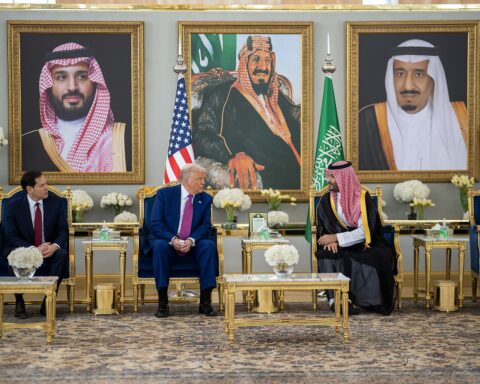

MINA — Crown Prince Mohammed bin Salman used the annual Eid al-Adha reception at Mina Palace on May 29 to publicly thank Saudi Arabia’s military for “efforts to defend the country” during what he called “the crises the region is experiencing.” The phrase amounts to the first on-record royal acknowledgment that Saudi Arabia has played an active combat role in the ninety-one-day Iran war — delivered not through a MOFA communiqué or a defense ministry briefing but through a Hajj protocol address where attribution is soft and deniability survives. The audience included princes, the Grand Mufti, senior GCC officials, and the military commanders who had overseen the first deployment of air defense batteries on the Mecca perimeter in modern Hajj history. Iran was not mentioned. Neither was the word “war.” Asharq al-Awsat and Al Arabiya published the statement. Reuters, Bloomberg, and the Financial Times did not cover it.
Table of Contents
- What MBS Said — and What He Did Not
- Who Was in the Room?
- Why Did Riyadh Break Its Silence at Mina?
- Ninety-One Days of Combat Without a Name
- How Does 2026 Compare to the Wars Saudi Arabia Has Declared?
- The Interceptor Crisis Behind the Gratitude
- Where Was This Statement Published — and Where Was It Not?
- What Does Iran Gain by Ignoring the Mina Statement?
- Frequently Asked Questions
What MBS Said — and What He Did Not
The exact words, as reported by Asharq al-Awsat: “These efforts are a direct extension of the broader commitment to defending Saudi Arabia’s security and protecting its sovereignty, a commitment that has been clearly evident during the crises the region is experiencing.” MBS also thanked “members of the military and security sectors, employees across various government agencies, and volunteers for their service and for ensuring the safety and security of pilgrims.” The second sentence — thanking volunteers and civil servants — is the standard Mina register. The first is not.
“These efforts are a direct extension of the broader commitment to defending Saudi Arabia’s security and protecting its sovereignty, a commitment that has been clearly evident during the crises the region is experiencing.”
— Crown Prince Mohammed bin Salman, Mina Palace, May 29, 2026 (Asharq al-Awsat)
“Defending Saudi Arabia’s security” and “protecting its sovereignty” in the context of “the crises the region is experiencing” is a direct reference to the military’s combat posture during the Iran war. But the construction is bounded with care. The crises are the region’s, not Saudi Arabia’s. The commitment “has been clearly evident” — present perfect, continuous, already demonstrated — rather than declared in the present tense. The phrasing acknowledges what the military has done without announcing what Saudi Arabia is doing.
Consider what is absent. Iran is not named. No specific military operation is referenced — not the RSAF strikes on Iranian territory confirmed by Reuters, not the approximately 2,400 PAC-3 interceptors expended against 894 aerial threats between March 3 and April 7, not the CENTCOM actions launched from Saudi soil on May 25–26. There is no mention of Saudi Arabia’s position in the US-Iran MOU negotiations from which it has been excluded for five rounds and 106 days. The word “enemy” does not appear.
The Middle East briefing 3,000+ readers start their day with.
One email. Every weekday morning. Free.
The Saudi Press Agency carried the event under Hajj-stewardship framing. Asharq al-Awsat — Saudi-owned, London-based, read by Gulf policymakers — separated the defense language into its own coverage line. Al Arabiya filed the event as “MBS receives well-wishers at Mina Palace on Eid al-Adha.” Arab News, the Kingdom’s English-language broadsheet, led on the Hajj-service angle with no defense-crisis framing in its headline.
Who Was in the Room?
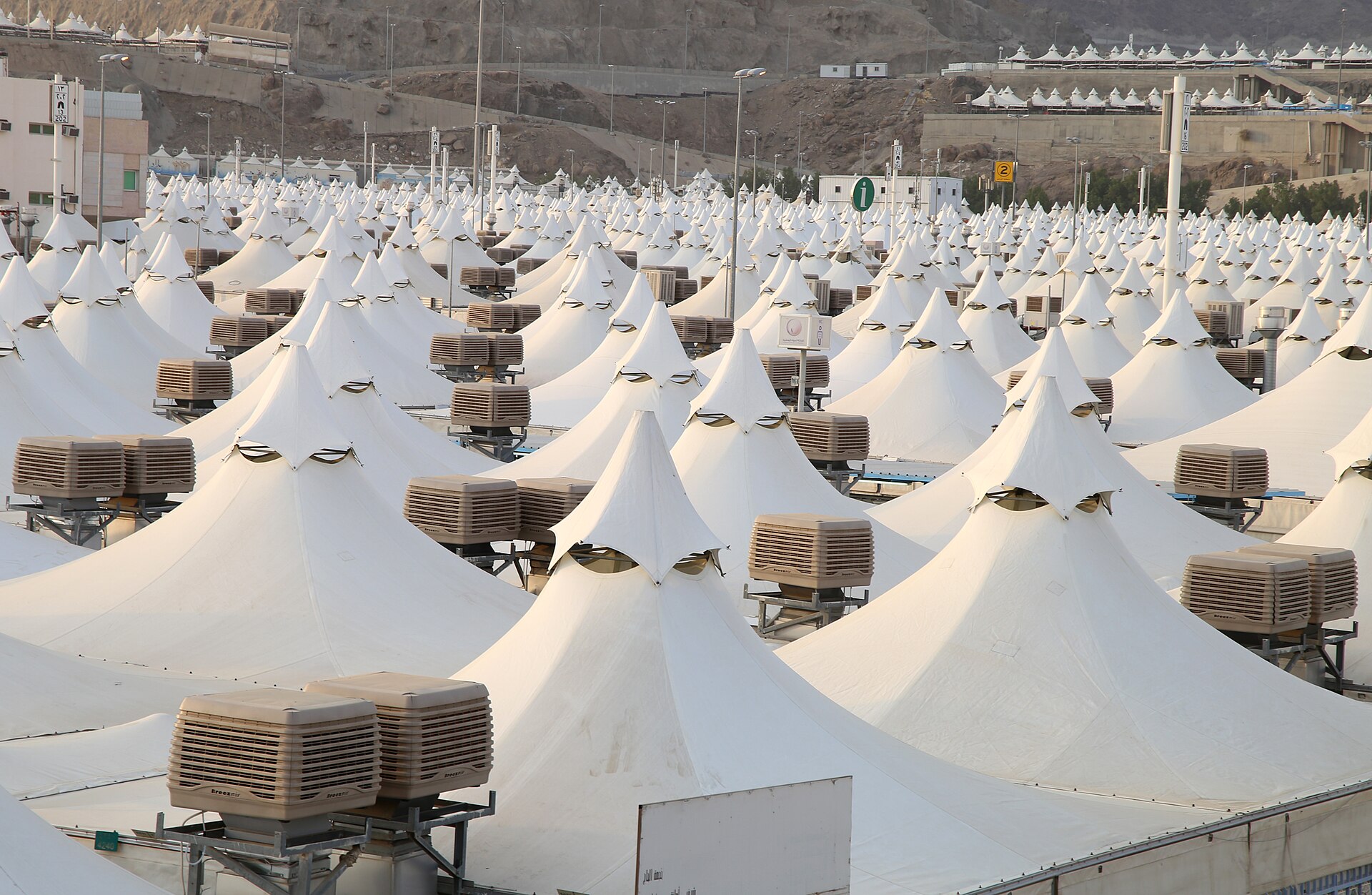
The Mina Palace reception follows a fixed annual structure: Quranic recitation, Crown Prince remarks on behalf of King Salman, affirmation of the Kingdom’s stewardship of the Two Holy Mosques, banquet. The guest list is standardized — Arab News and the Saudi Gazette reported the presence of princes, Grand Mufti Sheikh Abdulaziz Al al-Sheikh, senior scholars and sheikhs, ministers, GCC officials, and “commanders of military sectors participating in Hajj operations.”
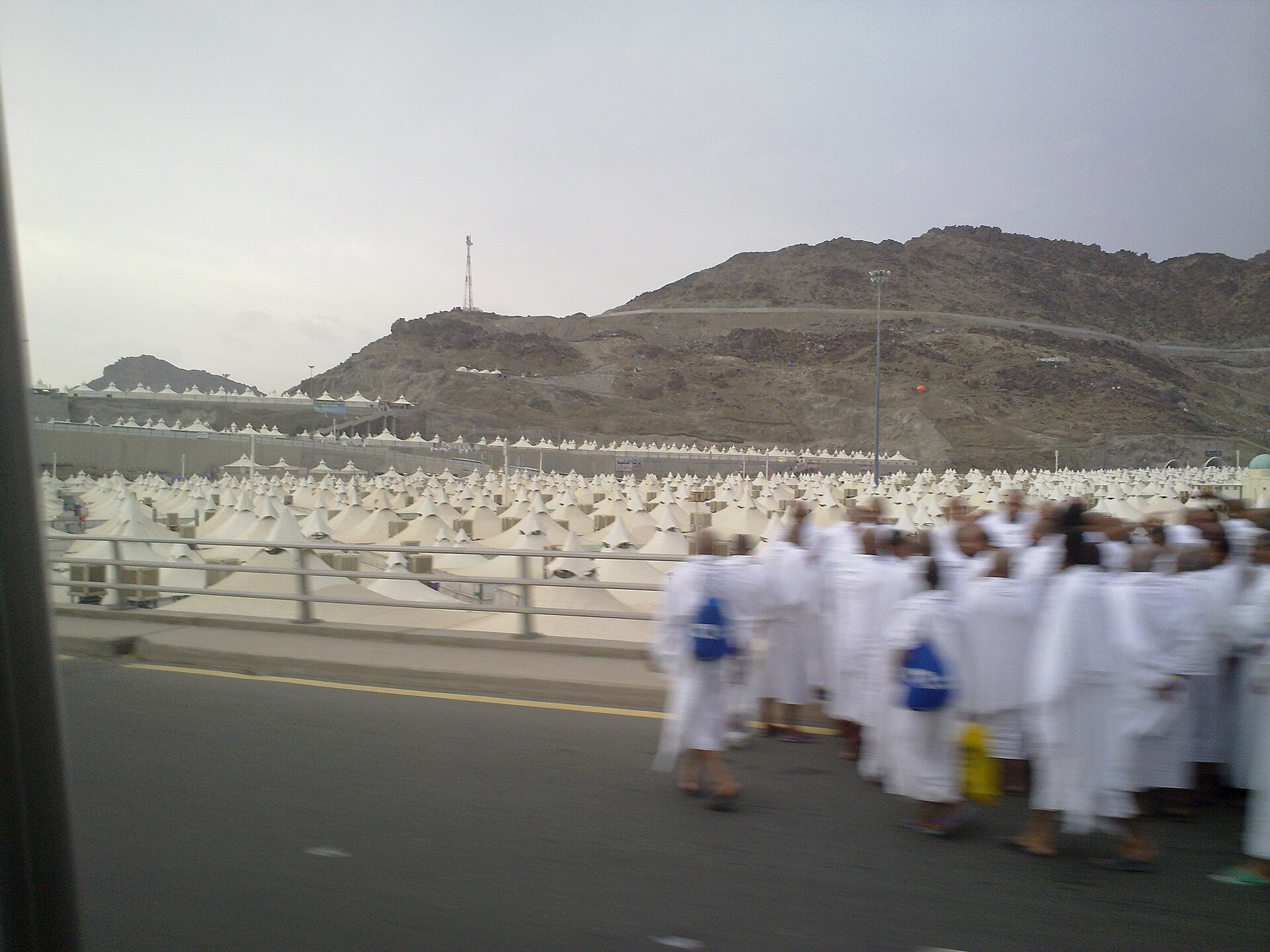
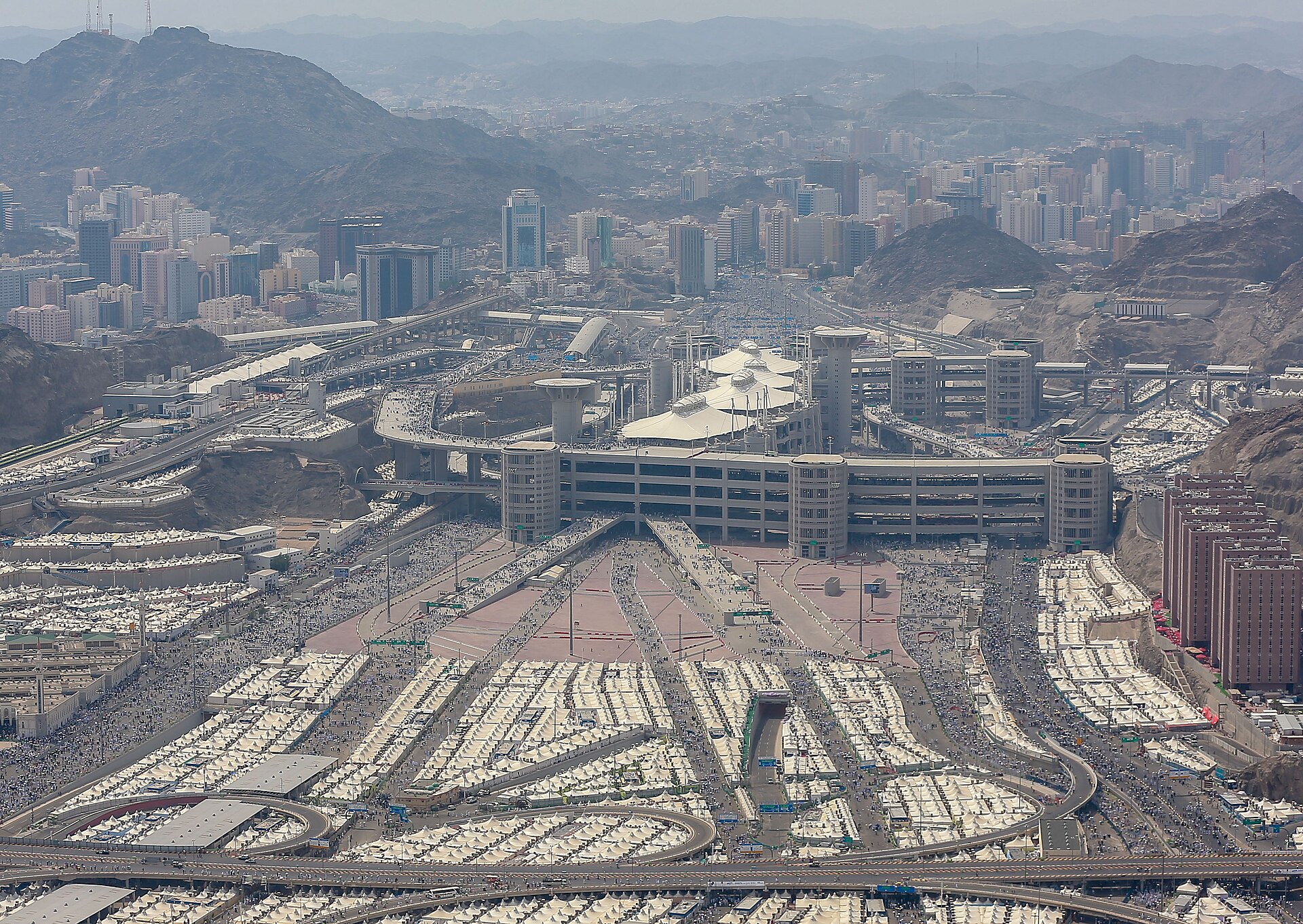
In any other year, those military commanders would have overseen crowd management, medical logistics, and perimeter security for the world’s largest annual gathering. In 2026, they had commanded the first air defense deployment on the Mecca perimeter in modern Hajj history — a response to the reality that 1,707,301 pilgrims performed Hajj, according to the Saudi Ministry of Hajj and Umrah, under the threat arc of Iranian ballistic missiles that had struck Saudi territory in each of the preceding three months. Gulf News and Arab News confirmed the deployment.
The GCC officials in the room represent governments navigating their own versions of the war’s ambiguity. Kuwait had absorbed 362 Iranian aerial intercepts — 265 during the full-war phase, 97 post-ceasefire — including a May 28 barrage of seven ballistic missiles, two cruise missiles, and 26 drones that struck Camp Buehring for the second time in three months. The UAE had closed its embassy in Tehran, exited OPEC, and deployed Israeli-origin air defense on its soil. Oman had refused to sign the IMO’s Hormuz advisory — the sole non-signatory among maritime nations. MBS was claiming a combat burden in front of allies whose governments have not acknowledged it on Saudi Arabia’s behalf.
The Grand Mufti’s presence carries its own institutional weight. In August 1990, King Fahd obtained a fatwa from Grand Mufti Ibn Baz legitimizing the presence of non-Muslim troops on Saudi soil to repel Iraq’s invasion of Kuwait — a prerequisite for the coalition that followed. In 2026, no equivalent fatwa has been requested or issued, because no equivalent war has been declared. The Grand Mufti sat in the same room where MBS thanked generals for a combat role that has no formal religious or legal authorization on the Saudi books.
Why Did Riyadh Break Its Silence at Mina?
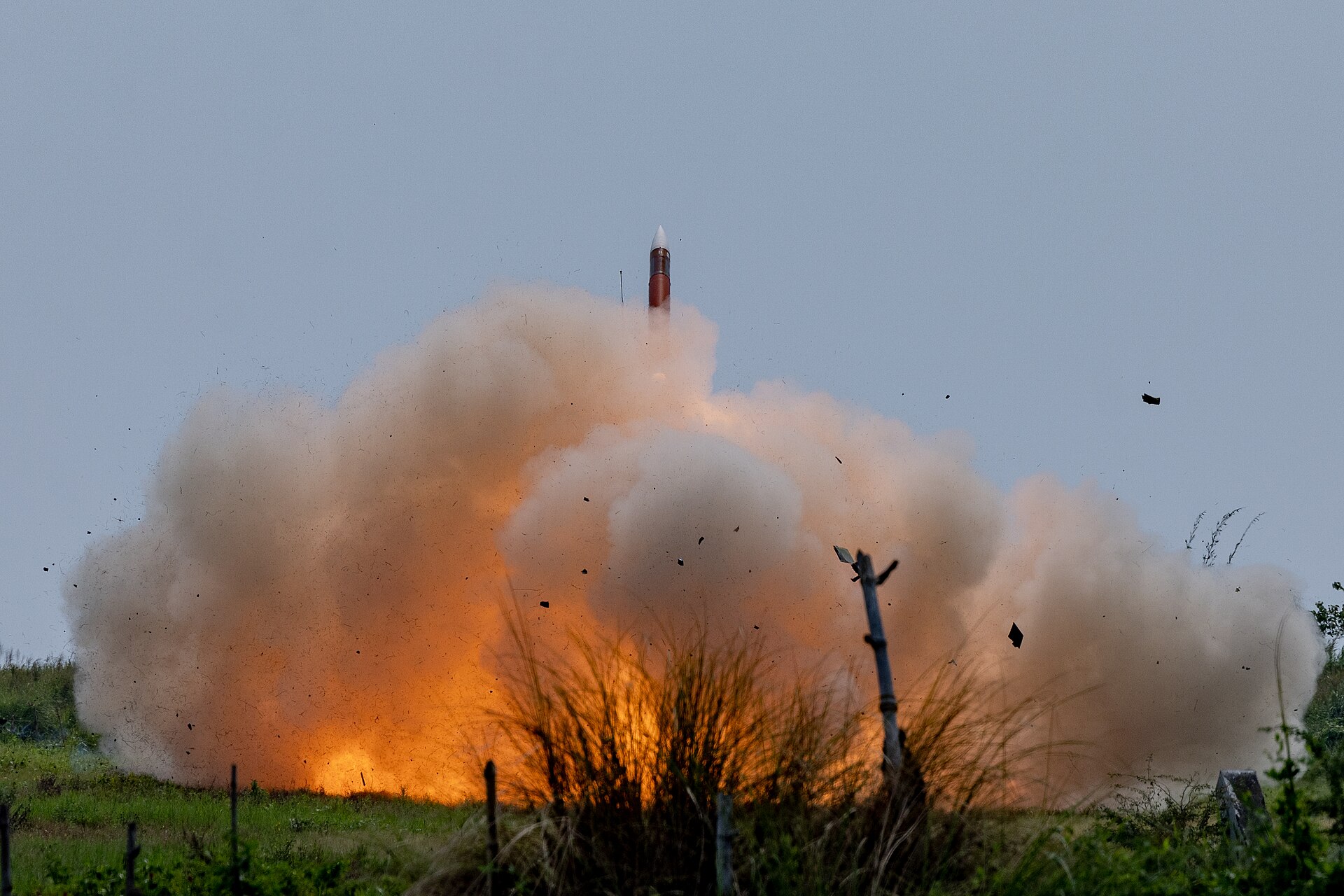
Because the Mina Palace reception operates under Hajj protocol conventions that allow soft attribution — a statement can be heard by every general, prince, and GCC official in the room without constituting a formal diplomatic position. Ten days of MOFA silence preceded this moment. Faisal bin Farhan’s May 20 call for Hormuz to be “restored to state prior to February 28th 2026” was the last substantive Saudi diplomatic communication before MBS spoke.
For those ten days, MOFA issued nothing — not on the CENTCOM strikes launched from Saudi territory on May 25–26, not on the May 28 barrage that struck Kuwait’s Mina al-Ahmadi refinery for the third time in two weeks, not on the fracturing of MOU momentum after Trump told his cabinet on May 27 that he was conditioning the Iran deal on Saudi normalization with Israel. Bin Farhan’s next confirmed appearance was at the EU Gymnich informal meeting in Cyprus on May 27 — two days before the Mina reception. Between May 20 and May 29, the Kingdom’s diplomatic voice went silent while its military continued to operate, its interceptor inventory continued to deplete, and CENTCOM continued to use its airspace and bases for offensive strikes against Iran without consultation.
The silence broke not through MOFA but through MBS directly — and not at a press conference, a cabinet session, or a defense briefing, but inside the Hajj cordon. SPA published it. Asharq al-Awsat amplified the defense framing. No international wire service treated it as a standalone diplomatic development. That same Hajj cordon contained a more specific disclosure from the Ministry of Defence: the first official acknowledgment of Saudi combat deaths, buried in a logistics notice for the Mina martyr-family camps — confirming casualties from a war the Kingdom has never named.
Domestically, the statement plants the first royal-level marker in what may become a war narrative for Saudi public consumption. Saudi Arabia has 15.7 to 17.1 million active users on X — the largest Arabic-language market on the platform, according to the Gulf International Forum.
MEMRI documented the shift from Saudi neutrality to what it described as an “existential threat” framing of Iran as early as March 2, 2026. But that shift had been expressed through MOFA statements and state-aligned media editorials. The Mina address is the first time the Crown Prince — speaking on behalf of King Salman — placed the military’s actions inside the frame of national defense during this war.
“Saudi Arabia has abandoned its declared position of neutrality and now defines Iran as an existential threat.”
— MEMRI, “Shift In Saudi Arabia’s Declared Position On Iran War,” March 2, 2026
Within the GCC, MBS was asserting that Saudi Arabia has borne costs it has not publicized — 2,400 interceptors expended, PSAB infrastructure destroyed, RSAF jets dispatched to Iranian airspace — while other Gulf states have pursued bilateral survival strategies. Anwar Gargash, the UAE’s presidential adviser, called the GCC “weakest historically” in May. No formal rejoinder from GCC delegations was expected at a Hajj reception. None was offered.
Saudi Arabia cannot declare war — Article 61 of the Basic Law reserves that authority for King Salman, and no royal decree has been issued. It cannot formally acknowledge co-belligerency without triggering the framework that Mojtaba Khamenei’s fourteen-page Arafah Day doctrine has already articulated: “nations and lands will no longer serve as shields for American bases.” It cannot remain silent while its military bleeds and its infrastructure absorbs repeated strikes. The Mina reception operates under diplomatic conventions that require no formal attribution — MBS could say what he said without a single MOFA follow-up, a single press briefing, or a single wire-service quote. The same constitutional architecture that prevents MBS from declaring war also blocks him from the Abraham Accords: why Saudi recognition of Israel requires a Royal Decree the crown prince cannot sign is the same Article 70 constraint that has made Israel normalization a hostage to King Salman’s ninety-year-old pen.
Ninety-One Days of Combat Without a Name
What the Saudi military has done since February 28 has no formal designation, no named operation, and no public-facing spokesman. Between March 3 and April 7 — thirty-eight days — Saudi Arabia expended approximately 2,400 PAC-3 MSE interceptors against 894 aerial threats, according to CSIS’s Missile Defense Project. CSIS described the depletion rate as having “no comparable precedent in the system’s operational history.”
The Royal Saudi Air Force struck Iranian drone and missile-launch sites on Iranian soil in late March — the first known direct Saudi military action against Iran in the modern history of the Gulf, confirmed by Reuters. Riyadh did not confirm the strikes. It did not deny them. It issued no statement of any kind.
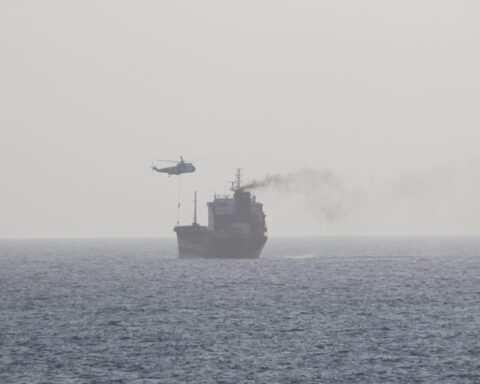
On March 16, an Iranian strike damaged five KC-135 tankers at Prince Sultan Air Base; eleven days later, on March 27, a second strike destroyed an E-3G Sentry AWACS aircraft — tail number 81-0005 — and damaged at least five additional KC-135s, wounding fifteen US service members. Ten KC-135 tankers were damaged or destroyed across the two PSAB attacks, according to The Aviationist, Military Times, and Defense News. KC-135s were subsequently evacuated from the base. Saudi Arabia issued no statement on either strike.
The Saudi military absorbed and inflicted damage at a scale that, in any prior conflict involving the Kingdom, would have been accompanied by daily briefings, a named spokesman, and a formal coalition framework. In 2015, al-Asiri held regular press conferences on operations an order of magnitude smaller than the 2026 intercept campaign. In 2026, the RSAF conducted its first offensive operations against a near-peer adversary — strikes on Iranian sovereign territory — and the Kingdom’s official communication apparatus produced silence. That silence also obscures a deeper structural gap: every prior Saudi military campaign operated under a specific written legal instrument, and the 2026 war has none. Hadi’s death on May 28 extinguished the last surviving author of Saudi Arabia’s most recent such instrument — the March 2015 letter that authorised Decisive Storm — while Riyadh has produced no comparable document for the conflict MBS thanked his generals for fighting.
On May 25–26, CENTCOM struck Iranian missile launch sites and two IRGC mine-laying fast boats near Bandar Abbas — strikes launched in part from Saudi territory. Saudi Arabia was not consulted, and MOFA was silent. The action took place inside Riyadh’s self-imposed Hajj no-escalation window. Three days later, MBS thanked his generals at Mina for their “efforts to defend the country” without referencing any specific operation, any specific strike, or any specific adversary.
How Does 2026 Compare to the Wars Saudi Arabia Has Declared?
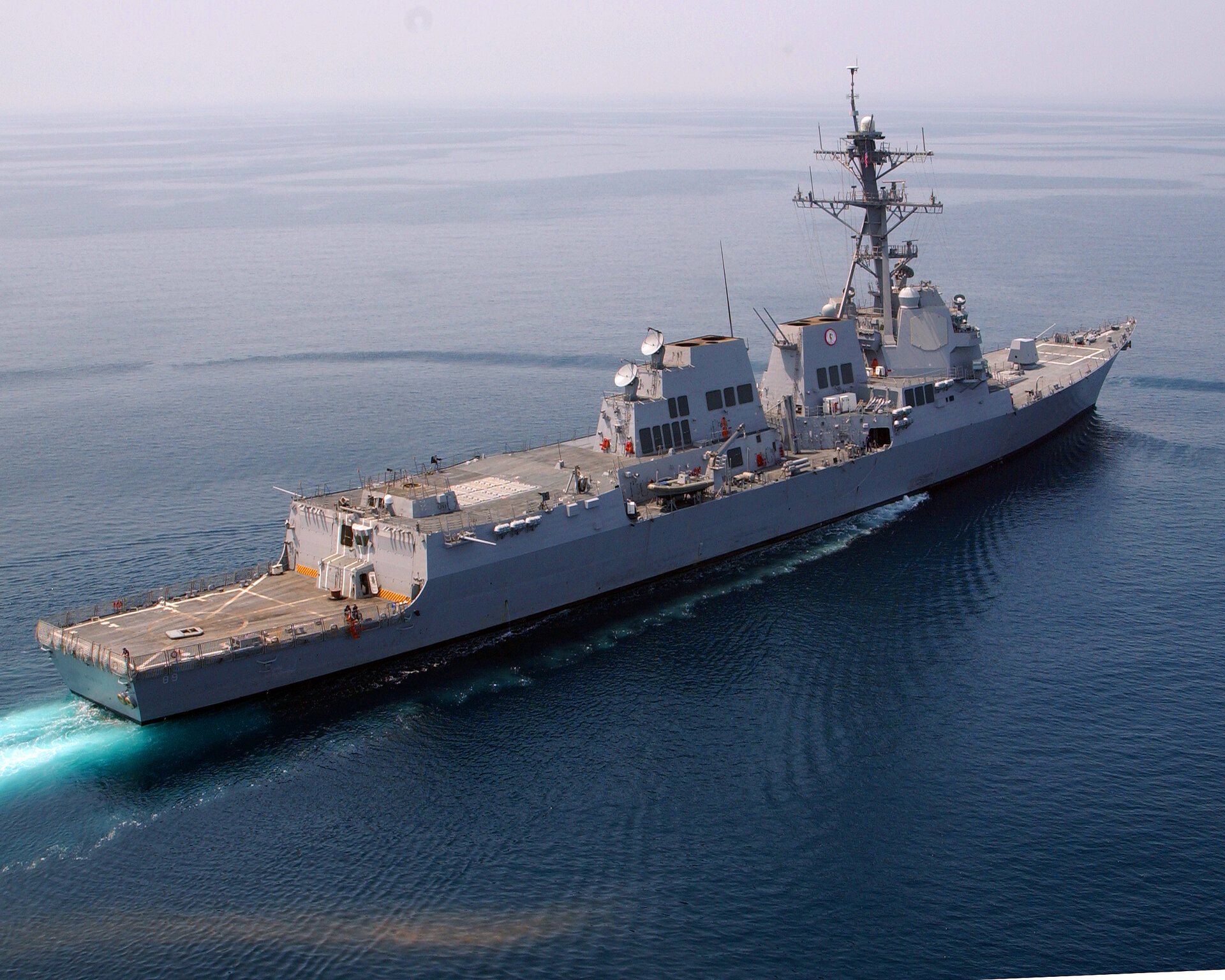
In both prior cases — the 1991 Gulf War and the 2015 Yemen intervention — Saudi Arabia declared the campaign, named it, appointed a military spokesman, and published a coalition list. In 2026, none of these elements exist.
On August 6, 1990, King Fahd publicly requested US military intervention following Iraq’s invasion of Kuwait. Fahd received a fatwa from Grand Mufti Ibn Baz authorizing the presence of non-Muslim troops on Saudi soil — the first such ruling in the Kingdom’s modern history. Saudi Arabia was the diplomatic architect of the coalition, the host, and the inviter. The Kingdom was the aggrieved party’s neighbor, not itself under direct attack.
In 1990, Saudi Arabia invited the coalition and controlled the diplomatic frame. In 2026, the US-Israel military campaign began without Saudi agreement: CENTCOM strikes are launched from Saudi soil without consultation, and the US-Iran MOU negotiations exclude Saudi Arabia entirely. Fahd’s August 1990 address preceded coalition operations by months and shaped them. MBS’s May 29 statement came ninety-one days into a conflict whose combat record Saudi Arabia had not previously acknowledged at the royal level.
On March 26, 2015, Operation Decisive Storm was announced within hours of its launch. Saudi Arabia’s ambassador in Washington held a press conference. Brigadier-General Ahmed al-Asiri was named as the coalition’s military spokesman and conducted regular media briefings. The operation had a formal name, a nine-nation coalition list, and a publicly articulated legal basis. When it transitioned to Operation Restoring Hope on April 21, 2015, that transition was also formally announced.
| 1991 (Gulf War) | 2015 (Decisive Storm) | 2026 (Iran War) | |
|---|---|---|---|
| Declaration | King Fahd public request, Aug 6, 1990 | Ambassador press conference, Mar 26, 2015 | None issued |
| Operation name | Desert Shield / Desert Storm | Decisive Storm / Restoring Hope | None |
| Military spokesman | Coalition spokesmen (named) | Brig-Gen Ahmed al-Asiri (named) | None |
| Coalition list | 34 nations, publicly named | 9 nations, publicly named | Absent from UK-France 40-nation coalition |
| Legal basis | UNSC Res 678; Grand Mufti fatwa | Hadi government request; GCC mandate | No articulation; Art. 61 decree not issued |
| Saudi under direct attack | Scud strikes (limited) | No | 894 aerial threats; PSAB struck twice |
| Royal acknowledgment | Immediate, public | Immediate, public | Day 91, Mina Palace — protocol venue |
In 2026, the Saudi military has expended more interceptors in 38 days than most NATO members hold in their total inventories, conducted offensive strikes on Iranian soil, and absorbed direct hits on its most sensitive military installations. Saudi Arabia is absent from the UK-France 40-nation Hormuz coalition assembled at Northwood. No royal decree of war has been issued under Article 61 of the Basic Law. The Mina statement acknowledged the military’s “efforts” without naming what those efforts were, who they were directed against, or under what authority they were conducted.
The Interceptor Crisis Behind the Gratitude
MBS thanked the military commanders in the room without describing the inventory crisis those commanders are managing. Pre-war PAC-3 MSE stocks stood at roughly 2,800 rounds. After 38 days of intercept operations, approximately 400 remain — an 86 percent drawdown. The $9 billion DSCA-approved replenishment sale covers 730 rounds. Lockheed Martin’s production line will not deliver meaningful volumes before late 2027, according to Defense Post and Defense News reporting.
Four hundred interceptors against an adversary that has fired 1,372 ballistic missiles at GCC states since February 28, according to the IISS. The May 28 barrage at Kuwait alone — seven ballistic missiles, two cruise missiles, and 26 drones in a single 24-hour window — consumed the kind of interceptor volume that the Saudi inventory can no longer sustain repeatedly. The broader US force posture in the Gulf faces comparable strain: the MQ-9 Reaper fleet has fallen to 135 units against a 189-unit operational minimum, with 24 destroyed during Operation Epic Fury, according to the Congressional Research Service.
The gap between authorization and delivery — at least eighteen months — means Saudi Arabia will enter 2027 with fewer interceptors than it expended in the war’s first five weeks, unless alternative sources are secured or the conflict’s intensity drops below levels sustained since the April ceasefire. No allied PAC-3 transfer from Japan, Germany, or any other operator has been announced. The commanders MBS was thanking at Mina deployed air defense batteries on the Mecca perimeter while managing an interceptor deficit that narrows with every engagement.
Where Was This Statement Published — and Where Was It Not?
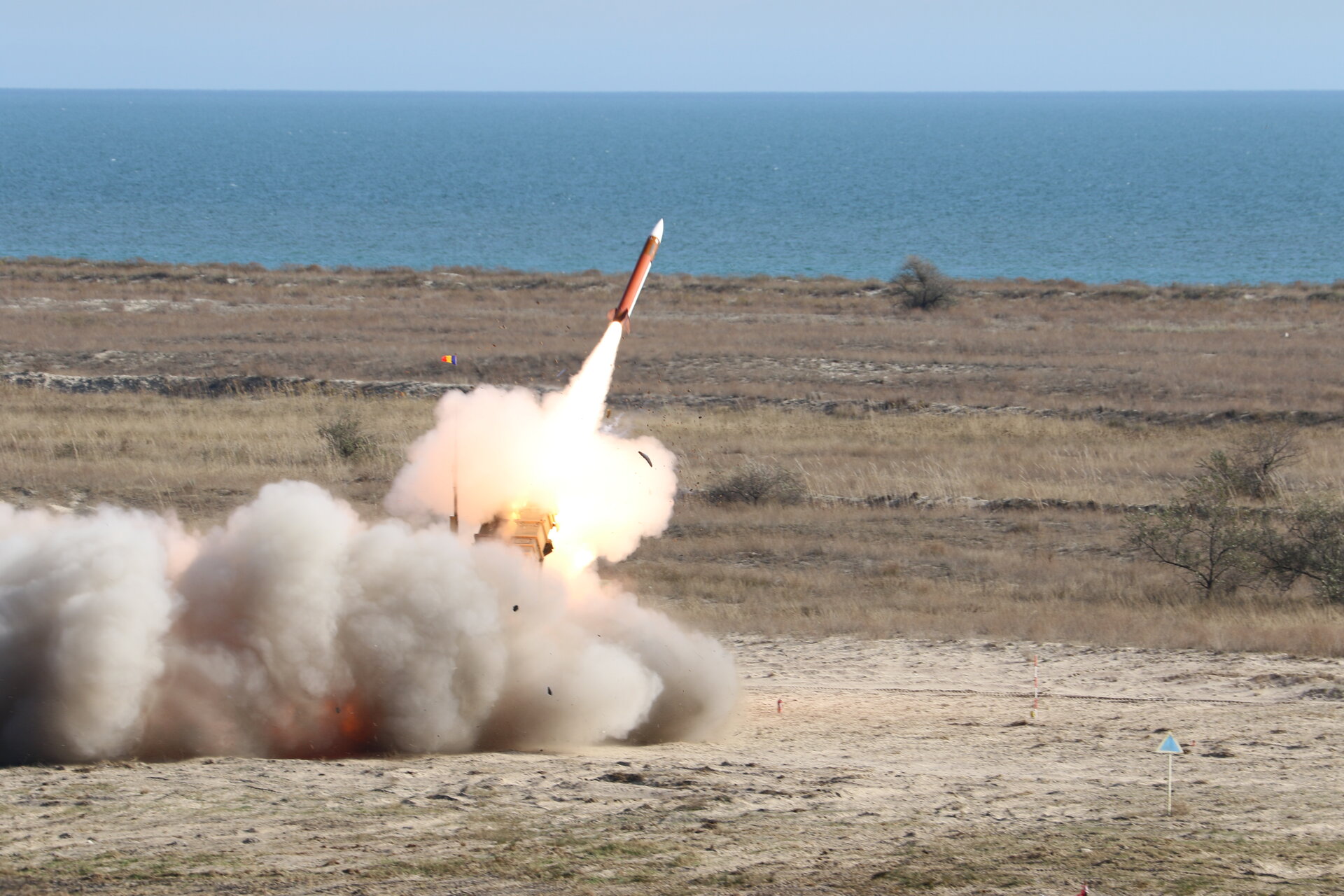
Asharq al-Awsat and Al Arabiya — both Saudi-owned — carried the defense framing. Reuters, Bloomberg, the Financial Times, Associated Press, and Al Jazeera did not cover it as a standalone diplomatic development. The statement exists in the Arabic-language Gulf media ecosystem and nowhere else in the international press. The distribution was the design.
Asharq al-Awsat published two separate articles on the reception — one framing MBS’s remarks through the defense lens, another through Hajj stewardship. The Gulf International Forum’s media analysis describes Asharq al-Awsat as “closely aligned with the political-security outlooks of its host government.” Al Arabiya, the widest-reaching Arabic-language news channel, filed the event under soft ceremonial framing. Arab News led on the Hajj-service angle with no defense-crisis language in its English-language headline. SPA emphasized stewardship.
The pattern is consistent with how Saudi Arabia has communicated throughout the 91-day conflict: operational facts confirmed by foreign correspondents, official silence from MOFA, and strategic messaging through Saudi-owned outlets whose editorial alignment with Riyadh is understood by their readership without requiring formal attribution. The Mina statement follows this architecture but adds one element. For the first time, the messenger is not an outlet or a foreign ministry spokesperson but the Crown Prince himself.
What Does Iran Gain by Ignoring the Mina Statement?
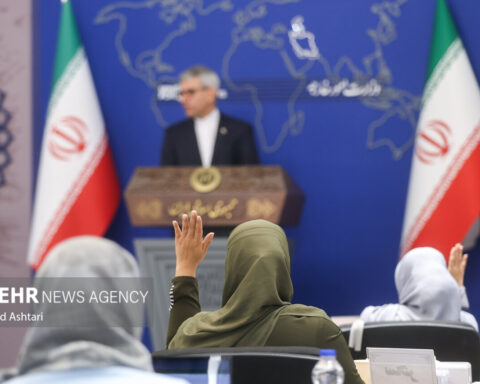
Iran avoids amplifying a statement that names no adversary, describes no operation, and claims no strike — while preserving the structural exclusion of Saudi Arabia from MOU negotiations that has served Tehran throughout. As of the close of May 29, no reaction to the Mina defense framing has appeared in IRNA, Tasnim, PressTV, or any IRGC-affiliated outlet.
If Tehran parses “crises the region is experiencing” as a veiled war acknowledgment and amplifies it, it hands Riyadh something Riyadh itself declined to construct: a formal escalation narrative at a moment when the MOU process is stalled and the Persian Gulf Security Authority is collecting approximately $2 million per transit without a signed agreement. Iran would be converting a protocol address into a policy shift that MBS chose not to make.
Iran has its own reasons to leave Saudi Arabia’s combat role unnamed. If Tehran publicly frames Riyadh as a co-belligerent, it creates pressure to include Saudi Arabia in any settlement architecture — an outcome that complicates the bilateral US-Iran structure Tehran prefers. The dual-track structure of Iranian negotiations — Araghchi’s diplomatic channel alongside the IRGC’s operational autonomy — is designed to manage ambiguity, not collapse it.
The IRGC has also not publicly acknowledged that RSAF jets struck Iranian territory — a fact confirmed by Reuters. To do so would be to admit that Saudi military action produced operational effects on Iranian soil, a concession the IRGC’s deterrence posture cannot absorb. The May 10 IRGC statement threatening “assaults on US bases and enemy ships” named US bases but did not name Saudi Arabia, even though CENTCOM strikes were launched from Saudi territory.
Both governments currently operate on the formal premise that Saudi Arabia is not a combatant. The 2,400 interceptors expended, the RSAF strikes confirmed by Reuters, and the CENTCOM launches from Saudi bases are matters of record.
Frequently Asked Questions
Has Saudi Arabia formally declared war on Iran?
No. Article 61 of the Basic Law reserves the authority to declare war, a state of emergency, and general mobilization to the King — not the Prime Minister, a post MBS holds. King Salman has issued no such decree. The closest the Kingdom has come to a formal posture statement was the SPA communiqué issued after the initial Iranian strikes in early March: “The Kingdom affirmed that it will take all necessary measures to defend its security and protect its territory, citizens, and residents, including the option of responding to the aggression.” That language — “all necessary measures,” “the option of responding to the aggression” — has not been repeated in subsequent official statements. The Mina phrasing — “efforts” and “crises the region is experiencing” — sits several registers below the March formulation.
Did Iran send pilgrims to Hajj 2026 despite the war?
Yes. Iran sent approximately 30,000 pilgrims against a formal quota of 87,550 — a 34 percent utilization rate. The reduced number reflects both the diplomatic rupture and wartime travel constraints, but Iran did not boycott Hajj. This creates a structural tension within the Mina statement itself: the same government whose military is intercepting Iranian missiles is also guaranteeing the safety of Iranian citizens on Saudi soil under the Kingdom’s custodial obligation over the Two Holy Mosques. MBS’s emphasis on “ensuring the safety and security of pilgrims” implicitly encompasses Iranian nationals, though they were not named.
What does the Chatham House assessment say about Saudi Arabia’s strategic calculation?
Chatham House’s May 2026 analysis, “How the Iran war is reshaping Saudi strategy,” concluded that “the threat of maritime insecurity to its Red Sea ambitions helps explain Saudi Arabia’s reluctance to engage directly in the war against Iran and its lobbying against further escalation.” This places Saudi caution in economic rather than diplomatic terms: NEOM, the Red Sea tourism corridor, and the broader Vision 2030 infrastructure depend on maritime stability that a formal declaration of belligerency would jeopardize. The Mina statement’s avoidance of escalatory language is consistent with this assessment — acknowledging the military’s role without expanding the Kingdom’s formal war exposure or inviting retaliatory targeting of economic assets along the western seaboard.
How many aerial threats has the US-led regional coalition intercepted in total?
CENTCOM reported that its regional air defense cooperation — conducted through the Middle Eastern Air Defense Combined Defense Operations Cell (MEAD-CDOC) at Al Udeid, Qatar, established January 12, 2026 — intercepted “more than 6,000 one-way attack drones and over 1,500 ballistic missiles” across the theater as of late May 2026. Saudi Arabia participated in this architecture but received no public credit from CENTCOM or Washington. The Kingdom’s approximately 2,400 PAC-3 MSE expenditures — confirmed independently by CSIS — represent the single largest national interceptor contribution to the regional defense effort, exceeding any other MEAD-CDOC participant by a wide margin.