WASHINGTON — U.S. Central Command struck Iranian radar installations and drone command-and-control sites at Goruk and on Qeshm Island over the weekend, the military confirmed on June 1 — inside the 72-hour window that opened when President Trump dispatched a courier carrying amended MOU terms to Mojtaba Khamenei’s underground compound on May 31. Iran’s IRGC retaliated within hours, launching missiles and drones at Ali Al-Salem Air Base in Kuwait. Tehran simultaneously announced it would issue its own counter-amendments to the draft agreement rather than accept Washington’s text.
The exchange made June 1 the third distinct U.S. strike operation since the April 7 ceasefire took effect, according to CENTCOM. Navy Capt. Tim Hawkins, the CENTCOM spokesperson, said the command was “using restraint during the ongoing ceasefire” — a description delivered the same day it bombed Iran’s largest island. Iran’s IRGC aerospace force said it struck Kuwait in direct retaliation for a U.S. attack on a telecoms tower on Sirik Island, constructing a causal chain that does not reference the ceasefire at all.
Saudi Arabia issued no statement. Prince Sultan Air Base, the facility south of Riyadh from which CENTCOM launches operations into Iranian airspace, has no Status of Forces Agreement. Brent crude opened June 1 at approximately $93.37 per barrel — between $14 and $18 below the kingdom’s PIF-inclusive fiscal breakeven of $108–111 per barrel, according to Goldman Sachs estimates. The courier has not returned. Both sides struck before it could.
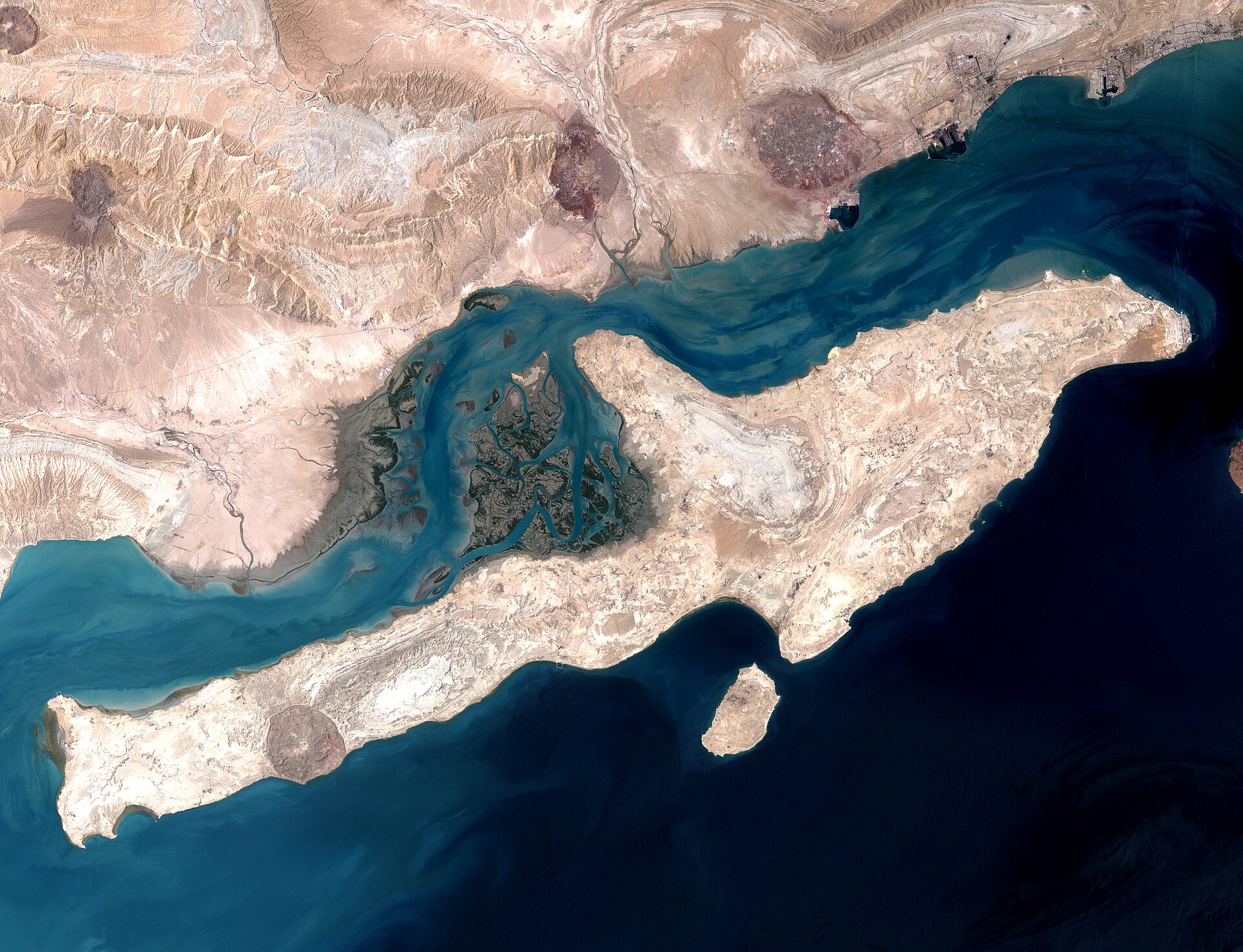
Table of Contents
What CENTCOM Struck
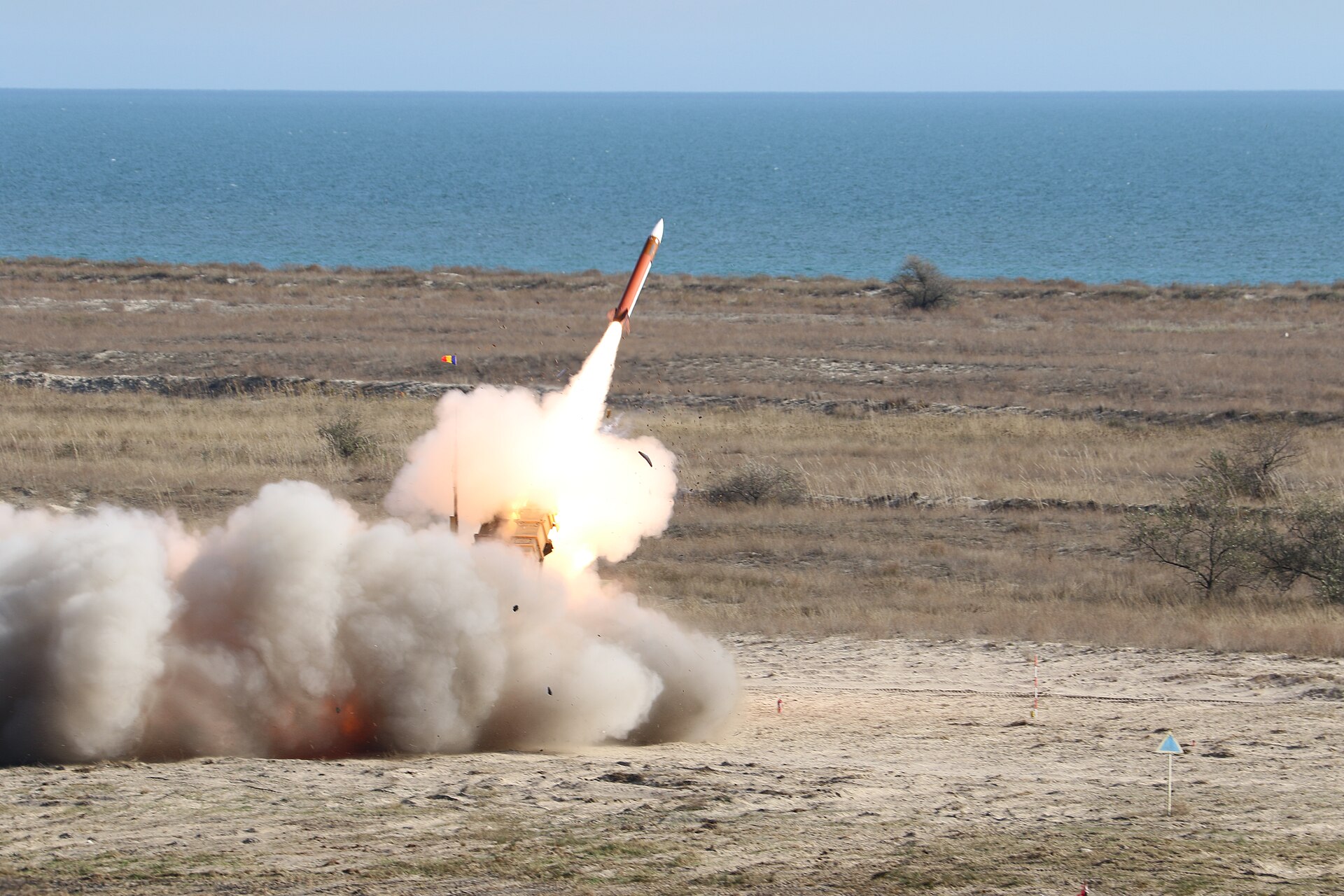
CENTCOM confirmed strikes on “radar and command and control sites for drones in Goruk, Iran and Qeshm Island,” conducted across Saturday and Sunday (May 31–June 1). Two unnamed U.S. officials told NBC News the action was a direct response to “24 hours of missile, drone and small boat launches carried out by Iran’s IRGC near the Strait of Hormuz.”
The stated proximate trigger was the IRGC’s shootdown of a U.S. MQ-1 Predator drone operating over international waters, according to CENTCOM’s official statement. Hawkins said the strikes were intended “to protect our troops from threats posed by Iranian forces — specifically boats attempting to lay mines and missile launch sites.”
Qeshm Island is the largest island in the Persian Gulf, sitting at the mouth of the Strait of Hormuz. Western military analysts have described it as Iran’s “unsinkable aircraft carrier” — a phrase applied to the island’s fortified tunnel networks, forward drone squadrons, and anti-ship missile batteries positioned to monitor U.S. Fifth Fleet movements and execute strikes across the Gulf. Goruk, further inland, hosts radar infrastructure that feeds targeting data to the same network.
The Middle East briefing 3,000+ readers start their day with.
One email. Every weekday morning. Free.
The MQ-1 Predator is an older surveillance platform. Its shootdown echoes the June 2019 downing of a U.S. RQ-4 Global Hawk near the Strait — an incident that brought the U.S. and Iran to the brink of direct military conflict before Trump, in his first term, pulled back at the last hour. In 2026, CENTCOM struck within hours of the loss.
“U.S. Central Command continues to defend our forces while using restraint during the ongoing ceasefire.” — Navy Capt. Tim Hawkins, CENTCOM spokesperson, June 1
The target selection — drone command-and-control rather than a missile battery or naval facility — points toward a specific operational objective. Qeshm-based drone squadrons provide the surveillance backbone for Iran’s Persian Gulf Security Arrangement, the toll system that charges approximately $2 million per transit for uncovered vessels. Degrading the C2 nodes that direct those drones narrows Iran’s ability to identify, track, and intercept commercial shipping through the Strait. CENTCOM did not state this connection in its public release.
Why Did Iran Target Ali Al-Salem Again?
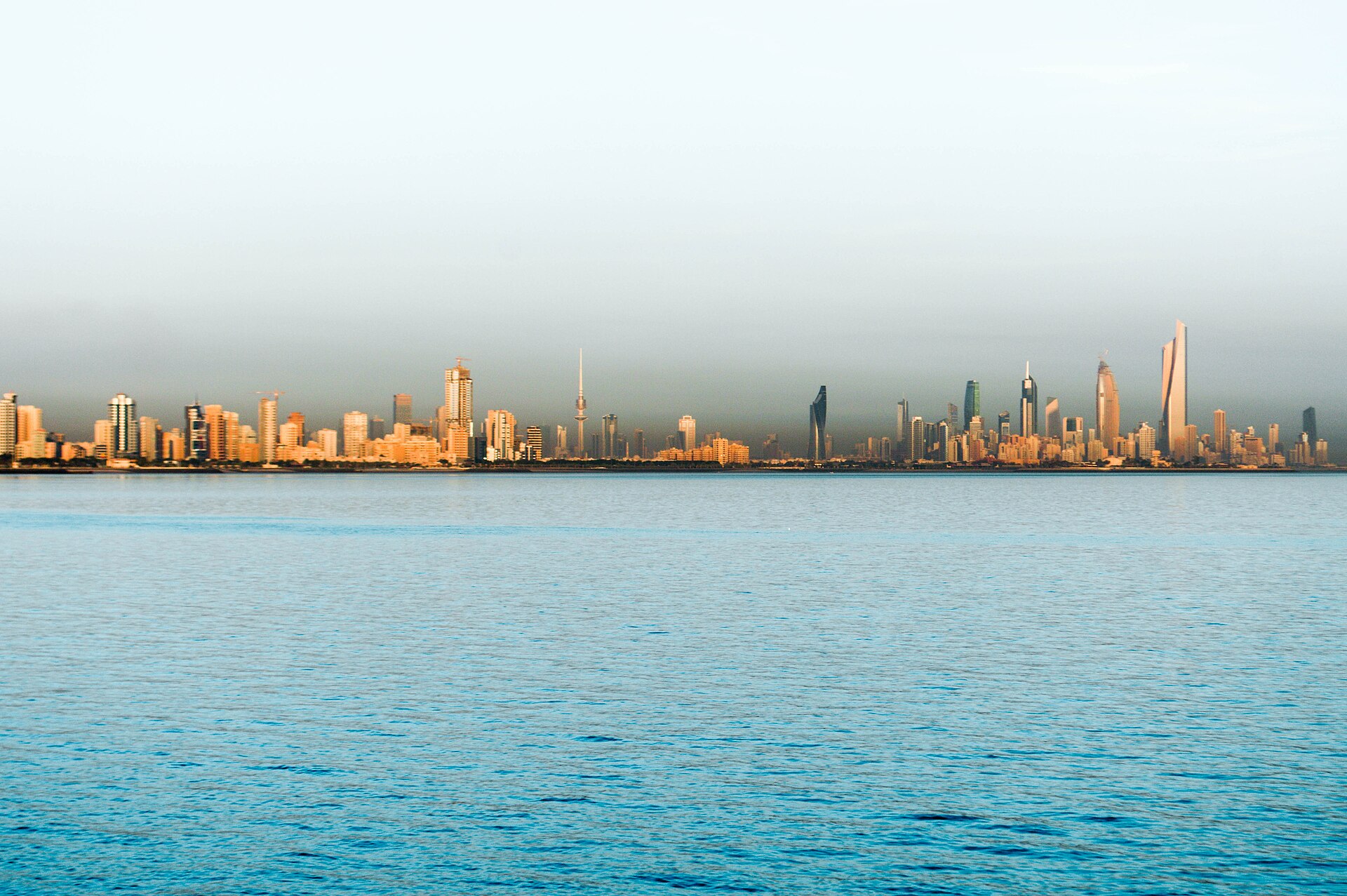
The IRGC’s aerospace force confirmed on June 1 that it targeted “an air base used in a US attack on a telecoms tower on Sirik Island,” identifying the facility as Ali Al-Salem Air Base in Kuwait. Kuwait’s state news agency KUNA reported that air defense systems intercepted “hostile missile and drone threats.” The army confirmed successful interceptions. Explosion sounds were audible across Kuwait City. No casualties or damage were reported.
Ali Al-Salem has absorbed repeated strikes. On May 28, a Fateh-110 ballistic missile was intercepted by Kuwait’s PAC-3 battery above the base, but falling debris struck the flight line, wounding five Americans and destroying or damaging two MQ-9 Reaper drones worth approximately $60 million. A successful intercept produced the damage profile of a hit.
The IRGC’s targeting language follows an established pattern: Ali Al-Salem is designated as a “US base,” not a Kuwaiti military facility. Iran does not describe itself as attacking Kuwait. It describes itself as attacking America on Kuwaiti soil. The framing denies GCC state sovereignty in the targeting calculus — a position it has maintained since the first strikes against Gulf installations in late February.
Kuwait’s intercept burden grows heavier with each wave. The country has now intercepted more than 362 missiles and drones since February — 265 during initial hostilities and at least 97 since the ceasefire, according to IISS data. Kuwait invoked Article 51 self-defense through UN Security Council Resolution 2817, backed by 135 co-sponsors. Saudi Arabia’s Ministry of Foreign Affairs has not publicly supported the invocation.
The Sirik Island framing introduces a new element. By citing a specific prior U.S. action — the destruction of a telecoms tower on Sirik — as its casus belli, the IRGC constructs a retaliation sequence that operates entirely outside the ceasefire framework. No IRGC statement on June 1 referenced the ceasefire as an operative constraint. The IRGC’s stated sequence runs from the Sirik strike directly to the Kuwait response, with no ceasefire acknowledgment between them.
Can the MOU Survive a Simultaneous Escalation?
Iran’s semi-official Tasnim News Agency reported on June 1, citing an informed source, that Tehran will apply its own counter-amendments to the MOU draft. “Nothing is final yet,” the source said. “Iran will only accept a draft it agrees to, and the amendments made by the United States do not imply Tehran’s approval.”
Iranian Parliament Speaker Mohammad Baqer Ghalibaf reinforced the rejection in a statement carried by Iranian state media on June 1: “Our criterion is tangible achievements that we must attain in order to fulfil our commitments in return. We will not approve any agreement until we are sure that we have secured the Iranian nation’s rights.” Iranian negotiators, he added, have “no trust in the enemy’s words and promises.”
The MOU has been unsigned for 106 days. Trump’s May 31 amendments — tightening language on highly enriched uranium removal timelines and Hormuz transit wording — were dispatched via motorcycle courier because Mojtaba Khamenei, who holds ratification authority, operates from an underground bunker and does not use electronic communications. The 72-hour minimum for a courier round-trip means no written response is physically possible before June 3.
Both sides struck before that deadline. CENTCOM hit Qeshm and Goruk on the weekend the courier departed. The IRGC hit Kuwait within hours. Tasnim’s counter-amendment announcement followed the same day. The 72-hour minimum expires June 3. While CENTCOM conducted its third post-ceasefire strike, the competing MOU texts that have led analysts to conclude Iran and America are negotiating two different deals continued to deteriorate in parallel. The tit-for-tat chain continued on June 1 when the IRGC fired two Noor cruise missiles at the MSC Sariska V departing Umm Qasr — extending the strike perimeter from Hormuz into the upper Persian Gulf for the first time in the conflict.
The MOU process is not dead. Tasnim’s language — “counter-amendments,” not rejection — keeps the channel structurally open. But the process has fractured along the same constitutional lines that have defined Iran’s negotiating posture since the war began. Tasnim is IRGC-affiliated. On May 29, Tasnim denied the MOU was “finalized” while Iran’s foreign ministry track described negotiations conducted in “good faith.” Articles 150 and 176 of Iran’s constitution give the IRGC autonomous operational authority the foreign ministry cannot override. The SNSC, the only body that can route an agreement to Mojtaba Khamenei for ratification, is itself in institutional transition between the Larijani and Zolghadr tenures.
France — the only external power with both a Hormuz coalition co-lead and a direct channel to Tehran — has called President Pezeshkian twice in recent months. Paris is mediating maritime access. It is not mediating the nuclear terms that Trump’s amendments address. No state has access to both the FM and IRGC tracks simultaneously.
Saudi Arabia Hosts the Strikes and Pays the Spread
Prince Sultan Air Base, approximately 100 kilometers south of Riyadh, is the forward facility from which CENTCOM operates into Iranian airspace. There is no SOFA. Approximately 2,700 U.S. personnel are stationed there — compared to 10,000 at Al Udeid Air Base in Qatar, which has both a SOFA and, as of May 2, a $4.01 billion emergency PAC-3 MSE resupply waiver signed by Secretary of State Rubio under Section 36(b) expedited procedures.
Saudi Arabia has received no equivalent waiver. The kingdom’s PAC-3 inventory stood at approximately 80 to 150 rounds as of late May — between 1.3 and 2.4 days of full-intensity coverage, according to IISS assessments. Saudi forces expended approximately 2,400 rounds against 894 tracked threats during 38 days of initial hostilities (CSIS). Lockheed Martin’s Camden, Arkansas plant produces roughly 620 rounds per year. Saudi Arabia’s 730-round replenishment order carries an 18-month delivery floor. Qatar’s emergency waiver bypassed that queue entirely.
Each new Kuwait wave depletes the regional interceptor pool that Saudi Arabia cannot replenish on the current timeline. The GCC’s Joint Defense Agreement has not been invoked — its consensus mechanism allows any member to veto activation. Saudi MOFA has been publicly silent for more than 10 days.
The fiscal exposure is equally direct. Brent crude closed May at approximately $91.20 per barrel, down roughly 17% for the month — the worst monthly decline since the Covid-era collapse of 2020. The kingdom’s Q1 2026 deficit reached SAR 125.7 billion ($33.5 billion), consuming 76% of the full-year SAR 165 billion target in 90 days. Aramco’s $21.89 billion quarterly dividend — payable June 9, eligibility date June 1 — now exceeds the company’s free cash flow. PIF cash reserves sit at $15 billion, a six-year low.
Goldman Sachs projects $80–90 billion in full-year deficit (6–6.6% of GDP). Wood Mackenzie’s “Quick Peace” scenario — contingent on MOU signature — prices Brent at $80 by year-end and $65 through 2027. The strikes inside the courier window push that scenario further from realization.
Saudi Arabia hosts the base launching the strikes, absorbs the oil price discount those strikes accelerate, and funds a defense posture with an interceptor pipeline that runs through a plant that prioritizes the ally that has a SOFA — all with a state treasury running at a pace that exhausts the budget by September. CENTCOM did not notify Riyadh before past strikes. There is no public indication that changed on June 1.
Background: Qeshm, Goruk, and the Hormuz Architecture
Qeshm Island sits in Hormuzgan Province at the southern entrance to the Strait of Hormuz. Iran has invested decades in hardening the island as a military platform: underground tunnel networks, forward-positioned drone squadrons, anti-ship missile batteries, and radar arrays that provide continuous coverage of the Strait’s traffic separation scheme. The island’s proximity to the Strait — less than 20 kilometers at its narrowest point — makes it the primary staging ground for Iranian interdiction and surveillance of commercial traffic.
Goruk hosts supporting radar and communications infrastructure that feeds targeting data to forward positions including Qeshm. CENTCOM’s decision to strike both locations simultaneously suggests an effort to degrade the integrated surveillance network rather than individual launch points.
Sirik Island, the smaller island the IRGC cited as the retaliation trigger, lies on the Iranian coast east of Qeshm, with telecommunications infrastructure that likely supports coordination between IRGC naval and drone units. Its appearance in the IRGC’s causal narrative connects the U.S. strike campaign to Iran’s broader Hormuz enforcement posture — the same infrastructure that makes the PGSA toll system operational.
The Strait handles approximately 20% of global petroleum trade. Iran’s PGSA, designated under OFAC sanctions on May 28, charges approximately $2 million per transit and depends on the drone surveillance network that Qeshm anchors — the same network CENTCOM targeted on May 31 and June 1.
Frequently Asked Questions
Has the U.S. struck Qeshm Island before in this conflict?
The June 1 operation is the first publicly confirmed U.S. strike on Qeshm Island since the conflict began on February 28. Prior U.S. actions since the April 7 ceasefire targeted Bandar Abbas drone control infrastructure and other mainland facilities. Qeshm’s status as Iran’s most fortified island at the mouth of Hormuz makes it a qualitatively different target — analogous to striking a permanent military installation rather than a deployed asset. CENTCOM characterized the weekend operation as its third action since the ceasefire, grouping the Goruk and Qeshm strikes as a single event.
What legal framework covers CENTCOM strikes during a declared ceasefire?
CENTCOM invokes self-defense authority under standing rules of engagement, not the ceasefire terms. Hawkins’s characterization — “restraint during the ongoing ceasefire” — positions the strikes as compatible with, rather than authorized by, the ceasefire. The ceasefire is a political framework negotiated between the U.S. and Iran, not a UN-mandated cessation of hostilities with binding enforcement provisions. Neither side has published its terms. Both sides have struck multiple times since April 7 while describing the ceasefire as operative.
How many interceptors does Kuwait have remaining, and where does replenishment stand?
Kuwait’s exact remaining PAC-3 inventory is classified. Public IISS figures confirm more than 362 intercept engagements since February — 265 during initial hostilities and at least 97 post-ceasefire, with the June 1 wave adding to that total. Kuwait, unlike Qatar, has not received a publicly announced emergency resupply waiver, though its smaller force size and higher intercept-per-day rate during peak periods suggest its depletion curve may be steeper than Saudi Arabia’s. The June 1 engagement was the second targeting Ali Al-Salem in four days.
What is the PGSA and why do the Qeshm strikes matter for shipping?
The Persian Gulf Security Arrangement is Iran’s toll system for Strait of Hormuz transit, charging approximately $2 million per passage for vessels not covered by bilateral carve-outs with India, Iraq, and Pakistan. The U.S. Treasury designated the PGSA under OFAC sanctions on May 28, creating a compliance binary: any entity that pays the toll risks sanctions exposure; any vessel that refuses risks IRGC interdiction. The system’s enforcement depends on the drone surveillance network based on Qeshm. Degrading that network does not eliminate the toll — Iran can rebuild or improvise — but it reduces Iran’s ability to track non-compliant vessels in real time.
Does Saudi Arabia have any direct communication channel with the IRGC?
No confirmed channel exists between Riyadh and the IRGC command structure. Saudi diplomatic contacts with Iran operate exclusively at the foreign ministry level — Foreign Minister Faisal bin Farhan has met counterpart Abbas Araghchi four times, and Crown Prince Mohammed bin Salman exchanged Eid greetings with President Pezeshkian. But the IRGC operates under separate constitutional authority (Articles 150 and 176), and its command decisions — including Hormuz enforcement, strike targeting, and MOU conditionality — route through Mojtaba Khamenei, not the foreign ministry. Saudi Arabia’s exclusion from the IRGC track means Riyadh cannot influence the institution that decides whether strikes continue or the toll system persists.