
DHAHRAN — Saudi Aramco transferred $21.89 billion to shareholders on June 9, the largest quarterly base dividend in its listed history. The wire cleared six days before the grace period on Sadara Chemical’s $3.7 billion in guaranteed senior debt expires — a deadline Aramco has not publicly acknowledged to any of the more than 25 banks in the Sadara lending syndicate.
The dividend, up 3.5 percent year-on-year, left Aramco with approximately $53.3 billion in cash, down from $75.2 billion at the end of the first quarter. In the same filing period, Aramco reported free cash flow of $18.6 billion — meaning it distributed $3.29 billion more than it generated. The coverage ratio stands at 0.85x: eighty-five cents of free cash flow for every dollar paid.
These two events — the dividend and the debt cliff — will be processed by different audiences, on different terminals, in different time zones. They draw from the same cash pile, backstopped by the same sovereign balance sheet, in a fiscal quarter where the Saudi government has already burned through 76 percent of its full-year deficit allocation. Aramco is performing financial stability for equity investors in one direction and financial silence toward creditor banks in the other. It cannot sustain both past June 15.
Table of Contents
- How Much Cash Does Aramco Have After the June 9 Dividend?
- What Is Sadara’s $3.7 Billion Guaranteed Debt?
- Twenty-Six Units Offline With No Return Date
- Who Holds Sadara’s Debt?
- The 2020 Precedent
- PIF’s Three-Sided Conflict
- The Fiscal Arithmetic of June 2026
- What Happens If Aramco Lets Sadara Default?
- The Information Gap
- After June 15
- Frequently Asked Questions
How Much Cash Does Aramco Have After the June 9 Dividend?
Aramco ended Q1 2026 with $75.2 billion in cash and cash equivalents. The $21.89 billion base dividend disbursed on June 9 reduces this to approximately $53.3 billion — the lowest post-dividend cash position since the company’s December 2019 IPO. Free cash flow for Q1 was $18.6 billion, leaving a quarterly shortfall of $3.29 billion covered by drawing down reserves.
| Aramco Cash Bridge — Q1 2026 | Amount |
|---|---|
| Cash, end-Q1 2026 | $75.2B |
| Less: Q1 base dividend (disbursed June 9) | ($21.89B) |
| Estimated cash, post-dividend | ~$53.3B |
| Memo: Q1 free cash flow | $18.6B |
| Memo: FCF-to-dividend coverage | 0.85x |
| Memo: Sadara guarantee (Aramco share) | $2.405B |
The shortfall is partly structural. A $15.8 billion working capital build — driven by the Hormuz closure and the collapse of Sinopec liftings from 10 million barrels per month to 2 million — locked capital in unsold inventory and receivables that Aramco could not convert to cash within the quarter. This is not a timing mismatch that resolves in Q2. Iran has reclassified Hormuz from a concession to an invoice, and the blockage that trapped those barrels has not lifted.
Aramco’s gearing ratio rose from 3.8 percent at end-2025 to 4.8 percent by March 31, 2026. For a company that spent years advertising sub-5-percent gearing as proof of balance sheet discipline, the direction is more instructive than the level. The ratio remains low by international oil major standards. It is no longer falling.
The Middle East briefing 3,000+ readers start their day with.
One email. Every weekday morning. Free.
Brent closed at $94.48 on June 8. On June 9 it traded between $95 and $97. The IMF estimates Saudi Arabia’s fiscal breakeven at approximately $96 per barrel; Bloomberg Economics places the composite figure — including off-budget spending, PIF transfers, and giga-project commitments — at $108 to $111. At current prices, the kingdom runs a deficit on every barrel it sells. The following day, Trump’s unconfirmed Iran settlement declaration drove the Brent price collapse that widened Aramco’s revenue gap by an additional 4.2 percent to $89.15, adding roughly $150 million daily to Riyadh’s fiscal shortfall.
What Is Sadara’s $3.7 Billion Guaranteed Debt?
Sadara Chemical Company is a $20 billion joint venture between Saudi Aramco (65 percent) and Dow Inc. (35 percent), operating 26 integrated petrochemical units at Jubail Industrial City — the largest single-phase chemical complex ever built. The project reached financial close on June 28, 2013.
In March 2021, Sadara completed a comprehensive debt restructuring. The original $10 billion in completion guarantees — released in November 2020 when Sadara achieved mechanical completion — were replaced with $3.7 billion in parent guarantees on senior debt principal. Aramco guaranteed $2.405 billion, proportional to its 65 percent ownership stake. Dow guaranteed $1.295 billion. The debt maturity was extended from 2029 to 2038. A grace period was established, expiring June 15, 2026.
“Saudi Aramco and Dow have agreed to guarantee up to an aggregate of $3.7 billion of senior debt principal in proportion to their ownership interests in Sadara.”
— Aramco press release, March 2021
The restructuring was designed for a world in which Sadara would be operating. The April 2026 regulatory disclosure from Sadara says otherwise: the company “cannot provide, at the present time, an estimate for the return to production.” The shutdown, the filing added, “is contingent on domestic and international factors.” That language — written by lawyers for a Tadawul-listed entity — means Sadara’s management does not know when the war ends.
All 26 units have been offline since late March 2026. Sadara has reported net losses in four of its past five fiscal years. By end-2025, accumulated losses exceeded 100 percent of share capital — a threshold that triggers a mandatory extraordinary general assembly under Saudi Companies Law. No EGA has been announced.
Twenty-Six Units Offline With No Return Date
Sadara’s shutdown is not a maintenance event. It is a consequence of the war.
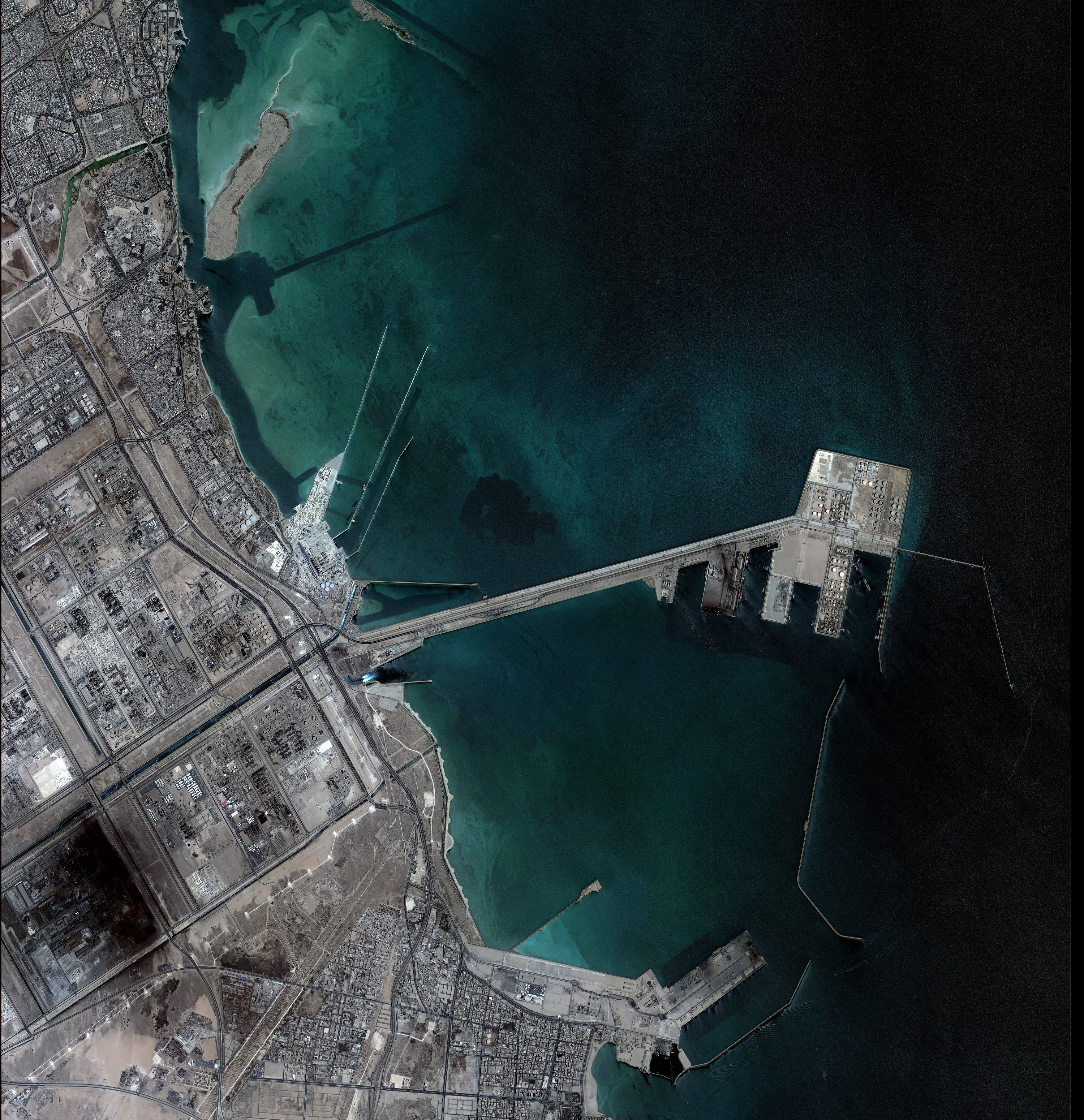
The Jubail complex sits on the Gulf coast, 80 kilometers north of Dammam, inside the zone where Iranian strikes have targeted petrochemical and energy infrastructure since late February. The dual-use targeting doctrine that Israel applied to Iran’s Mahshahr petrochemical zone has implications running in both directions across the Gulf. Jubail houses not only Sadara but SABIC facilities, Ma’aden operations, and the downstream backbone of Saudi Arabia’s non-oil industrial strategy.
Sadara’s feedstock — ethane, naphtha, and natural gas liquids — depends on Aramco’s domestic supply network. With Aramco’s own operations running under wartime constraints and export corridors disrupted, restarting a 26-unit integrated complex is not a scheduling problem. It requires a security environment that does not currently exist and a supply chain that has not been restored.
Aramco’s CEO told CNBC on May 11, 2026 that the “oil market won’t normalize until 2027 if Hormuz disruption persists.” Sadara produces chemicals, not crude, but it consumes the same feedstock, occupies the same geography, and exports through the same corridors. The Jubail complex’s output — polyethylene, ethylene glycol, isocyanates — reached Asian and European buyers through the same Gulf terminals now degraded by conflict. The Houthi maritime ban on Israeli-linked shipping has rerouted traffic patterns across the Red Sea and Arabian Sea in ways that compound the Hormuz closure’s effect on Jubail-origin shipments.
The formal rejection of the Trump MOU, expected by June 9, removes the last diplomatic framework under which Hormuz reopening was even theoretically sequenced. Normalization is not on the Iranian offer sheet. Sadara’s 26 units will remain offline for the duration of whatever comes next.
Who Holds Sadara’s Debt?
The original Sadara financing — the largest project-finance deal in Middle East petrochemical history at the time of close — was structured in tranches designed to match the project’s strategic scale. The lending stack pulled in commercial banks, Islamic capital markets, the Saudi sovereign wealth fund, and Western export credit agencies.
| Sadara Debt Structure | Amount | Holder / Type |
|---|---|---|
| Uncovered commercial bank debt | $2.2B | HSBC, JPMorgan, Saudi commercial banks |
| Sukuk | $2.0B | Islamic capital markets |
| PIF loan | $1.3B | Public Investment Fund |
| Export credit agencies | ~$7.0B | US Exim Bank ($5B), others |
| Total original debt stack | ~$12.5B | |
| 2021 restructuring: parent guarantee | ||
| Aramco guarantee (65%) | $2.405B | Saudi Aramco |
| Dow guarantee (35%) | $1.295B | Dow Inc. |
| Total parent guarantee | $3.7B | |
The syndicate comprises more than 25 banks. The 2021 restructuring preserved this creditor structure while swapping the completion guarantees for the $3.7 billion parent guarantee — a mechanism that replaced construction risk with operational risk. In March 2021, that looked like a conservative trade. Sadara had achieved mechanical completion, was ramping production, and Jubail was not a target.
Aramco’s public filings since April contain no language addressing the June 15 deadline, no guidance on whether the guarantee will be called, extended, or restructured, and no indication that creditor discussions are under way.
Dow’s $1.295 billion guarantee exposes a Midland, Michigan-based specialty chemicals company to a default event in a Saudi Arabian war zone. Dow’s Q1 2026 earnings call did not mention Sadara’s guarantee in the forward-looking risk section. The U.S. Export-Import Bank’s approximately $5 billion in Sadara exposure represents one of the largest single-project commitments in Exim’s portfolio — a commitment originated in 2013 when Jubail was a showcase for U.S.-Saudi industrial cooperation, not a wartime liability.
The 2020 Precedent
Aramco has defended its dividend before — under conditions that look nothing like the present.
In fiscal year 2020, net income fell 44 percent to $49 billion. Free cash flow dropped roughly 40 percent. Aramco held the $75 billion annual dividend by drawing down cash reserves. The decision established a principle the market has internalized: the base dividend is defended even when free cash flow does not cover it.
In 2020, Hormuz was open. Jubail was operating. Sadara was producing. Saudi Arabia was not at war. The fiscal deficit — while large — was a pandemic-era phenomenon shared by every petrostate on earth. Markets treated it as temporary because it was.
The performance-linked dividend tranche provides the only real-world precedent for actual reduction. In Q1 2025, the variable component was cut to $219 million, down from $10.7 billion a year earlier. The base dividend has never been reduced since the December 2019 IPO. The 2020 precedent tells equity analysts that Aramco will draw down reserves to maintain the base payout. It tells creditor banks nothing about what happens when a guaranteed subsidiary stops operating indefinitely during wartime.
“Any reduction in Aramco’s dividend will have implications for the government budget and PIF, requiring either new sources of revenue, spending adjustments, or increased borrowing.”
— Arab Gulf States Institute, 2026
PIF’s Three-Sided Conflict
The Public Investment Fund holds $1.3 billion in Sadara’s original lending stack — a direct creditor position established at financial close in 2013. PIF is simultaneously the Saudi government’s primary vehicle for non-oil economic development, the recipient of the largest share of Aramco’s dividend distributions, and a sovereign entity whose cash reserves have fallen to approximately $15 billion, a six-year low.
If Sadara defaults and the parent guarantee is called, Aramco pays $2.405 billion from the same cash pool that funded the $21.89 billion dividend hours earlier. That payment would reduce Aramco’s post-dividend cash from $53.3 billion to roughly $50.9 billion — a further 4.5 percent drawdown before Q2 operations, capital expenditure, and the next quarterly dividend cycle begin.
If the guarantee is not called and Sadara’s debt is restructured a second time, PIF — as a Sadara creditor — absorbs a haircut or an extension on $1.3 billion it lent from a balance sheet that can no longer tolerate impairment. PIF’s $15 billion cash position is already less than NEOM’s $16 billion exit bill for 2026–2030 contract terminations. A $1.3 billion Sadara write-down would compress an already negative cushion further.
The fund cannot advocate for the dividend (which fills its coffers), advocate for the guarantee call (which drains Aramco’s cash and therefore its future dividend capacity), and protect its own Sadara lending position simultaneously. One of these three interests will be subordinated. No public communication from any relevant Saudi entity has indicated which one.
The Fiscal Arithmetic of June 2026
The Saudi Q1 2026 budget deficit reached SAR 125.7 billion — 76 percent of the government’s full-year official projection, consumed in three months. Goldman Sachs projects the full fiscal year 2026 deficit at SAR 300 to 330 billion. AGSI summarized the arithmetic: “Goldman Sachs’s projection of a 6.6 percent GDP deficit for 2026 reflects the arithmetic of a state trapped between the premium it depends on and the production capacity it has lost.”
Q1 military spending reached SAR 64.7 billion, a 26 percent year-on-year increase. This is the demand side of the same fiscal equation. Aramco’s dividend funds the government that funds the military spending that has not prevented the conditions forcing Sadara offline.
OPEC+ actual production fell from 42.77 million barrels per day in February 2026 to 33.19 million in April — a 22 percent decline reflecting both voluntary cuts and involuntary wartime capacity losses across the cartel. Saudi Arabia’s own output has been constrained not by quota but by infrastructure and export route degradation.
PressTV reported on May 23 that “Saudi public debt has multiplied twelvefold since 2015.” The framing is adversarial — Iranian state media covers Saudi financial stress as evidence the war achieves strategic objectives without requiring Iran to hold Hormuz indefinitely. The underlying data, drawn from Saudi Ministry of Finance disclosures, is not disputed. The debt trajectory predates the war. The war accelerated it.
Brent at $95 is $13 to $16 below Bloomberg Economics’ composite breakeven estimate. At current production volumes, every dollar below breakeven costs the Saudi treasury approximately $3.6 billion per year in foregone revenue. The gap between market price and breakeven has persisted since mid-April. The Q2 deficit projection is already worse than Q1.
Aramco itself acknowledged the scale of the disruption. The company reported that Hormuz’s closure had “removed 1 billion barrels of oil from global supply” — a figure PressTV amplified on May 10 as evidence of permanent impairment. The editorial framing is adversarial, but the underlying figure draws directly from Aramco’s own disclosure. The CEO’s statement that the market will not normalize before 2027 places the earliest possible recovery outside the current fiscal year, outside the current dividend cycle, and outside the June 15 grace period by approximately eighteen months.
What Happens If Aramco Lets Sadara Default?
A Sadara default would be the first credit event at a Saudi Aramco-guaranteed entity since the company’s 2019 IPO. The $3.7 billion guarantee was structured as a backstop to prevent precisely this scenario — a signal to the 25-plus syndicate banks, to Islamic capital markets, and to the U.S. Export-Import Bank that the Saudi state, through Aramco, stood behind Jubail’s debt.
The Dubai World precedent is the closest available analogue. On November 26, 2009, Dubai World requested a standstill on $26 billion in debt. The IMF’s subsequent assessment concluded the event “effectively abolished the perceived implicit sovereign guarantee for government-related entities” across the Gulf. Abu Dhabi provided a $10 billion rescue on December 14, 2009. The $23.5 billion restructuring was completed by May 2010.
Dubai World had Jebel Ali port and DP World’s global terminal network — revenue-generating assets that underpinned the restructuring. Sadara has 26 offline units, no restart timeline, and a regulatory filing that attributes the shutdown to factors beyond management’s control. A second restructuring without an operating asset is a different negotiation than a restructuring with one. The recovery assumptions in any revised creditor model would have to price both the duration of the war and the post-war restart cost — two variables that cannot be estimated because the war has no defined endpoint.
The U.S. Exim Bank’s approximately $5 billion exposure introduces a Washington dimension. A default on Exim-backed debt at a joint venture with a Dow subsidiary, during a conflict in which the United States is providing air defense support to Saudi Arabia, would create a bureaucratic and political conflict across Treasury, Commerce, State, and the NSC simultaneously. The Exim portfolio was approved under the assumption that Jubail was a model of bilateral economic cooperation. No contingency language in the original facility contemplated a scenario in which the complex was shut down by a war involving its host country.
The Information Gap
Aramco produced a 72-page Q1 2026 earnings report. It hosted an analyst call. It issued guidance on production volumes, capital expenditure, and downstream expansion. “Sadara” appeared as a line item in the consolidated financial statements. No forward-looking commentary on the June 15 deadline was offered. No analyst on the call asked about it.
This is not oversight. Aramco’s investor relations operation is among the most professionally managed in the global energy sector. Its investor relations team draws from major investment banks and manages disclosure timing with the precision of a listed oil major whose largest shareholder is a sovereign wealth fund. The absence of communication about a $3.7 billion guaranteed-debt deadline — falling six days after the largest dividend disbursement in company history — is a choice made by people who understand what silence communicates to a syndicate of 25 banks.
No Reuters, Bloomberg, or Financial Times reporting on the June 15 deadline has appeared. The coverage gap mirrors the company’s own silence. The Sadara grace period expiration is disclosed in public filings — the March 2021 restructuring terms are documented in Zawya, Argaam, Arab News, and SEC 8-K filings. The information is available. The absence of coverage is a second-order effect of the same communication strategy: if Aramco does not flag the deadline, and if no creditor bank breaks ranks to brief a reporter, the event approaches without the market pressure that press coverage would generate.
Dow’s silence is parallel. The $1.295 billion guarantee was not discussed in Dow’s most recent earnings call. Midland is 7,400 miles from Jubail, and the exposure sits in a subsidiary’s joint venture on a continent where Dow has no operational control over the security environment. For Dow’s investor relations team, the rational short-term strategy is to say nothing and hope Aramco resolves the situation. This strategy has a shelf life of six days. A subsequent analysis examines the disclosure architecture that explains why no regulatory filing has been made by either guarantor ahead of the June 15 deadline.
After June 15
The grace period expires. Aramco has three visible options.
First: pay under the guarantee. Aramco transfers $2.405 billion — its 65 percent share — to the syndicate from a $53.3 billion cash pile that must also fund Q2 operations, Q3 dividend preparations, capital expenditure, and the working capital demands of a wartime supply chain. The payment defends the guarantee’s credibility but accelerates the cash drawdown at a moment when every dollar of reserve has a competing claim.
Second: negotiate a second restructuring. This requires engaging 25-plus creditor banks, the Exim Bank, PIF (as both owner and lender), and Dow — all while Sadara has no operating income, no restart date, and accumulated losses exceeding 100 percent of share capital. The 2021 restructuring took months to negotiate under peacetime conditions with an operating asset. A second restructuring under wartime conditions with an idle one would test the syndicate’s willingness to extend further credit to a project whose collateral value depends on the war ending.
Third: do nothing. Let the grace period lapse without payment or renegotiation. This triggers cross-acceleration clauses in Sadara’s broader debt instruments, potentially including the $2 billion sukuk and the $7 billion in export credit agency facilities. A cross-acceleration event at a $12.5 billion debt stack backstopped by Saudi Aramco would reprice sovereign-adjacent credit risk across the Gulf in a single trading session.
The dividend says the state is stable. The silence says nobody has decided what to do about Sadara. On June 16, one of these statements will be tested.
On June 12, Trump told ABC News a ceasefire deal could be signed “as early as this weekend,” while Iran denied any agreement and the IRGC fired on commercial vessels at Hormuz. The diplomatic calendar and Sadara’s operational deadline now run on diverging tracks — and only one of them governs what happens Monday.
Frequently Asked Questions
What is Sadara Chemical Company?
Sadara is the cornerstone of Saudi Arabia’s downstream industrial strategy — a $20 billion joint venture between Saudi Aramco (65 percent) and Dow Inc. (35 percent) at Jubail Industrial City. It was designed to convert Saudi Arabia’s gas feedstock advantage into exportable specialty chemicals, reducing dependence on crude oil revenue. All 26 integrated units have been offline since late March 2026, eliminating both production and the feedstock-to-chemicals conversion that underpins Vision 2030’s industrial diversification targets.
What is the $3.7 billion Sadara parent guarantee?
In March 2021, Aramco and Dow restructured Sadara’s debt and replaced $10 billion in completion guarantees with $3.7 billion in parent guarantees on senior debt principal. Aramco guaranteed $2.405 billion and Dow guaranteed $1.295 billion, proportional to their ownership stakes. The grace period on this guarantee expires June 15, 2026.
How much cash does Aramco have after the June 9 dividend?
After disbursing the $21.89 billion Q1 2026 base dividend on June 9, Aramco’s estimated cash position is approximately $53.3 billion, down from $75.2 billion at end-Q1. Free cash flow for Q1 was $18.6 billion, producing a coverage ratio of 0.85x — meaning Aramco paid more in dividends than it generated in cash.
Why are all 26 Sadara units offline?
Sadara’s Jubail complex shut down in late March 2026 as a consequence of the Iran-Saudi conflict and the Hormuz disruption. The company’s April 2026 regulatory disclosure states it “cannot provide, at the present time, an estimate for the return to production” and that the shutdown “is contingent on domestic and international factors.” Feedstock supply, security conditions, and export corridor access all remain disrupted.
What happens if the Sadara guarantee defaults?
Aramco would face three options simultaneously: pay $2.405 billion from its post-dividend cash pile (reducing reserves to roughly $50.9 billion), negotiate a second restructuring with 25-plus creditors over a project with no operating income and no restart date, or let the grace period lapse — triggering cross-acceleration across Sadara’s full ~$12.5 billion debt structure. The third path would be the first credit event at an Aramco-guaranteed entity since the 2019 IPO, with immediate pricing consequences for sovereign-adjacent Gulf credit.
What is PIF’s exposure to Sadara?
PIF holds a $1.3 billion loan in Sadara’s original debt stack, making it both a creditor to Sadara and the primary government vehicle receiving Aramco’s dividend. With PIF cash at approximately $15 billion — a six-year low and less than NEOM’s $16 billion exit bill — the fund faces a conflict between protecting its creditor position, supporting the dividend that fills its coffers, and absorbing potential impairment on its Sadara lending. The Hormuz dimension of the Sadara shutdown — and why the June 11 Khatam al-Anbiya shoot-on-sight order forecloses any near-term restart — is analyzed in Hormuz Has No Ceasefire to Collapse. Even if Aramco resolves the June 15 grace period, war-risk insurance premiums will keep adding $800,000 to $2 million per VLCC voyage through Hormuz for 12 to 36 months after any ceasefire — the actuarial clock does not reset on the day a deal is signed.
The June 12 Vance announcement added another layer: a named signatory, a date, and four C-17s en route to Geneva — alongside Iran’s flat denial that any MOU text had been approved. The June 15 Sadara grace deadline arrives the morning after the proposed ceremony, regardless of whether a document is signed. What a Geneva signing cannot change about Sadara’s fiscal position is analyzed in Geneva Will Not Reopen Jubail — the MOU phase one contains no provisions on debt service, Jubail operating status, or Hormuz commercial access.