JEDDAH — Saudi Arabia housed 30,000 Iranian nationals inside the holiest territory on earth for six weeks of active war, and as of today — June 9, Day 101 of the Iran-Israel conflict — the last of those pilgrims are completing departure processing. The mutual passive deterrent that neither Riyadh nor Tehran could publicly name has expired, and nothing has been built to replace it.
The conventional framing, advanced most explicitly by Middle East Monitor on May 27, held that Hajj imposed an “invisible red line” and a “de facto non-aggression pact” — but only in one direction: sacred obligation constrained Saudi Arabia. That reading is incomplete. Iran’s Supreme National Security Council — the same body that authorizes IRGC targeting packages — approved the dispatch of 30,000 nationals into Saudi sovereign territory during an active regional war.
The constraint was bilateral in mechanism, even if asymmetric in cost. Both governments operated under the logic of mutual exposure, and both lost that shared excuse not to escalate at approximately the same hour today.
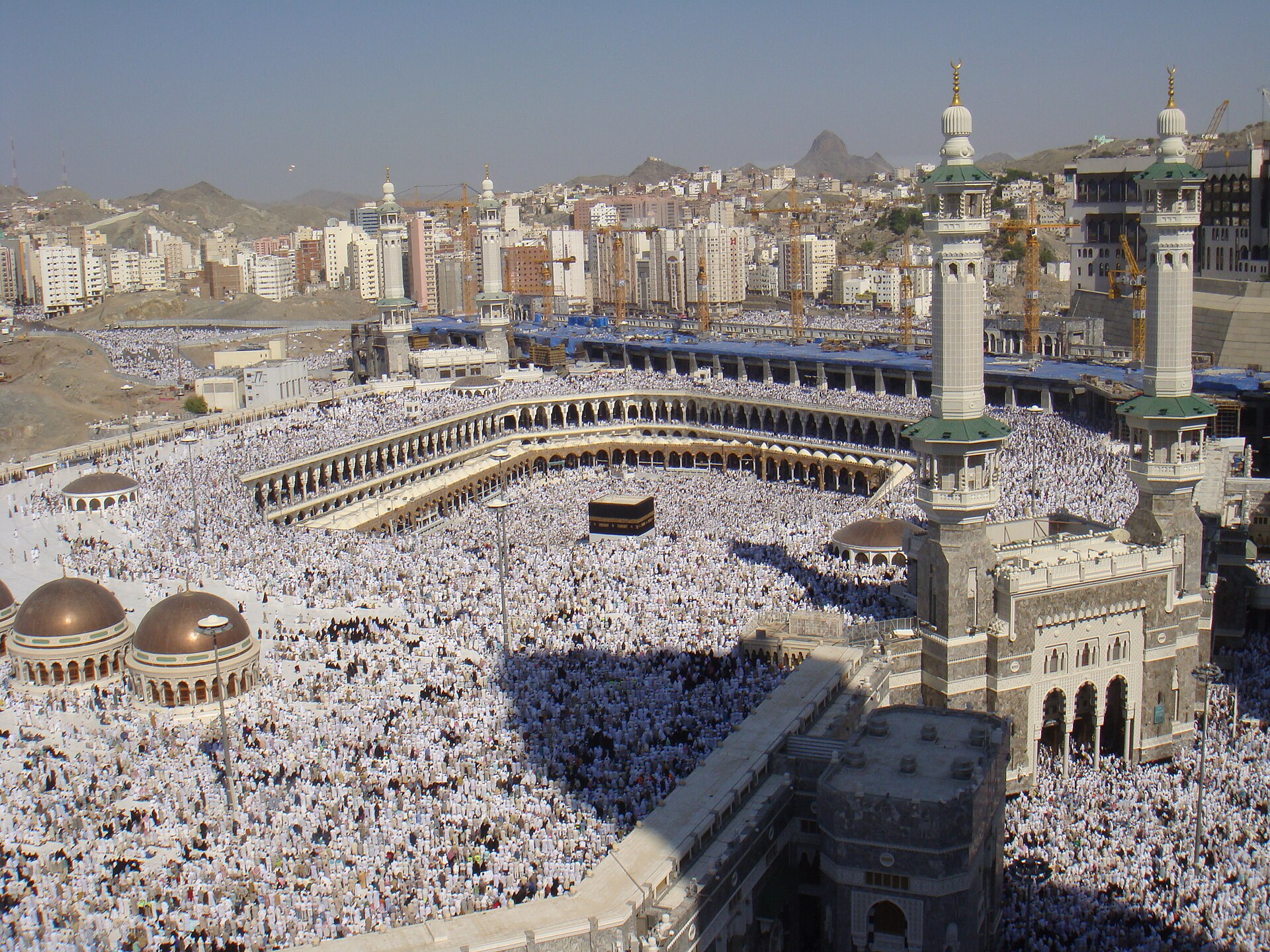
Table of Contents
- The Bilateral Hostage Logic Neither Side Could Name
- Who Authorized What — and Through Which Institution?
- What Do Iran’s Hajj Numbers Signal About Calculated Risk?
- The Custodian Trap: Why Saudi Arabia Could Not Restrict Access
- How Patriot Redeployment Revealed the Priority
- Does the 1987 Mecca Massacre Precedent Still Apply?
- The Departure Timeline and the June 9 Convergence
- What Expires When the Last Pilgrim Leaves?
- Iran Filed Its Counteroffer on the Same Day the Shield Dissolves
- Frequently Asked Questions
The Bilateral Hostage Logic Neither Side Could Name
Deterrence in the Gulf has operated for a century through hardware: oil infrastructure, naval chokepoints, air defense batteries. What Hajj 2026 introduced was a different species — a soft deterrent constructed from human presence, religious obligation, and reputational exposure on both sides. For six weeks, those pilgrims occupied Saudi sovereign territory inside a security perimeter that Riyadh had publicly committed to protect. Any Iranian strike on Saudi soil during that window risked killing nationals that Iran’s own Supreme Leader had personally authorized to be there.
The reverse constraint operated through a different mechanism but with equivalent force. Saudi Arabia — whose ruling dynasty has staked its legitimacy on the title “Custodian of the Two Holy Mosques” since King Fahd formally adopted it on October 27, 1986 — could not plausibly escalate against Iran while tens of thousands of Iranian Muslim pilgrims performed rites inside Mecca. Any military action, any diplomatic rupture severe enough to endanger pilgrim safety, would have validated the charge that Ruhollah Khomeini leveled in 1979 and that Tehran has recycled in every subsequent crisis: that the House of Saud is unfit to manage the Hajj.
The Middle East Monitor called this a “de facto non-aggression pact.” The more precise term is bilateral hostage logic — each side held the other’s exposure as collateral, and neither could liquidate the position without absorbing catastrophic reputational cost. The mechanism was not accidental. It was institutionally authorized by the highest decision-making bodies in both capitals, negotiated through formal bilateral channels, and maintained through 101 days of war in which every other constraint in the region degraded or collapsed.
The Middle East briefing 3,000+ readers start their day with.
One email. Every weekday morning. Free.
Who Authorized What — and Through Which Institution?
The Saudi-Iran bilateral Hajj agreement was signed on November 12, 2025, by Alireza Rashidian, head of Iran’s Hajj and Pilgrimage Organization, and Tawfiq bin Fawzan Al-Rabiah, Saudi Minister of Hajj and Umrah. According to Mehr News Agency and ABNA English, Rashidian emphasized “systematic, transparent, and coordinated planning” — language that reads as bureaucratic routine until you note the date: 3.5 months before the war began on February 28, 2026. The agreement was not a wartime improvisation. It was a peacetime contract that both sides chose to honor after hostilities commenced.
The critical institutional detail is on Tehran’s side. Tasnim News Agency confirmed that the pilgrim dispatch proceeded “in accordance with the command, approval, and viewpoint” of Mojtaba Khamenei — not a religious endorsement but an executive authorization. The Supreme Leader’s office sits atop Iran’s Supreme National Security Council, the body that approves IRGC targeting decisions including the operational parameters for strikes on Gulf infrastructure.
The same institutional chain that authorized True Promise 5’s conditional threshold against Israeli strikes in Beirut authorized the placement of those Iranian nationals inside Saudi Arabia’s most sensitive security zone. On the Saudi side, the decision to honor the agreement required its own institutional override. Riyadh had expelled Iran’s military attaché and four embassy staff on March 21, 2026 — three weeks into the war — but conspicuously retained Ambassador Alireza Enayati, preserving exactly the diplomatic channel needed to manage pilgrim logistics while signaling that the broader relationship had ruptured.
What Do Iran’s Hajj Numbers Signal About Calculated Risk?
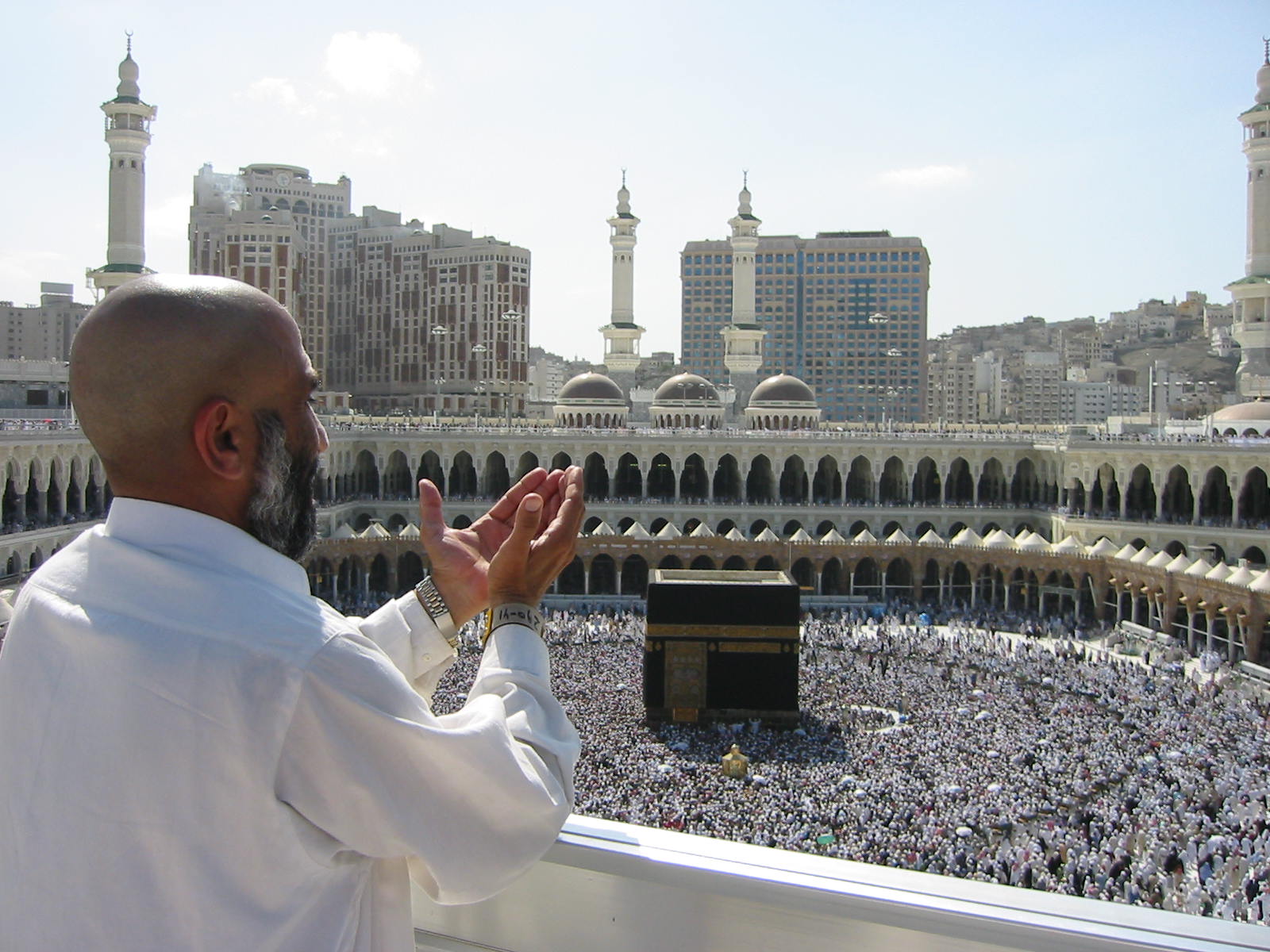
Iran filled 34.3% of its assigned Hajj quota — 30,000 pilgrims against an allocation of 87,550. IRNA attributed the shortfall explicitly to the “wartime situation,” a framing that positioned Iran as the restrained party absorbing the cost of conflict. The total Hajj 2026 attendance reached 1,707,301 pilgrims from 165 nationalities, according to Saudi Arabia’s General Authority for Statistics, with 1,546,655 international arrivals — a figure that exceeded 2025 levels despite the active war, per Arab News.
| Metric | Figure | Source |
|---|---|---|
| Total Hajj 2026 pilgrims | 1,707,301 | GASTAT (Saudi Arabia) |
| International arrivals | 1,546,655 from 165 nationalities | GASTAT |
| Iranian pilgrims dispatched | ~30,000 | IRNA / Tasnim via Gulf News |
| Iranian quota allocation | 87,550 | OIC formula |
| Iranian fill rate | 34.3% | Calculated |
| Vision 2030 revenue gap from Iranian shortfall | ~$310M | Middle East Insider |
| Bilateral agreement signed | November 12, 2025 | Mehr News / ABNA English |
| First Iranian pilgrims on Saudi soil (wartime) | April 25, 2026 | House of Saud |
| Departure processing began | June 1, 2026 | Tasnim |
The 66% shortfall cost Saudi Arabia approximately $310 million in Hajj-related revenue against Vision 2030 projections, according to Middle East Insider — a figure that registers against a fiscal deficit Goldman Sachs projects at SAR 300-330 billion for the full year. But the revenue loss was the price of the deterrent. As long as those nationals were inside the Kingdom, the cost of any Saudi escalation against Iran included the risk of a pilgrim crisis that could reprise 1987 — an outcome that no amount of revenue could offset.
Iran’s Deputy for Hajj and Umrah Affairs, Akbar Rezaei, confirmed the dispatch through IRNA in April, stating that Iran “will send around 30,000 pilgrims to Saudi Arabia for this year’s Hajj following coordination with Riyadh.” The word “coordination” carried more diplomatic weight than the rest of the sentence combined. It acknowledged a bilateral working relationship that persisted beneath the surface of a war in which IRGC missiles had struck five of Saudi Arabia’s treaty allies.
The Custodian Trap: Why Saudi Arabia Could Not Restrict Access
The Custodian title — adopted by King Fahd in 1986 in direct response to Ayatollah Khomeini’s charge that the House of Saud was unfit to manage the Hajj — transformed pilgrimage administration from an administrative function into the dynasty’s foundational legitimacy claim. Every successor has used it. Mohammed bin Salman’s entire domestic reform program operates under its umbrella: Vision 2030’s infrastructure investments in Mecca and Medina are premised on the idea that the Kingdom’s stewardship is both competent and universal.
This created a structural trap that Iran understood and exploited. Restricting Iranian pilgrim access — even during wartime, even after expelling military staff — would have validated precisely the charge that the Custodian title was designed to refute. Saudi Arabia could not filter Muslim pilgrims by nationality without undermining the theological basis of its own governance. The US Overseas Security Advisory Council issued its first-ever advisory against Hajj 2026 attendance, but Riyadh could not echo that warning for Iranian nationals without conceding that it could not guarantee safety inside Mecca — an admission no Custodian can make.
Iran, for its part, used this constraint as a platform. Mojtaba Khamenei’s Hajj season message on May 26 called on Muslims to sustain chants of “Death to America” and “Death to Israel” beyond the pilgrimage, per RFE/RL via GlobalSecurity. The pilgrimage was simultaneously a religious obligation, a political demonstration, and a component of the deterrence architecture that constrained both parties. Tehran sent pilgrims into Saudi territory knowing they functioned as a shield; Riyadh accepted them knowing the same.
How Patriot Redeployment Revealed the Priority
Saudi Arabia’s PAC-3 MSE inventory has depleted to approximately 400 rounds — roughly 14% of pre-war stockpile levels — with zero new deliveries expected before mid-2027. Against that backdrop, the Kingdom redeployed Patriot batteries to Mecca and Medina for the Hajj season, pulling coverage from other critical infrastructure including petrochemical facilities and military installations. The redeployment was not announced publicly but was reported by WARYATV and corroborated by analysis of Saudi defense posture on Day 100.
The decision reveals the hierarchy of Saudi strategic priorities in compressed form. With fewer than 400 interceptor rounds available across the entire Kingdom, every battery reassigned to the Holy Cities represented a gap elsewhere — and Riyadh chose the Hajj over Jubail, over Yanbu, over the Eastern Province oil infrastructure that generates the revenue keeping the state solvent. The logic is internally consistent: a missile strike on Mecca during Hajj would be an existential event for the dynasty in a way that a strike on a desalination plant would not.
But the redeployment also served the deterrence function. By visibly defending the sites where Iranian pilgrims congregated, Saudi Arabia reinforced the message that any attack on those locations would kill Iranians — a message directed squarely at Tehran’s own targeting decisions.
Now that Hajj has concluded, the question is whether those batteries return to their pre-Hajj positions or remain concentrated around the Holy Cities. Either choice carries cost. Redeploying back to industrial sites restores economic protection but signals that the Custodian’s priority was seasonal, not permanent. Keeping them in place maintains the religious-infrastructure shield but leaves Jubail’s 7% share of global petrochemical production, Sadara’s $3.7 billion debt facility, and the Eastern Province desalination network defended by whatever residual coverage remains — which, at 14% of pre-war inventory, may mean nothing at all.
Does the 1987 Mecca Massacre Precedent Still Apply?
On July 31, 1987, a political demonstration by Iranian pilgrims in Mecca escalated into a confrontation with Saudi security forces that killed 275 Iranians, 85 Saudi police, and 42 other nationals. Iran banned its citizens from Hajj for three years. Saudi Arabia severed diplomatic relations in April 1988. The rupture lasted until the two countries restored ties — a process that took years and required Rafsanjani-era pragmatism on Tehran’s side.
The 2015-2016 sequence proved the pattern still held. The September 2015 Mina stampede killed at least 2,411 pilgrims according to AP’s count, including 464 Iranians, and Iran accused Saudi Arabia of criminal negligence. When Riyadh executed Shia cleric Sheikh Nimr al-Nimr in January 2016, Iranian crowds attacked the Saudi embassy and consulate. The diplomatic rupture that followed kept Iran out of Hajj in 2016 and relations frozen for seven years until the Chinese-brokered normalization of March 2023.
The precedent matters because it establishes what happens when the pilgrim-presence mechanism breaks: it does not degrade gradually. It ruptures catastrophically, producing multi-year diplomatic blackouts and eliminating the Hajj channel entirely. Both capitals operated through the 2026 season with that history as backdrop. The restraint was not altruistic — it was informed by institutional memory of what uncontrolled escalation inside the Hajj perimeter actually costs.
The lesson both capitals absorbed from this history is not that pilgrimage is safe during war — it is that it requires an unspoken compact to remain so. That compact held through Hajj 2026. It has no mechanism to hold through the months that follow.
The Departure Timeline and the June 9 Convergence
Iranian pilgrim departure processing began on June 1, according to Tasnim, and extended through the formal close of Hajj on June 9. Iraq’s Interior Ministry coordinated overland convoy escorts for pilgrims returning via the Arar border crossing — the Karbala-to-Saudi route that had served as the primary land corridor, per the New Arab. The first Iranian nationals had arrived on Saudi soil on April 25, when an initial pilgrim group landed in Medina, making the total presence window approximately 45 days.
June 9 is not arbitrary. It is the same date on which Iran’s counteroffer to the US MOU framework — transmitted via Oman — reaches its response window, and the date on which Aramco’s $21.89 billion dividend payment processes, exposing the gap between the company’s $18.6 billion free cash flow and its distribution commitments. It is Day 101 of the war — the first full day on which the passive Hajj constraint is no longer operative. The convergence is not coordinated, but it is structural: multiple timelines that were independently set now expire simultaneously.
| June 9 Convergence Event | Mechanism | Saudi Exposure |
|---|---|---|
| Last Iranian Hajj pilgrims complete departure | Bilateral passive deterrent expires | No replacement constraint on IRGC targeting |
| Iran counteroffer response window (via Oman) | $12-24B frozen asset demand vs. IEEPA framework | Not party to negotiation; cannot influence terms |
| Aramco $21.89B dividend payment | FCF $18.6B (0.85x coverage) | Post-div cash $53.3B; fiscal buffer thinning |
| Sadara $3.7B debt grace period at T-6 days | June 15 expiry; 25+ creditor banks | Aramco $2.405B / Dow $1.295B guarantor split |
| Day 101 — first post-Hajj operational day | No passive or active Saudi diplomatic instrument | 34 days since last FM-to-FM contact (May 6) |
“Hajj 2026 quietly imposed limits on war itself… an invisible red line” — Middle East Monitor, May 27, 2026
What Expires When the Last Pilgrim Leaves?
The bilateral passive deterrent depended on three conditions: Iranian nationals physically present on Saudi soil, Saudi institutional commitment to their protection, and both governments’ awareness that a crisis involving pilgrims would reprise the 1987/2016 catastrophic-rupture pattern. As of today, the first condition no longer holds. The second becomes moot without the first. The third persists as historical memory but provides no operational constraint.
For Saudi Arabia, the post-Hajj window reopens the question of diplomatic posture toward Tehran. The Kingdom’s foreign minister has not contacted his Iranian counterpart in 34 days — since May 6, 2026 — and the Oman-mediated track that carries Iran’s counteroffer runs through channels to which Riyadh is not party. Saudi Arabia enters the post-Hajj period without a bilateral diplomatic instrument, without a back-channel (the Pakistan track is documented but not Saudi-controlled), and without the passive shield that pilgrim presence provided.
Chatham House observed in May 2026 that “Saudi leadership is using the war to reprioritize its spending under the cover of crisis” — but reprioritization requires a minimum baseline of physical security that the Hajj season incidentally supplemented. For Iran, the expiry removes the reputational cost of striking Saudi territory. Mojtaba Khamenei’s personal authorization of the pilgrim dispatch meant that any IRGC operation hitting Saudi soil during Hajj would have contradicted the Supreme Leader’s own directive, and that constraint is now lifted.
The IRGC’s targeting doctrine — demonstrated through 100 days of escalating strikes on Gulf infrastructure — no longer needs to account for Iranian civilian presence inside the Kingdom. The institutional logic that kept Saudi Arabia off the primary target list during Hajj has no replacement mechanism, and neither capital has proposed one.
Iran Filed Its Counteroffer on the Same Day the Shield Dissolves
Iran’s June 9 counteroffer, transmitted through Oman, demands the release of $12-24 billion in frozen assets before any Hormuz reopening — the same pool of funds that the US Treasury under Secretary Bessent has earmarked via IEEPA authority for Gulf ally war damage compensation. The IMF’s June 3 Article IV assessment made Saudi economic recovery explicitly “contingent on Hormuz normalising,” establishing for the first time that a sovereign credit assessment is conditional on a chokepoint controlled by an adversary. Saudi Arabia is not party to the Oman-mediated negotiation and cannot influence the asset-release terms that will determine whether the Strait reopens.
The timing creates a compound exposure. The passive Hajj deterrent expires on the same day that Iran’s negotiating position hardens — the counteroffer’s asset demand is structurally incompatible with Washington’s IEEPA framework, as previous analysis has documented. Saudi Arabia loses its only passive constraint precisely when the diplomatic track most likely to produce escalation-avoidance enters its most contentious phase.
The Kingdom built no bilateral channel during the six weeks of Hajj to serve as a successor mechanism — it redeployed air defense batteries but created no diplomatic architecture. The pilgrim shield functioned because it was self-enforcing, and it expired because self-enforcing mechanisms have built-in termination dates that neither party can extend unilaterally.
Frequently Asked Questions
Why didn’t Saudi Arabia use the Hajj period to negotiate a bilateral security understanding with Iran?
The Hajj bilateral agreement was deliberately scoped to pilgrim logistics — transport, accommodation, medical services, and security coordination — not political negotiation. Saudi Arabia’s Hajj Ministry and Iran’s Hajj Organization operated through a technical track that both sides treated as severable from the conflict. Expanding it into a security channel would have required foreign ministry engagement, and Saudi FM Prince Faisal’s last known contact with Iranian FM Araghchi was May 6.
The institutional separation was by design: it allowed the Hajj to proceed without either side appearing to negotiate under duress. The cost was that when the technical track concluded, no political track existed to absorb the transition, leaving both capitals without a successor channel on Day 101.
Could Iran reinstate the pilgrim-presence deterrent through Umrah season?
Umrah — the lesser pilgrimage, which can be performed year-round — does not generate the same deterrent conditions. Hajj concentrates over a million pilgrims in a defined geographic zone (Mecca, Mina, Arafat, Muzdalifah) over a fixed five-day ritual period, creating a density of foreign nationals that makes any military action in the vicinity internationally catastrophic. Umrah pilgrims are dispersed, arrive individually over months, and number in the low thousands at any given time for most nationalities.
The concentration effect that made Hajj a passive deterrent does not replicate at Umrah scale. Iran would need to send pilgrims in coordinated large groups — an action that would be transparently strategic and likely rejected by Saudi authorities, who control Umrah visa issuance with far more discretion than the OIC quota system governing Hajj.
Has Saudi Arabia historically escalated against Iran immediately after Hajj seasons?
The 2016 pattern is instructive: the Nimr execution occurred in January 2016, three months after the September 2015 Mina stampede, and the diplomatic rupture followed the execution rather than the Hajj itself. In 1987, the massacre occurred during Hajj rather than after it, and the subsequent rupture was reactive. There is no precedent for Saudi Arabia using a post-Hajj window for preemptive escalation.
The more relevant pattern is that the post-Hajj period removes a constraint without creating an incentive — the absence of a reason not to escalate is different from the presence of a reason to escalate. The risk is not Saudi action but the removal of a mutual brake on an escalation cycle driven primarily by IRGC operations and US-Iran negotiation dynamics, neither of which Riyadh controls.
What is the US position on the Hajj-as-deterrent framework?
The United States has not publicly acknowledged the pilgrim-presence dynamic as a deterrence mechanism. OSAC’s first-ever advisory against Hajj 2026 attendance suggested the opposite — that Washington viewed the pilgrimage as a risk to US nationals rather than a regional stabilizer. The advisory was narrowly scoped to citizen safety, not strategic analysis, but its issuance indicated that US security agencies assessed the deterrent as unreliable.
No US official, including Secretary Rubio or NSA Sullivan’s replacement, has referenced the Hajj constraint in public statements about Gulf de-escalation. The omission may reflect a policy assessment that acknowledging the mechanism would legitimize Iran’s use of civilian presence as a strategic instrument.
How does the Hajj constraint compare to other passive deterrents in the current conflict?
Three other passive constraints have operated during the Iran-Israel war: the Hormuz shipping-dependency mutual-damage logic (weakened after Iran’s partial closure), the GCC-hosted US force presence (degraded by PAC-3 depletion and PSAB vulnerability), and energy-market interdependence (undermined by Brent remaining below Saudi breakeven). The Hajj constraint was unique in that it was the only one with a fixed termination date known to all parties in advance.
Hormuz, base presence, and energy interdependence degrade gradually under pressure. Hajj expired on a specific day — today — creating a discrete shift in the risk environment rather than a gradual erosion. The revenue gap from Iran’s two-thirds quota shortfall also signals that the mechanism, even while it lasted, was already operating at reduced capacity.