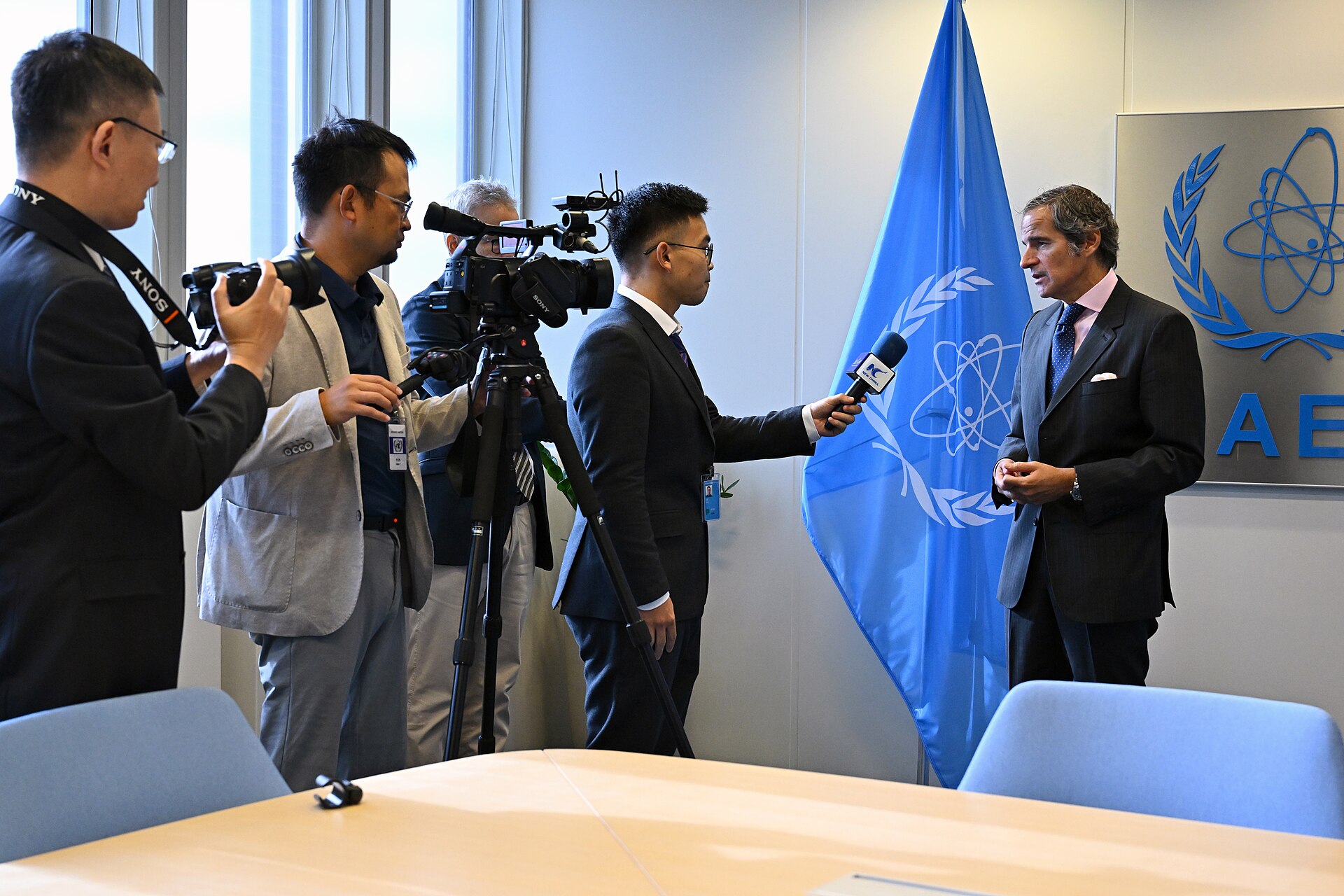

VIENNA — The framework that the Trump administration will formalize at Geneva on June 19 was already audited, three days before the June 15 signing, by the one institution it cannot function without. The International Atomic Energy Agency declared Iran in non-compliance with its safeguards obligations by a 21-10-3 vote on June 12, and the agency’s director general, Rafael Grossi, had already given the framework its terminal review in April when he called it, in language that has not been retracted in the eight weeks since, “an illusion of an agreement.” What now stands between Phase 1 and Phase 2 is not a 1.5-page text endorsed by five G7 governments but a 60-day negotiating window opening with the IAEA locked out of Iran for 108 days, a 15-year gap between Washington and Tehran on how long enrichment must be paused, and a 440.9-kilogram stockpile of 60% uranium that Washington wants removed from the country and that Iran’s supreme leader has ordered must not leave it.
None of this is a forecast that Phase 2 will collapse. It is the documented arithmetic of what 60 days will be expected to resolve, and the audit Grossi filed before the ceremony has not been answered by anyone with the authority to answer it.
Table of Contents
- What Phase 1 Delivered and What It Left Out
- Why Is the 15-Year Enrichment Gap So Wide?
- What Does 440.9 Kilograms of 60% Uranium Actually Mean?
- Why Is the IAEA Calling This an Illusion?
- Where Does Saudi Arabia Fit in Phase 2?
- Will 60 Days Be Enough?
- The Price of a Deal That Stays on Paper
- Frequently Asked Questions
What Phase 1 Delivered and What It Left Out
The framework signed on June 15 and being formalized at Geneva on June 19 runs to a page and a half, and the most truthful thing to say about its nuclear contents is that there are none. Enrichment limits, stockpile disposition, inspection regime, sanctions sequencing, ballistic missile constraints, and proxy support — every category that a Middle East nuclear agreement is normally judged on — sits inside the 60-day Phase 2 window that opens the moment Geneva closes, which means the framework being celebrated as a diplomatic breakthrough is a procedural waypoint dressed up as a settlement.
Phase 1’s actual content is narrow: a Hormuz transit understanding whose own toll-versus-fee language remains contested between Washington and Tehran in public, a ceremonial endorsement track on which five G7 governments signed before they had seen the final text, and a deferral of every nuclear question to a second window that begins running on June 19. Phase 2 inherits the entire dispute and then some, because the framework’s silences are themselves negotiating positions to which the parties have already committed.
This was the architecture flagged in mid-May when the 60-day clock was first floated as a placeholder for terms not yet drafted. It is also the architecture that Sharon Squassoni, the George Washington University Elliott School scholar and former senior nonproliferation official, described to Arms Control Today in early June as a framework that “abandons every nonproliferation standard Washington spent seventeen years building” — a structural criticism, not a process complaint.
The Middle East briefing 3,000+ readers start their day with.
One email. Every weekday morning. Free.
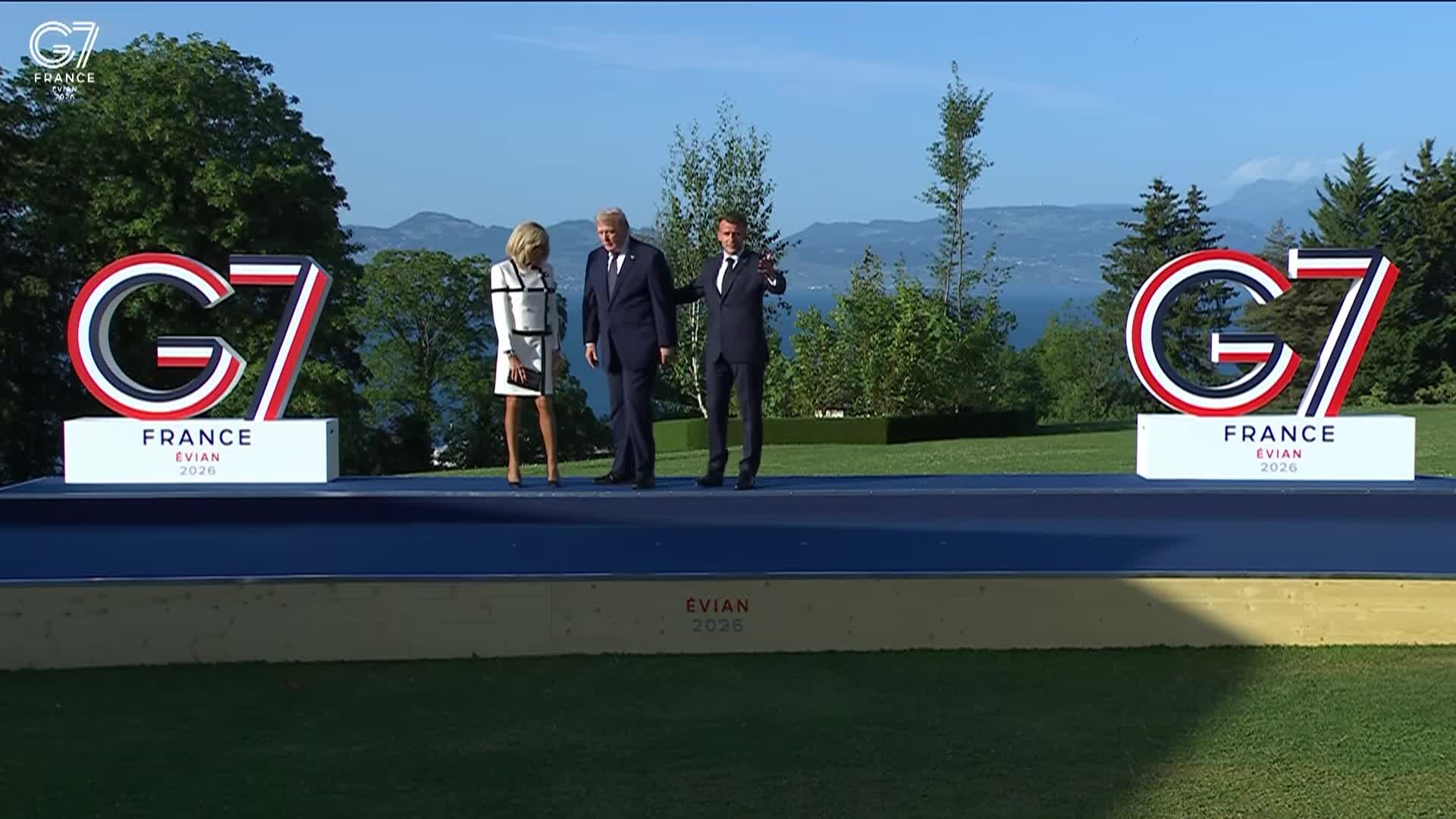
Where Phase 1 was a 15-month exercise in producing a text that almost everyone could endorse, Phase 2 is a 60-day exercise in producing the substance that the text deferred. The five G7 governments that signed at Évian on June 16 did so before the final text was released, a sequence documented in the June 16 Évian coverage here. The interval between those two propositions is the entire negotiation.
Why Is the 15-Year Enrichment Gap So Wide?
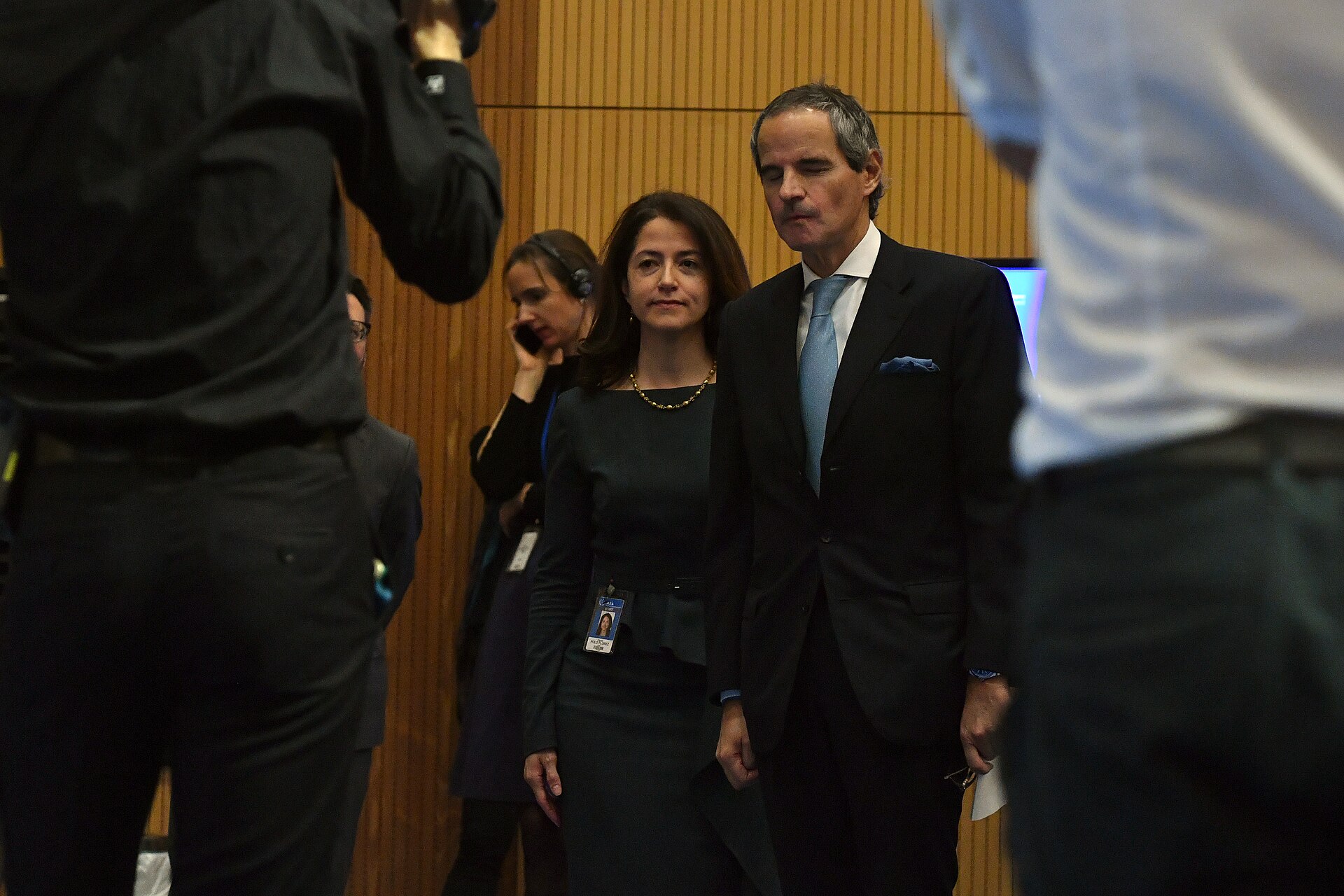
Phase 2 opens with Washington seeking a 20-year moratorium on uranium enrichment inside Iran and Tehran offering five years before reverting to limited enrichment at 3.67% U-235, the same low-enriched figure the JCPOA used as its long-term cap. The gap between those positions — 15 years — is wider than the entire duration of the JCPOA’s core centrifuge restrictions, which expired after a decade, and it is the first numerical reality that the Geneva ceremony will not paper over.
MV Ramana, a nuclear policy scholar at the University of British Columbia, told Al Jazeera in April that he could “not discern any technical reasons for either 20 or five years,” which is the cleanest available description of what is actually being argued about: not physics, but the duration over which Iran will accept being a state on probation. Axios reported in mid-April that mediators were sounding out a 12-to-15-year landing zone, though that figure has remained analyst speculation rather than a position either capital has confirmed. President Trump’s own framing at G7 Évian on June 16 — that the question of whether Iran retained the centrifuge stock was, in his words, scarcely worth the bother to argue about — has been read in Tehran as a softening of the public red line that Vice President Vance had set out at the February 17-18 Munich Security Conference.
Mohammad Ali Tabaar of the Carnegie Endowment, writing in May, framed the impasse with a precision that the daily reporting has not matched. Iran, he assessed, is “pushing the enrichment issue down the negotiations agenda” — a deliberate sequencing strategy rather than a temporary tactical evasion, designed to bank early concessions on sanctions sequencing and Hormuz language before enrichment limits are seriously addressed. Talks, he concluded in the same analysis, “now appear to be at an impasse.”
The JCPOA itself supplies the comparator that makes the gap measurable. Its 10-year centrifuge restrictions, 15-year cap at 3.67%, 20-year centrifuge production monitoring, and 25-year uranium mine monitoring were the product of 18 months of negotiation from interim deal to final agreement — and that negotiation began with the parties closer together than Washington and Tehran are now.
| Item | US opening position | Iran opening position | JCPOA precedent |
|---|---|---|---|
| Enrichment moratorium duration | 20 years | 5 years | 15 years at 3.67% cap |
| HEU stockpile location | Removed from Iran | Remains inside Iran | Shipped to Russia (2015) |
| Centrifuge production monitoring | Unspecified Phase 2 term | Unspecified Phase 2 term | 20 years |
| Uranium mine monitoring | Unspecified Phase 2 term | Unspecified Phase 2 term | 25 years |
| Verification regime | Full IAEA access restored | Inside-country only | Additional Protocol applied |
| Negotiation runway | 60 days | 60 days | 18 months (JPoA to JCPOA) |
The JCPOA’s 18-month runway produced a deal that even its critics conceded was technically dense, with annexes running to more than 150 pages of verification protocols. The Geneva clock is 60 days for a settlement opening with a gap on Year One that the JCPOA’s negotiators did not face at any point in their 18 months. Wendy Sherman, the former under secretary of state who led the JCPOA negotiation, told ABC’s This Week on June 14 that “I can assure you they will not get all of this done in 60 days” — a sentence that, coming from the only American official who has ever run an end-to-end nuclear negotiation with Tehran, deserves to be the operating assumption of every subsequent paragraph written about Phase 2.
What Does 440.9 Kilograms of 60% Uranium Actually Mean?
The physics of 440.9 kilograms of uranium enriched to 60% U-235 are not in dispute, and they are the second arithmetic the Geneva ceremony cannot resolve by ceremony alone. According to assessments by the Institute for Science and International Security (ISIS-online.org), the stockpile is sufficient — if further enriched to weapons-grade 90% U-235 — for approximately seven to ten nuclear weapons, with a post-strike breakout time of roughly 12 weeks to produce enough weapons-grade material for a single device. The figures are not provocative; they are arithmetic.
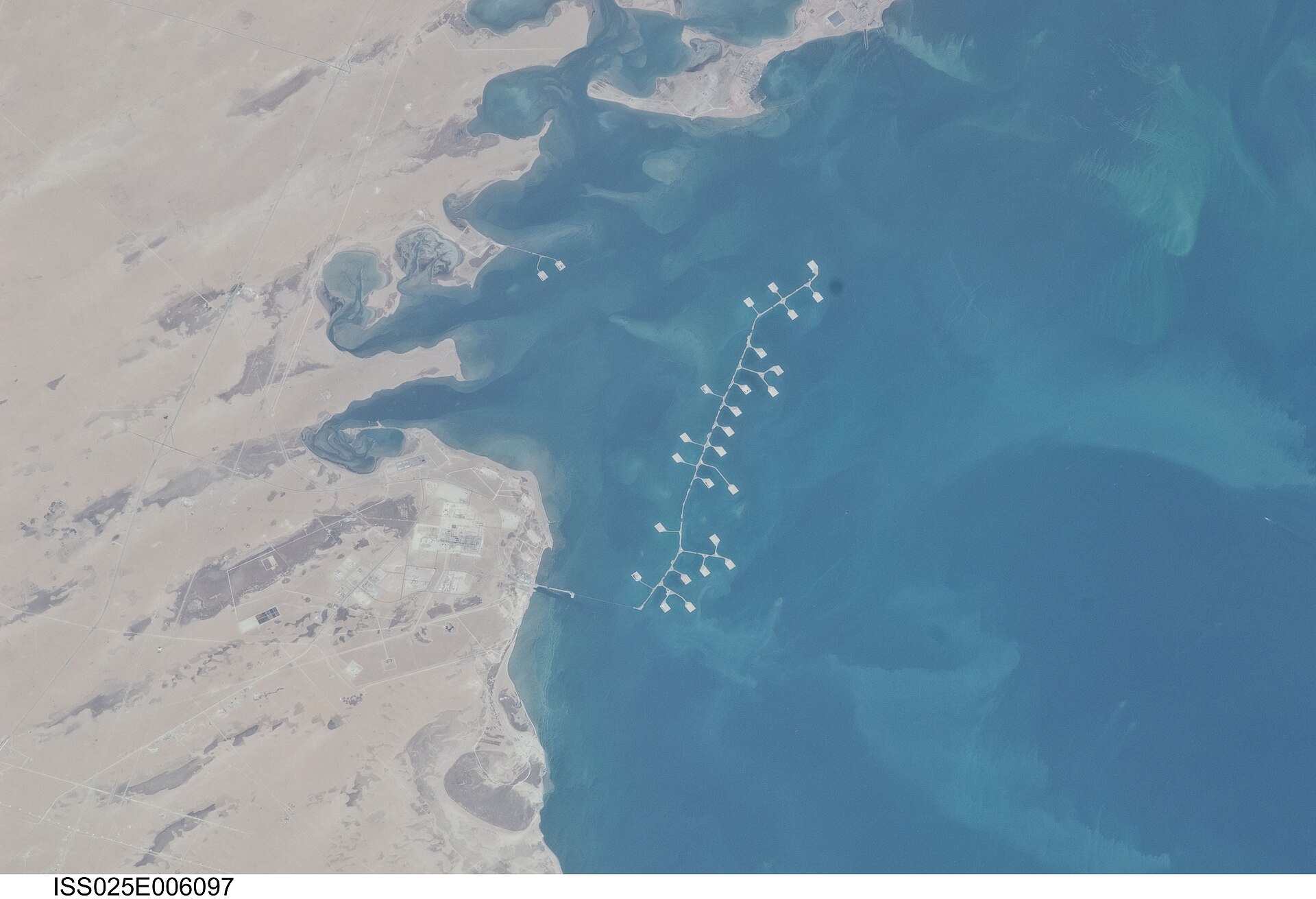
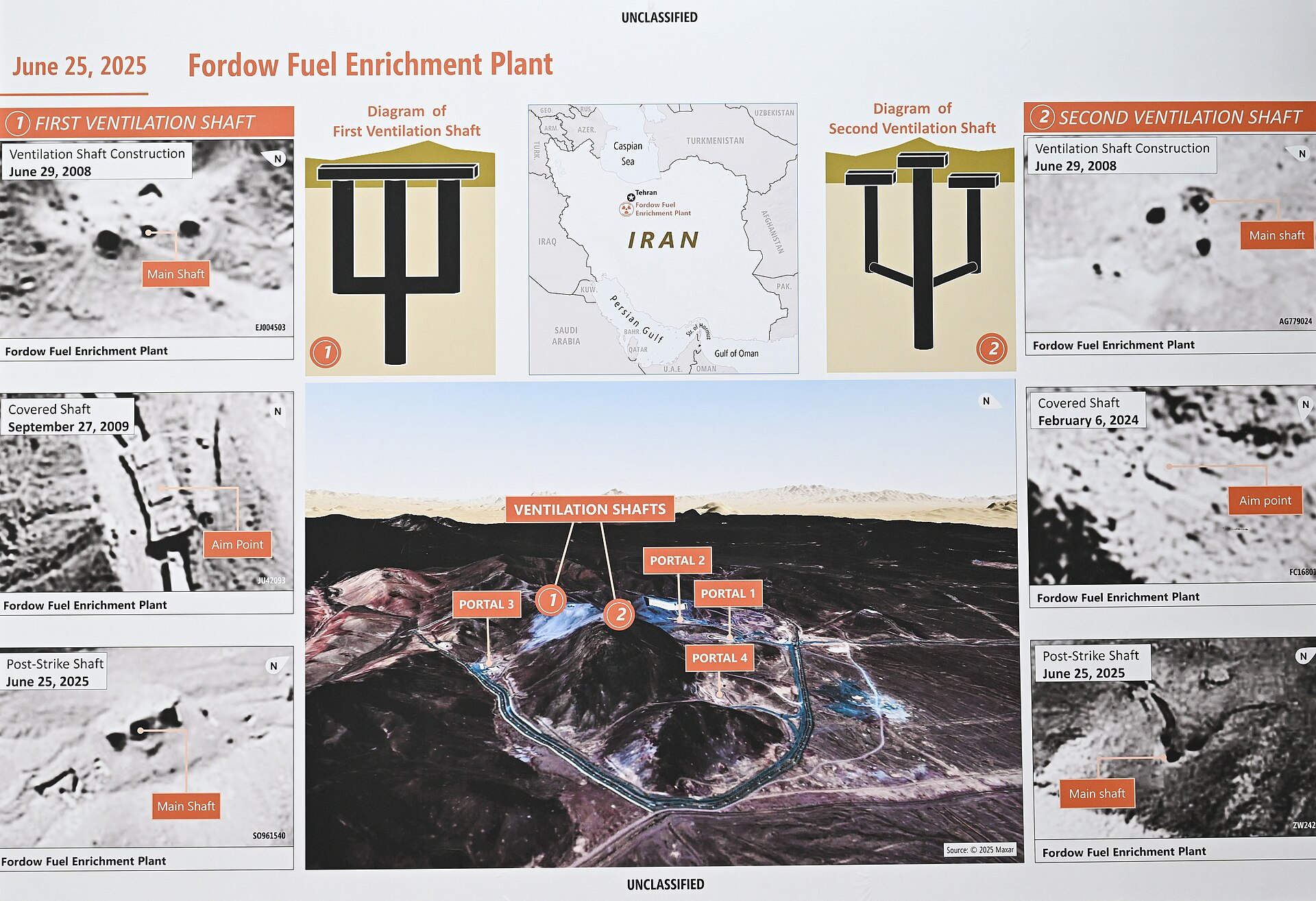
The IAEA believes most of that stockpile — somewhere between 265 and 287 kilograms, or roughly 60 to 65% — is held inside the tunnel complex at Esfahan, with up to 80 kilograms at Fordow and a remaining 74 to 96 kilograms at Natanz. The Fordow location is the geometrically awkward one. Built between 80 and 100 meters underground, the facility was designed to survive conventional strike packages; the June 2025 American operation dropped 12 GBU-57 Massive Ordnance Penetrators on it, and satellite imagery analyzed by CSIS and the Atlantic Council in early 2026 showed tunnel collapses, an approximately 30% degradation of the surface complex, and — critically — no resumption of enrichment activity. Dump trucks and bulldozers visible in subsequent imagery were filling craters, not running cascades.
What that imagery does not show is the condition of the HEU itself. Up to 80 kilograms of 60% uranium may be physically present beneath the Fordow rubble, and the IAEA has not had access to verify either its quantity or its integrity. This is not a verification question that can be resolved by satellites. It can be resolved only by inspectors on the ground, with the equipment to take samples and the access to compare what is there with what was last declared — and the last declaration was logged in late February.
The disposition question is the one Phase 2 inherits intact. Washington’s position, transmitted publicly through the Axios reporting in April, is that the entire 440.9-kilogram stockpile must be removed from Iranian soil — the same model the JCPOA used in 2015 when 25,000 pounds of Iranian-held nuclear material were shipped to Russia. Iran’s position, set out in a directive issued by Supreme Leader Ali Khamenei in late May and reported by Reuters via Xinhua, is the opposite: the enriched uranium “must remain inside the country.” Iranian Foreign Minister Abbas Araghchi formalized that position publicly on June 13, telling state-affiliated outlets that any dilution of the stockpile must occur inside Iran, not in a third country.
That divergence is not a difference of degree. It is a difference about whose territory holds the most consequential material at the table Phase 2 will negotiate around, and there is no obvious midpoint between the two positions that does not require one capital to recede on a question its leadership has publicly committed to.
Why Is the IAEA Calling This an Illusion?
The IAEA’s audit of Phase 2 was effectively filed in two installments. The first was Rafael Grossi’s interview with The Hill in mid-April, in which he set out the agency’s nonnegotiable test: “Iran has a very ambitious, wide nuclear program so all of that will require the presence of IAEA inspectors. Otherwise, you will not have an agreement. You will have an illusion of an agreement.” The second was a more compressed and quotable version of the same proposition, delivered to The Telegraph and carried by Iran International on April 20: “Without verification, any agreement is no agreement. It’s an illusion of an agreement.”
“Without verification, any agreement is no agreement. It’s an illusion of an agreement.”
— Rafael Grossi, Director General, IAEA, April 20, 2026
Neither statement was conditioned on which framework, which capital, or which clock. The verification test is the IAEA’s standing position, and it has been the agency’s standing position since its founding statute was negotiated in 1957. What makes Grossi’s April quote a Phase 2 audit rather than a generic warning is the verification gap that Phase 2 opens with.
Standard IAEA safeguards practice for stockpiles of highly enriched uranium calls for verification on an approximately 30-day cycle, an interval calibrated to the practical detectability of diversion. The last time agency inspectors conducted verification at Iran’s major nuclear sites was on or before February 28, 2026. The window between that date and the June 19 Geneva ceremony is 111 days; the window between that date and June 16 is 108. Either way, Phase 2 begins on a baseline that is more than three full safeguards cycles out of date, which means the agency cannot confirm, today, the present quantity or location of the 440.9-kilogram stockpile that the United States is asking Iran to remove from its soil.
The formal Vienna response to that absence is the Board of Governors resolution adopted on June 12 by a 21-10-3 vote — 21 in favor, ten abstentions, three against (Russia, China, and Niger) — declaring Iran in non-compliance with its NPT safeguards obligations. The agency’s underlying language is unusually direct in a Vienna context: “Iran is the only NPT non-nuclear-weapon State to have produced and accumulated uranium enriched up to 60% U-235…The Agency’s lack of access to verify the previously declared HEU and LEU, for nearly a year — which is long overdue according to standard safeguards practice — is a matter of proliferation concern.”
A board resolution is not, in itself, a binding decision. What it is, in the regulatory grammar that Phase 2 inherits, is a finding by the agency that the framework about to be celebrated at Geneva is being signed in the absence of the verification baseline that the framework’s own structure requires. Lindsey Menton of the Carnegie Endowment, writing in May, gave the IAEA’s position its plain meaning: “credible oversight remains the sine qua non of a negotiated settlement.” Phase 2 has not yet begun, and that condition is already 108 days overdue.
Where Does Saudi Arabia Fit in Phase 2?
Saudi Arabia holds no seat in the Phase 2 nuclear talks. That sentence is not the editorial observation; it is the structural fact, and it is the central reason this framework cannot succeed on the regional terms the Kingdom has been told it will. Riyadh endorsed the framework through Pakistan in mid-June without a direct foreign ministry statement, accepted enrichment-permissive terms in its own 123 Nuclear Cooperation Agreement with Washington on May 13 — exactly 31 days before the framework MOU was signed — and is now expected to absorb the regional consequences of a Phase 2 negotiation it cannot enter and a verification regime it cannot influence. The full structural implications of that exclusion are analyzed in The Enrichment Ceiling Will Be Set Without Riyadh in the Room.
The May 13 agreement, signed alongside a $142 billion defense package, is the single most consequential document for Saudi Arabia’s nuclear standing since the country joined the NPT in 1988, and its content is the second reason Phase 2 begins compromised. The agreement omits all three pillars of what is informally known as the Gold Standard: there is no ban on uranium enrichment, no ban on plutonium reprocessing, and no precondition that Riyadh ratify the IAEA’s Additional Protocol before nuclear exports proceed. Those omissions are not oversights — they are negotiated positions, taken by Washington in the full knowledge of what the JCPOA, the UAE 2009 agreement, and 17 years of nonproliferation precedent had previously held to be the floor.
The UAE’s 2009 agreement supplies the comparator that makes the Saudi terms legible. Article 7 of that document explicitly prohibits the United Arab Emirates from possessing sensitive nuclear facilities or engaging in enrichment or reprocessing, and the agreement entered into force on December 17, 2009 with that provision intact — the Saudi agreement contains no such article. Squassoni, in her Arms Control Today piece, described the result as a “gilded sweetheart deal” — language that, from a scholar who has been measured about US nuclear cooperation arrangements across four administrations, reads as a structural verdict rather than a rhetorical one. That assessment has been amplified legislatively by S.4243, the “No Nuclear Weapons for Saudi Arabia Act,” reintroduced on March 25, 2026 by Senators Ed Markey (D-MA) and Jeff Merkley (D-OR), which would require an affirmative congressional vote before any US-Saudi civilian nuclear cooperation enters into effect.
The trajectory is what the Geneva ceremony cannot correct. Washington is asking Tehran in Phase 2 to accept enrichment terms that it has just declined to impose on Riyadh, and the gap between those two postures — detailed in the June 13 coverage here — is a bargaining-power problem before it is a fairness problem. The Arms Control Association had warned in February 2026 that an enrichment-permissive Saudi deal would structurally undermine any subsequent Iran framework; that warning preceded the May 13 signing by three months and the framework MOU by four.
What Saudi Arabia receives from Phase 2, in the structural arithmetic the Geneva ceremony will formalize, is exposure without authority. The Kingdom is expected to underwrite the regional security order that the framework presupposes — through Hormuz transit traffic, through Lebanon-track political support, through the $3 billion tranche it extended to Pakistan as the back-channel ran through Islamabad — and it holds no seat at the table where the nuclear terms underwriting that order will be drafted. The royal family’s full structural map is set out on the House of Saud’s permanent profile of the dynasty, and none of its members will be in the Vienna room when 60-day Phase 2 substance is negotiated.
Will 60 Days Be Enough?
Sherman’s “I can assure you they will not get all of this done in 60 days” is the senior version of an answer that the available expertise has been giving in different registers for two months. Phase 2 needs to resolve, on the published agenda alone, enrichment duration, stockpile disposition, sanctions sequencing, inspection architecture, ballistic missile limits, and the proxy support file — and Sherman’s underlying point, made in the same broadcast, is that the JCPOA’s 18-month runway from interim deal to final agreement was already considered tight by the team that ran it.
“Some of my colleagues negotiated what was known as the Joint Plan of Action, which was a short-term deal to give us six months to come to a final resolution. It took us 18 months.”
— Wendy Sherman, former US Under Secretary of State, June 14, 2026
The point Sherman keeps returning to is not the timeline but the composition of the team. “It takes an expert team,” she told ABC, “including nuclear physicists, Treasury experts, sanctions experts, commerce experts, lots of lawyers, intelligence assets to really get such a deal done” — a sentence that reads, in the Phase 2 context, as a quiet inventory of what the administration’s negotiating bench currently lacks. The State Department’s senior nonproliferation tier has been thinned by departures since January, and the Treasury sanctions team that ran the JCPOA’s Annex II implementation has not been reassembled at anything like the JCPOA scale.
Tabaar’s “pushing the enrichment issue down the negotiations agenda” framing makes the runway problem worse rather than better. If Iran’s sequencing strategy banks early Phase 2 concessions on sanctions sequencing and Hormuz language before enrichment limits are seriously addressed, the 60-day window may close with a Phase 2 agreement that has resolved the easier items and deferred the hardest ones to a phantom Phase 3 — which is not on any published calendar and which neither capital has committed to.
Lindsey Menton’s caveat, also from her Carnegie analysis in May, is the technical complement to Sherman’s procedural one. Despite the infrastructure destruction the June 2025 strikes inflicted, she assessed, “Iran still has an ability and perhaps greater desire to reconstitute these capabilities, including in smaller, clandestine facilities.” A 60-day Phase 2 agreement that bans known facilities while leaving smaller clandestine sites unaddressed is, on Menton’s reading, an agreement that does not solve the problem it was negotiated to solve. Senator Lindsey Graham (R-SC) gave the political version of the same concern in his June 14 remarks: “I am somewhat concerned that Iran’s view of the agreement seems different than what the American negotiating team is claiming.”
The Iranian read of the same window is, on its own terms, internally consistent. Araghchi has said publicly that Iran “won the war,” that enrichment will continue “with or without deal,” and that the framework imposes no new nuclear obligations on Iran — a position the IRNA seven-point MOU text leaked on June 12 set out in writing in exactly those terms. The Khamenei directive on HEU disposition is not, from Tehran’s vantage, an obstinacy; it is a security position taken in light of what Iranian sources, quoted by Reuters in May, described as deep suspicion that the ceasefire is “a tactical deception by the US.” Whether Washington shares that read or not is irrelevant to the Phase 2 arithmetic. Both capitals are negotiating from postures their domestic audiences have been told are non-negotiable, and both have 60 days to discover otherwise.
The Price of a Deal That Stays on Paper
Brent crude closed on June 16 at $78.82 a barrel, down 5.23% on the day. Saudi Arabia’s fiscal breakeven, depending on which measure is applied, runs from $80 a barrel on the narrow IMF formula to $94 a barrel on the Bloomberg Economics figure to $111 a barrel when the Public Investment Fund’s domestic spending commitments are included. Phase 2’s price, in the simplest available expression, is that gap — multiplied by the days, weeks, and months the 60-day clock fails to deliver substance.
The first-quarter fiscal evidence is the part the Geneva ceremony is least equipped to soften. Saudi Arabia recorded a Q1 2026 deficit of SAR 125.7 billion ($33.5 billion), the largest single-quarter deficit in the Kingdom’s history, consuming 76% of the full-year forecast in 90 days and financed entirely through debt issuance. The Q1 figures were assembled when Brent averaged above $107 a barrel — a price level at which Saudi Arabia, on the published breakeven figures, ought to have been in surplus. That it was not is the data point that subsequent analysis of fiscal sustainability has to begin with rather than end at.
| Indicator | Figure | Source / context |
|---|---|---|
| Brent crude, June 16 close | $78.82/bbl | Trading Economics |
| Daily move, June 16 | −5.23% | Trading Economics |
| Breakeven (IMF, narrow) | $80/bbl | Middle East Insider, March 2026 |
| Breakeven (Bloomberg) | $94/bbl | Bloomberg Economics |
| Breakeven (PIF-inclusive) | $111/bbl | Bloomberg Economics |
| Q1 2026 fiscal deficit | SAR 125.7B / $33.5B | Gulf News, Saudi Gazette |
| Share of full-year forecast spent in Q1 | 76% | Saudi Ministry of Finance |
| Q1 average Brent | Above $107/bbl | Business Recorder |
| PGSA exposure | ~$2B/year | $1/bbl × 5.5M bpd × 365 |
The Persian Gulf Strait Authority fee — the $1-per-barrel charge that Iran’s parliament codified into domestic law on March 30 and 31, before any MOU draft existed — is the second piece of arithmetic. At Saudi Arabia’s 5.5 million barrels per day of Hormuz-routed crude, the fee carries a $5.5 million-a-day, roughly $2 billion-a-year, cost that the framework’s “toll-free” language was supposed to neutralize. It does not. The MOU bans “tolls” without defining the term against “service fees,” and Iranian officials have been clear in public, including Araghchi on June 14, that the parliament’s codification will be enforced as a service-fee regime that the framework does not address.
What that means in operational terms is that Saudi Arabia’s principal export route remains, as detailed in the June 15 mine-clearance coverage, on the wrong side of a 40-to-50-day mine-clearance window at the optimistic estimate and a six-month Pentagon estimate at the pessimistic one. Phase 2 is being negotiated against an oil price already inside the most painful of the three breakeven figures, with no fiscal cushion from Q1 to absorb a longer Hormuz disruption, and with a PGSA fee structure that the Geneva ceremony’s text does not foreclose.
The expression “an illusion of an agreement,” to which Grossi has not been asked to add any further qualification since April 20, has a precise fiscal translation for Riyadh. It is the difference between an oil market that returns to its $90-to-$100 trading range on the strength of a verifiable Phase 2 settlement, and an oil market that holds at $78 because the settlement remains a procedural waypoint behind which 60% uranium is held in tunnels nobody can inspect. That gap between the two market states is what Phase 2 is being asked to close — in 60 days, with no verified baseline, between two capitals whose opening positions are 15 years apart and whose physical stockpile disagreement is not bridgeable without one capital crossing a publicly stated red line.
Vienna filed its audit before Geneva signed, and in the eight weeks since Grossi gave the framework its terminal review on April 20, no amendment has been issued and no Iranian or American statement has answered the verification gap on which the audit turned. Phase 2’s clock starts on Thursday.
Frequently Asked Questions
What is INARA and why does Senator Graham invoking it matter for Phase 2?
The Iran Nuclear Agreement Review Act, passed in 2015 in the lead-up to the JCPOA, requires the executive branch to transmit any nuclear agreement with Tehran to Congress within five days of signing, opens a 30-day review window during which Congress can vote on a resolution of disapproval, and prohibits the president from waiving or suspending statutory sanctions during that window. Graham’s June 14 demand that Vice President Vance personally present the Iran deal to Congress under INARA reflects the procedural reality that, as of June 16, the framework MOU signed on June 15 has not been submitted to Congress, and there is an active legal debate about whether the framework triggers INARA at all or whether Phase 2’s eventual product is the trigger. If Phase 2’s settlement falls outside INARA’s reach, the 60-day window also bypasses the only existing US statutory check on the executive branch’s nuclear diplomacy with Iran.
How does the Fordow facility factor into verification under Phase 2?
Fordow’s underground depth — 80 to 100 meters — is the part of the verification problem that most resists procedural fixes. The June 2025 strike package using 12 GBU-57 MOPs degraded approximately 30% of the surface complex and caused tunnel collapses, but the core enrichment hall and the up-to-80-kilogram HEU stockpile assessed to be present there cannot be physically inspected without ground access that Iran has not agreed to and cleanup operations that have not yet occurred. Standard IAEA safeguards procedures presuppose physical sample collection on a 30-day cycle; Fordow’s current condition means that even if Iran granted full access tomorrow, the agency would face a multi-week site-stabilization process before its inspectors could safely enter. Phase 2’s verification clause, whatever it contains, will be tested first against Fordow.
What exactly is the PGSA and how does it interact with the MOU’s toll-free language?
The Persian Gulf Strait Authority was established by Iranian legislation passed on March 30 and 31, 2026, codifying a $1-per-barrel service fee on transits through the Strait of Hormuz, with exemptions for Russia, China, India, Iraq, and Pakistan but with no exemption for Saudi Arabia, the United Arab Emirates, or Kuwait. The Iranian parliament’s drafting predates the framework MOU by ten weeks, which is the relevant chronology for the interpretive dispute: the MOU’s “toll-free” language was negotiated against an existing Iranian fee regime that Tehran considers domestic law, and Araghchi’s public framing as a “service fee” rather than a “toll” is the position the framework’s text was unable to foreclose. The annual cost to Saudi Arabia at its 5.5-million-barrels-per-day Hormuz volume is roughly $2 billion at full implementation.
What is the UAE Gold Standard and how does the Saudi 123 Agreement compare?
The “Gold Standard” is the informal name for the nonproliferation architecture embedded in the United Arab Emirates’ 2009 nuclear cooperation agreement with the United States, which entered into force on December 17, 2009. Article 7 of that agreement prohibits the UAE from possessing sensitive nuclear facilities or engaging in enrichment or reprocessing, and the agreement also includes an Additional Protocol requirement and most-favored-nation provisions that, in their original drafting, would have rendered the UAE entitled to renegotiate if a later US bilateral granted enrichment terms to a regional partner. The Saudi agreement of May 13, 2026 grants exactly that — enrichment terms with no ban, no reprocessing prohibition, and no Additional Protocol precondition — which is the structural mechanism by which Squassoni’s “abandons every nonproliferation standard” assessment operates. The UAE has not publicly invoked its MFN clause; whether it does so during Phase 2 is one of the second-order regional questions Geneva does not address.
What would a successful Phase 2 agreement actually need to contain?
A Phase 2 settlement that withstands the Grossi audit would require, at minimum, four verifiable elements absent from the current architecture: a restored IAEA inspection regime with at least JCPOA-equivalent access including the Additional Protocol, a physically resolved disposition of the 440.9-kilogram 60% HEU stockpile in a form the IAEA can confirm (whether in-country dilution under continuous supervision or third-country transfer), an enrichment moratorium of measurable duration with corresponding centrifuge production limits, and a sanctions sequencing schedule that maps statutory waivers to verifiable Iranian performance. None of those four elements is presently the subject of agreed text. A 60-day window that produces three of the four would be a JCPOA-grade achievement; a 60-day window that produces none of them would meet the literal definition Grossi gave on April 20 — an agreement on paper, an illusion in practice.
The gap between what Geneva verified and what Washington publicly stated widened further at the G7 closing press conference, where Trump invoked Saudi Arabia’s ballistic missiles to justify Iran keeping its own arsenal — invoking the same weapons system the $142 billion US-Saudi arms deal was sold to counter.