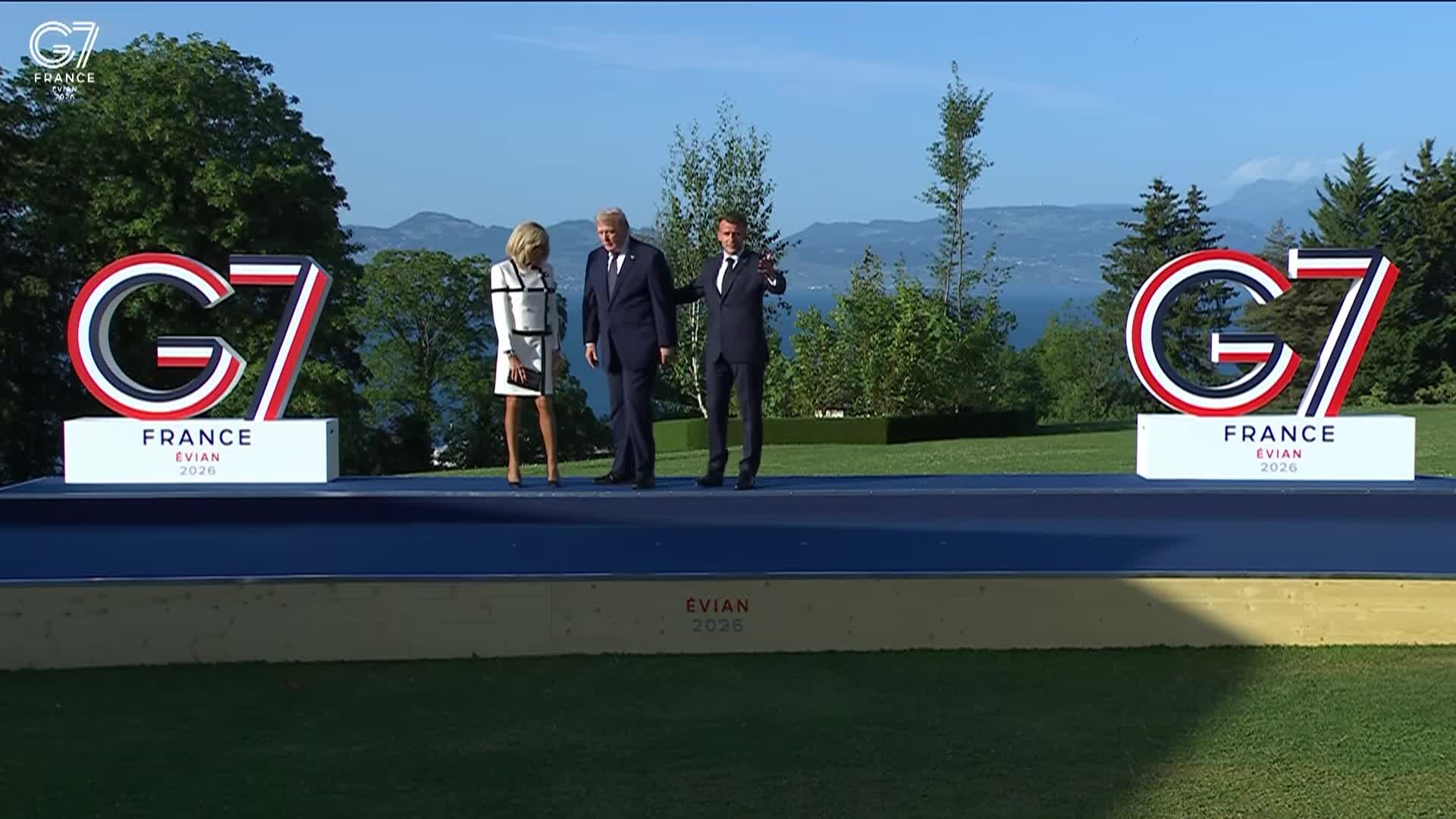

WASHINGTON — Three days before JD Vance is scheduled to sign a nuclear memorandum of understanding in Geneva, President Donald Trump stood before G7 leaders at Évian and publicly retreated from his administration’s core demand on Iran. “Why do you even bother?” he said of extracting enriched uranium from Iranian territory. “It’s probably half a million dollars worth.” The same day, CIA Director John Ratcliffe told the president that U.S. intelligence raises serious doubts about Iran’s willingness to make the nuclear concessions Washington has publicly demanded — a warning backed by Secretary of State Marco Rubio and Defense Secretary Pete Hegseth.
The Geneva ceremony is confirmed for June 19. Phase 1 of the MOU contains zero nuclear terms; every commitment on enrichment, stockpile disposition, and verification is deferred to a 60-day negotiating window whose starting conditions the vice president himself has acknowledged remain unresolved. Iran holds 440.9 kilograms of highly enriched uranium at 60 percent purity, unverified by IAEA inspectors since February 28. Saudi Arabia, which endorsed the deal through Pakistan and carries $2 billion a year in Hormuz transit exposure, has no seat in the nuclear track and no mechanism to influence the terms being softened in its name.
Table of Contents
- What Did Trump Say About Uranium at the G7?
- The CIA Director Warned the Same Day
- Why Has the Core Red Line Shifted Before the Ceremony?
- The Ceremony Before the Terms
- What Does Phase 2 Require — and Who Is in the Room?
- The 123 Agreement Already Conceded the Precedent
- How Much Does Saudi Arabia Stand to Lose From an Enrichment-Permissive Deal?
- Sixty Days Without a Baseline
- Frequently Asked Questions
What Did Trump Say About Uranium at the G7?
At the G7 summit in Évian on June 16, 2026, Trump publicly questioned the value of removing enriched uranium from Iran, stating: “Why do you even bother? because it’s not very valuable, you know. It’s probably half a million dollars worth.” This directly contradicts the White House’s April 8, 2026, position — delivered through Al Jazeera — that “the United States continues to reject any uranium enrichment inside Iran” and that the red line “has not changed.”
The remark was not off-script or a passing aside. It was Trump’s considered response when asked about one of the two core demands his own envoy, Steve Witkoff, had carried into every round of Geneva talks since 2025: the physical removal of Iran’s enriched uranium stockpile from Iranian territory. Witkoff had framed the demand in absolute terms across multiple venues throughout 2026 — “We cannot allow even 1% of an enrichment capability” — and had specifically called for the dismantlement of Iran’s enrichment infrastructure at Natanz, Fordow, and Isfahan. The other core demand, zero enrichment capability, had been presented as non-negotiable. By June 16, the president had reduced the first demand to a question of commercial value and had not addressed the second at all in the Phase 1 document his vice president is scheduled to sign in 72 hours.
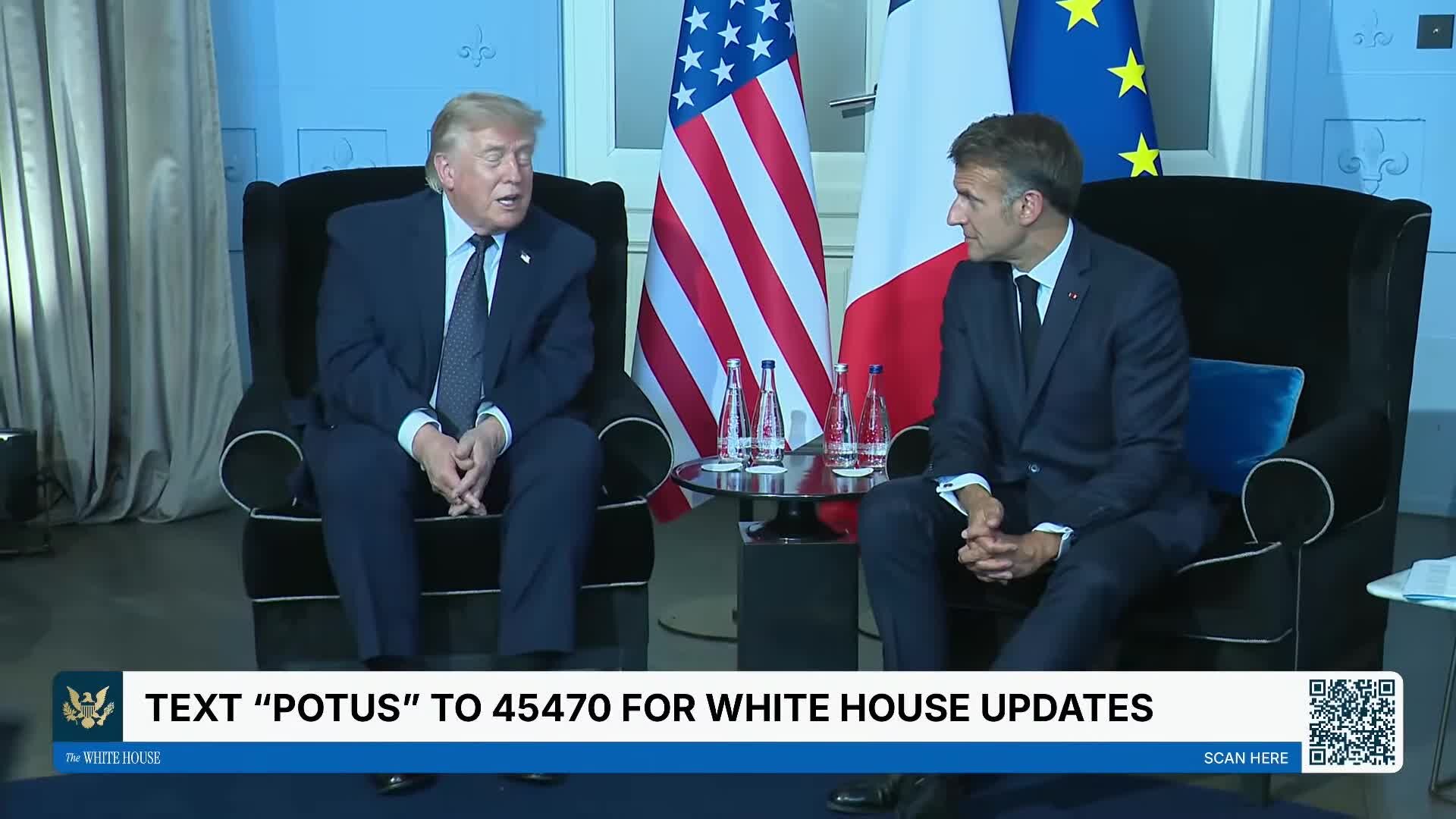
The timing is what converts a rhetorical softening into a diplomatic signal. Trump made the statement with the IRGC-affiliated Tasnim news agency already tracking his public pronouncements on the deal, noting he had announced it “38 times in the last two months” before it materialized. When a president describes his own negotiating demand as commercially trivial in front of allied leaders — three days before the ceremony that locks in the framework — he is not musing aloud. He is repositioning, and every party to the negotiation recalibrates accordingly, including the parties not in the room.
The CIA Director Warned the Same Day
On June 15, Axios reported that CIA Director John Ratcliffe had privately informed Trump that U.S. intelligence raises serious doubts about Iran’s willingness to make the nuclear concessions the administration has publicly demanded. The core of Ratcliffe’s warning was specific and sourced to signals intelligence: private discussions among Iranian officials differ materially from Tehran’s public commitments on the nuclear file. Rubio and Hegseth both supported the assessment, placing the State Department and the Pentagon alongside the CIA in questioning the deal’s nuclear viability.
The Middle East briefing 3,000+ readers start their day with.
One email. Every weekday morning. Free.
Vance, Witkoff, and senior advisor Jared Kushner pushed back against Ratcliffe’s assessment and defended the deal — creating a documented split within the administration between the intelligence community’s reading of Iran’s intentions and the diplomatic team’s commitment to the June 19 ceremony. The split is not over tactics or sequencing. It is over whether the counterparty intends to honor the framework the United States is about to sign. Ratcliffe’s concern was not that Phase 2 might be difficult or slow. It was that Iran’s private position on nuclear terms was already at odds with what the administration was telling the American public Phase 2 would deliver.
The juxtaposition with Trump’s G7 statement the following day compounds the signal. When a CIA director tells a president that the counterparty’s private commitments differ from its public ones, and the president responds within 24 hours by publicly softening his own demands at an allied summit, the diplomatic message to Tehran is unambiguous: the American position is moving toward Iran’s, not the other way around. Abbas Araghchi, Iran’s foreign minister, had already told CBS News on June 13 that Iran would at most “down-blend” enriched uranium inside its own territory — not transfer it abroad — and that enrichment is “a sovereign right.” Ratcliffe’s intelligence suggested even that offer overstated what Tehran privately intends to concede.
Why Has the Core Red Line Shifted Before the Ceremony?
The U.S. red line on Iran’s nuclear program has shifted in both substance and framing across 2026, moving from “zero enrichment, full dismantlement” to an increasingly ambiguous position where the ceremony precedes the resolution of terms. As late as April 8, 2026, the White House insisted the red line “has not changed.” Steve Witkoff demanded in both the 2025 and 2026 Geneva rounds that Iran accept zero enrichment capability and the dismantlement of its infrastructure at Natanz, Fordow, and Isfahan. Two months later, the president publicly described the material at the center of that red line as commercially worthless.
Vance’s own account of the gap has been remarkably consistent in one respect: he has acknowledged from the beginning that Iran has not accepted the core American demands. After the second Geneva negotiating round in February 2026, Vance told Fox News: “In some ways it went well, they agreed to meet afterwards, but in other ways it was very clear that the President has set some red lines that the Iranians are not yet willing to actually acknowledge and work through.” That statement was made on February 17–18. Nothing in the intervening four months — not the ceasefire, not the MOU draft, not the G7 endorsement — has resolved the gap Vance identified, because Phase 1 of the memorandum contains no nuclear terms whatsoever. Every nuclear commitment is deferred to the 60-day Phase 2 window that begins after the June 19 ceremony.
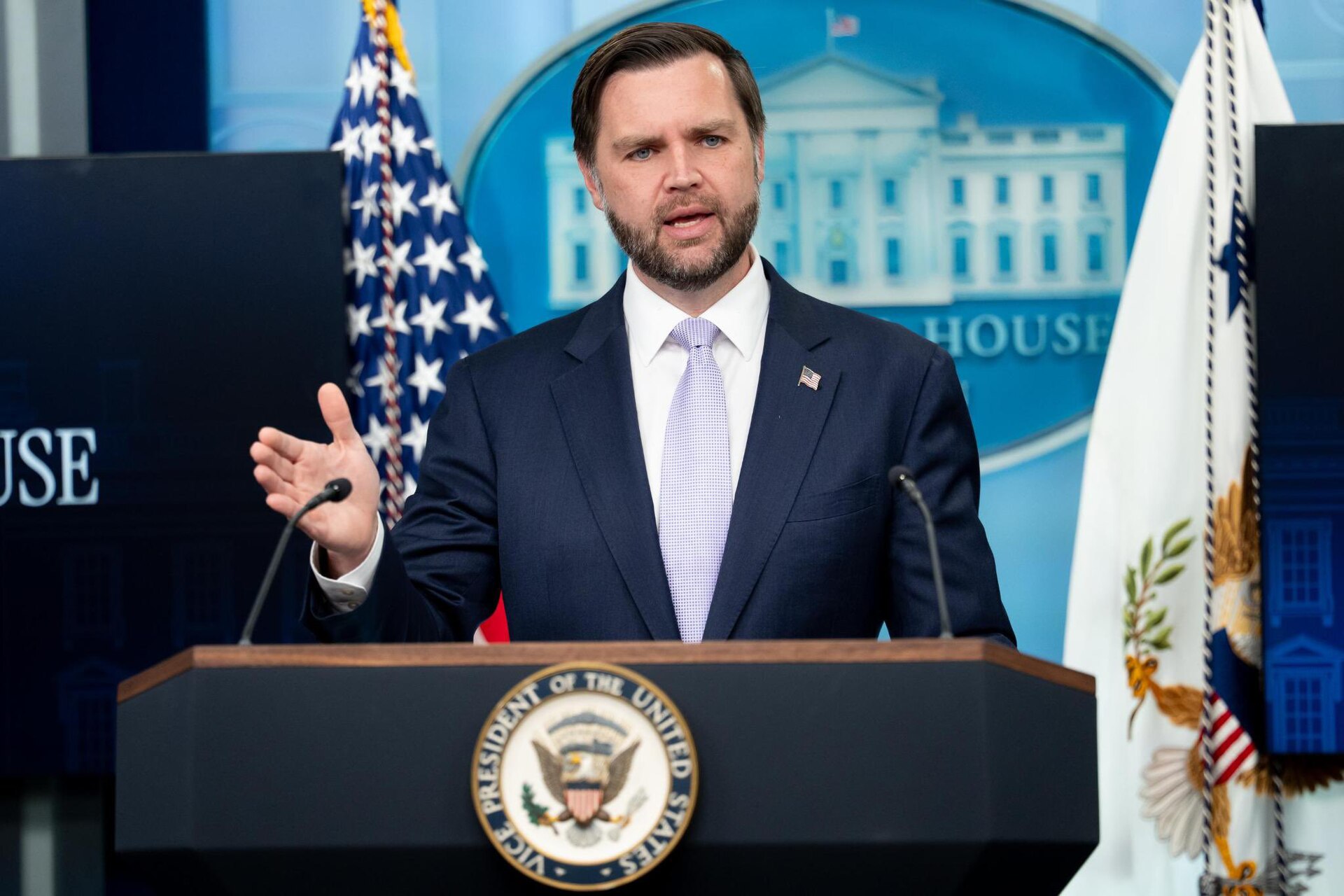
The New Republic captured the structural contradiction in its June 16 headline: “JD Vance Admits They’re Still Negotiating Trump’s Biggest Iran Goal.” The word “still” does the work. The ceremony is not contingent on resolving the nuclear file; the ceremony is designed to formalize a framework within which the nuclear file will, in theory, be resolved later. Interim agreements routinely precede final terms in diplomacy. What makes this case different is that the president has publicly reduced his own core demand to a statement about scrap value, his CIA director has privately warned that the counterparty has no intention of meeting even the softened version, and his vice president has confirmed — on the record, to Fox News — that the red lines remain unacknowledged. The ceremony proceeds anyway.
The Ceremony Before the Terms
In 2015, the Joint Comprehensive Plan of Action was negotiated over an 18-month final phase, following a six-month interim agreement. The text was published simultaneously with the signing. Every endorsing party — the P5+1, Iran, and the European Union — knew what it was endorsing because the document existed in public before the celebration. Wendy Sherman, who led the U.S. negotiating team for the JCPOA, told The Hill and ABC News on June 14–15, 2026, precisely what the comparison means for the current deal: “I can assure you they will not get all of this done in 60 days.”
The 2026 sequence inverts the 2015 precedent at every level. The G7 endorsed the MOU at Évian before the text had been publicly released, relying on leaked and internally contradictory versions: the U.S./Axios version described a toll-free Hormuz arrangement plus nuclear dismantlement, while the Iranian/Mehr version described $24 billion in sanctions relief plus ongoing service fees. IRNA published what it called a seven-point summary on June 12, in which Iran “undertakes no new nuclear commitments” — a formulation that, if accurate, means Phase 2 would need to secure commitments the MOU itself explicitly disclaimed. The White House called IRNA’s version “a complete fabrication,” and Vance initially confirmed a $300 billion financial component on CBS before partially retracting it on Fox the same day. The document has been described by multiple outlets as “about a page and a half,” which is not a framework for resolving a nuclear standoff but a statement of intent formatted as a memorandum.
The inversion matters because ceremonies create political facts that outlast the terms they were meant to ratify. Once Vance signs in Geneva — with Trump himself possibly attending, as the vice president suggested on Fox News: “I certainly plan to be there, but it’s possible the President himself could be there” — the administration will have a public commitment to defend. Walking away from Phase 2 after a presidential-level signing ceremony carries vastly higher political costs than abandoning a staff-level negotiating round. Iran’s negotiators understand this asymmetry, which is why Araghchi has used language like “Iran won the war” on state television while simultaneously insisting on enrichment as a sovereign right in English-language interviews aimed at Western audiences. The ceremony locks in the American concession. The terms remain open for Iranian contestation.
What Does Phase 2 Require — and Who Is in the Room?
Phase 2 of the MOU opens a 60-day window for negotiating the nuclear terms that Phase 1 left blank. Based on public statements from both sides, the issues to be resolved include the disposition of 440.9 kilograms of highly enriched uranium at 60 percent purity, the future of enrichment infrastructure at Natanz, Fordow, and Isfahan, the restoration of IAEA inspector access suspended since February 28, and the verification protocols for any agreement reached. No named mechanism for conducting these negotiations, no timeline for intermediate milestones, and no arbiter for disputes appears in the MOU text that has been described publicly.
The scale of the gap is measurable by precedent. The JCPOA’s nuclear terms required 18 months of final-phase negotiation among the P5+1 and Iran, involving hundreds of technical experts, multiple IAEA verification rounds, and detailed annexes running to hundreds of pages that addressed enrichment levels, centrifuge types, stockpile caps, and inspection protocols in granular technical specificity. The 60-day Phase 2 window allots roughly three days for every month the JCPOA required. Vance told NBC News on June 15–16 that nuclear inspectors would “absolutely” return to Iran under the MOU terms — it was the one specific nuclear concession he cited publicly. The IAEA Board’s June 2026 vote — 21 in favor, 10 against, 3 abstentions — demanded uranium accounting and inspector access, a resolution Iran has not acknowledged in any public statement.
The room for Phase 2 negotiations, as currently configured, includes the United States, Iran, and Oman as a mediating party. It does not include Saudi Arabia, the UAE, any European state, or the IAEA as a diplomatic participant rather than a technical subject of discussion. The U.S.-Saudi 123 Agreement signed May 13 — 31 days before the MOU — omitted all three Gold Standard provisions that the UAE accepted in 2009: no enrichment ban, no reprocessing ban, no Additional Protocol precondition. Sharon Squassoni of George Washington University, writing for the Arms Control Association in June 2026, called it a “gilded sweetheart deal.” If Phase 2 produces an enrichment-permissive outcome for Iran, Saudi Arabia will have already secured its own enrichment-permissive framework and will have done so without any leverage over the terms of either agreement. On the eve of the Burgenstock meeting, Khamenei publicly authorized Iran’s negotiators while simultaneously pre-authorizing their walkout if US demands proved “excessive” — the demands Saudi Arabia needs most; Khamenei’s statement set the ceiling before Phase 2 opened.
The 123 Agreement Already Conceded the Precedent
The structural irony of the Saudi position is that Riyadh locked in the outcome it should be most alarmed by before the negotiation that determines it has even begun. The U.S.-Saudi 123 Agreement, signed on May 13, 2026, as part of a $142 billion defense package, gives Saudi Arabia a civilian nuclear cooperation framework that omits every safeguard Washington has historically demanded of Middle Eastern partners. The UAE’s 2009 agreement — the Gold Standard that the nonproliferation community had treated as the regional benchmark — included an enrichment ban, a reprocessing ban, and an Additional Protocol precondition. The Saudi version includes none of these, and the UAE’s most-favored-nation clause, which entitled Abu Dhabi to any less restrictive terms offered to a regional partner, has been structurally voided by the Saudi agreement’s existence.
The Arms Control Association warned in February 2026 that an enrichment-permissive Saudi deal would undermine any subsequent negotiation with Iran on the same terms. The logic is straightforward and has not been contested by the administration: if Washington cannot demand from its closest regional ally what it demands from its adversary, the demand itself loses credibility as a negotiating position. When Trump told the G7 that uranium “isn’t very valuable,” he was not only softening his position toward Tehran — he was retroactively validating the omissions in the Saudi agreement and establishing the floor for what Iran can reasonably expect from Phase 2. Senators Ed Markey and Jeff Merkley reintroduced S.4243 on March 25, specifically targeting the absence of Gold Standard provisions in the Saudi deal, but the legislation has not advanced beyond introduction. What Phase 2 will produce for the kingdom that accepted those terms is examined in detail in The Enrichment Ceiling Will Be Set Without Riyadh in the Room.
The timeline compounds the problem. Saudi Arabia signed its nuclear cooperation agreement 31 days before the MOU ceremony. If Phase 2 produces an enrichment-permissive deal with Iran — which Trump’s Évian comments, Araghchi’s public statements, and the MOU’s structural omissions all suggest it will — Saudi Arabia will have surrendered its leverage before the negotiation it should have shaped even began. The kingdom’s 24-day silence on the MOU, broken only through a Pakistani intermediary rather than a direct MOFA statement, is the quiet of a party that understands its position has been decided for it.
How Much Does Saudi Arabia Stand to Lose From an Enrichment-Permissive Deal?
Saudi Arabia’s exposure to the Iran deal operates on two tracks — the direct financial costs of the Hormuz arrangement and the strategic costs of an enrichment-permissive regional precedent — and Riyadh has no seat at the table for either. The direct costs are quantifiable: Iran’s Persian Gulf Security Agreement charges approximately $1 per barrel in the 5-nautical-mile Qeshm-Larak corridor, translating to $5.5 million per day and roughly $2 billion per year at Saudi Arabia’s 5.5 million barrels per day of Hormuz-dependent crude exports. The PGSA was codified in Iranian parliament on March 30–31, 2026 — before the MOU draft existed — and has continued operating despite OFAC sanctions imposed May 27.
| Metric | Value | Source |
|---|---|---|
| Saudi Hormuz-dependent crude | 5.5 million bpd | OPEC / industry estimates |
| PGSA fee rate | ~$1/barrel | Iranian parliamentary legislation, Mar 30–31 |
| Daily PGSA exposure | ~$5.5 million | Calculated |
| Annual PGSA exposure | ~$2 billion | Calculated |
| Saudi Q1 2026 fiscal deficit | SAR 125.7B ($33.5B) | Saudi Ministry of Finance |
| Brent crude (mid-June 2026) | $82–84 | Market data |
| Saudi fiscal breakeven (Brent) | $108–111 | IMF / Goldman Sachs estimates |
| US-Saudi 123 Agreement value | $142B defense package | White House, May 13, 2026 |
| Iran HEU stockpile (60% purity) | 440.9 kg | IAEA, last verified Feb 28 |
| IAEA verification gap | 107+ days (since Feb 28) | IAEA reporting |
The strategic costs are harder to quantify but potentially larger. An enrichment-permissive deal with Iran — even one limited to low-enrichment uranium under nominal civilian auspices — establishes a regional precedent that every Gulf state will invoke. Saudi Arabia’s 123 Agreement already permits enrichment by omission; an Iranian deal that formally allows it under international supervision transforms the precedent from a bilateral gap in a defense package into a regional norm that constrains future nonproliferation negotiations across the Middle East. Crown Prince Mohammed bin Salman stated in 2018 that Saudi Arabia would pursue nuclear weapons if Iran did — a position that has never been formally retracted and that an enrichment-permissive deal makes operationally relevant for the first time.
The fiscal context makes the exposure acute. Saudi Arabia recorded its largest quarterly deficit in history in Q1 2026 — SAR 125.7 billion ($33.5 billion), against Goldman Sachs’s full-year projection of SAR 300–330 billion. Subsidies rose 170 percent year-over-year, military spending rose 26 percent, and Brent crude at $82–84 sits $25–29 below the kingdom’s fiscal breakeven. Non-oil exports fell 27 percent in Q1. The Public Investment Fund’s cash position dropped to $15 billion — a six-year low — against $16 billion in NEOM exit obligations alone.
Adding $2 billion a year in Hormuz transit fees to a fiscal position already under this degree of structural stress is not a rounding error. It is a recurring cost that the kingdom endorsed without negotiating, for a deal whose nuclear terms its closest ally is now publicly softening.
Sixty Days Without a Baseline
The 60-day Phase 2 window opens with a verification gap that makes its own terms unenforceable before they are written. IAEA inspectors ceased verification activities in Iran on February 28, 2026 — a date now more than 107 days in the past. During that period, the agency has been unable to verify the status of Iran’s 440.9-kilogram HEU stockpile at 60 percent purity, the operational state of approximately 80 kilograms of enriched material at the Fordow facility, or the enrichment levels at any declared or undeclared site in Iranian territory. The 60-day clock begins, in effect, from a position of zero verified baseline — meaning that whatever terms Phase 2 produces will be measured against data the international community does not possess and that Iran has shown no willingness to provide.
The IAEA Board’s June 2026 resolution — adopted 21-10-3 — demanded both uranium accounting and the restoration of inspector access. Iran has not acknowledged the resolution in any public statement. IRNA reported on June 12 that Iran “undertakes no new nuclear commitments” under the MOU — a formulation that, if it reflects the actual text, means Phase 2 would need to secure commitments the MOU itself disclaimed. Vance’s assurance that inspectors will “absolutely” return provides a political commitment without a verification architecture: no timeline for return, no scope of access, no protocol for reconciling discrepancies between Iran’s declarations and the IAEA’s last verified data from February, and no enforcement mechanism if Iran delays or restricts access once the 60-day clock is running.
The academic literature has identified the core obstacle as an “indivisibility problem.” The Conversation, in its June 2026 analysis, noted that there is no midpoint between the U.S. demand for zero enrichment and Iran’s assertion of a sovereign right to enrich — and that both previous negotiating rounds, in 2025 and 2026, ended not in agreements but in bombings. Witkoff’s formulation — “We cannot allow even 1% of an enrichment capability” — and Araghchi’s formulation — “We have every right to enjoy a peaceful nuclear energy, including enrichment” — are not positions separated by a negotiable distance. They are mutually exclusive statements about the nature of sovereignty. The 60 days are being asked to resolve what two years of alternating diplomacy and military operations have not, starting from a position where the verified data that any nuclear agreement requires as its input does not exist.
Vance has warned that the United States is “locked and loaded” to restart military operations if Phase 2 fails — language that reintroduces the escalation cycle that the MOU was ostensibly designed to break. If the 60-day window closes without agreement, the administration will face a choice between accepting an unresolved nuclear file — the outcome Ratcliffe warned about — and returning to the military posture it pursued before the ceasefire, but now from a weaker diplomatic position, having signed a ceremony that Tehran will cite as evidence of American concessions already made. Saudi Arabia, which cannot influence the demining timeline, has no role in the Hormuz clearance operations, and holds zero seats in the Geneva process, would absorb the consequences of either outcome through continued Strait disruption and an unresolved regional nuclear precedent it had no part in shaping.
Frequently Asked Questions
When and where is the Iran MOU signing ceremony?
The ceremony is scheduled for June 19, 2026, in Geneva, Switzerland, at the Palais des Nations. Vice President JD Vance is confirmed to attend and sign on behalf of the United States; he told Fox News on June 15–16 that “it’s possible the President himself could be there,” with Witkoff and Kushner also confirmed. Iran has designated Parliament Speaker Mohammad Bagher Qalibaf as its signatory — a break from the 2015 JCPOA precedent, when Foreign Minister Mohammad Javad Zarif signed for Iran. Araghchi will reportedly sign “remotely,” meaning the ceremony may involve split locations, and Oman serves as the principal mediator with no European signatory involved, unlike the P5+1 format of 2015.
Has Iran agreed to remove enriched uranium from its territory?
No. Araghchi told CBS News on June 13 that Iran would consider “down-blending” enriched uranium inside Iran — diluting its 60 percent HEU to lower purity levels domestically — but explicitly rejected the U.S. demand to transfer the material outside the country, calling enrichment a “sovereign right.” A senior U.S. official told Reuters the MOU requires “dismantling of Iran’s nuclear program, on-site destruction and removal of HEU from Iran.” These two descriptions of the same agreement are irreconcilable. The MOU’s Phase 1 contains no nuclear terms; enrichment and stockpile disposition are entirely deferred to Phase 2. Iran’s parliament codified enrichment as a sovereign right in legislation passed before the MOU draft existed.
What did CIA Director Ratcliffe specifically warn about?
Axios reported on June 15 that Ratcliffe informed Trump that U.S. intelligence — sourced to private communications among Iranian officials — shows Tehran’s willingness to make nuclear concessions diverges materially from its public commitments. Both Rubio and Hegseth supported the assessment. The warning created a documented split: Ratcliffe, Rubio, and Hegseth against the deal’s nuclear viability; Vance, Witkoff, and Kushner in favor of proceeding to the June 19 ceremony. The Ratcliffe warning preceded Trump’s Évian “why do you even bother” statement by approximately one day, meaning the president softened his public demand after receiving intelligence that Iran would not meet even the prior version.
What is the $300 billion figure Vance mentioned?
Vance initially confirmed on CBS that the Iran deal includes a $300 billion financial component, then partially walked it back on Fox News the same day without clarifying the discrepancy. Iran’s IRNA reported $24 billion in frozen asset releases as part of the MOU; the U.S. has not confirmed that figure. The gap between $24 billion (Iran’s publicly cited number) and $300 billion (Vance’s initial CBS figure) remains unexplained by either side. The $300 billion may reflect the total projected value of sanctions relief, frozen asset releases, trade normalization, and financial access over the deal’s full duration, but no official breakdown has been provided by the administration.
Can Saudi Arabia influence Phase 2 nuclear negotiations?
No mechanism exists for Saudi participation. Phase 2 negotiations involve the United States, Iran, and Oman as the mediating party. The IAEA is a subject of discussion — its inspectors and verification protocols are among the issues to be negotiated — but it is not a diplomatic participant in the Geneva track. Saudi Arabia’s only formal connection to the nuclear file is the U.S.-Saudi 123 Agreement signed May 13, which governs bilateral civilian nuclear cooperation but provides Riyadh no standing in the multilateral Iran track. The kingdom’s exclusion from the demining coalition, its non-participation in the Geneva process, and its absence from any monitoring committee means its $2 billion annual PGSA exposure and its strategic interest in regional nuclear precedent are both dependent on outcomes it cannot shape, cannot delay, and cannot veto.
Later the same day at the G7 closing press conference, Trump invoked Saudi Arabia’s own missile holdings to justify Iran keeping its ballistic arsenal — a concession that collapsed the threat premise underpinning the $142 billion US-Saudi arms deal signed fourteen months earlier.