
VIENNA — The United States cannot simultaneously demand that Iran transfer its enriched uranium out of the country and permit Saudi Arabia to enrich uranium without the nonproliferation framework Washington spent seventeen years enforcing. The two agreements signed within thirty-one days of each other — the US-Saudi 123 Agreement on May 13 and the Iran MOU framework circulated in early June — impose incompatible nuclear standards on two countries Washington claims to hold to the same nonproliferation regime.
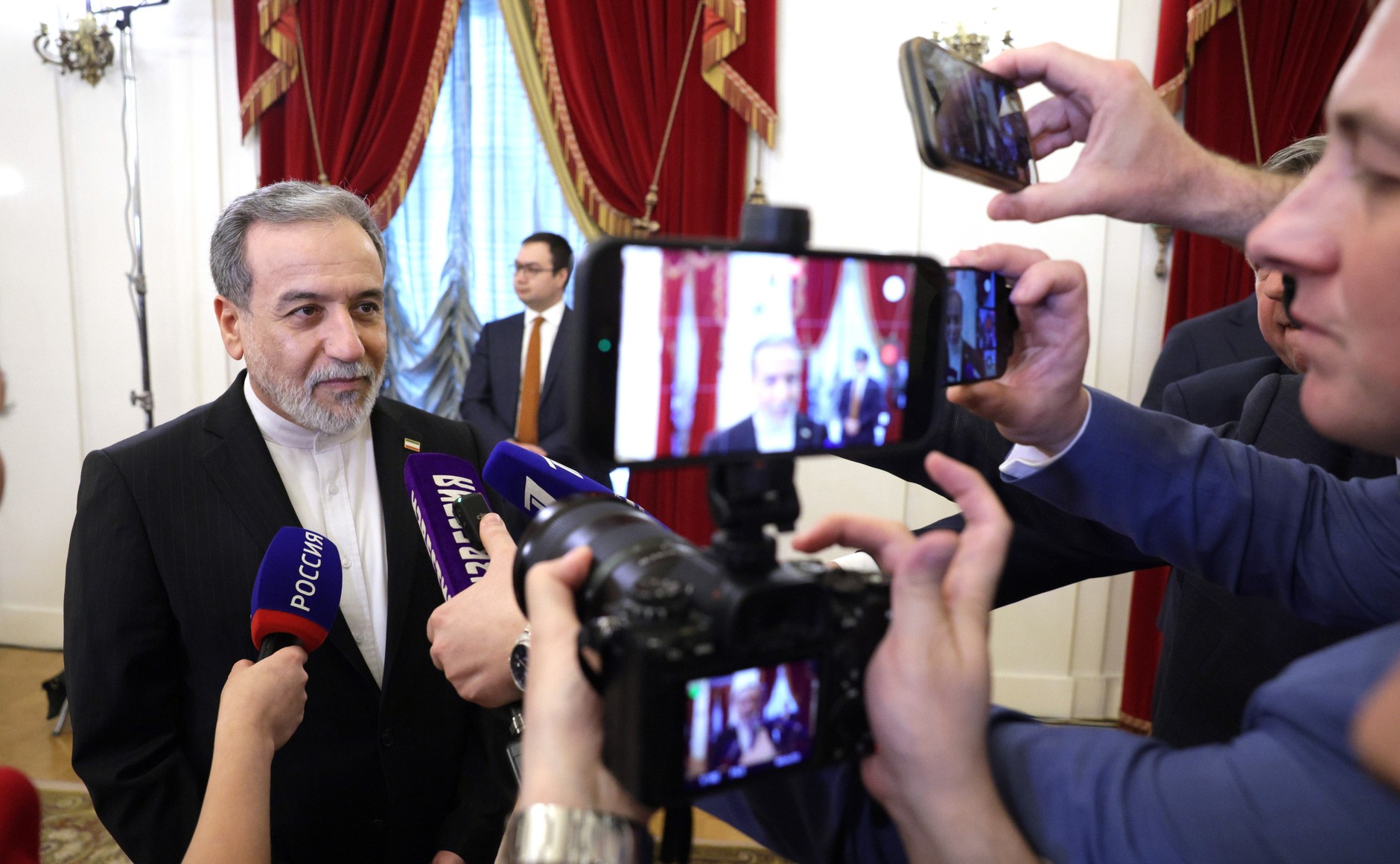
Iran’s Foreign Minister Abbas Araghchi stated on CBS News on June 13 that dilution of Iran’s 440.9-kilogram stockpile of 60%-enriched uranium inside Iran is Tehran’s “only acceptable position.” The statement directly rejects the US framework’s requirement — reported by Axios and confirmed by US officials — that the material be “taken out of the country.” He delivered it hours before the proposed Geneva MOU signing ceremony that Vice President J.D. Vance was designated to attend. The US-Saudi 123 Agreement, signed alongside a $142 billion defense package during Trump’s Riyadh visit, omits all three pillars of the Gold Standard for nuclear cooperation: the enrichment ban, the reprocessing ban, and the precondition requiring IAEA Additional Protocol ratification before any US export licenses are issued. Araghchi’s CBS appearance was not an opening gambit — it was a public restatement of the position Iran formally tabled through Oman forty-eight hours before US strikes began.
Table of Contents
- What Did Araghchi Say on CBS News?
- The US Removal Demand
- What Does the Saudi 123 Agreement Permit?
- The Standard That Lasted Seventeen Years
- Why Can’t Washington Enforce Both Agreements?
- Fordow and the Verification Void
- What Does the 60-Day Window Contain?
- The Senate’s Warning
- Frequently Asked Questions
What Did Araghchi Say on CBS News?
On the same broadcast, Araghchi declared that Iran “insists on nuclear enrichment under any deal” and claimed Iran “won the war,” asserting that the United States has agreed to release $24 billion in frozen Iranian assets during the 60-day negotiation period that the MOU envisions. Neither claim has been confirmed by Washington.
“Our position has always been that the only way to deal with the stockpile of enriched material is to dilute it inside Iran.”
Abbas Araghchi, Iranian Foreign Minister, CBS News, June 13, 2026
The interview was not a diplomatic trial balloon. Araghchi had conveyed the identical position — dilution of 440 kilograms of 60%-enriched material inside Iran, no transfer abroad — to Vice President Vance through Oman forty-eight hours before US military strikes began, according to CBS News reporting on the back-channel exchange. The CBS appearance took a private diplomatic offer and converted it into a public commitment, broadcast to American and Iranian audiences on the morning of the day a signing ceremony had been proposed in Geneva. Fox News’s Persian-language service confirmed the enrichment line independently: “Nuclear enrichment will continue with or without deal.”
The domestic constraints behind Araghchi’s statement are as binding as the diplomatic ones. Mehdi Khanalizadeh, an Iranian state television pundit with access to the Islamabad negotiating track, assessed on May 29 that the draft MOU “violates eight of the ten conditions approved by Mojtaba Khamenei and contradicts the Supreme National Security Council’s ceasefire statement.” Araghchi’s public insistence on dilution-inside-Iran and continued enrichment aligns with those internal red lines — and closes the space for any Iranian negotiator who might explore flexibility on the stockpile question during the 60-day phase-two window the MOU envisions.
The Middle East briefing 3,000+ readers start their day with.
One email. Every weekday morning. Free.
The war-winner framing compounds the constraint. “The best time to end a war is when you hold the upper hand in the field and are the victor of that field,” Araghchi told WION, citing Iranian state media. “We are the victors of this field, not as a slogan but based on existing realities.” A foreign minister who has declared victory on international television cannot return to the negotiating table and offer concessions on the terms he cited as evidence of that victory.
The US Removal Demand
The US negotiating framework, reported by Axios and confirmed through multiple diplomatic sources including Time magazine and Al Jazeera, requires Iran to hand over its enriched uranium, with negotiators floating removal to the United States itself. The framework envisions a 12-to-15-year moratorium on Iranian enrichment, down-blending of the existing stockpile on Iranian soil, and subsequent physical transfer of the blended material out of the country. A senior US official told reporters that the material would be “taken out of the country” — a formulation that directly contradicts Araghchi’s insistence that dilution occur “inside Iran” with no transfer.
The two positions are not separated by negotiating distance. They are separated by a definitional incompatibility about what constitutes an acceptable outcome. Iran says the material stays. The US says the material leaves. There is no intermediate position in which material simultaneously remains inside Iran and is taken out of it. One side must concede entirely, or the nuclear terms cannot be agreed.
Washington has a precedent to point to. Under the 2015 Joint Comprehensive Plan of Action, Iran’s enriched uranium stockpile was capped at 300 kilograms — a 98% reduction from pre-deal levels — and excess material was physically exported to Russia. Fordow, the underground enrichment facility built inside a mountain near Qom, was converted from an active enrichment site to a physics research center with no fissile material. The JCPOA demonstrated that stockpile removal from Iran was operationally feasible and had been executed without incident over multiple years.
The current situation bears little resemblance to 2015. Iran’s stockpile has grown from the JCPOA’s 300-kilogram cap to 440.9 kilograms enriched to 60% U-235, a concentration far above the JCPOA’s 3.67% limit and requiring minimal additional processing to reach weapons-grade 90%. The IAEA has not verified this figure since inspections ceased during the June 2025 conflict — a verification gap now exceeding 97 days. The material the US demands Iran surrender is material whose current quantity, location, and accessibility the international community cannot confirm.
What Does the Saudi 123 Agreement Permit?
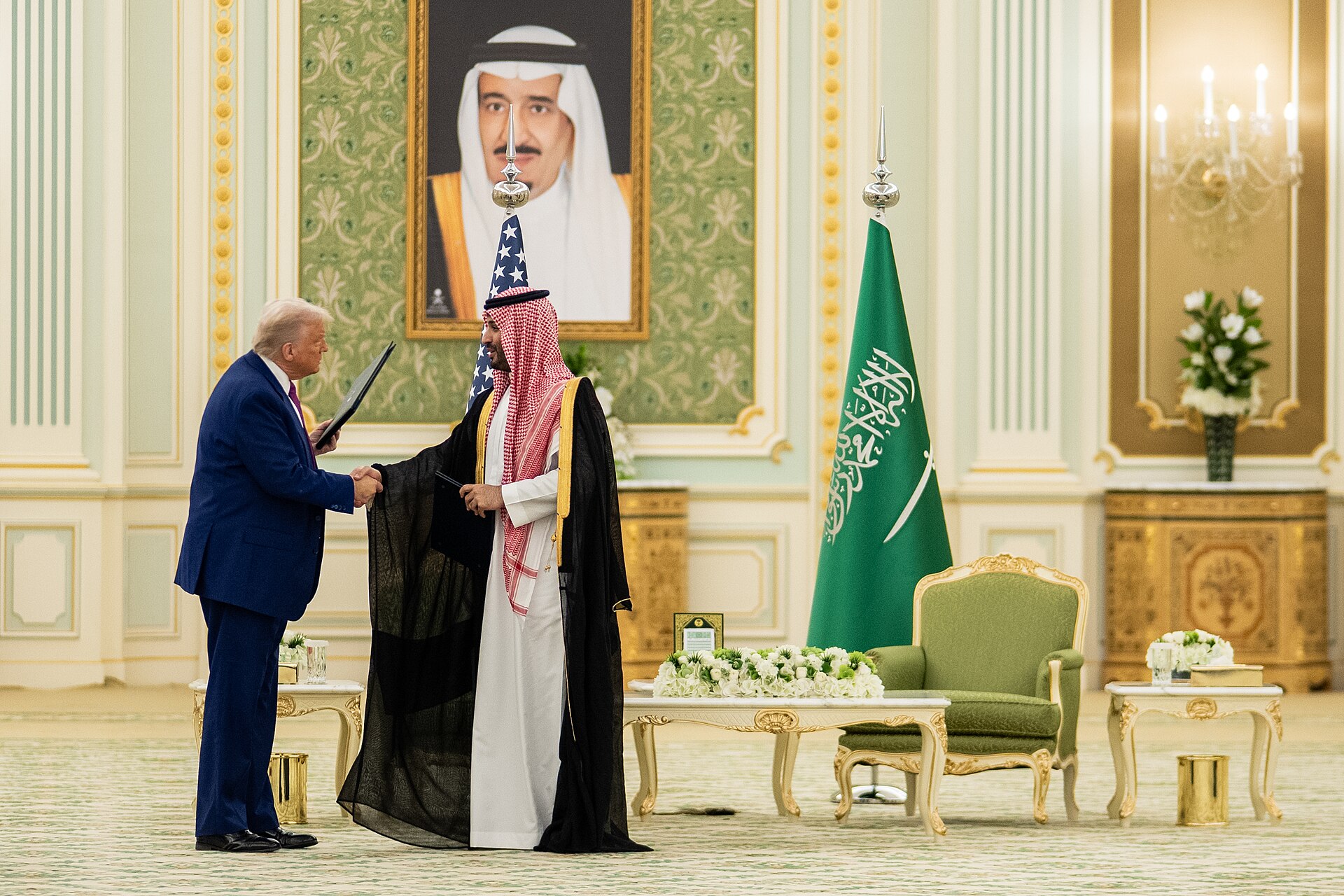
The US-Saudi 123 Agreement, signed on May 13, 2026, during President Trump’s Riyadh visit, permits Saudi Arabia to pursue uranium enrichment and reprocessing without adopting the IAEA’s Additional Protocol. The Additional Protocol — the enhanced safeguards regime that grants inspectors access to undeclared as well as declared sites — is the international baseline for nuclear transparency, ratified by 140 countries. In place of it, the Saudi agreement substitutes a bilateral safeguards arrangement that covers only declared facilities, an arrangement that by design cannot detect undeclared nuclear activity.
The agreement omits all three pillars of what nonproliferation specialists have called the Gold Standard since the 2009 US-UAE nuclear cooperation deal: a permanent ban on uranium enrichment, a permanent ban on plutonium reprocessing, and a precondition requiring the recipient country to ratify the Additional Protocol before any US nuclear export licenses are issued. The UAE accepted all three conditions. Saudi Arabia accepted none of them.
“[The Saudi 123 Agreement] abandons every nonproliferation standard Washington spent seventeen years building.”
Sharon Squassoni, former US nonproliferation official, George Washington University Elliott School, Arms Control Today, June 2026
Squassoni’s June 2026 assessment followed an earlier institutional warning the Arms Control Association had published in February 2026 — three months before the 123 Agreement was signed. That February analysis stated: “The nuclear cooperation agreement will open the door to some type of Saudi uranium enrichment program, raising concerns about whether it will be more challenging to negotiate enrichment limits with Iran if the United States is greenlighting a Saudi enrichment program with less intrusive safeguards.” The warning arrived in time to change the outcome. It did not.
The sequencing is the element no diplomatic language can obscure. The Biden administration had insisted in 2023 that any Saudi nuclear cooperation deal include enrichment and reprocessing prohibitions as preconditions. Saudi Arabia rejected both. The Trump administration signed the agreement without them — and did so thirty-one days before it would need to defend, in Geneva, the principle that enrichment must be denied to Iran. The IAEA had already flagged the contradiction: Vienna Audited the Deal Geneva Has Not Yet Signed documents the agency’s “illusion of an agreement” warning and the 108-day verification gap that predates the Gold Standard’s collapse.
The Standard That Lasted Seventeen Years
The 2009 US-UAE 123 Agreement was negotiated during the Bush administration and signed into effect under Obama. It imposed three binding conditions on Abu Dhabi: a permanent commitment to forgo uranium enrichment on UAE soil, a permanent commitment to forgo plutonium reprocessing, and a requirement that the UAE ratify the IAEA Additional Protocol before any US nuclear export licenses could be issued. The agreement was praised across the nonproliferation community as a model for civilian nuclear cooperation in a proliferation-sensitive region and established the benchmark against which every subsequent Middle Eastern nuclear cooperation proposal was measured.
The UAE deal contained one further provision that is now acutely relevant: a most-favored-nation clause stipulating that Abu Dhabi would receive terms no less favorable than any subsequent US nuclear cooperation agreement with another Middle Eastern country. The Saudi 123 Agreement grants Riyadh more permissive terms on every dimension that clause was meant to protect. Where the UAE permanently banned enrichment and reprocessing and adopted the Additional Protocol before receiving export licenses, Saudi Arabia retained the right to enrich and reprocess and substituted a bilateral safeguards arrangement that covers only declared facilities.
| Provision | UAE 2009 (Gold Standard) | Saudi Arabia 2026 | US Demand from Iran (MOU Framework) |
|---|---|---|---|
| Uranium enrichment | Permanently banned | Permitted | 12–15 year moratorium |
| Plutonium reprocessing | Permanently banned | Permitted | Not addressed in phase one |
| IAEA Additional Protocol | Required before export licenses | Not required; bilateral substitute | Implicitly required via compliance resolution |
| HEU stockpile disposition | Not applicable | Not applicable | Must leave the country |
| Safeguards scope | All facilities (declared and undeclared) | Declared facilities only | Full access demanded |
| Congressional review | 30-day review period (completed) | No affirmative vote required | Not applicable (executive agreement) |
The structural implications extend beyond the bilateral terms. The Gold Standard was not merely a condition imposed on the UAE — it was cited by the Obama administration as the template for every future nuclear cooperation agreement in the Middle East. The State Department referenced it in negotiations with Jordan in 2010, with Vietnam in 2014, and in preliminary discussions with Saudi Arabia during the Obama second term. Each time, the benchmark was the same: no country would receive terms more permissive than what the UAE had accepted. The Saudi 2026 agreement does not fall short of the Gold Standard. It establishes a new, lower baseline against which every future nuclear cooperation request in the region will be measured.
Why Can’t Washington Enforce Both Agreements?
Because the Saudi 123 Agreement permits enrichment under bilateral-only safeguards while the Iran MOU framework demands enrichment cessation and stockpile removal under Additional Protocol standards, any Iranian negotiator can cite the Saudi agreement as evidence that US nuclear red lines are applied selectively. The enforcement problem is structural, not rhetorical. The US is demanding that Iran accept a moratorium on enrichment, surrender its stockpile for removal from the country, and submit to IAEA inspections of undeclared sites. Simultaneously, Washington has signed an agreement that permits Saudi Arabia to enrich, does not require Riyadh to forgo reprocessing, and replaces the Additional Protocol with a bilateral framework that cannot detect undeclared activities.
The Arms Control Association identified this linkage before the 123 Agreement was signed, warning in February 2026 that permitting Saudi enrichment with reduced safeguards would undermine the US negotiating position with Iran. The agreement was signed anyway. The warning was not wrong — it was ignored.
Saudi Arabia’s own posture deepens the contradiction. Crown Prince Mohammed bin Salman stated on CBS’s 60 Minutes in 2018 that Saudi Arabia would pursue nuclear weapons if Iran obtained them — a public threat of proliferation from the country now receiving the most permissive nuclear cooperation terms Washington has offered any Middle Eastern state. The Trump administration cited MBS’s threat as a reason to finalize the Iran deal during the war, when American coercive power was greatest: constraining Iran’s program would remove Saudi Arabia’s stated justification for pursuing weapons. But the 123 Agreement signed with Riyadh provides the permissive framework under which a Saudi enrichment program could develop without the multilateral oversight mechanisms designed to distinguish civilian from military intent. Senator Edward Markey called the administration’s approach “writing a recipe for disaster with its plan to give nuclear-weapon-wannabe Saudi Arabia nuclear technology without the strongest safeguards.”
Araghchi’s CBS interview did not name the Saudi 123 Agreement. It did not need to. The structure of his argument — that Iran is a sovereign state entitled to nuclear rights, that enrichment is non-negotiable, that the battlefield gives Tehran the standing to refuse terms it considers discriminatory — presupposes the existence of a double standard. The Saudi agreement converts that rhetorical claim into a documented one. When Araghchi told CBS that Iran “insists on nuclear enrichment under any deal,” the audience that mattered was not the American public. It was the IAEA Board of Governors and whatever body inherits the phase-two negotiating mandate, where the Saudi 123 text — a US government document permitting allied enrichment under weaker safeguards — will function as Iran’s primary exhibit against the premise that enrichment per se is a proliferation red line. The IAEA non-compliance resolution passed against Iran on June 12 demanded transparency standards from Tehran that Washington exempted Riyadh from meeting thirty days earlier.
Fordow and the Verification Void
The US demand that Iran’s enriched uranium leave the country assumes the material can be located, quantified, and physically secured for transfer. The IAEA’s inability to conduct inspections since the June 2025 conflict means none of those assumptions currently hold. The Agency’s last verified count — 440.9 kilograms enriched to 60% U-235 — is now more than 97 days old, and the stockpile’s current state, distribution across facilities, and accessibility are unknown to international monitors.
An estimated 80 kilograms of that material is assessed by the Institute for Science and International Security to be inside the Fordow Fuel Enrichment Plant, a facility built inside a mountain near Qom at a depth designed to resist aerial bombardment. US GBU-57 Massive Ordnance Penetrator strikes — the heaviest conventional bunker-buster in the American arsenal — inflicted approximately 30% structural damage to the complex. Seventy percent of Fordow’s deep-mountain infrastructure survived. The centrifuge halls, their contents, and the condition of whatever material remains inside are not accessible to international inspectors.
Under the JCPOA, Fordow’s conversion was among the agreement’s most concrete achievements. Iran removed all nuclear material from the facility, disconnected two-thirds of its centrifuges, and permitted continuous IAEA monitoring of the remaining research infrastructure. The conversion was verified quarterly. Fordow in 2026 — partially damaged, uninspected for over three months, containing an estimated 80 kilograms of near-weapons-grade material — represents the inverse of what the JCPOA achieved. The US demand that Iran restore JCPOA-level transparency at Fordow would require physical access that neither American nor IAEA personnel currently possess.
The IAEA Board of Governors passed a US-backed non-compliance resolution on June 12, with 21 members voting in favor, 10 abstaining, and Russia, China, and Niger opposing. The resolution — the first formal finding of Iranian non-compliance in two decades — demanded that Tehran provide inspectors access to facilities and materials the Agency cannot verify. The resolution’s operational force depends entirely on Iran’s willingness to readmit inspectors, a willingness Araghchi’s CBS interview gave no indication Tehran intends to extend on terms other than its own.
What Does the 60-Day Window Contain?
The MOU that Vice President Vance was designated to sign in Geneva contains no nuclear terms. Enrichment caps, stockpile disposal, IAEA access provisions, Fordow’s future, and the fate of Iran’s enriched uranium are all deferred to a 60-day phase-two negotiation. That negotiation has no agreed framework, no designated parties beyond the US and Iran, and no mechanism for including the countries whose security calculus depends on the outcome. Phase one is a framework for producing a framework.
Araghchi’s “won the war” claim accompanied his assertion that Washington has agreed to release $24 billion in frozen Iranian assets during the 60-day negotiation period. If accurate, Iran would receive the financial concession before any nuclear terms are agreed — inverting the JCPOA model, where sanctions relief was tied to verified compliance milestones. Any such release during negotiations removes the financial pressure that is supposed to produce nuclear concessions. The US has not publicly confirmed the figure or the timeline.
The 60-day clock, if the Geneva ceremony proceeds, would place the nuclear negotiation deadline in mid-August 2026. Within that window, the US must reconcile Araghchi’s “only acceptable position” — dilution inside Iran, enrichment continuation, material retention — with its own framework requiring material removal and a 12-to-15-year moratorium. The Khanalizadeh assessment establishes the floor: Iran’s hardline establishment regards the current MOU draft as already too permissive, not too restrictive. Any movement toward the US position in phase two would require overriding an institutional consensus that the deal has already conceded too much.
Saudi Arabia, which the US named among twelve “approvers,” holds no seat in the phase-two negotiation and has issued no public statement on the nuclear terms. The kingdom’s Foreign Ministry has been silent for more than twenty-four days. The country that signed a 123 Agreement permitting enrichment on May 13 is absent from the negotiation meant to restrict enrichment that begins — at the earliest — in mid-June.
By June 16 at Évian, the structural contradiction had become explicit: Trump publicly softened the uranium removal demand the same day his CIA director privately warned it would not be met. The Ratcliffe warning and Trump’s Évian dismissal of the uranium red-line together established that the 60-day window opens with the American position already retreating toward Iran’s — without Saudi Arabia in the room for any of it.
The Senate’s Warning
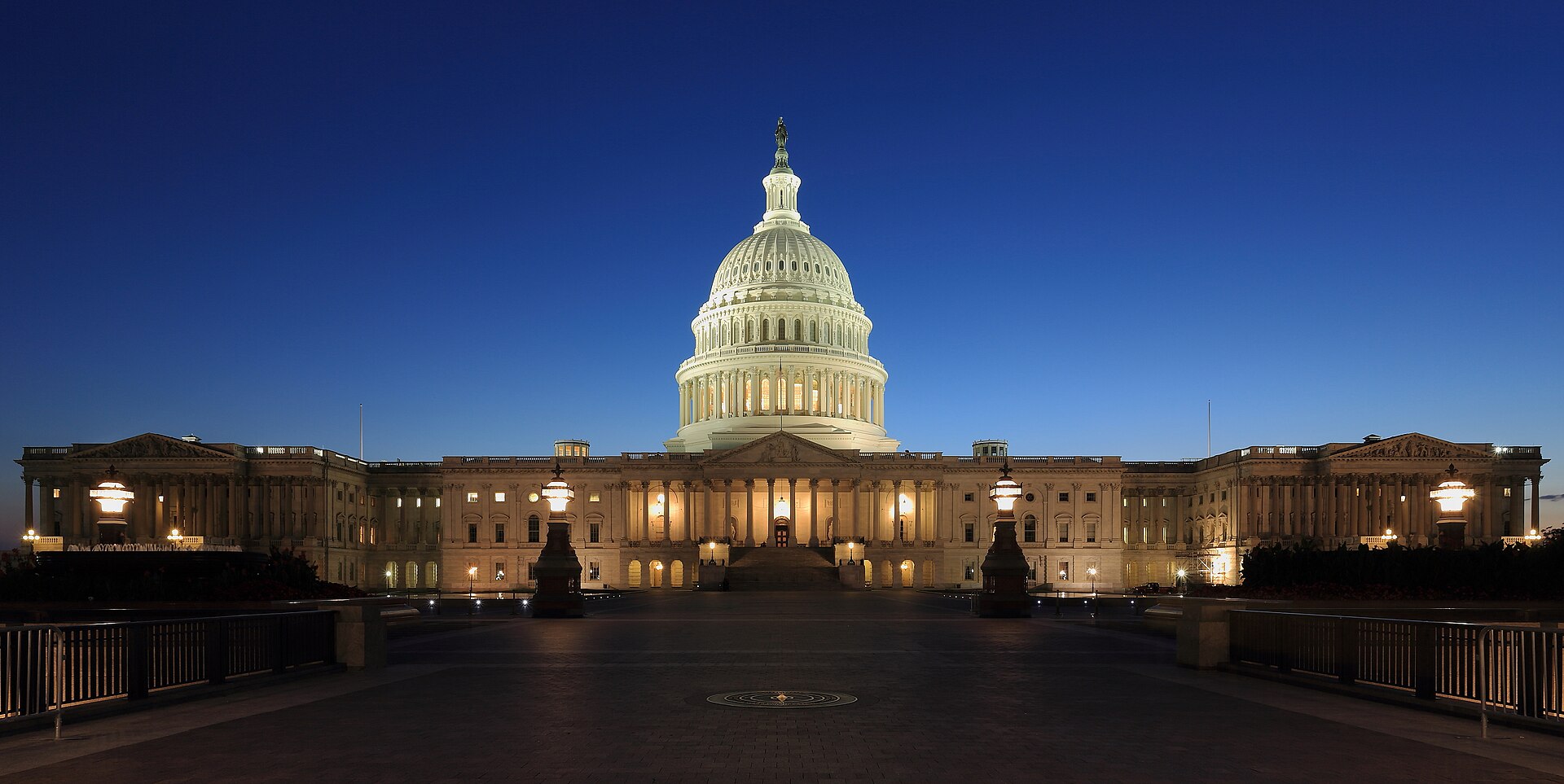
The structural tension between the Saudi 123 Agreement and the US negotiating position on Iran was identified by members of Congress before either instrument was finalized. Senator Markey and Senator Jeff Merkley of Oregon reintroduced the “No Nuclear Weapons for Saudi Arabia Act” (S. 4243) on March 25, 2026 — nearly two months before the 123 Agreement was signed — requiring an affirmative Congressional vote before any Saudi nuclear cooperation agreement takes effect. The bill’s premise was that executive-branch-only approval, without Congressional review, created precisely the kind of proliferation risk the Gold Standard had been designed to prevent.
A Reuters report on May 19 confirmed that a letter from multiple senators warned the Saudi nuclear pact “lacks strict guardrails.” The Arms Control Association published a separate analysis in April 2026 noting that US negotiators on the Iran track “were ill-prepared for serious nuclear talks with Iran,” with Trump’s lead negotiator assessed as lacking technical expertise in nuclear matters. The combination — a permissive Saudi deal signed by an administration the nonproliferation community assessed as technically underprepared, and an Iran framework that demands concessions the Saudi deal renders logically incoherent — was flagged in advance by the institutions responsible for oversight.
The deal Trump claims Khamenei approved defers every nuclear question to a 60-day negotiation. What Washington signed with Saudi Arabia thirty-one days earlier answered those same questions in Riyadh’s favor before the negotiation begins. Iran’s delegation will arrive at the phase-two table — if it arrives — carrying a US government document that permits enrichment for Washington’s closest Gulf partner under safeguards weaker than those Washington is demanding Tehran accept.
Frequently Asked Questions
Can Iran formally cite the Saudi 123 Agreement in IAEA or international proceedings?
IAEA safeguards agreements are bilateral instruments between individual states and the Agency, so the US-Saudi 123 Agreement — a separate bilateral document — would not have formal standing in IAEA Board of Governors deliberations. Iran could, however, raise it at the NPT Review Conference or in the IAEA General Conference as evidence of discriminatory nonproliferation standards. Iran advanced analogous arguments about Israel’s undeclared nuclear program at the 2005 and 2010 NPT Review Conferences. The 2026 Saudi agreement provides a more direct comparison because it involves the same state — the United States — that is leading the enforcement push against Iran, and covers the same technology — enrichment — that is at the center of the MOU dispute.
Is dilution of 60%-enriched uranium technically feasible inside Iran?
Down-blending 60%-enriched uranium hexafluoride to low-enriched levels (below 5% U-235) or to natural uranium concentrations is a well-understood isotopic process that Iran demonstrated during limited dilution operations under JCPOA implementation between 2016 and 2018. The IAEA has confirmed that dilution can be verified if inspectors have access. The US objection is not to the technical feasibility of dilution but to the strategic risk: material diluted and retained inside Iran can be re-enriched to higher concentrations faster than material exported to a third country, because the feedstock infrastructure and centrifuge cascades remain in place. Under the JCPOA, Russia served as the recipient precisely to eliminate that re-enrichment pathway.
Has the UAE responded to the Saudi 123 Agreement?
Abu Dhabi has not issued a public statement on the Saudi 123 Agreement as of June 13, 2026. Emirati officials have expressed concern through private channels, according to nonproliferation analysts cited by the Arms Control Association, that the most-favored-nation clause in the 2009 US-UAE deal has been structurally voided by the more permissive Saudi terms. The UAE could theoretically invoke that clause to seek renegotiation of its own enrichment and reprocessing prohibitions, though no formal request has been reported. Any such renegotiation would further erode the Gold Standard framework at a moment when Washington is attempting to impose enrichment constraints on Iran.
What is the realistic timeline for Saudi enrichment capability?
Saudi Arabia has contracted with South Korean consortium KEPCO and French firm EDF for reactor construction under Vision 2030, with the first power-generating unit projected for operation between 2032 and 2035. Enrichment capability requires either indigenous centrifuge development — which Saudi Arabia has not publicly demonstrated — or procurement of enrichment technology from a foreign supplier. The 123 Agreement does not provide enrichment technology; it permits its pursuit. The gap between legal authorization and operational enrichment is estimated at five to ten years assuming foreign technical assistance. Pakistan’s historical A.Q. Khan network demonstrated that such timelines can be compressed when a state has political will and access to external suppliers willing to cooperate outside multilateral controls.