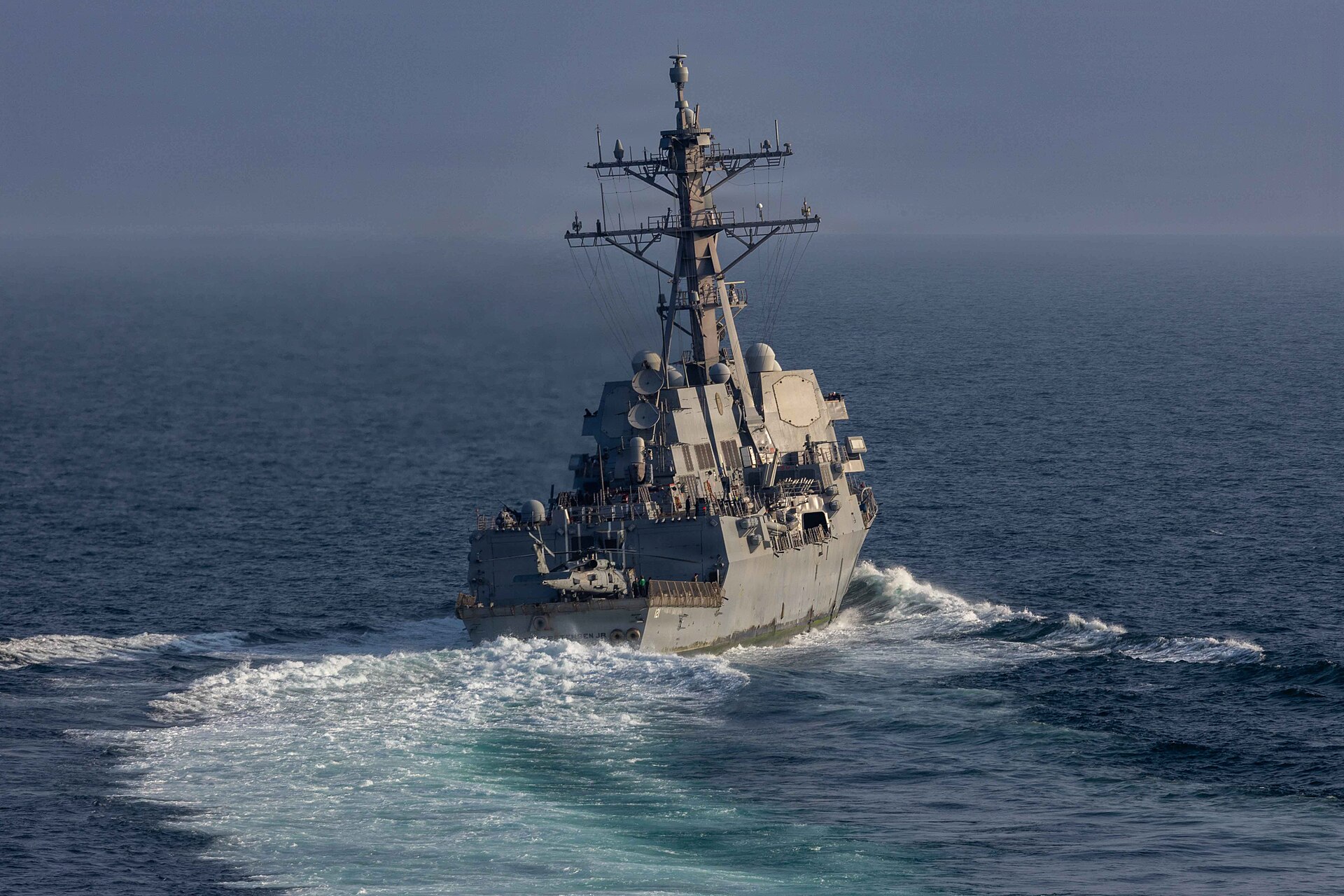
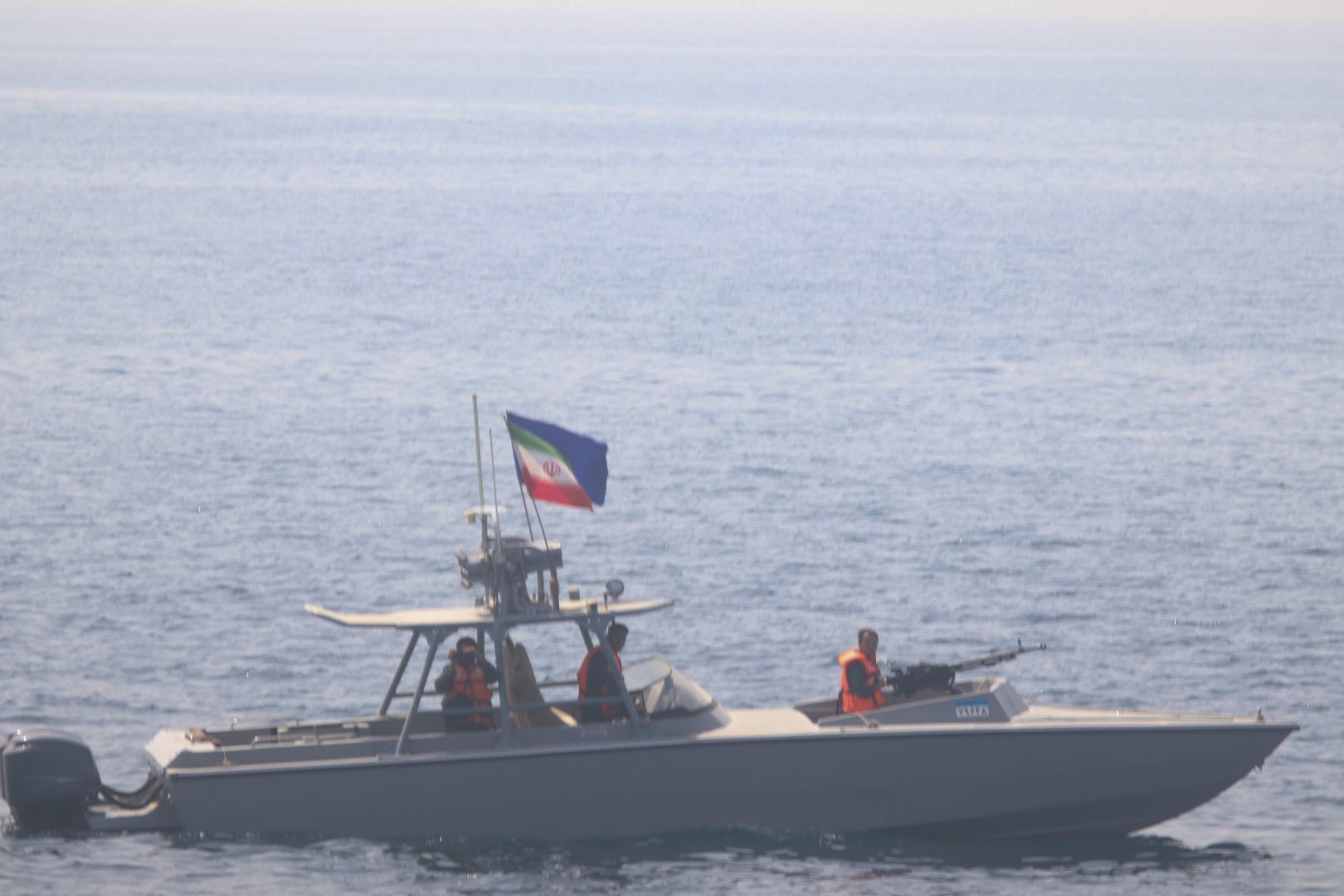
RIYADH — The Islamic Revolutionary Guard Corps Navy transmitted a radio warning to USS Frank E. Petersen Jr. (DDG-121) during mine clearance operations in the Strait of Hormuz on June 15, 2026, hours after the US-Iran memorandum of understanding was electronically signed. The message, according to reporting first published by this outlet: “This is the last warning.”
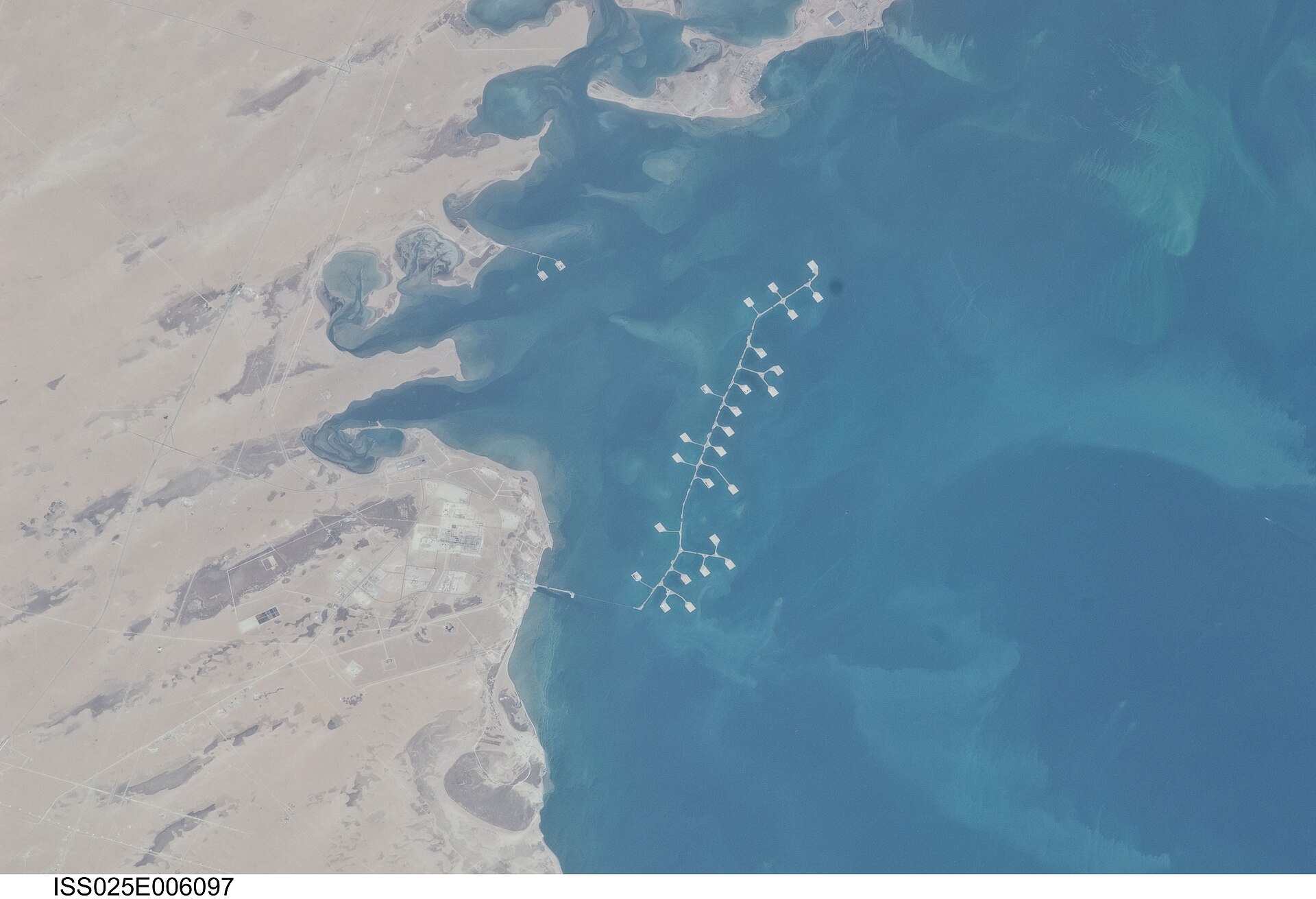
Saudi Arabia’s four largest offshore oil fields — Marjan, Safaniya, Zuluf, and Abu Safa — have sat idle since March, their combined pre-shutdown output of 2 to 2.5 million barrels per day reduced to zero. The platforms are on skeleton crews approximately 100 kilometers from where the IRGC broadcast its warning. Saudi Arabia’s foreign ministry has not made a public statement on the Iran file in 26 consecutive days. The Geneva signing ceremony is 48 hours away.
Table of Contents
A Warning Transmitted During Mine Clearance
US Central Command began minesweeping operations in the Strait of Hormuz within hours of the MOU’s electronic signing on June 15. The mission dispatched USS Frank E. Petersen Jr. — an Arleigh Burke-class guided missile destroyer — into waters the IRGC had declared closed since a formal Khatam al-Anbiya order on June 11.
The IRGC Navy’s response was a radio call directed at the destroyer during its sweep. Iran simultaneously notified the United Nations that “non-hostile” vessels could resume transit of the strait — but conditioned passage on “Iranian coordination,” language that does not appear in the MOU text as described by either Washington or Tehran.
In the first 48 hours following the signing, one commercial vessel crossed Hormuz: Petronet LNG’s tanker Disha, flagged to India, according to CNBC. No crude or product tanker followed. Eight hundred and fifty vessels remained anchored on either side of the strait as of June 17, per Kpler tracking data.
The mine threat includes the Maham-7, an Iranian-manufactured ground-influence mine designed to defeat standard acoustic and magnetic countermeasure sweeps, according to naval warfare analysts. USS Frank E. Petersen Jr. is a guided missile destroyer, not a dedicated mine countermeasure vessel. The UK’s HMS Lyme Bay and France’s marine units are leading the dedicated minesweeping component as part of a multinational coalition assembled at the G7 in Évian.
The Middle East briefing 3,000+ readers start their day with.
One email. Every weekday morning. Free.
What Has the IRGC Done Near Saudi Offshore Fields Before?
On June 16, 2017, three small boats flying red-and-white flags approached the Marjan offshore oil field at high speed. Saudi naval forces fired warning shots, captured one vessel, and detained three individuals. Two boats escaped. Saudi Arabia’s Centre for International Communications stated the captured vessel “was loaded with weapons for subversive purpose” and identified the detained individuals as IRGC members, as reported by RFE/RL and Gulf News.
“It is clear this was intended to be a terrorist act in Saudi territorial waters designed to cause severe damage to people and property.”
Saudi Arabia’s Centre for International Communications, June 2017
Tehran’s denial followed a pattern that would repeat. Gen. Rasoul Sanaeizadeh, deputy head of the IRGC’s political bureau, called the Saudi claims “a sheer lie” and “an amateurish fabrication,” according to Iran’s semi-official Tasnim news agency, as reported by Fox News and RFE/RL. Majid Aghababaie, head of border affairs at Iran’s Interior Ministry, told Al Jazeera there was “no proof that they are military personnel” and identified the three as fishermen from Bushehr port.
In October 2018, a second confirmed approach occurred at Marjan — the same structural template. Three boats, one captured, explosives claimed by Saudi forces, Iranian state television insisting they were fishing vessels. Neither incident produced a military escalation, a diplomatic rupture, or a public Saudi demand for accountability beyond the initial Centre for International Communications statement.
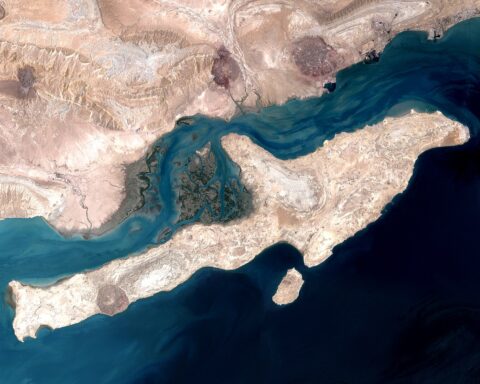
Marjan lies approximately 100 kilometers southwest of Iran’s Kharg Island. The Iranian portion of the same geological reservoir is designated the Forouzan field; more than 80 percent of the hydrocarbon reserves sit in Saudi waters, according to NS Energy Business and the IranOilGas Network. The IRGCN’s 5th Naval Region covers the northern Persian Gulf waters surrounding both the Iranian and Saudi portions of the reservoir.
Four Supergiant Fields on Skeleton Crews
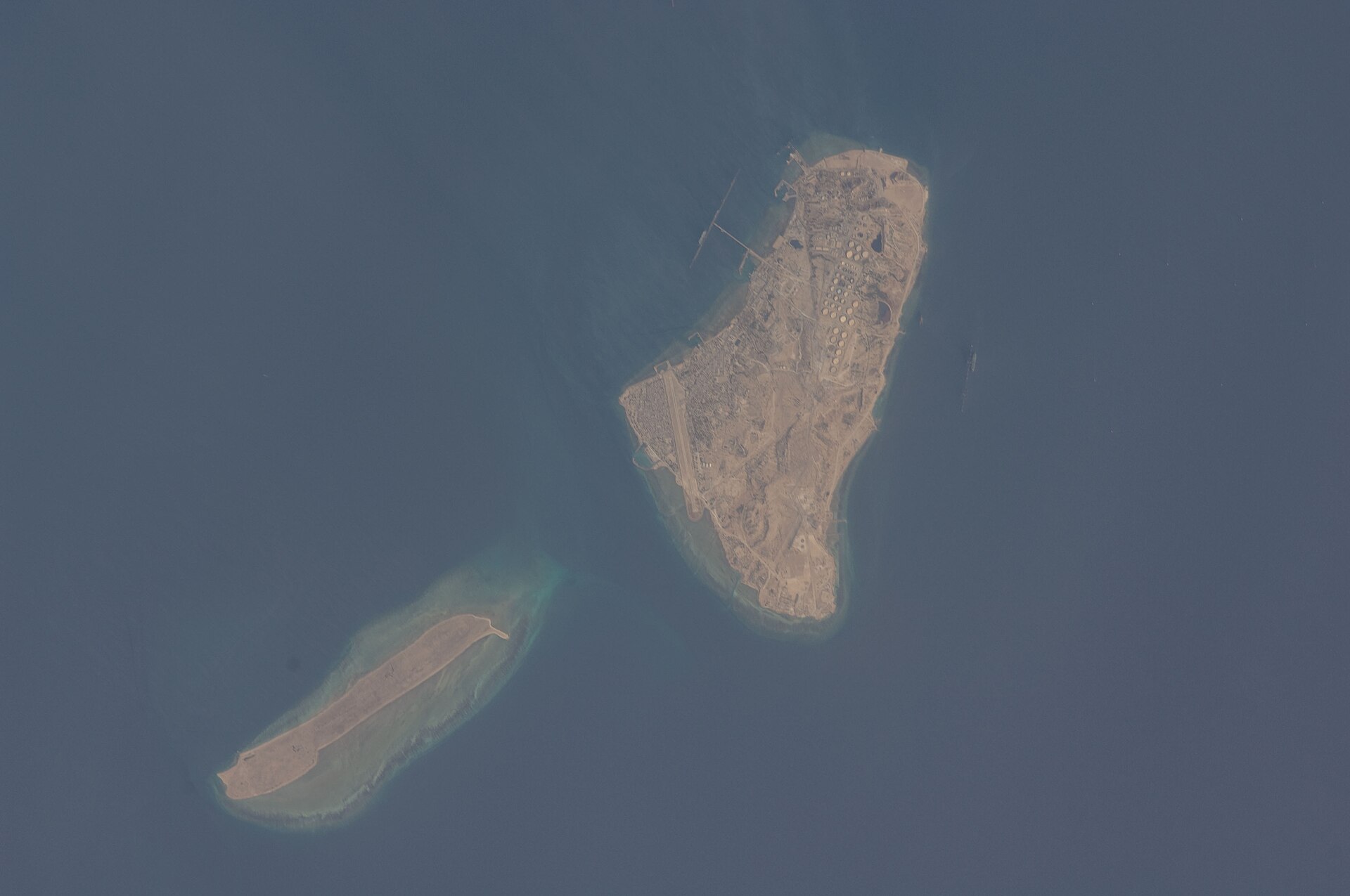
The four offline fields represent the core of Saudi Arabia’s offshore production capacity. Safaniya — the world’s largest offshore oil field — was producing 1.2 million barrels per day before it was shut down in March 2026, according to Splash247 and Offshore Technology. Zuluf was producing 800,000 bpd. Marjan was producing 500,000 to 600,000 bpd. Abu Safa — shared with Bahrain under a revenue-splitting agreement — was producing 300,000 bpd.
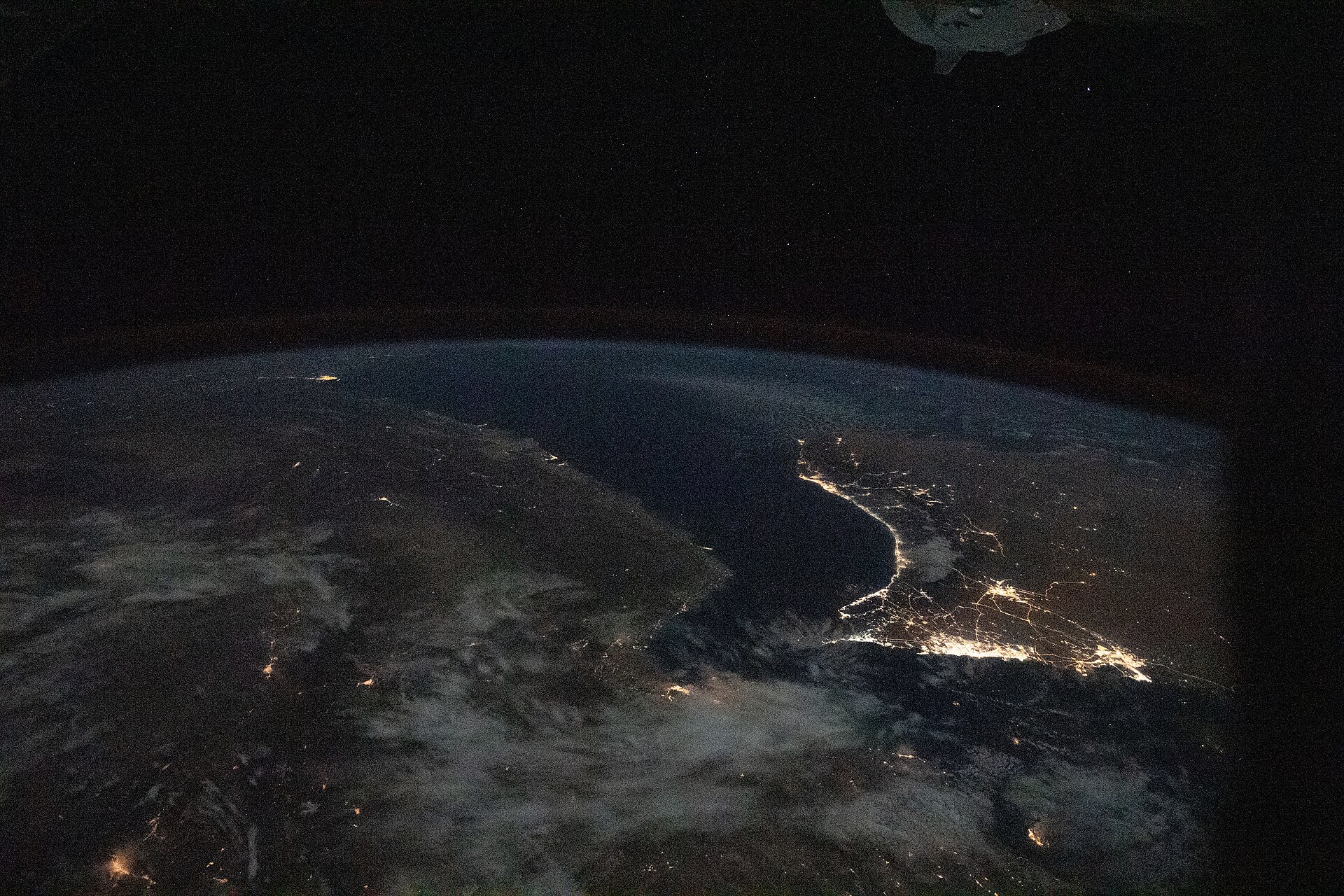
All four are located in the northern Persian Gulf, east of Saudi Arabia’s Eastern Province, in waters where the IRGC has conducted documented approach operations against Saudi energy infrastructure in 2017 and 2018.
Skeleton-crew status means the platforms maintain enough personnel for safety monitoring and emergency shutdown procedures, but not for active production or well maintenance. Extended shutdown carries its own operational risks — corrosion, well integrity degradation, and the loss of continuous reservoir pressure management. The longer the fields remain offline, the more complex and expensive the restart sequence becomes, according to offshore engineering assessments compiled by Offshore Technology.
Marjan’s $12 billion Crude Increment Programme — part of an $18 billion joint expansion with the Berri field that was targeting 800,000 bpd — was mid-construction when the conflict began. The expansion is suspended, its completion timeline now indeterminate, according to Aramco project disclosures reviewed by Offshore Technology.
Who Commands the IRGC Navy Now?
Alireza Tangsiri — the commander who ordered the closure of Hormuz — was killed in an Israeli strike on Bandar Abbas on March 26, 2026, according to the Times of Israel and Al Arabiya. His replacement, Brig. Gen. Ali Azmaei, the former commander of the IRGCN’s 5th Naval Region, was subsequently targeted in a US strike on the same city. Iranian state media have not confirmed Azmaei’s survival.
Azmaei’s former command — the 5th Naval Region, headquartered at Bushehr — covers the northern Persian Gulf, including the waters around Kharg Island and the Forouzan/Marjan boundary zone. The 1st Naval Region, based at Bandar Abbas, covers the Strait of Hormuz itself — the area where the June 15 warning was transmitted. Both regions now operate without confirmed top commanders, according to available open-source reporting from Al Arabiya and the Washington Institute for Near East Policy.
Farzin Nadimi, a senior fellow at the Washington Institute, has described the IRGC Navy’s institutional culture as one that “encourages tactical freelancing — aggressive young commanders can earn fame and promotion by taking risky steps” without authorization from the top of the chain. Nadimi’s 2018 analysis described a pattern of behavior embedded in the force’s structure, independent of who holds the top command.
“All critical positions must be chosen and managed directly by the Revolutionary Guards.”
Ahmad Vahidi, IRGC Commander, April 2026, reported by Euronews
IRGC Commander Ahmad Vahidi stated in April 2026 that “all critical positions must be chosen and managed directly by the Revolutionary Guards,” according to Euronews. Foreign Minister Araghchi and Parliament Speaker Ghalibaf — who will represent Iran at the Geneva ceremony on June 19 — “cannot make decisions without the IRGC’s approval,” Euronews reported. The IRGC political bureau, through which Sanaeizadeh issued the 2017 Marjan denial, is appointed by the Supreme Leader’s representative and operates outside the foreign ministry chain of command.
Twenty-Six Days of Institutional Silence
Saudi Foreign Minister Prince Faisal bin Farhan’s last documented public engagement on the Iran file was a phone call with Pakistan Foreign Minister Ishaq Dar on June 13, during which both “welcomed” the deal’s “final stage,” according to Pakistan Today. No direct Saudi statement on Iran has followed. No MOFA press release. No Saudi Press Agency wire. No foreign ministry spokesman briefing.
The kingdom endorsed the MOU through a Pakistani intermediary’s readout — not through its own diplomatic apparatus. Saudi Arabia holds no seat at any of the three mediation tracks (Swiss, Omani, Pakistani) that produced the document, and is not a party to it.
June 16 was 1 Muharram 1448 AH — the Islamic New Year — a public holiday confirmed by Saudi Arabia’s Supreme Court, according to Arabian Business. Banks, government offices, and ministries were closed. June 17 is the first operational business day since the MOU was signed, the IRGC warning was transmitted, and the Sadara $3.7 billion grace deadline expired — all on June 15.
On June 17, the Saudi Press Agency had not published any foreign ministry statement on the MOU, the IRGC warning, or the Sadara deadline as of publication. The Geneva ceremony is scheduled for June 19, with Vice President Vance and Parliament Speaker Ghalibaf confirmed as signatories. Saudi Arabia’s delegation level and participation, if any, have not been announced by MOFA.
One Tanker, 850 Waiting
Brent crude closed at $78.82 per barrel on June 16 — down 5.23 percent in a single session, according to Trading Economics. Saudi Arabia’s fiscal breakeven stands at $108 to $111 per barrel, per IMF estimates and Gulf analysts. The gap between market price and the kingdom’s budget assumptions: approximately $30 per barrel.
The sell-off reflects futures traders positioning for resumed Hormuz supply flows. The mine clearance operation that drew the IRGC’s warning faces a 40-to-50-day commercial confidence threshold before shipping operators resume routine transits, according to maritime security consensus. The Pentagon’s estimate for full threat-surface-survey clearance runs to six months, TechTimes reported.
The IRGC’s Port and Coastal Security Administration — designated an IRGC front organization by the US Treasury on May 27, 2026 — continues collecting $1 per barrel as “service fees” despite the MOU’s “toll-free” language. Saudi Arabia is not among the exempted states (Russia, China, India, Iraq, and Pakistan are). At 5.5 million barrels per day of pre-war Saudi throughput, the exposure is $5.5 million per day — approximately $2 billion per year.
Background
The US-Iran MOU, electronically signed on June 15, 2026, is approximately one and a half pages long. It establishes a 60-day toll-free transit window through the Strait of Hormuz and extends the ceasefire between the United States and Iran. All nuclear questions — including Iran’s 440.9 kilograms of highly enriched uranium at 60 percent enrichment, unverified by the IAEA for over 100 days — are deferred to Phase 2 negotiations.
The Geneva ceremony is scheduled for June 19, with Vice President J.D. Vance, Parliament Speaker Mohammad Bagher Ghalibaf, and US Special Envoy Steve Witkoff expected to attend, according to CNN and NBC. The MOU text has not been made public. The G7 at Évian endorsed the agreement on June 16 on the basis of verbal summaries from mediators, not the document itself.
The IRGC declared the Strait of Hormuz closed through a formal order from Khatam al-Anbiya — the IRGC’s central headquarters for combined operations — on June 11, 2026. The order stated that any vessel approaching the strait constituted “cooperation with the enemy.” An April 18, 2026 Channel 16 SOLAS broadcast from the IRGCN had previously warned all commercial shipping that the strait was “closed…by Khamenei’s order.”
Saudi Arabia’s supergiant offshore fields in the Persian Gulf were shut down in March 2026 after the IRGC’s closure of Hormuz cut off export routes for Gulf-produced crude. Production was redirected where possible to the East-West Pipeline and the Red Sea port at Yanbu, but the pipeline’s capacity cannot fully replace the combined offshore output.
Frequently Asked Questions
What is the Forouzan field and why does it matter for Marjan security?
Forouzan is the Iranian designation for the portion of the Marjan geological reservoir that extends into Iranian waters, on the eastern side of the maritime boundary. More than 80 percent of the reservoir’s hydrocarbon reserves lie on the Saudi side, according to NS Energy Business. Iranian output from Forouzan has historically been a fraction of Saudi Marjan’s production. Iran’s Kharg Island — the country’s primary crude oil export terminal — is the closest major Iranian energy facility to the Marjan field, approximately 100 kilometers to the northeast. The shared-reservoir dynamic provides IRGC naval patrols with standing justification for activity in the Marjan zone, distinct from any diplomatic developments between Tehran and Riyadh.
Has the IRGC Navy confronted US military vessels in Hormuz before 2026?
Yes. The IRGCN has a documented history of close-quarters encounters with US Navy vessels in and around the Strait of Hormuz. In January 2016, IRGC fast boats approached USS Mahan within 1,000 yards in the strait. In August 2017 — six weeks after the first Marjan incident — USS Thunderbolt fired warning shots after an IRGC fast boat came within 150 yards during a transit. In April 2020, 11 IRGC fast boats harassed US Navy and Coast Guard vessels conducting exercises in international waters. The Pentagon has documented dozens of what it terms “unsafe and unprofessional” IRGC naval interactions in the region since 2015.
What is BIMCO CONWARTIME and why does it block commercial traffic?
CONWARTIME is a standard contractual clause administered by the Baltic and International Maritime Council (BIMCO) that allows shipowners and charterers to refuse to enter or remain in areas listed as war risk zones. BIMCO activated CONWARTIME provisions for the Persian Gulf after Iran’s closure of Hormuz in early 2026. Once triggered, vessel operators can reroute or cancel voyages without contractual penalty. The MOU’s toll-free language cannot override individual carrier and insurer risk assessments — each vessel operator and its underwriter must independently determine whether conditions permit safe passage, regardless of what diplomats sign in Geneva.
What role does Oman play in Hormuz transit coordination?
Iran and Oman announced a bilateral co-administration framework for Hormuz transit in May 2026. Oman, which controls the southern approach to the strait, has historically maintained working relations with Tehran and served as an intermediary in multiple US-Iran diplomatic episodes, including the 2013–2015 nuclear back-channel that preceded the JCPOA. The Iran-Oman arrangement gives Tehran’s “coordination” requirements a degree of regional legitimacy — Muscat’s participation allows Iran to frame transit conditions as a bilateral governance mechanism rather than unilateral coercion. Saudi Arabia is not party to the co-administration framework.
How does the PGSA differ from the IRGC Navy?
The Port and Coastal Security Administration (PGSA) was established by Iranian parliamentary legislation in March 2026 to collect fees on vessels transiting Hormuz. The US Treasury designated it an IRGC front organization on May 27, 2026. It is operationally distinct from the IRGC Navy: the Navy handles interdiction, patrol, and force projection; the PGSA handles fee collection, port-side inspection, and customs enforcement. Both report through IRGC institutional channels to the Supreme Leader’s representative, not through Iran’s foreign ministry. The PGSA’s fee structure — $1 per barrel charged as “service fees” — survived the MOU’s “toll-free” language because the text prohibits “tolls,” not service charges.
[hos_widget_conflict_pulse]
[hos_widget_iran_war_map]