
DHAHRAN — Iran’s state tanker company moved approximately 4.8 million barrels of crude oil through the Strait of Hormuz on June 15–16, 2026, while Saudi Arabia’s 5.5 million barrels per day remain physically blocked by mines that will take 40 to 180 days to clear. The MOU has produced a two-track strait: one lane open, exclusively for Iran; the other sealed by ordnance Iran laid and no party has yet removed.
Brent crude fell to $78.57 on June 17 — its lowest since early March and a fifth consecutive daily decline — on expectations of resumed Hormuz supply. That supply, as of this writing, is entirely Iranian. Saudi Arabia faces a compounding fiscal mechanism with no historical parallel: blocked exports, a falling price driven by a competitor’s resumed flow, and a $2 billion annual fee liability when its cargoes eventually do transit.
The three NITC supertankers that reactivated AIS signals on June 16 and exited the US naval blockade perimeter — Diona, Hero 2, and a third unnamed vessel — carried crude loaded at Kharg Island weeks earlier. Their passage confirms what the deal’s structure always implied: Iran exempted itself from its own blockade before the ink dried on the agreement it signed.
Table of Contents
- The First Barrels Through Hormuz Are Iranian
- What Moved on June 15–16?
- Why Is Brent Falling on Supply That Saudi Arabia Cannot Deliver?
- How Long Before Saudi Crude Can Transit?
- What Does the PGSA Fee Cost Saudi Arabia?
- The Three-Way Squeeze: Quantifying the Asymmetry
- Tanker War Inversion
- What the Market Is Pricing — and What It Is Missing
- Frequently Asked Questions
The First Barrels Through Hormuz Are Iranian
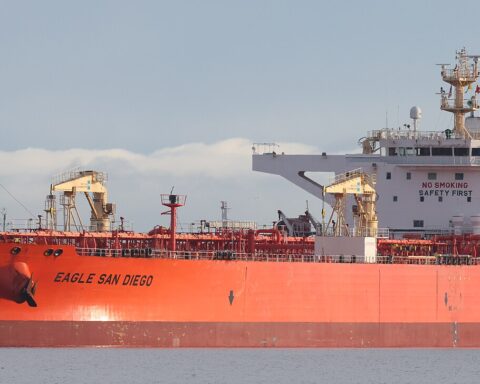
The Strait of Hormuz reopened on June 15–16, 2026 — but only for vessels belonging to Iran’s National Iranian Tanker Company. NITC VLCCs Diona (IMO 9569695) and Hero 2 (IMO 9362073), both under US sanctions since the Trump administration’s 2019 maximum pressure campaign, exited the US naval blockade perimeter carrying a combined 3.8 million barrels of crude oil, according to vessel-tracking data published by TankerTrackers and confirmed by CNBC on June 17. A third tanker carrying approximately 1 million barrels followed, bringing the first-wave Iranian export cargo to roughly 4.8–5 million barrels (Shafaq News, Daily Sabah, June 17 2026).
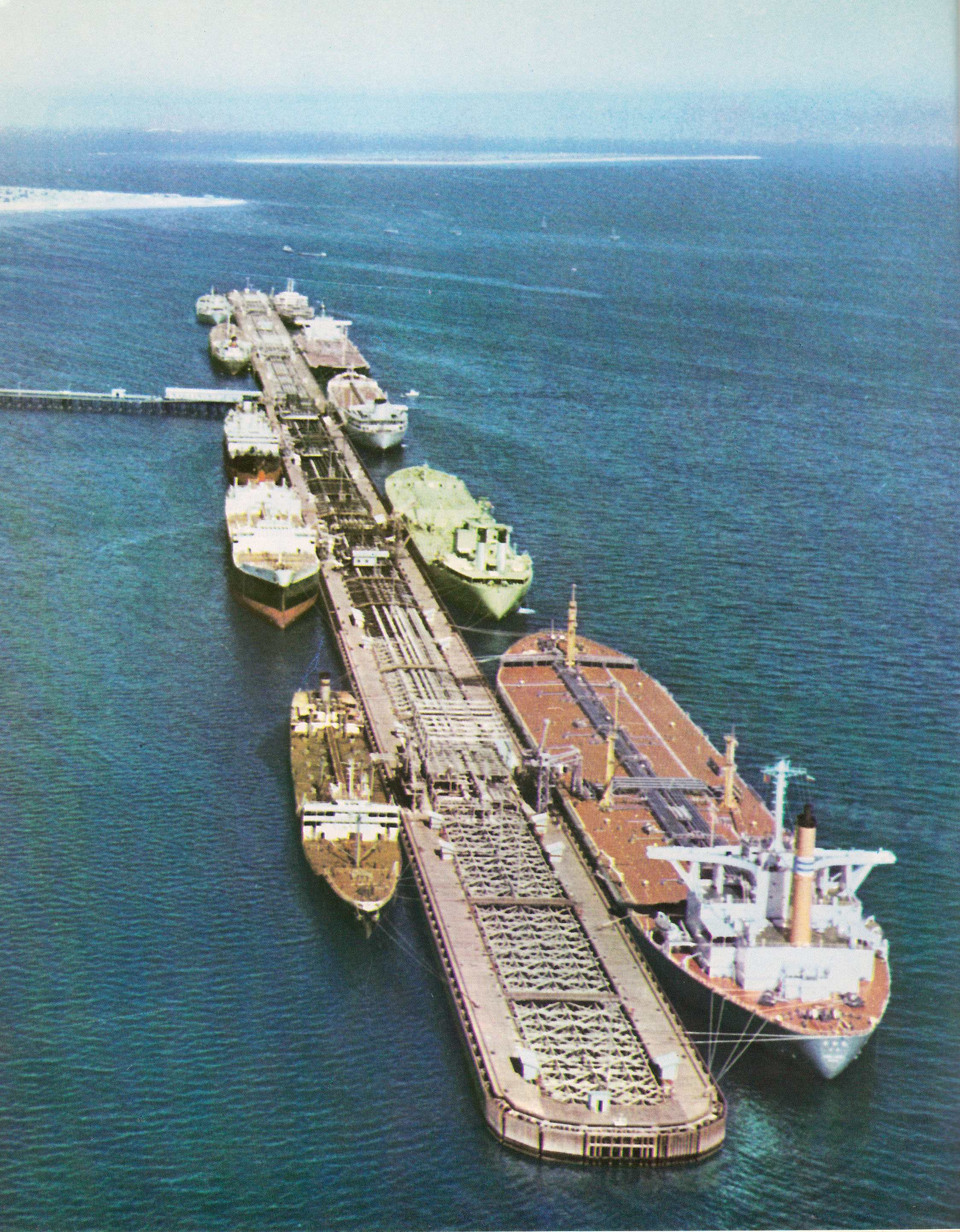
All three vessels had loaded crude at Iran’s Kharg Island terminal earlier in 2026, before the US naval blockade of Iranian vessel departures began on April 13. They sat laden, waiting. When the MOU framework created the opening, they moved — predating the formal Geneva signing ceremony scheduled for June 19. Iran did not wait for the ceremony. It moved its crude first.
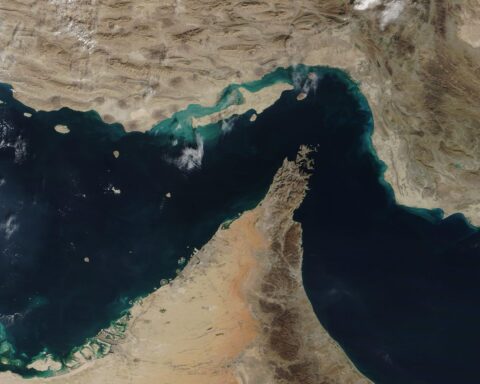
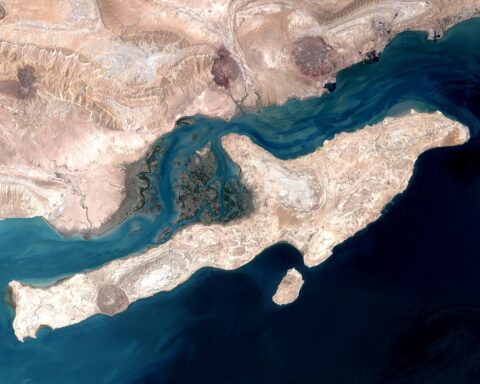
The transit route ran through the PGSA corridor — the five-nautical-mile channel between Qeshm and Larak islands, inside Iranian territorial waters, formally constituted on May 5, 2026. NITC vessels transited without fee payment, confirming that the exemption operates as a sovereign, company-specific carve-out. Russia, China, India, Iraq, and Pakistan also hold exemptions. Saudi Arabia does not.
The Middle East briefing 3,000+ readers start their day with.
One email. Every weekday morning. Free.
Iran’s oil exports in May 2026 had collapsed by over 90 percent year-on-year under the naval blockade, cratering to roughly 65,000–186,000 barrels per day according to UANI tracking data and gCaptain reporting. The June 15–16 transit represents not merely a resumption but a statement: the blockade is over for Iran before the deal is formally signed, and the infrastructure to move Iranian crude was never dismantled — only paused.
What Moved on June 15–16?
Three laden VLCCs carried approximately 4.8–5 million barrels of Iranian crude through the Strait of Hormuz on June 15–16, 2026. The breakdown:
- Diona (IMO 9569695) — approximately 1.9 million barrels. NITC-owned, US-sanctioned. Reactivated AIS June 16 (gCaptain, June 17 2026).
- Hero 2 (IMO 9362073) — approximately 1.9 million barrels. NITC-owned, US-sanctioned. Reactivated AIS June 16 (gCaptain, June 17 2026).
- Third vessel (unnamed in available reporting) — approximately 1 million barrels (Shafaq News, Daily Sabah, June 17 2026).
All three loaded at Kharg Island — Iran’s primary crude export terminal in the northern Persian Gulf — prior to the April 13 blockade initiation. Their AIS transponders had been dark for weeks. The simultaneous reactivation on June 16, one day after the MOU signing, indicates coordinated timing with the diplomatic calendar rather than independent commercial decisions.
TankerTrackers, the vessel-tracking analytics firm that monitors Iranian crude movements via satellite imagery, confirmed the departures constituted Iran’s first observed crude export in approximately two months (IranWire, June 17 2026). Before the blockade, Iran exported roughly 1.5–1.8 million barrels per day. The 4.8-million-barrel first wave is equivalent to roughly 2.5–3 days of pre-blockade flow compressed into a single convoy movement.
Iranian state media framed the transit as proof that the deal works on Iran’s timetable. The vessels moved before Geneva, before the text was public, and before any other nation’s crude transited the strait. The sequencing is the message.
Why Is Brent Falling on Supply That Saudi Arabia Cannot Deliver?
Brent crude fell to $78.57–$78.74 per barrel on June 17, 2026, according to Trading Economics — its lowest level since early March and a fifth consecutive session of decline. WTI fell in parallel to approximately $75 per barrel. The market is pricing in resumed Hormuz supply.
The supply it is pricing in does not yet exist for the strait’s largest user.
Saudi Arabia ships approximately 5.5 million barrels per day through Hormuz under normal conditions — roughly 30 percent of all crude transiting the strait pre-crisis. As of June 17, zero Saudi barrels have moved through the waterway. The kingdom’s largest offshore fields sit in the Persian Gulf and require Hormuz transit; they cannot use the Petroline bypass to Yanbu on the Red Sea.
The market’s logic is anticipatory: Iranian crude is moving, so other crude must follow. But forty to fifty days of mine clearance separate anticipation from reality for non-Iranian traffic. In the interim, every dollar Brent falls represents revenue Saudi Arabia cannot earn on barrels it cannot ship.
Saudi Arabia’s fiscal breakeven sits at $108–111 per barrel (IMF estimates, multiple sources). At $78.74, the per-barrel gap is approximately $29–32. Multiply that by the 5.5 million barrels per day Saudi Arabia would normally export through Hormuz, and the daily fiscal shortfall from the Hormuz closure alone — independent of OPEC+ quota compliance or Red Sea bypass capacity — runs into hundreds of millions of dollars.
Lars Barstad, CEO of Frontline, which operates an 80-vessel VLCC fleet, told CNBC on June 11: “Gulf states are desperate to increase their oil exports and tankers are positioned close to the region to cash in on a reopening of Hormuz.” Positioning is not transiting. Frontline itself has not yet sent vessels through the strait.
How Long Before Saudi Crude Can Transit?
The Joint Maritime Information Center downgraded the Strait of Hormuz threat level from “severe” to “substantial” on June 17, 2026, according to CNBC. The downgrade is two levels above “moderate” — the threshold at which P&I clubs and war-risk insurers would clear the waterway for standard commercial transit. The insurance industry has not yet reopened the strait.
BIMCO Chief Safety and Security Officer Jakob Larsen stated on June 15 that statements by the US and Iran “are currently unclear and do not offer sufficient information regarding key aspects such as timings and safe routes.” Shipowners need reassurance that transiting Hormuz is “not only permitted, but also safe” (New Arab/France24, June 15 2026).
INTERTANKO called the US-Iran agreement “welcome relief” but urged “the US and Iranian administrations to collaborate in ensuring the Strait of Hormuz is free from the threat of mines” (Claims Journal/France24, June 15 2026). The phrasing is precise: the mines remain.
Industry assessments and Pentagon estimates produce a range:
- 40–50 days minimum: The swept-lane confidence threshold — the point at which insurance companies, shipping firms, and oil majors would accept the residual risk of a partially cleared channel (Jerusalem Post, Al Jazeera, CNBC, June 15–17 2026).
- 6 months maximum: The Pentagon’s estimate for full technical sweep clearance — every mine identified, neutralized, or mapped, and the full Technical Standards for Survey clearance issued.
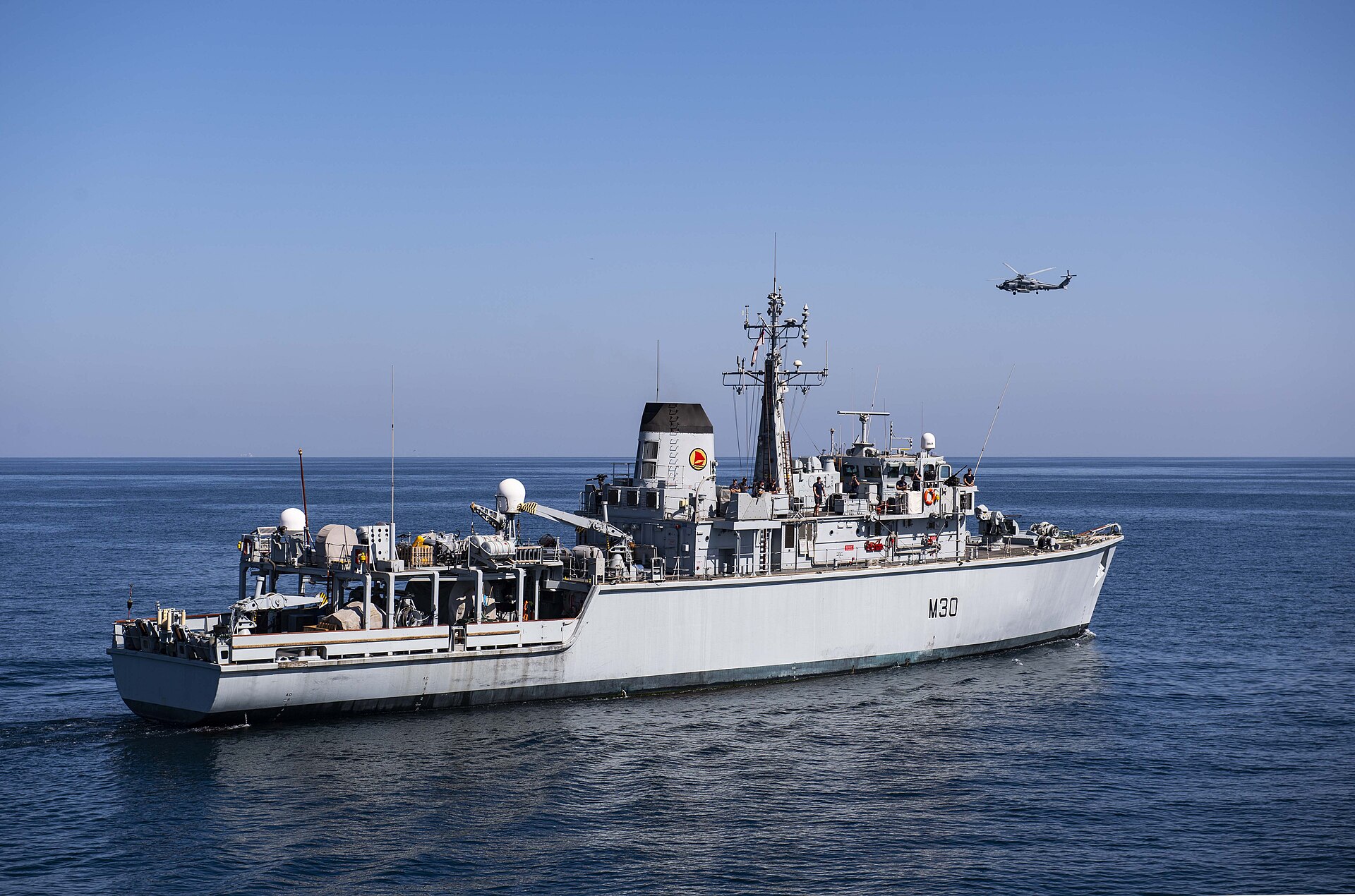
Iran deployed Maham-7 ground-rising pattern mines — designed to evade sonar detection and defeat conventional mine countermeasures. US Secretary of State Marco Rubio confirmed to the Senate Foreign Relations Committee on June 2 that Iran had “mined large segments of Hormuz — international waters” (Al Jazeera, CNBC). As of June 17, over 550 ships remain stranded on either side of the Strait (Al Jazeera explainer, June 17 2026).
CNBC analyst data projects that tankers entering the Persian Gulf could increase to 12 per day — approximately 50 percent of prewar levels — in the first 30 days of the US-Iran deal. That projection assumes mine clearance proceeds without incident and insurers lower war-risk premiums within weeks. Neither has occurred. The vessels that moved on June 15–16 were Iranian state vessels transiting their own territorial waters through a corridor Iran controls — a different risk calculus entirely from a commercially insured VLCC carrying Saudi crude through international shipping lanes where mines may remain.
Iran signed the deal and kept the minefield. The MOU grants no mine-clearance authority to any party. The IRGC’s “last warning” to USS Frank E. Petersen Jr. (DDG-121) during minesweeping operations on the same day as MOU signing demonstrated that clearance remains contested.
What Does the PGSA Fee Cost Saudi Arabia?
The Persian Gulf Security Authority charges approximately $1 per barrel — roughly $2 million per VLCC transit — payable in Chinese yuan via Kunlun Bank/CIPS or in Bitcoin/stablecoins (Euronews, May 25 2026). The fee structure was codified by Iran’s parliament on March 30–31, 2026 — before the MOU draft existed — and framed as a “service fee” rather than a toll, sidestepping the MOU’s toll prohibition.
Iran’s Foreign Minister Araghchi stated on June 14 — the originally scheduled signing day — that Iran will charge ships “for services rendered” at Hormuz. The MOU text prohibits “tolls.” It does not prohibit “service fees.” The distinction is the entire game.
At $1 per barrel multiplied by Saudi Arabia’s 5.5 million barrels per day of normal Hormuz throughput, the kingdom faces approximately $5.5 million per day — or roughly $2 billion per year — in PGSA liability when its crude eventually does transit. This fee applies on top of a Brent price already $29–32 below fiscal breakeven.
The exemption list — Russia, China, India, Iraq, Pakistan — covers Iran’s strategic partners and the nations whose crude or product flows serve Iranian interests. Saudi Arabia, the strait’s largest single-country user by volume, is explicitly excluded. The PGSA fee functions as a targeted extraction mechanism: the nations that opposed Iran’s Hormuz closure pay; the nations that acquiesced or cooperated do not.
Amos Hochstein, former senior US energy advisor, told CNBC in June 2026: “No matter what happens, the Iranians will control the Strait of Hormuz for the foreseeable future” and “everybody in the region believes this.” The PGSA fee is the monetization layer on top of that control.
The MOU banned tolls and built the fee collector. Iran’s reclassification of the charge from “toll” to “service fee” exploits a textual gap the negotiators either failed to close or chose to leave open. The result is identical: Saudi Arabia pays Iran to transit a waterway that international law designates as a strait used for international navigation under UNCLOS Article 38.
The Three-Way Squeeze: Quantifying the Asymmetry
Saudi Arabia’s fiscal exposure from the Hormuz crisis operates through three simultaneous mechanisms. No other oil-producing nation faces all three:
Mechanism 1: Blocked exports. Saudi Arabia’s four largest offshore fields — Marjan, Safaniya, Zuluf, and Abu Safa — remain at zero output. Combined pre-shutdown production was 2–2.5 million barrels per day. The Petroline to Yanbu can carry a maximum of 7 million barrels per day, but total Saudi production capacity exceeds what Yanbu alone can export. The offshore barrels are stranded until mines are cleared — 40 to 180 days from June 17.
Mechanism 2: Falling price driven by Iranian supply. Brent fell to $78.57 on June 17 — its fifth consecutive decline — on expectations of resumed Hormuz supply (Trading Economics, June 17 2026). The supply moving is Iranian. Each dollar Brent falls costs Saudi Arabia approximately $5.5 million per day in foregone revenue across its full export base. The gap between spot price and fiscal breakeven now exceeds $29 per barrel.
And the price did not stop there. By June 18, Brent had fallen to $75.49 — a 40% collapse from peak — deepening the daily revenue loss on Saudi barrels that still could not move. The market had fully priced Iranian supply resumption before a single non-Iranian commercial tanker cleared the minefield.
Mechanism 3: Future PGSA liability. When Saudi crude eventually does transit Hormuz — after mine clearance — it faces approximately $1 per barrel in PGSA “service fees” ($5.5 million/day, $2 billion/year) that Iranian crude does not pay. Saudi Arabia subsidizes its competitor’s shipping advantage in perpetuity under the current framework.
No postwar oil producer has faced all three mechanisms simultaneously. Saudi Arabia loses revenue from barrels it cannot ship, loses further revenue from a declining price caused by a competitor’s resumed shipments, and will pay that competitor a fee to resume its own shipments once the physical blockage clears.
Aramco’s financial position reflects the strain. Q1 2026 free cash flow was $18.6 billion against a quarterly dividend of $21.89 billion — a 0.85x coverage ratio, the first sub-1.0x since the pandemic (Aramco press release, May 2026). The kingdom’s Q1 fiscal deficit reached SAR 125.7 billion ($33.5 billion), the largest quarterly deficit on record. Saudi crude exports to China are set for a record low in June 2026: Sinopec reduced offtake by 80 percent; Rongsheng cut from 7 million barrels in February to 1 million in June (AGBI, Zawya, Baird Maritime, May–June 2026).
Aramco published its July 2026 Official Selling Price for Asia on June 8 — seven days before the MOU was signed — cutting Arab Light by $6 per barrel, the largest reduction since 2022. That price was locked before Geneva and cannot be retroactively adjusted. Saudi Arabia enters the post-MOU market at a discounted price it set when it expected the blockade to persist — and now faces Iranian supply depressing spot prices further below even that discounted level.
Tanker War Inversion
The closest historical analog is the 1984–1988 tanker war, when Iran attacked vessels carrying Saudi and Kuwaiti crude through the Persian Gulf. The response — Operation Earnest Will (July 1987–September 1988) — reflagged Kuwaiti tankers as American to secure US Navy escort protection. Iran attacked tankers; the US protected them. The asymmetry was kinetic: missiles and mines versus warships.
The 2026 version inverts the mechanism. Iran does not attack Saudi tankers — it charges them. The PGSA corridor replaces the mine-and-missile interdiction of 1984–88 with a fee-based extraction system that accomplishes the same strategic outcome: Saudi crude costs more to move than Iranian crude. In 1987, the asymmetry was military risk. In 2026, it is contractual cost.
During the JCPOA implementation period (2015–2018), NITC vessels benefited from the lifting of US and EU secondary sanctions but received no formal corridor exemption — all vessels transited on equal terms under UNCLOS. The 2026 PGSA exemption is the first time Iran has created a positive corridor mechanism privileging its own state tanker company while charging third parties. It is a structural innovation in strait control: monetization rather than denial.
The 550-plus vessels stranded on either side of the strait cannot move until insurers reclassify the risk. NITC vessels face no such constraint — they transit their own nation’s territorial waters through a corridor their own government controls, exempt from fees their own parliament levied. The playing field is not level. It was never designed to be.
What the Market Is Pricing — and What It Is Missing
The oil market on June 17 is pricing in Hormuz reopening. Brent’s fifth consecutive daily decline — from roughly $83 in the days following MOU signing to $78.57 — reflects trader expectations that 20+ million barrels per day of Persian Gulf supply will soon reach global markets (Trading Economics, CNBC, June 17 2026). The logic is directional: a deal was signed, tankers moved, supply will resume.
What the market appears not to have priced is the asymmetric timing. Iranian crude is moving now. Saudi, Kuwaiti, Emirati, and Iraqi crude — the volumes that constitute the bulk of Hormuz throughput — cannot move until:
- Mines are cleared (40–180 days)
- JMIC downgrades threat level to “moderate” or below (not yet achieved — currently “substantial”)
- P&I clubs and war-risk insurers restore standard coverage (dependent on JMIC downgrade)
- BIMCO CONWARTIME clauses are deactivated by individual shipping contracts
- London Market Association safety guidance is updated
None of these conditions has been met as of June 17. The market is trading on a headline — Iranian tankers moved — and extrapolating full-strait reopening from a partial, exemption-based, single-nation transit.
The falling Brent price creates a second-order problem for Saudi Arabia specifically. Aramco’s July OSP was published June 8 at a steep discount — the largest Asia cut since 2022, with the Arab Light premium collapsing 51 percent from $19.50 to $9.50 between May and July. That price lock preceded the MOU by a week. If spot Brent continues falling, the OSP discount may prove insufficient to attract buyers who can source cheaper Iranian barrels now moving freely. Saudi Arabia discounted before the MOU to compete with sanctioned Iranian crude; it now faces unsanctioned Iranian crude at a lower spot price on top of that discount. Chinese refiners have already acted on this math: Saudi crude exports to China are heading for a record low in June 2026.
The Sadara debt deadline — $3.7 billion in guaranteed senior debt whose grace period expired on June 15 — adds another dimension. Aramco and Dow have not filed material event notices. The fiscal environment in which that debt exists has worsened: lower prices, blocked exports, rising liabilities. The market has not connected the Hormuz reopening timeline to the corporate debt overhang in Saudi Arabia’s petrochemical sector.
Frequently Asked Questions
Are Saudi oil tankers currently able to transit the Strait of Hormuz?
No. As of June 17, 2026, no Saudi-flagged or Saudi-chartered tanker has transited the Strait of Hormuz since the IRGC closure order in March. The JMIC threat level remains at “substantial” — two grades above the “moderate” threshold that would trigger insurance normalization. War-risk premiums remain elevated by 340 percent above pre-crisis levels, and BIMCO CONWARTIME clauses remain active in most charter parties covering the Persian Gulf. Only NITC-owned Iranian vessels have transited under the PGSA corridor exemption.
Which countries are exempt from PGSA fees at the Strait of Hormuz?
Russia, China, India, Iraq, and Pakistan hold exemptions from the PGSA’s approximately $1-per-barrel service fee, along with Iran’s own NITC fleet. The exemption list corresponds precisely to nations that either cooperated with Iran during the Hormuz crisis or whose naval forces did not participate in the US-led blockade. Saudi Arabia, the UAE, Kuwait, Japan, South Korea, and all European importers are not exempt — meaning the strait’s largest users by volume bear the full cost while exempted nations gain a structural shipping advantage.
How does the Hormuz closure affect Saudi Arabia’s OPEC+ production quota?
Saudi Arabia’s OPEC+ quota applies to production, not exports. The kingdom can technically produce crude and store it domestically or route it through Yanbu without violating quota agreements. However, the four major offshore fields (Marjan, Safaniya, Zuluf, Abu Safa) that require Hormuz transit represent 2–2.5 million barrels per day of capacity that cannot currently reach any export terminal. OPEC+ approved its fourth consecutive 188,000 bpd production hike on June 7 — a hike Saudi Arabia cannot fully deliver while Hormuz remains mined for non-Iranian traffic.
What is the historical precedent for one nation controlling strait fees while exempting itself?
There is no direct precedent in modern maritime history. The closest analogs — Turkey’s Bosphorus transit fees, Egypt’s Suez Canal tolls, and Panama Canal charges — apply uniformly to all vessels regardless of flag state. Denmark abolished its Sound Dues for the Danish Straits in 1857 under international pressure. Iran’s PGSA structure is the first instance since the pre-Westphalian era of a state imposing differential strait charges that exempt its own commercial fleet while taxing competitors. UNCLOS Article 26(2) permits charges only for “specific services rendered to the ship” — a blanket per-barrel charge arguably fails this test.
Could Saudi Arabia challenge the PGSA fee under international law?
Saudi Arabia could invoke UNCLOS Article 233 and Article 26 through the International Tribunal for the Law of the Sea (ITLOS), arguing the fee violates the right of transit passage. However, Iran withdrew from ITLOS compulsory jurisdiction in 2019 and has not recognized any binding maritime arbitration mechanism since. The practical enforcement mechanism would be a UN Security Council resolution — which Russia and China would veto given their PGSA exemptions. GCC states submitted a letter to the IMO on May 21 (five of six GCC members, with Oman declining to sign) protesting the fee, but IMO resolutions are non-binding on sovereignty claims within territorial waters. The market those Saudi barrels will eventually enter carries its own structural ceiling: eight million barrels of new supply expected in 2027, per IEA projections, priced into a Brent environment Goldman already pegs at $75. Saudi Bahri supertankers crossed Hormuz on June 18 in the first Saudi crude transit since February — the opening move in that market re-entry.
Iran formalized the permit system governing those transits on June 19, publishing forty mandatory declaration categories, a mandatory Larak corridor routing through territorial waters, and a five-day permit validity window — the bureaucratic architecture behind the PGSA exemption NITC vessels used. The full rulebook is examined in Iran’s PGSA vessel declaration and Hormuz transit fee structure.