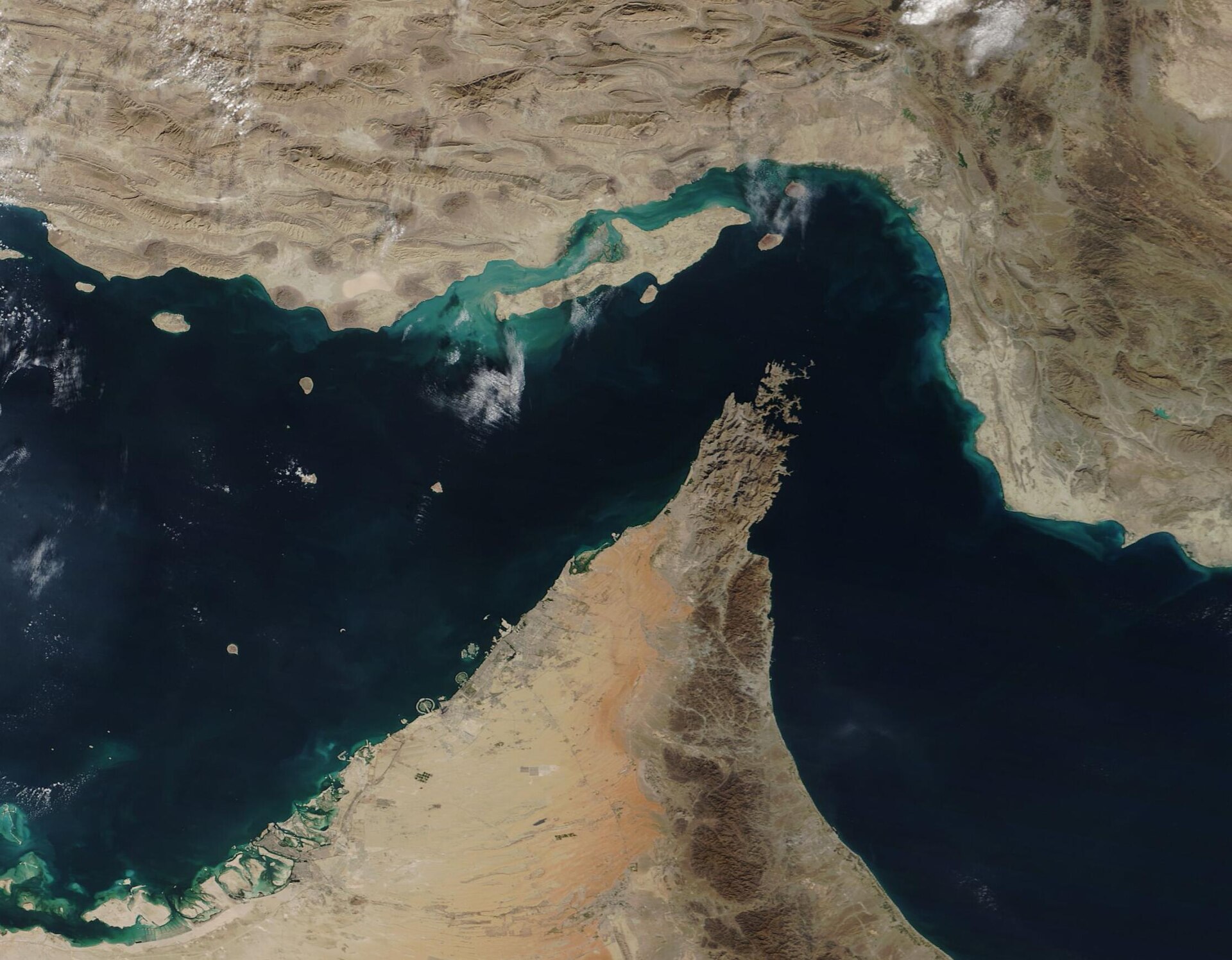

TEHRAN — Hours after Iran signed the Hormuz MOU on June 15, the IRGC Navy radioed a US destroyer conducting mine-clearance operations in the Strait of Hormuz: “This is the last warning. This is the last warning.” Brent crude, responding to the signing rather than the radio channel, slid to $80.47 — roughly $28 below the price Saudi Arabia needs to balance its budget.
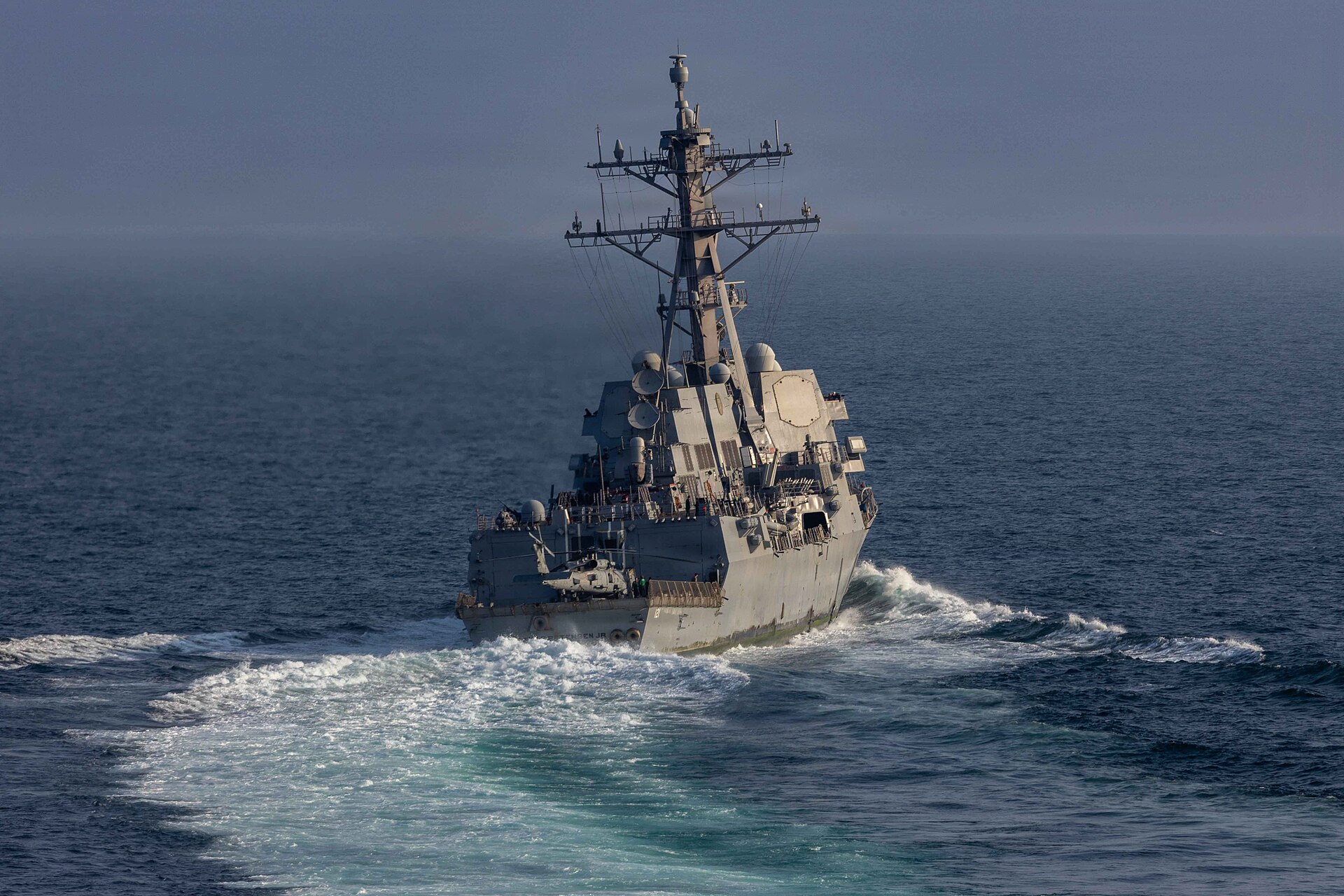
The gap between those two events — a diplomatic document signed in Geneva and an operational threat broadcast in the shipping lane — is the variable that governs when Saudi crude flows at full volume through the strait. The MOU promises Hormuz will reopen “within 30 days, under Iranian arrangements.” The IRGC, on the same day, told the USS Frank E. Petersen Jr. to leave or be targeted. Saudi Arabia’s fiscal position, already hemorrhaging at approximately $100 million per day below breakeven, is not hostage to what diplomats signed in Switzerland. It depends on what IRGC patrol boat operators in the shipping lane decide to do about the minesweepers.
On June 15–16, while the minesweepers were still broadcasting their last-warning intercepts, Iranian NITC tankers Diona and Hero 2 moved 4.8 million barrels of crude eastbound through the strait. That transit confirmed the asymmetry in practice: one lane open, exclusively for Iran; Saudi crude lanes still sealed by the same ordnance Iran laid.
Table of Contents
- What Did the IRGC Radio to the USS Frank E. Petersen Jr.?
- The MOU Text vs. the Operational Reality
- Why Can’t the US Just Clear the Mines?
- The Maham-7 Problem
- How Long Will Hormuz Mine Clearance Take?
- The Allied Fleet That Cannot Enter
- The Leaderless Navy
- What Does the IRGC’s Warning Mean for Saudi Arabia’s Budget?
- Brent at $80 Is a Bet Against the IRGC
- What Happens if Clearance Stalls Past July?
- Frequently Asked Questions
What Did the IRGC Radio to the USS Frank E. Petersen Jr.?
The IRGC Navy transmitted “This is the last warning” to the USS Frank E. Petersen Jr. (DDG-121) during mine-clearance operations in the Strait of Hormuz on June 15, 2026 — the same day the Iran-US MOU was signed. In video released hours later by Iranian state media, an IRGC serviceman ordered the destroyer to “alter course and go back to the Indian Ocean immediately” or “be targeted.”
The destroyer’s response was measured: “Passage in accordance with international law. No challenge is intended to you, and I intend to abide by rules of our government’s cease-fire.” The USS Frank E. Petersen Jr. and the USS Michael Murphy (DDG-112) have been conducting Hormuz mine-clearance operations since at least April 2026, when Defense Secretary Pete Hegseth confirmed their deployment as part of a mission “to ensure the strait is fully clear of sea mines previously laid by Iran’s Islamic Revolutionary Guards Corps.”
Two signals arrived on June 15 from different branches of the Iranian state. Iran’s UN notification stated non-hostile ships may transit the strait — a diplomatic communication consistent with the MOU. The IRGC’s radio channel told a US warship conducting mine clearance to leave or face targeting — an operational communication that contradicted it. Both were official, issued under sovereign authority, and neither rescinded the other.
The Middle East briefing 3,000+ readers start their day with.
One email. Every weekday morning. Free.
The MOU Text vs. the Operational Reality
The 14-point MOU framework addresses Hormuz reopening in a single clause: the strait is to reopen “within 30 days, under Iranian arrangements.” Mine-clearance authority is not among the 14 points. A clause-by-clause reading of the MOU shows that Point 5’s 30-day mine-clearance deadline runs against a Pentagon six-month operational estimate — a gap the text does not resolve. The 60-day negotiation period covers nuclear enrichment limits, stockpile disposal, sanctions relief, and war reconstruction — the mines in the water are, by the text’s own structure, outside the agreement’s scope.
The omission is not accidental. The IRGC has asserted its own authority over the strait through a separate chain of command that predates the MOU and operates independently of it. Khatam al-Anbiya Central Headquarters stated it controls all Hormuz traffic “with full authority” as of its April 5 and April 10 declarations — authority the MOU neither references nor rescinds. Fars News, the IRGC-affiliated outlet, reported that marine traffic “will be regulated by Iran in coordination with Oman,” a bilateral framing that excludes both Saudi Arabia and the United States from operational decisions about a waterway carrying 38 percent of Saudi crude.
Iran’s foreign minister, Araghchi, declared after the deal that Iran “won the war.” A country that believes it won the war does not, as a practical matter, surrender mine-clearance authority over its most strategically valuable chokepoint to the adversary’s navy. The MOU’s drafters appear to have understood this — by declining to include mine clearance in the agreement at all. What Iran signaled on June 15 was not ambiguity but a two-track architecture: civilian diplomacy for the signing ceremony, IRGC operational control for the strait. A parallel legal gap runs alongside the operational one: the EU’s June 8 designations of Iran’s Hormuz fee-collection apparatus — the Hormozgan IRGC Naval Command and its PGSA operator — remained in force as the MOU was signed, a legal contradiction that the agreement’s text left unaddressed.
Why Can’t the US Just Clear the Mines?
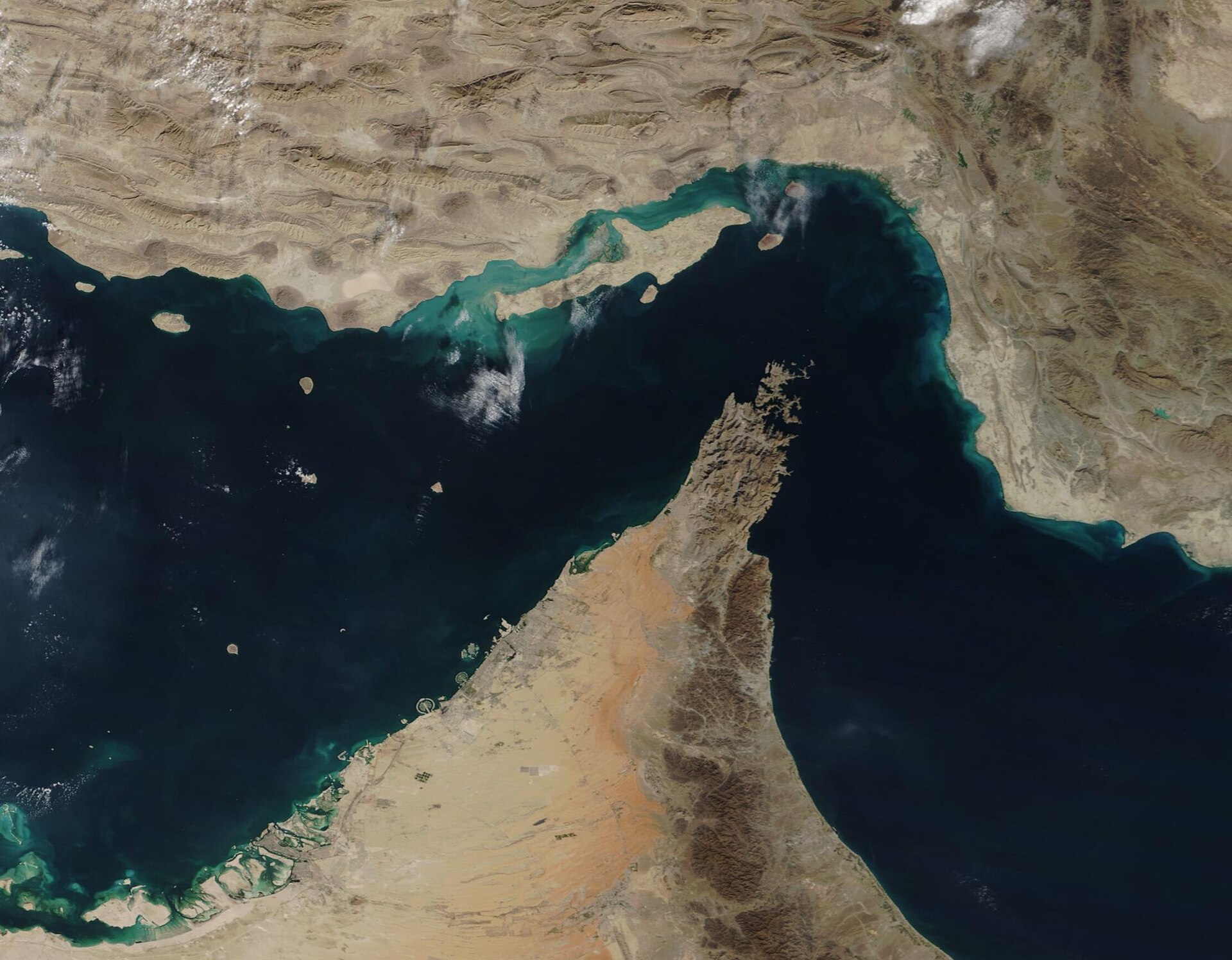
The Pentagon briefed the House Armed Services Committee on April 22 that clearing the Strait of Hormuz could take up to six months after the war ends. Intelligence indicated Iran deployed 20 or more mines, including GPS-guided remotely deployed variants engineered to evade conventional sonar detection. Chief Pentagon spokesperson Sean Parnell called the Washington Post’s reporting of the classified briefing “dishonest journalism” built on “cherry-picked” information — without offering a shorter counter-estimate.
The obstacle is not solely technical. The two US destroyers tasked with clearance are operating in waters where the IRGC has told them they “will be targeted.” The MOU grants no foreign navy explicit authorization to conduct mine-clearance operations, and the IRGC’s Khatam al-Anbiya headquarters has not issued any coordination protocol for demining vessels. Without authorization from the same Iranian state apparatus that issued the threat — and with the IRGC broadcasting warnings during active operations — the legal and operational basis for continued US clearance is contested by the government that signed the MOU hours earlier.
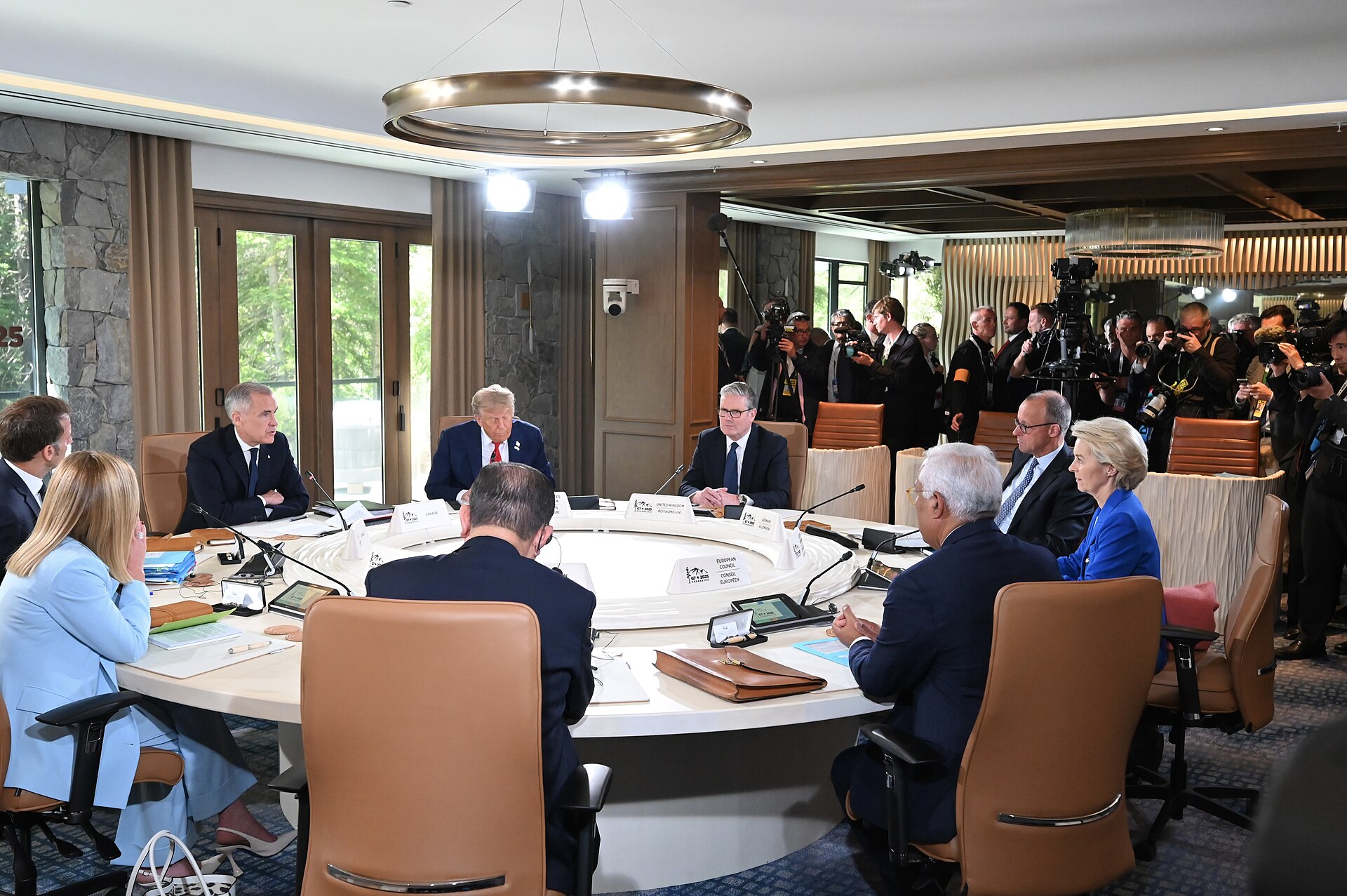
Trump’s comments at the G7 in Evian on June 16 sharpened the contradiction rather than resolving it. He told Macron he does not see a need for “much help” from allies on demining because the strait is “going to be open” thanks to the deal. That statement treats the MOU signing as the clearing event — as though a diplomatic ceremony in Geneva neutralizes ordnance in the Persian Gulf. The IRGC’s radio transmission on the same day treats the signing as irrelevant to what happens in the shipping lane.
The 1991 Gulf War offers the only comparable post-conflict strait clearance precedent, and the comparison flatters nobody. Operations ran from March 3 to July 20, 1991 — approximately 4.5 months — against a less sophisticated Iraqi mine threat, with full Iraqi cooperation following unconditional surrender, and a 12-nation coalition working under UN Security Council Resolution 687. No hostile actor contested the 1991 clearance. In 2026, the force that laid the mines is broadcasting warnings to the ships attempting to find them.
The Maham-7 Problem
Iran’s primary deployed mine is the Maham-7, a 220-kilogram seabed weapon reverse-engineered from the Italian Manta. Its GRP composite casing scatters sonar waves, degrading both “highlight and shadow” returns — the two visual indicators that sonar operators use to distinguish a mine from seafloor clutter. It carries three acoustic sensors, including a subsonic frequency detector, and a three-axis magnetic sensor that allows it to discriminate between hull types. It sits on the bottom and waits for the specific signature of a passing vessel.
The US Navy’s primary countermeasure in the region is the AN/AQS-20 sonar system, carried aboard Independence-class Littoral Combat Ships with mine warfare packages. The Maham-7’s composite casing was designed to defeat precisely this system — a sonar-evading mine engineered for the sonar Iran knew the US would deploy. Bottom mines of this type clear three to five times slower than moored variants in the mixed-sediment conditions of the Hormuz seabed, according to US Navy mine warfare doctrine. The Pentagon’s six-month estimate accounts for this clearance rate differential. The commodity market does not.
Five Western maritime security sources reached a more optimistic consensus: conventional minesweepers combined with autonomous underwater drones could achieve insurer confidence within 40 to 50 days — the threshold at which underwriters would begin issuing transit policies for commercial vessels. That estimate assumes the clearance force operates without interference from the navy that laid the mines. The IRGC’s June 15 radio transmission to the vessel doing the clearing indicates that assumption is already invalid.
How Long Will Hormuz Mine Clearance Take?
Every credible clearance estimate exceeds the MOU’s 30-day reopening clause, and none accounts for a hostile force contesting the operation in real time. The range runs from the most optimistic Western maritime assessment to the Pentagon’s classified congressional briefing, with the IRGC’s June 15 operational posture placing the realistic timeline at the longer end or beyond it.
| Estimate Source | Timeline | Conditions Assumed |
|---|---|---|
| MOU text | 30 days | “Under Iranian arrangements” |
| Western maritime security (5 sources) | 40-50 days | Uncontested clearance, insurer confidence |
| 1991 Gulf War precedent | ~4.5 months | Full Iraqi cooperation, 12-nation coalition, UNSCR 687 |
| Pentagon (HASC briefing, Apr 22) | Up to 6 months | Post-conflict, full mine field clearance |
| IRGC operational posture (Jun 15) | Indefinite | Active contestation of clearing vessels |
Polymarket reflects a skepticism that the crude market does not. Traders there price a 78.5 percent probability that Hormuz traffic does not normalize by June 30, despite the MOU signing — a bet that the agreement’s 30-day clause is operationally meaningless. Even by July 31, a full two and a half weeks past the MOU’s deadline, the normalization probability reaches only 63.5 percent. The prediction market is pricing the IRGC’s radio channel. Brent is pricing the signing ceremony.
CENTCOM formally began that clearance mission on June 16 — the day after the MOU signing — marking the first time the operation carried official post-deal authorization. The gap between CENTCOM’s mine clearance mission and the timelines industry and Pentagon are working from is now the critical variable governing when Saudi crude actually moves.
War-risk insurance tells the same story through actuarial math rather than prediction markets. Premiums remain at 16 times baseline; at their March peak, underwriters charged 2.5 to 5 percent of hull value per transit — approximately $5 million for a single VLCC passage through a strait that once carried tankers at a rate of 100 to 140 per day. Current Hormuz throughput has collapsed to 5 to 17 ships daily. The 107-day blockade may have ended on paper, but the commercial strait — the one that determines insurance quotes, freight rates, and Saudi revenue — remains closed by underwriter math that the MOU has not changed.
The Allied Fleet That Cannot Enter
France, the UK, Germany, Japan, Italy, and Canada proposed a “strictly defensive and independent mission” to clear Hormuz mines. The assets are staged and the personnel are ready. RFA Lyme Bay departed Gibraltar on May 25 carrying more than 100 minehunting personnel from the Royal Navy’s diving and threat exploitation group, supplemented by French Navy mine warfare equipment. The French aircraft carrier Charles de Gaulle, integrated with HMS Dragon, could reach the operational area within two to three days of authorization.
Macron spelled out the timeline to Trump at Evian: French fighter aircraft could begin observation missions “as soon as Tuesday, followed within 48 hours by frigates and within two to three days, the aircraft carrier.” Trump’s response collapsed the timeline into irrelevance — he does not see a need for “much help” because the strait is “going to be open.” Without US political backing, the six-nation coalition lacks the authorization to enter waters where the IRGC has issued targeting threats against the only navy currently attempting clearance. Macron can offer the Charles de Gaulle. He cannot unilaterally send it into a contested zone that Washington considers already resolved.
The IRGC’s radio warning succeeded not by shifting the military balance — the combined Western naval force in the region vastly overpowers the IRGC Navy — but by establishing a political tripwire that the MOU’s fragility amplifies. Authorizing mine clearance over IRGC objections risks an incident that unravels the agreement before the 60-day nuclear negotiation period begins. Declining to authorize it means the mines stay in the water, the insurers stay on the sidelines, and the strait stays commercially closed at scale. The IRGC did not need to fire a weapon — pressing a radio button froze a six-nation demining coalition with 100-plus minehunters already aboard ship.
The Leaderless Navy
The IRGC Navy commander post has been vacant since Commodore Alireza Tangsiri was killed in an Israeli strike at Bandar Abbas on March 26 — 81 days without a replacement as of the MOU signing. In a conventional military, a command vacancy restrains operational tempo and narrows decision-making to defensive postures. The IRGC’s mosaic doctrine inverts that logic entirely, distributing authority across 31 semi-autonomous corps, each with independent operational capability and its own intelligence and targeting chain. The operator who radioed “last warning” to the USS Frank E. Petersen Jr. needed no centralized authorization to issue the threat.
This structural reality undermines the MOU’s diplomatic architecture. The agreement was negotiated with Iran’s civilian apparatus — Araghchi’s foreign ministry, Qalibaf’s parliament, and envoys operating under the Supreme Leader’s authority. None of these institutions controls what an IRGC patrol boat operator does in the Hormuz corridor at two in the morning. Even if Tehran’s civilian leadership genuinely intends for mine clearance to proceed, a local IRGC commander can create an incident that halts operations by threatening, approaching, or engaging a clearing vessel. The June 15 radio transmission is evidence that at least one operational unit has already made that choice — on signing day.
Iran’s parliament reinforced the IRGC’s operational architecture from a legislative direction. The Hormuz transit fee bill passed March 30-31, before the MOU draft existed, establishing PGSA fee collection as a statutory mandate independent of any diplomatic agreement. The fee structure, the IRGC’s declared authority over strait traffic, and the mine-laying itself all predate the MOU. The agreement was layered on top of operational and legislative realities it does not address. The MOU banned tolls while the institutional infrastructure for fee collection was already built and functioning.
What Does the IRGC’s Warning Mean for Saudi Arabia’s Budget?
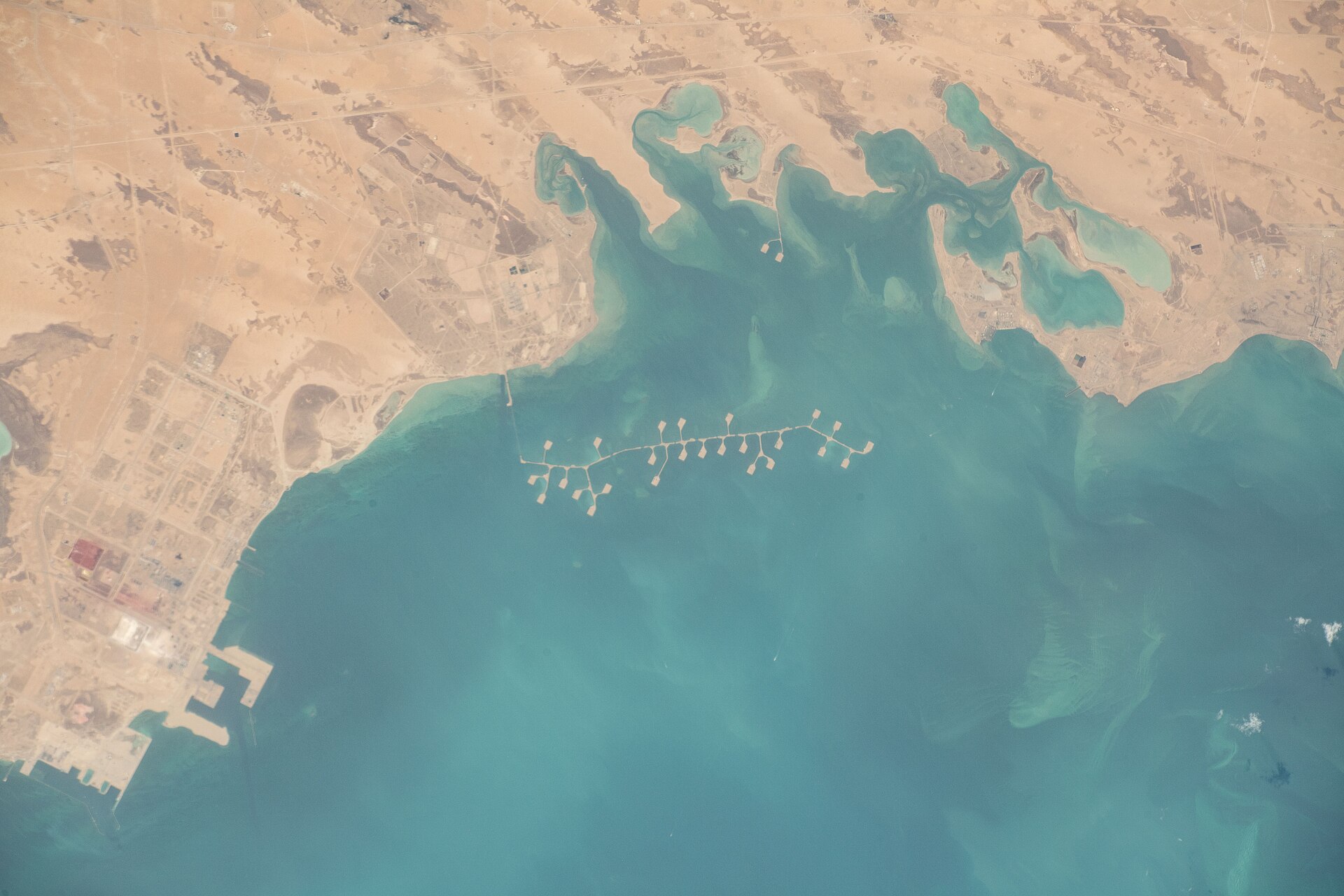
Saudi Arabia loses approximately $100 million per day for every day Brent crude remains at $80.47 instead of the $108-111 the kingdom needs to balance its books. The Q1 2026 budget deficit reached SAR 125.7 billion ($33.5 billion), the largest quarterly shortfall on record, consuming 76 percent of the full-year SAR 165 billion target in three months. Saudi crude exports collapsed from roughly 7.3 million barrels per day before the Hormuz closure to approximately 4.4 million in March 2026. The Aramco East-West Pipeline is running at its maximum capacity of 7.0 million barrels per day — every additional barrel of crude requires transit through the strait where the IRGC just told the minesweepers to leave.
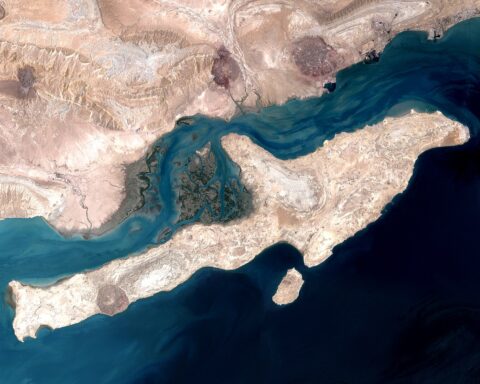
Brent’s slide to $80.47 reflects a market that interpreted the MOU signing as a clearance event — as though a ceremony in Geneva changes what is in the water off Qeshm Island. The IRGC’s radio transmission on signing day is operational evidence against that assumption. Every day the mines remain is another day of fiscal erosion against a budget already in the worst quarterly position since Saudi Arabia began publishing fiscal accounts.
| Saudi Fiscal Metric | Value | Source |
|---|---|---|
| Brent crude (June 16) | $80.47/barrel | Market data |
| Saudi fiscal breakeven | $108-111/barrel | Goldman Sachs |
| Daily fiscal gap at current Brent | ~$100M/day | Derived from breakeven spread |
| Q1 2026 budget deficit | SAR 125.7B ($33.5B) | Saudi Ministry of Finance |
| PGSA fee exposure | $5.5M/day (~$2B/year) | $1/barrel x 5.5M bpd through Hormuz |
| Pre-closure crude exports | ~7.3M bpd | EIA |
| March 2026 crude exports | ~4.4M bpd | EIA |
| East-West Pipeline (Hormuz bypass) | 7.0M bpd (at maximum) | Aramco |
| Current Hormuz traffic | 5-17 ships/day | Kpler |
| Pre-conflict Hormuz traffic | 100-140 ships/day | Kpler |
The PGSA adds a second front of exposure that persists regardless of the mine clearance timeline. Iran’s Persian Gulf Service Authority charges approximately $1 per barrel for transit through the Qeshm-Larak corridor — a fee the MOU bans as a “toll” but that Iran has rebranded with parliamentary backing as a “service fee.” The GCC told ships not to pay, but the directive carries no enforcement mechanism against IRGC patrol boats in the strait. At Saudi Arabia’s pre-closure Hormuz export volume of 5.5 million barrels per day, the annual liability runs to roughly $2 billion — a structural cost that the MOU’s toll prohibition has not eliminated because Iran simply changed the label.
The Sadara Chemical Company’s $3.7 billion in guaranteed senior debt — Aramco at 65 percent and Dow at 35 percent — saw its grace period expire on June 15, the same day as both the MOU signing and the IRGC radio warning. All 26 Jubail industrial units have been offline since late March with revenue at zero for 11 weeks. The silence from both guarantors on the $3.7 billion deadline has attracted less attention than the signing ceremony but carries more immediate financial consequence. The mines in the Hormuz shipping lane and the debt on the Jubail balance sheet share a common feature: neither was addressed by the document signed in Geneva.
Brent at $80 Is a Bet Against the IRGC
The crude price encodes a chain of assumptions, each of which must hold simultaneously. The IRGC must stand down from the operational posture it demonstrated on June 15. Local commanders in the Hormuz corridor — operating without a navy chief since Tangsiri’s death, under a mosaic doctrine that rewards initiative over obedience — must allow minesweepers to work unmolested in waters the IRGC claims full authority over. The United States must authorize continued clearance against IRGC objections, which Trump’s Evian remarks suggest he considers unnecessary, and the allied coalition must be willing to enter contested waters without US political cover. Every link must hold for Brent at $80 to be correct.
Polymarket’s 78.5 percent probability that Hormuz does not normalize by June 30 reflects this dependency chain more honestly than the commodity market does. The crude market traded the headline — a signing ceremony, a 30-day clause, a president declaring the strait “going to be open.” The prediction market traded the operational variables: an IRGC radio warning broadcast to a minesweeper on signing day, a mine designed to defeat the deployed sonar, a leaderless but decentralized naval command structure that requires no permission to escalate, and a US president who told allies their demining help is unnecessary. When a commodity and a prediction market diverge this sharply on the same underlying event, one of them has mispriced the risk.
Saudi Arabia’s budget is where the mispricing materializes. The kingdom skipped the G7 Evian session on Hormuz reopening — the meeting most directly relevant to its own fiscal survival — while Egypt, Qatar, and the UAE attended and MBS declined for a third consecutive G7. Riyadh has no seat at the PGSA fee table, no role in the mine-clearance operation, no presence in the allied coalition, and secured no bilateral with Trump at Evian. Its fiscal exposure to the IRGC’s operational decisions is total, and its ability to influence those decisions is zero.
What Happens if Clearance Stalls Past July?
If mine clearance stalls into August, Saudi Arabia’s fiscal position crosses from severe into structural. A second quarter at comparable bleed rates — restricted Hormuz throughput, Brent stuck $28 below breakeven — would push the annual shortfall well past the SAR 300-330 billion range Goldman Sachs projected as its downside scenario. PIF cash reserves sit at $15 billion — a six-year low — against $16 billion in NEOM exit obligations. Aramco’s Q1 free cash flow of $18.6 billion fell below its $21.89 billion quarterly dividend commitment, the first sub-1.0x coverage ratio since the pandemic.
The asymmetry between the two sides of the strait is structural, not cyclical. Every day of delay widens Riyadh’s quarterly deficit while costing Tehran nothing — the mines are already in the water, the PGSA fees are legislated, and the IRGC’s decentralized command requires no affirmative decision to maintain the current posture. Inaction is the default, and the default favors Iran. Saudi Arabia did not attend the Evian session where Hormuz reopening was negotiated, holds no seat in the clearance operation, and maintains no direct channel to the IRGC command structure — decentralized or otherwise — that could address what was broadcast on June 15.
This is the last warning. This is the last warning.
IRGC Navy radio transmission to USS Frank E. Petersen Jr. during mine-clearance operations, Strait of Hormuz, June 15, 2026
Secretary of State Marco Rubio confirmed that Iran mined “large segments” of the strait; those segments remain mined. The allied fleet that could accelerate clearance — staged, crewed, and within days of the operational zone — is waiting for authorization from a president who says he does not need their help. The 107-day blockade ended with a ceremony. The only thing that moved on June 15 was the price of oil, and it moved in the wrong direction for the country whose budget depends on the strait the IRGC has not finished closing.
The following day, the G7 offered its own ceremony. Five nations at Évian congratulated the MOU without addressing the mine-clearance gap the signing day had already exposed — the same gap the IRGC’s warning to USS Frank E. Petersen Jr. made tangible in real time.
Frequently Asked Questions
Did the MOU authorize any country to clear mines from the Strait of Hormuz?
No. The 14-point framework addresses Hormuz reopening through a single clause — “within 30 days, under Iranian arrangements” — without defining mine-clearance authorization, rules of engagement for demining vessels, or coordination mechanisms with the IRGC. The legal basis for US or allied mine-clearance operations remains the pre-MOU framework: individual navies operating under their own rules of engagement in waters the IRGC claims authority over. Post-conflict mine clearance has historically required separate military-to-military agreements or UN Security Council authorization — the 1991 Gulf War operated under UNSCR 687. No equivalent resolution has been proposed for Hormuz in 2026, and Russia and China, both exempt from PGSA fees, would likely veto any such measure.
How does the Maham-7 compare to other naval mines Iran has deployed?
Iran’s mine inventory includes the EM-52 rocket-propelled rising mine and the Chinese-origin SADAF-02 moored contact mine, both deployed in smaller numbers during the Hormuz closure. The Maham-7 is the most advanced: unlike the EM-52, which rises toward its target and produces a detectable ascent signature, the Maham-7 detonates from the seabed without rising — leaving no acoustic trace for countermeasure systems to track during the approach phase. Its three-axis magnetic sensor can discriminate between warship and commercial hull signatures, enabling selective targeting that the EM-52 and SADAF-02 lack. Iran is also believed to possess a small number of the Sadaf-7, a moored variant with passive acoustic homing, though intelligence reporting suggests these are less numerous than the Maham-7 in the current Hormuz deployment.
What is Saudi Arabia’s alternative export route if Hormuz clearance is delayed past the MOU’s 30-day window?
The East-West Pipeline (Petroline) to the Red Sea terminal at Yanbu is Saudi Arabia’s only operational Hormuz bypass, running at its maximum capacity of approximately 7.0 million barrels per day. Beyond this, Aramco has explored emergency rail transport of crude products to Jeddah Islamic Port, but existing rail infrastructure between the Eastern Province and western terminals was built for passenger and freight service, not bulk liquid transport. A Red Sea FPSO (floating production, storage, and offloading) option has circulated in industry discussions but would require 18 to 24 months of construction. LNG and petrochemical exports — including production from the now-offline Jubail complex — have no pipeline bypass and are entirely dependent on Hormuz access, making them stranded until the strait reopens to commercial traffic at scale.
Why has the IRGC Navy commander not been replaced since March?
Tangsiri’s replacement requires approval from IRGC Commander-in-Chief Hossein Salami and the Supreme Leader’s office — an office that has been operating through courier-based communication since Mojtaba Khamenei went into hiding following his father’s assassination in February 2026. The multi-day delays inherent in courier communication have slowed all senior IRGC appointments, not just the navy command. In the interim, the mosaic doctrine ensures operational continuity without a single commander: each of the 31 corps maintains its own chain of command, intelligence apparatus, and engagement authority. The vacancy is irrelevant to the IRGC’s operational capacity but structurally consequential for diplomacy — there is no single interlocutor who can credibly commit the IRGC Navy to standing down during mine-clearance operations, even if Tehran’s civilian leadership signs agreements that assume such cooperation.
The pricing implications of that stall materialized in Aramco’s July OSP: Aramco’s $6 July OSP cut — priced on June 8, before the IRGC warning was issued — reflects a bet on reopening that the IRGC’s own patrol boats are not yet honoring.
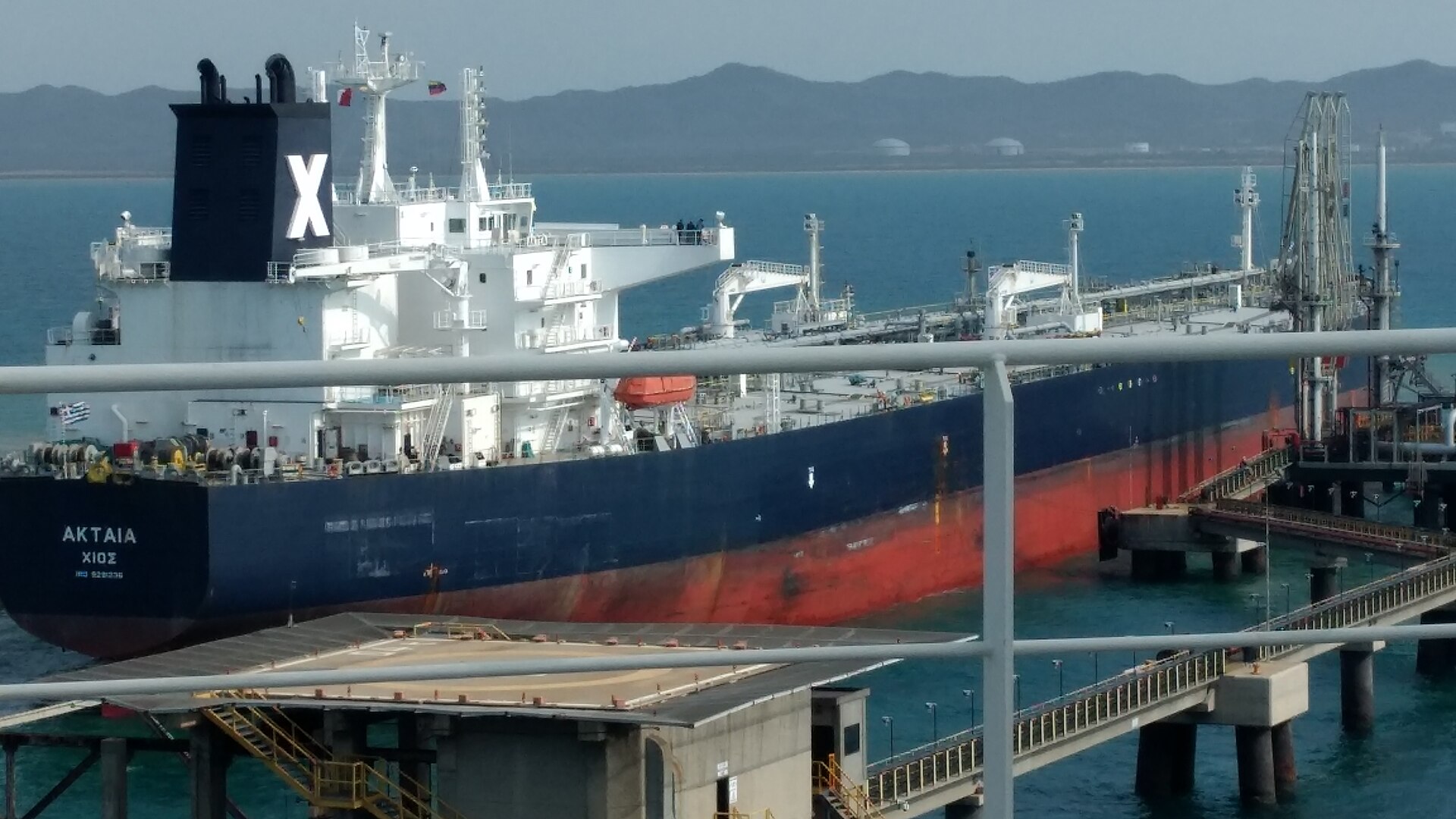
The IRGC’s continued maritime assertiveness did not stop with the June 15 warning. As of June 17, Saudi Arabia’s four largest offshore fields — Marjan, Safaniya, Zuluf, and Abu Safa — remained idle, and the MOFA had not issued a public statement on Hormuz in 26 days.