
TEHRAN — Mohammad Bagher Ghalibaf has conditioned all further US-Iran negotiations on the implementation of five specific Islamabad MOU articles, four of which require active American performance and none of which have a named arbiter to verify completion. The precondition list, announced on July 1, is less a compliance checklist than a veto mechanism: every unfulfilled gateway article is, by the text’s own terms, Washington’s failure.
The five articles — 1, 4, 5, 10, and 11 — govern the ceasefire, naval blockade removal, Hormuz passage, oil sanctions waivers, and frozen-asset releases. Article 5, the sole clause requiring Iranian action, commits Tehran only to “best efforts” for safe passage and preserves “the sovereign rights of coastal states.” With the PGSA fee set to auto-activate on August 18, Doha talks paused through July 9, and forty-four days left on the MOU clock, the obligation to act sits on Washington’s side of the table.
Table of Contents
- The Five Gateway Articles
- Why Do Four of Five Require American Action?
- What Does “Best Efforts” Mean When Iran Writes the Definition?
- Who Decides Whether the Articles Have Been Implemented?
- The Oil That Flows While the Clock Runs
- What Happens When August 18 Arrives?
- The Commander Who Negotiates by Not Negotiating
- Frequently Asked Questions
The Five Gateway Articles
The Islamabad MOU, signed June 17, 2026, contains fourteen articles. A gateway clause — governing the transition from Phase 1 implementation to Phase 2 final negotiations — reads: “subject to the beginning of implementation of paragraphs 1, 4, 5, 10, and 11, the US and Iran will start negotiations regarding the final deal on the remaining paragraphs,” according to the full text published by Arab Center DC and CNN on June 17. Five articles are formal prerequisites. Until all five are at least begun, there are no final talks on nuclear inspections, sanctions architecture, or the nine remaining clauses.
Ghalibaf made the practical consequence explicit on July 1. “Tehran will not enter into any further negotiations with the United States until the terms of the MOU are implemented,” he told state television, in remarks Democracy Now! broadcast in full. He did not specify which terms remained unfulfilled. The five articles he cited are the same five the MOU’s own text designates as prerequisites for Phase 2.
The gateway clause is not merely a list. It is the MOU’s only sequencing mechanism — the sole point at which one party’s non-performance can formally block Phase 2 from beginning. Article 13, later in the text, reinforces the gate: it prohibits final nuclear negotiations until the early articles are implemented. Iran’s declaration of US non-compliance on any gateway article prevents the talks from advancing. On Day 16 of a sixty-day clock, the calendar favors the party with no outstanding obligations of its own.
| Article | Subject | Core Obligation | Obligated Party | Status (Day 16) |
|---|---|---|---|---|
| 1 | Ceasefire | Permanent termination of military operations on all fronts, including Lebanon | United States / Israel | Disputed — Israel continues Lebanon strikes |
| 4 | Naval blockade | US begins removal immediately; fully ends blockade within 30 days | United States | Partial — removal begun; July 17 deadline approaching |
| 5 | Hormuz passage | Iran uses “best efforts” for safe passage, toll-free for 60 days; demining within 30 days | Iran | Traffic resumed; demining contested; PGSA infrastructure intact |
| 10 | Oil waivers | US Treasury issues waivers for Iranian crude and all associated services | United States | GL X issued June 22 — expires August 21 |
| 11 | Frozen assets | US makes “fully available” all frozen or restricted Iranian funds and assets | United States | Ghalibaf claims $12B agreed; US has not confirmed |
The distribution is visible in the table. Four articles name the United States as the obligated party. One names Iran.
The Middle East briefing 3,000+ readers start their day with.
One email. Every weekday morning. Free.
Why Do Four of Five Require American Action?
Four of the five gateway articles — 1, 4, 10, and 11 — place the compliance obligation on the United States because they govern actions only Washington can perform: ending military operations, removing the naval blockade, issuing sanctions waivers, and releasing frozen assets. The fifth, Article 5, requires Iranian action on Hormuz passage but contains language elastic enough to make non-compliance defensible under the MOU’s own terms.
These four articles cluster, with a precision that reads as deliberate, around US-side deliverables. None includes a mechanism to verify that delivery has occurred.
Article 1 commits both parties to “the immediate and permanent termination of military operations on all fronts, including in Lebanon,” according to CNN’s June 17 publication of the full text. Iran’s compliance is easy to demonstrate — Tehran points to its own ceasefire. Washington’s is not.
More than 4,000 people have been killed in Israeli strikes on Lebanon since March 2, according to Al Jazeera’s casualty tracker, and the strikes have not stopped since the MOU’s June 17 signing. The Soufan Center noted on July 1 that the subsequent Trilateral Framework Agreement between the US, Israel, and Lebanon does not specifically mandate that Israel cease combat operations against Hezbollah. Ghalibaf, posting on X the same day, cited Israel’s continued strikes as “clear evidence of US non-commitment to the ceasefire,” according to Tribune India.
Article 4 requires the United States to “immediately upon signing” begin removal of its naval blockade and “fully end the naval blockade within 30 days” — approximately July 17, per the text published by the American Presidency Project. Removal has begun: Iran is exporting oil through corridors that were blockaded in April. But whether the US has formally declared the blockade “fully ended” as of Day 16 remains an open question, and Article 4 names no party competent to certify completion.
Under Article 10, the US Treasury must issue waivers for Iranian crude, petroleum products, and all associated services including banking, insurance, and transportation. OFAC partially fulfilled this on June 22 with General License X, which authorized dollar-denominated purchases of Iranian oil for the first time in over forty years, according to Herbert Smith Freehills — who noted the authorization is “expressly limited in duration.” The license expires at 12:01 a.m. EDT on August 21, 2026. If GL X is not renewed, Article 10 reverts to unfulfilled.
The final gateway article, Article 11, commits the US to “make fully available for use the frozen or restricted funds and assets of the Islamic Republic of Iran.” Ghalibaf told state television in June that “in Switzerland we agreed on the release of $12 billion in frozen assets,” as reported by Iran International. The US has not confirmed this figure. Total frozen Iranian assets globally amount to approximately $24 billion, according to Al Jazeera. By publicly asserting a commitment Washington has not acknowledged, Ghalibaf established the benchmark against which he measures American performance on Article 11 — and no joint statement from the Switzerland talks acknowledges the amount.
What Does “Best Efforts” Mean When Iran Writes the Definition?
Under international law, “best efforts” requires reasonable attempts, not guaranteed outcomes. Iran can demonstrate best efforts by pointing to resumed vessel traffic in the Strait of Hormuz without dismantling the PGSA’s pre-clearance system or the fee infrastructure that activates automatically in forty-four days. The MOU’s “sovereign rights of coastal states” carveout gives Tehran treaty-basis to reject demining arrangements it disputes.
Article 5, the single gateway clause requiring Iranian action, commits Iran to make arrangements “using its best efforts for the safe passage of commercial vessels with no charge for 60 days only from the Persian Gulf to the Sea of Oman and vice versa,” according to the full text published by NPR on June 18. Iran must also remove “technical and military obstacles” and complete demining within thirty days, and “conduct dialogue with the Sultanate of Oman to define the future administration and maritime services in the Strait of Hormuz” consistent with “the sovereign rights of coastal states.”
In practice, the standard is self-assessed. Vessels are transiting. Traffic has resumed. Iran can report compliance while the PGSA’s toll machinery remains intact, waiting for August 18. The phrase commits Tehran to a process, not a measurable result.
A thirty-day demining deadline — approximately July 17 — appears in the text, but the sovereignty carveout that accompanies it operates as a contractual escape. As Al Jazeera detailed on June 28, the language gives Iran treaty-basis to reject any demining scheme it disputes. The MOU gave Tehran the legal vocabulary to refuse demining on sovereign grounds, a dynamic that emerged when Article 5 first became a flashpoint between the parties.
Dialogue with Oman has no deadline at all. The text says “conduct dialogue” and “define the future administration” — phrases that describe a process, not a deliverable. Iran can talk to Muscat indefinitely, and Oman has already begun co-developing its own Hormuz fee regime — a process that continued through the second Doha round without resolution.
Iran’s toll infrastructure — published passage terms, fee schedules, pre-clearance requirements on pgsa.ir — predates the MOU and has not been dismantled during the sixty-day toll-free window. The Maritime Executive reported in May 2026 that the PGSA had already taken steps toward full operations before the MOU was signed, establishing the administrative framework that would resume after the fee holiday expires. Article 5 commits Iran to a temporary suspension. It does not commit Iran to dismantle the system the suspension applies to.
Who Decides Whether the Articles Have Been Implemented?
No one. The MOU names no arbiter, establishes no joint commission, and creates no procedure for resolving disputes about whether a given article has been implemented. Each party asserts its own compliance and challenges the other’s. Iran’s chief negotiator can declare the United States non-compliant, and no institution exists within the MOU framework to adjudicate the claim.
Daniel Schneiderman of the Perry World House at the University of Pennsylvania observed that the MOU “does not yet have” the “enforcement and verification mechanisms” that supported the JCPOA. The 2015 nuclear deal established a Joint Commission with representatives from all P5+1 parties plus Iran, continuous IAEA monitoring at declared sites, and a snapback mechanism under UNSC Resolution 2231 that allowed any original participant to reimpose multilateral sanctions within sixty-five days. The snapback was imperfect — the Trump administration’s 2020 invocation after withdrawing from the deal remained contested — but it existed.
Even the 1981 Algiers Accords, which resolved the Iran hostage crisis through a similarly structured memorandum, created an independent Claims Tribunal at The Hague with nine arbitrators — three US-appointed, three Iranian-appointed, and three jointly selected. That tribunal has operated continuously for forty-five years. The 2026 MOU has no equivalent body.
IAEA inspectors have not accessed Iranian nuclear sites for 121 days. The 440.9 kilograms of uranium enriched to 60 percent purity that Director General Rafael Grossi last verified on June 10, 2025, remains unmonitored — an information blackout that the MOU’s verification void has done nothing to address.
A&O Shearman, in a client advisory issued in June 2026, noted the MOU “makes no mention of a mechanism to reimpose sanctions if Iran cheats.” Gibson Dunn observed that any new Iran-related UNSC resolution “would require passage through a body where Russia and China hold veto power.” Ghalibaf’s July 1 announcement — that Tehran would not negotiate further until the MOU’s terms are implemented — is itself an act of adjudication. Iran declared the US non-compliant. No one within the MOU’s framework is empowered to overrule the determination.
Article 13 compounds the effect. The clause blocks final nuclear negotiations until the early articles are implemented, a sequencing gate first examined during the Doha talks. Ghalibaf’s precondition statement tracks Article 13’s logic: Phase 2 cannot begin until Phase 1 is implemented. On Day 16 of the MOU, Iran’s chief negotiator has defined “implementation” in terms that four-fifths of the time require someone else to act.
The Oil That Flows While the Clock Runs
While Ghalibaf declares the MOU unfulfilled, Iran is collecting the economic benefits the agreement was designed to deliver. The compliance dispute has not interrupted the flow of oil.
Since the MOU was signed on June 17, Iran has exported more than forty million barrels of crude oil, according to Ghalibaf himself in a state television interview carried by CNBC on July 1. Before the signing, exports had dropped to zero during the US naval blockade. The exports are moving at prices roughly 20 percent above pre-war levels, Ghalibaf told the same broadcast — an inversion of the typical discount Iranian crude carries on international markets. TankerTrackers.com reported Iranian export volumes at 1.66 million barrels per day for June 2026.
General License X, issued by OFAC on June 22, opened dollar-denominated channels for Iranian crude that had been closed for decades, with an expiry of August 21 that Baker McKenzie separately flagged as a hard deadline. For the intervening weeks, Iranian oil has entered global markets through legitimate banking and insurance infrastructure — a transformation from the shadow-fleet, AIS-dark, yuan-settled trade that characterized pre-MOU Iranian exports. Foreign Policy reported on July 2 that the Doha talks are “at Tehran’s behest, bogged down in the implementation of the understanding” rather than advancing to nuclear substance.
Between 2013 and 2015, the JCPOA’s predecessor framework — the Joint Plan of Action — produced a similar dynamic. During the JPA’s fourteen-month interim period, Iran received approximately $700 million per month in limited sanctions relief while enrichment continued at reduced but still active levels, according to the Congressional Research Service. The 2026 MOU operates at a larger scale: forty million barrels at market prices with a 20 percent premium generates revenue that dwarfs the JPA’s installments, and the gateway architecture imposes fewer interim constraints on Iran’s nuclear program.
The Washington Institute for Near East Policy has documented this pattern across multiple Iranian negotiating cycles, describing Iran’s historical use of prolonged discussions to sustain economic benefits while deferring structural concessions. The dynamic recurs: relief flows first, structural concessions follow at the pace Iran sets, and the clock that matters is the one counting down to the next auto-activating deadline — not the one measuring diplomatic progress. The 2026 variant fits the template: Iran sells oil under Article 10 while declaring Articles 1, 4, and 11 unfulfilled, and the obligation to act falls on parties — the United States and, through Article 1, Israel — that Iran does not control.
What Happens When August 18 Arrives?
The PGSA’s sixty-day fee suspension expires on August 18, automatically reactivating Iran’s $1-per-barrel transit fee on all Hormuz tanker traffic without any new declaration or enforcement action. Three days later, General License X expires, ending the oil sanctions waiver. The convergence creates a dual cliff with no assured extension on either date.
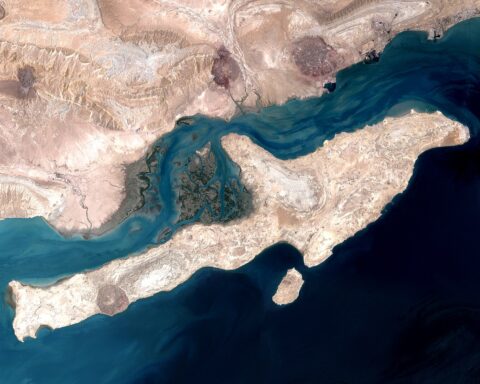
The PGSA fee covers all tanker traffic through a five-nautical-mile corridor between Qeshm and Larak islands. It auto-activates on August 18 without any Iranian decision, announcement, or diplomatic confrontation. At pre-war Saudi export volumes, the implied cost is approximately $5.5 million per day. The MOU itself, signed for a sixty-day period, nominally expires on August 16 — two days before the fee returns.
Ghalibaf operates in a negotiating environment where these deadlines reinforce his position rather than threaten it. The Wall Street Journal reported that President Trump privately told Defense Secretary Hegseth and General Caine he will not resume strikes and is comfortable with the August 18 deadline slipping. Iran’s chief negotiator knows, from leaked reporting, that Washington will not escalate if the clock runs out.
The Doha talks — the only active diplomatic channel — paused on July 4 for Khamenei’s funeral and are not expected to resume before July 9, consuming five of the forty-four remaining MOU days. The second Doha round ended with two process wins and no agreement on Hormuz fees, a pattern that burns calendar days without producing the deliverables Ghalibaf’s precondition list demands.
The PGSA was sanctioned by OFAC on May 27 under Executive Order 13224. Any shipper that pays the fee after August 18 violates US sanctions; any shipper that refuses risks Iran treating its transit as unauthorized. The dual-impossibility trap requires no Iranian enforcement action. It requires only the date to arrive.
The Commander Who Negotiates by Not Negotiating
Ghalibaf joined the Islamic Revolutionary Guard Corps as a teenager during the Iran-Iraq War, rising to chief commander of the IRGC Imam Reza Brigade by the early 1980s, according to his Britannica entry. He later commanded the IRGC’s 5th Nasr Division and, from 1997 to 2000, served as commander of the IRGC Air Force. CNN, in a March 2026 profile, described him as “a pillar of the Iranian establishment for nearly three decades” who has “spearheaded the war effort and led the high-stakes negotiations.” WION noted he “remained closely aligned with the IRGC” and “was an early supporter of Khamenei’s son, Mojtaba.”
The alignment with Mojtaba — now Supreme Leader, sixteen weeks into the role — gives Ghalibaf’s negotiating position a source of domestic authority that extends beyond the Majlis. The relationship has not been smooth. In April 2026, IRGC generals interfered in the composition of Iran’s negotiating delegation, and Ghalibaf attempted to resign after being reprimanded for trying to include nuclear issues in the Islamabad talks, according to Iran International reporting from April 24 and May 20. He returned as head of the team — a survival that required navigating between Mojtaba’s office, the IRGC’s operational commanders, and the parliament. The resignation gambit, whether genuine or tactical, established his willingness to walk away. That authority chain has become harder to read: Mojtaba’s absence from his father’s funeral ceremonies, confirmed by Iranian security services who said they cannot protect him, underscores how little of the Supreme Leader’s position has been consolidated into a visible governing presence. A dedicated analysis of the health verification gap — 120 days without an appearance, the May 8 “full health” claim, and the Article 176 ratification problem it creates — is available in the Mojtaba Khamenei health and governance analysis.
“Negotiation is a method of struggle. When we are negotiating with America, we are not negotiating with a friend; we are negotiating with a malicious enemy who will definitely take action against us whenever he finds an opportunity.”
— Mohammad Bagher Ghalibaf, July 1, 2026 (Tribune India / ANI)
The MOU itself, he told Fars News Agency in June, is “a record of America’s failure, and people will judge it.” The framing matters domestically: Ghalibaf presents the agreement not as a compromise but as evidence of American defeat, a position that makes any further Iranian concession a retreat from victory already declared.
On July 1, Iranian state television cut short a pre-recorded Ghalibaf interview. The censored segment covered IAEA inspections, frozen assets, and a purported $300 billion reconstruction credit, Iran International reported. Parliament members publicly complained about the cut. Ghalibaf had already stated publicly that Fordow, Natanz, and Isfahan are barred from IAEA access “under any circumstances” — a position hard enough that even state broadcasters appeared reluctant to air it without editorial intervention.
Frequently Asked Questions
Is the Islamabad MOU legally binding under international law?
The Islamabad MOU is a memorandum of understanding, not a treaty. It has not been ratified by the US Senate or the Iranian Majlis and does not carry the force of an executive agreement submitted under the Case-Zablocki Act, which requires the State Department to transmit binding international agreements to Congress within sixty days. Because no ratification occurred, its obligations are politically rather than legally enforceable — meaning that if either party walks away, the other’s recourse is diplomatic pressure, not litigation or automatic sanctions snapback. The Vienna Convention on the Law of Treaties, which governs binding agreements, does not apply.
Has Iran met the thirty-day demining deadline under Article 5?
The Article 5 demining deadline falls on approximately July 17, 2026 — thirty days from the June 17 signing. As of July 3, Iran has not publicly reported demining operations in the Strait of Hormuz, and no international body has verified mine clearance. The Joint War Committee of Lloyd’s Market Association continues to designate the entire Arabian Gulf as a Listed Area, a classification that maritime war-risk insurers historically take years to unwind regardless of the underlying military situation. Post-MOU war-risk premiums have fallen from a peak of 2.5-8 percent of hull value to approximately 1 percent, but remain elevated relative to pre-war rates.
What happens to Iranian oil exports if General License X is not renewed?
Iranian crude would revert to pre-MOU sanctions status, and dollar-denominated transactions through international banking channels would end. Iran would fall back on the shadow-fleet infrastructure it used before the war: ship-to-ship transfers, AIS-dark transits, and yuan-denominated settlements through Chinese teapot refineries. The Atlantic Council noted in June 2026 that Chinese state refiners were already exploring Iranian crude purchases through yuan payment networks. Pre-war Iranian shadow exports averaged roughly 1.3 million barrels per day, well below the 1.66 million bpd TankerTrackers.com reported under GL X authorization in June 2026.
On July 3, Ghalibaf moved from structural veto to explicit threat, warning that Iran would “resume proportionate actions” if the US and Israel failed to meet Article 1 Lebanon obligations during the July 4–9 diplomatic pause. HOS has the full account of the July 3 warning and what the pause means for the enforcement gap. The MOU’s silence on proxy forces has simultaneous consequences for Saudi Arabia: Houthi spokesman Saree issued a threat against Saudi airports and Aramco on July 3, operating outside any ceasefire architecture the MOU created.
How does Iran’s sequencing strategy compare to the JCPOA negotiations?
The 2015 JCPOA required Iran to reduce its enriched uranium stockpile to 300 kilograms, cap centrifuges at Natanz at 5,060, convert the Fordow facility to a research center, and grant expanded IAEA access — all before the main tranche of sanctions relief materialized on Implementation Day, January 16, 2016. Inspectors were in place before relief flowed. The 2026 MOU inverts this sequence: Iran demands relief first and defers nuclear engagement to Phase 2. The inversion mirrors the Bush-era deadlock of 2005-2008, when Iran refused to suspend enrichment as a precondition for talks — a position that prevailed when the Obama administration abandoned the precondition to open the channel that produced the JCPOA.
The hardliner position on fees became explicit on July 4, when Iran’s ambassador to China told the World Peace Forum that Hormuz tolls are “definite” and named China as a “friendly nation” eligible for preferential treatment. The friendly-nation carve-out announced in Beijing is the toll-governance corollary to the compliance veto: just as Ghalibaf’s five-article structure delays US obligations, the fee exemption architecture rewards alignment rather than neutrality, leaving Saudi Arabia exposed to the full $5.5M per day on August 18 with no pathway to exemption. The constitutional gap deepened on July 5 when Reuters sources confirmed the MOU signing-authority gap created by Mojtaba Khamenei’s physical incapacitation — injuries that prevented him from attending his father’s funeral despite requesting permission to do so.
The funeral itself added a further complication to Ghalibaf’s post-funeral position: the ceremony’s IRGC-managed emcee delivered a kill-threat against Trump from the official podium. How the incitement traps Ghalibaf between treaty and political survival is the direct follow-up to the compliance-veto dynamic this article traces. The Islamabad round adds a further layer: Pezeshkian arrives carrying a veto only Mojtaba can lift — a mandate whose conditionality gives every hardliner faction grounds to reject any outcome.