RIYADH — Iraqi Prime Minister Ali al-Zaidi arrived in the Saudi capital on 14 October and pledged that Iraqi territory would not serve as a corridor for attacks on the kingdom — the first visit by a foreign head of government since the Houthi missile strike on King Khalid International Airport killed 13 people on 10 October, according to the BBC and Al Jazeera. Al-Zaidi’s office stated Iraq’s “firm position is not to allow its territory to be used as a launching pad for any attacks or actions that affect the security of the kingdom.”
The promise arrives against a backdrop that tests its weight. The IMF projected a 3.3 per cent contraction of the Saudi economy for 2026, revised down from 1.7 per cent growth just three months earlier, according to The National. A Houthi missile set fire to three floors of Aramco’s Dhahran headquarters on the night of 13 October. And the Combating Terrorism Center at West Point assessed that at least 36 of Iraq’s approximately 65 to 70 Popular Mobilisation Forces brigades had demonstrably supported IRGC operations during the current war — raising the question of whether Al-Zaidi’s pledge can deliver what his government does not fully control.
Table of Contents
- The First Visit Since the Airport
- Why Did Al-Zaidi Publish His Case Before He Arrived?
- What Does the Corridor Pledge Actually Commit To?
- How Did the September Pipeline Attack Force This Meeting?
- Thirty-Six Brigades and Four Border Crossings
- Can a Dormant Pipeline Bind Baghdad to Riyadh?
- The Fiscal Ceiling Saudi Arabia Cannot Ignore
- Iran’s Parallel Channel
- FAQ
The First Visit Since the Airport
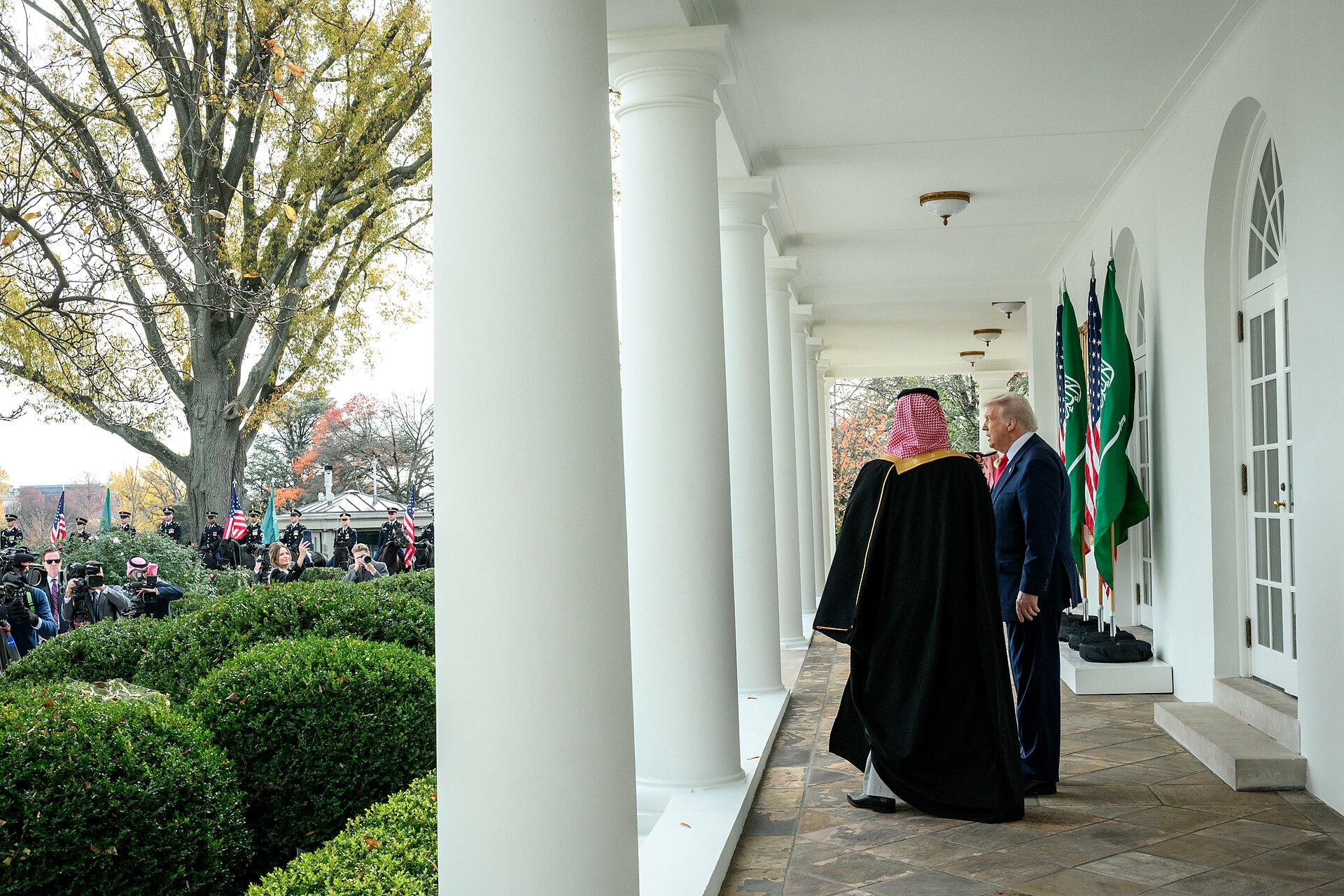
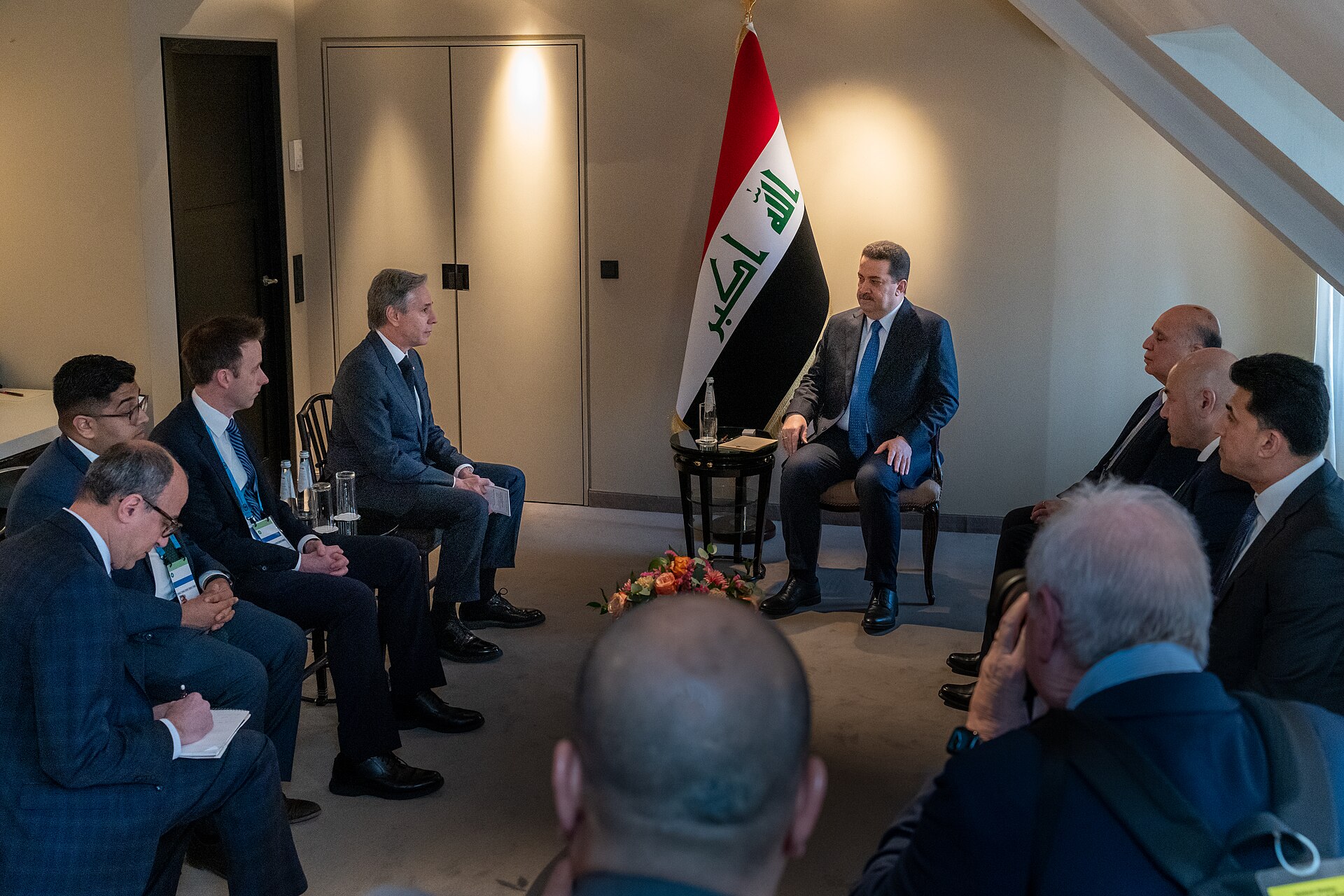
Crown Prince Mohammed bin Salman received Al-Zaidi in Riyadh on 14 October, according to The National. The meeting came four days after the deadliest single Houthi strike on the Saudi capital — a missile that killed 13 and wounded at least 308 people at King Khalid International Airport on 10 October, per the BBC and Al Jazeera. The airport remained closed at the time of Al-Zaidi’s visit. A further strike on 11 October killed a Pakistani resident and injured 11 at Terminal 4, CNN reported.
Al-Zaidi, at 41 the youngest prime minister in Iraqi history, took office in May 2026 as a compromise candidate from the Coordination Framework — the Shia electoral bloc that won Iraq’s November 2025 elections. He had no prior political office. Al Jazeera described him as a businessman selected specifically to avoid a US veto while not alienating Iran-backed factions within the bloc.
He arrived in a capital under fire. On the morning of 14 October, Aramco’s Dhahran headquarters was still dealing with the aftermath of a Houthi missile that struck the previous night, setting fire to approximately three floors of a tower block housing operations management. Bloomberg and the Saudi energy ministry confirmed the strike, reporting no casualties. Al-Zaidi denounced the King Khalid Airport attack, opposing “any harm inflicted on civilians and civilian facilities during conflicts,” according to Asharq Al-Awsat.
That Crown Prince Mohammed bin Salman chose to receive a foreign leader while his capital’s airport remained shut and his national oil company’s headquarters bore smoke damage was itself a signal. The visit served multiple audiences simultaneously: it demonstrated to Washington that Riyadh was pursuing diplomatic channels beyond the American track, it showed Tehran that Iraq’s government was engaging Riyadh at the highest level, and it gave Al-Zaidi domestic cover against PMF factions who would accuse him of subordinating Iraqi sovereignty to a Saudi demand.
The Middle East briefing 3,000+ readers start their day with.
One email. Every weekday morning. Free.
Saudi Arabia had summoned Iraq’s ambassador in April 2026 over drone attacks launched from Iraqi soil, per Arab News. The trajectory from ambassador-level summons to a head-of-government meeting took six months and required two crises — the July PMF strikes and the September pipeline attack — to produce the Riyadh visit.
Why Did Al-Zaidi Publish His Case Before He Arrived?
On the eve of his Riyadh visit, Al-Zaidi published an op-ed in Asharq Al-Awsat — a newspaper owned by the Saudi Research and Media Group. He called for mutual respect for sovereignty and a balanced foreign policy, argued that Baghdad and Riyadh had achieved measurable progress in rebuilding trust, and positioned Iraq as a potential intermediary between regional powers, according to HathalyoumEn’s 14 October reporting.
The sequencing was deliberate. By the time Al-Zaidi sat across from the crown prince, the Saudi media ecosystem had already carried his case. The corridor pledge he delivered in person was not a surprise — it was a formalization of a position his op-ed had previewed to Riyadh’s own readership on a Saudi-owned platform.
Dr. Abbas Al-Anbori, an adviser to Al-Zaidi, had told The National in July that “Iraq could be a door to Iran to be open to the West” and that nations must preserve Iraq’s “position in the middle between United States and Iran.” Al-Zaidi visited Washington and Tehran in the same week that month, according to The National. The dual visit — Washington one week, Tehran the next — was an exercise in positioning that only a technocrat without partisan baggage could attempt. A prime minister drawn from Kataib Hezbollah or Asaib Ahl al-Haq would not have been received in Washington. A figure perceived as a US client would not have survived the Coordination Framework’s internal politics.
Al-Zaidi’s value to every party lies in his absence of hard ideological commitments — a surface on which both capitals can project expectations, at least temporarily. The Asharq Al-Awsat op-ed extended that positioning from a stance articulated by advisers to a public argument authored by the prime minister himself, placed on a Saudi masthead before he boarded the flight to Riyadh.
What Does the Corridor Pledge Actually Commit To?
The language from Al-Zaidi’s office, quoted by Al Jazeera, stated Iraq’s “firm position is not to allow its territory to be used as a launching pad for any attacks or actions that affect the security of the kingdom and the countries of the region, and to be keen on adhering to the principles of good neighbourliness and respecting the sovereignty of Iraq and brotherly and friendly countries.”
This is not new language. In July 2026, Iraqi and Saudi officials had already emphasized sovereignty and a pledge that Iraqi territory would not be used to launch attacks against other states, according to a Centcom Citadel report on bilateral security cooperation. Interior ministry officials from both countries met in Riyadh in January 2026 to review their security cooperation agreement. What the October visit does is elevate that commitment from working-level diplomatic correspondence to a head-of-government undertaking.
What it does not do is name any group, specify an enforcement mechanism, or set a timeline. No joint statement was published after the meeting. No bilateral agreement text was released. The pledge exists in Al-Zaidi’s office communiqué and his op-ed — documents that carry diplomatic weight but impose no verifiable obligation.
The absence of a signed document is itself revealing. A formal communiqué would have committed Al-Zaidi to language that Iran-aligned factions within his governing coalition could use against him in Baghdad. A unilateral pledge from his office, by contrast, allows him to present the corridor denial as Iraq’s sovereign position — something he chose to state rather than something Riyadh extracted. The distinction matters in the Coordination Framework, where members of the bloc include factions whose militia wings are the very groups the pledge notionally constrains.
The operational question is not whether Al-Zaidi means what he says but whether the Iraqi state has the capacity to monitor the shared border with Iran, patrol the crossing points the CTC documented, and interdict weapons flows controlled by factions that command their own logistics networks and, in some cases, their own border-crossing arrangements with Iranian counterparts.
How Did the September Pipeline Attack Force This Meeting?
On 10 and 11 September, drones launched from Maysan province in southeastern Iraq struck Saudi Arabia’s East-West crude oil pipeline, causing fires and shutting down flows, according to Al Jazeera. The pipeline has a design capacity of approximately 7 million barrels per day and had become Saudi Arabia’s primary alternative to the disrupted Hormuz route. Saudi investigators confirmed the launches came from Iraqi territory, near the Sheeb border crossing with Iran.
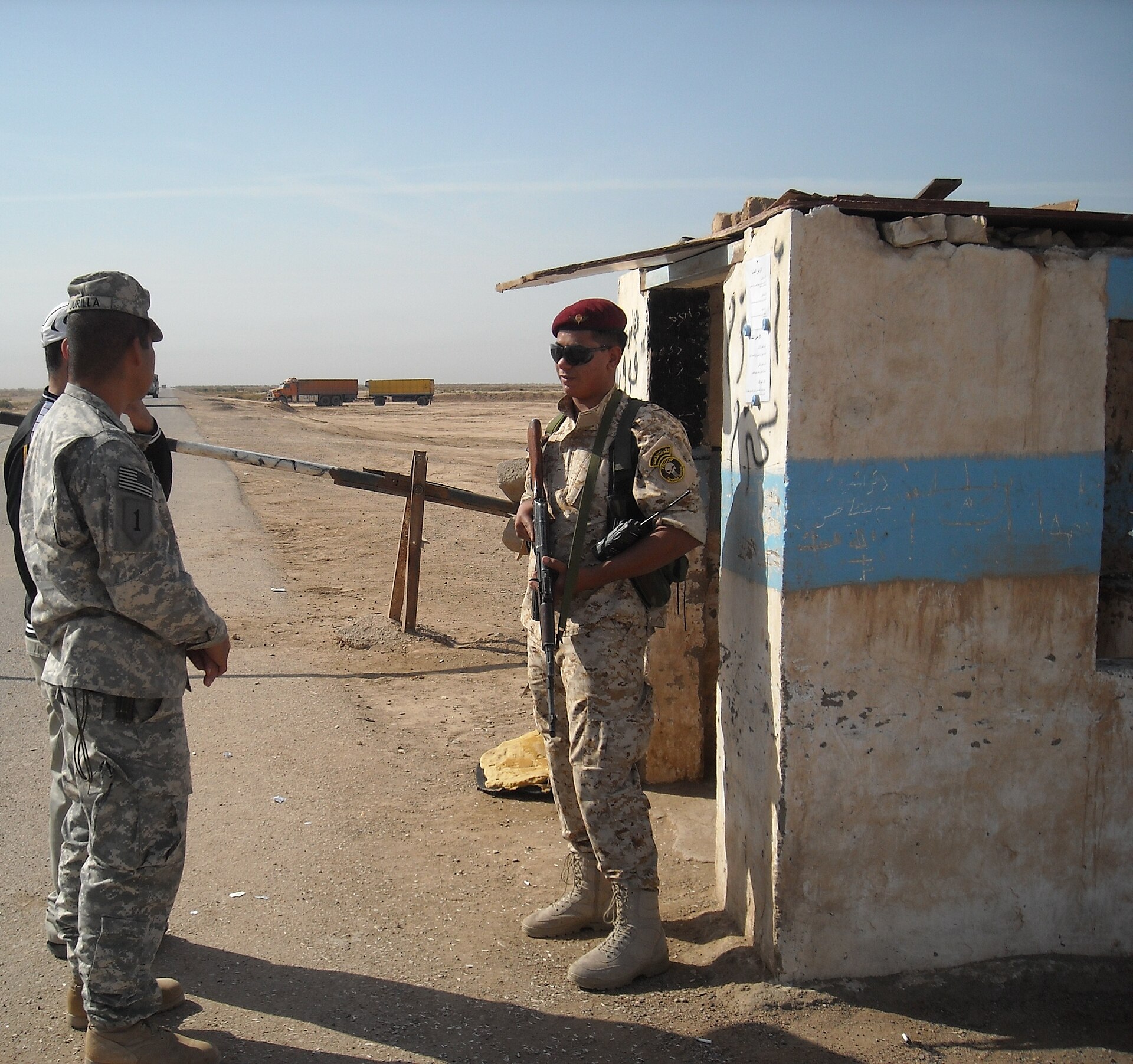
Iraq’s response was swift in form. Security forces seized a drone-launching platform in the al-Tayeb district of Maysan province, according to Al Jazeera’s 13 September report. The Maysan operations commander and provincial police chief were dismissed. Three border crossings with Iran were temporarily closed for security inspections. No group was formally charged. Baghdad invited Iran to join the investigation.
Lt. Gen. Saad Maan, Iraq’s military spokesperson, said Iraq adopts the principle of “preventive sovereignty” to prevent its territory being used as “a launching pad against any other country.” Analyst Salim Zakhour, cited by Al Jazeera, described the Saudi response as “political containment through the Iraqi government” — a deliberate choice not to retaliate militarily after Baghdad asked for time to act on its own.
The pipeline restarted on 22 September, according to Reuters. By 6 October, the Saudi energy minister said it was pumping 5.8 million barrels per day, per Al Jazeera. The visit Al-Zaidi made on 14 October was the diplomatic culmination of that restraint.
The Saudi decision not to strike Iraq again after the September pipeline attack — in contrast to the joint Saudi-US strikes of 29 July — reflected a calculation that the July escalation had produced the worst possible outcome: it killed PMF members, cancelled the Al-Zaidi visit, gave Baghdad reason to portray Saudi Arabia as the aggressor, and did not stop the drone attacks. The September restraint was not mercy. It was a bet that a visiting Iraqi prime minister delivering a public pledge would constrain cross-border operations more than another round of airstrikes that would push Al-Zaidi further from the table.
His original trip to Riyadh had been scheduled for late July. It was cancelled after joint Saudi-US airstrikes on PMF sites in Iraq on 29 July killed 20 PMF members and wounded 32, according to Al Jazeera. Iraq’s National Security Council condemned the strikes as a “flagrant violation of Iraq’s sovereignty.” The rescheduling required a three-month diplomatic reset — and a pipeline attack that gave both sides reason to return to the table.
Thirty-Six Brigades and Four Border Crossings
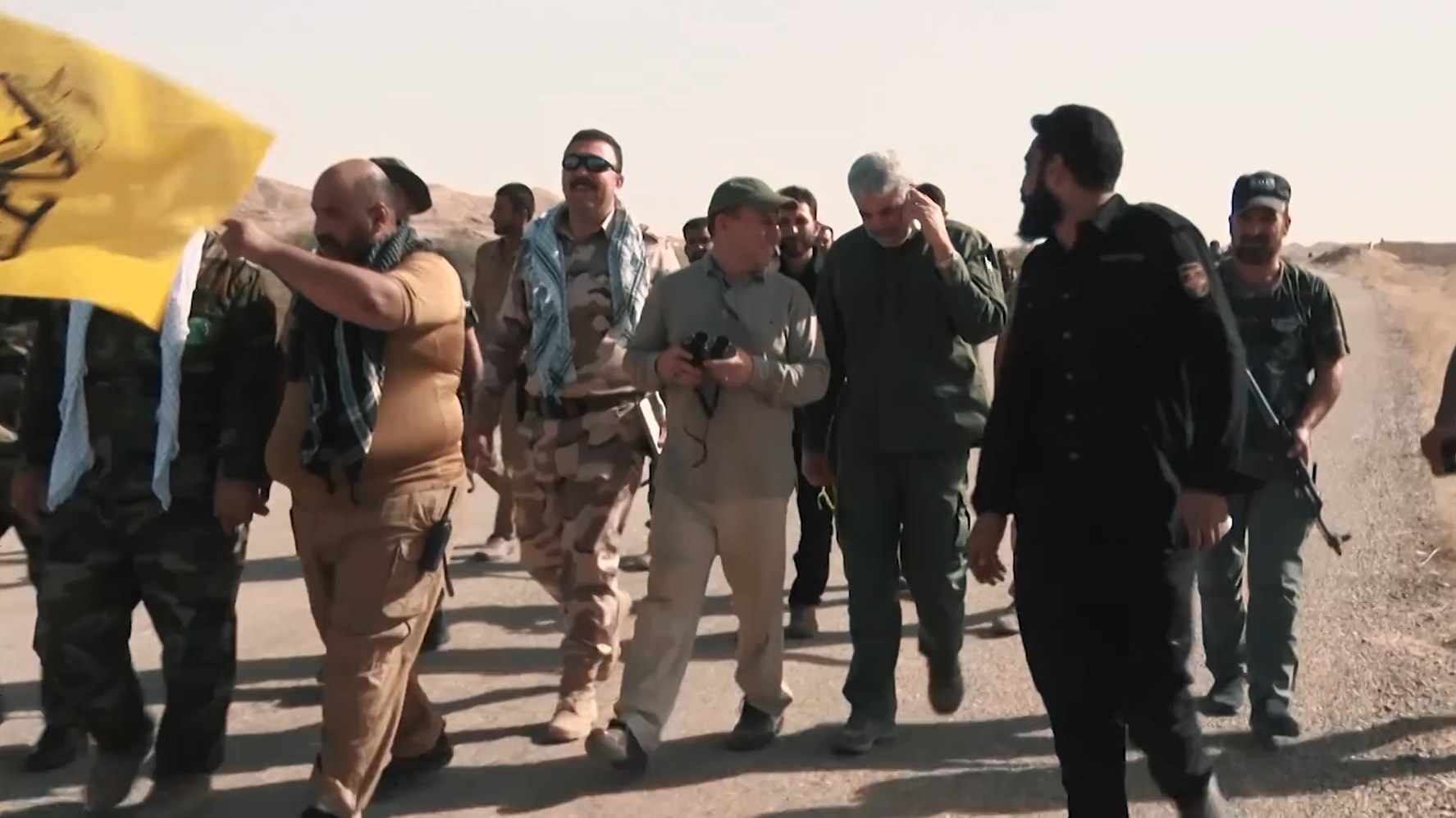
The enforcement gap behind Al-Zaidi’s pledge is structural. The PMF is formally a state institution under the Iraqi prime minister’s authority. In practice, the factions most aligned with Iran — Kataib Hezbollah, Asaib Ahl al-Haq, Harakat al-Nujaba, and the Badr Organization as the logistics backbone — respond to IRGC Quds Force direction, not Baghdad’s chain of command.
The CTC at West Point documented weapons entering Iraq through four crossings: Badra in Wasit province, Al-Sheeb in Maysan, and Mandali and Muntheriyah in Diyala. The Badr Organization, particularly PMF Brigade 27, functioned as the rear logistics element for IRGC-directed operations, controlling trucking routes and weapons distribution networks across the border zone.
Between late March and early April 2026, between 18,000 and 26,000 PMF personnel crossed into Iran — the largest documented cross-border PMF deployment of the war, per the CTC assessment. Drone attacks on Gulf states attributed to Iraqi territory during the conflict included three claims against Saudi Arabia, 16 against Kuwait, and 15 against Bahrain.
The geography compounds the politics. Maysan province, where the September pipeline drones were launched, shares a long border with Iran’s Khuzestan province. The Sheeb crossing — the point nearest to the al-Tayeb launch site that Iraqi forces seized — sits along one of the busiest informal trade routes between the two countries. Commercial truck traffic, pilgrimage travel, and weapons logistics share the same roads. Al-Zaidi can dismiss a provincial police chief for failing to prevent a drone launch. Dismantling the logistics network the Badr Organization has operated along that border for years would require a military confrontation with factions his government depends on for its parliamentary majority.
Al-Zaidi has launched a disarmament push since taking office, but Responsible Statecraft described it as “mission impossible” — a simultaneous attempt to satisfy three irreconcilable power centers. Tehran wants the Iran-aligned factions elevated. Washington wants them eliminated. Baghdad wants them accommodated within state structures. The Stimson Center assessed that militia groups were “hedging on disarmament” — complying selectively while preserving operational capacity.
Can a Dormant Pipeline Bind Baghdad to Riyadh?
The Iraqi Pipeline in Saudi Arabia, known as IPSA, has been dormant since 1991, when Saudi Arabia shut it after Iraq’s invasion of Kuwait. It runs from southern Iraq through Saudi territory to the Red Sea port of Yanbu. Iraq’s oil ministry spokesperson Sahib Bazoun confirmed in April 2026 that the ministry had “explored agreements to reactivate the Saudi pipeline,” according to a Foundation for Defense of Democracies analysis published in May.
A revived IPSA would give Iraq something no diplomatic communiqué provides: a Hormuz-bypass export route whose continued operation depends on Saudi consent. Baghdad currently exports through the Basra terminals on the Gulf and the Ceyhan pipeline through Turkey — both exposed to the current conflict. A Red Sea route through Saudi Arabia would diversify that exposure and create economic interdependence of the kind that makes corridor pledges self-enforcing.
For Saudi Arabia, the incentive runs in both directions. A revived IPSA would add Iraqi crude to Yanbu’s loading capacity at a moment when the kingdom’s own East-West pipeline is operating below its design capacity of 7 million barrels per day. Every barrel that reaches the Red Sea bypasses the Hormuz chokepoint that Iran controls. The pipeline’s route through Saudi territory gives Riyadh a physical lever: any future cross-border attack from Iraqi soil would threaten the export route that generates Baghdad’s oil revenue.
The FDD assessed the pipeline reactivation as “likely a pipe dream” in May 2026, citing security, maintenance, and political obstacles after 35 years of dormancy. But the war has rewritten the cost-benefit calculation. What was an unlikely infrastructure project in peacetime becomes a structural hedge in wartime — and Al-Zaidi’s visit may be the first meeting in which both sides had reason to discuss it seriously.
Al-Zaidi’s Riyadh visit was expected to include pipeline discussions, HathalyoumEn reported. No post-meeting coverage has confirmed whether the topic was raised or any agreement reached. The absence of any announced outcome on IPSA may reflect the visit’s security focus, or it may reflect caution: neither side would announce a pipeline deal while Riyadh’s own diversification strategy and Baghdad’s border governance remain works in progress.
The Fiscal Ceiling Saudi Arabia Cannot Ignore
The IMF’s October 2026 World Economic Outlook, published the day before Al-Zaidi’s visit, projected a 3.3 per cent contraction of the Saudi economy for the year. The July forecast had been 1.7 per cent growth — a five-percentage-point downward revision in three months, driven by prolonged Hormuz disruption and the cumulative toll of the conflict on oil shipments, according to The National and Middle East Monitor. The IMF does not expect a full return to pre-war Hormuz conditions until October 2027.
Saudi Arabia’s revised full-year 2026 deficit stands at 245 billion riyals, approximately $65.3 billion, according to the pre-budget statement reported by Reuters via Zawya. Goldman Sachs projects the war-adjusted gap at 6.6 per cent of GDP — roughly $80 to $90 billion when off-budget items are included, per Bloomberg. The IMF’s verdict on Vision 2030 amounts to a direct revision of the kingdom’s medium-term growth model.
IMF chief economist Silvana Tenreyro said the Gulf region’s economic resilience “is reaching its limits.” The Arab Center for Washington D.C. assessed that “even a return to the status quo ante of January 2026 will not restore the perception of the Gulf as a safe harbor for global capital and tourism.”
These numbers change the value Riyadh assigns to diplomatic channels. A kingdom growing at 1.7 per cent can afford to wait for an Iraqi pledge to produce operational results along the Maysan border. A kingdom contracting at 3.3 per cent, running a deficit that Goldman Sachs puts at up to $90 billion, has less margin to let any diplomatic opening — Baghdad included — drift without producing a measurable reduction in cross-border threats. The cost of patience is now denominated in quarterly GDP data, and the IMF publishes that data on schedule.
Iran’s Parallel Channel
Two days before Al-Zaidi arrived in Riyadh, Iranian Foreign Minister Abbas Araghchi called Saudi Foreign Minister Prince Faisal bin Farhan. Araghchi urged diplomacy, stating that “insisting on a military approach and disregarding a political solution would only further complicate the situation,” according to Al Jazeera. He offered Iran’s facilitation for talks between Riyadh and the Houthis.
The offer frames the Houthis not as a proxy Tehran will restrain but as a party whose interests Iran can represent at a negotiating table. It positions Tehran as mediator, not combatant — a framing at odds with the CTC’s assessment of IRGC operational integration with Iraqi militias and the cross-border logistics documented through Badra, Al-Sheeb, Mandali, and Muntheriyah.
The offer also carried a secondary message. By proposing to mediate between Riyadh and the Houthis, Araghchi was implicitly asserting that Iran has influence over Houthi decision-making — influence that could be deployed to reduce the attacks on Saudi airports and infrastructure. This is the dimension Al-Zaidi’s corridor pledge does not address. Even if Baghdad sealed its border with Iran tomorrow, the Houthi strikes that have killed 20 people at Saudi airports between 6 and 11 October, per the BBC, originate from Yemen, not from Maysan province. Al-Zaidi can promise to close the northern corridor. He cannot close the southern front.
The timing of Araghchi’s call relative to Al-Zaidi’s visit resists an innocent reading. If coordinated with Baghdad, it suggests Tehran is comfortable with the Al-Zaidi channel and wants to accompany it. If designed to pre-empt it, it suggests Iran views the Riyadh visit as a potential encroachment on its own diplomatic positioning — a direct Saudi-Iraqi track that bypasses Tehran’s role as interlocutor.
The Arab Center for Washington D.C. captured Riyadh’s strategic bind: “Neither outcome is fully congenial to the Saudi leadership, and neither lies within its power to determine.” Crown Prince Mohammed bin Salman cannot resolve the war through Iraq alone, and he cannot end the Hormuz crisis without some channel to Tehran. Al-Zaidi arrived offering one path. Araghchi’s call offered another. What neither offered was a mechanism to enforce the corridor denial that the 14 October meeting was built around — a gap that the IMF’s 3.3 per cent contraction makes more expensive to tolerate with every passing quarter.
Frequently Asked Questions
When were Iraq-Saudi diplomatic relations restored after the 1990 rupture?
Saudi Arabia closed its embassy in Baghdad in 1990 after Iraq’s invasion of Kuwait, beginning a 25-year diplomatic rupture. Relations were not formally restored until 2015. The rapprochement accelerated under Iraqi Prime Minister Mustafa al-Kadhimi between 2020 and 2022, and deepened under his successor Mohammed Shia al-Sudani. Interior ministry officials from both countries met in Riyadh in January 2026 to review an existing security cooperation agreement, per Centcom Citadel.
How does Saudi Arabia’s projected contraction compare to other Gulf economies?
The IMF’s October 2026 World Economic Outlook projected contractions across most of the GCC: Kuwait at negative 16.7 per cent, Qatar at negative 15.6 per cent, Bahrain at negative 11.3 per cent, the UAE at negative 3.9 per cent, and Saudi Arabia at negative 3.3 per cent, per The National. Oman was the only GCC economy to post positive growth, at 4.1 per cent, reflecting its geographic position outside the Strait of Hormuz chokepoint and its lower dependence on Gulf-side oil export infrastructure.
What is Saudi Arabia’s oil price fiscal breakeven?
Estimates vary depending on what obligations are included. The central government breakeven sits between $80 and $96 per barrel, according to Goldman Sachs and Wood Mackenzie figures cited by financial analysts. When off-budget spending through the Public Investment Fund is included — covering Vision 2030 megaprojects, NEOM, and other diversification commitments — the breakeven rises to between $108 and $113 per barrel. Brent crude stood at $102.94 on 9 October, per CNBC, placing the kingdom below its full-obligation breakeven.
Is Al-Zaidi also visiting Kuwait on this Gulf tour?
The Riyadh visit was announced as part of a broader Gulf tour that included Kuwait, according to Shafaq News’ reporting ahead of the visit. No coverage of the Kuwait meeting or its outcomes had been published as of 14 October. Kuwait’s Cabinet stated in a separate statement that Saudi security is “an inseparable part of the security” of Kuwait and the GCC, per Arab News.