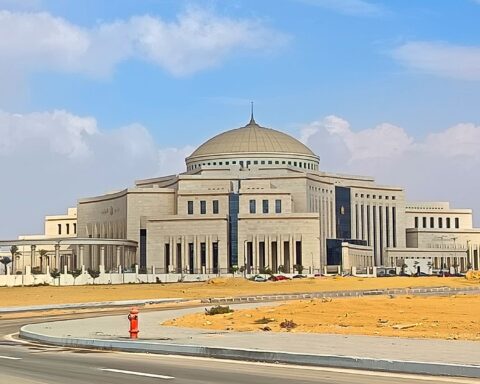
CAIRO — Egypt’s House of Representatives is convening behind closed doors on October 26 for a roll-call vote on whether to authorize President Abdel Fattah el-Sisi to deploy military forces to defend Saudi Arabia. The session, the third since emergency deliberations began on October 18, requires at least 398 of the chamber’s 596 members to vote yes under Article 152 of the 2014 constitution.
The vote arrives with $5.3 billion in Saudi deposits due to Egypt’s central bank this month, a Houthi warning letter on the speaker’s desk, and at least one party bloc ordered to abstain. Pakistan deployed troops to Saudi Arabia without a parliamentary vote; Turkey has not ratified the Makkah pact in its own legislature; Egypt is putting the question to elected representatives in a recorded, roll-call session — a step that neither Islamabad nor Ankara took.

Table of Contents
What Does Article 152 Require?
Article 152 of Egypt’s 2014 constitution is unambiguous: the president, as supreme commander of the armed forces, cannot declare war or send troops on a combat mission outside Egyptian territory without first consulting the National Defence Council and then securing a two-thirds majority in parliament. That consultation happened on October 18 when the NDC met at Al Ittihadiya Palace and approved “all necessary and possible forms of support” for Saudi Arabia’s defence, according to Gulf News. The parliamentary phase — the binding one — began the same day.
The House of Saud Daily Briefing
Saudi Arabia's news in 3 minutes, every morning. Free. See today's issue
The procedural mechanics are unusually transparent for the region. At least 30 members requested a roll-call vote by name under Article 325 of the House rules, meaning every MP’s decision will be recorded individually rather than by show of hands, Egypt Daily News reported on October 25. Abstentions, under Article 328, do not count toward or against the two-thirds threshold — a provision that functionally lowers the number of “yes” votes needed if a significant bloc chooses to sit the vote out rather than oppose it.
Speaker Hisham Badawi designated the October 26 session as a secret sitting under Article 130 of the House rules, which bars media coverage and public transcripts while deliberations are underway. The chamber has already held two prior sessions on the authorization: the emergency sitting on October 18 and a second session on October 19 that adjourned without reaching a decision, Al Jazeera reported.
The last time Egypt’s parliament voted on a comparable military commitment was January 2016, when members approved an extension of naval and air unit deployments to the Gulf area, the Red Sea, and the Bab al-Mandab strait. The vote was 415 for, zero against, according to Ahram Online — Egyptian forces had participated in the Saudi-led Yemen operation since March 2015.

Where Do Egypt’s Parties Stand?
The pro-government bloc commands a comfortable majority in Egypt’s House, but the road to 398 votes has exposed fractures the chamber rarely displays in public. Deputy Speaker Asem El-Jazzar told Vetogate that the “majority of MPs’ views during discussions lean toward approving the authorization,” a statement that acknowledged, if only implicitly, a minority that does not.
Ahmed Abdel Gawad, head of the Nation’s Future Party parliamentary group — the largest bloc in the House — has backed the request, Al Jazeera reported on October 19. Al-Nour Party deputy chief Galal Morra told Egypt Independent that “Egypt’s security is tied to Arab stability” and endorsed defensive coordination with Riyadh. The Republican People’s Party, with 25 seats, directed its bloc to support the authorization, according to Egypt Independent’s party-by-party survey.
| Party / Bloc | Seats | Position | Source |
|---|---|---|---|
| Nation’s Future Party | Largest bloc | Support | Al Jazeera, Oct 19 |
| Al-Nour Party | — | Support | Egypt Independent |
| Republican People’s Party | 25 | Support | Egypt Independent |
| Wafd Party | — | Support (individual dissent) | Alhurra |
| Egyptian Social Democratic Party | 11 | Abstain | Alhurra |
| Civil Democratic Movement | — | Reject | Alhurra |
The opposition, while small, has been vocal. The Egyptian Social Democratic Party, which holds 11 seats, directed its entire bloc to abstain, citing ambiguity over the mission’s objectives, duration, and cost to Egyptian citizens, Alhurra reported. MP Maha Abdel Nasser went further, announcing she would reject the authorization outright and objecting to what she called an “open mandate” without defined objectives, according to Egypt Independent. The Civil Democratic Movement, an opposition alliance, rejected any Egyptian role in a regional war and called for mediation instead.
“We’re talking only about defence.”
— President Abdel Fattah el-Sisi, Al Jazeera, October 19, 2026
Even within supportive parties, individual dissent has surfaced. Mohamed Abdel-Alim Dawoud, a Wafd Party MP, said on Facebook that he would abstain personally despite his party’s official backing for the deployment, Alhurra reported. Mostafa Bakry, an MP who supports the authorization in principle, told New Lines Magazine and Gulf News that Egypt still seeks a political solution.
The Soufan Center, in an analysis published on October 26, described the repeated postponements as evidence of “substantial dissension” within the chamber. The gap between the second session’s October 19 adjournment and today’s third sitting — a full week — was the longest interval in the three-session sequence.
The Houthi Warning Letter
Before Egypt’s parliament could deliberate in private, the Houthi-controlled government in Sanaa made its position public. Yahya Ali al-Ra’i, speaker of the Houthi-run Sanaa House of Representatives, sent a formal letter to Speaker Hisham Badawi urging Egypt’s parliament not to approve the deployment, New Lines Magazine and Alhurra reported. The letter warned that any Egyptian involvement posed “a great threat to its national security and domestic stability.”
Mohammed al-Bukhaiti, a member of the Houthi political bureau, extended the warning beyond direct combat. “Any form of participation, whether direct or indirect, minor or major, constitutes participation in the crime and injustice against Yemen,” al-Bukhaiti said, according to New Lines Magazine — a formulation broad enough to encompass logistics, intelligence sharing, and air defence cooperation.
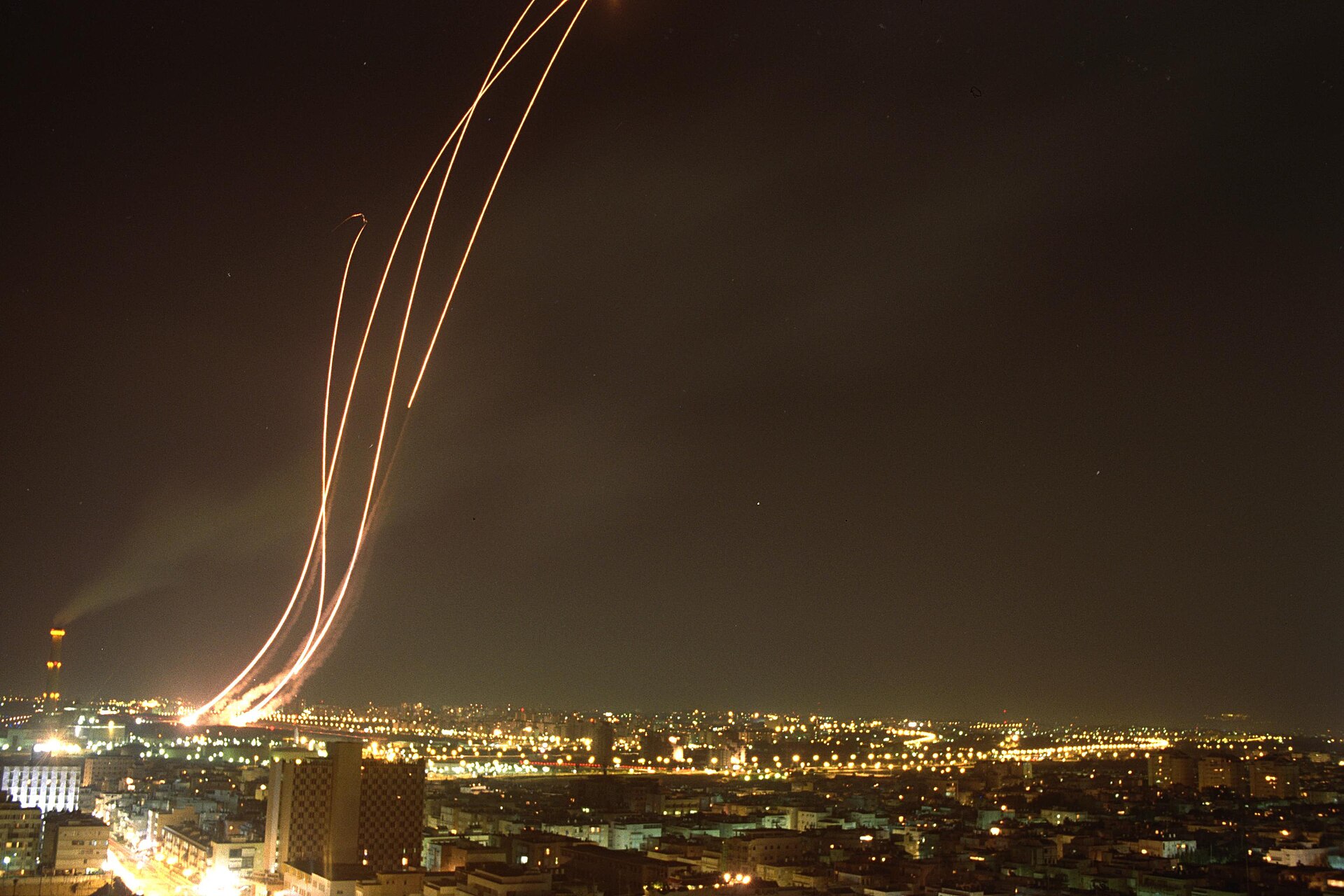
The warnings carry operational weight. Houthi forces have targeted Makkah and Madinah with missiles, launched salvos at southern Saudi cities that the coalition intercepted, and claimed drone attacks on Aramco pipeline infrastructure in recent weeks, according to coalition and Saudi government statements. Egypt’s own Suez Canal revenues have been a direct casualty of Houthi Red Sea shipping disruption since late 2023.
Iran’s foreign minister, Abbas Araghchi, reinforced the Houthi message from Tehran. “Any foreign intervention would complicate matters,” Araghchi told reporters, according to Alhurra.

The Economic Weight Behind the Vote
The authorization vote does not happen in an economic vacuum. Saudi Arabia was due to deposit $5.3 billion into Egypt’s central bank this month, plus $267.39 million in interest, Al Jazeera reported on October 19. Cairo’s fiscal position makes the timing impossible for any MP to ignore, even if no Egyptian official has drawn a direct line between the deposit and the deployment question.
The Suez Canal, Egypt’s other major foreign-currency artery, has been haemorrhaging revenue since Houthi attacks on Red Sea shipping accelerated in late 2023. Egypt’s Foreign Minister Badr Abdelatty put the cumulative loss at approximately $11 billion, according to Al Jazeera — a figure that represents years of foregone tolls.
Markets registered the tension on October 19, the day parliament held its second session. The EGX30 fell in early trading before recovering to close 0.4 percent higher, according to Al Jazeera.
Crown Prince Mohammed bin Salman met President Sisi in Cairo on September 15, after which Egypt’s presidency said Saudi and Gulf security was “inseparable from Egypt’s own,” Asharq Al-Awsat reported. That language foreshadowed the NDC’s October 18 declaration and the authorization request that followed four days later.
Pakistan Sent 8,000 Troops Without a Vote
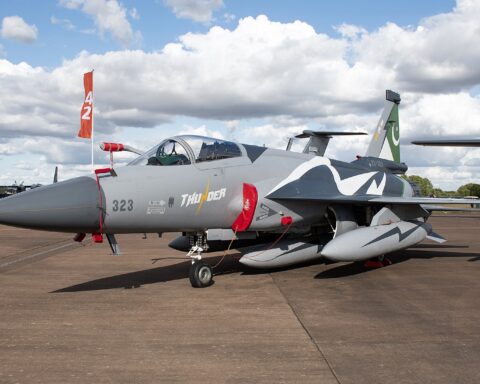
Egypt is not the first country asked to contribute forces to Saudi Arabia’s defence, but it is routing the decision through a public constitutional process that neither Islamabad nor Ankara used. Pakistan deployed approximately 8,000 troops to Saudi Arabia by executive decision alone, with no parliamentary vote and no public debate over the terms, according to Reuters. Pakistan’s defence minister later acknowledged that combat operations are “practically being conducted by Saudi Arabia’s own forces,” Al Jazeera reported on October 6.
The contrast is procedural as much as political. Egypt’s Article 152 route produces a parliamentary record — names attached to votes, parties on record, a constitutional paper trail — while Pakistan’s troops arrived in Saudi Arabia on the authority of the prime minister alone. Turkey, the third major Muslim-majority military power in the coalition conversation, has not ratified the Makkah Joint Defence Agreement in its parliament, Al Jazeera reported on October 6.
Three nations, three models: Islamabad’s executive shortcut, Ankara’s legislative silence, and Cairo’s full two-thirds constitutional vote. The Egyptian approach is the only one that puts the decision in front of elected legislators for a recorded, individual roll call — a process that carries democratic weight but also means every MP who votes “yes” will have their name on the record.
What Happens If Parliament Approves?
Approval, if it comes, would not by itself put Egyptian troops on Saudi soil. The authorization is conditional: Egypt would act only if Saudi Arabia formally requests support, and the mandate covers defensive operations inside Saudi territory, not offensive action in Yemen, according to New Lines Magazine and Al Jazeera. No formal Saudi request has been made public as of October 26.
MP Reda Abdulsalam told New Lines Magazine that any Egyptian role would be limited to “defending vital facilities” — a scope that could encompass air defence, critical infrastructure protection, and border security but would exclude ground offensives or cross-border operations. Effat El-Sadat, head of the Sadat Democratic Party, told Alhurra that standing with Saudi Arabia was compatible with diplomacy but warned that “mediation needs clear guarantees.”
Egypt’s Foreign Minister Badr Abdelatty has been pursuing a parallel diplomatic track, telling reporters that Cairo would explore “every opportunity” to resolve the Yemen conflict through negotiation, Alhurra and Al Jazeera reported. He discussed de-escalation with Iran’s foreign minister Araghchi — a channel that Egypt maintains even as its parliament debates a military mandate.
“Egypt is ready to take any measure Saudi Arabia requests to defend its security and sovereignty.”
— President Abdel Fattah el-Sisi, Gulf News, October 18, 2026
If the 398-vote threshold is not reached, the proposal can be brought back for another session under parliamentary rules. If a second attempt also falls short, the authorization is considered rejected — a result that would leave Sisi’s pledge of support to Riyadh without the constitutional backing to fulfil it.

Background and Timeline
The authorization process moved quickly by Egyptian legislative standards. President Sisi asked parliament to authorize a potential deployment within days of the National Defence Council’s October 18 approval, compressing three sessions into nine days.
The parliamentary timeline ran from the emergency sitting on October 18 through an inconclusive second session on October 19, and then to today’s third sitting a full week later. That gap gave party leaders time to consolidate positions — and gave the Houthi leadership in Sanaa time to send its warning letter to Speaker Badawi.
Egypt’s military has a recent history of Gulf operations. In March 2015, Egyptian forces joined the Saudi-led coalition in Yemen, deploying naval and air units. In January 2016, parliament approved an extension of that deployment unanimously, according to Ahram Online. The 2026 authorization debate comes in a different context: the Houthis are targeting Saudi airports, disrupting international air traffic to Riyadh, and threatening any country that joins the Saudi-led response.
Frequently Asked Questions
Has Saudi Arabia formally requested Egyptian military support?
No formal Saudi request has been made public as of October 26, 2026. The parliamentary authorization, if approved, gives President Sisi the constitutional authority to respond to such a request but does not itself trigger a deployment. The distinction matters: Egypt’s constitutional framework requires the request to come from Riyadh before troops can move, meaning a “yes” vote creates a standing authorization rather than an immediate deployment order.
What role has Al-Azhar played in the debate?
The Grand Imam of Al-Azhar — Egypt’s most senior religious authority — urged Arab and Muslim leaders to mediate the conflict and avert further bloodshed, Al Jazeera reported on October 19. The intervention added a religious dimension to the parliamentary debate, with the institution positioning itself on the side of diplomacy without explicitly endorsing or opposing the military authorization.
What forces did Egypt deploy during the 2015-2016 Gulf operation?
Egypt contributed naval and air units — not ground combat troops — to the Saudi-led coalition starting in March 2015. The January 2016 parliamentary vote authorized their continued deployment to the Gulf area, the Red Sea, and the Bab al-Mandab strait, according to Ahram Online. The 2026 authorization debate is broader in scope, covering a potential ground-force deployment to defend Saudi territory rather than a maritime and air support role.
Could the vote be postponed again?
Under the House rules, Speaker Badawi has the procedural authority to adjourn a session, as he did on October 19 when the second sitting ended without a decision. Repeated postponements carry political costs, however: the Soufan Center’s October 26 analysis described the delays as evidence of “substantial dissension,” and each deferral extends the period of uncertainty for Cairo’s relationships with both Riyadh and the Houthi-led government in Sanaa.
The House of Saud Daily Briefing
Saudi Arabia's news in 3 minutes, every morning. Free. See today's issue