KHAMIS MUSHAIT — Saudi-led coalition forces intercepted 10 Houthi ballistic missiles targeting southern Saudi Arabia on Sunday, coalition spokesman Major General Turki al-Maliki announced on X. The salvo forced civil defence teams into two governorates and raised fresh questions about how long Riyadh’s air defences can absorb fire at this rate.
The barrage came on a day when al-Maliki separately confirmed the interception of a cruise missile aimed at Khamis Mushait and the destruction of a ballistic missile and two drones over Riyadh. Two people were injured, and three residential buildings and seven vehicles were damaged by falling debris in the Asir region, according to Saudi Civil Defence via the state news agency SPA.
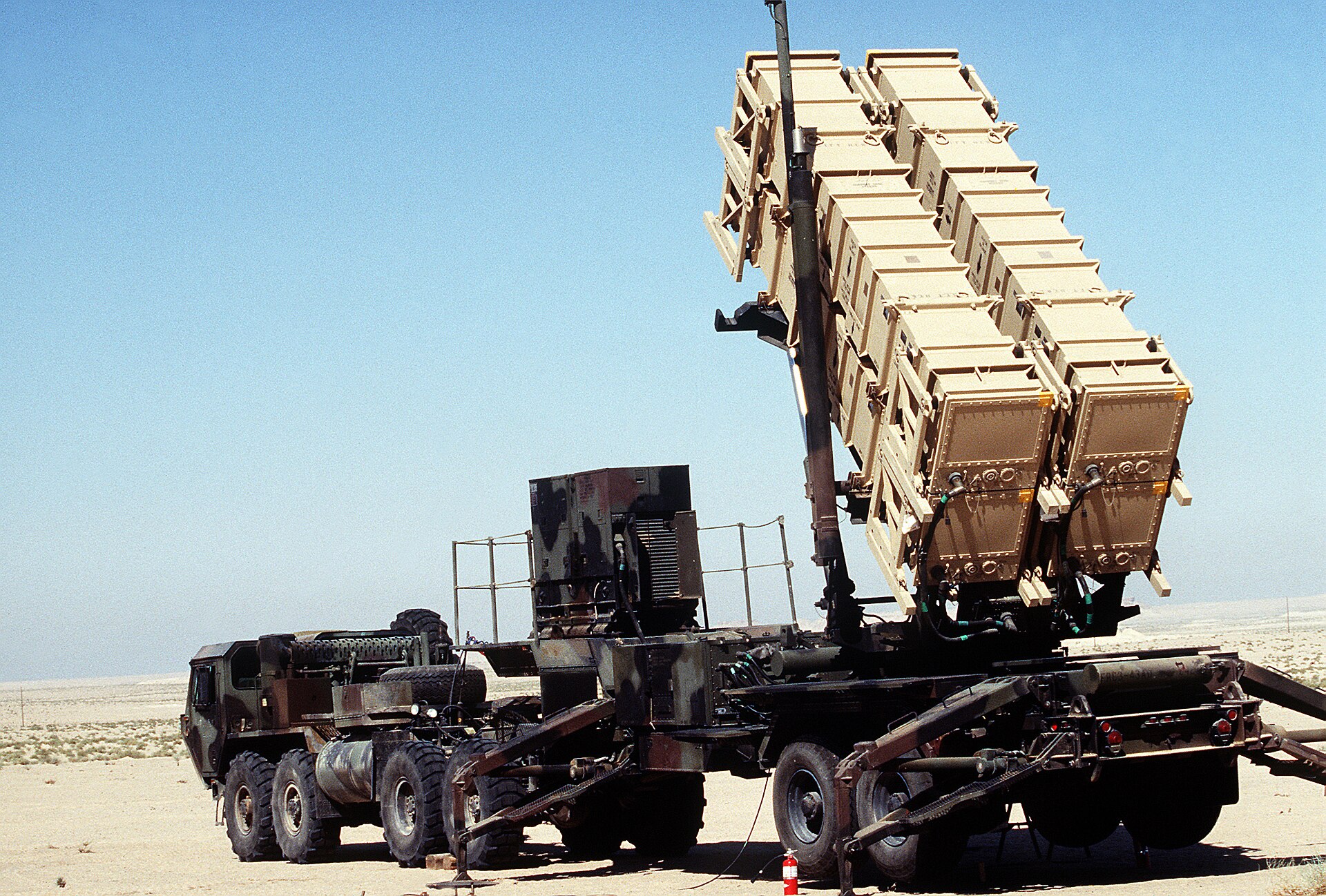
Table of Contents
What Did the Coalition Intercept?
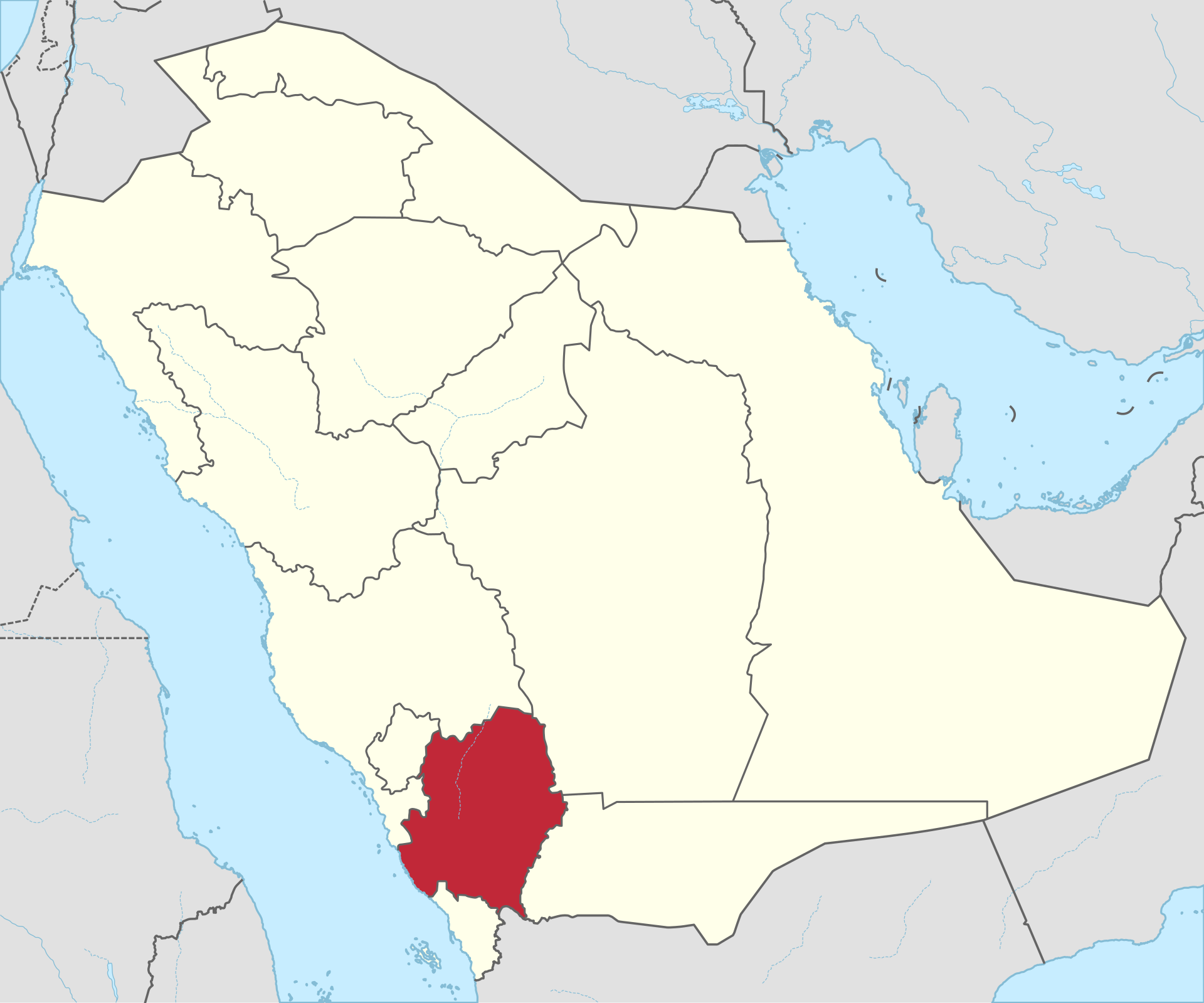
Al-Maliki said the 10 ballistic missiles were “successfully detected” and “intercepted and destroyed” before reaching their targets in Saudi Arabia’s southern region, according to Anadolu Agency via BERNAMA. He gave no further detail on the weapons’ origin point, their type, or the air-defence systems that engaged them. The coalition described the target geography only as the “southern region,” a designation that covers the provinces of Asir, Jizan and Najran — all of which sit within range of Houthi launch sites across the Yemeni border.
The House of Saud Daily Briefing
Saudi Arabia's news in 3 minutes, every morning. Free. See today's issue
The 10-missile announcement came after al-Maliki had already reported the interception of a separate cruise missile aimed at Khamis Mushait earlier the same day, according to Anadolu via BERNAMA. He also confirmed that coalition forces intercepted a ballistic missile and two drones targeting Riyadh, according to The National News. In total, the coalition acknowledged engaging 14 inbound projectiles on a single day — 11 ballistic missiles, one cruise missile and two drones — across the southern and central regions of the kingdom.
No source confirmed whether the 10 southern missiles were launched simultaneously in a single salvo or whether the coalition announced the cumulative result of sequential engagements over several hours. That distinction matters for the batteries involved: a simultaneous volley saturates a battery’s fire channels in a way that sequential launches do not.
Debris on the Ground
Saudi Civil Defence teams responded to incidents in Khamis Mushait and Ahad Rafidah governorates in the Asir region, SPA reported via Minute Mirror. Two people were injured — a Saudi citizen and an Asian resident — and three residential buildings and seven vehicles were damaged by debris from the intercepts. Ahad Rafidah has been repeatedly targeted by Houthi missile and drone attacks; an October 2 incident there saw debris from an intercepted ballistic missile injure one Asian expatriate and damage a prayer room and vehicles, according to Arab News Pakistan.
The National Early Warning Platform issued two alerts for Abha city and Khamis Mushait governorate on Sunday morning, The National News reported. The Khamis Mushait alert was the second that the platform had issued for the area that day. Civil Defence later said the danger had passed and urged residents to avoid gatherings and filming.
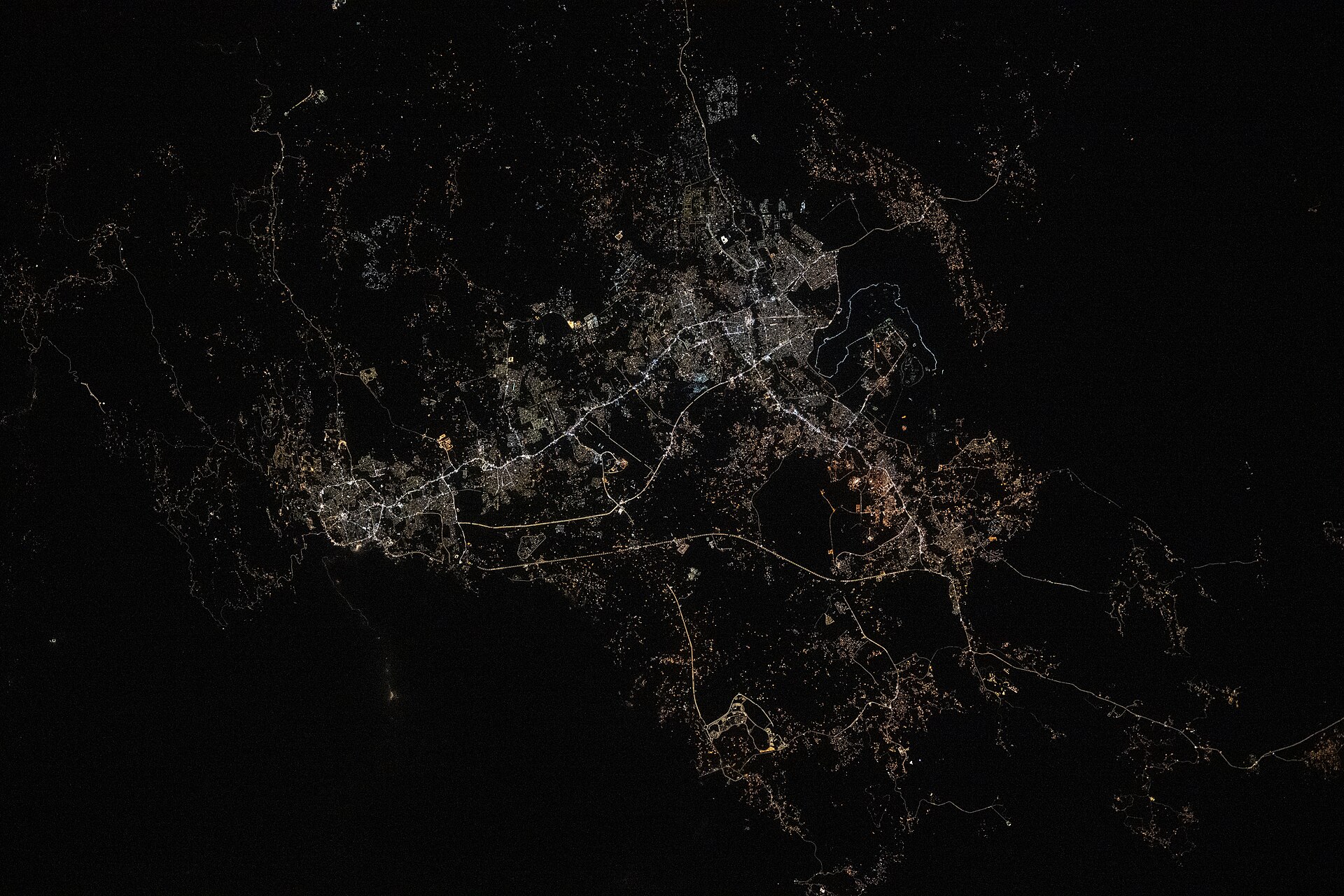
The injuries and damage reinforce a pattern that has held since mid-September: even successful interceptions produce ground-level consequences. Houthi strikes wounded 13 civilians in Khamis Mushait, Abha and Taif in mid-September, according to Khaleej Times. Debris from intercepted weapons continues to hit residential areas in the south, where cities sit closer to the Yemeni border and intercepts happen at lower altitudes.
What Does It Cost to Stop 10 Missiles?
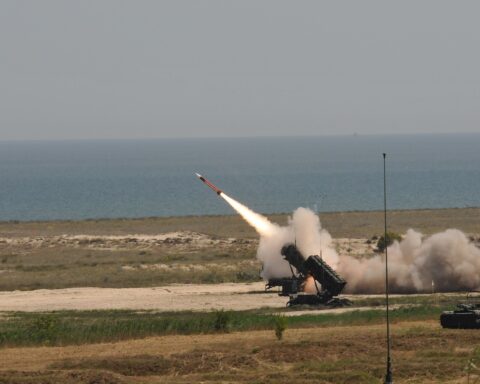
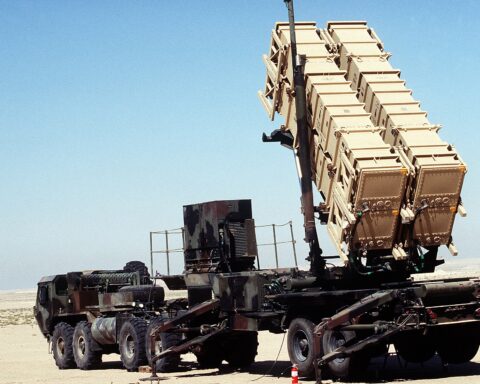
Standard Patriot engagement doctrine calls for a minimum of two interceptors per incoming ballistic missile target, according to defence publications. Some doctrine manuals and operational reviews cite two to four interceptors per target when missiles arrive in salvos, because the fire-control system hedges against a miss on the first shot. Ukrainian Patriot operators have achieved kills with single interceptors, but that reflects experienced crews firing at slower cruise missiles — not the standard operating procedure for ballistic threats.
Applied to a 10-missile volley, doctrine would require a minimum of 20 interceptors and potentially as many as 40. That range is a doctrinal estimate, not a confirmed expenditure: the coalition has never disclosed how many interceptors it fires per engagement, and no source gives a round count for Sunday’s interceptions. What is confirmed is the scale of the demand: 14 inbound threats in one day, across multiple batteries, in a war where the supply of interceptors is already under pressure.
Each PAC-3 MSE interceptor costs roughly $5 million, according to industry estimates published by defence outlets. Twenty interceptors — the doctrinal minimum for 10 ballistic missiles — would cost approximately $100 million at list price. The Houthi ballistic missiles they destroyed cost a fraction of that to produce and launch. The asymmetry is not new, but it compounds with every salvo.
How Long Do the Interceptors Last?
The Wall Street Journal reported this month that Saudi Arabia’s stock of Patriot interceptors is “running short” and estimated that fewer than 1,000 remain, according to UNI India. No other outlet has published a specific stock figure, and Riyadh does not disclose its inventory. Those are the only sourced characterisations of the kingdom’s air-defence reserves.
Saudi Arabia has asked regional and Western allies, including France, Britain, Egypt and Pakistan, for help replenishing its Patriot interceptor stocks, the WSJ reported. The shortage is undermining Riyadh’s ability to deter attacks, the paper reported. The United States approved a $9 billion sale of 730 PAC-3 MSE missiles on January 30, 2026, according to Open Magazine, but delivery status remains unconfirmed. Lockheed Martin’s PAC-3 MSE production framework currently produces roughly 600 interceptors per year, with a framework to scale to 2,000 per year, according to Army Recognition.
The US deployed two additional Patriot air-defence batteries to Gulf energy sites around October 1–2, citing concerns about Iranian retaliation, Axios reported via Army Recognition. One went to a major Saudi oil facility, the other to a Qatari gas facility. CENTCOM declined to comment. Those batteries bolster point defence at critical infrastructure, but they do not solve the problem of southern-tier batteries absorbing ballistic volleys at a rate that consumes interceptors faster than they can be manufactured and shipped.
Saudi Arabia’s stock of Patriot interceptors is “running short” and the shortage is undermining Riyadh’s ability to deter attacks.
The Wall Street Journal, October 2026, via UNI India
France confirmed the deployment of troops, radars and air defences to Yanbu on the Red Sea coast, according to Al Jazeera on September 25. Britain announced plans to fly defensive missions over Saudi Arabia, Bloomberg reported on October 21. Pakistan has approximately 8,000 troops in the kingdom, according to Reuters. All of these contribute to the broader air-defence picture, but Yanbu is on the western coast, Britain’s defensive missions cover central airspace, and the Pakistani deployment’s air-defence role has not been specified. None of these partner contributions have been confirmed as operating in the southern border tier where Sunday’s 10 missiles were engaged.
The Houthi Account
Houthi military spokesman Yahya Saree claimed the group targeted Najran Airport and Khamis Mushait Airbase with ballistic missiles and drones, according to ANI via the Tribune India. Khamis Mushait hosts King Khalid Air Base, a major Saudi military air base, and the Houthis have previously claimed a large-scale attack on the facility in September 2026. Saree said the strikes “hit their targets” — language the coalition directly contradicts by announcing successful interceptions.
Saree framed the attacks as retaliation for what he described as 100 Saudi airstrikes on Yemen in the prior 24 hours, according to Yahoo News via the Associated Press. He did not name the specific weapon types used in the southern salvo. His claims could not be independently verified.
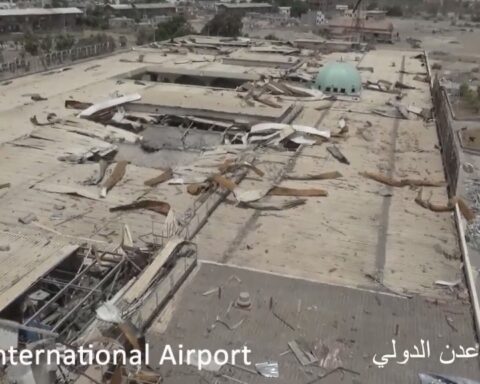
On broader targeting, Saree said the Houthis also struck King Khalid Airport in Riyadh and an Aramco facility in Yanbu, and renewed a warning that airlines should avoid King Khalid International Airport, calling it “a military target,” according to Al Jazeera. The Houthis separately denied Saudi claims that missiles had fallen near Mecca and Medina, calling them “a great and huge lie” and saying their “operations target Saudi oil facilities, bases, and vital military sites,” according to Al Jazeera.
On Saturday October 24, Saree had claimed a series of missile and drone operations against Saudi targets including airports, oil infrastructure and a military base, covering Riyadh, Yanbu, Rabigh, Dammam, Najran and Khamis Mushait, according to Yahoo News via the Associated Press. The breadth of the Houthi target list — airports, refineries, pipelines, air bases — suggests a campaign designed to stretch Saudi air defences across the widest possible geography, forcing batteries to defend everywhere at once.
Riyadh Airport Reopens Into the Same War
Saudi Arabia reopened two terminals at King Khalid International Airport on Sunday, roughly two weeks after the airport’s closure following Houthi attacks, The National News reported. The reopening came on the same day that a ballistic missile and two drones were intercepted over Riyadh — a reminder that the air threat to the capital has not diminished even as the government tries to restore commercial aviation. Travellers can check the latest on airport operations across the kingdom.
The US updated its travel warning on Saturday, citing Houthi missile and drone targeting of Saudi Arabia and 11 other regional countries. The State Department warned that attacks “have the potential to escalate rapidly beyond that immediate area,” according to The National News. Updated travel advisories and flight status are available for those monitoring the situation. The warning followed a week in which the Houthis struck or targeted Saudi airports, oil facilities, a military base and the Aramco headquarters in Dhahran on consecutive days.
Background
The Saudi-led coalition has been fighting Houthi forces since 2015, after the group seized the Yemeni capital Sanaa. The 2022 truce collapsed in July, and the Houthis escalated from strikes on southern cities to targeting Riyadh’s airport by September 19, when smoke rose near King Khalid International Airport, according to Reuters via the Kathmandu Post. Strikes on the airport between October 7 and 11 killed at least 20 people, according to CNN’s tallying of GACA statements. A Houthi strike on October 10 alone killed 12 and wounded 309, according to GACA statements reported by CBS and Al Jazeera.
Yemen’s government launched an offensive on October 4, with the coalition saying 100 jets flew in “Operation Dawn of Yemen,” according to the Oman Observer. The Mecca defence pact committee agreed to activate collective deterrence measures and deploy Pakistani and Turkish forces, according to Al Jazeera on October 6. Turkey’s parliament has not ratified the pact as of that date.
FAQ
Were the 10 missiles launched at the same time?
No source confirms the launch timing. Al-Maliki’s announcement gave no breakdown — he described the 10 missiles collectively as targeting Saudi Arabia’s “southern region” without indicating a launch sequence or duration. The coalition has disclosed neither how many batteries were engaged nor how long the engagement window lasted. That information would also tell analysts how many fire-control radars were committed to the southern intercepts at one time, but it has not been released.
Which air-defence system intercepted the missiles?
The coalition did not name the system or systems used. Saudi Arabia operates Patriot PAC-2 and PAC-3 variants, and the US deployed two additional Patriot batteries to Gulf energy sites in early October, according to Axios. Whether those deployments, or partner-contributed systems from France or Britain, played a role in Sunday’s southern intercepts is not confirmed.
Has the US offered to resupply Saudi interceptors?
Washington approved the sale of 730 PAC-3 MSE missiles worth $9 billion on January 30, 2026, according to Open Magazine. However, no source confirms that deliveries have begun. Lockheed Martin’s current production rate is approximately 600 PAC-3 MSE interceptors per year, with a framework to scale toward 2,000, according to Army Recognition. Even at full production, the lead time from contract to delivery is measured in years, not weeks.
What is the current toll from Houthi attacks on Saudi civilians?
Documented casualties from mid-September to October 25 include 13 civilians wounded in Khamis Mushait, Abha and Taif in mid-September (Khaleej Times), at least 20 killed in airport strikes between October 7 and 11 (CNN/GACA), and two more injured on Sunday (SPA via Minute Mirror). These figures count only incidents where Saudi authorities or independent outlets provided confirmed numbers; they exclude Houthi claims and incidents where only damage — not casualties — was reported. Every successful interception also risks debris injuries in densely built-up cities near the Yemeni border, where intercepts occur at lower altitude.
Are foreign troops defending southern Saudi Arabia?
Pakistan has approximately 8,000 troops in Saudi Arabia, according to Reuters. France confirmed troops, radars and air defences at Yanbu — on the Red Sea coast, not the southern border tier. Britain announced plans to fly defensive missions over Saudi Arabia, according to Bloomberg. No source specifies which, if any, of these partner forces are deployed in the Asir region where Sunday’s missiles were intercepted. The coalition has not disclosed whether allied personnel operate any of the air-defence batteries in the south.
The House of Saud Daily Briefing
Saudi Arabia's news in 3 minutes, every morning. Free. See today's issue