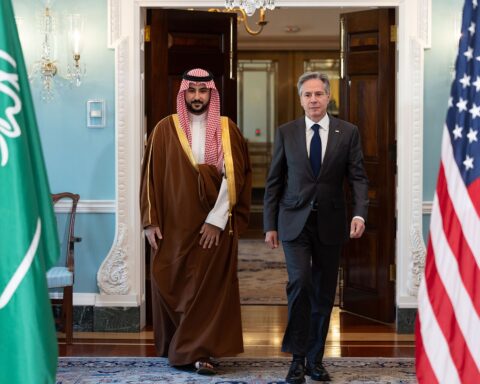

RIYADH — Prince Khalid bin Salman flew to Tehran on October 26 for the first joint visit to Iran by the three Makkah pact allies since the mutual-defence agreement was signed in August. He brought Pakistan’s army chief and Turkey’s intelligence director. He returned with an agreement to “continue discussions” — the language joint statements produce when nothing has been agreed.
The same day, CNN reported that US forces in the Middle East can execute “potentially major” operations against Iran within 96 hours of a presidential order. Most officials briefed on planning expect that order after the November 3 midterm elections. The New York Times reported that the United States and Israel have drafted joint post-midterm strike plans.
Saudi Arabia cannot stop Houthi attacks militarily — its interceptor stocks are running short. It cannot deliver a ceasefire through its own diplomacy — Tehran’s demands run through Washington. And it cannot veto a US strike whose consequences would fall hardest on Saudi infrastructure. Prince Khalid’s trip tested whether any of these constraints might bend. The joint statement from Tehran suggests they did not.
The House of Saud Daily Briefing
Saudi Arabia's news in 3 minutes, every morning. Free. See today's issue
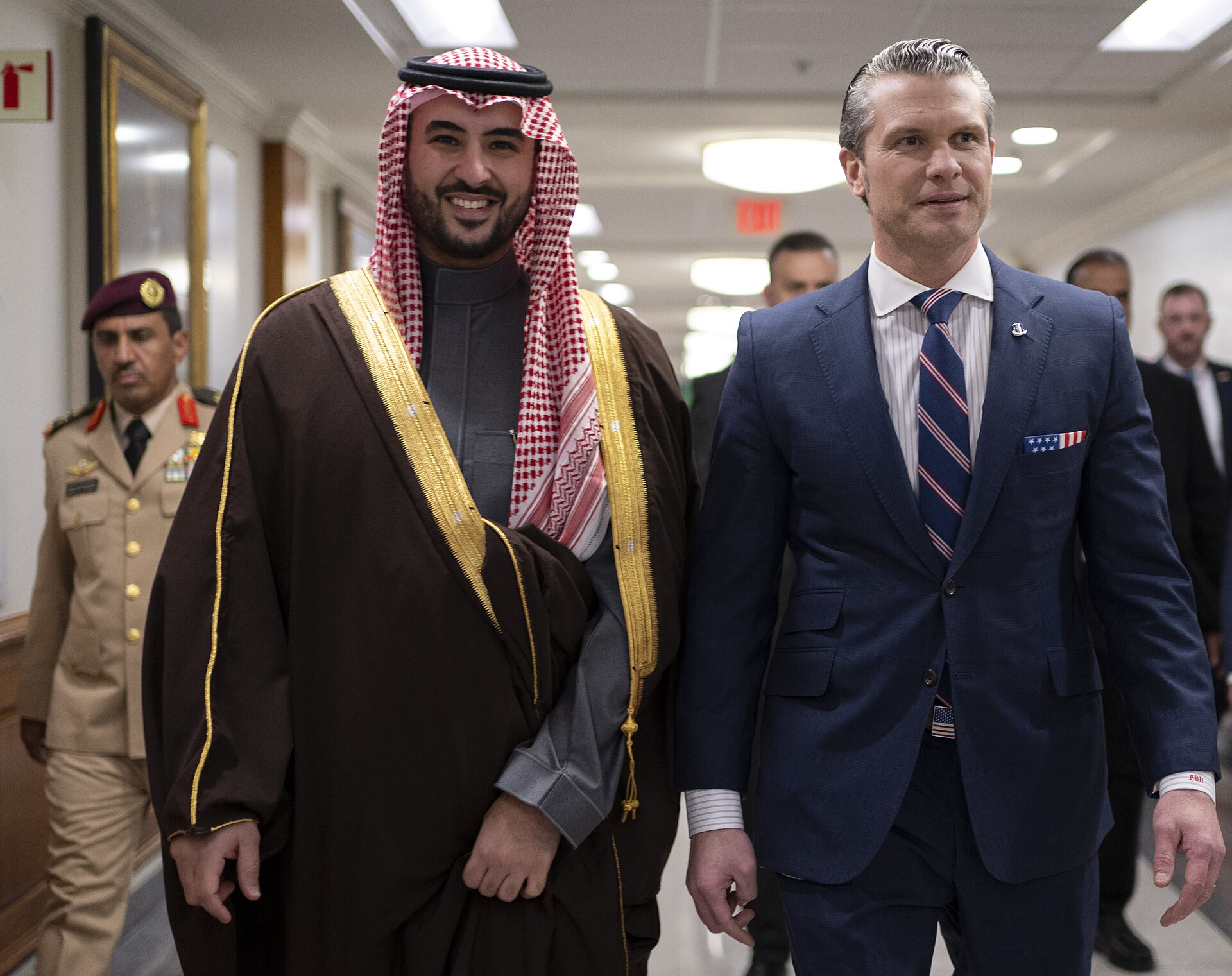
Table of Contents
- What Happened in Tehran on October 26?
- The Makkah Pact Arrives in Tehran
- Was Prince Khalid’s Visit Aimed at a Deal or at Washington?
- Iran’s Counter-Offer: Endogenous Security Without Foreign Forces
- Can Saudi Arabia Prevent a US Strike on Iran?
- The Military and Fiscal Cost of Exposure
- What Options Does Riyadh Have Left?
- Frequently Asked Questions
What Happened in Tehran on October 26?
Prince Khalid bin Salman, Pakistan Army Chief Field Marshal Asim Munir, and Turkey’s National Intelligence Director Ibrahim Kalin met Iran’s Supreme National Security Council Secretary Mohsen Rezaei in the first joint Makkah pact visit to Tehran. No ceasefire was reached. The parties agreed only to “continue discussions aimed at strengthening cooperation among the four regional countries,” according to Xinhua’s account of the joint statement.
The delegation was calibrated to signal seriousness without committing to specifics. Prince Khalid represented Saudi military authority. Field Marshal Munir — the operational head of the approximately 8,000 Pakistani troops deployed in Saudi Arabia, per Reuters — represented the pact’s only active force contribution. Kalin, rather than a Turkish military figure, represented Ankara’s preferred posture as intermediary rather than combatant.
Iran fielded Rezaei, whose portfolio spans the country’s military and intelligence apparatus — a hosting choice that framed the meeting as a security matter, not a diplomatic courtesy. Prince Khalid met President Masoud Pezeshkian separately, according to Xinhua. What was said in the room remains undisclosed. No official readout detailed Saudi Arabia’s proposals, and Iran’s public statements were confined to generalities.
Pezeshkian told the delegation that Tehran supports “any understanding that promotes regional unity, solidarity, security, and development.” He reiterated that Iran does not seek nuclear weapons. He did not address Houthi operations against Saudi Arabia — the issue that brought Prince Khalid to Tehran in the first place, and the one on which Iran’s silence speaks most directly to Saudi Arabia’s predicament.
Deputy Minister Rayed Krimly, who accompanied Prince Khalid, described the visit afterwards as supporting “de-escalation, dialogue and diplomatic solutions, complementing Qatari and Pakistani mediation.” The phrasing was notable for what it included: an acknowledgment that Saudi Arabia’s own diplomacy operates alongside, not in place of, other channels that Riyadh does not control.
The Makkah Pact Arrives in Tehran
The October 26 visit was the first time the three Makkah pact signatories presented themselves jointly to Iran since Mohammed bin Salman, Recep Tayyip Erdogan, and Shehbaz Sharif signed the mutual-defence agreement in Makkah on August 7. The pact’s mutual-defence clause treats an attack on one signatory as an attack on all. Turkey’s Foreign Minister Hakan Fidan, at the signing ceremony, said it was “not directed against Iran.”
That agreement was born from specific failures. The 2019 attacks on Saudi Aramco’s Abqaiq and Khurais facilities — attributed to Iran, never formally answered by the United States — demonstrated that Washington’s security umbrella was retractable. Saudi Arabia’s effort to secure a US mutual-defence treaty stalled when Washington tied it to Israeli normalisation terms Riyadh would not accept. Crown Prince Mohammed bin Salman made two direct appeals to President Trump in September for US strikes against the Houthis, according to CNN. Both were declined.
The Makkah pact was the alternative. Its October 5 emergency meeting in Riyadh activated rapid-deployment provisions and agreed on force transfers to Saudi Arabia, following intensified Houthi attacks. On the same day Prince Khalid was in Tehran, Egypt’s parliament approved a separate troop deployment to Saudi Arabia — a bilateral arrangement outside the pact’s formal structure.
| Date | Event | Outcome |
|---|---|---|
| August 7 | Makkah pact signed by Saudi Arabia, Pakistan, Turkey | Mutual-defence clause; Fidan says “not directed against Iran” |
| September (twice) | MBS appeals to Trump for US strikes on Houthis | Both requests declined (CNN) |
| September 25 | Araghchi presents 7-day roadmap for Hormuz reopening | Trump rejects it (WSJ) |
| October 5 | Emergency pact meeting in Riyadh | Rapid-deployment provisions activated |
| October 26 | First joint pact visit to Tehran | “Agreed to continue discussions” |
Turkey’s choice of delegate was itself a statement. Kalin is an intelligence official, not a military commander or foreign minister. Ankara has invested in the pact’s diplomatic utility — it provides a framework for Turkish influence in the Gulf — but has kept its military commitment deliberately vague. Turkey ratified the pact in late October and sent its intelligence chief to Tehran. It has not, however, announced troop deployments or committed air-defence assets. The distinction between political alignment and military exposure is the space in which Ankara operates.
The pact’s military substance remains thinner than its diplomatic ambition. Pakistan’s forces provide ground-based defence capacity. Turkey has committed intelligence and defence-industry cooperation but has not announced troop deployments. Egypt’s contribution adds manpower. None of these countries provides the advanced air-defence systems — Patriot PAC-3 batteries, THAAD units — that Saudi Arabia requires to sustain its interception rate against Houthi missiles. Those come from the United States, which has not announced additional transfers to the kingdom.
Was Prince Khalid’s Visit Aimed at a Deal or at Washington?
Multiple analysts suggest the trip served a dual purpose: testing whether Iran would accept terms that could forestall a US strike, and demonstrating to Washington that Saudi Arabia had exhausted its diplomatic options. If the talks produced a breakthrough, Riyadh would gain a ceasefire. If they failed, Washington would have fewer grounds for delay.
Andreas Krieg of MENA Analytica described the visit as “a significant diplomatic signal” — Riyadh “wants to influence events rather than wait for another escalation.” The characterisation implies initiative. The record suggests Saudi Arabia’s space for initiative has been narrowing for months.
Iran’s September roadmap, presented by Foreign Minister Abbas Araghchi, offered to reopen the Strait of Hormuz in exchange for the lifting of the US naval blockade, sanctions waivers, and the release of approximately $12 billion in frozen Iranian assets. Those are terms only Washington can deliver. The Wall Street Journal reported that Trump rejected the roadmap. SNSC Secretary Rezaei subsequently called the American response “insufficient.”
Saudi Arabia cannot deliver what Iran demands. It does not control US sanctions policy, naval deployments, or the disposition of frozen assets. What it could theoretically offer — direct financial inducements to the Houthis — remains in the realm of single-source reporting. Israel Hayom, citing anonymous Gulf diplomatic sources, claimed Riyadh offered $1 billion to the Houthis via Tehran to halt attacks. Saudi Arabia has not confirmed the figure. No second outlet has corroborated it.
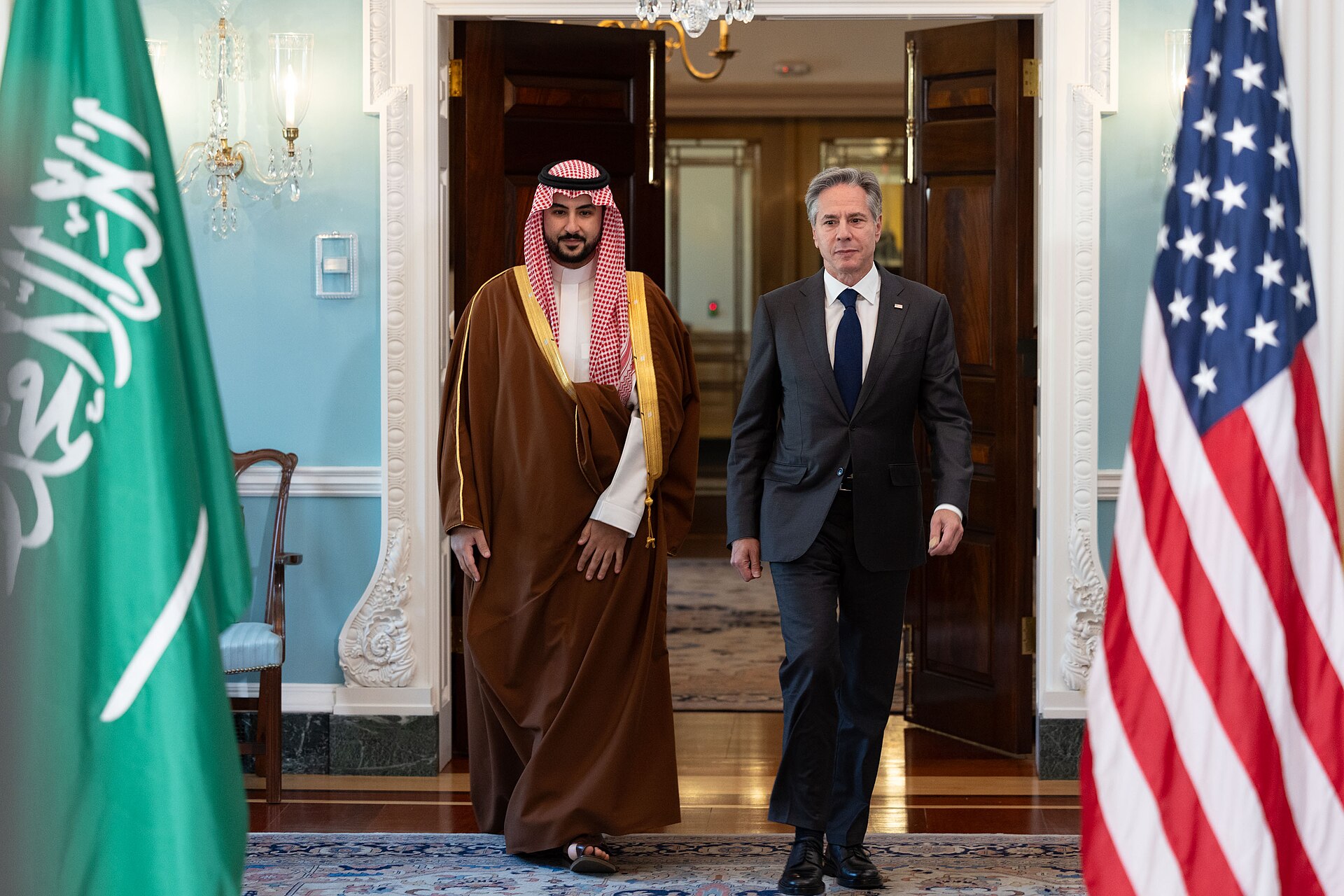
Hesham Alghannam, a Saudi security analyst, called the Tehran meeting a “final opportunity” to stop the crisis from widening. If that framing is accurate — and the absence of any scheduled follow-up talks lends it weight — then the question is no longer what Riyadh can negotiate but what Washington decides to do with the answer Tehran provided.
Iran’s Counter-Offer: Endogenous Security Without Foreign Forces
Iran’s public response to the delegation was warm in register and empty in commitment. Pezeshkian expressed openness to “any understanding.” He made no specific commitments regarding the Houthis, missile transfers, or attacks on Saudi oil infrastructure.
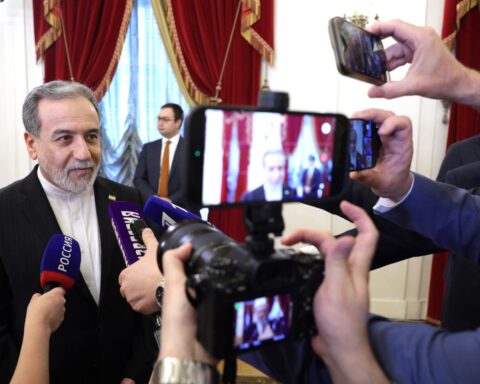
The operative Iranian position was articulated not inside the meeting room but alongside it. Ali Bagheri Kani, the SNSC deputy, framed the talks as implementing “endogenous security in West Asia” — a term of art in Iranian strategic discourse meaning regional states providing their own security without outside powers. In practice: without the United States.
Bagheri Kani restated that Washington must meet seven conditions before Tehran considers direct negotiations. Only three have been publicly disclosed — the lifting of the naval blockade, sanctions waivers, and the release of frozen assets. He said Iran could accept a compressed four-to-five-day implementation window, a detail suggesting Tehran has done the operational planning for a deal it will execute only with Washington, not with Riyadh.
The Strait of Hormuz’s “routes and management will not return to pre-war arrangements” — regional states must provide security without foreign forces.
Abbas Araghchi, Iranian Foreign Minister, October 25–26, 2026 (Xinhua)
Araghchi’s declaration that the strait’s governance is now a bargaining chip was the most consequential statement of the day. It announced that Hormuz’s future will not be negotiated bilaterally with Saudi Arabia or the Makkah pact. Since Saudi Arabia’s navy cannot secure the strait alone, and the pact lacks a naval component capable of doing so, the condition returns the problem to Washington — where Iran wants it.
The structure of Iran’s position has been consistent across every recent engagement: welcome Riyadh’s diplomacy, praise regional cooperation, and route every concrete demand through the United States. Araghchi’s earlier offer to “facilitate dialogue between Saudi Arabia and Yemen,” reported by the BBC on October 11, positioned Tehran as intermediary rather than party — the same manoeuvre, applied to the Houthis rather than the strait. In Bagheri Kani’s framework, the Makkah pact countries arrive in Tehran as visitors who cannot deliver what the host requires.
Can Saudi Arabia Prevent a US Strike on Iran?
Almost certainly not. Saudi Arabia has no veto over US military decisions, and its influence is structurally constrained by dependence on American weapons systems.
One CNN official described what was being planned as “a big effort.” Al Jazeera, citing Axios and Pentagon sources, reported that any renewed campaign would “go beyond efforts to simply ‘mow the lawn'” — targeting energy facilities, military sites, and nuclear infrastructure.
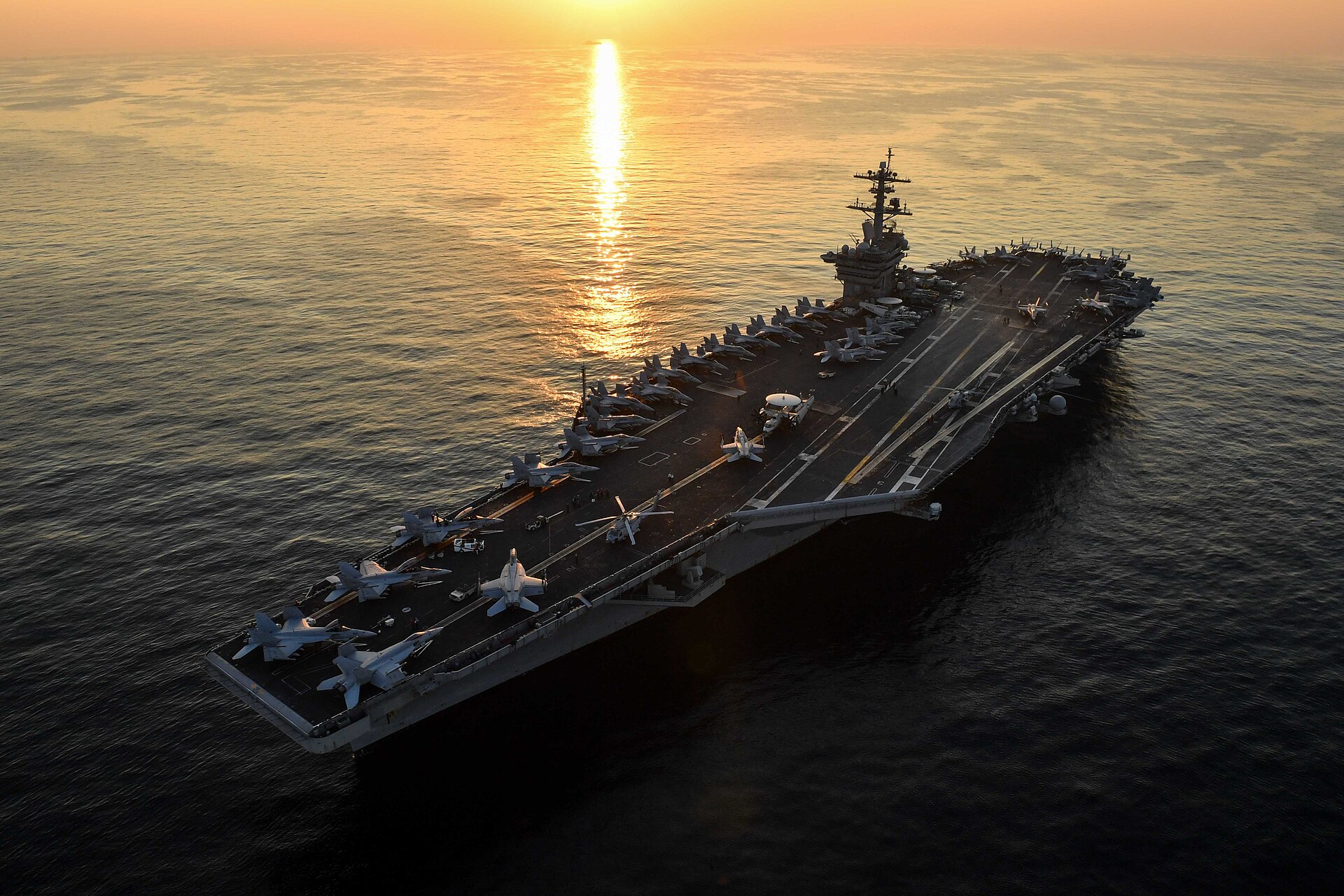
The reinforcements are already moving. The USS Theodore Roosevelt carrier group, approximately 10,000 additional soldiers, and the 13th Marine Expeditionary Unit are deploying to the region, with arrival expected by end of November, according to Al Jazeera.
Trump’s own signals have been dual. At a Friday rally he referenced Operation Epic Fury, the February 28 strike campaign. On Saturday he suggested strikes could come “tomorrow” while also floating “a big, beautiful agreement.” He stated: “Let them have a nuclear weapon — because they would use it.” The statements map no single trajectory.
Military advisers want to know what another escalation would achieve that earlier rounds did not, and “there has been no clear answer.”
Julie Norman, Chatham House, October 25, 2026 (Al Jazeera)
Norman described US strike planning as “both short-term deterrence and a real option after the midterms,” adding that Trump is “always keeping options on the table.” Her observation that the Pentagon cannot articulate what a new round of bombing would accomplish — given that previous rounds did not halt Iranian missile production or Houthi attacks — is the question that haunts Saudi planning too. A US strike that does not disable Iran’s retaliatory capacity leaves Saudi Arabia absorbing the response.
Marwan Muasher, vice president for studies at the Carnegie Endowment, assessed earlier this year that Saudi Arabia’s influence over Washington is limited. “It is also not easy to replace U.S. military equipment with Chinese or Russian options,” he wrote. Riyadh will continue seeking stronger US military ties despite frustration — which means it cannot credibly threaten to walk away from the relationship on which its air-defence architecture depends.
Mohamad Elmasry of the Doha Institute warned that the next round of strikes “could actually be more dangerous, more catastrophic than the previous round.” The distinction between previous rounds and what is now being planned is scope: earlier operations targeted military infrastructure; the emerging plans, per the Axios and Pentagon reporting, include energy facilities and nuclear sites.
The Military and Fiscal Cost of Exposure
While Prince Khalid was in Tehran, the war continued. Coalition forces intercepted three Houthi drones over Riyadh and southern Saudi Arabia on October 26. The previous day, Saudi forces intercepted two missiles targeting Makkah and Madinah. Earlier on October 25, a missile was intercepted during King Khalid International Airport’s reopening after a two-week closure.
Coalition spokesman Turki AlMalki stated that Saudi forces “continue the process of dismantling the ballistic missile network of the terrorist Houthi militia.” Coalition strikes destroyed Houthi missile launchers in Sanaa on October 26. But the rate of incoming fire has not slowed — the October 25 barrage of 10 missiles over southern Saudi Arabia was among the highest single-day totals of the conflict.
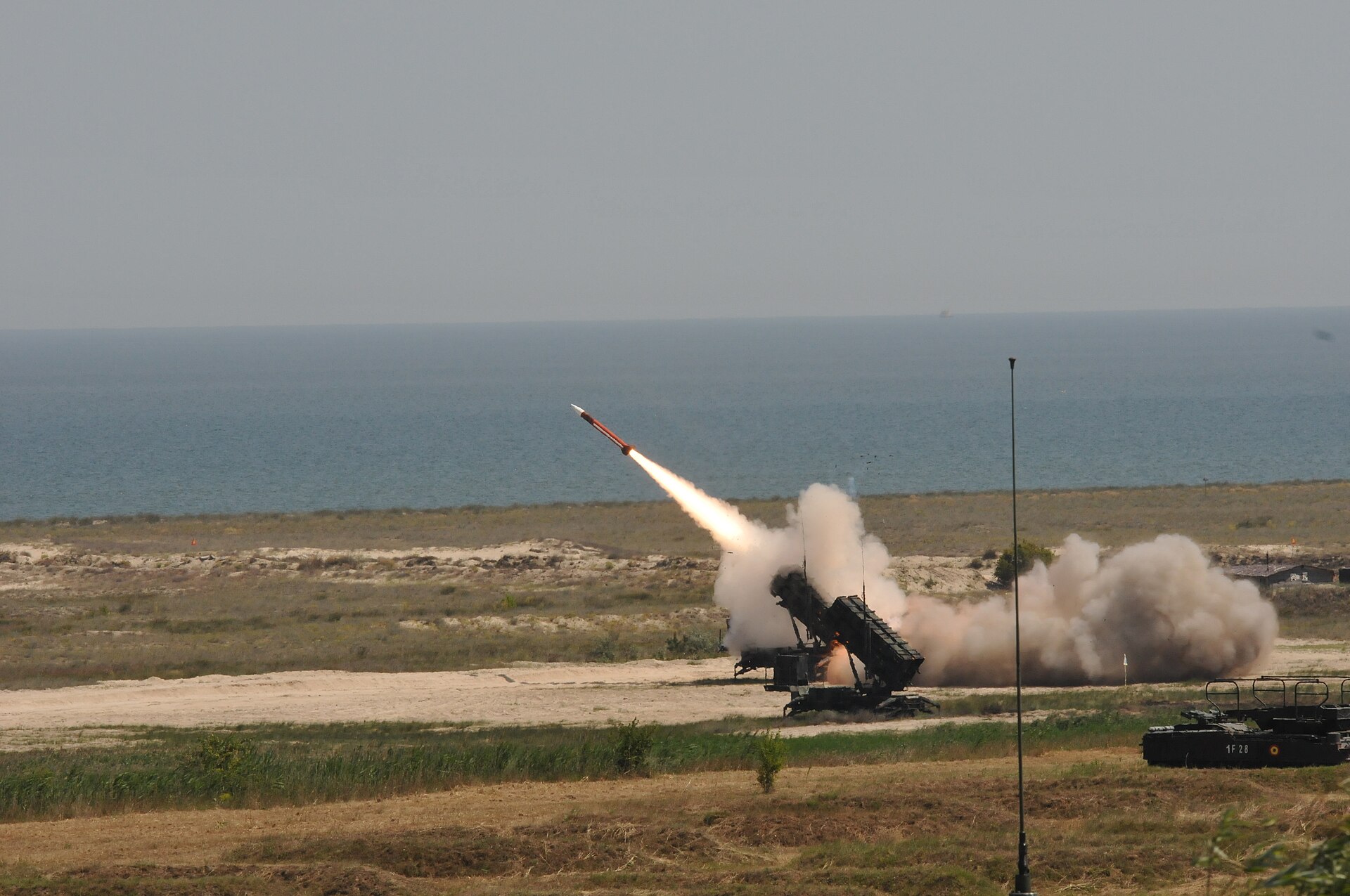
The interceptor arithmetic compounds with every engagement. The Wall Street Journal reported that Saudi stocks stand at “fewer than 1,000” and are “running short.” Each incoming missile or drone demands a response — often multiple interceptors per threat. The Makkah pact’s troop contributions do not address this deficit. Pakistan’s soldiers and Egypt’s approved deployment add ground-based capacity. Neither country contributes Patriot PAC-3 batteries or THAAD units. Those come from the United States.
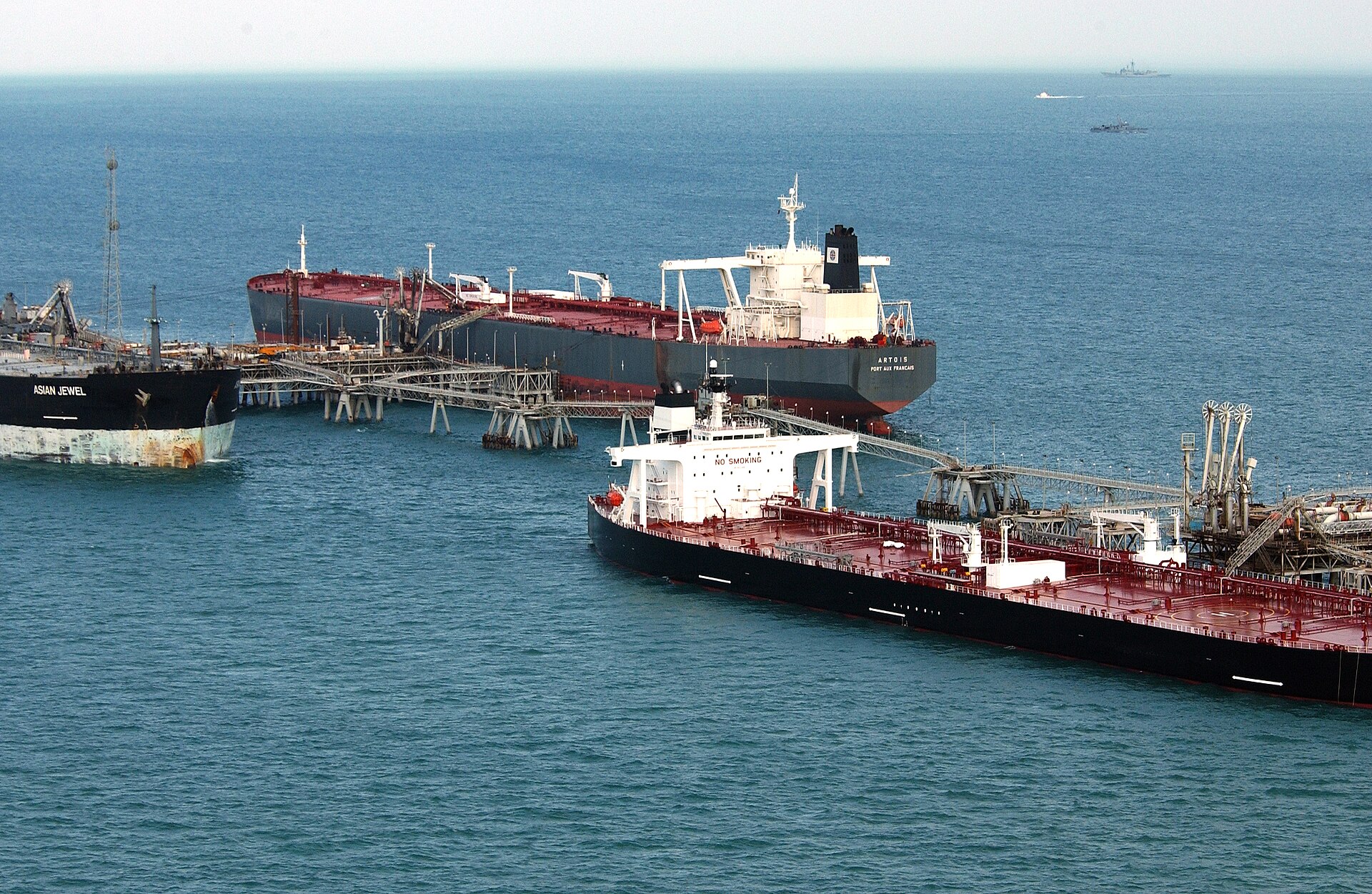
A US strike on Iran would intensify the interceptor problem. Iran’s April strikes on the East-West Petroline cut Saudi output by approximately 700,000 barrels per day, according to the Saudi Ministry of Energy — the single largest infrastructure loss of the conflict to that point. A post-midterm US campaign that provokes full-scale Iranian retaliation against Saudi targets would demand interceptor expenditure that the kingdom’s current stockpile may not sustain.
| Indicator | Figure | Source |
|---|---|---|
| Interceptor stocks | “Fewer than 1,000” — “running short” | Wall Street Journal |
| Oil export loadings decline | More than 70% (7.5 mb/d to ~2.1 mb/d) | OilPrice.com / JPMorgan / Aramco |
| 2026 fiscal deficit | 245 billion riyals (~$65 billion) | Reuters via Zawya |
| Hormuz tanker transits | 4/day vs. 85/day pre-war baseline | IMF PortWatch / straits.live |
| Brent crude (late October) | $114–117/barrel | Market data |
| Petroline output loss (April strikes) | ~700,000 bpd | Saudi Ministry of Energy (SPA) |
The fiscal picture compounds the military one. Saudi Arabia’s 2026 deficit of 245 billion riyals reflects the collision between reduced export volumes and a budget built for full-capacity production. Higher oil prices partially offset the lost barrels, but the arithmetic does not balance. Saudi Arabia’s fiscal model assumes export flows that no longer reach market.
The IRGC’s expansion of tanker disruption beyond Hormuz into the Gulf of Oman, reported this weekend, threatens the alternative routing some Saudi crude had used. Houthi attacks on East-West Pipeline pumping stations, also on October 26, placed the overland bypass under simultaneous pressure. Every export corridor that Saudi Arabia has tried to diversify through is now contested.
The postponement of the Future Investment Initiative summit to 2027 captured the economic mood. The stated reason was that 19 airlines were refusing to fly to Riyadh because of Houthi threats — a commercial verdict on Saudi Arabia’s security environment that no diplomatic communique can override.
What Options Does Riyadh Have Left?
Saudi Arabia’s remaining options are narrow: continue multilateral diplomacy through the Makkah pact and Qatari-Pakistani mediation, prepare its infrastructure and population for Iranian retaliation, or attempt to extract security guarantees from Washington before any strike is ordered. None offers a ceasefire on terms Riyadh controls.
ACLED’s analysis of Gulf state positions places Saudi Arabia between two poles: Oman and Qatar, which favour dialogue with Iran, and the UAE and Bahrain, which are most hostile to Tehran. Riyadh occupies the middle — bound to the Makkah pact’s collective-defence framework but unwilling to abandon the diplomatic track that the Tehran visit represents.
The mediation channels remain open. Qatar and Pakistan serve as the primary indirect connection between Washington and Tehran. Oman maintains what regional diplomats regard as the most trusted but least-used back channel to Iran. Saudi Arabia’s own bilateral channel — the one tested in Tehran on October 26 — appears to have reached its ceiling. Krimly’s language about “complementing Qatari and Pakistani mediation” reads, in retrospect, less like diplomatic courtesy and more like an acknowledgment of where the effective conduits actually run.
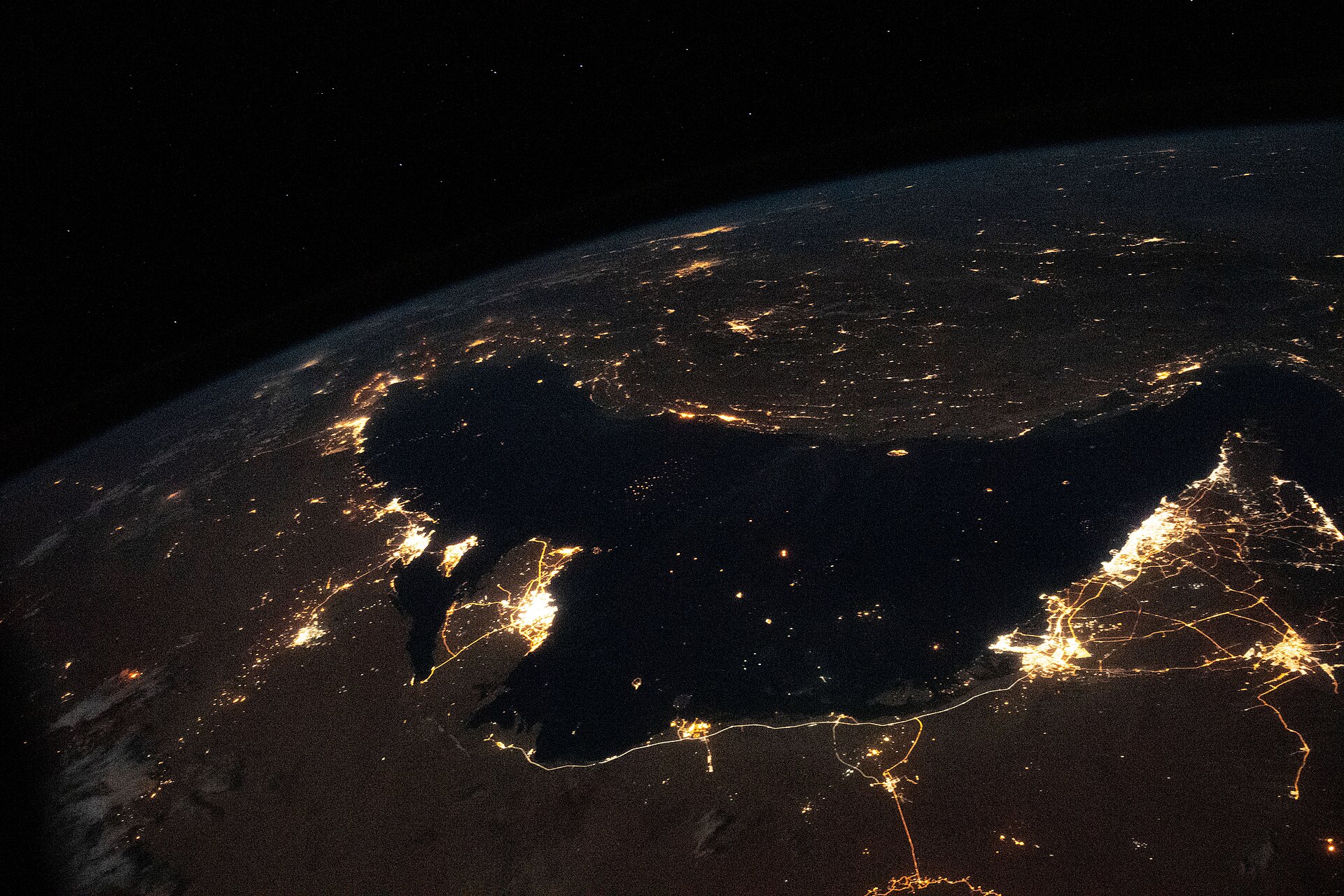
What remains is preparation of a kind that acknowledges diplomacy’s limits. The coalition’s October 5 rapid-deployment activation, Egypt’s parliamentary vote, Pakistan’s forces already in-country, the OPEC+ November 1 meeting where Saudi Arabia will confront a quota it cannot fill — these are the arrangements of a government positioning for the scenario in which the diplomatic track has not produced results by the time the decision moves elsewhere.
The question of security guarantees from Washington hangs over all of this. Trump ruled out strikes before November 3, according to The National. But no public commitment has been made to consult Saudi Arabia before ordering them, or to extend defensive support during the retaliatory phase. MBS’s two September appeals for US strikes on the Houthis — both declined — suggest that Washington and Riyadh are not operating from the same threat assessment. What Saudi Arabia needs most from the United States right now is not an attack on Iran but a guarantee of protection from the consequences of one. No such guarantee has been reported.
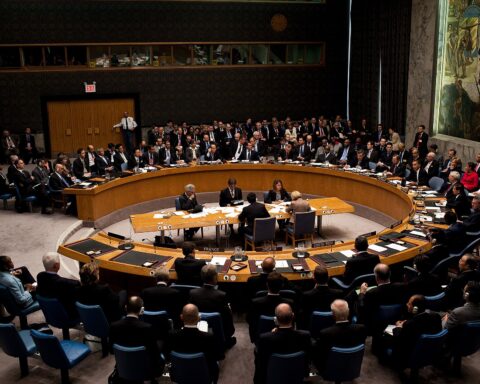
UN Secretary-General Antonio Guterres called it “essential to stop any escalation” and warned against “an overwhelming attack on Iran” and a reciprocal Iranian strike on Gulf states. The warning named what Saudi planners already know: in a US-Iran exchange, the kingdom is the most geographically exposed target in the region.
No follow-up round of Makkah pact talks with Iran has been publicly scheduled. CNN’s sources place US forces at 96 hours from launch readiness. Most observers briefed on planning expect a presidential decision after November 3. The interval between now and the midterms is defined by two timelines: one diplomatic, which produced no next appointment in Tehran, and one military, which has one.
Frequently Asked Questions
How many ships has the US naval blockade affected in the Strait of Hormuz?
CENTCOM reported that 135 ships have been turned around since the blockade began on July 14, according to CBS News. Pre-crisis, the Strait of Hormuz handled approximately 85 tanker transits per day, according to IMF PortWatch. By October 18, that figure had fallen to 4. The IRGC formally declared the strait closed on October 26. The disruption extends beyond oil — container and dry-bulk traffic transiting the strait has also been affected, contributing to the re-routing of global supply chains around the Cape of Good Hope.
What does Iran mean by “endogenous security in West Asia”?
Iran’s concept of “endogenous security” — framed by SNSC deputy Ali Bagheri Kani at the October 26 talks — holds that West Asian states should manage their own security without outside powers, meaning in practice without the United States. The framework positions Tehran as a regional guarantor and implicitly calls for the withdrawal of US military forces from the Gulf — the opposite of what Saudi Arabia’s defence architecture requires. It is Iran’s consistent answer to every Western-backed collective-security proposal for the region.
What is Operation Epic Fury?
Operation Epic Fury is the name associated with the US military campaign launched against Iran on February 28, 2026. Trump referenced the operation by name at a recent rally, using it as shorthand for the maximalist military option. His invocation of a specific operational name — rather than speaking generically about strikes — is read by analysts as a signal that planning for a repeat has advanced beyond the conceptual stage. Any renewed operation would, according to Al Jazeera’s reporting of Axios and Pentagon sources, target nuclear facilities, military infrastructure, and energy sites.
Who mediates between the US and Iran?
Qatar and Pakistan currently serve as the primary indirect channel between Washington and Tehran. Oman maintains a separate back channel that regional diplomats consider the most trusted but least frequently activated. Saudi Arabia’s October 26 delegation to Tehran attempted to open its own direct line, but the outcome — an agreement to keep talking, with all of Iran’s concrete demands directed at Washington — reinforced the existing mediation structure rather than replacing it. The Qatari diplomatic shuttle was credited with creating the opening for the Tehran meeting itself.
The House of Saud Daily Briefing
Saudi Arabia's news in 3 minutes, every morning. Free. See today's issue