
DHAHRAN — Saudi Arabia’s oil export routes face simultaneous threat from three directions. The Islamic Revolutionary Guard Corps said on October 9 that enforcement against non-compliant tankers would no longer be limited to the Strait of Hormuz, Euronews reported. Tanker transits through the strait fell to four per day by October 18, from a pre-war baseline of approximately 85, according to IMF PortWatch data. On October 26, the Houthis claimed drone attacks on pumping stations along the East-West Pipeline, Saudi Arabia’s primary bypass for the strait the IRGC formally declared closed the same day. IRGC adviser Mohammadreza Naqdi said Iran would pursue enforcement “including passages along Oman’s coast,” The National reported on October 13, citing Fars News Agency.
Every major Saudi export artery is under pressure at once. Saudi crude loadings have plunged 72 percent since January, OilPrice.com reported citing JPMorgan and Aramco data. War-risk insurance for a Hormuz transit has risen more than tenfold since the conflict began, according to Marsh. Iran’s non-compliant vessel list has grown from 46 ships in August to 124 by late October, creating an enforcement regime that deters tanker traffic even without kinetic action against every hull.
Table of Contents
- Three Routes, Three Threats
- How Did Hormuz Go From 85 Ships a Day to 4?
- What Does the IRGC Mean by “Beyond Hormuz”?
- The East-West Pipeline Under Fire
- What Does War-Risk Insurance Cost a Tanker Today?
- Is the PGSA Non-Compliant List a Second-Order Blockade?
- Can Saudi Arabia Still Export Enough Oil?
- What Happens If All Three Routes Close?
- Frequently Asked Questions
Three Routes, Three Threats
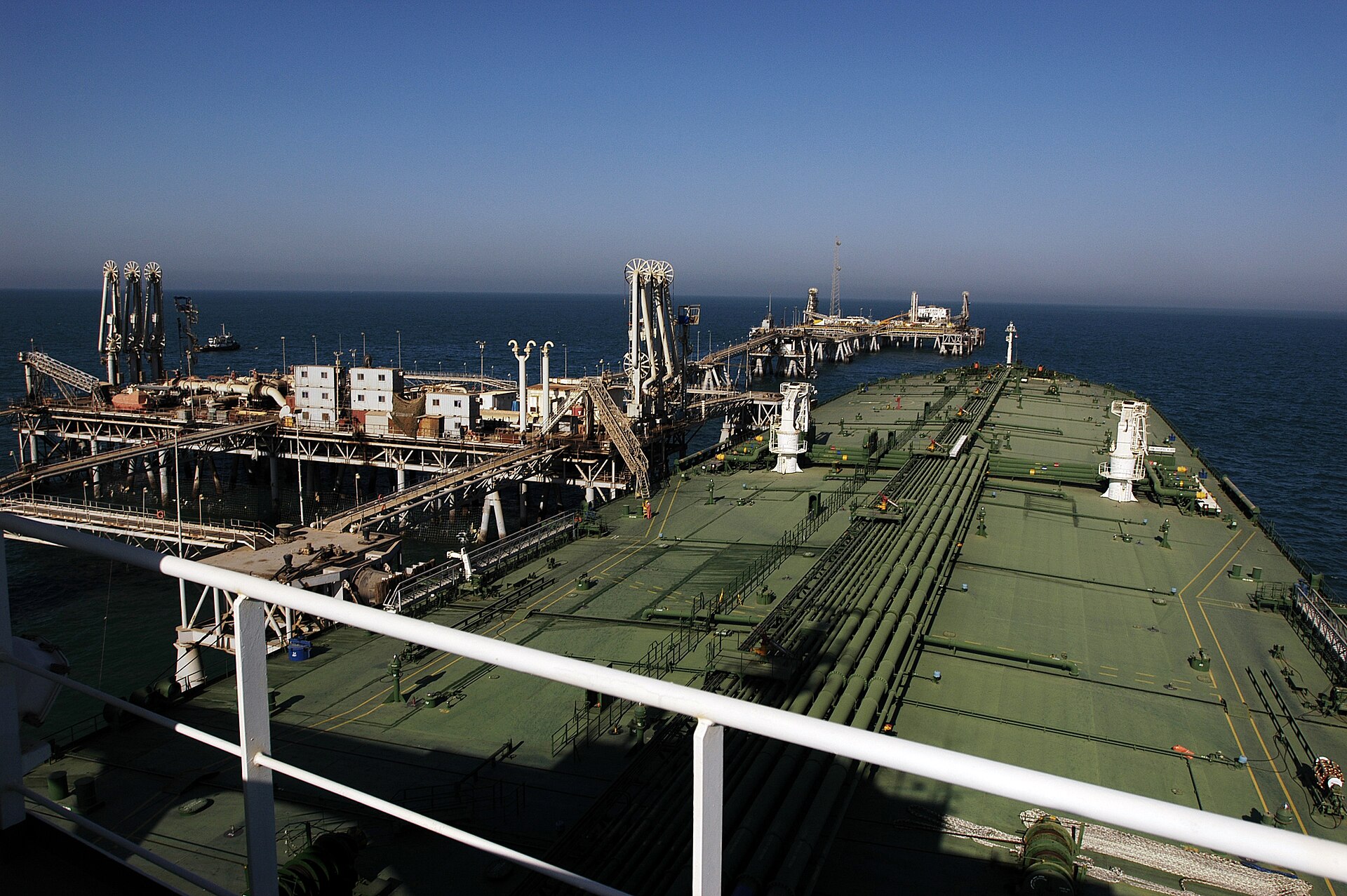
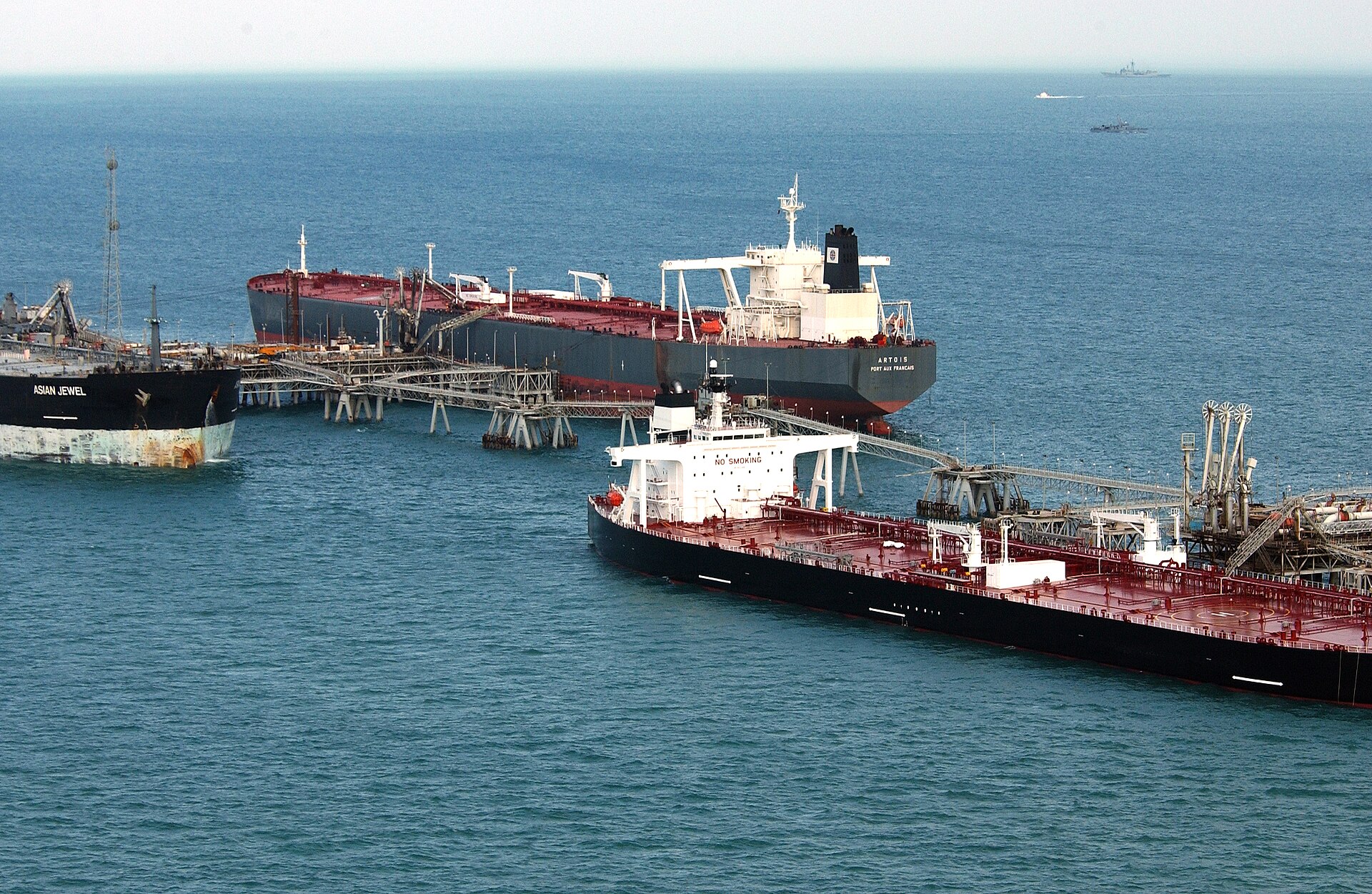
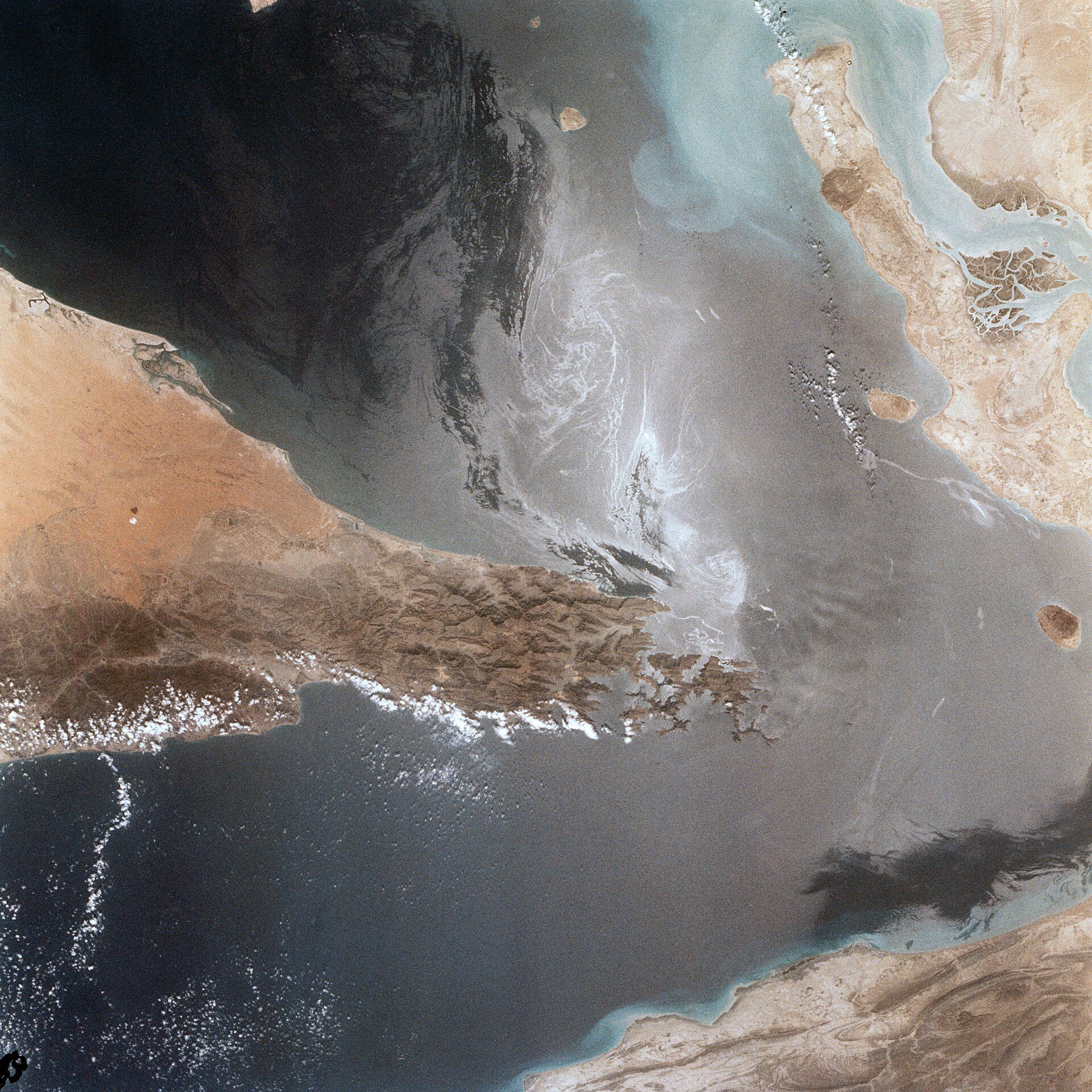
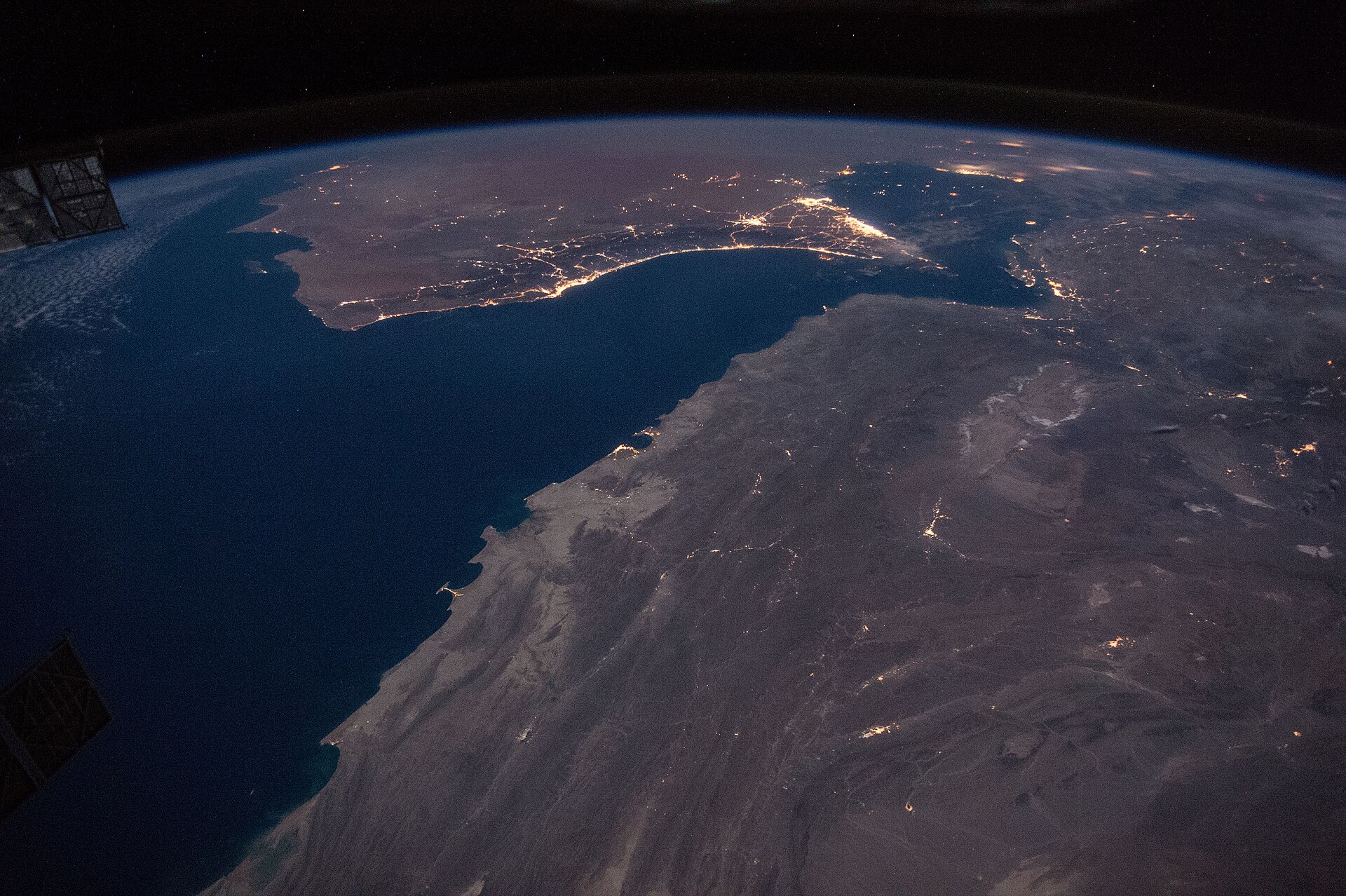
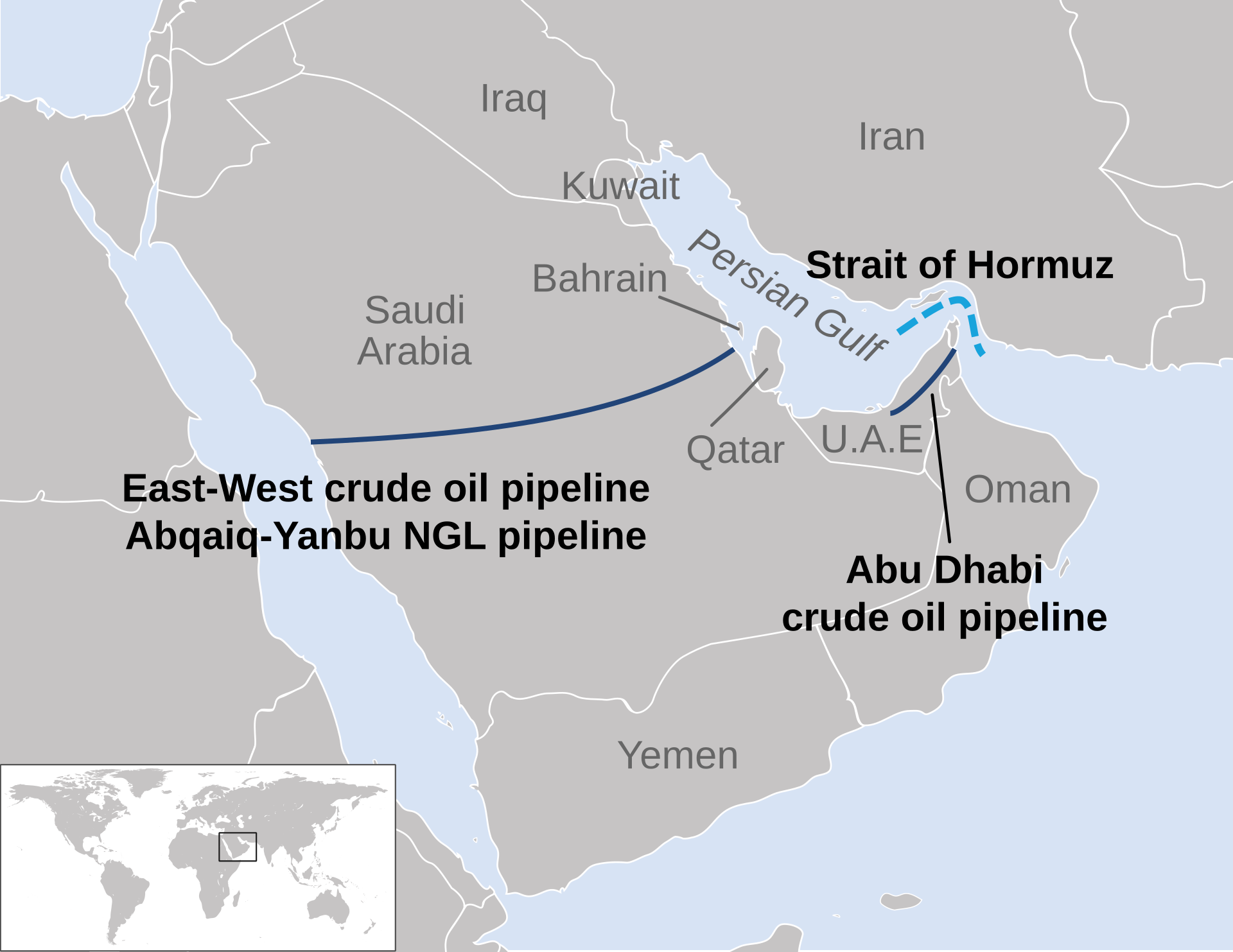
Saudi Arabia’s crude oil reaches the global market through three arteries. The first and historically dominant route runs from the eastern terminals at Ras Tanura and Ju’aymah through the Strait of Hormuz, which carried approximately 20 million barrels per day of crude oil — roughly 20 percent of global seaborne oil trade — and a similar share of the world’s liquefied natural gas before the current conflict. The second is the East-West Pipeline, a 1,200-kilometre line from the eastern oil fields to the Yanbu terminal on the Red Sea, with a design capacity of 7 million barrels per day and an exportable capacity of approximately 5 million barrels per day. The third is the wider maritime corridor through the Gulf of Oman and Arabian Sea, through which tankers pass after transiting or bypassing Hormuz to reach open water.
The House of Saud Daily Briefing
Saudi Arabia's news in 3 minutes, every morning. Free. See today's issue
Each route is now contested by a different actor, a different weapon, or both. The threats differ in kind — naval enforcement at Hormuz, drone strikes on the pipeline, and expanding maritime attacks in the Gulf of Oman — but their simultaneous effect is cumulative.
| Route | Pre-War Capacity | Current Status | Threat |
|---|---|---|---|
| Strait of Hormuz (eastern terminals) | ~20 mb/d total strait traffic | 4 transits/day on Oct 18 (IMF PortWatch) | IRGC — declared closed Oct 26 |
| East-West Pipeline to Yanbu | 7 mb/d design capacity; ~5 mb/d exportable | 5.8 mb/d on Oct 6; pumping stations targeted Oct 26 | Houthis — drone strikes |
| Gulf of Oman / wider corridor | Open passage for post-Hormuz transit | IRGC prohibited zone; attacks at Sohar and Bukha (Oct 21) | IRGC — enforcement “beyond Hormuz” |
The convergence of these three vectors is what distinguishes October 2026 from every prior Hormuz escalation. Previous disruptions — the tanker wars of the 1980s, the 2019 Gulf attacks — affected a single corridor. The current crisis threatens the eastern terminals, the Red Sea bypass, and the maritime lanes in between, all at the same time. The cost is measured not only in barrels not loaded but in insurance premiums, tanker rates, and the growing power of Iran’s non-compliant vessel list to deter traffic without firing a shot.
How Did Hormuz Go From 85 Ships a Day to 4?
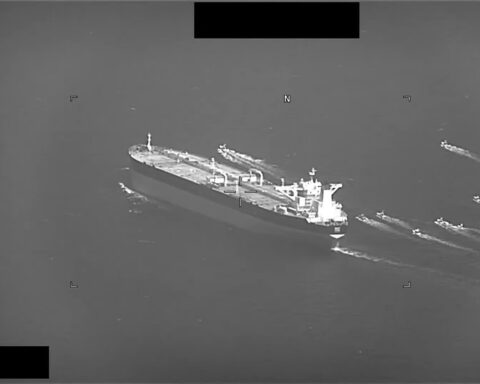
The blockade that would effectively close the world’s most important oil chokepoint began on July 14, 2026, CBS News reported on October 10. The decline in traffic was not instantaneous. For weeks, individual tankers continued to transit under varying degrees of risk, some under CENTCOM escort, others attempting unassisted passage. The IRGC progressively tightened enforcement, using the PGSA non-compliant vessel list as a framework for identifying and targeting unauthorized transits. By mid-October, CENTCOM estimated that 135 ships had been turned around since the blockade started, CBS News reported.
The transit data tells the story in stages. Daily traffic fell to single digits by October and reached four transits on October 18. The IRGC formally declared the strait closed on October 26, ratifying a reality the shipping data had already recorded. IRGC advisory group head Ali Fadavi said on October 5 that flows through the US-supervised Hormuz route were “negligible,” at only 3 to 4 million barrels per day, IRNA reported.
For Saudi Arabia, the closure has severed its eastern terminals from the global market. Ras Tanura and Ju’aymah historically handled the majority of the kingdom’s crude exports to Asia, its largest customer base. Those barrels must now travel overland through the East-West Pipeline to Yanbu, then by tanker down the Red Sea and through the Bab el-Mandeb strait to reach the same Asian buyers. The rerouting adds thousands of kilometres of sea passage, a new set of chokepoints, and exposure to the Houthis’ Red Sea campaign. For buyers who once received Saudi crude within days of loading at Ras Tanura, the Yanbu-to-Asia route via the Bab el-Mandeb and around the Arabian Peninsula is a fundamentally different supply chain.
What Does the IRGC Mean by “Beyond Hormuz”?
The IRGC’s October 9 statement, quoted in the introduction, represented an explicit expansion of Iran’s enforcement perimeter. Beyond the Hormuz declaration, the corps warned that companies cooperating with the United States would have all their vessels targeted “regardless of location,” Euronews reported. The statement did not name specific routes, but subsequent IRGC operations and official remarks mapped the expanded zone.
IRGC adviser Mohammadreza Naqdi said Iran would close routes it considers illegal, “including passages along Oman’s coast,” Fars News Agency reported, as cited by The National on October 13. Iran had already established a prohibited zone in the Gulf of Oman and Arabian Sea in September 2026. On October 15, a tanker caught fire while attempting to enter this zone, Al Arabiya reported.
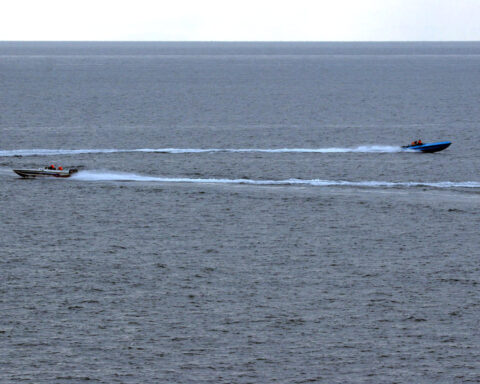
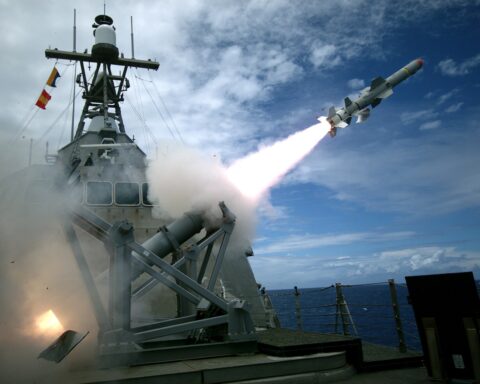
The kinetic activity has followed the rhetoric. A Joint Maritime Information Center report, cited by Gulf News on October 25, documented vessels attacked at Oman’s Sohar anchorage and west of Bukha on October 21. Attacks have reached waters near the UAE and Qatar: The National reported on October 13 that a Panama-flagged crude carrier, the Gem No 2, was struck approximately 25 kilometres west of Al Jazeera in the UAE, while a separate vessel was hit roughly 95 kilometres north of Madinat Ash Shamal, Qatar. IRGC operations in the strait itself have included cruise missile strikes against transiting vessels.
Habibollah Sayyari, chief of staff of the Iranian Army, reinforced the threat on October 13. “We have struck blows against enemy vessels. If anything else happens against Iran, we will strike them again,” Sayyari told The National.
The pattern amounts to a concentric geographic expansion of Iran’s enforcement perimeter: first the strait itself, then the Gulf of Oman, then Omani coastal waters, and then waters adjacent to the UAE and Qatar. Tanker operators that rerouted to avoid Hormuz now face the possibility that the expanded zone will follow them. The IRGC’s October 9 statement made this explicit: the enforcement regime is no longer geographic but entity-based, targeting specific companies and their entire fleets.
The East-West Pipeline Under Fire
The East-West Pipeline — also called the Petroline — runs from Saudi Arabia’s eastern oil fields to the Yanbu terminal on the Red Sea. Since the Hormuz closure, it has become the kingdom’s primary export lifeline. Before the conflict, the bulk of Saudi exports went through the eastern terminals and Hormuz, and the pipeline carried only a fraction of its capacity.
The pipeline’s wartime record has been marked by disruption and rapid repair. Houthi drone strikes forced a suspension on September 12, Reuters and Baird Maritime reported on September 24. It restarted on September 22, and by October 6, Saudi Energy Minister Prince Abdulaziz bin Salman told the GCC 2026 Forum in Manama that flow had reached 5.8 million barrels per day, Al Jazeera reported. Chatham House described the pipeline as “operating near its 7 million barrels per day capacity, still short of Saudi Arabia’s pre-war output of around 10 million bpd.” Kpler estimated flows at approximately 2 million barrels per day in August — well below the pipeline’s rated capacity even before the September shutdown.
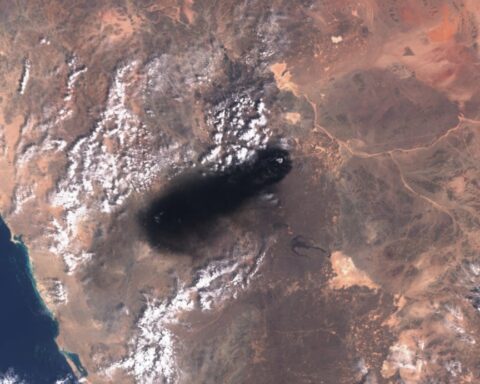
On October 26, the Houthis claimed drone attacks on pumping stations along the line. Saudi Arabia has not confirmed damage from the latest strikes, leaving the pipeline’s current throughput uncertain. The pipeline crosses open desert terrain with multiple pumping stations that are difficult to defend against drone and cruise missile attack across their full length. The Yanbu terminal can sustain loadings of 4 to 4.5 million barrels per day — a hard ceiling that limits exports even when the pipeline operates at full capacity. The gap between pipeline throughput and terminal loading capacity means that even an undamaged pipeline delivers less oil to tankers than it can carry.
The Kiel Institute for the World Economy modelled the stakes in its Policy Brief No. 206, published in March 2026. The brief found that if the Hormuz closure is compounded by sustained disruption to the Saudi pipeline, the global economic effects roughly double compared with a Hormuz-only scenario, reflecting the pipeline’s role as the sole remaining high-volume alternative to the strait.
What Does War-Risk Insurance Cost a Tanker Today?
Before the conflict, war-risk insurance for a tanker transiting the Strait of Hormuz cost approximately 0.25 percent of hull value per voyage, according to data cited by The Opscon and Fairwayeta.com. That baseline has been replaced by a premium structure that has fundamentally altered the economics of Gulf shipping. Marcus Baker, global head of marine at Marsh, put the current range at 3 to 10 percent of hull value per transit, The Opscon reported in July. By October, the Boston Report confirmed rates near the top of that range, at 6 to 10 percent.
The repricing dwarfs any prior Gulf disruption. During the June 2019 tanker attacks, war-risk premiums peaked at $185,000 to $200,000 per supertanker transit, Bloomberg reported at the time. At current premium rates applied to modern hull valuations, a single Hormuz transit costs millions of dollars in insurance alone. Very large crude carrier rates on the Gulf-to-China route reached approximately $1.2 million per day by October 5, compared with roughly $80,000 per day a year earlier, bdnews24 reported citing LSEG data. Howden Re described the repricing of the marine war-risk baseline as “likely permanent.”
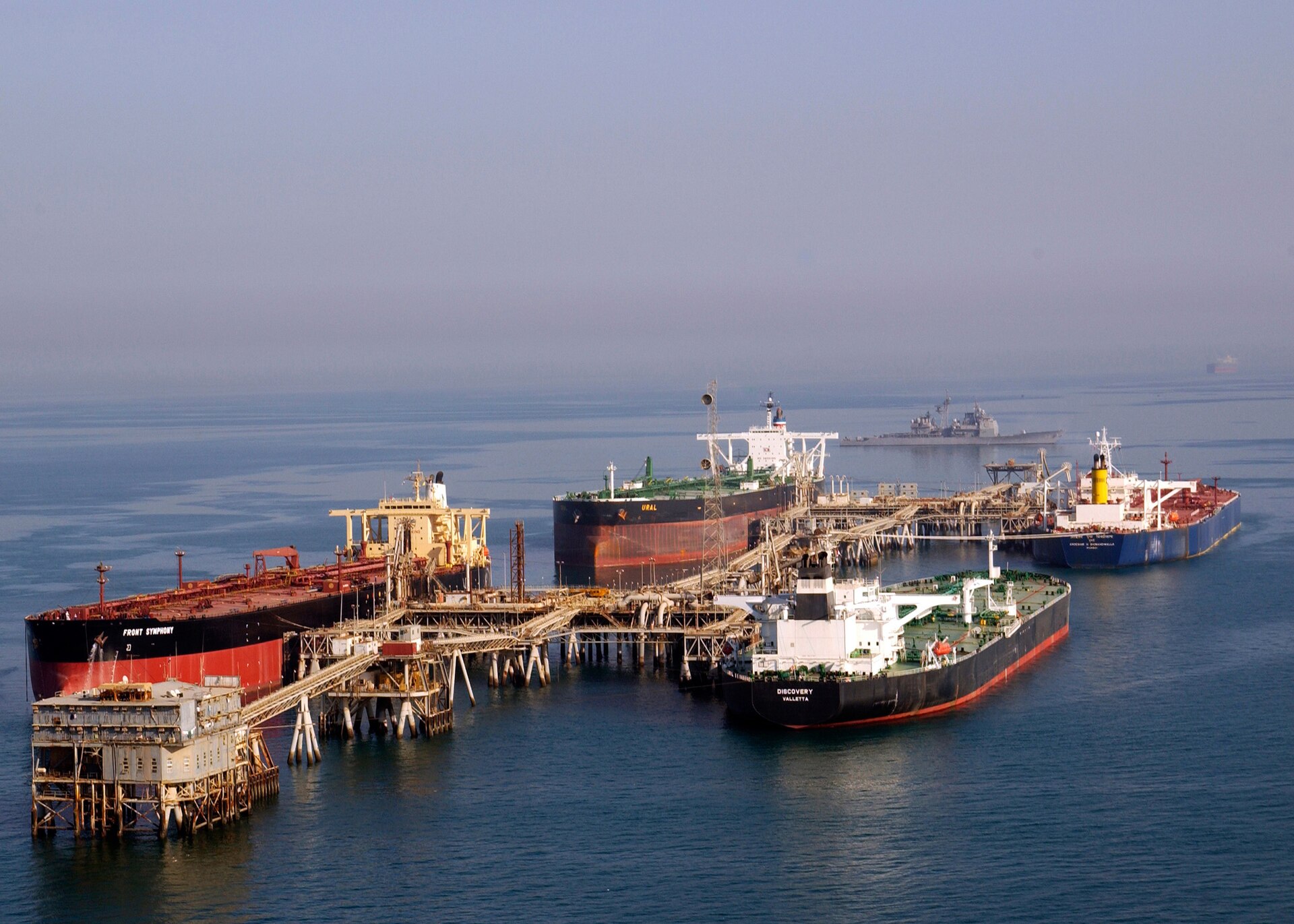
The repricing has also tightened the global tanker market. When vessels reroute from Hormuz to the Cape of Good Hope, each ship spends 10 to 15 additional days at sea per round trip. The same fleet carries fewer barrels per year, driving freight rates higher and compounding the cost to buyers already paying elevated crude prices. That day-rate reflects not only war-risk but this compression of effective fleet capacity.
The insurance arithmetic has a direct consequence for routing decisions. According to analysis from Fairwayeta.com and Kpler, the cost crossover between a Hormuz transit and the alternative Cape of Good Hope route occurs at approximately 2 percent of hull value in war-risk premium. At current rates of 6 to 10 percent, the Cape route is decisively cheaper per voyage, even with the additional sailing time and approximately $1 to 2 million in extra fuel and routing costs, Kpler reported.
The implication is that Hormuz has been priced out of the market for rational commercial operators, independent of the physical blockade. Even if the IRGC were to reduce its kinetic enforcement, the insurance market would need months of sustained safe passage to bring premiums back below the Cape crossover threshold. As Howden Re assessed, this repricing appears structural rather than cyclical. The physical blockade created the risk; the insurance market has institutionalized it, and the Gulf of Oman attacks documented by the JMIC have extended the repriced zone beyond the strait itself.
Is the PGSA Non-Compliant List a Second-Order Blockade?
The Persian Gulf Security Authority launched its non-compliant vessel list on August 24, 2026, designating 46 ships — a figure confirmed by gCaptain, Argus Media, and Global Trade Alert. By October 20, the PGSA told Tasnim News Agency that the list had grown to 122 vessels. Seatrade Maritime reported 123 to 124 by October 22. The PGSA stated that “action taken against more than 40 vessels” and that 19 ships were negotiating their removal from the list, Tasnim reported.
The list functions as both a targeting tool and a deterrent. Three UAE-linked tankers — the Al Ruwais, Sinbad, and Mersin Prosperity — were struck in the Strait of Hormuz and subsequently confirmed to have been on the PGSA list at the time of their attack, Tehran Times and PressTV reported on October 1. The PGSA said the three vessels had “repeatedly attempted to transit over the past two months.” The IRGC struck four additional tankers between October 22 and 23 for unauthorized ship-to-ship transfers, The Opscon reported.
Martin Kelly of EOS Risk Group told gCaptain on August 24 that the PGSA’s designations “skew toward UAE state-linked, Greek-managed, and Indian-linked ships, with gas carriers well represented.” The profile suggests selective enforcement aimed at the commercial pressure points of states aligned with the US-led maritime coalition. The IRGC’s October 9 statement extended the threat further, warning that companies cooperating with the United States would have all their vessels targeted regardless of location, Euronews reported.
“Regional energy exports must either be for everyone or for no one.”
— IRGC-linked statement, reported by Reuters via Noonpost
The deterrent effect reaches beyond the named vessels. Tanker operators whose ships are not on the list face the prospect of addition at any time, and charterers weigh PGSA listing risk when booking Gulf-bound cargoes. Protection and indemnity clubs price the listing as a coverage event.
The list grew from 46 ships at launch to 124 in eight weeks, adding more than one new designation per day on average. For the tanker market, the PGSA has become an enforcement instrument that suppresses traffic in parallel with the physical blockade — coercion by paperwork and demonstrated willingness to act on it.
Can Saudi Arabia Still Export Enough Oil?
Saudi crude loadings fell to approximately 2.1 million barrels per day by mid-September, down from 7.5 million in January and February, OilPrice.com reported citing JPMorgan and Aramco data. The International Energy Agency said Saudi output fell 2.6 million barrels per day in August and crude shipments dropped to 6 million barrels per day, Trend reported on September 14. Those figures predated the Hormuz closure reaching its current severity and the October Houthi strikes on the pipeline.
The IEA estimated in its Hormuz Factsheet of February 2026 that Saudi and UAE pipelines combined offer 3.5 to 5.5 million barrels per day of bypass capacity. The IEA warned that the logistics “have not been robustly tested.” The October 6 pipeline flow of 5.8 million barrels per day ran into the Yanbu terminal’s ceiling of 4 to 4.5 million barrels per day — a bottleneck between throughput and actual ship loadings that the pipeline section above details.
OPEC+ kept Saudi Arabia’s November production quota at 10.5 million barrels per day at its October 4 meeting, Enerdata reported. The quota assumes export infrastructure that no longer exists at that scale. Aramco’s response has been visible in its pricing: the company cut its November Arab Light official selling price to Asia by $3 per barrel, to $5 below the Oman/Dubai benchmark — the widest discount since June 2020, bdnews24 reported on October 5 citing Reuters. The discount reflects a seller competing for buyers it can no longer reliably supply.
Saudi Arabia’s 2026 budget deficit reached 245 billion riyals, Zawya and Reuters reported on September 30. Brent crude stood at $114 per barrel on October 23. The paradox of the current crisis is that oil prices are elevated precisely because Saudi barrels cannot reach the market — the kingdom bears the fiscal cost of high prices it cannot benefit from, while importers bear the price cost of barrels that cannot arrive.
What Happens If All Three Routes Close?
A simultaneous disruption of Hormuz, the East-West Pipeline, and the wider Gulf corridor would remove the vast majority of Saudi crude from the global market. The Kiel Institute’s combined Hormuz-and-pipeline scenario — quantified in the pipeline section above — roughly doubles the global energy price impact of a Hormuz-only closure. That model did not include a third variable: the Bab el-Mandeb strait at the southern end of the Red Sea, through which Yanbu-loaded tankers must pass to reach Asian markets.
The Bab el-Mandeb carried 4.2 million barrels per day in 2025, down from 8.7 million barrels per day in 2023, according to IEA figures cited by Noonpost. The decline reflects the Houthi disruption campaign that predated the current conflict. Ali Akbar Velayati, adviser to Iran’s Supreme Leader, said the “Resistance front views Bab el-Mandeb as it does Hormuz,” Noonpost and Fox News reported. Reuters reported that Tehran has asked the Houthis to prepare to close the Bab el-Mandeb if the United States targets Iranian energy infrastructure.
A Houthi official, unnamed in the Noonpost report, warned of an “operational alliance” between Iran-aligned groups that could push oil to $200 per barrel. Saudi Yanbu exports bound for Asia transit the Bab el-Mandeb. If the Houthis enforce even a partial interdiction of that corridor, the pipeline bypass fails as an export route regardless of whether the pipeline itself is operating.
The IEA’s pre-war bypass capacity estimate, detailed in the section above, assumed at least one functioning corridor between the Persian Gulf and open water. A total closure — Hormuz blocked, the pipeline damaged, and the Bab el-Mandeb under Houthi enforcement — would leave Saudi Arabia with no maritime path for its crude. The kingdom would retain domestic refinery consumption and overland deliveries to neighbouring states, but its role as the world’s swing exporter would be functionally suspended.
The probability of all three closures occurring simultaneously depends on coordination between Tehran and the Houthis, the durability of the pipeline’s air defences, and the willingness of the United States to intervene militarily. None of these factors is within Saudi Arabia’s unilateral control. The Houthis have already demonstrated the ability to suppress Bab el-Mandeb traffic by half, as the IEA figures cited above show — enforcement of that corridor is a demonstrated capability, not a theoretical contingency. The kingdom’s export infrastructure, built over decades to serve a peacetime market through Hormuz, was designed with the assumption that at least one corridor would always remain open. That assumption is now the variable under test.
Frequently Asked Questions
What conditions has Iran set for reopening the Strait of Hormuz?
Iran’s Foreign Minister Abbas Araghchi proposed a seven-day roadmap in September 2026 that conditioned reopening the strait on the United States lifting its naval blockade of Iranian ports, granting sanctions waivers, and releasing approximately $12 billion in frozen Iranian assets, Al Jazeera reported on September 25. The Trump administration rejected the proposal. No alternative diplomatic framework for restoring Hormuz transit has been announced. The IRGC’s escalation of attacks beyond the strait in October, combined with the expansion of the PGSA non-compliant list, indicates that Iran is broadening its enforcement tools rather than narrowing its demands.
How has the export disruption affected Saudi Arabia’s broader economy?
Saudi Arabia’s real GDP was forecast to contract by 3.6 percent in 2026, Zawya and Reuters reported on September 30. The contraction extends beyond crude oil revenue. Saudi petrochemical exports — a major component of the kingdom’s non-oil industrial base — depend on the same eastern port infrastructure and Gulf shipping corridor disrupted by the Hormuz closure. Container shipping through the strait also served Saudi Arabia’s imports of machinery, vehicles, and construction materials for Vision 2030 projects, meaning the blockade constrains both export revenue and the import flows that sustain economic diversification.
Has the United States considered military action to reopen Hormuz?
President Trump ruled out strikes on Iran before the November 3 midterm elections, The National reported on October 8. CENTCOM has focused on escort operations and enforcing the US naval blockade of Iranian ports rather than attempting to force the strait open by clearing IRGC positions. The diplomatic impasse — Iran demands the US blockade be lifted first, while Washington demands Iran reopen the strait first — has left no path to mutual de-escalation. The US midterm election calendar introduces a political constraint: military escalation against Iran before November 3 carries domestic political risk that the administration has publicly ruled out accepting.
The House of Saud Daily Briefing
Saudi Arabia's news in 3 minutes, every morning. Free. See today's issue