
RIYADH — The United States has privately warned several Gulf Arab states to prepare for a “short, intense” military campaign against Iran expected after the November 3 midterm elections, the Wall Street Journal reported on October 28. The warnings were transmitted through both diplomatic and military channels on the same day that President Donald Trump told a rally in Lubbock, Texas: “You’ll see Iran in a couple of weeks, if you don’t mind.”
The disclosure arrives six days before the midterms and as Iran has issued explicit threats to attack Gulf desalination plants, power grids, and oil facilities if the United States strikes again — threats Tehran has already partially acted on in Bahrain and Kuwait. For a region where Qatar depends on desalinated water for 99 percent of its supply and Saudi Arabia for 70 percent, according to CSIS, any campaign that invites Iranian retaliation puts civilian water supply at risk alongside military targets.
Table of Contents
The Warning and Military Preparations
Trump has not made a final decision but is “leaning toward a large post-election attack” that could target Iranian infrastructure and nuclear sites, the Wall Street Journal reported. The White House declined to comment on “sensitive military plans that may or may not exist,” adding only that “President Trump keeps all options on the table to ensure that Iran can never have a nuclear weapon.”
The House of Saud Daily Briefing
Saudi Arabia's news in 3 minutes, every morning. Free. See today's issue
The New York Times, citing American officials, reported that the planned operation “could last approximately three days,” with targets including Iranian nuclear facilities, energy infrastructure, and missile and drone capabilities. At the Lubbock rally, Trump added: “It could be over whenever I want it to be over.”
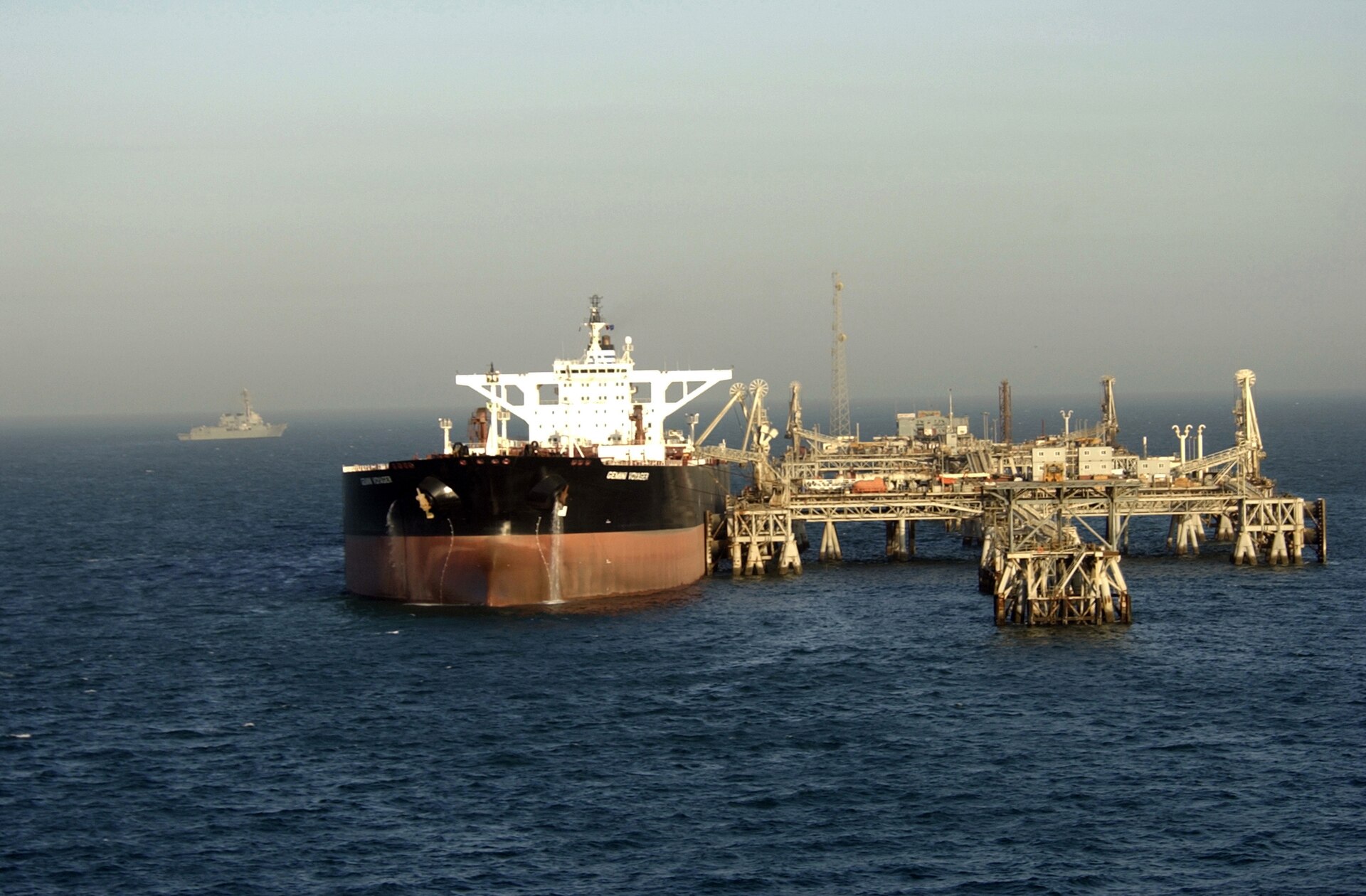
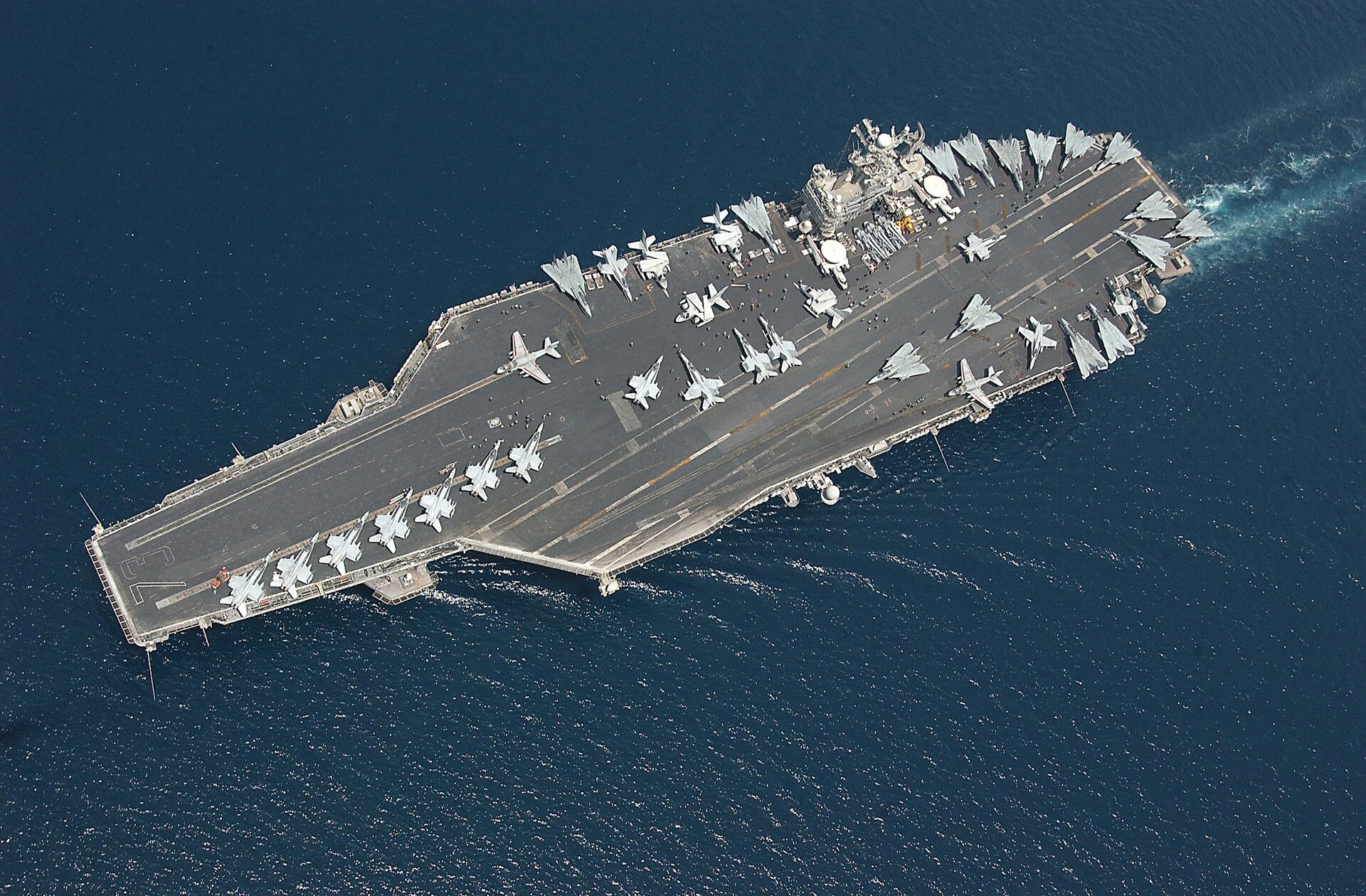
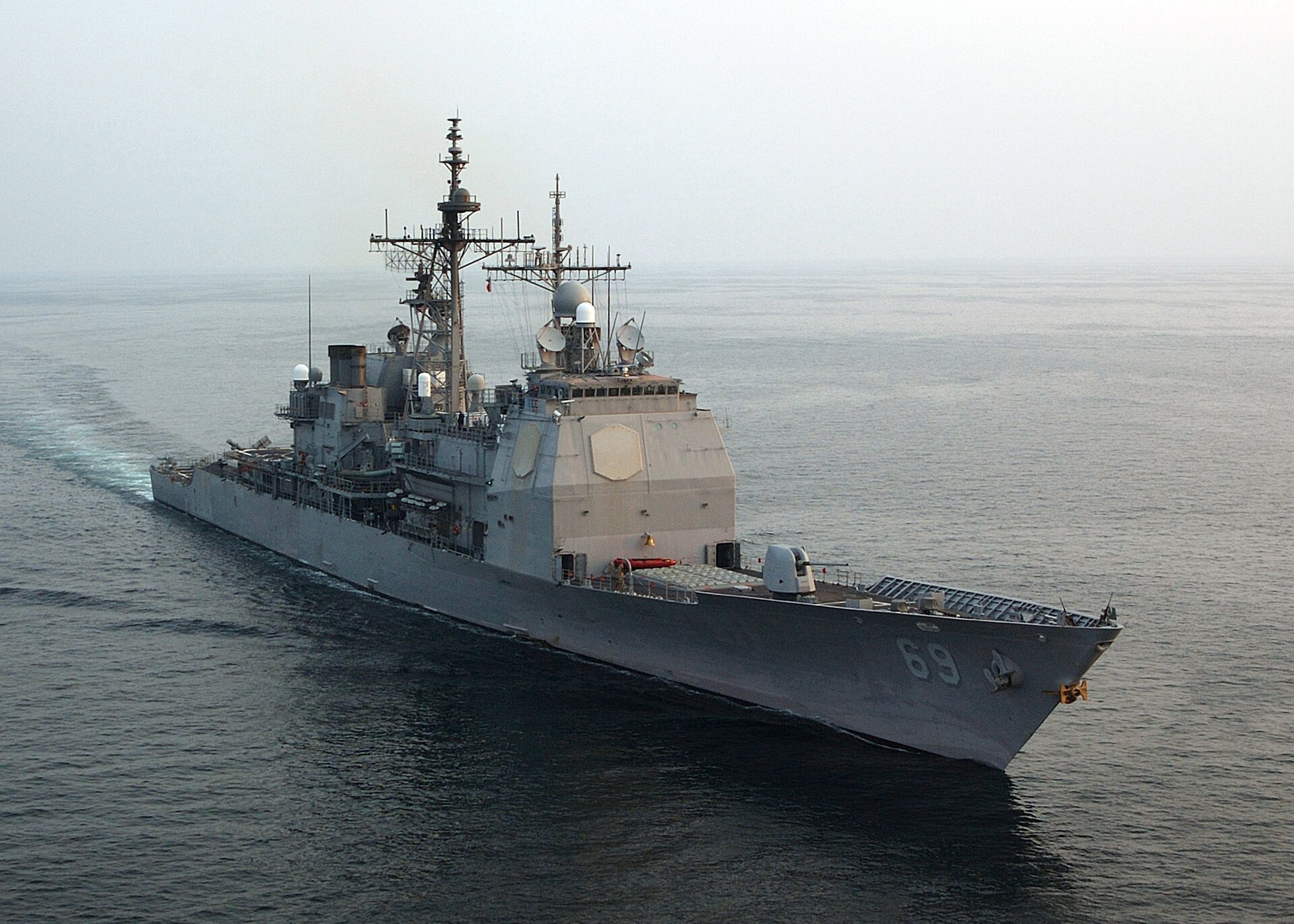
Military preparations are already visible. A Patriot missile defense system is being moved to the Middle East, troops are being relocated from vulnerable forward bases, and munitions are being restocked, the Journal reported. Bombers and fighter jets are being prepared. An additional carrier strike group and Marine expeditionary unit are expected to join approximately 20 US warships already in the region next month.
The warning followed a rapid sequence of escalatory steps. On October 27, the US ordered all non-emergency staff and families to leave Saudi Arabia. The same day, CNN reported that US forces can strike Iran within 96 hours of a presidential order. On October 22, Washington issued a red alert to US citizens across 12 countries — including Saudi Arabia, Qatar, Bahrain, Kuwait, Oman, and the UAE — warning of risks to American interests, according to Euronews. Earlier in October, the US imposed new sanctions on Iran’s shadow tanker fleet while Trump delayed strikes until after the midterms.
These moves coincide with the failure of diplomatic efforts. Saudi Arabia sent its defense minister to Tehran on October 26, and the resulting joint communiqué from Saudi Arabia, Iran, Turkey, and Pakistan did not produce a ceasefire. Iran has since offered to reopen the Strait of Hormuz within four to five days if the US lifts its blockade, while adding a $24 billion reserves demand before any reopening clock starts.
What Would Iran Target in Retaliation?
Iran’s retaliatory doctrine extends well beyond oil terminals. In August, Iranian FM Abbas Araghchi conveyed warnings through Saudi, Turkish, and Qatari counterparts that if the US struck Iran again, Tehran would hit “energy facilities, oil fields, refineries, electricity grids, water infrastructure, transport networks, and other strategic assets” across the Gulf, Reuters reported, citing two senior Iranian officials, two Gulf sources, and a senior regional diplomat. A senior Gulf source described the message as “unequivocal.”
The threats have grown more granular over time. In March, Iranian military spokesman Ebrahim Zolfaqari stated on state media that if Iran’s fuel and energy infrastructure is attacked, “all energy infrastructure, as well as information technology … and water desalination facilities” belonging to the US and “the regime in the region” will be targeted, France 24 reported. Iran’s Parliament Speaker Mohammad Baqer Qalibaf warned on X the same month that critical infrastructure could be “irreversibly destroyed” if Iranian power plants are attacked, according to France 24. The IRGC added that the Strait of Hormuz “will be completely closed and will not be opened until our destroyed power plants are rebuilt.”
On October 13, Mohsen Rezaei, secretary of Iran’s Supreme National Security Council, expanded the target list to include cables, data centers, and AI facilities across the region, according to Al Jazeera. Reza Nasri, a lawyer close to Iran’s Foreign Ministry, told multiple news outlets: “Power grids, seawater desalination plants, oil refineries and ports across the region will be on fire.”
Araghchi articulated the underlying doctrine in late July: “Any aggression against Iran, including our infrastructure, will compel a powerful and decisive response. Those who contribute to such aggression, whatever the kind of support, will also be considered as legitimate targets,” Middle East Eye reported.
These are not declaratory postures. Iranian drones struck a Bahrain desalination facility on March 8, according to CSIS and the Atlantic Council. An Iranian attack on Kuwait’s power and water desalination plant on March 30 killed one Indian worker, Al Jazeera reported. By late July, Iranian strikes had targeted Kuwait desalination plants for a fourth consecutive day, according to France 24. Each attack hit facilities serving populations in the hundreds of thousands — a fraction of the scale served by Saudi Arabia’s main coastal plants.
How Vulnerable Are Gulf Desalination Plants?
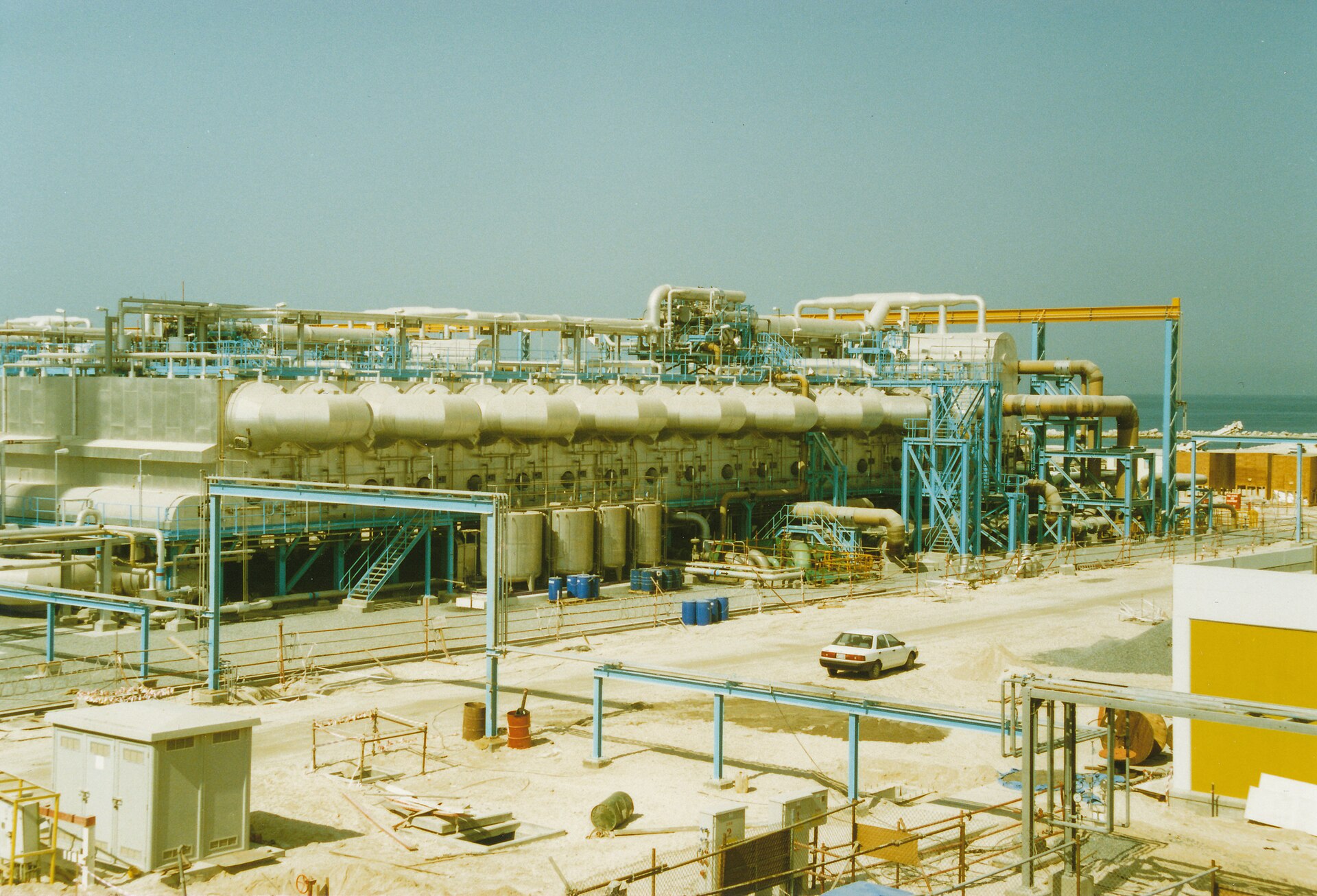
The Gulf’s water architecture was built for efficiency, not survivability. Fifty-six desalination plants supply more than 90 percent of the region’s desalinated water, and three-quarters of GCC desalination facilities are integrated power-and-water complexes — meaning a single strike can knock out both electricity and drinking water simultaneously, the Atlantic Council reported. The dependence spans the entire Gulf Cooperation Council: Kuwait and Bahrain draw approximately 90 percent of their water from desalination, Oman approximately 86 percent, according to CSIS.
Saudi Arabia’s four main desalination plants — Ras Al-Khair, Jubail, Shoaiba, and Yanbu — together supply the bulk of the kingdom’s drinking water. Ras Al-Khair alone produces approximately 1,036,000 cubic meters of water per day, according to Archirodon. A 2008 US diplomatic cable, reported by Fortune in March, assessed that Riyadh “would have to evacuate within a week” if the Jubail desalination plant or its pipelines and associated power infrastructure were seriously damaged.
Geography compounds the exposure. Gulf desalination plants are “large, fixed, open-air industrial complexes mostly concentrated along the coast within 350 kilometres” of Iran, CSIS noted. Ginger Matchett of the Atlantic Council identified “anti-drone capabilities” as “the most urgent need” for defending water infrastructure.
The 2019 strikes on Abqaiq and Khurais offer a precedent for what precision attacks on fixed Gulf infrastructure can achieve. Drones and cruise missiles temporarily knocked out more than half of Saudi Arabia’s crude output, Reuters and Defense News reported. Desalination plants — with exposed piping, cooling systems, and reverse-osmosis membranes concentrated in open-air coastal sites — present a comparable target profile with less built-in redundancy than oil processing facilities.
Iran has prepared for the scenario it expects. The IRGC activated its decentralized command doctrine — known as Mosaic Defence — which allows local commanders to continue fighting if central command is destroyed, Euronews reported on October 22. The IRGC declared “100% certainty” that the US and Israel will attack again. On October 28, Araghchi told the Times of Israel that an “Israeli-instigated attack” would have a “devastating impact” on global markets.
Air Defense and the Interceptor Question
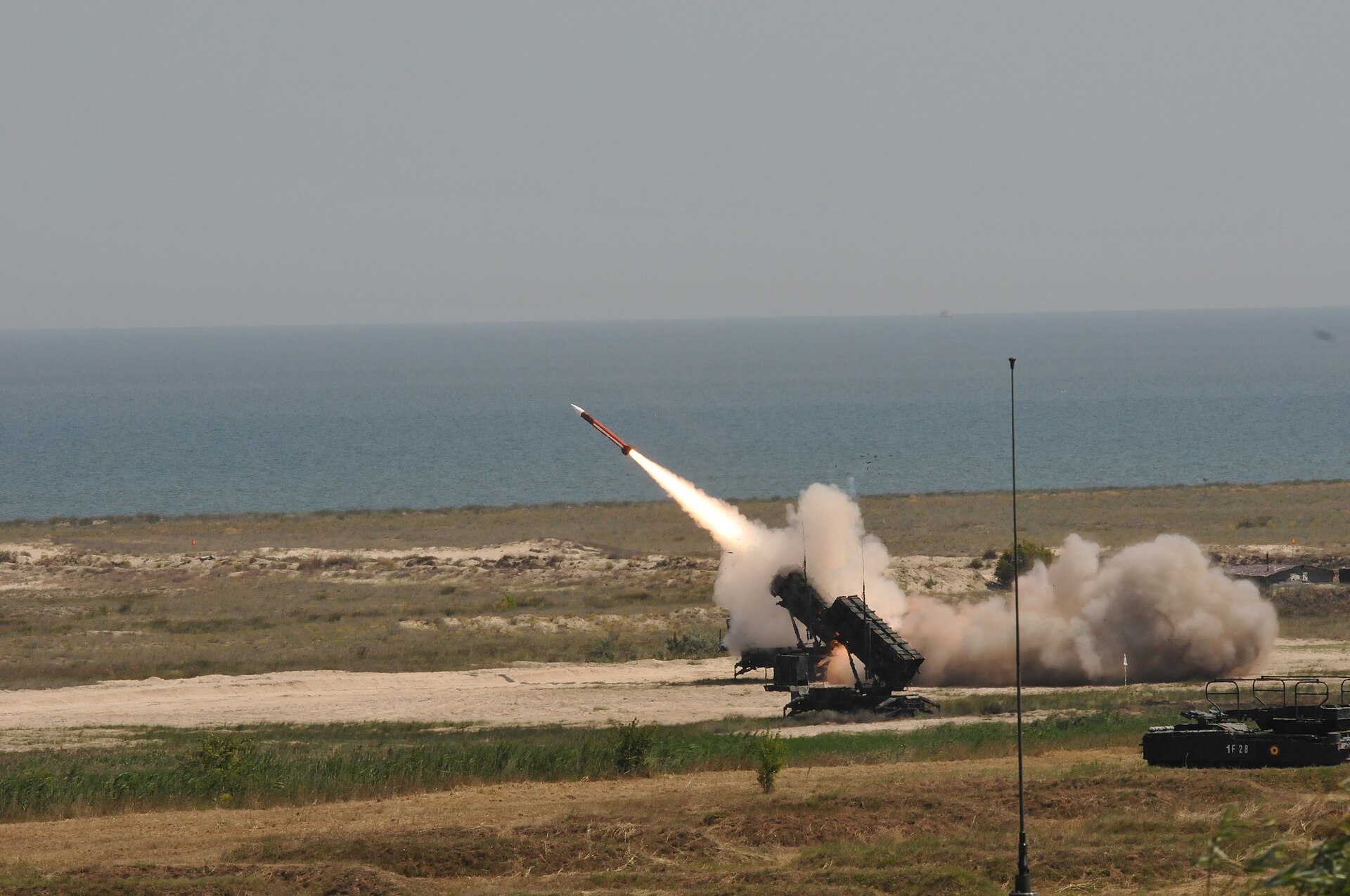
The US has moved to reinforce Gulf air defenses ahead of any campaign. In early October, Washington sent two additional Patriot batteries to the region — one to Saudi Arabia and one to Qatar — specifically to protect oil and gas sites, according to Axios. The Wall Street Journal reported on October 28 that another Patriot system is being moved from Texas to the Middle East.
In January, the US approved a sale to Saudi Arabia of 730 PAC-3 MSE missiles valued at approximately $9 billion, according to Militarnyi and Army Recognition. The delivery timeline remains unconfirmed. Before the Iran campaign began, US Patriot interceptor stockpiles stood at 25 percent of the volume deemed necessary by the Pentagon, according to Military Watch Magazine, citing July 2025 data. The economics of missile defense favor the attacker: Iran’s drone and cruise missile inventory — tested through months of proxy launches by the Houthis — can be produced at a fraction of the cost of the interceptors used to shoot them down.
US Defense Secretary Pete Hegseth said in March that Gulf partners are “stepping up even more” and willing to “go on the offense,” and that Washington is working on “collective, integrated air defenses,” Reuters reported. The defenses are being tested by proxy forces already: Houthis claimed a missile strike on the Ras Tanura refinery on October 28, and the IMO warned that the Hormuz traffic route contains mines and cannot guarantee safe transit.
Abdulaziz Sager, head of the Gulf Research Center in Riyadh, told Reuters: “There is a wide feeling across the Gulf that Iran has crossed every red line with every Gulf country.” Fawaz Gerges of the London School of Economics described a different tension — Gulf states caught between the immediate Iranian threat and the risk of being drawn deeper into a US-Israeli war. He called the posture “calculated restraint.”
Background
The US-Iran conflict began on February 28, 2026, when American and Israeli forces launched strikes on Iran. Supreme Leader Ali Khamenei was killed that day. Mojtaba Khamenei became Supreme Leader on March 8.
The war has escalated through eight months of missile exchanges, Houthi offensives against Saudi Arabia, and a progressive Iranian blockade of the Strait of Hormuz. The IRGC declared Hormuz closed on October 26 after tanker transits dropped to four. Araghchi’s seven-day roadmap — his September proposal calling for Hormuz reopening, sanctions waivers, and the release of approximately $12 billion in frozen assets — was rejected by Trump, the Wall Street Journal reported on September 26. Qatari mediators presented a separate draft deal, which Iran rejected.
Crown Prince Mohammed bin Salman appealed to Trump twice in September for US strikes on the Houthis; both requests were declined, according to Axios. On October 8, Trump told The National: “We will not be attacking Iran at any time prior to the midterm elections.” The Journal’s October 28 report indicates the post-election constraint is about to expire.
Frequently Asked Questions
Which Gulf states received the US warning?
The Wall Street Journal named only “several Gulf Arab countries” without listing them. The pattern of US actions — Patriot deployments to Saudi Arabia and Qatar, the embassy departure order covering Saudi Arabia, and the October 22 red alert spanning 12 countries including all six GCC states — suggests the warning reached most Gulf Cooperation Council capitals. Bahrain, which hosts the US Fifth Fleet, and the UAE, which hosts forward-deployed US air assets, would be natural recipients given their military exposure.
How long can Saudi Arabia sustain water supply if desalination is disrupted?
No official Saudi figure has been published. The 2008 US diplomatic cable cited by Fortune assessed that Riyadh would face evacuation within a week if Jubail and its associated pipeline infrastructure were knocked out. Saudi Arabia has since expanded capacity — Ras Al-Khair came online in 2014, and the Shoaiba and Yanbu plants have been upgraded — but approximately 70 percent of the kingdom’s total water supply still flows from four major coastal facilities, according to CSIS. Groundwater reserves provide some buffer in areas away from the coast, though they cannot substitute for desalinated output at the scale required by Riyadh, Jeddah, and the Eastern Province’s cities.
Has the US told Gulf states what to do about civilian infrastructure?
The WSJ report does not detail the content of the US warnings beyond preparation for a military campaign. The two Patriot batteries sent to Saudi Arabia and Qatar in early October were deployed specifically to protect oil and gas sites, according to Axios — not water or power infrastructure. The Atlantic Council’s Ginger Matchett has argued that anti-drone systems are the most pressing gap in Gulf infrastructure defense, a view that predates the October 28 warning. Whether the US has offered specific guidance on hardening desalination or power plants is not publicly known.
What is Iran’s Mosaic Defence doctrine?
Mosaic Defence is Iran’s decentralized command structure, activated during the current conflict, that distributes launch authority across the IRGC’s network of regional bases and proxy forces. Under the doctrine, local commanders can initiate retaliatory strikes independently if central command in Tehran is destroyed — meaning a US “decapitation strike” on Iran’s command infrastructure would not necessarily prevent launches against Gulf targets. Euronews reported on October 22 that the IRGC had activated this system in preparation for what it called a certain renewed attack.
The House of Saud Daily Briefing
Saudi Arabia's news in 3 minutes, every morning. Free. See today's issue