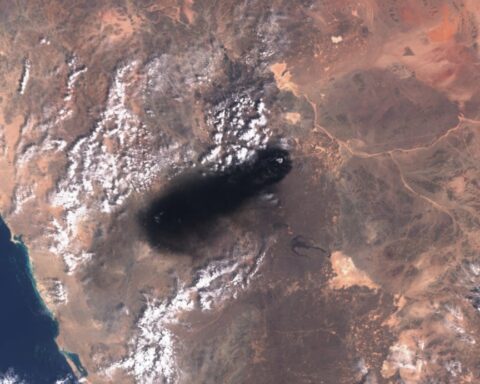
DHAHRAN — A fire broke out early on Tuesday near Saudi Aramco facilities at Ras Tanura, the kingdom’s largest crude oil export terminal on the Persian Gulf, Bloomberg reported on October 27. The Saudi-led coalition confirmed separately that air defenses had intercepted and destroyed 3 Houthi ballistic missiles launched toward the eastern region, according to Türkiye Today. No statement had been issued by Aramco or the Saudi Ministry of Energy at the time of publication.
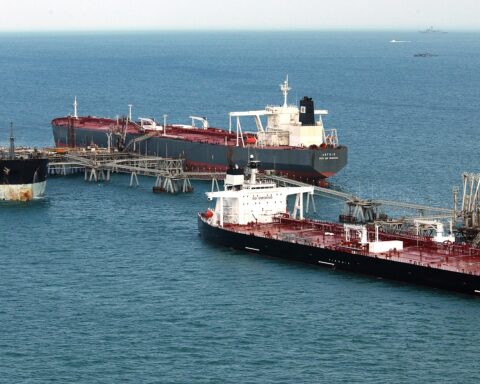
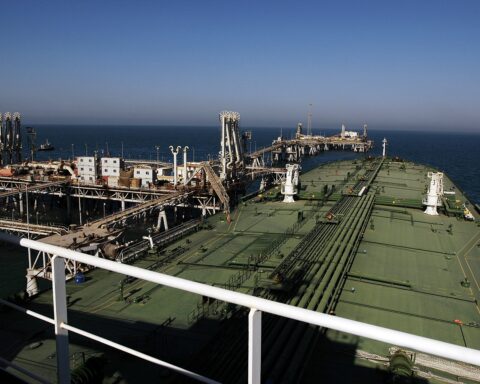
Ras Tanura is not a pipeline junction or a transit chokepoint. It is the stage where Saudi crude physically loads onto tankers — with loading jetties and a 550,000-barrel-per-day refinery, according to MarineLink. A fire there, even one described as “contained,” introduces a different kind of disruption at a moment when every other Saudi export route is under pressure.
Table of Contents
What Happened at Ras Tanura on October 27?
Bloomberg reported that a fire broke out early Tuesday near Aramco facilities at Ras Tanura, citing one person with knowledge of the matter who said the fire had been “contained.” No extent of damage was confirmed.
The House of Saud Daily Briefing
Saudi Arabia's news in 3 minutes, every morning. Free. See today's issue
Iranian state media outlet IRIB, citing Arab media sources, reported that the 550,000-barrel-per-day Ras Tanura refinery had been “targeted by missiles, triggering powerful explosions and large plumes of smoke,” according to Newsquawk. That account — one step removed from any primary claim of responsibility — has not been confirmed by Saudi authorities.
Separately, explosions were reported in the nearby city of Dammam, and air operations at King Fahd International Airport were suspended, Newsquawk reported. The coalition’s statement confirmed the interception of 3 ballistic missiles targeting the eastern region but did not name Ras Tanura specifically as the missiles’ objective, according to Türkiye Today.
No confirmed details have emerged about which facility within the Ras Tanura complex was affected — whether the crude loading jetties known as the Sea Islands, the tank farm, or the refinery buildings. No force majeure notices or loading suspension announcements had been made public by the time of publication.
Oil Prices Spike Then Retreat
The initial market reaction was sharp but brief. Brent crude rose 0.6% to $116.50 per barrel and West Texas Intermediate rose 0.7% to $102.50 at 8:25 a.m. GMT, according to Türkiye Today. Within two hours, Brent had retreated to a range of $109.53 to $111.91 per barrel by 10:08 UTC, Newsquawk reported.
The pattern fits a broader tendency this conflict has produced. “The risk premium has tended to unwind within sessions” unless physical flows are disrupted, a Newsquawk analyst noted, adding that the key signal is “confirmation of damage to throughput rather than to sentiment.”
Brent has risen approximately 13% this month, according to Bloomberg — a cumulative price response to the Hormuz closure, pipeline attacks, and the broader escalation between Iran and Saudi Arabia. The benchmark stood at $102.94 on October 9, according to CNBC. October’s gains have erased the summer relief that followed Ras Tanura’s resumption of loading in June.
Why Does Ras Tanura Matter for Global Oil Supply?
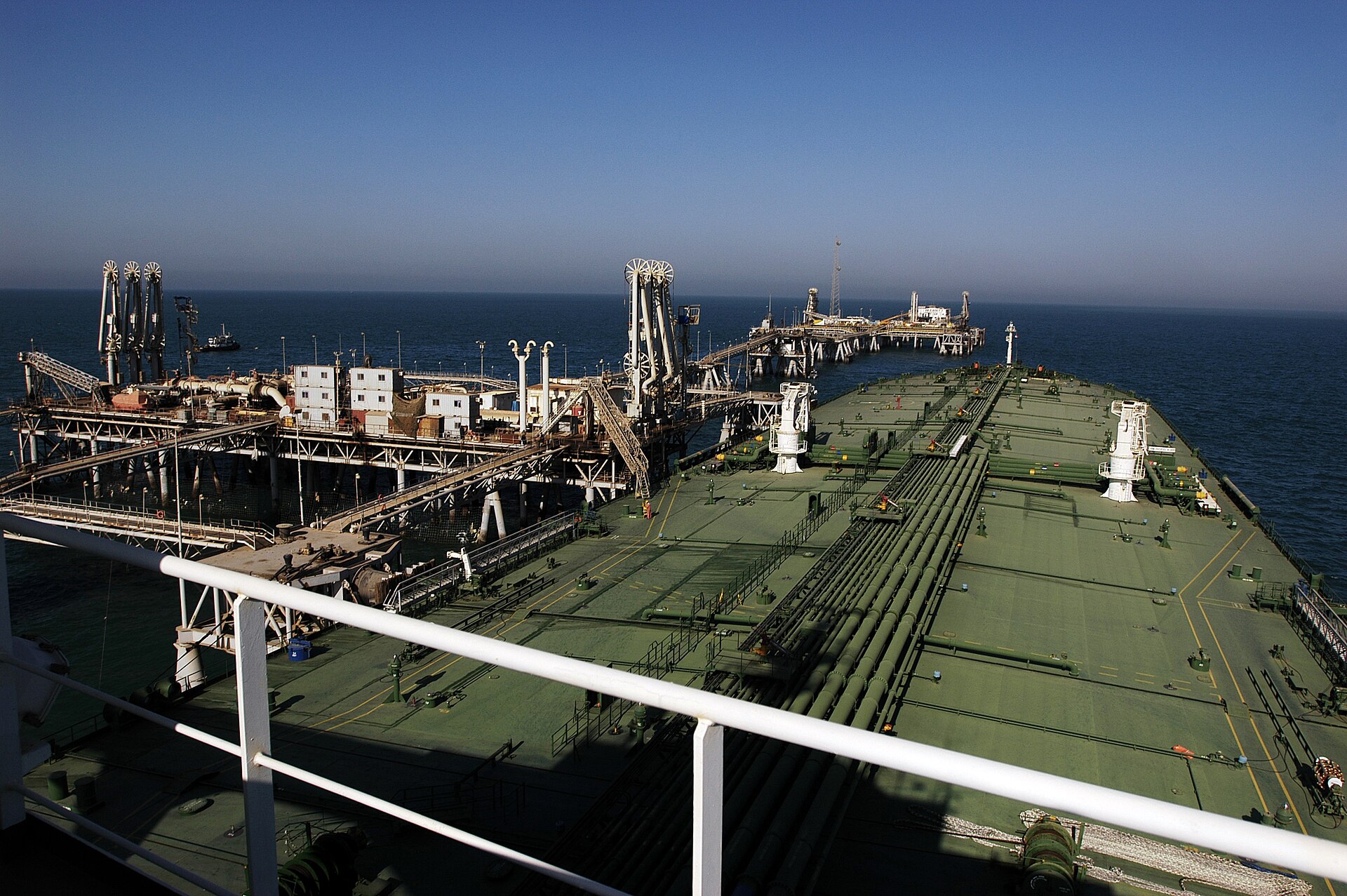
Ras Tanura hosts Saudi Aramco’s crude loading jetties — known as the Sea Islands — along with a 550,000-barrel-per-day refinery and more than 50 million barrels of storage, according to MarineLink. Before the conflict, the terminal exported more than 5 million barrels per day of crude, primarily to Asian buyers, Hydrocarbon Processing reported in July 2026.
That throughput made Ras Tanura the single largest crude loading point in the world. Its share of global seaborne crude loadings, however, has fallen during the conflict — from 11.3% in 2025 to 4.0% in January through September 2026, according to Cyprus Shipping News. Even at the reduced volume, the terminal’s role as the point where Saudi oil enters the seaborne market gives it an outsized bearing on global supply.
The distinction matters for how markets read damage to Ras Tanura. “It is a load-point rather than upstream processing, so the key tell is tanker tracking and any notice of force majeure or loading delays,” a Newsquawk analyst wrote on October 27. A refinery strike reduces domestic fuel supply. A loading-stage disruption directly removes barrels from the seaborne market — barrels that have already been extracted, processed, and piped to the coast.
Bloomberg noted that Aramco had been “stepping up crude exports from the Persian Gulf again” as Hormuz tanker traffic had approached pre-war levels before Tuesday’s incident.
The Attribution Gap
No explicit Houthi claim of responsibility for the Ras Tanura fire has been found. Yahya Saree, the Houthi military spokesman, issued statements on October 27 claiming “three military operations with dozens of ballistic missiles” — but the targets he named were King Khalid Airport in Riyadh, King Khalid Air Base in Khamis Mushait, and a naval base in Jazan, according to AFP via the Manila Times. Ras Tanura was not mentioned.
The coalition’s confirmation of 3 intercepted missiles aimed at the eastern region establishes that Houthi projectiles were directed toward the area where Ras Tanura sits. But the coalition did not explicitly attribute the fire to those missiles, and the interception language — “intercepted and destroyed” — implies the projectiles did not reach their intended targets intact.
Iranian state media IRIB reported the strike citing Arab media, not a Houthi communiqué or its own on-the-ground reporting. That chain of attribution — Iranian state outlet citing unnamed Arab sources — does not constitute primary confirmation from any party to the conflict.
What is established: a fire occurred at or near Ras Tanura, it was contained, and Houthi ballistic missiles were in the air over the eastern region on the same morning. Whether the fire resulted from a missile that evaded interception, from falling debris, or from another cause entirely remains unaddressed by any official source. The causal link between these facts is, for now, a matter of inference.
Ras Tanura’s Troubled 2026
Tuesday’s fire is not the first incident at Ras Tanura this year. On March 2, an Iranian drone attack caused a fire at the refinery after Saudi defenses intercepted 2 drones and debris struck the facility, according to The National News. Aramco shut the 550,000-barrel-per-day refinery as a precaution. The last cargo loaded before the halt departed on March 8 bound for China, The National News reported in June.
The terminal was offline for nearly four months. On June 26, Aramco resumed crude loading at Ras Tanura, with 2 VLCCs loading simultaneously, The National News reported. By July 2, at least 5 VLCCs carrying a combined 10 million barrels had exited the Strait of Hormuz after loading at the terminal, and Aramco had offered 6 million barrels to Asian customers on the spot market, according to Hydrocarbon Processing.
That resumption brought immediate relief to global markets. Brent fell from approximately $120 per barrel in March to roughly $70 in July as Ras Tanura volumes returned and a US-Iran interim deal briefly eased Hormuz transit conditions, Hydrocarbon Processing reported. The $50-per-barrel swing illustrated the outsized influence that a single export terminal can have on global crude pricing when supply is already tight.
Aramco CEO Amin Nasser said on October 5 that “our system is intact” and that the company could make its 12 million barrel-per-day sustainable capacity available within days, according to The National News. That statement — made three weeks before Tuesday’s fire — addressed the company’s production capacity. Whether Aramco can move those barrels to market through infrastructure now under repeated attack is a different question.
How Does This Compound Saudi Arabia’s Export Crisis?
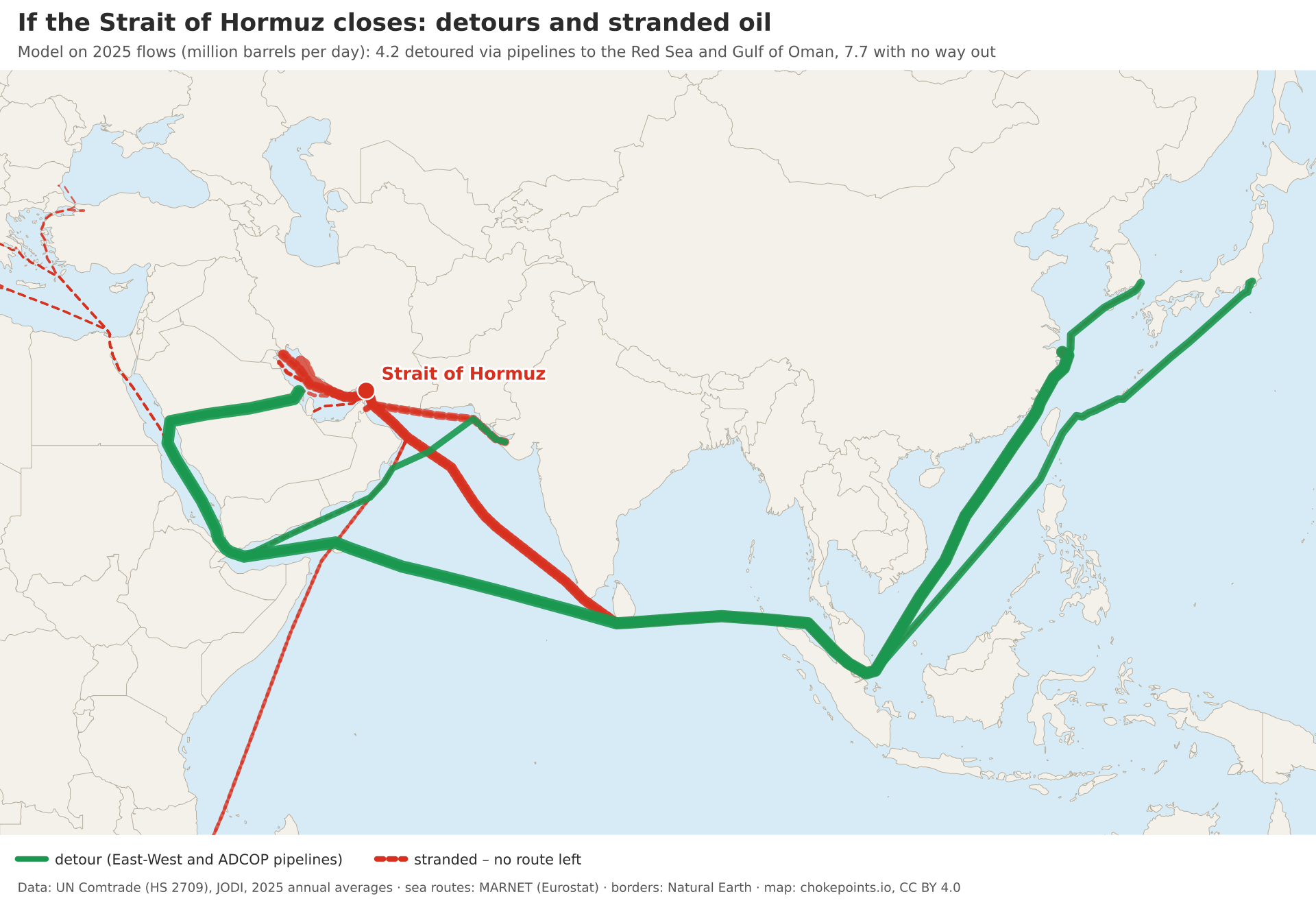
The Ras Tanura fire arrives against a backdrop of compounding disruptions to every stage of Saudi Arabia’s oil export chain. The IRGC declared the Strait of Hormuz closed on October 26, and tanker transits through the strait have fallen from approximately 85 per day before the conflict to just 4 on October 18, according to IMF PortWatch data.
On October 26, Houthis claimed drone attacks on East-West pipeline pumping stations, targeting the overland alternative that Saudi Arabia had relied on to bypass Hormuz. The East-West pipeline, with a design capacity of approximately 7 million barrels per day, had only restarted on September 22 after a previous disruption, according to Saudi Gazette via Zawya.
Houthi forces warned people to stay away from Saudi oil sites on October 8, according to the Associated Press. The attacks in subsequent weeks have moved through Saudi export infrastructure in sequence: the pipeline, then the strait, then the loading terminal itself. Each route serves a different function in the kingdom’s export system, and each is under a distinct form of pressure simultaneously.
OPEC+ has kept Saudi Arabia’s November production target at 10.5 million barrels per day, according to Enerdata. Whether the kingdom can move that volume to market — regardless of what it can produce — depends on infrastructure that is being tested from multiple directions at once. The IEA reported that cumulative Middle East supply losses had exceeded 1.3 billion barrels through late June, according to The National News. The figure has only grown since.
Diplomatic efforts between Saudi Arabia and Iran have not produced a ceasefire. The Hormuz closure, East-West pipeline strikes, and Tuesday’s Ras Tanura fire all occurred within 24 hours.
Background
Saudi Arabia and Iran have been engaged in an escalating conflict since early 2026, with Houthi forces — backed by Tehran — conducting regular missile and drone strikes against Saudi infrastructure. The conflict has disrupted global oil supply at multiple points: the Strait of Hormuz, inland pipeline infrastructure, refineries, and coastal export terminals. The International Energy Agency reported that Saudi output fell 2.3 million barrels per day in August 2026, with crude shipments dropping to 6 million barrels per day, according to Reuters.
Ras Tanura, located on a peninsula in Saudi Arabia’s Eastern Province facing the Persian Gulf, has been a focal point of this conflict. The March drone attack and subsequent four-month shutdown demonstrated the terminal’s vulnerability and its outsize influence on global oil pricing. When loading resumed on June 26, Brent fell from approximately $120 to $70 within weeks, according to Hydrocarbon Processing. Whether the October 27 fire has disrupted those loading operations is unresolved at the time of publication.
Frequently Asked Questions
What is the Ras Tanura Sea Islands facility?
The Sea Islands are a set of crude loading jetties located offshore from the Ras Tanura peninsula, connected to onshore storage by submarine pipelines. They allow Very Large Crude Carriers to load directly from the terminal. Before the 2026 conflict, the jetties were the departure point for crude shipments primarily destined for refineries in China, Japan, South Korea, and India. Whether the Sea Islands sustained any damage on October 27 has not been confirmed.
Has Saudi Arabia issued force majeure on crude deliveries?
No force majeure notices related to the October 27 Ras Tanura fire had been made public at the time of publication. In crude oil term contracts, force majeure clauses allow a seller to suspend delivery obligations when an extraordinary event — a military strike, natural disaster, or infrastructure failure — prevents normal operations; declaration requires formal notification to buyers, who must then seek alternative cargoes on the spot market. The absence of a notice at publication time suggests Aramco had not yet determined that loading operations were sufficiently disrupted to trigger that threshold — or had not yet had time to assess.
What fiscal pressure does Saudi Arabia face from oil disruptions?
Saudi Arabia projected a budget deficit of 245 billion riyals for 2026, according to Reuters via Zawya. Prolonged disruptions to crude export infrastructure compound that fiscal strain by reducing the volume of oil the kingdom can sell, even as elevated prices partially offset lower volumes. The IEA has documented cumulative supply losses exceeding 1.3 billion barrels through late June, according to The National News — a figure that represents both lost revenue and unmet global demand.
What other export routes does Saudi Arabia have besides Ras Tanura?
The primary alternative is the East-West pipeline, which carries crude overland from the Eastern Province to the Red Sea port of Yanbu, bypassing the Strait of Hormuz entirely. The pipeline has a design capacity of approximately 7 million barrels per day, according to Saudi Gazette via Zawya. However, Houthi forces claimed drone attacks on the pipeline’s pumping stations on October 26. The Associated Press reported on October 8 that Houthis had warned people to stay away from Saudi oil sites, suggesting the group views energy infrastructure as a continuing target set.
How did the March 2026 Ras Tanura shutdown affect global oil markets?
The March 2 Iranian drone attack led Aramco to shut the 550,000-barrel-per-day refinery as a precaution, halting all crude loadings for nearly four months. During the shutdown, Brent traded around $120 per barrel. When Aramco resumed loading on June 26 and a US-Iran interim deal briefly eased Hormuz conditions, Brent fell to approximately $70 in July, according to Hydrocarbon Processing — a swing of roughly $50 per barrel tied in part to one terminal’s operational status.
The House of Saud Daily Briefing
Saudi Arabia's news in 3 minutes, every morning. Free. See today's issue