
WASHINGTON — Democrats won 54 Senate seats and at least 228 House seats on November 3, giving the party control of both congressional chambers for the first time since January 2023 and handing it the committee gavels that determine which arms sales reach a floor vote and which die in markup. For Saudi Arabia, the arithmetic changed overnight. A $24.3 billion F-35 sale whose 30-day review clock expired on October 17 without a blocking vote now faces a Senate Foreign Relations Committee that will be chaired by a Democrat when the 120th Congress convenes in January 2027 — and Senator Ed Markey’s resolution of disapproval, introduced before the midterms, remains pending. The Letter of Offer and Acceptance, the document that makes the sale legally binding, has not been issued.
The shift matters less than it appears in one direction — Trump retains the executive authority to strike Iran whenever he chooses, and a Democrat Congress cannot override his veto — and more than it appears in another. Arms transfers, base-access agreements, and the political appetite for American forces operating from Saudi soil all run through congressional chokepoints that Democrats now control. Mohammed bin Salman spent years rebuilding the US-Saudi relationship on the assumption that a sympathetic White House could carry the full weight. A hostile Congress tests that assumption in ways Riyadh has not faced since the Khashoggi crisis of 2018 and 2019.
The House of Saud Daily Briefing
Saudi Arabia's news in 3 minutes, every morning. Free. See today's issue
Table of Contents
What Happens to the $24.3 Billion F-35 Sale?
The sale is approved but not yet binding. The 30-day congressional review expired without a blocking vote, but the Letter of Offer and Acceptance has not been issued. Senator Markey’s disapproval resolution survives into a Congress where Democrats will chair the committee that decides its fate.
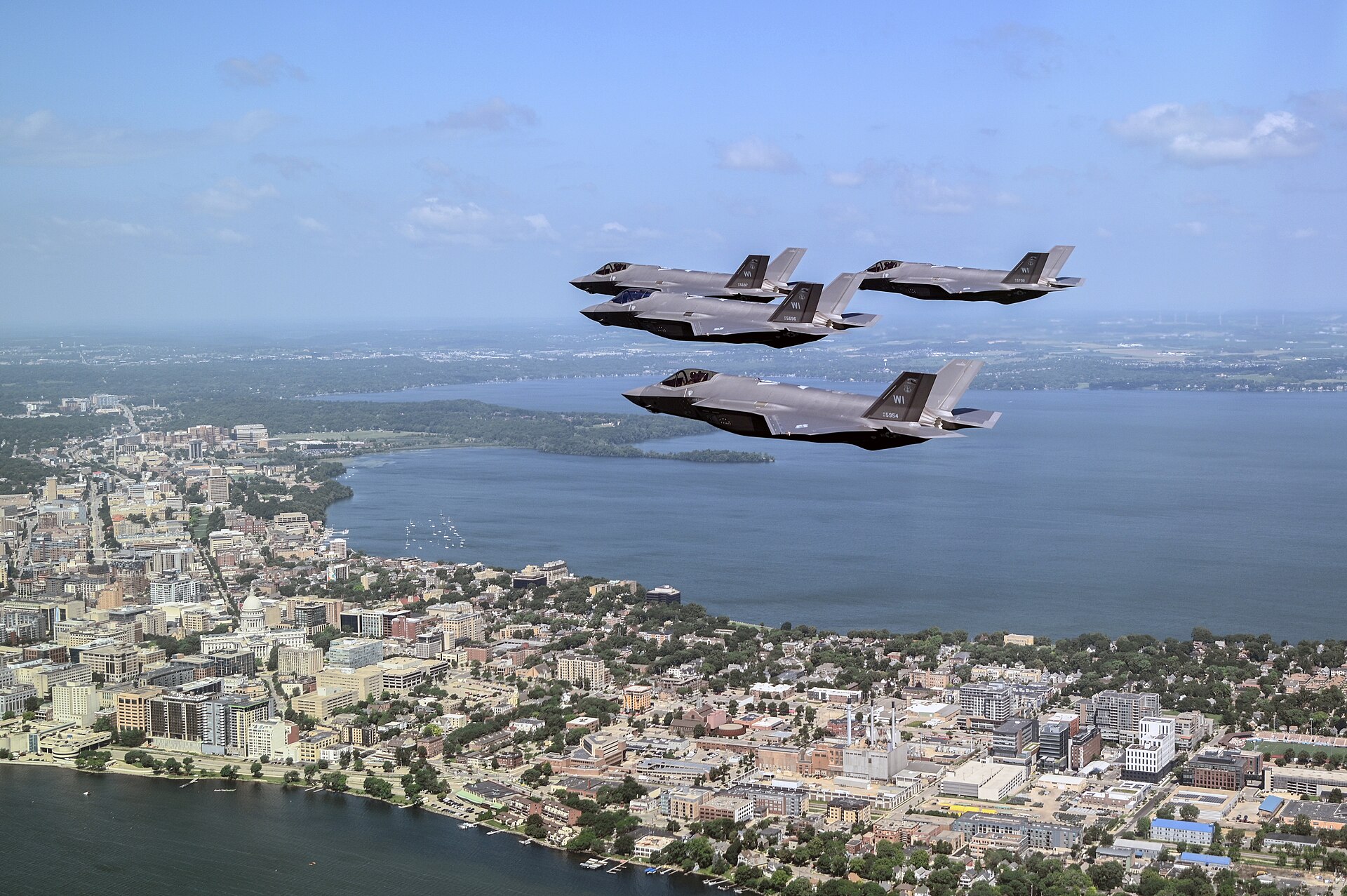
The formal congressional review for the proposed sale of 48 F-35A Lightning II aircraft to Saudi Arabia, valued at $24.3 billion, expired on October 17 without a vote to block it, according to Times of Defence and International Defence Analysis. That expiration does not mean the sale is done. The Letter of Offer and Acceptance — the contractual instrument that binds both governments — has not been signed. And the resolution of disapproval introduced by Senator Ed Markey of Massachusetts remains alive in the Senate Foreign Relations Committee, where it will be taken up by a Democratic majority in January.
Markey’s objections run broader than the jets themselves. He cited the concurrent $5 billion sale of bombs and guidance kits, the civil nuclear cooperation agreement signed in July, and what he described as unresolved concerns about the Saudi-led campaign in Yemen, according to Reason. Representative Raja Krishnamoorthi of Illinois added a separate argument: that advanced F-35 technology could reach China through Saudi Arabia, citing a New York Times intelligence assessment, as reported by Breaking Defense.
The China vector introduces a complication that human-rights arguments alone did not. A Democratic committee chair sympathetic to the intelligence community’s concerns about technology transfer has a procedurally simple path: hold hearings, demand classified briefings, and slow-walk the Letter of Offer until conditions are attached. The sale need not be formally voted down to be effectively frozen. Lockheed Martin’s delivery schedule, already stretched across its global order book, does not wait for Washington’s internal politics. Slots deferred are slots reassigned.
For Riyadh, the F-35 is not merely a fighter aircraft. It was the centrepiece of the Strategic Defense Agreement signed at the White House in November 2025, when Trump approved a package that included nearly 300 tanks and designated Saudi Arabia a major non-NATO ally, as Enterprise reported. The jets represented a qualitative leap that would have placed Saudi Arabia’s air force in the same technological tier as Israel’s — Trump himself said the Saudi F-35s would be “pretty similar” to Israel’s variant, according to Dawn. Losing or delaying them rewrites the force-planning assumptions that the Saudi military has built around for the past year.
Can Democrats Actually Stop a Strike on Iran?
No. Democrats can force symbolic votes and attach spending riders, but the president retains command authority over military operations, and a veto blocks any binding War Powers Resolution. The real leverage is indirect: appropriations riders on must-pass spending bills that force the White House into politically costly confrontations.
The 2026 record illustrates why. Democrats can force votes that embarrass the White House; they cannot prevent the president from ordering military operations. The House passed Iran War Powers Resolutions on June 3, voting 215 to 208, and again on July 23, 214 to 208, according to NPR. The Senate passed its own resolution on June 23, 50 to 48, with Republican senators Bill Cassidy, Susan Collins, Lisa Murkowski and Rand Paul crossing party lines, as the American Society of International Law documented.
None of it bound the president. Concurrent resolutions — the kind Congress passed — lack the force of law. A joint resolution would require a presidential signature, and Trump would veto it. The July 23 Senate vote on a joint resolution failed 47 to 49, according to CNBC. Even with their new 54-seat majority, Democrats remain well short of the 67 votes needed to override.
The president retains command authority over military operations regardless of who controls the committee rooms. A veto blocks any joint resolution, including a War Powers Resolution on Iran.
What Democrats can do is less dramatic but more consequential over time. Senator Chris Murphy of Connecticut, speaking to Türkiye Today on November 4, outlined a strategy of appropriations riders: Democrats would “fund the Defense Department but attach a provision barring any money from going to the war against Iran.” Riders inserted into must-pass spending bills create a different kind of leverage than standalone resolutions. They force the president to choose between accepting the restriction and shutting down the government — or vetoing the bill and shouldering the political cost. The question is whether Democrats can hold their caucus together through a conference committee. Trump, who told CBS News he “would strike Iran again,” has reasons to avoid that test.
Why Did Murphy Go to Riyadh?
Because the Iran war transformed the political economics of the US-Saudi relationship. The senator who was once Riyadh’s fiercest Democratic critic returned from a pre-midterm visit saying Washington “needs the Saudis,” signalling that a pragmatist wing of the party sees the security relationship as load-bearing, not dispensable.
Murphy’s evolution is the most under-reported subplot of the midterm cycle. After the Khashoggi murder in October 2018, Murphy was the Senate’s most vocal critic of the US-Saudi relationship. He co-authored the resolution that directed an end to US military support for the Saudi-led coalition in Yemen. He gave floor speeches. He held up nominations. He was, by any measure, the Democratic senator Riyadh most needed to neutralise.
He visited Riyadh before the midterms. And he came back saying Washington “needs the Saudis,” according to Türkiye Today. The shift was not a conversion. It was a recognition that the Iran war had changed the underlying structure of the relationship. With Houthi strikes hitting Riyadh’s airports and Aramco facilities, with the Strait of Hormuz effectively closed for extended periods, and with roughly 100 US military advisers already stationed in Saudi Arabia providing intelligence support according to CNN, the argument that the United States should distance itself from the kingdom had collided with the fact that American personnel were already there.
Murphy’s positioning tells Riyadh two things. First, that the Democratic caucus is not monolithic. There is a faction — call it the pragmatist wing — that recognises the security relationship as load-bearing and wants to maintain it, with conditions. Markey represents the other faction, the one that sees arms sales as moral leverage and the nuclear deal as a proliferation risk. The balance between these two wings will determine what emerges from committee.
Second, Murphy’s Riyadh visit signals that the senator is positioning himself for a role in shaping the relationship, not merely opposing it. A senator who visits the capital, meets the officials, and returns with a nuanced message is a senator who expects to chair a relevant subcommittee. For MBS, the practical question is whether to invest political capital in the Murphy wing or to bypass Congress entirely through executive mechanisms. The answer is probably both.
The Emergency Exception and Its Limits
Trump has a workaround, and there is recent precedent for it. On March 19, 2026, the State Department invoked Section 36(b)’s emergency exception to process arms notifications to Gulf allies including the UAE, Jordan, and Kuwait, skipping the standard 30-day congressional review, as the Defense Security Cooperation Agency confirmed and Defense Security Monitor reported on April 23. Saudi Arabia was not included in that emergency tranche — CRS and other sources confirm it lacked the status-of-forces agreement that underpinned the emergency certification. But the authority exists, and the question for Riyadh is whether a future determination could include the F-35 Letter of Offer.
The precedent is already set. Trump used the same mechanism in 2019, when Congress voted to block $8 billion in arms sales to Saudi Arabia after the Khashoggi murder. He vetoed three resolutions — one on the arms sale and two War Powers Resolutions on Yemen — and Congress failed to override. The Washington Post reported on the vetoes in July 2019. The constitutional architecture is clear: a determined executive can sustain arms transfers against congressional opposition, provided the president is willing to spend the political capital.
The approximately $44 billion in US arms approvals to Saudi Arabia during 2026 alone, as tallied by Arabian Gulf Business Insight, reflects a pace that assumes executive dominance. That total includes the $9 billion Patriot PAC-3 MSE sale approved in January, the $5.75 billion in JDAM-ER kits and tank engines approved in September, and the pending F-35 Letter of Offer. Whether Trump invokes emergency authority again to push the F-35 LOA through before Democrats take the gavels in January is the most consequential near-term question.
But the emergency exception has a cost. Each time a president bypasses congressional review, the political price of the next bypass rises. Members of both parties who value the institution’s prerogatives — and who face voters who notice — accumulate grievances. The appropriations riders Murphy described represent a different form of congressional power, one that the emergency exception does not neatly circumvent. A president can skip a 30-day review window. He cannot easily sign a defence appropriations bill that includes a prohibition on spending for operations he intends to conduct.
How Tehran Reads the Midterms
With public celebration and private caution. Parliament Speaker Ghalibaf declared Americans had voted against war; Supreme Leader Mojtaba Khamenei warned his own establishment not to expect any meaningful change from a Democratic Congress. The split reveals a regime that wants to exploit the congressional wedge while doubting it will hold.
Iran’s reaction split into two registers within hours, and the gap between them is the story. Parliament Speaker Mohammad Bagher Ghalibaf posted on X immediately after the results: “Americans said NO TO WAR, and we endorse this message,” as PBS NewsHour and Spectrum News reported. State-linked newspaper Hamshahri ran an image of Trump bowed and blindfolded, an echo of the 1979 hostage crisis imagery, according to PBS NewsHour. The public-facing message was triumphalist: the American people had repudiated Trump’s war, and Tehran claimed vindication.
Supreme Leader Mojtaba Khamenei issued the corrective. “If there are still those who harbor even a slight hope for a change in behavior or partisan and factional shifts within the system of domination… they are gravely mistaken,” PBS NewsHour reported him saying. The statement was directed inward, at an Iranian political class that might interpret the midterms as an opening for negotiation or concession. Khamenei was telling his own establishment that a Democratic Congress changes nothing fundamental about the American threat.
He is mostly right, and partly wrong. He is right that Trump retains strike authority and that a veto blocks any binding congressional constraint. He is wrong — or at least incomplete — in dismissing the congressional shift’s second-order effects on Saudi Arabia. If Democrat control delays arms transfers, complicates base-access arrangements, and raises the political cost of American forces operating from Saudi soil, the net effect is a weaker US-Saudi security posture in the Gulf even without a single new restriction on Iran operations.
Iran International raised the inverse possibility on November 4: that a Democrat Congress might actually accelerate Trump’s Iran timeline. The argument runs that a president facing a hostile legislature has an incentive to act before new constraints take effect — to present Congress with a fait accompli rather than a request for permission. Trump twice declined Crown Prince Mohammed bin Salman’s requests for US strikes on Houthi positions in September, CNN reported on October 10. Those refusals came when Congress was still divided. Whether the calculus changes with both chambers in opposition is a question Tehran should be asking, regardless of Khamenei’s public dismissals.
Does the Makkah Pact Fill the Gap?
Not yet. The pact established a mutual-defence principle and a secretariat, but no joint command, no standing force, no common data links, and no automatic response mechanism. Pakistan’s troops provide a tripwire presence. Analysis suggests the pact may not even cover drone attacks, which account for the majority of Houthi strikes on Saudi territory.
The Makkah Joint Defence Pact, signed on August 7, established the principle that an attack on one member is an attack on all, as Kuwait Times and AFP reported. A secretariat was formed in Saudi Arabia in August 2026, with a Pakistani secretary-general, according to Geopolitical Monitor and Arab News. Turkey’s parliamentary committee approved the pact, though the full General Assembly has not voted. Syria is in negotiations to join.
The gap between principle and capability remains wide. No integrated command structure has been publicly disclosed. No standing force exists. There are no common data links, no compatible munitions standards, and no automatic response mechanism. Pakistan’s Defence Minister Khawaja Asif said on October 5 that “if there is unprovoked aggression, or a spillover of whatever is happening in Yemen into Saudi Arabia, definitely the Mecca agreement will become operational,” as Geo News and Al Jazeera reported. Pakistan’s foreign ministry said on September 10 that it was “not considering an immediate military response” under the pact following Houthi strikes, Dawn reported.
The distance between Asif’s conditional promise and the foreign ministry’s immediate disclaimer captures the pact’s operational reality. About 8,000 Pakistani troops are deployed in Saudi Arabia, according to Reuters, along with roughly 16 JF-17 aircraft and an HQ-9 air defence system financed by Riyadh, as Reuters separately reported in May. Those forces provide a tripwire presence but not the integrated air and missile defence that the Houthi drone threat demands.
Analysis from Horn Review, published October 8, identified a specific vulnerability: the pact’s text may not automatically activate against drone attacks, which account for the majority of Houthi strikes on Saudi territory. If the mutual-defence trigger requires a threshold of conventional military aggression that drones fall below, the pact addresses the wrong threat. Saudi Arabia’s most immediate security problem is not a conventional invasion but a persistent campaign of low-cost unmanned strikes against airports, oil facilities and civilian infrastructure — the kind of asymmetric warfare that collective defence treaties have historically struggled to address.
The question the Democratic midterm sweep forces is whether Riyadh can afford to treat the joint-command gap as aspirational rather than urgent. If the US security umbrella becomes politically contested in ways it was not before — if every arms transfer requires a fight, if every deployment invitation becomes a congressional hearing — then the Makkah Pact needs to become operational faster than its current trajectory suggests. Secretary of State Marco Rubio said on October 5 that “we intend to live by” the US-Saudi defence agreement, The National reported. Living by it and being able to deliver on it through a hostile Congress are different propositions.
China Walks Through the Door
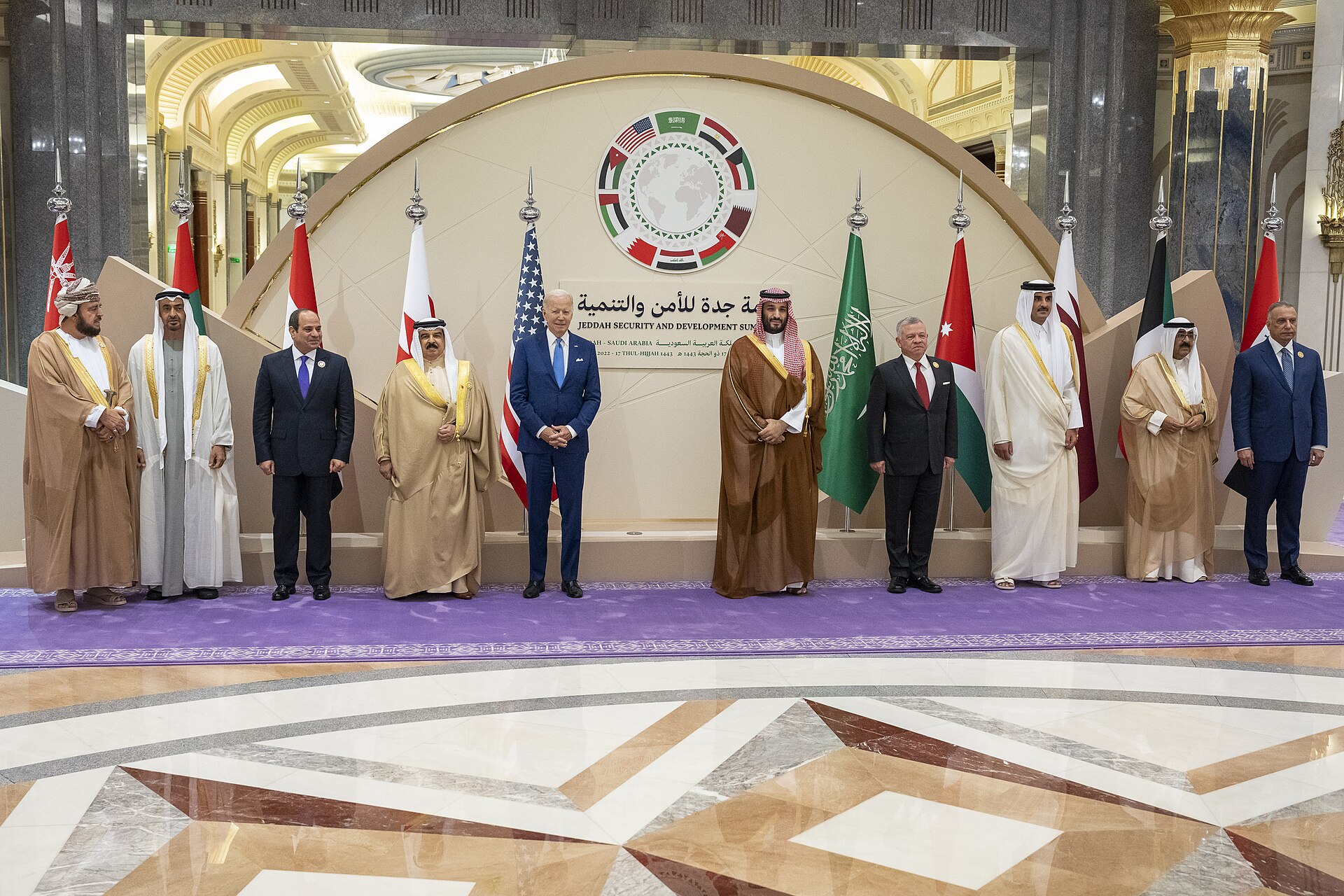
Saudi National Security Adviser Musaed Al-Aiban met Chinese Foreign Minister Wang Yi in Beijing on November 2 and delivered a letter from Crown Prince Mohammed bin Salman to President Xi Jinping concerning bilateral ties, Arab News reported. The timing was deliberate. With the midterm results still incoming, with the US-Saudi arms pipeline facing new political headwinds, and with the Iran conflict entering an uncertain phase, Riyadh signalled that it has options.
Wang Yi met Iranian officials the same day. He described the regional situation as having “again reached a critical crossroads between war and peace,” CGTN reported. Beijing announced that its special envoy would visit Iran, Oman and Saudi Arabia. The choreography was obvious: China positioned itself as the neutral mediator, the power that talks to both sides, the alternative to a Washington that — from Riyadh’s perspective — is increasingly constrained by its own domestic politics.
Wang Yi’s call for parties to “resolve differences and end hostilities through dialogue… and safeguard energy and shipping lane security,” as CGTN quoted him, aligns with Saudi interests in a way that a Democrat-controlled Congress may not. Riyadh wants arms, security guarantees, and freedom of navigation through Hormuz. Washington can provide the first two but faces new domestic obstacles. Beijing can provide diplomatic cover and economic partnership but lacks the military capacity to project force in the Gulf. The ideal Saudi position is to maintain both relationships, using each as leverage against the other’s limitations.
The risk is that the China card overplays itself. Krishnamoorthi’s opposition to the F-35 sale was grounded specifically in the concern that advanced technology could reach China — an argument that gains force precisely when Riyadh is seen as deepening ties with Beijing. Every Al-Aiban visit to Beijing makes the next F-35 committee hearing harder, not easier. MBS’s diplomatic opening to China is rational as insurance but counterproductive as display.
The $50 Billion Deficit Question
Saudi Arabia’s projected 2027 budget deficit stands at 191 billion riyals, equivalent to approximately $50.93 billion, according to Zawya and Reuters reporting from September 30. The Saudi government’s pre-budget statement, also released September 30, projected real GDP contracting 3.6 per cent in 2026 on a 21.8 per cent drop in oil activities, according to Reuters via Zawya. Aramco’s third-quarter profit came in at $36.25 billion, the company’s investor relations filing showed. The fiscal picture compresses the timeline for every strategic decision Riyadh faces.
A defence relationship that requires buying $44 billion in American weapons in a single year — while running deficits of this magnitude, while funding Vision 2030 megaprojects, while absorbing the economic shock of Hormuz disruptions and Houthi attacks on oil infrastructure — strains the budget in ways that political friction in Washington makes worse. Delayed deliveries mean delayed capability. Delayed capability means continued vulnerability. Continued vulnerability means continued economic damage from attacks that a functioning integrated air defence might have prevented.
The fiscal pressure also shapes the Makkah Pact calculation. Building an integrated joint command from scratch — with common communications, interoperable munitions, joint training exercises, and a standing headquarters staff — costs money. Pakistan’s deployment is already financed by Riyadh. Scaling that model to include Turkey, Egypt, and potentially Syria requires a level of sustained defence spending that competes directly with the domestic investment agenda. The 2027 deficit suggests that Riyadh cannot do everything simultaneously. Something has to be sequenced, and the sequencing reveals priorities.
Democrats’ control of the appropriations process adds a variable that Saudi fiscal planners cannot model with confidence. If the F-35 sale is delayed by a year, force modernisation timelines shift. If appropriations riders restrict US military cooperation, the cost of alternative arrangements rises. If the political environment makes future emergency exceptions more costly for the White House, the pipeline of routine arms transfers — the less dramatic but operationally essential flow of spare parts, munitions, and maintenance support — faces the kind of uncertainty that defence ministries budget against but cannot eliminate.
Frequently Asked Questions
Who will chair the Senate Foreign Relations Committee in the 120th Congress?
The chairmanship will pass to a Democrat when the 120th Congress convenes in January 2027. Senator Jim Risch of Idaho chairs the committee in the current 119th Congress, with Senator Jeanne Shaheen of New Hampshire serving as the ranking Democrat, according to SenatorDB and CongressCountdown. The incoming chair has not been publicly confirmed; seniority rules and caucus elections in December will determine the appointment. Shaheen’s foreign policy record has been more moderate than Markey’s on Gulf issues, which could matter for how aggressively the committee pursues the F-35 disapproval resolution.
Has Saudi Arabia formally requested an acceleration of the Makkah Pact joint command?
No public request has been reported. The pact’s secretariat, established in August 2026 with a Pakistani secretary-general, represents the only institutional structure disclosed to date. The gap between the secretariat’s formation and the absence of any announced joint-command timeline suggests that the pact’s military integration remains in early planning stages rather than active implementation, as Geopolitical Monitor’s analysis indicated.
Could Trump issue the F-35 Letter of Offer and Acceptance during the lame-duck session?
Procedurally, yes. The 30-day congressional review period expired on October 17, and the executive branch retains the authority to issue the LOA without further congressional action during the lame-duck period of the 119th Congress. The political question is whether the administration judges it worth expending capital on a move that Democrats would characterise as circumventing the incoming majority’s oversight authority, particularly given that Democrats have also introduced a separate resolution to block the concurrent Saudi civil nuclear cooperation agreement, as ABC News reported.
What leverage do Democrats have over US military advisers already in Saudi Arabia?
CNN reported on October 11 that more than 100 US military advisers are stationed in Saudi Arabia providing intelligence support. Their presence falls under existing authorisations that do not require separate congressional approval for continuation. However, the appropriations power gives Congress indirect leverage: funding for intelligence-sharing programmes, maintenance contracts, and logistics support flows through annual defence spending bills. Murphy’s stated strategy of attaching Iran-related riders to appropriations legislation could, if successful, restrict the scope of advisory operations without requiring a standalone vote on troop presence.
Has Iran indicated willingness to negotiate with a Democrat-controlled Congress in place?
Iran’s Foreign Minister Abbas Araghchi told Qatari mediators on November 1 that a delegation had been formed to discuss reopening the Strait of Hormuz, as NewsCord reported. Bloomberg reported on November 2 that Hormuz reopening talks were advancing, though Iran simultaneously warned of a wider response if attacked. Supreme Leader Mojtaba Khamenei’s November 4 statement dismissing any hope from partisan shifts suggests the regime’s official position is that congressional composition does not alter Iran’s strategic posture — though Ghalibaf’s celebratory post indicates that at least some Iranian officials see domestic American politics as a factor they can exploit.
On November 5, Iran formally rejected the US reply to its Hormuz conditions, with SNSC Secretary Rezaei calling Washington’s response “not convincing.” Qatar and Pakistan are now pushing a narrower interim deal trading a halt to attacks on shipping for an end to the US blockade of Iranian ports. Iran’s rejection of the US reply on Hormuz and the Qatar interim framework are reported separately.
The House of Saud Daily Briefing
Saudi Arabia's news in 3 minutes, every morning. Free. See today's issue