BEIJING — Saudi national security advisor Dr. Musaed bin Mohammed Al-Aiban met Chinese Foreign Minister Wang Yi in Beijing on Monday and delivered a written message from Crown Prince Mohammed bin Salman to President Xi Jinping, the Saudi Press Agency reported. In a separate meeting the same day, Wang told Ali Bagheri Kani — deputy secretary of Iran’s Supreme National Security Council — to “focus on a political solution rather than once again resorting to armed conflict,” according to RTHK, making Beijing one of the few capitals conducting simultaneous face-to-face diplomacy with both sides of the Gulf crisis less than 36 hours before President Donald Trump’s moratorium on striking Iran expires with Tuesday’s midterm elections.
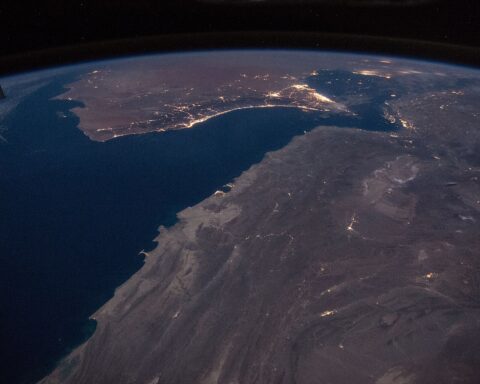
Wang declared the Middle East “has again reached a critical crossroads between war and peace” and called on all parties to “safeguard the region’s energy and shipping lane security,” according to Reuters. Al-Aiban is the same official who led the Saudi delegation to the March 2023 Beijing talks that produced the Chinese-brokered restoration of Saudi-Iranian diplomatic relations. His return to Beijing came as the Strait of Hormuz blockade neared its fourth month and Israeli Prime Minister Benjamin Netanyahu pressed Trump to strike Iran after the midterms, according to Axios.
The House of Saud Daily Briefing
Saudi Arabia's news in 3 minutes, every morning. Free. See today's issue
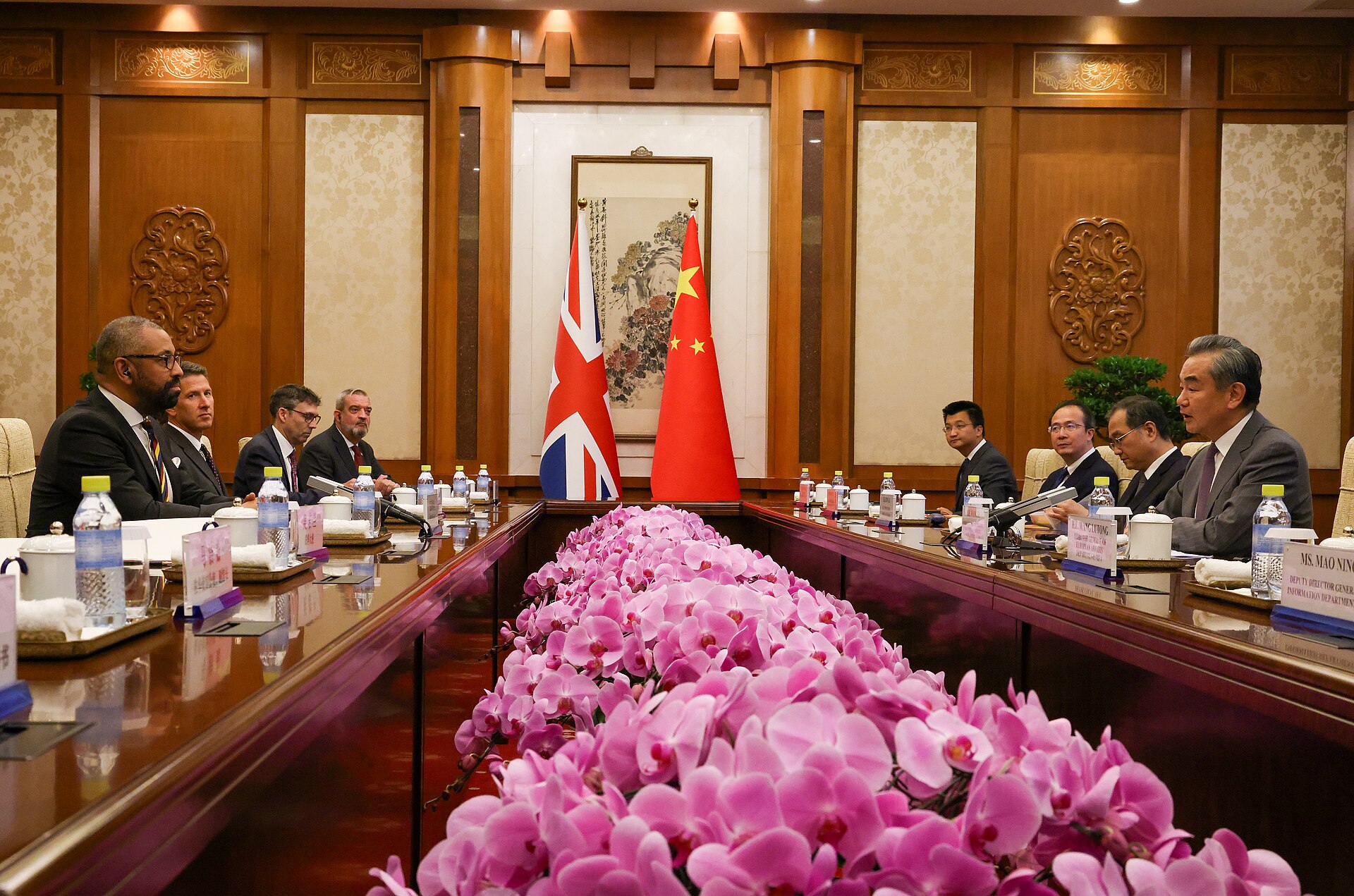
The Saudi Press Agency described the crown prince’s message as covering “bilateral relations, ways to develop them, and issues of common interest” but disclosed nothing further, according to Asharq Al-Awsat. China’s foreign ministry separately announced that Special Envoy for the Middle East Zhai Jun would visit Iran, Oman, and Saudi Arabia in early-to-mid November on shuttle diplomacy aimed at “promoting peace talks, easing tensions and de-escalating the situation,” spokesperson Mao Ning said, according to the Global Times.
Table of Contents
What Did Wang Yi Tell Saudi Arabia and Iran?
Wang Yi’s public statements on Monday split cleanly between his two meetings. The Saudi readout emphasized dialogue, negotiations, and energy security. The Iranian readout affirmed China’s support for Iran’s sovereignty while pressing for “a spirit of reason and pragmatism,” according to RTHK. Both readouts shared one telling omission: Wang did not demand that Iran reopen the Strait of Hormuz, a step he has taken explicitly on at least two prior occasions this year.
On April 13, Wang stated that “blocking the Strait of Hormuz would not serve the common interests of the international community,” according to CGTN. On September 16, meeting Iranian Foreign Minister Abbas Araghchi in Beijing, he went further: “We urge all parties to take effective measures to reopen the Strait of Hormuz at an early date,” according to the Chinese foreign ministry. Monday’s language — calling on parties to “safeguard the region’s energy and shipping lane security” — treated the crisis as a shared problem rather than singling out Iran, a shift from the September formulation that the readouts did not explain.
Wang told Bagheri Kani that China “supports Iran in safeguarding its own sovereignty and security,” according to RTHK — language that Tehran could read as backing for its position even as Beijing urged restraint. Whether that dual message reflects deliberate ambiguity or competing imperatives within China’s foreign policy establishment, the readouts do not say. What they do establish is that China’s public rhetoric on the blockade has softened since September, even as the economic toll of the crisis has steepened.
On the same day, Xi held talks with Oman’s Sultan Haitham bin Tariq al-Said, and a China-Oman joint statement called for revival of the Islamabad Memorandum and restoration of safe navigation through the Strait of Hormuz, according to WANA. Between the two Wang Yi meetings, the Zhai Jun shuttle diplomacy announcement, and the Xi-Oman statement, Beijing assembled four separate diplomatic moves on Hormuz in a single day.
Why Did Saudi Arabia Send Al-Aiban Back to Beijing?
Al-Aiban led the Saudi side of the March 2023 Beijing talks that ended a seven-year diplomatic freeze between Saudi Arabia and Iran — a breakthrough no Western capital had been able to broker. The crown prince did not send his foreign minister or an ambassador to deliver Monday’s message to Xi. He sent the man who had already closed a deal in this room, carrying a personal message from the crown prince.
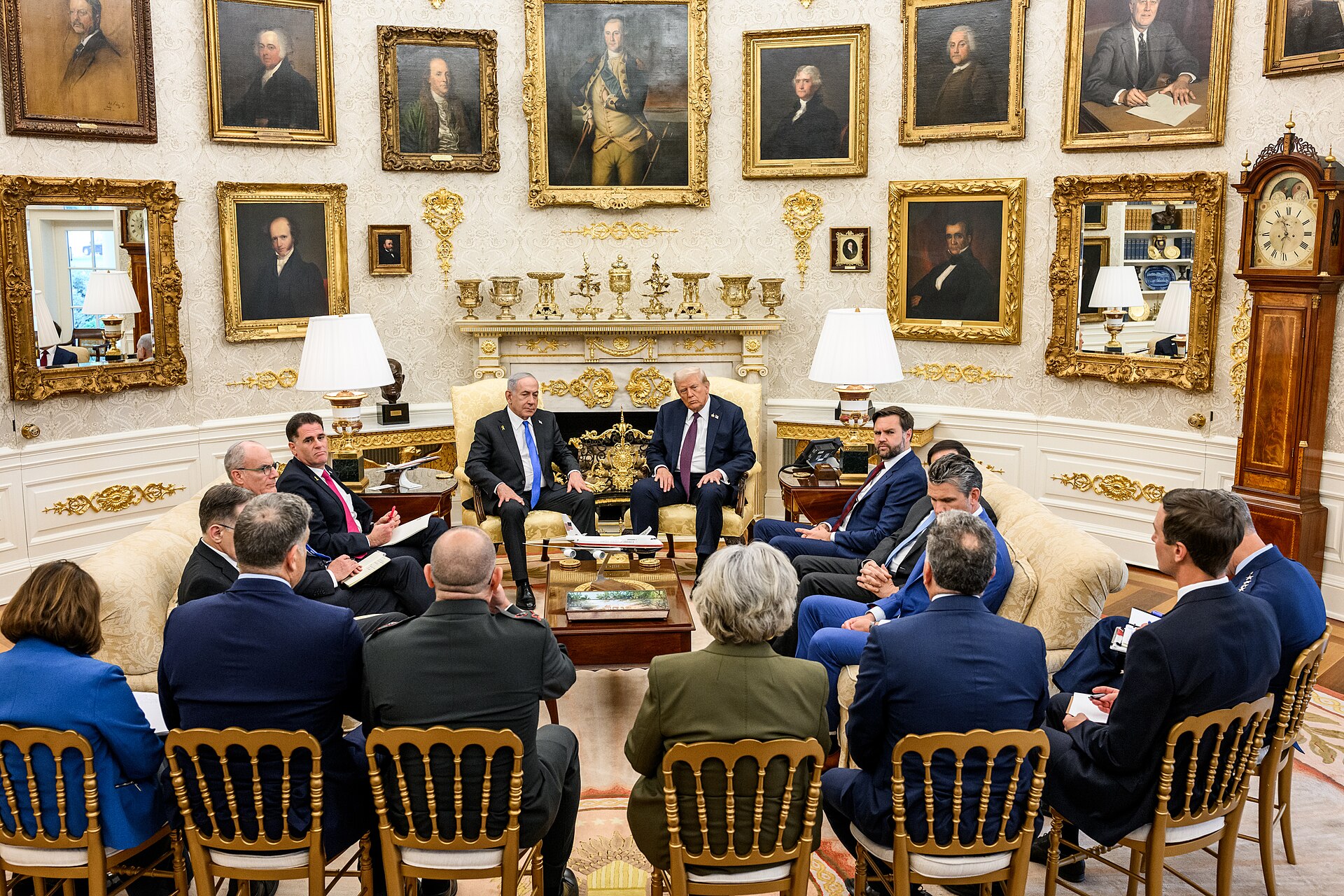
The timing was not subtle. Trump ruled out attacking Iran before the November 3 midterm elections in comments reported by The National on October 8. That moratorium expires on Tuesday. Saudi Arabia faces at least four post-midterm scenarios ranging from renewed negotiations to American military strikes against Iran, and Trump said on October 31 that Iran wants to talk even as mine attacks continued in the strait.
Al-Aiban’s Beijing visit ran alongside other diplomatic channels that have produced no agreement. Iran offered a 2-day Hormuz reopening through the Qatar-brokered Doha process, but the offer has not been accepted. Iran’s Foreign Minister Araghchi submitted a 7-day Hormuz roadmap through Qatar on September 25 — proposing that the strait reopen in exchange for sanctions waivers and approximately $12 billion in frozen Iranian assets, according to Al Jazeera — and that plan has produced no breakthrough either. No source has confirmed whether the China channel and the Qatar-brokered track are coordinated.
What the meeting confirmed is that Saudi Arabia is working every available channel before the American military option comes back into play. The Makkah Defence Pact still lacks a joint command as the moratorium expires. The Beijing channel is, for now, the one that has delivered results before.
China’s Dual Role in the Hormuz Crisis
China’s position as a Gulf mediator sits uncomfortably alongside its record as Iran’s economic lifeline and its history of shielding Tehran from enforcement. In April, China and Russia vetoed a UN Security Council resolution calling for the reopening of the Strait of Hormuz. China’s UN envoy argued the resolution placed “all the blame on Iran,” according to the record of the vote — a framing that blocked the only international enforcement attempt of the crisis.
CNN reported on September 25 that Chinese satellite imagery and intelligence had improved Iran’s ability to track vessels in the strait and target American military bases. Secretary of State Marco Rubio, asked about the report, declined to address it directly but noted that China had opposed Iranian tolling of Hormuz shipping, according to CNN. The allegation — denied by neither government — complicates Beijing’s presentation of itself as a neutral broker.
Iran has not exempted Chinese vessels from the blockade. Two Chinese-flagged ships were blocked from entering the Strait of Hormuz around March 27, according to contemporaneous reports of the crisis. The incidents tested the assumption that Beijing’s relationship with Tehran would guarantee its own commercial passage — an assumption that neither government has publicly confirmed or denied.
Yet China remains Iran’s most important economic partner. Chinese buyers purchase more than 80 percent of Iran’s crude oil exports, with transactions settled in yuan, according to Al Jazeera. That dual exposure — shielding Iran diplomatically while absorbing the commercial cost of the blockade — defines the tension at the center of Monday’s meetings. Wang Yi told Bagheri Kani to choose a “political solution.” He did not say what would happen if Tehran refused.
How Much Is the Hormuz Crisis Costing China?
The numbers behind Monday’s diplomacy are brutal. China’s crude oil imports fell approximately 32 percent in the second quarter of 2026 compared with the first quarter, averaging 8.1 million barrels per day — a decline analysts attributed to the Gulf supply disruption, according to US Energy Information Administration data reported by Econovis. Saudi crude deliveries to China dropped to a record low of approximately 645,000 barrels per day in May, down from approximately 1.4 million barrels per day in 2025, according to Reuters.
Before the blockade began, China depended on the Strait of Hormuz for 49 percent of its oil imports. By August that share had fallen to 38 percent as importers scrambled for alternative suppliers, according to Econovis. The cost of the oil that still moves through the Gulf has exploded — supertanker rates on the Gulf-to-China route exceeded $1 million per day in October, according to LSEG data reported by bdnews24, compared with roughly $80,000 per day a year earlier. That is a 12-fold increase in the cost of shipping a single cargo.
Saudi Arabia is pricing its crude to match the desperation. Aramco set its November official selling price for Arab Light crude to Asian buyers at $5 per barrel below the Oman/Dubai benchmark — the widest discount since June 2020, according to Reuters. China is Saudi Arabia’s largest trading partner, with bilateral trade exceeding $100 billion in 2025, according to Arab News. CENTCOM reported that 135 vessels had been turned around from the strait as of October 10, according to CBS News — each one a cargo that Chinese, Indian, Japanese, and South Korean refiners had expected to receive.
Diplomacy Before the Moratorium Expires
Monday’s Beijing meetings landed at the intersection of three diplomatic tracks that have so far failed to resolve the crisis. The Qatar-brokered Doha process has produced Iran’s 7-day Hormuz roadmap and a subsequent 2-day counter-offer, but no agreement, according to Al Jazeera. The Makkah Defence Pact still lacks a joint command structure as the moratorium expires. And Iran’s Araghchi proposed a 2-day Hormuz reopening timed to the moratorium expiry that has drawn no public response from Washington or Riyadh.
China’s announced next step is Zhai Jun’s shuttle diplomacy tour to Iran, Oman, and Saudi Arabia in early-to-mid November, according to the Global Times. Mao Ning said the visits would allow China to “play a constructive role in safeguarding regional peace and stability.” No source has confirmed whether Beijing intends to apply economic pressure on Iran, or whether its intervention extends beyond the diplomatic statements delivered on Monday.
The content of the crown prince’s message to Xi remains undisclosed. Whether it requested Chinese pressure on Tehran, proposed a framework for reopening Hormuz, or addressed the bilateral relationship alone is unknown. What is known is the calendar: Zhai Jun’s shuttle diplomacy will begin in a region where Trump’s moratorium on striking Iran has expired and the military option he suspended before the midterms is no longer off the table.
Frequently Asked Questions
Who is Dr. Musaed bin Mohammed Al-Aiban?
Al-Aiban holds three overlapping titles: Minister of State, Cabinet Member, and National Security Advisor — making him Saudi Arabia’s most senior security official below the crown prince. He led the Saudi delegation to the March 6-10, 2023 Beijing talks that produced the Chinese-brokered Saudi-Iran rapprochement, the agreement under which both countries reopened embassies and exchanged ambassadors for the first time since 2016. His dispatch to Beijing on Monday with a personal message from Mohammed bin Salman marks his most visible diplomatic mission since that breakthrough.
What is the Islamabad Memorandum that China and Oman want revived?
The Islamabad Memorandum is a framework agreed in June 2026 that proposed a 60-day passage arrangement through the Strait of Hormuz. It was never fully implemented. The China-Oman joint statement issued on November 2 called for its revival alongside the restoration of safe navigation through the strait, according to WANA. The memorandum remains the most detailed multilateral framework for reopening Hormuz, but Iran has since escalated its conditions beyond what the original text envisioned.
Could China use the Hormuz crisis to extract concessions on Taiwan?
Several analysts have raised this possibility. Christopher Heurlin, associate professor at Bowdoin College, told Al Jazeera in May that Beijing was “holding off on putting any pressure on Iran to end the conflict” while awaiting signals on Taiwan. Inderjeet Parmar, professor of international politics at City St George’s University of London, told the same outlet that China “can use this as leverage regarding Taiwan.” A $14 billion US arms package for Taiwan remains pending US congressional approval, according to Al Jazeera, and some scholars believe Beijing may seek concessions on Taiwanese independence in exchange for pressing Iran toward a deal.
Has China ever publicly threatened to cut economic ties with Iran over Hormuz?
No. Beijing has not publicly threatened to reduce oil purchases, impose financial sanctions, or apply any economic consequences on Tehran for the blockade. China’s strongest tool against Iran is its position as the dominant buyer of Iranian crude, but it has never indicated a willingness to use that position as a pressure tool. Wang Yi’s harshest public language came on September 16, when he urged Iran to reopen the strait “at an early date.” Beijing has consistently relied on diplomatic statements and UN Security Council vetoes rather than economic pressure, and nothing in Monday’s readouts suggested that approach has changed.
The House of Saud Daily Briefing
Saudi Arabia's news in 3 minutes, every morning. Free. See today's issue