
RIYADH — Houthi military spokesman Yahya Sarea claimed four separate operations on November 10, targeting King Khalid International Airport, Aramco facilities in Abqaiq, a troop assembly in Yemen’s Lahj province supervised by a person he named as a Saudi officer, and Riyadh’s financial centre, according to statements broadcast on Al-Masirah TV and reported by Xinhua and CGTN. The Saudi-led coalition said air defences had intercepted one ballistic missile and one cruise missile fired at Riyadh, a ballistic missile aimed at southern Saudi Arabia, and destroyed a drone over the Eastern Province, coalition spokesman Turki al-Maliki announced on X, Asharq Al-Awsat reported.
The four-pronged claim spans everything from Saudi Arabia’s aviation and oil infrastructure — both under sustained assault for weeks — to the financial hub struck two days earlier and a frontline battle zone hundreds of kilometres away in southwestern Yemen. Residents in Riyadh received text message alerts about an “aerial threat” as multiple explosions were heard across the capital, AFP reported, while Saudi Civil Defence later said the danger had passed.
The House of Saud Daily Briefing
Saudi Arabia's news in 3 minutes, every morning. Free. See today's issue
Table of Contents
What Did the Houthis Claim on November 10?
Sarea’s statement, broadcast from the Houthi-controlled capital Sanaa, laid out four operations in sequence. The first targeted King Khalid International Airport and pumping stations on the East-West pipeline, Xinhua reported. The second targeted Aramco facilities in Abqaiq, the Kingdom’s largest oil-processing complex in the Eastern Province.
Both targets have been hit repeatedly through the current escalation. KKIA was struck in October, triggering airline cancellations that at one point grounded more than a third of Saudi flights. Abqaiq was previously named in a Houthi operation claimed on November 7, when Sarea listed six separate operations targeting Aramco facilities, KKIA and a National Guard camp in Najran.
The third operation, Sarea said, “targeted gatherings supervised by the Saudi officer Bader Al-Harbi in Al-Mudariba and Ras Al-Ara, resulting in a large number of casualties,” according to CGTN. Xinhua’s reporting placed this operation in the Al-Madaribah and Ras Al-Arah areas of Yemen’s Lahj province — a battlefield claim inside Yemen, not an attack on Saudi territory. Bader Al-Harbi was named by the Houthis as a Saudi officer; his identity could not be independently verified from open sources. No specific casualty figure was provided.
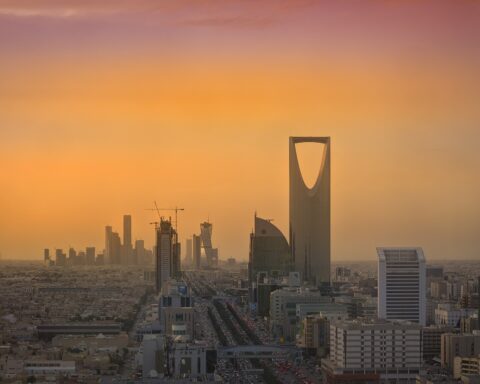
The fourth operation “targeted the financial center in the Saudi capital, Riyadh,” Sarea said, according to both CGTN and Xinhua. The weapon type was not specified in the available excerpts of his statement, and no independent source confirmed physical damage to the financial district on November 10.
The coalition did not address any of the four specific Houthi targeting claims. Al-Maliki’s statement dealt only with interceptions: one ballistic and one cruise missile over Riyadh, one ballistic missile over the south, and one drone over the Eastern Province, Asharq Al-Awsat reported.
How Did Saudi Air Defences Respond?
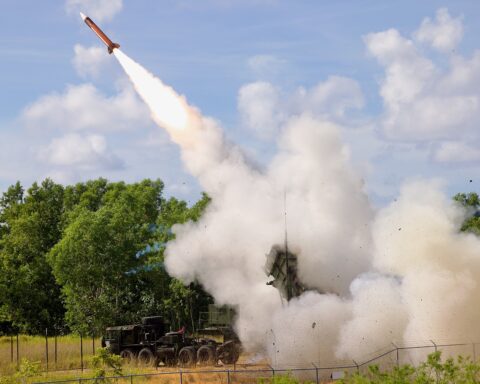
Al-Maliki’s announcement described a multi-front defensive engagement across Saudi Arabia. The coalition said it destroyed a ballistic missile and a cruise missile fired at Riyadh — the latest in a series of interceptions over the capital that has stretched for days. Earlier on November 10, coalition air defences had already intercepted three Houthi missiles aimed at Riyadh, including one ballistic and one cruise missile in a predawn engagement.
A separate ballistic missile was intercepted over southern Saudi Arabia, al-Maliki said, while a drone was destroyed over the Eastern Province, according to Asharq Al-Awsat. The southern intercept is geographically telling — Lahj province, where the Houthis’ third operation took place, lies directly across the border from Saudi Arabia’s southern military zone.
Riyadh residents heard the interceptions firsthand — the alert-and-all-clear pattern has become routine, including one on November 9 that lasted only minutes.
The simultaneous interception of ballistic missiles, cruise missiles, and drones across multiple zones — Riyadh, the south, and the Eastern Province — illustrates the breadth of threats Saudi air defences tracked on a single day. The coalition announced interceptions over Riyadh on multiple days in November, including a cruise missile on November 7 and a ballistic missile over the Eastern Province on November 8.
The Lahj Frontline
Sarea’s third operation stands apart from the other three. While operations one, two, and four targeted Saudi infrastructure and cities, the third was a battlefield claim — a strike on what the Houthis described as a Saudi-supervised troop assembly in Al-Madaribah and Ras Al-Arah, deep inside Yemen’s Lahj province.
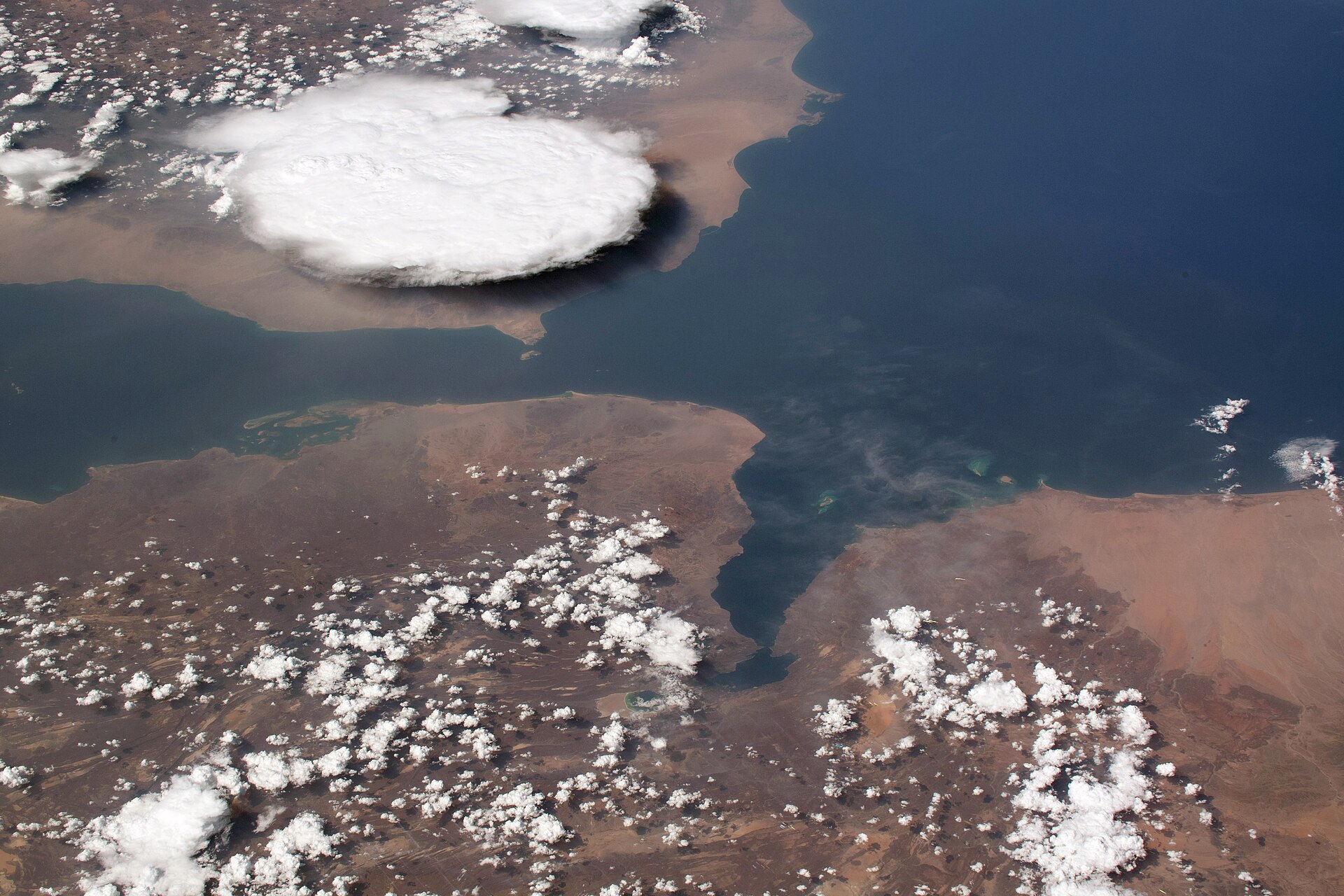
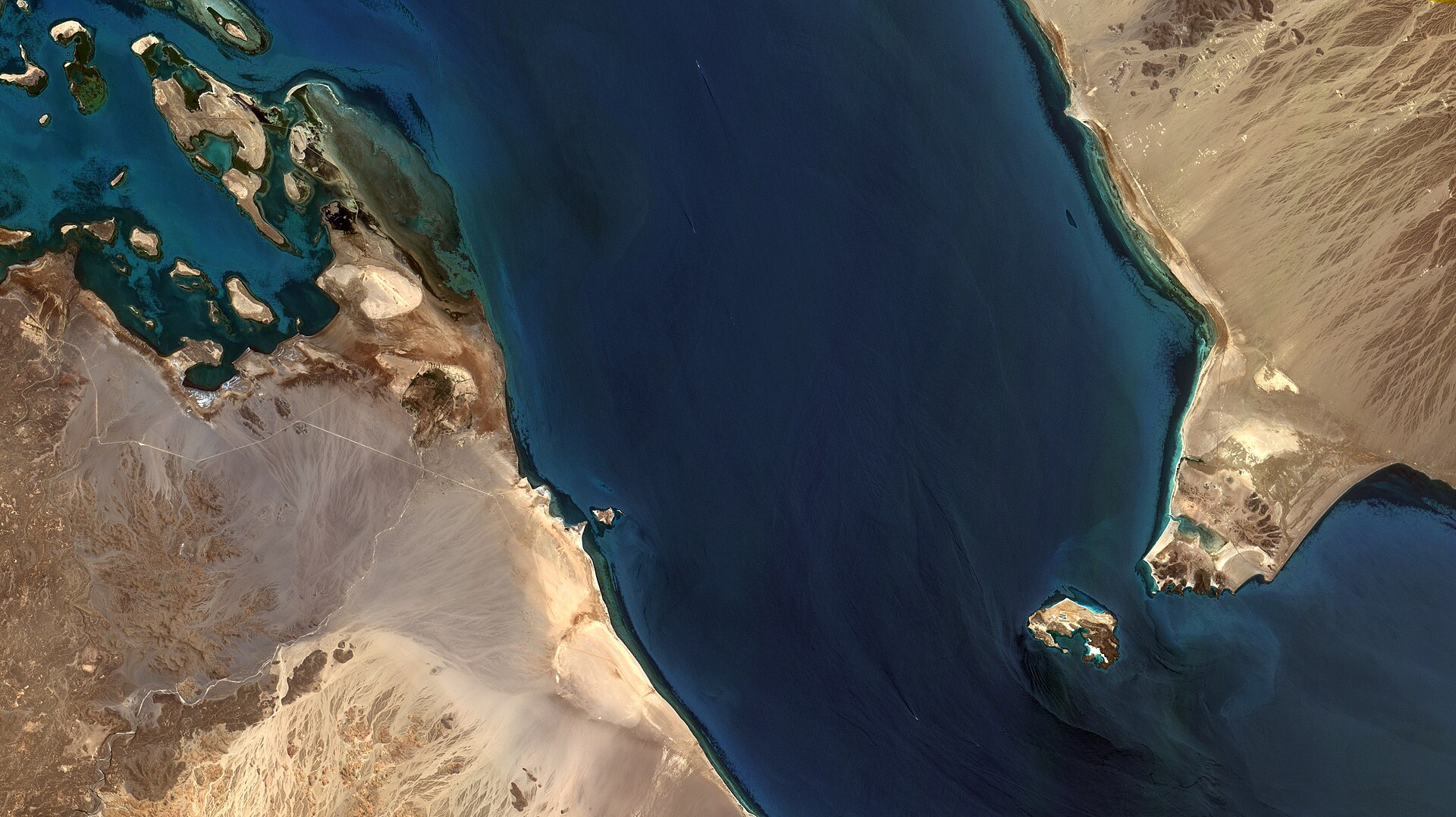
Al-Madaribah Wa Al-Arah district sits at the southwestern tip of Yemen. It is the westernmost, southernmost, and largest of Lahj governorate’s 15 districts, covering approximately 1,848 square kilometres, and it lies near the Bab al-Mandab Strait — the chokepoint connecting the Red Sea to the Gulf of Aden through which a significant share of global shipping passes.
The district is not a symbolic target chosen for propaganda value — it is active combat terrain. Yemen Monitor reported that Houthi forces have been dispatching reinforcements to the area in an effort to cut supply lines to government-aligned forces at Bab al-Mandab and Dhubab airport. Clashes in the Al-Shatt and Al-Majza’a areas of Al-Madaribah and Ras Al-Arah have been ongoing, according to the outlet.
The naming of a specific individual — Bader Al-Harbi — in a Houthi communiqué is unusual. Sarea’s statements typically refer to coalition or Saudi forces collectively rather than singling out officers by name. No Saudi military biography or official identification of an officer by that name was found in open sources, and neither the Saudi government nor the coalition has responded to the claim.
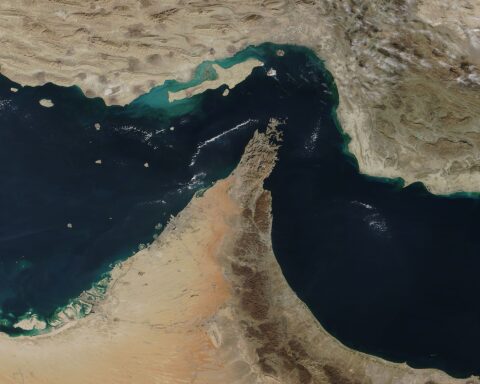
The Houthis’ push toward Bab al-Mandab has been building for weeks. On November 6, the group claimed seizure of the Kahboub mountain range near the Bab al-Mandab Strait — a claim that, if accurate, would give the Houthis tactical leverage over a second maritime chokepoint at a time when Iran’s closure of the Strait of Hormuz has already cut Gulf shipping traffic.
Why Is the Financial Centre a Repeated Target?
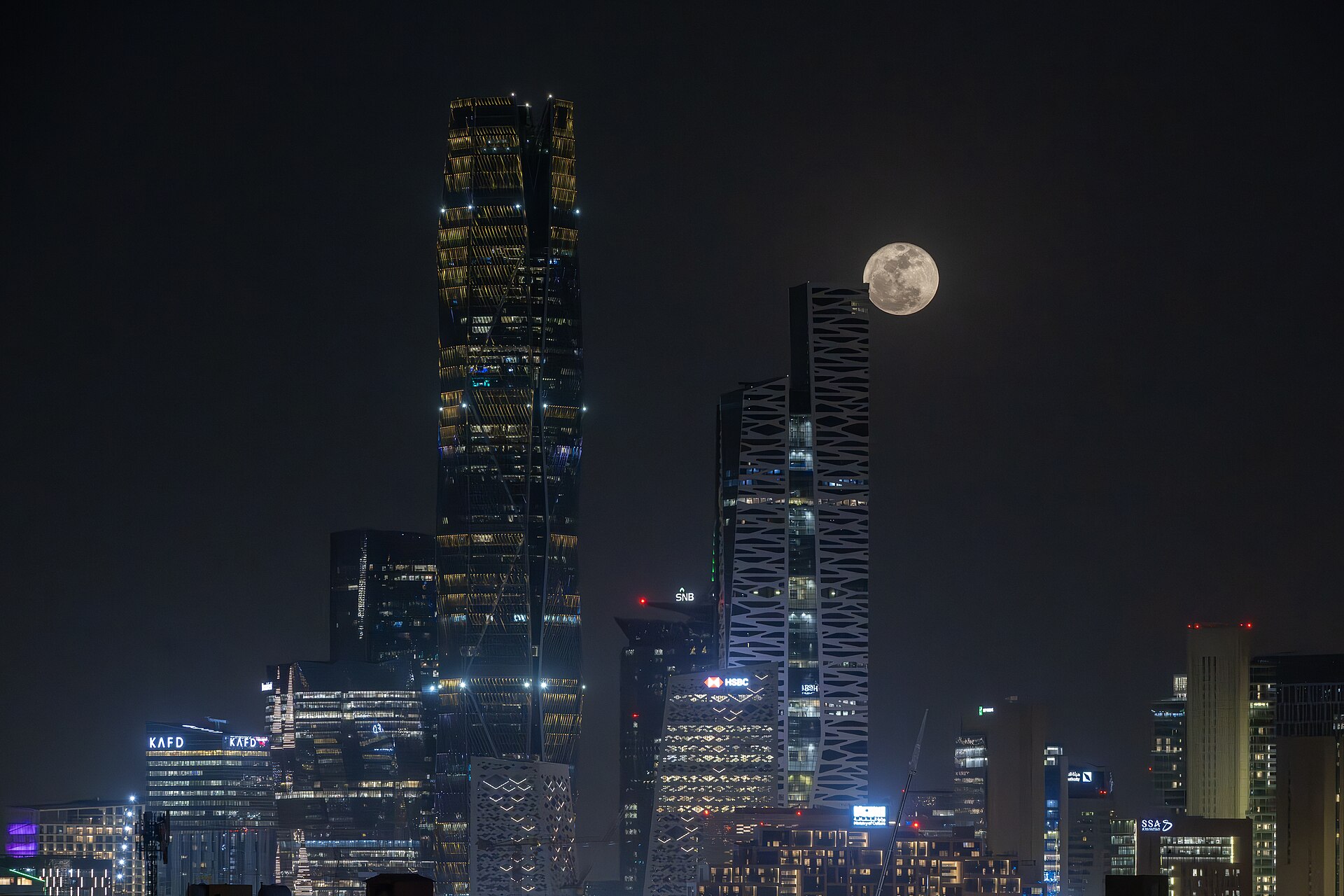
The fourth operation — targeting Riyadh’s financial centre — marks the second time in three days that the Houthis have aimed at the economic nerve centre of the Saudi capital. On November 8, Houthi forces struck the King Abdullah Financial District, damaging the Aramco Tower and blowing out windows across multiple floors of the administrative building.
The Saudi Energy Ministry described the November 8 incident as an “attempted attack” that caused “minor damage” from “falling shrapnel,” with no injuries, Al Jazeera reported. That characterisation sat uneasily alongside AFP and Reuters reporting from witnesses who described what appeared to be a more substantial impact. The strike was widely described as the first time projectiles had physically struck the economic core of the Saudi capital during the current escalation, according to AFP.
On November 10, the coalition said it intercepted missiles over Riyadh but did not specifically address the Houthi claim of hitting the financial centre. No independent source confirmed new physical damage to the KAFD area on that date. The coalition’s interception claims and the Houthis’ targeting claims are not mutually exclusive — a missile aimed at the financial centre can be intercepted before reaching it, which is what the available evidence suggests happened on November 10.
The Houthis appear to understand the signalling value of naming the financial centre specifically. KAFD houses major financial institutions and was designed as the centrepiece of Saudi Arabia’s post-oil economic diversification under Vision 2030. Middle East Eye reported on November 10 that the Houthis warned “most of Saudi airspace should be considered unsafe” — a statement that carries weight for both the aviation sector and the foreign investors who were meant to fill those glass towers.
The East-West Pipeline
The East-West pipeline — Saudi Arabia’s primary route for bypassing the Strait of Hormuz by moving crude from the Gulf coast to the Red Sea port of Yanbu — was also part of the Houthi first operation on November 10. Sarea’s statement claimed a strike on KKIA and on pumping stations along the pipeline, Xinhua reported.
The Saudi Energy Ministry, quoted by the Saudi Press Agency, said the strike caused a “limited fire” that was extinguished and that “pipeline operations were unaffected.” The pipeline has been attacked multiple times during the current conflict, including a strike on November 9 that the Energy Ministry characterised in identical terms — limited fire, no operational impact.
Each strike on the pipeline, even unsuccessful ones, pressures the Kingdom’s alternative export route at the worst possible time. The IRGC declared the Strait of Hormuz closed on October 26, forcing Saudi Arabia to route a larger share of crude exports through Yanbu. The pipeline has a capacity of approximately 7 million barrels per day, with about 5 million barrels per day exportable, according to Aramco. If it were taken offline for any sustained period, Saudi Arabia’s ability to export crude would drop sharply.
Background
The November 10 Houthi claims came on a day packed with military activity across the Saudi-Yemen theatre. Earlier that day, the Saudi-led coalition struck a gas facility and oil company building in Sanaa. The coalition had also struck and destroyed a Houthi launch platform in Sanaa on November 9.
The Houthis’ four-operation claim follows a pattern of multi-target communiqués that has intensified through November. On November 7, Sarea claimed six operations targeting Aramco facilities, KKIA, a pumping station on the East-West pipeline, and a Saudi Arabian National Guard camp in Najran. The coalition did not confirm any of those claims.
The fighting in Lahj adds a ground dimension to what has primarily been an aerial and missile war. The Houthis’ simultaneous claims — that they can strike the Saudi capital’s financial district while also conducting ground operations near Bab al-Mandab — project an image of a group fighting on two fronts with sufficient firepower for both. Whether the claims match reality is another question, and one that neither Saudi Arabia nor independent observers have answered for the November 10 operations.
Saudi air defences have been under daily strain since the October escalation began. The alert-and-all-clear cycle that has become part of daily life in Riyadh — phones buzzing with threat warnings, explosions audible overhead, then an official all-clear — carries its own cost even when interceptions succeed. Airlines across Europe and Asia have suspended Saudi routes at various points, and the European Union Aviation Safety Agency has issued a conflict-zone information bulletin covering Saudi airspace.
Frequently Asked Questions
Has any independent body verified the Houthi claims from November 10?
No. As of publication, no independent international body, wire service, or Saudi government entity has confirmed any of the four specific Houthi claims. The coalition acknowledged intercepting missiles and a drone but did not address the Houthis’ targeting assertions. The Lahj battlefield claim is particularly difficult to verify because it involves a remote combat zone in southwestern Yemen where independent media access is restricted. The Yemeni government’s internationally recognised forces separately claimed a “surprise attack” against Houthi positions in Al-Madaribah, according to Asharq Al-Awsat, but the Houthis’ version of events is unconfirmed.
Who are the main forces fighting in the Lahj-Bab al-Mandab area?
The Lahj frontline involves Houthi forces on one side and government-aligned formations — including the Giants Brigades, a UAE-backed Yemeni military force — on the other. Saudi Arabia has provided air support and, the Houthis allege, ground supervision through officers like the individual they named as Bader Al-Harbi. The coalition has not confirmed the presence of Saudi military officers in the Al-Madaribah area. The district’s proximity to Bab al-Mandab makes it strategically valuable: control of the area could allow one side to threaten or protect the strait’s approaches.
What is the current status of KAFD after the November 8 and November 10 attacks?
The confirmed physical damage to KAFD dates from the November 8 attack, when the Aramco Tower sustained blown-out windows across multiple floors. The Saudi Energy Ministry described it as “minor damage” with no injuries. On November 10, the Houthis claimed to target the financial centre again, but the coalition said it intercepted missiles over Riyadh, and no independent source confirmed new damage to the KAFD area on that date. The district remains operational, though the back-to-back targeting raises questions about tenants’ and investors’ confidence in the security of the complex.
How many times has the East-West pipeline been attacked in November 2026?
The pipeline has been hit multiple times in November. The Saudi Energy Ministry confirmed strikes on both November 9 and November 10, using identical language in both cases — “limited fire” extinguished, operations unaffected. The Houthi six-operation claim on November 7 also named pipeline pumping stations as targets. The pipeline runs from the Gulf coast to the Red Sea port of Yanbu — Saudi Arabia’s primary crude export route while the Strait of Hormuz remains closed.
What does “most of Saudi airspace should be considered unsafe” mean in practice?
Middle East Eye reported that the Houthis issued this warning on November 10. In practical terms, it reinforces the risk calculus facing international airlines. Airlines have suspended Saudi routes at various points during the current escalation. The European Union Aviation Safety Agency has issued a conflict-zone information bulletin covering Saudi airspace. Whether the Houthis can genuinely threaten commercial aviation across the entire Kingdom — rather than targeting specific points like KKIA — is debated, but the warning itself functions as a deterrent to carriers weighing whether to resume service.
The House of Saud Daily Briefing
Saudi Arabia's news in 3 minutes, every morning. Free. See today's issue