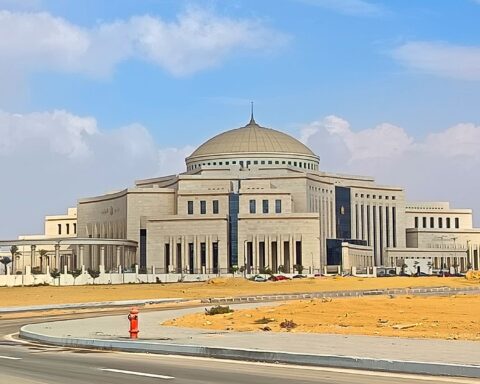

ISLAMABAD — Pakistan has approximately 8,000 troops, a full fighter squadron, two drone units, and a Chinese-manufactured long-range air-defence battery deployed on Saudi Arabian soil, and the country’s National Assembly has not voted on any of it. With Turkey’s ratification law published in the Official Gazette on 14 November 2026, the Makkah Joint Defence Agreement is now fully trilateral and legally binding, the culmination of a process that began with a bilateral Saudi-Pakistan defence treaty in September 2025 and accelerated into operational reality faster than most analysts in either capital expected.
The deployment has been on the ground since April 2026, financed entirely by Riyadh, stationed at King Abdulaziz Air Base in the Eastern Province. For Pakistan — a country with tens of billions in Chinese investment commitments under the China-Pakistan Economic Corridor, a roughly 900-kilometre border with Iran, and a substantial Shia population — this represents the most consequential foreign policy gamble Islamabad has made in a generation, pursued by Field Marshal Asim Munir’s military establishment without the parliamentary debate that Pakistani lawmakers demanded the last time the question arose.
The House of Saud Daily Briefing
Saudi Arabia's news in 3 minutes, every morning. Free. See today's issue
Table of Contents
- What Has Pakistan Deployed to Saudi Arabia?
- Why Did Pakistan Skip a Parliamentary Vote?
- How Much Is Saudi Arabia Paying for the Deployment?
- How Does the Makkah Pact Actually Work?
- What Did Turkey’s Ratification Change?
- Iran’s Calibrated Non-Response
- China’s Strategic Silence
- The Western Military Footprint the Pact Joins
- Frequently Asked Questions
What Has Pakistan Deployed to Saudi Arabia?
Saudi Arabia’s Ministry of Defence announced on 11 April 2026 that Pakistani fighter jets and support aircraft had arrived at King Abdulaziz Air Base in the Eastern Province, describing the deployment in terms of “joint deployments, intelligence sharing and co-ordinated responses to regional threats,” as reported by The National. What the ministry did not disclose — and what neither Islamabad nor Riyadh has officially confirmed since — is the scale of what followed.
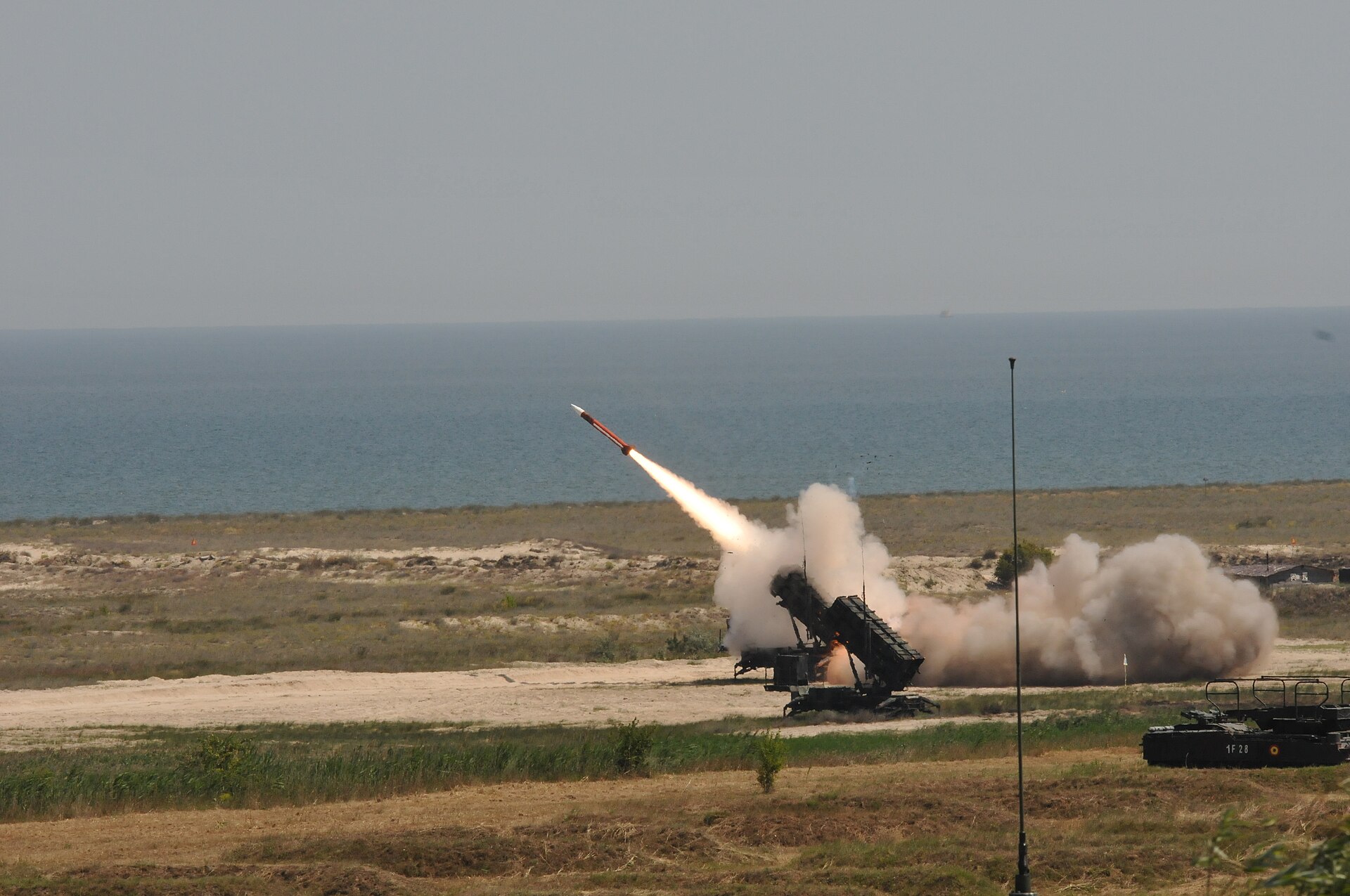
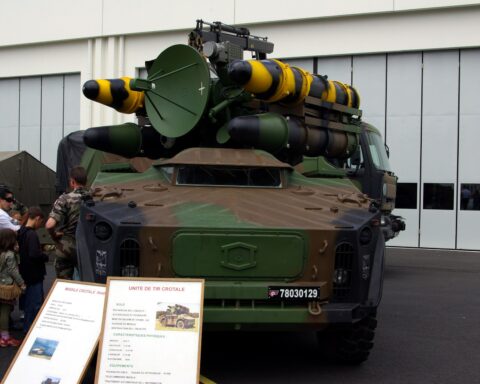
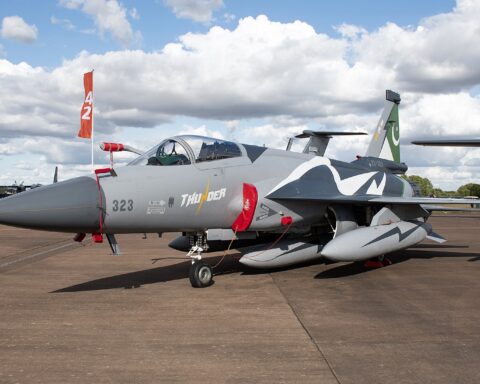
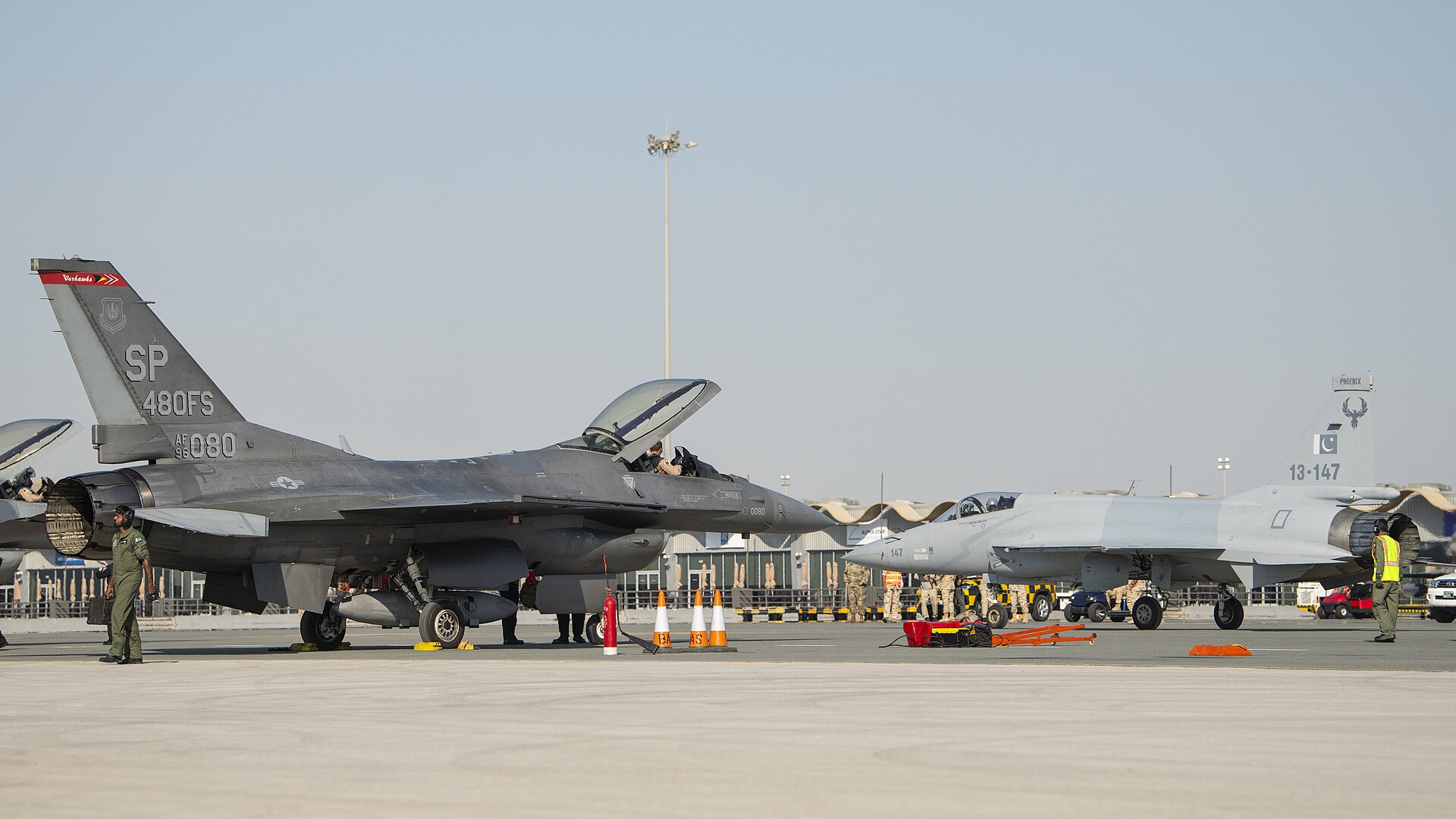
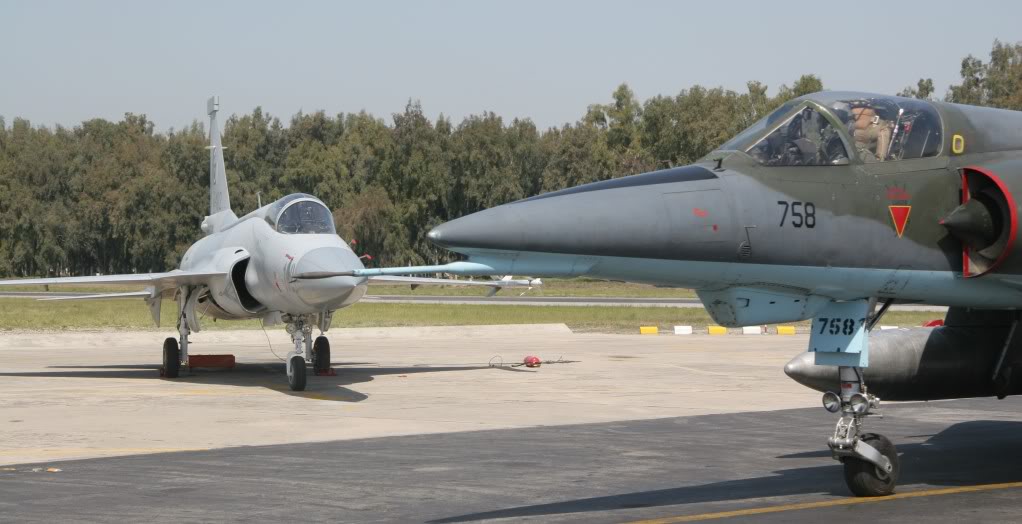
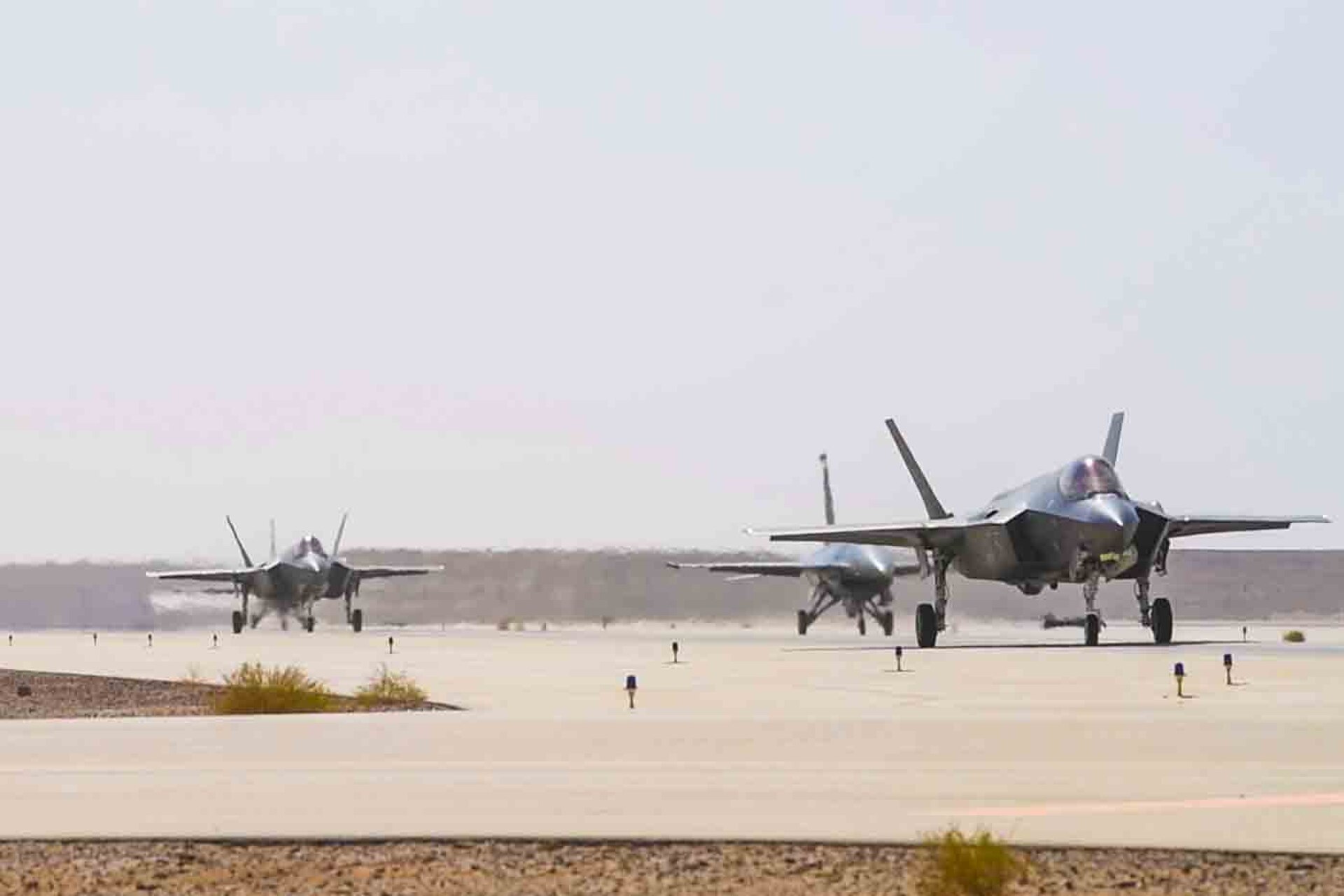
Reuters reported in May 2026, citing unnamed defence officials, that the deployment comprises approximately 16 JF-17 Thunder multirole fighters — one full squadron — alongside roughly 8,000 troops, two drone squadrons, and a Chinese-manufactured HQ-9 long-range air-defence system operated entirely by Pakistani personnel. The HQ-9 drew particular analytical attention, because it places a Chinese-built strategic air-defence platform into an active theatre of operations, operated by a third country’s military and financed by a fourth — Saudi Arabia covers the entire cost of the deployment, according to multiple reports including the Arab Center for Washington DC.
The aircraft question is murkier than it should be for a deployment of this consequence. When Pakistani jets first appeared at King Abdulaziz Air Base for the multinational Spears of Victory-2026 exercise in January 2026, Arab News identified them as F-16 Block-52 fighters — American-made aircraft whose use outside Pakistan’s borders requires Washington’s prior consent under the terms of their foreign military sale. By April, when the permanent deployment was announced, The National initially described the arriving aircraft as F-16s, but Reuters’ May reporting identified them as JF-17 Thunders, a joint Pakistani-Chinese platform that carries no American export restrictions and whose deployment bypasses any Washington veto.
Neither government has clarified which aircraft type is currently stationed at the base, and it is possible that both have rotated through at different stages, but the distinction matters enormously: F-16 deployment would require American approval that the State Department has not publicly acknowledged giving, while JF-17 deployment keeps the arrangement entirely outside Washington’s formal consent architecture. The ambiguity may itself be deliberate — a way for Islamabad to avoid testing whether the United States would bless F-16 combat deployment in a theatre where American forces are simultaneously operating, while still putting capable multirole fighters on Saudi tarmac under conditions that nobody in Washington can formally object to.
Imtiaz Gul, an Islamabad-based security analyst, told Al Jazeera in April 2026 that “three jets won’t make much of a difference militarily” and that the move was “messaging Tehran to be flexible in these talks” — an assessment that applied to the initial announcement before Reuters documented the full squadron-strength deployment a month later.
Why Did Pakistan Skip a Parliamentary Vote?
In April 2015, Pakistan’s National Assembly voted to keep the country out of the Saudi-led military coalition intervening in Yemen — a decision that infuriated Riyadh, strained the bilateral relationship for years, and became a benchmark of parliamentary sovereignty over foreign military deployments abroad. The 2026 deployment happened without any comparable debate, and the constitutional anomaly has drawn sharper criticism from foreign analysts and Pakistani opposition figures than from the country’s own courts or mainstream media establishment.
Al-Monitor reported in October 2026, citing a Reuters analysis, that Pakistan agreed to rapidly deploy additional forces without a parliamentary vote. Prime Minister Shehbaz Sharif’s government said the Makkah Pact had gone through “all necessary government procedures” but declined to specify whether the National Assembly was involved, let alone whether it voted. The legal basis Islamabad points to is the bilateral Saudi-Pakistan Strategic Mutual Defence Agreement, signed on 17 September 2025, which treats an attack on either country as an attack on both — but that bilateral treaty was itself never subjected to the kind of parliamentary scrutiny that the 2015 precedent established.
The difference between 2015 and 2026 is, in practical terms, Field Marshal Asim Munir. Pakistan’s army chief — promoted to Field Marshal in May 2025 after the India-Pakistan conflict, the first officer to hold that rank in decades — has been the driving force behind the Saudi deployment, and the civil-military balance in Islamabad has shifted far enough that the parliamentary veto which stopped the Yemen deployment a decade earlier is, for the moment, functionally inoperative. Michael Kugelman of the Atlantic Council called Pakistan’s move “a bit of a risky gambit,” telling Reuters: “But it’s a different era now” — a verdict that the parliamentary process of 2015 would have complicated, if not prevented entirely.
Muhib Rahman and Nazmus Sakib, writing in War on the Rocks, argued that Pakistan is “seeking a standing role in regional security rather than short-term material gains,” and that the Makkah Pact may represent Pakistan’s most serious attempt to convert its geopolitical value into something durable. That framing — Pakistan as permanent security provider rather than occasional hire — requires exactly the kind of institutional commitment that parliamentary scrutiny tends to qualify, condition, and constrain, which may explain why the Sharif government chose to route the deployment through executive channels rather than risk a debate whose outcome, given the 2015 precedent, was far from guaranteed.
How Much Is Saudi Arabia Paying for the Deployment?
The financial architecture surrounding the deployment makes the question of payment impossible to separate from the deeper question of economic dependency. Saudi Arabia finances the entire operational cost — salaries, equipment, logistics — according to multiple reports, though neither government has disclosed the specific figure. Alongside this direct funding, Riyadh rolled over a $5 billion deposit in Pakistan’s central bank for three years in July 2026, according to the Express Tribune, then extended a separate $3 billion deposit for what Pakistan’s finance ministry described as “a reasonable period” on 5 November 2026, according to Pakistan Today — the same day Turkey’s parliament voted 279 to 119 to ratify the Makkah Pact.
The timing of the $3 billion extension was either coincidental or choreographed, and nobody in either capital has said which. When the deployment was formalised in April 2026, Al Jazeera reported that the two governments also agreed to accelerate a pledged $5 billion investment package. Those commitments sit alongside the roughly 2.5 million Pakistani workers in the kingdom whose remittances form a separate lifeline for Pakistan’s current account.
The deployment is not a transaction in which Pakistan sells military services for cash — it is an expression of a financial entanglement so deep and so multidimensional that separating the military component from the economic one is an exercise in accounting fiction. Saudi deposits prop up Pakistan’s foreign exchange reserves at a time when the country’s external financing needs make Saudi goodwill indispensable, and the accelerated investment package sweetens a relationship in which the sweeter ingredient was already dependency.
The financial structure also underwrites a potential escalation clause that neither government has discussed publicly. War on the Rocks reported, citing an unnamed source who has seen the confidential text of the Makkah Pact, that the agreement allows Pakistan to expand its force to as many as 80,000 troops in a major regional crisis — a tenfold increase from the current approximately 8,000. Whether that ceiling reflects genuine military planning or an aspirational maximum built into a treaty by negotiators covering every contingency is unclear, but the figure reveals the scale of what Riyadh believes it may need and what Islamabad has agreed, in principle, to supply.
How Does the Makkah Pact Actually Work?
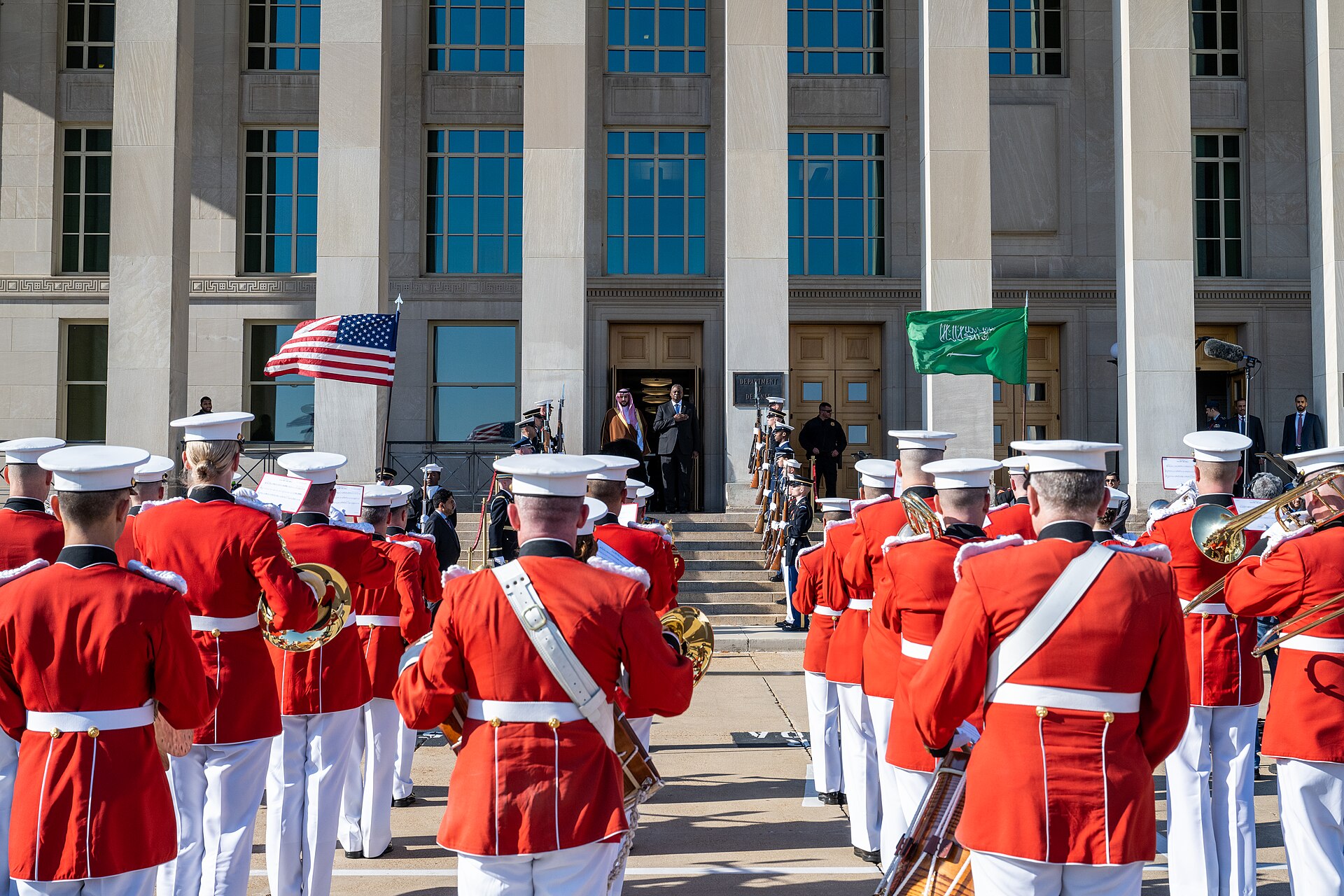
The full text of the Makkah Joint Defence Agreement, published by The National on 21 October 2026, reveals a treaty designed to sound more binding than its enforcement mechanisms can guarantee. Article 2 contains the collective defence clause: “Any external armed attack on any of the ‘Parties’ will be considered an attack against all the ‘Parties.'” The language echoes NATO’s Article 5, but the qualifying phrases do the real work — parties are committed to “immediately assist” using “available means” consistent with Article 51 of the UN Charter, giving each signatory the interpretive space to calibrate its response rather than obligating automatic military intervention on any predetermined scale.
There is no integrated joint command in the treaty text, no shared force structure, and no combined operations centre. The pact establishes a permanent secretariat under Article 8, based in Saudi Arabia, with Pakistan supplying the first Secretary-General on a three-year rotation — that secretariat was stood up on 31 August 2026, according to War on the Rocks. The Arab Center for Washington DC, which published what remains the most rigorous analytical treatment of the pact in August 2026, concluded that its importance “is not military but political and industrial” — a framework for defence cooperation and arms procurement rather than a war-fighting alliance in any operational sense.
“After five decades, it is no longer possible to talk about a U.S.-led order in the Middle East.”
Steven A. Cook, Senior Fellow, Council on Foreign Relations
Cook’s reading suggests the pact matters less for what it can deliver on the battlefield than for what it signals about regional powers constructing their own security arrangements without American sponsorship or permission. Prince Khalid bin Salman, Saudi Arabia’s defence minister, tested the treaty’s operational language on 5 October 2026, announcing that the Makkah Pact committee had agreed to “activate collective deterrence measures… in response to the attacks and all those responsible for them,” according to Al Jazeera. What “collective deterrence measures” meant in practice was not specified publicly, and neither Turkey nor Pakistan disclosed any change in their operational posture after the announcement — a gap between activation rhetoric and visible military action that defines the pact’s central ambiguity: broad enough to claim collective purpose, flexible enough to let each party define its own contribution.
What Did Turkey’s Ratification Change?
Turkey’s parliament voted 279 to 119 on 5 November 2026 to ratify the Makkah Pact, and the law was published in the Official Gazette on 14 November, bringing the treaty into full trilateral legal force. Pakistan had ratified on 23 October, and the bilateral Saudi-Pakistan component had been operational since April, so Turkey’s vote did not change the military facts on the ground in the Eastern Province — but it transformed the diplomatic architecture from a bilateral arrangement with an aspiring third member into a binding collective defence treaty among three of the most militarily capable states in the Muslim world.
What Turkey’s ratification explicitly did not do was authorise the deployment of Turkish troops to Saudi Arabia. Under Article 92 of the Turkish constitution, a separate parliamentary mandate is required to send forces abroad, and no such mandate has been sought or is expected, according to Turkish Minute. Turkey’s contribution is anticipated to be advisory, training, and equipment — a posture consistent with Ankara’s growing role as an arms exporter to the Gulf rather than a troop contributor. Hakan Fidan, Turkey’s foreign minister, framed the pact defensively during discussions reported by the Arab Center for Washington DC, saying it “identifies no common adversary and is not directed at Iran.”
The distinction places Turkey in a fundamentally different operational category from Pakistan within the same treaty — one ally has troops, fighters, and air-defence systems deployed, while the other has a legal commitment to regard an attack on Saudi Arabia as an attack on itself but no forces on the ground and no parliamentary mandate to send them. The GCC’s own collective security apparatus is developing in parallel: the 23rd Joint Defence Council session in Manama approved an advanced forward headquarters for the GCC Unified Military Command in Kuwait on 10 November 2026, according to The National and Arab News, and Turkey’s relationship to that evolving structure remains undefined in the Makkah Pact’s text.
| Date | Event |
|---|---|
| 14 Dec 1982 | First formal Pakistan-Saudi military protocol signed |
| 17 Sep 2025 | Saudi-Pakistan bilateral Strategic Mutual Defence Agreement signed |
| Jan 2026 | Pakistani F-16 Block-52s participate in Spears of Victory-2026 exercise |
| 11 Apr 2026 | Saudi MOD announces arrival of Pakistani fighter jets and support aircraft |
| May 2026 | Reuters reports ~16 JF-17s, ~8,000 troops, 2 drone squadrons, 1 HQ-9 system |
| 30 Jul 2026 | Saudi Arabia rolls over $5 billion deposit in Pakistan for 3 years |
| 7 Aug 2026 | Makkah Joint Defence Agreement signed by Saudi Arabia, Turkey, and Pakistan |
| 31 Aug 2026 | Permanent secretariat established; Pakistan supplies first Secretary-General |
| 5 Oct 2026 | Prince Khalid bin Salman announces “collective deterrence measures” activated |
| 7 Oct 2026 | New York Times reports PAF jets used against Houthis; Pakistan denies |
| 23 Oct 2026 | Pakistan ratifies Makkah Pact |
| 5 Nov 2026 | Turkey parliament votes 279-119 to ratify; Saudi Arabia extends $3B to Pakistan |
| 14 Nov 2026 | Turkey ratification law published in Official Gazette; pact enters full force |
Iran’s Calibrated Non-Response
Iran’s reaction to the Pakistani deployment has been more revealing for what it has not included than for what it has. Foreign Minister Abbas Araghchi formally welcomed the Makkah Pact when it was signed, urging Muslim states to rely on themselves for security rather than on external powers — a framing that repositions a military alliance directed at Iranian interests as consistent with Tehran’s own rhetorical preferences, according to the Arab Center for Washington DC. Araghchi separately offered to “facilitate dialogue between Saudi Arabia and Yemen,” positioning Iran as a mediator rather than as a party that might find itself at the receiving end of the pact’s collective defence clause.
The parliamentary response was less polished. Ebrahim Rezaei, an Iranian lawmaker, dismissed the pact publicly, arguing that it would not protect Saudi Arabia better than its existing dependence on Washington and urging Riyadh to stop seeking outside protection, the Arab Center reported. The split between Araghchi’s diplomatic welcome and Rezaei’s dismissal tracks with what analysts describe as Tehran’s calibrated approach to the evolving Gulf security architecture: escalating through proxies and direct action against military infrastructure across the Gulf while keeping rhetoric toward Pakistan and Turkey below the threshold that would force a direct confrontation with either.
Pakistan’s Foreign Minister Ishaq Dar told Al Jazeera in April 2026 that he had warned Iranian leaders in early March that Islamabad was bound by its obligations to Riyadh, and that he secured Iranian assurances that Saudi territory would not be used as a launchpad for operations against Iran — a mutual guarantee that drew an implicit boundary around the deployment’s purpose. The fact that Tehran sought and received that assurance before the Pakistani forces arrived suggests Iran calculated the presence was tolerable as long as it remained defensive, a calculation that the New York Times report in October 2026 — claiming PAF jets had been used against Houthi targets, which Pakistan’s Information Ministry called “fake and fabricated,” according to Pakistan Today — threatened to destabilise.
The roughly 900-kilometre border Pakistan shares with Iran, according to the Arab Center for Washington DC, and the substantial Shia component of Pakistan’s population give Tehran a degree of influence over Islamabad that requires no formal diplomatic protest to exercise. Iran does not need to threaten Pakistan publicly — the geography and demography apply their own pressure — and Islamabad’s decision to secure Iranian assurances before deploying, rather than deploying and daring Tehran to respond, reveals how precisely the Sharif government understood the constraints under which it was operating. The ongoing missile and drone attacks on Saudi cities that the deployment was designed to help counter have, if anything, validated Tehran’s restraint toward Pakistan itself: as long as Pakistani forces are positioned as a defensive shield rather than an offensive sword, Iran can treat the deployment as a Saudi investment decision rather than a Pakistani provocation.
China’s Strategic Silence
Beijing has issued no official statement on the Makkah Pact or on the deployment of Pakistani forces to Saudi Arabia, a silence that speaks with considerable precision about the complexity of China’s position in the Gulf. Pakistan is China’s most reliable regional partner, the host country for the China-Pakistan Economic Corridor, and the primary export customer for the JF-17 Thunder fighter — the aircraft now operating from a Saudi air base in the Eastern Province, within range of the same airspace that Iranian-backed drones have been penetrating.
South China Morning Post reported that Chinese state media reacted with “ambivalence” to the deployment, and SCMP analysts identified an indirect benefit that Beijing is unlikely to acknowledge publicly: Pakistan’s forces give Chinese weapons systems — both the JF-17 and the HQ-9 air-defence battery — operational exposure in a high-threat environment that generates performance data no amount of peacetime testing can replicate. The HQ-9’s deployment is the more consequential of the two, because its effectiveness against the missile and drone threats Saudi Arabia faces daily, including the Houthi ballistic missiles targeting Saudi airports, will produce operational intelligence that flows back to the system’s Chinese designers through the relationship with the Pakistani crews who operate it.
For Beijing, the arrangement delivers a further advantage that no Chinese official will articulate: Pakistan’s military presence gives China an indirect security stake in the Gulf without requiring Chinese troops, Chinese ships in harm’s way, or Chinese diplomatic capital spent on a conflict that offers Beijing no upside. China’s diplomatic engagement in the Gulf has focused on mediation and commercial relationships, and the Makkah Pact allows that posture to continue — Beijing can remain the patron that manufactures the weapons and finances the infrastructure without becoming the ally that fights the war, a division of labour that serves Chinese strategic interests at minimal Chinese cost and risk.
The Western Military Footprint the Pact Joins
The Pakistani deployment arrived not into a security vacuum but into a kingdom already hosting one of the densest concentrations of foreign military assets anywhere outside NATO territory. The United States maintains a presence at Prince Sultan Air Base, approximately 100 kilometres southeast of Riyadh, operating THAAD and Patriot air-defence systems alongside fighter aircraft, ISR platforms, and the infrastructure supporting the coalition’s ongoing air campaign against Houthi positions in Yemen. France announced on 24 September 2026 that it would send soldiers, radars, and air-defence assets to protect Yanbu, Saudi Arabia’s Red Sea crude export terminal — specific equipment and troop numbers remain undisclosed, according to The War Zone.
The existing non-American foreign military footprint in the kingdom is more extensive than the Makkah Pact’s narrative of self-reliance might suggest. A Greek Patriot battery has been stationed near Yanbu since 2021, and British Sky Sabre short-range air-defence units arrived in spring 2026, both arrangements reported by the Arab Center for Washington DC. Saudi Arabia’s air-defence architecture now includes American systems operated by Americans, American systems operated by Saudis, French and British assets whose specific operators remain undisclosed, a Greek Patriot battery, and a Chinese-manufactured HQ-9 operated by Pakistani crews — a patchwork that reflects Riyadh’s strategic conclusion that no single power can guarantee the kingdom’s security and that diversification across suppliers, operators, and alliance structures is the only viable hedge against the unreliability of any one relationship.
The Makkah Pact operates alongside this Western footprint rather than replacing it, and that coexistence is by design. Pakistani JF-17s and an HQ-9 battery do not substitute for American THAAD coverage or the French radar systems arriving at Yanbu, just as Turkish advisory support does not replace the operational expertise that American and British forces bring to Saudi Arabia’s integrated air and missile defence network. What the pact offers Riyadh is a layer of military commitment that carries no American congressional conditions, no European human rights reviews, and no risk of sudden withdrawal driven by a shift in domestic politics in Washington — a layer that Saudi Arabia controls, finances, and directs according to its own strategic priorities rather than those of an ally whose attention and reliability have become, in Riyadh’s calculation, insufficient to bet the kingdom on.
When Pakistan’s National Assembly voted in April 2015 to stay out of the Saudi-led coalition in Yemen, the session lasted all day, opposition members made speeches about sovereignty and non-alignment, and the galleries were packed — it was, by most accounts, the most consequential foreign policy debate in Pakistani parliamentary history. In 2026, the deployment that vote was designed to prevent happened anyway, and the chamber was not consulted. The JF-17s Reuters reported are on the tarmac at King Abdulaziz Air Base, the HQ-9 is scanning the Eastern Province sky — Reuters’ account, still officially unconfirmed — and the parliament that said no a decade ago is learning what it means when the question is never put.
Frequently Asked Questions
Is the 1979 Grand Mosque siege part of Pakistan’s military history in Saudi Arabia?
The participation of Pakistani SSG special forces in the retaking of the Grand Mosque in Makkah in November 1979 is widely cited in secondary accounts but remains contested — no Pakistani or Saudi primary source has confirmed it, and the only well-documented foreign military role in the operation was played by France’s GIGN commandos. The earliest confirmed formal military arrangement between the two countries is the protocol signed on 14 December 1982, under which Pakistani military personnel served in Saudi Arabia through the 1980s, a presence that grew to an estimated 13,000 troops during the 1991 Gulf War.
Could the Makkah Pact be invoked against India or Israel?
Article 2’s “external armed attack” language carries no geographic restriction, but the assistance clause limits response to “available means” consistent with UN Charter Article 51 self-defence, which confines invocation to genuinely defensive scenarios arising from armed attack. No signatory has suggested the pact is oriented toward India or Israel, and Turkey maintains diplomatic relations and active defence-industrial ties with both countries — including a military-to-military relationship with Israel that predates the current Gulf crisis — making such invocation politically unworkable in practice.
Has the New York Times report of Pakistani combat operations been resolved?
The New York Times reported on 7 October 2026 that Pakistan Air Force jets had been actively used against Houthi targets in Yemen. Pakistan’s Information Ministry fact-check unit responded the same day, calling the report “fake and fabricated” and stating that Pakistani authorities would announce any change in the country’s operational role themselves, according to Pakistan Today. Neither Saudi Arabia nor any independent military observer has confirmed or denied the claim, and whether Pakistani forces are operating in a purely defensive posture or have participated in offensive operations remains unresolved as of mid-November 2026.
What happens to Pakistan’s deployment if the Gulf crisis de-escalates?
The Makkah Pact’s institutional design suggests the arrangement is intended to outlast any specific crisis. The permanent secretariat established on 31 August 2026, with Pakistan supplying the first Secretary-General on a three-year rotation, creates bureaucratic continuity independent of the threat level. The bilateral September 2025 Strategic Mutual Defence Agreement that preceded the trilateral pact contains no published sunset clause, and the financial underpinning — Saudi central bank deposits and accelerated investment commitments that are now deeply embedded in Pakistan’s external financing — creates an economic incentive structure that makes withdrawal costly for Islamabad regardless of whether the current escalation subsides.
The House of Saud Daily Briefing
Saudi Arabia's news in 3 minutes, every morning. Free. See today's issue