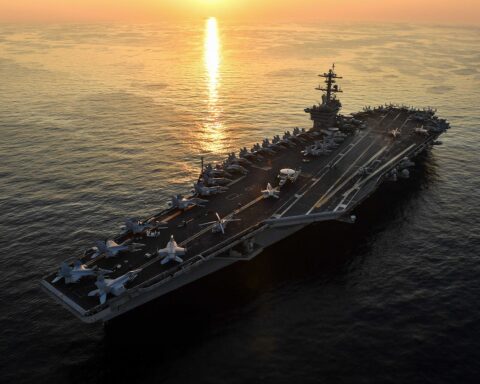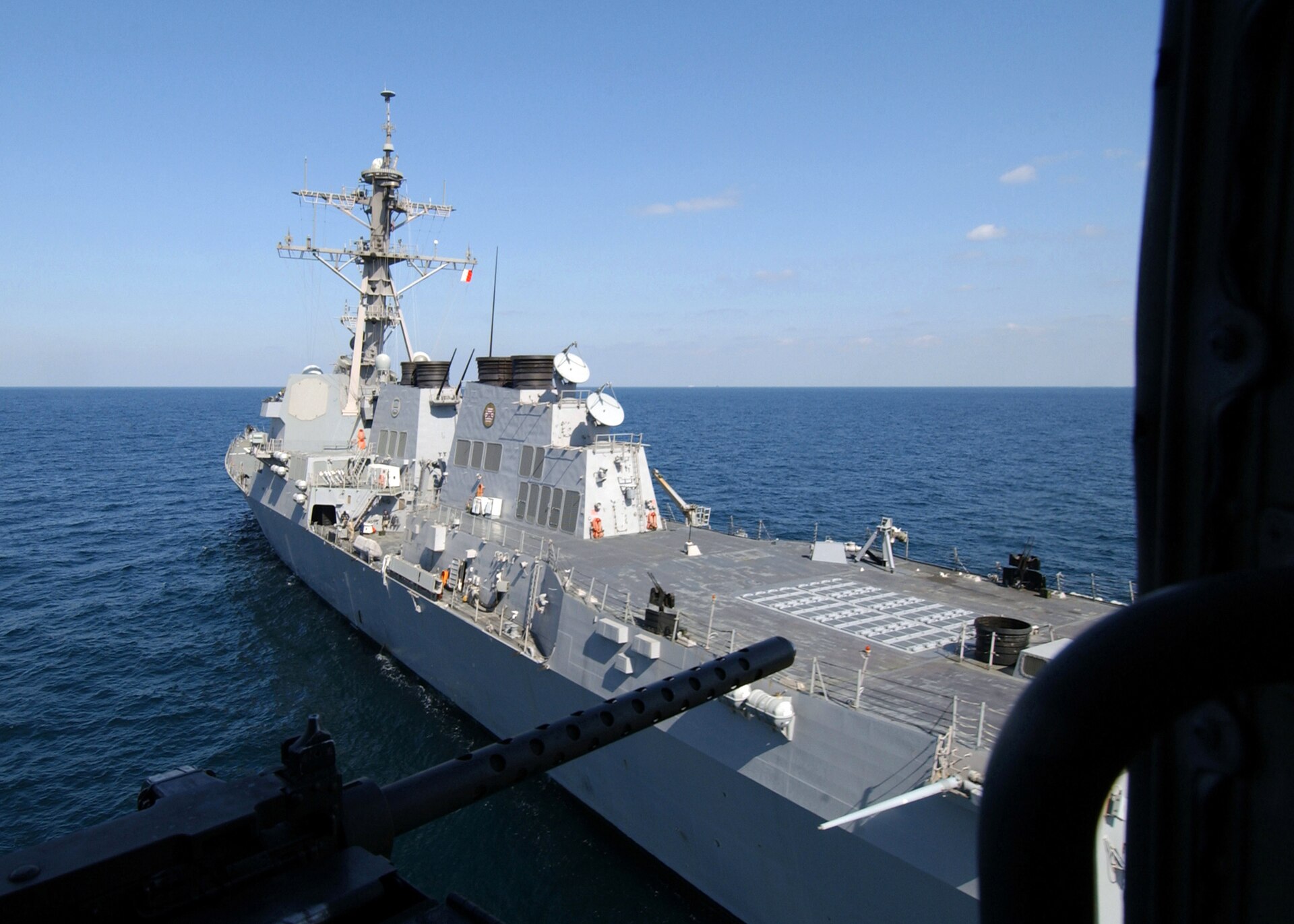

WASHINGTON — The United States military disabled a sixth commercial vessel attempting to run the Iran blockade since July while 158 others complied with rerouting orders, CENTCOM confirmed on November 27 — a 158-to-6 enforcement ratio that transforms a contested naval operation into a functioning military chokepoint. For Saudi Arabia, which privately wants Iran’s export revenues suppressed but publicly needs the Strait of Hormuz navigable for its own tankers, the blockade’s mounting effectiveness creates a problem that mirrors the one it was designed to solve.
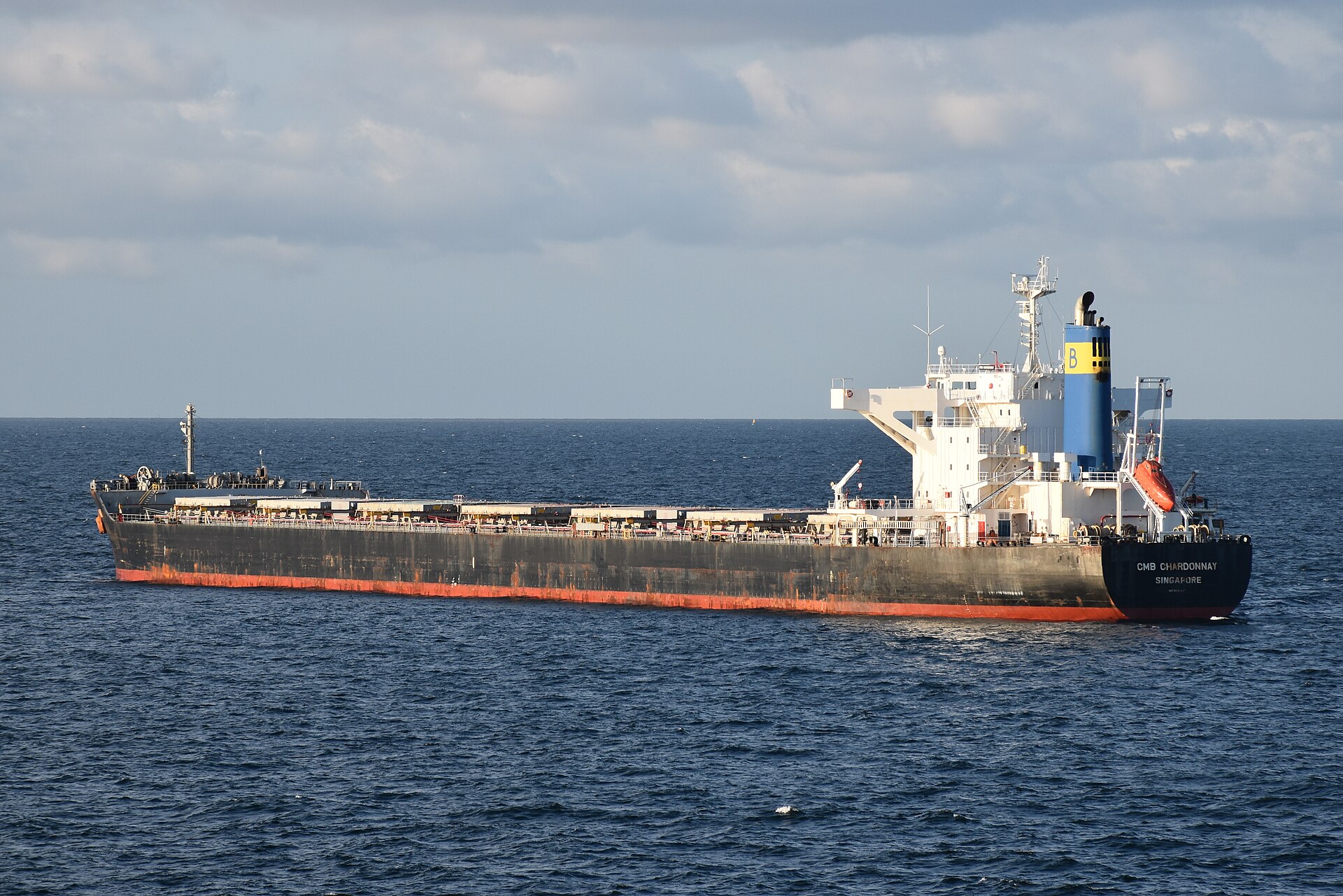
The Palau-flagged M/V Pacific Archer, a Chinese-owned bulk carrier of approximately 52,400 deadweight tonnes, was disabled in the Gulf of Oman on November 26 after leaving Iran’s Bandar Abbas port, according to Iran International. CENTCOM said a US military aircraft fired precision-guided munitions at the ship’s stern, knocking out its propulsion without harming the civilian crew. On the same day the statement was released, Iranian Navy Commander Shahram Irani told state television that Iran would carry out operations to “not only break the naval blockade but also drive the enemy out of the region’s waters” — a promise the Pacific Archer’s dead engines made considerably harder to take seriously.
The House of Saud Daily Briefing
Saudi Arabia's news in 3 minutes, every morning. Free. See today's issue
Table of Contents
What Happened to the Pacific Archer?
The Pacific Archer is a bulk carrier, not an oil tanker — a distinction that matters because it suggests the blockade-running trade is diversifying beyond crude. The ship is approximately 52,400 deadweight tonnes, registered in Palau, one of several flag-of-convenience states whose registries keep appearing in CENTCOM enforcement reports. Maritime Executive described it as Chinese-owned, though the publication did not name the owner or operator. Ship-tracking data listed its destination as Singapore.
CENTCOM said the ship “attempted to run the U.S. naval blockade, despite multiple warnings” before a military aircraft fired precision-guided munitions at the stern. The command did not identify the aircraft type or disclose the cargo, which leaves open the question of whether this was an oil shipment, a sanctions-evasion run or something else entirely. What CENTCOM did confirm was the outcome: propulsion disabled, civilian crew unharmed, vessel no longer going anywhere under its own power.
The Pacific Archer is the sixth vessel disabled since the blockade was reinstated on July 14 and at least the fifteenth since it was first declared on April 13, according to CENTCOM and multiple outlets including Al Jazeera and PBS. The previous disabling was the St. Kitts-flagged M/V Huda on November 7. In September, two vessels — the Kylo and the Riesco — were sunk outright, on September 6 and September 9 respectively. And in June, a strike on the Palau-flagged M/T Settebello killed three Indian sailors, establishing the grim precedent that blockade enforcement can be lethal.
The blockade itself has had a turbulent history. It was declared on April 13 — covering ships entering or leaving Iranian ports, not all Hormuz transit traffic — after the Islamabad Talks collapsed. It was lifted on June 18 after a memorandum of understanding, then reinstated on July 14 after three vessels were struck and Trump declared the ceasefire “over.” Each iteration has been more assertive than the last, and the enforcement infrastructure around it — additional task forces, expanded legal scope, land-border extensions — suggests Washington is building a blockade designed to outlast any single presidential decision to end it.
How Effective Is the US Blockade of Iran?
The numbers tell one story with considerable clarity. Since the blockade resumed on July 14, CENTCOM says 158 merchant ships have complied with its instructions and been redirected, against six that attempted to run the blockade and were disabled. That is a deterrence rate that any naval power in history would recognise as effective, and the escalation ladder behind it — warnings, then disabling shots, then sinkings, then a lethal strike that killed three crew members — explains why the compliance side of the ratio keeps growing.
The pattern of enforcement reveals a calibrated approach rather than a blunt one. The Settebello strike in June was lethal and produced an international incident when India protested the killing of three of its nationals. The sinkings of the Kylo and Riesco in September demonstrated that the US was willing to destroy vessels entirely. But the November actions — the Huda disabled on the 7th, the Pacific Archer disabled on the 26th with its crew explicitly confirmed unharmed — suggest Washington has settled on disabling as its preferred enforcement method, lethal enough to deter but controlled enough to avoid the diplomatic fallout that dead sailors produce. The blockade is not escalating indiscriminately; it is finding its operational register.
| Date | Vessel | Outcome |
|---|---|---|
| June 2026 | M/T Settebello (Palau-flagged) | Struck; 3 Indian crew killed |
| Sept. 6 | M/V Kylo | Sunk |
| Sept. 9 | M/V Riesco | Sunk |
| Nov. 7 | M/V Huda (St. Kitts-flagged) | Disabled |
| Nov. 26 | M/V Pacific Archer (Palau-flagged, Chinese-owned) | Disabled; crew unharmed |
The blockade is also tightening in scope. On November 18, a CENTCOM advisory extended enforcement operations to include ship-to-ship transfers in the Persian Gulf, according to National Security Journal — meaning vessels no longer need to call at an Iranian port to be interdicted. If a tanker takes on Iranian crude from another ship at sea, it is now a target. That closes the most obvious workaround that sanctions-evasion networks had been using for years, and it moves the enforcement perimeter deeper into waters where commercial traffic from Saudi Arabia, the UAE, Qatar and Kuwait all operate.
Beyond the sea, Task Force Iron Gate — announced on November 7, the same day the M/V Huda was disabled — extends the blockade concept to land borders and the Caspian Sea, National Security Journal reported. Iraq was asked to close all but two land crossings with Iran. The blockade that started as a naval operation scoped to Iranian-port traffic is evolving into something closer to a comprehensive economic siege, applied across air, sea and land simultaneously.
The financial data tracks the military data. Iran’s unofficial exchange rate hit 2.93 million rials to the dollar on November 27, and Iran’s Central Bank acknowledged the blockade was “squeezing government revenue,” Iran International reported. For a country whose oil revenues were already under pressure from Houthi-related supply disruptions, the blockade is adding a layer of commercial isolation that rhetoric about breaking it cannot fix.
Can Iran Break the Blockade?
Tehran’s rhetoric on November 27 was as loud as it has been at any point since the blockade began. Iran’s Navy Commander Shahram Irani told state television that the armed forces would break the blockade and expel the United States Navy from the region. IRGC Aerospace Force Commander Majid Mousavi posted on X that Iran’s enemies “should expect military action in the air and at sea,” calling the blockade’s destruction “our firm mission and unwavering determination,” according to Ynet. SNSC Secretary Mohsen Rezaei said three days earlier that the armed forces were “determined to break the blockade,” Iran International reported. And on November 20, Foreign Minister Masoud Araghchi declared the blockade “must be broken.”
“Neither will the Strait of Hormuz be reopened, nor will we allow the blockade to remain in place.”
Mohammad Mokhber, adviser to Supreme Leader Mojtaba Khamenei, via Reuters, November 27
That quote — from one of the most senior figures in Iran’s post-Ali Khamenei power structure — captures Tehran’s bind with unusual precision. Iran is simultaneously refusing to reopen the strait it closed and refusing to accept the blockade Washington imposed in response. Both positions are maximalist, and neither is backed by the operational capacity to change facts on the water. The Pacific Archer tried. It is now adrift with no engine. Iranian MP Ahmad Kowsari’s claim that Iran controls Hormuz and can shatter the blockade at will is a statement aimed at a domestic audience that does not have access to CENTCOM’s enforcement data.
The most revealing detail from November 27 came not from any speech but from an IRGC statement: after the Pacific Archer was disabled, two tankers reportedly tried to transit the Strait of Hormuz via what the IRGC called an “unauthorised” route, according to Al Jazeera and PBS. One reportedly struck a naval mine and the other turned back. If the IRGC account is accurate — and the IRGC is hardly a disinterested narrator — then Iran’s own mine infrastructure did more to thwart the breakout attempt than the US Navy did. Tehran laid mines to close Hormuz to everyone and now finds those same mines blocking its own efforts to prove the strait is open to Iranian traffic.
This is not an isolated incident. Iran claimed on the same day that an oil tanker exploded after hitting a mine in Hormuz, continuing a pattern that has repeated throughout November — vessels striking ordnance that Iran itself deployed, in waters Iran claims to control, while Iran simultaneously argues that those waters are navigable for its chosen traffic. The gap between Tehran’s declared capacity to manage the strait and its demonstrated inability to protect even sympathetic shipping from its own defences is the most damaging rebuttal of the “Iran controls Hormuz” narrative, and it comes not from CENTCOM but from IRGC statements that are presumably designed to project strength rather than expose vulnerability.
Why Does Saudi Arabia Both Need and Fear the Blockade?
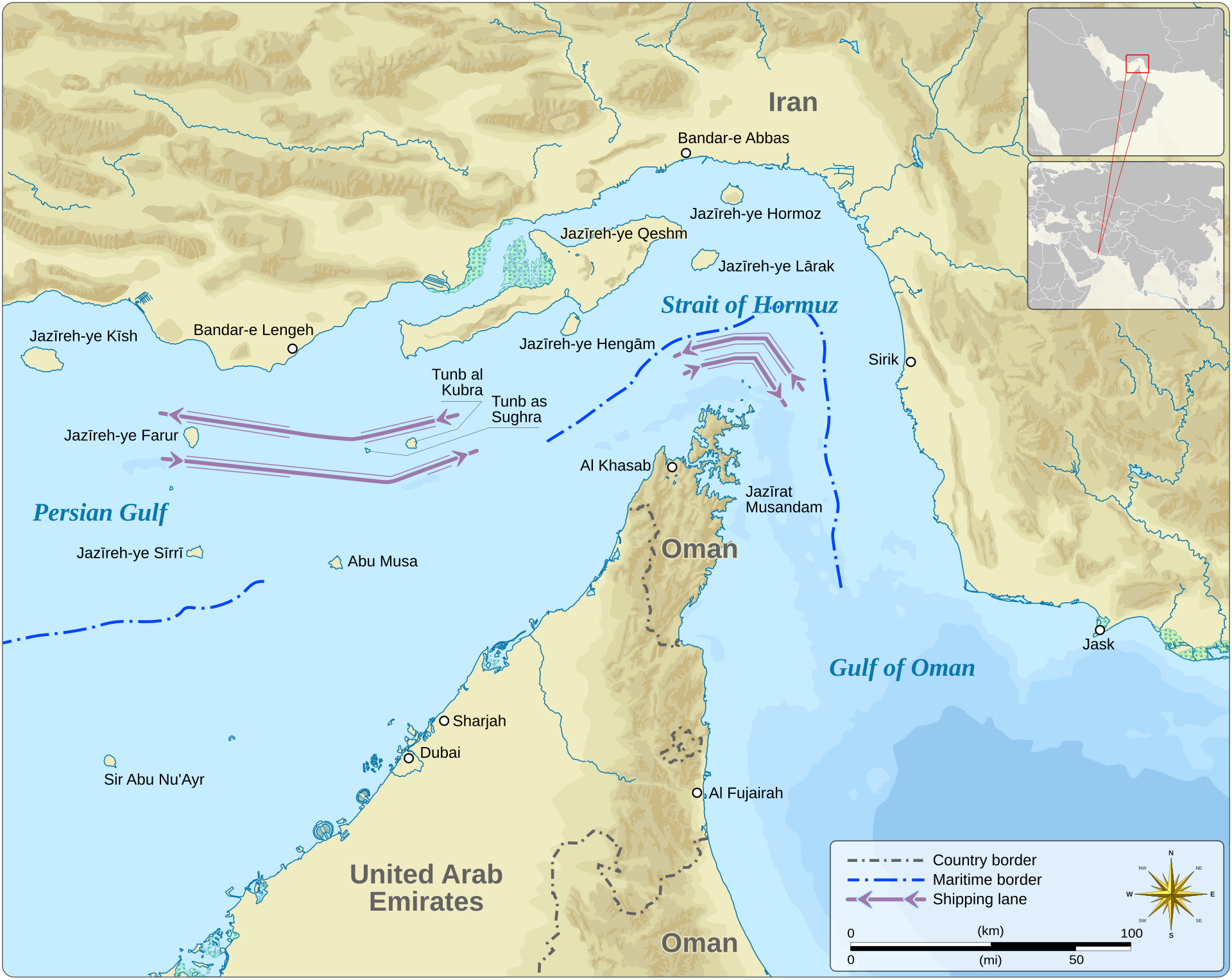
In late September, Crown Prince Mohammed bin Salman told US officials that the blockade should remain in place “until Iran is compelled to sign a new agreement,” according to the Wall Street Journal via Iran International. That is the clearest statement of Riyadh’s private position on record: the blockade is leverage, and MBS wants it maintained. But Saudi Foreign Minister Prince Faisal bin Farhan has been saying something very different in public, pressing at the G7 in Paris and in multiple autumn diplomatic meetings for Hormuz to return to its pre-February 28 status — no fees, no restrictions, free navigation for all.
These two positions are not complementary. They are contradictory, and the Pacific Archer’s disabling makes the contradiction harder to manage. Every ship the US stops reinforces the blockade MBS privately supports, but it also reinforces the reality that the strait Saudi Arabia’s tankers depend on is a contested military zone where the US Navy fires precision-guided munitions at merchant vessels. The blockade’s effectiveness in choking Iran’s exports comes at the price of making Hormuz the most dangerous commercial waterway on the planet — and Saudi Arabia, unlike Iran, cannot reroute around it.
The scale of that vulnerability is measured not in diplomatic statements but in barrels. Hormuz oil flows have fallen dramatically since the combined disruptions of Iran’s strait closure and the US blockade began, with pre-war traffic of 130 to 140 ships a day collapsing to a fraction of that figure, according to Reuters. By August, Saudi crude supply had fallen to 5.97 million barrels per day according to the IEA — well below the kingdom’s OPEC+ quota, and the pipeline alternative has not saved it.
The East-West pipeline, designed to move crude to the Red Sea and bypass Hormuz entirely, was supposed to be the insurance policy for precisely this scenario. Instead, it has been targeted by drone attacks launched from Iraq, leaving Yanbu loadings below three million barrels a day. The Houthis then declared their own maritime blockade on Saudi vessels in the Red Sea on July 20, according to Al Jazeera — meaning both of Saudi Arabia’s export corridors are now contested simultaneously. The kingdom that told Washington to keep the Iran blockade running is watching its own export routes degrade under the broader conflict that the blockade is part of, and neither corridor has a quick fix.
So MBS is left holding a position that only works if the blockade suppresses Iran without disrupting Saudi exports — a condition that becomes less plausible with each enforcement action in the Gulf of Oman. When US and Iranian forces exchanged strikes near Hormuz on November 24, Brent crude fell rather than spiked, posting its third weekly loss, because traders have already priced in the probability that Hormuz will remain functionally impaired for the foreseeable future. The blockade is working exactly as designed, and that is precisely what makes it uncomfortable for the country that asked Washington to keep it going.
The contradiction is not lost on Saudi diplomats. Prince Faisal’s public calls for free navigation and MBS’s private insistence that the blockade stay read differently depending on the audience, but they share a common premise: Riyadh needs the US to remain the dominant military power in the Gulf while simultaneously wanting the consequences of that dominance to fall on Iran alone. The Pacific Archer’s disabling is evidence that Washington can do the first part. Whether it can do the second is the question the blockade was never designed to answer.
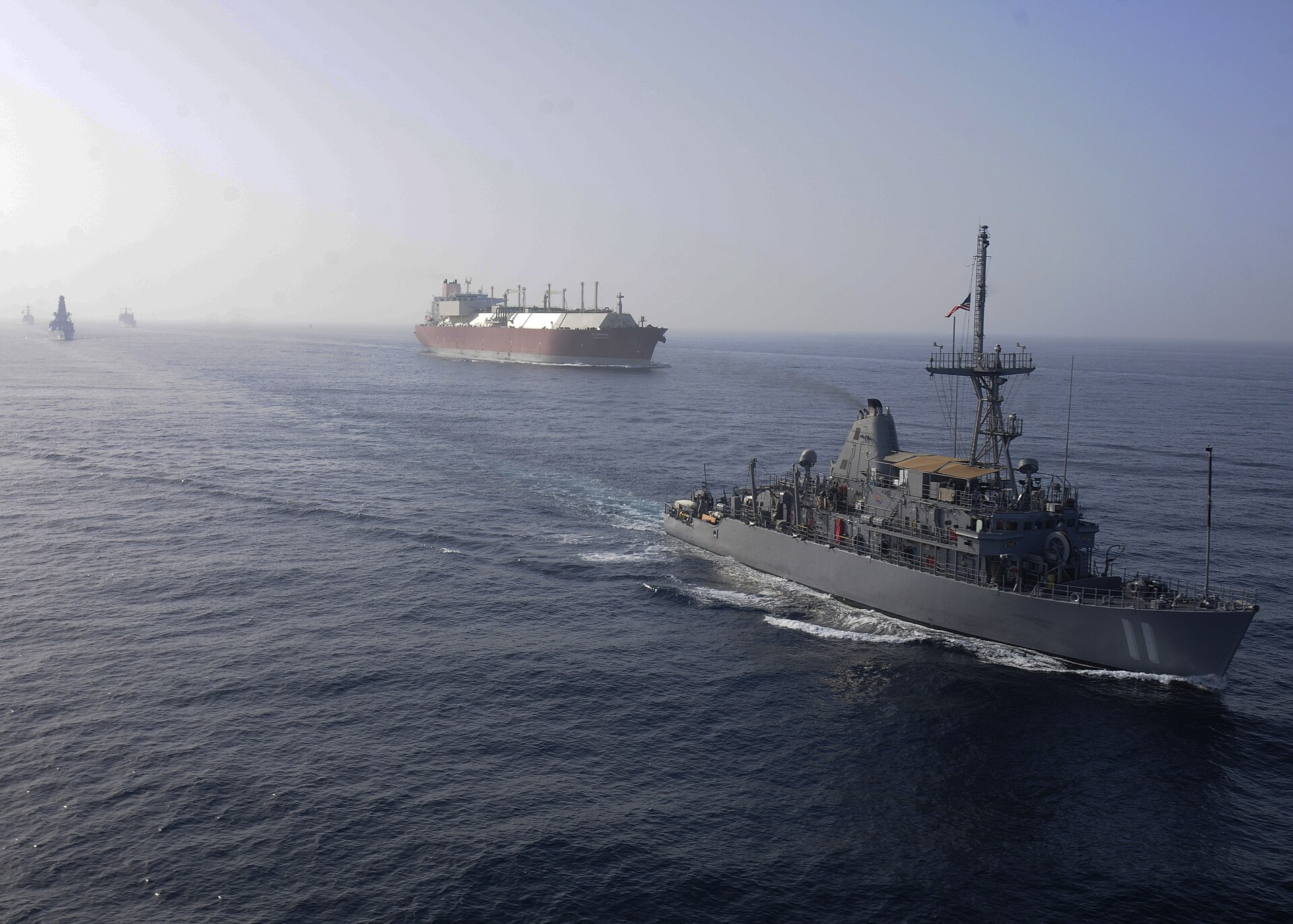
Is the Blockade Legal?
Mark Nevitt, an Emory University law professor and retired Navy JAG officer, assessed the core blockade — the one declared April 13 and scoped to ships entering or leaving Iranian ports — as having “a sound legal basis,” writing in Just Security in May 2026. By Nevitt’s analysis, the blockade was publicly declared, applied impartially, geographically limited and permits humanitarian shipments, meeting the traditional criteria under the law of armed conflict.
The legal picture gets messier at the edges, and the edges are expanding. Nevitt distinguished four types of US enforcement. The core port blockade is on firm ground. A global seizure of Iranian-flagged vessels is defensible as enemy capture. Contraband interdiction — stopping commercial oil cargoes — is contested. And the boarding of OFAC-sanctioned vessels is what Nevitt called “the most legally problematic,” because no naval warfare manual recognises US Treasury designations as a basis for belligerent boarding at sea.
Ann Marsden and Laura Stigaitė, writing in Pennington’s Law, reached a similar conclusion from a different angle: the US decision to scope the blockade to Iranian-port traffic rather than the entire strait is “at least facially more defensible” than a total Hormuz closure, which would breach UNCLOS Articles 26, 38 and 44 on transit passage. But they concluded that the operation “operates in legally uncertain territory” — a phrase that captures the gap between what international lawyers consider sound in a journal article and what happens when a military aircraft fires at a merchant ship in international waters.
The international response has followed that ambiguity. No state has formally recognised the blockade as legitimate. Russia and China vetoed a UN Security Council resolution to protect shipping on April 7. Israel endorsed the blockade. The UK, France and the EU called for de-escalation. Spain called the blockade senseless. And yet no flag state whose vessel has been disabled or sunk has formally challenged US authority to do it — not Palau, not St. Kitts, not the registries of the Kylo or Riesco. The legal uncertainty persists in academic journals; at sea, it has been resolved by the fact that the country with the most naval firepower in the Gulf is the one setting the rules, and nobody with a navy capable of contesting those rules has chosen to do so.
The November 18 extension to ship-to-ship transfers pushes into especially ambiguous territory, because it applies enforcement not to vessels calling at Iranian ports but to vessels conducting commerce in international waters of the Persian Gulf. That expansion is what trade lawyers and insurance underwriters watch, because it determines which hulls are insurable and which routes are navigable — and in modern maritime commerce, the insurance market enforces more effectively than the Navy does.
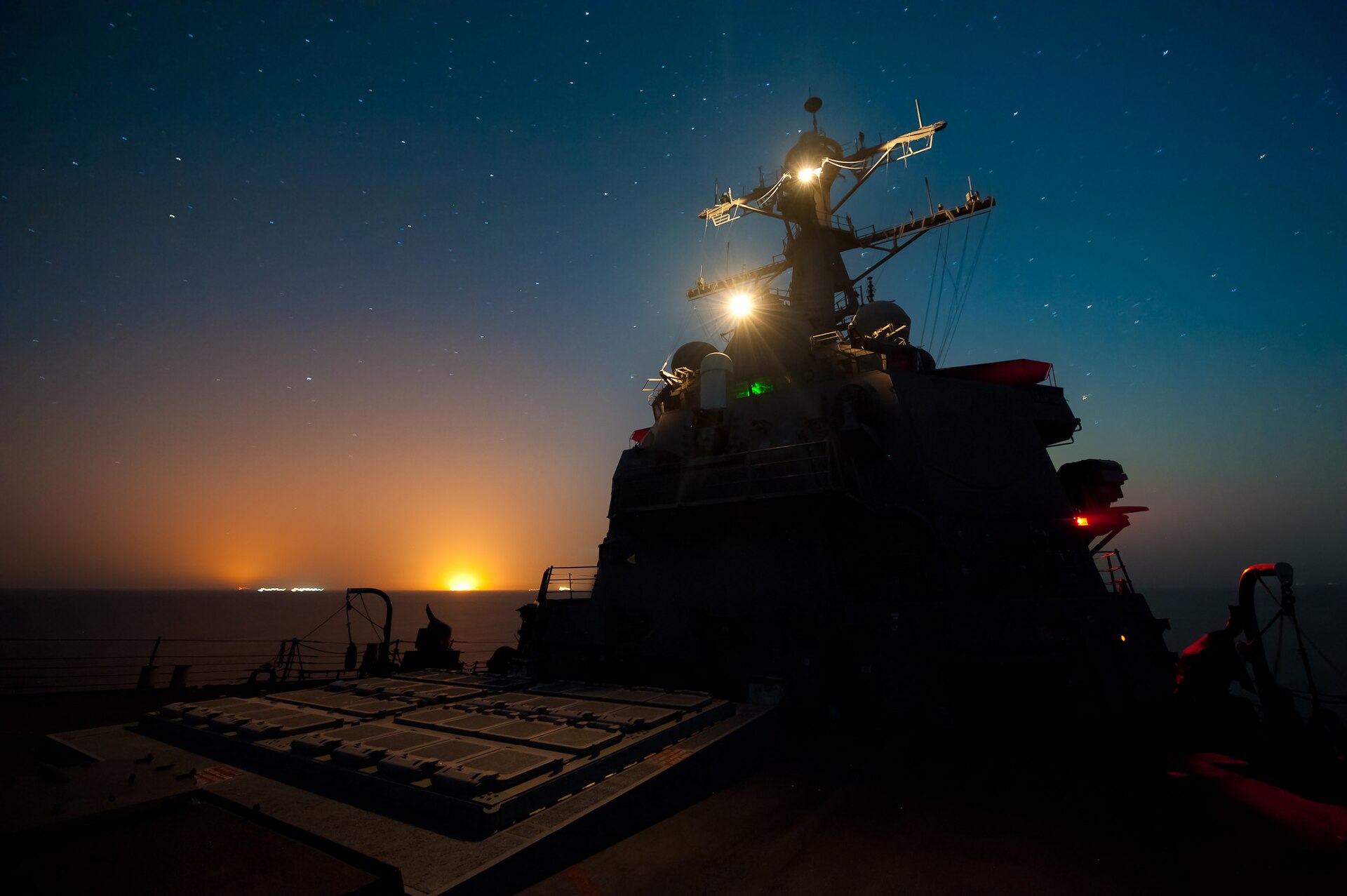
What Happens if Iran Sends the Kharg Island Convoy?
The variable that could change the blockade calculus overnight is sitting off the Iranian coast. As of November 20, at least 14 oil tankers had gathered near Kharg Island, according to satellite imagery reported by Euronews and cited by National Security Journal. Fars News, which is IRGC-affiliated, published a commentary on November 18 calling for a tanker convoy to challenge the blockade — the kind of editorial that in Iran’s media ecosystem often signals a policy under consideration rather than one already decided.
Iran’s Foreign Ministry spokesman Esmaeil Baqaei called the convoy reports “media speculation” on November 23 but added that Tehran has the right to act against the blockade “when it chooses,” according to National Security Journal. That formulation — dismissing the specific report while asserting the general right — is the diplomatic equivalent of keeping the option open without committing to it, and it suggests that the internal debate in Tehran about whether to force a confrontation at sea is not yet resolved. For Saudi Arabia, a convoy attempt would be as destabilising as a successful breakout, because the military response it would provoke — from the US, from Iran’s mines, or from both — would happen in the same waters that Aramco’s tankers need to transit.
The question the convoy forces is not whether Iran can physically send 14 tankers into the strait — it can — but what happens when they arrive. The US has demonstrated, 15 times since April, that it will fire on vessels running the blockade. Tehran has demonstrated, through its own IRGC mine reports, that the strait is seeded with ordnance that damages even ships Iran wants to protect. A convoy that runs into US enforcement and Iranian mines simultaneously would be a catastrophe that neither side intends but that the current escalation trajectory makes increasingly plausible, particularly as long as Tehran’s public rhetoric outpaces its private calculations.
At Kharg Island, those 14 tankers have been massing since at least November 20, according to the Euronews satellite imagery. None of them has sailed. The last ship that tried to run the blockade is drifting in the Gulf of Oman, its propulsion disabled and its civilian crew unharmed — left precisely where CENTCOM wanted it.
Frequently Asked Questions
What was the Pacific Archer carrying when it was disabled?
CENTCOM declined to disclose the cargo, and no other source has confirmed what was aboard. The Maritime Executive described the Pacific Archer as a bulk carrier rather than an oil tanker, which suggests the cargo was dry goods rather than crude — potentially making this an enforcement action against sanctions evasion in general commerce rather than the oil-specific blockade running that has dominated most previous incidents. Ship-tracking sites listed the vessel’s destination as Singapore, a major transhipment hub.
Has any country formally protested the Pacific Archer strike?
As of November 28, no state has publicly protested the specific strike on the Pacific Archer. China, whose nationals reportedly own the vessel, has not issued a public statement on the incident. Palau, the flag state, has not responded. This follows a pattern across all 15 enforcement actions since April: the states whose flags and owners are involved have not formally challenged US authority to disable their vessels, which may reflect a tacit acceptance that the costs of confrontation with Washington over a blockade-running ship outweigh the costs of losing the ship.
How does the Islamabad Memorandum affect the blockade’s current status?
The memorandum, agreed on June 17, provided 60 days of toll-free Hormuz passage and required the US to lift the blockade within 30 days, according to Iran International. It also committed the parties to a reconstruction plan of at least $300 billion. The blockade was lifted on June 18 as a result, but after three ships including the Saudi-flagged Wedyan were struck on July 7, Trump declared the ceasefire “over” and the blockade was reinstated on July 14. The memorandum has effectively lapsed, and the US and Iran disagree on whether the current blockade violates whatever ceasefire terms remain in effect.
What is Task Force Iron Gate?
Announced on November 7, Task Force Iron Gate extends US blockade enforcement beyond the maritime domain to include land borders and the Caspian Sea, according to National Security Journal. The task force reportedly asked Iraq to close all but two land crossings with Iran, targeting overland smuggling routes that maritime enforcement cannot reach. The expansion signals that Washington views the blockade not as a naval operation alone but as a comprehensive economic pressure campaign designed to close every available export route for Iranian goods.
Could the blockade end through negotiation before the convoy sails?
Iran FM Araghchi submitted a seven-day roadmap via Qatari mediators at the UN General Assembly in September, offering to reopen Hormuz in return for lifting the blockade, sanctions waivers and release of about $12 billion in frozen assets, according to Al Jazeera. The Wall Street Journal reported that Trump rejected the proposal. Iran’s SNSC set its own conditions in August — ending the war, lifting the blockade and paying wartime compensation — none of which Washington has accepted. The Oman-Qatar diplomatic channel remains nominally active, but no breakthrough has been reported since the Pacific Archer was disabled.
The House of Saud Daily Briefing
Saudi Arabia's news in 3 minutes, every morning. Free. See today's issue