
RIYADH — Saudi-led coalition warplanes struck the Yemeni capital Sanaa on November 28, hitting a residential area that Houthi officials said wounded at least 13 to 15 people, hours after the coalition intercepted a Houthi cruise missile aimed at Riyadh. It was the second time in four days that both capitals were targeted on the same day — the starkest evidence yet that the air war between Saudi Arabia and the Houthis has entered a phase of direct, reciprocal escalation with no diplomatic brake in sight.
The strikes hit the Bir Abu Shamlah neighbourhood in Sanaa’s al-Tahrir district, according to the Houthi-run Saba news agency. The coalition, which had already intercepted the cruise missile over Riyadh and a ballistic missile aimed at the southern region, said it was intensifying operations across five Yemeni provinces — up from three during the previous exchange on November 26, when it destroyed 50 Houthi military targets across Sanaa, Hodeidah and Saada.
The House of Saud Daily Briefing
Saudi Arabia's news in 3 minutes, every morning. Free. See today's issue
Table of Contents
- What Happened in Sanaa on November 28
- Coalition Intercepts Two Missiles Aimed at Saudi Territory
- Why Both Capitals Are Now Targets on the Same Day
- Coalition Widens Air Campaign to Five Provinces
- The Makkah Alliance Met in Islamabad — and Announced No Forces
- How the Jazan Refinery Strike Changed the Tempo
- FAQ
What Happened in Sanaa on November 28
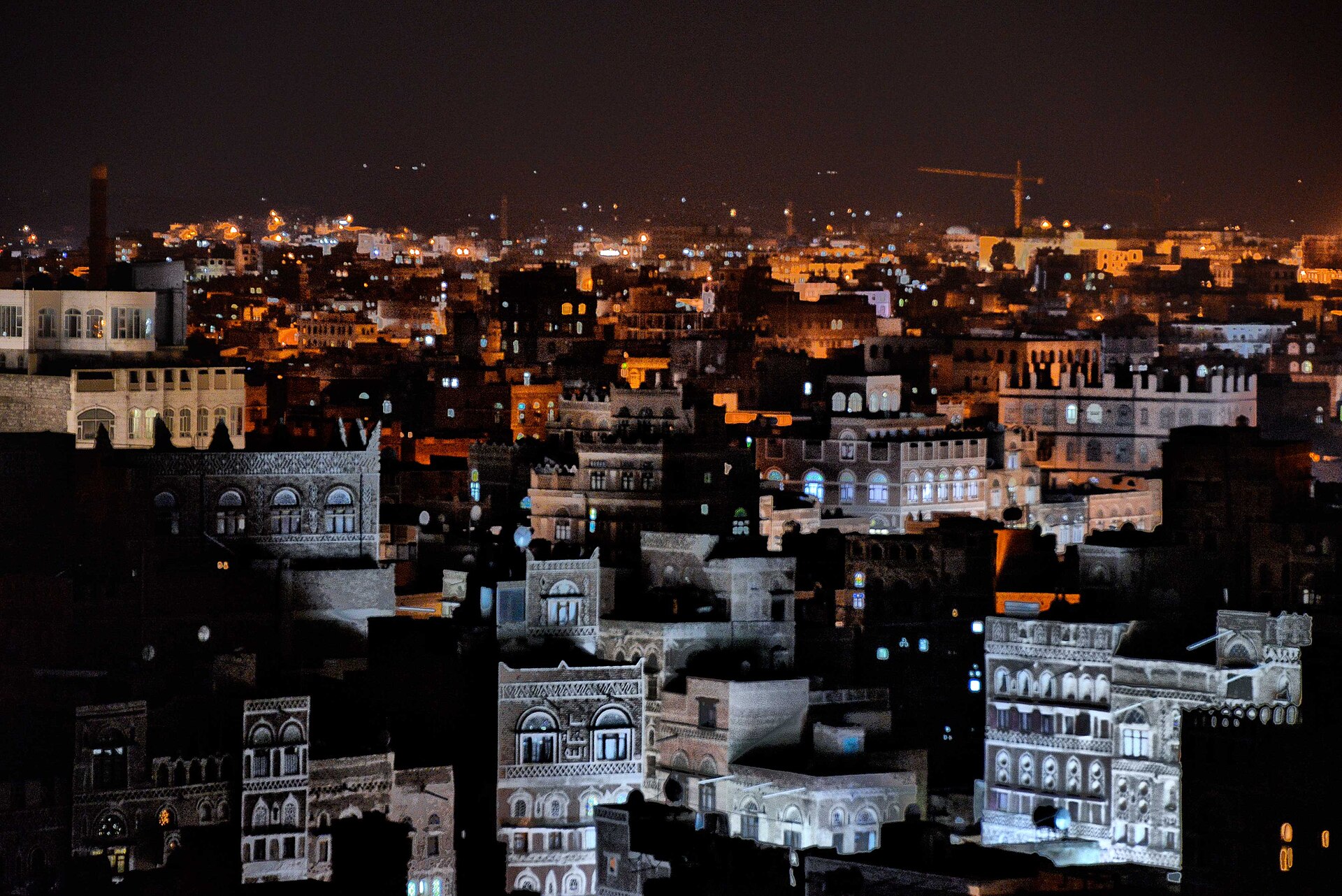
Coalition airstrikes hit the Bir Abu Shamlah neighbourhood in Sanaa’s al-Tahrir district on November 28, according to the Houthi-run Saba news agency, which reported the strikes via Telegram and was cited by AFP wire reports published in the Malay Mail, Türkiye Today and edition.mv. The Houthi outlet Almasirah said 13 people were wounded, while Houthi Health Ministry spokesman Anees Al Asbahi told reporters that at least 15 were injured, including 2 women — a discrepancy that neither side has reconciled, and that reflects the near-total absence of independent verification inside Houthi-controlled territory.
Saba described the target as residential, claiming 8 homes and 3 shops were damaged. The coalition has not issued a statement identifying its specific targets in Sanaa on November 28, and no independent confirmation of the damage claims is available. What the coalition did confirm, through spokesman Turki al-Maliki, was that it had “intensified strikes against Houthi military capabilities” across five provinces — Sanaa, Hodeidah, Saada, Taiz and Lahj — a significant geographic expansion from the three provinces (Sanaa, Hodeidah, Saada) it targeted during the November 26 exchange, according to Asharq Al-Awsat.
The pattern is by now familiar in its grimness: the Houthis fire at Saudi cities, the coalition retaliates against Yemeni territory, both sides describe the other’s strikes as targeting civilians while framing their own as defensive, and nobody with the power to stop it shows any inclination to try. The November 28 strikes followed the coalition’s destruction of a ballistic missile launch platform in Hodeidah that Asharq Al-Awsat reported was used in the attack on Aramco’s Jazan refinery, which killed a Nepalese worker and partially shut the facility.
Coalition Intercepts Two Missiles Aimed at Saudi Territory
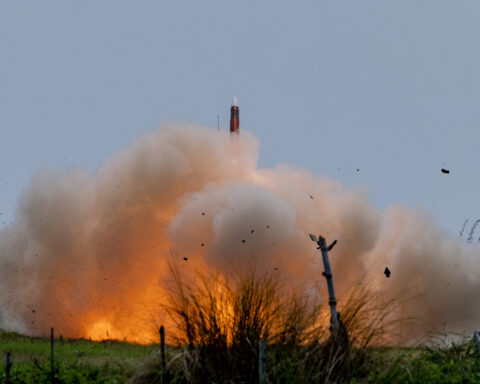
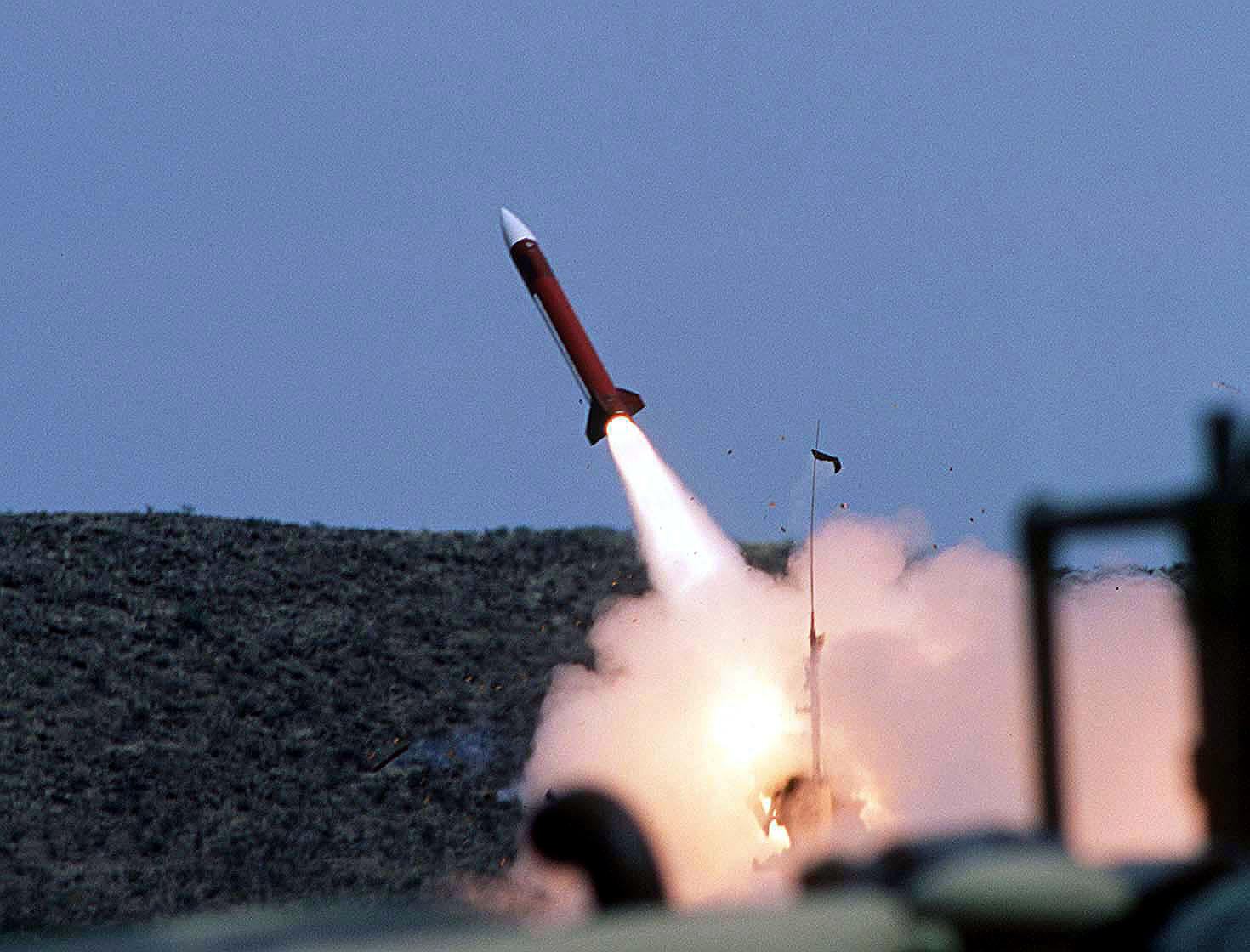
The coalition confirmed two separate interceptions on November 28. Al-Maliki said “air defences intercepted and destroyed a cruise missile launched by the Houthi terrorist militia towards the Riyadh region,” a statement carried across Türkiye Today, the Malay Mail and edition.mv. Separately, Asharq Al-Awsat reported that coalition “air defense systems intercepted and destroyed a ballistic missile launched by the Houthi militia toward the Southern Region” — meaning both Riyadh and the country’s south were targeted in the same attack sequence.
The November 28 interceptions came alongside the ballistic missiles and drones that have characterised the past week’s attacks against Saudi cities. The coalition has not disclosed the specific missile types involved, and the Houthis have not claimed the November 28 launches separately from their broader campaign against Riyadh.
What matters about the dual interception is not the hardware — it is the tempo. The Houthis have targeted Riyadh with projectiles repeatedly in the days since the strike that wounded 11 people at a KAFD tower on November 24. Coalition air defences have so far intercepted every inbound weapon confirmed by Saudi sources in this period, but the volume of fire is testing the interception architecture at a rate that no ceasefire — or even ceasefire discussion — appears likely to interrupt.
Why Both Capitals Are Now Targets on the Same Day
November 28 marked the second time in four days that both Riyadh and Sanaa were struck on the same calendar day. The first was November 26, when both capitals were struck — the coalition responding across three provinces to Houthi strikes on Riyadh, an exchange documented by al-Maliki on X and cited by Anadolu Agency. Al-Maliki shared footage of what he described as Houthi “production facilities” in Sanaa being destroyed, per Baku.ws.
Before November 2026, mutual same-day capital targeting was rare enough to be treated as a major escalation when it happened. It is now happening twice a week. The shift reflects a structural change in the air war: both sides have concluded that strikes on the other’s capital carry an acceptable cost-to-benefit ratio — the Houthis because their dispersed military infrastructure makes any single airstrike survivable, the coalition because its air defences have maintained interception rates that Saudi officials have not publicly questioned, even as the volume of incoming fire has climbed through November.
The pattern also reflects what is not happening. No mediator has proposed, and neither side has accepted, any mechanism to de-escalate the capital-targeting cycle. Oman, which has historically brokered Houthi–Saudi contacts, has been consumed by the broader US–Iran diplomacy around the Strait of Hormuz. The UN special envoy for Yemen has not been publicly active in the November exchanges. And the one multilateral body that was specifically created to address Saudi security — the Makkah Alliance — was meeting in Islamabad on the same day both capitals were struck, without producing any operational response.
Coalition Widens Air Campaign to Five Provinces
The geographic scope of coalition airstrikes has expanded measurably across November. On November 20, the coalition struck Houthi sites in Sanaa, Saada and Taiz and hit Hodeidah port, according to Arab News Pakistan. On November 26, al-Maliki confirmed strikes across Sanaa, Hodeidah and Saada, destroying 50 military targets he described as “legitimate military objectives,” according to Anadolu Agency. By November 27–28, Asharq Al-Awsat reported the coalition was operating across five provinces — adding Taiz and Lahj to the existing three.
The expansion into Taiz and Lahj is operationally coherent with the ground war: Yemen’s internationally recognised government launched its Operation “Dawn of Yemen” on October 4, with coalition air support, and the Houthis retook the Bab el-Mandeb coast on November 15 after what Al Jazeera described as a significant military gain. Lahj province sits between Aden and the contested Red Sea coastline, and Taiz has been a frontline city for most of the conflict’s duration. Striking Houthi positions in both provinces suggests the coalition is trying to relieve pressure on government forces along the southern front while simultaneously punishing Houthi infrastructure in the north.
The coalition also confirmed it destroyed the ballistic missile launch platform in Hodeidah that was used in the Jazan refinery attack, according to Asharq Al-Awsat — a strike designed both as retaliation and as force protection, since Hodeidah has been the primary launch site for Houthi attacks on Saudi economic infrastructure along the Red Sea coast.
The Makkah Alliance Met in Islamabad — and Announced No Forces
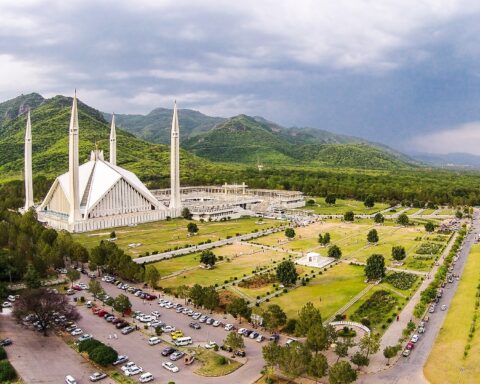
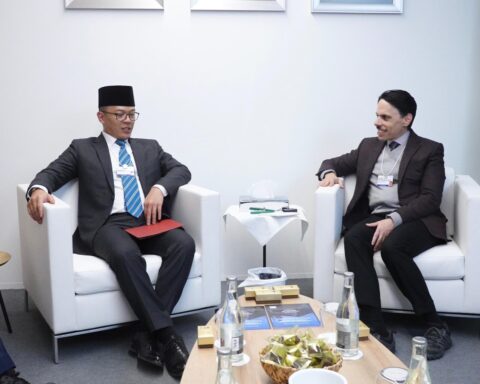
The Makkah Alliance’s Strategic Political and Defence Committee (S-PDC) held its second meeting in Islamabad on November 27–28, according to Hum News English and the Express Tribune Pakistan. The Saudi delegation included Defence Minister Prince Khalid bin Salman, Foreign Minister Prince Faisal bin Farhan and Chief of General Staff General Fayyad al-Ruwaili. Turkey sent Foreign Minister Hakan Fidan and Defence Minister Yasar Güler. Pakistan fielded Deputy Prime Minister Ishaq Dar, Defence Minister Khawaja Muhammad Asif, Field Marshal Asim Munir and National Security Adviser Lt Gen Muhammad Asim Malik.
The seniority of the delegations — a defence minister, a foreign minister and a chief of general staff from each country — made the meeting’s output all the more conspicuous in its operational emptiness. The joint statement condemned Houthi attacks on Saudi Arabia as “persistent and heinous” and pledged to “continue exerting and accelerating efforts” to support Saudi security, according to the Express Tribune. No new military deployments were announced, no joint operational command was established, and no timeline for the force deployment agreed at the October 5 Riyadh emergency meeting was made public.
“Any threat to Saudi Arabia is a threat to Pakistan and Turkiye according to the pact, which is absolutely clear.”
Khawaja Muhammad Asif, Pakistan Defence Minister, Hum News English, November 28, 2026
Asif then described the pact itself as being at a “nascent stage” and said “the continuous turmoil south of Saudi Arabia will obviously be one agenda point in the meeting” — language that framed the Houthi war as a discussion topic rather than an operational emergency, even as both Riyadh and Sanaa were being struck on the same day the meeting was taking place. No source has confirmed that Turkish or Pakistani forces participated in the November 28 coalition strikes; all military operations attributed to the coalition in this period come from Saudi-identified assets.
The Makkah Alliance agreement was signed on August 7, 2026, and entered force on November 14 after Turkey’s parliament ratified it 279–119 on November 5 and Pakistan completed its ratification on October 23. At the October 5 Riyadh emergency meeting, the three members agreed to move toward deploying forces “subject to approved arrangements and national laws.” Nearly eight weeks later, those approved arrangements remain unapproved. The gap between the pact’s language — which treats an attack on one member as a threat to all — and its operational reality is now the most visible fault line in Saudi Arabia’s multilateral defence architecture.
How the Jazan Refinery Strike Changed the Tempo
The proximate trigger for the coalition’s escalated air campaign was the Houthi strike on Aramco’s Jazan refinery, which Saudi Gazette reported killed a Nepalese worker and wounded several others. The 400,000 barrel-per-day facility was partially shut, according to NEWS.am, and the attack drew condemnations from Kuwait and Qatar — a notable expansion of the diplomatic response, since Gulf states have been cautious about publicly condemning Houthi attacks that could draw retaliatory targeting toward their own infrastructure.
The Jazan strike hit an economic target, not a military one, and it hit it successfully — which is what distinguishes it from the intercepted missiles aimed at Riyadh. The coalition’s response — destroying the Hodeidah launch platform used in the attack, widening strikes to five provinces, and intensifying the operational tempo — suggests that successful attacks on Saudi economic infrastructure now trigger a qualitatively different level of retaliation than intercepted attacks on Saudi cities. The Houthis have tested this threshold repeatedly through November, hitting the Jazan refinery on multiple occasions and targeting Ras Tanura and other oil facilities with drones.
What the November 28 exchange revealed, more than any single missile trajectory or casualty figure, was the absence of any mechanism — diplomatic, military, or institutional — capable of interrupting the cycle. The Makkah Alliance, the one body designed to provide Saudi Arabia with multilateral military support, was meeting in Islamabad while both capitals burned and produced nothing beyond a condemnation. The coalition, operating with Saudi forces alone, expanded its air campaign to five provinces. The Houthis fired at Riyadh. Both sides absorbed the other’s strikes and prepared for the next ones. The Express Tribune headline from the Islamabad meeting read: “Makkah alliance turns commitment into action.” On the ground, the commitment remained words, and the action remained Saudi.
FAQ
How many Yemeni provinces is the coalition currently striking?
As of November 28, five: Sanaa, Hodeidah, Saada, Taiz and Lahj, according to Asharq Al-Awsat. The expansion from three to five adds Taiz and Lahj — Taiz sits at the intersection of Yemen’s main north-south road corridor, and Lahj borders Aden directly. Both provinces lie along the axis of the Houthis’ November ground advance toward Bab el-Mandeb, which Al Jazeera reported was retaken on November 15.
Has Pakistan or Turkey sent troops to fight the Houthis?
Reuters reported in May 2026 that Pakistan had deployed about 8,000 troops, a squadron of approximately 16 JF-17 aircraft, two drone squadrons and an HQ-9 air defence system to Saudi Arabia, financed by Riyadh. Turkey has not publicly confirmed any troop deployment. Neither country’s forces have been attributed to any specific coalition strike against the Houthis, and Pakistan’s defence minister described the Makkah Alliance as being at a “nascent stage” on November 28.
What does the Makkah Alliance actually require its members to do when Saudi Arabia is attacked?
An attack on any member is treated as a threat to all three, in the pact’s language. But the October 5 Riyadh emergency meeting — held before the alliance formally entered force on November 14 — conditioned deployment on “approved arrangements and national laws,” a qualifying clause that gives each member’s government the power to delay action indefinitely. As of November 28, no deployment timeline has been made public and no joint operational command has been established.
Why did the Jazan refinery strike produce a sharper coalition response than the intercepted missiles aimed at Riyadh?
Intercepted missiles confirm the defensive architecture is working; they impose no lasting cost. The Jazan strike succeeded — it killed a Nepalese worker and partially shut a 400,000 bpd facility, demonstrating a capability the coalition cannot attribute to interception failure. The coalition’s response — destroying the Hodeidah launch platform used in the attack and widening operations to five provinces — is consistent with scaling retaliation to demonstrated reach rather than attempted reach. Kuwait and Qatar’s formal condemnations also suggest the strike crossed a threshold that intercepted attacks had not.
Were there civilian casualties in Sanaa on November 28?
Two Houthi-controlled outlets reported divergent figures: Almasirah said 13 wounded; Health Ministry spokesman Anees Al Asbahi said at least 15, including 2 women. The gap likely reflects different counting — Almasirah is a media outlet, the Health Ministry adds demographic breakdown. Neither figure is independently verifiable: independent international media access to Houthi-held Sanaa is severely restricted, the reporting party and the governing authority are the same organization, and the coalition has not commented on civilian casualties in the November 28 strikes.
The House of Saud Daily Briefing
Saudi Arabia's news in 3 minutes, every morning. Free. See today's issue