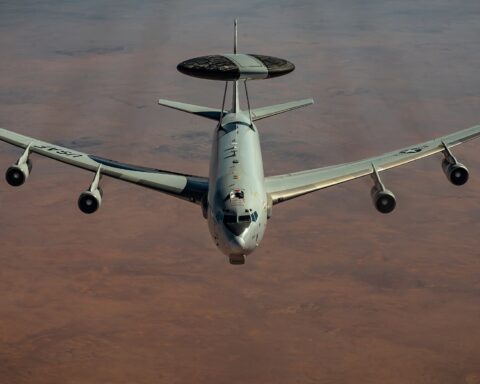
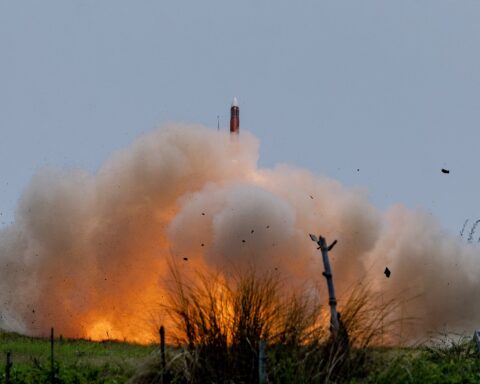
MANAMA — Adm. Brad Cooper, commander of the US 5th Fleet, said in a video published by CENTCOM on the evening of October 30 that IRGC naval forces had effectively vanished from the Strait of Hormuz following months of American strikes. “Here’s what I didn’t see,” Cooper said after flying over the waterway. “I didn’t see the IRGC out there, at all.”
The claim — paired with CENTCOM’s October 28 assertion on X that all internationally recognized transit routes had been cleared of Iranian sea mines — drew a pointed challenge from Tehran. IRGC spokesman Hossein Mohebbi said on October 29 that conditions in the strait are determined “not on social media and in America’s media war rooms” and demanded independent evidence rather than a US military statement, Iran International reported. Iran’s navy separately warned that the southern route near Oman’s coast remains “contaminated with mines” and that vessel owners and crews would be held responsible, according to VOA.
The House of Saud Daily Briefing
Saudi Arabia's news in 3 minutes, every morning. Free. See today's issue
Neither side’s operational claims can be independently verified. Both land as Americans vote in midterm elections on November 3 — the same day President Donald Trump’s moratorium on striking Iran expires. The question of what actually exists on the water in Hormuz is now inseparable from the question of what comes after the moratorium lifts.
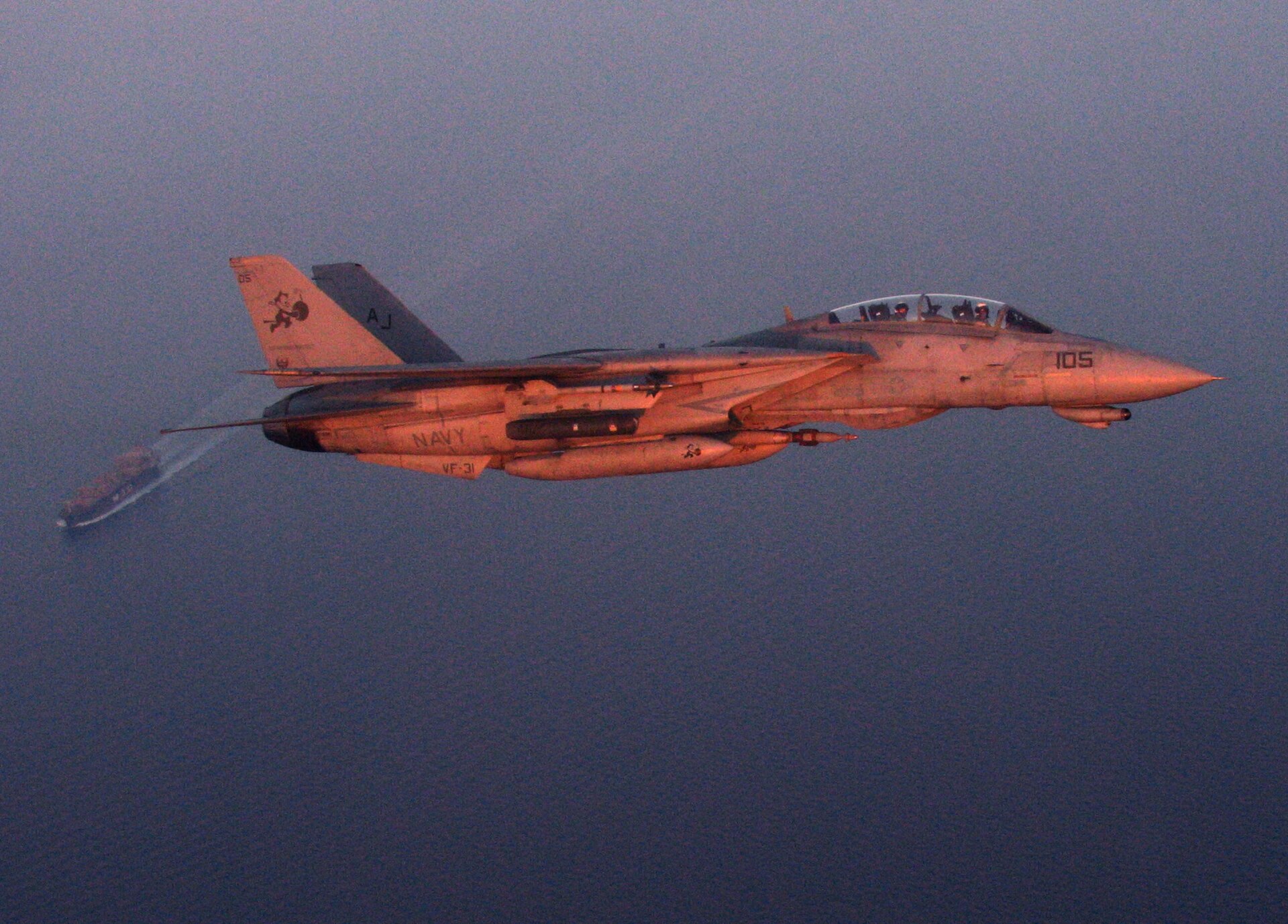
Table of Contents
What Did Cooper See From the Air?
Cooper flew over the Strait of Hormuz on October 25, according to Gulf News, though he described the visit only as “earlier this week” in the roughly two-and-a-half-minute video CENTCOM published five days later. The Maritime Executive, which examined the footage frame by frame, noted that vessel identities visible in the video could not be confirmed and suggested some imagery may predate the stated flight date.
From the aircraft, Cooper said he observed “dozens of commercial vessels” — cargo ships, crude oil tankers, and LNG carriers — along with US air and naval assets. What he did not see, he said, was any IRGC presence. “They were not out there because Iran’s navy is all at the bottom of the sea,” Cooper said, according to Life News Agency. He offered no count of IRGC vessels destroyed.
“Here’s what I didn’t see. I didn’t see the IRGC out there, at all.” — Adm. Brad Cooper, CENTCOM video published October 30, 2026
CENTCOM accompanied the video with a set of broader operational claims. More than 10,000 US forces were enforcing operations against Iran in the Gulf, the command said. Gulf partners had exported more than 1.5 billion barrels of crude since summer. More than 3,000 commercial vessels had transited the strait with CENTCOM support over six months, according to Maritime Gateway.
Cooper also said the US had maintained an “ironclad blockade on Iranian ports” that had prevented Iran from exporting any oil, Life News Agency reported. Two days before the video, CENTCOM had posted on X that “all internationally recognized primary transit routes through the Strait of Hormuz have been cleared of sea mines,” dismissing Iranian mine-strike reports as originating from “Iranian-controlled media,” according to Gulf News.
The Maritime Executive noted that CENTCOM’s “95 percent safe transit” figure “cannot be checked independently.” Cooper’s overflight was the command’s most direct public assertion yet that IRGC naval forces had been neutralized — a claim that rests on the authority of the person making it rather than on evidence accompanying it.
Iran’s Counter: Mines, Warnings, and a Demand for Proof
Iran’s response came from multiple channels. On October 29 — a day before Cooper’s video — IRGC spokesman Hossein Mohebbi dismissed CENTCOM’s October 28 mine-clearance claim, demanding independent evidence rather than what he called “America’s media war rooms,” Iran International reported.
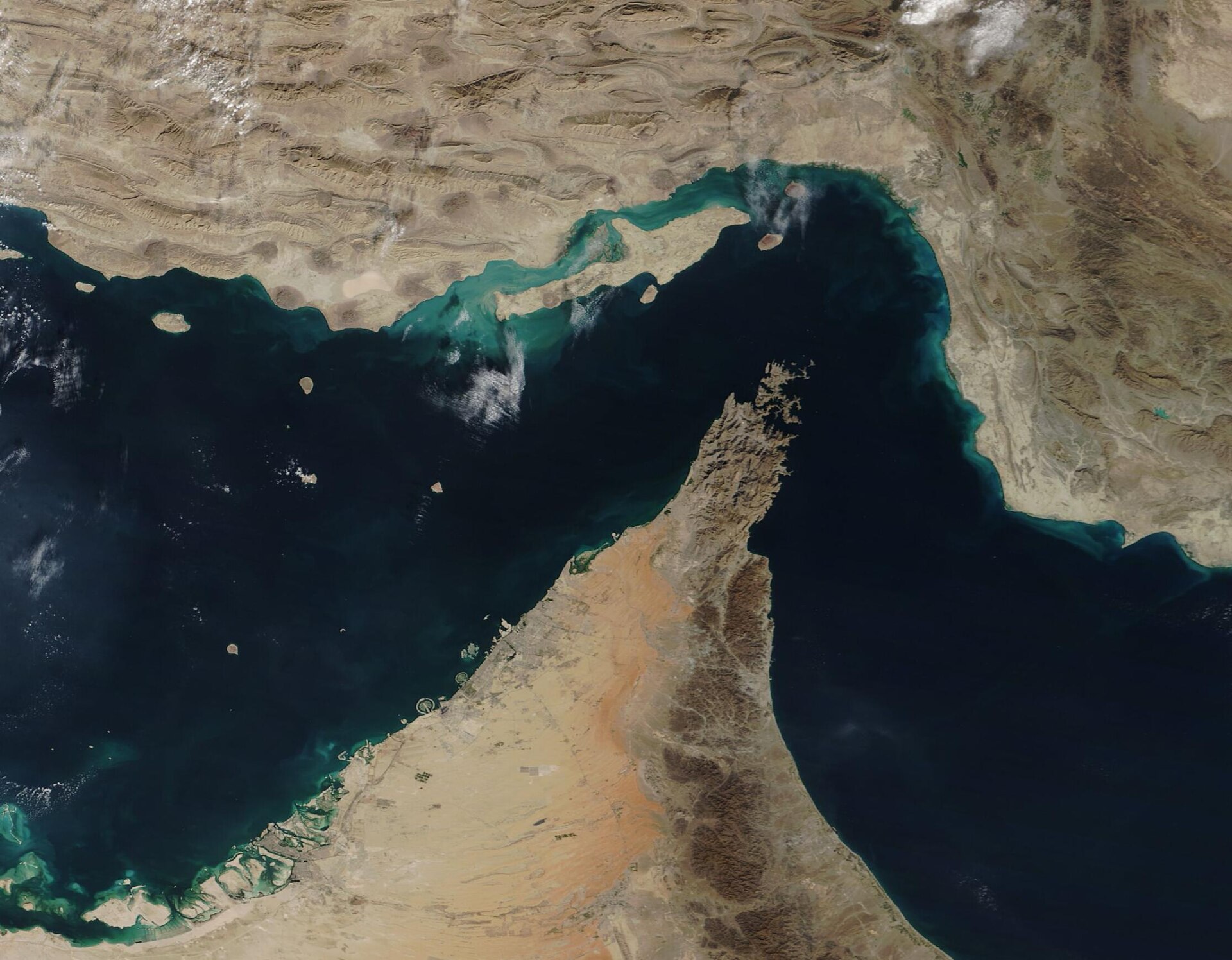
Iran’s navy issued a separate warning: the southern route near Oman’s coast is “contaminated with mines,” and vessel owners and crews transiting that route would be held responsible, VOA reported on October 30. The IRGC said tankers “transiting the unauthorized route” had ignored radio warnings from its naval forces before striking mines, according to Mehr News Agency.
The IRGC has made a series of mine-strike claims since mid-October, none independently verified. The sequence, all reported through Iranian state or semi-official media: two supertankers on October 17, three tankers on October 29, a fourth supertanker on October 31, and two more tankers on November 1. The October 31 claim, reported by Mehr News Agency, described “a massive explosion” on a supertanker carrying more than 2 million barrels on what the IRGC called “the unauthorized southern route of the Strait of Hormuz.”
The IRGC also escalated its rhetoric beyond the strait. PressTV reported that action against vessels using unauthorized routes would no longer be confined to Hormuz — violators would be pursued across the “entire region.” CENTCOM, for its part, denied a separate IRGC claim of having destroyed a US military sea drone, stating that all US unmanned surface vessels in the area were accounted for, VOA reported.
Taken together, Iran’s messaging amounts to a counter-narrative: the IRGC may not be visible from Cooper’s aircraft, but its mines are in the water, the southern route is dangerous, and American assurances are unverifiable assertions timed for a domestic audience. Iran’s claim on November 1 of a 7-fold weapons increase, linking Hormuz reopening to seven conditions, reinforced the message that the IRGC’s capacity to threaten the strait has grown rather than diminished.
Does the Evidence Support Either Side?
The most authoritative independent assessment available comes from JMIC, the body that issues threat advisories to commercial mariners. In its October 18 advisory — the most recent publicly available — JMIC found no substantiation for Iran’s October 17 claim that two supertankers had struck mines, gCaptain reported. JMIC did identify the GFS Pride as having been struck, but attributed the damage to an “unknown projectile,” not a mine.
JMIC maintained a SEVERE threat level for the Hormuz corridor in that same advisory and warned mariners to watch for attempted mining within and near the traffic separation scheme. That threat assessment — the highest short of an explicit closure recommendation — sits uneasily alongside CENTCOM’s assurance that transit lanes are clear.
Incidents have continued since both Cooper’s overflight and CENTCOM’s October 28 declaration. On November 1 at 1509 UTC, UKMTO reported that a vessel’s master relayed a Mayday on VHF Channel 16 after another vessel was hit by an “unknown projectile” in the Strait of Hormuz, Arab Times Online reported. UKMTO advised vessels to “transit with caution.” On November 2, a tanker was struck 72 nautical miles off Saudi Arabia and a tug was hit in the strait.
A separate category of attack persists alongside the mine dispute. The Louise 1, a Panama-flagged tanker, was targeted on October 29-30 near Khasab when a small boat attached two explosive devices — limpet mines — to its hull, Iran International and SAFETY4SEA reported. Limpet mines delivered by small boats represent a different operational capability from sea mines laid on the seabed. Their use does not require the kind of IRGC naval surface presence Cooper said he could not see from the air.
The broader traffic picture reinforces the sense of a strait under stress rather than one restored to normal operations. Transit volume stood at 254 vessels in the week ending October 14, according to gCaptain, against a pre-war JMIC baseline of 138 transits per day — meaning weekly traffic amounts to roughly what passed through the strait in fewer than two days before the conflict. War-risk insurance for a single Hormuz voyage runs 6 to 10 percent of hull value, the Financial Times reported, compared to approximately 0.25 percent before the war began on February 28. UKMTO has recorded 145 Iran-US conflict-related incidents since that date, Iran International reported.
AIS data, the standard tool for tracking vessel movements, offers no resolution. Maritime intelligence firm Windward found that AIS manipulation in the Hormuz corridor has reached “industrial scale,” meaning neither ship positions nor identities can be confirmed through publicly available tracking platforms.
Why Do Both Claims Land Before November 3?
Trump announced on October 8 that the US would “not be attacking Iran at any time prior to the midterm elections on 3 November,” The National reported. That moratorium expires tomorrow. The timing of Cooper’s video — published on a Friday evening, four days before the elections — and Iran’s counter-messaging are both calibrated for the window between now and the post-midterm decision point.
Cooper’s message serves a specific audience: it tells the White House and Congress that CENTCOM’s operations have succeeded, that IRGC naval forces have been destroyed, that Gulf oil is flowing, and that the mission does not require escalation. Netanyahu has separately pressed Trump to strike Iran after the midterms, Axios reported. A CENTCOM narrative of naval victory could either support or undercut that argument — as proof the current approach is working, or as evidence Iran’s conventional navy has already been defeated and broader targets are warranted.
Iran’s messaging serves the opposite function. By insisting mines remain active, that the southern route is contaminated, and that American claims are unverifiable, Tehran signals that the cost of any post-midterm escalation will be borne in the strait — in tanker strikes, in insurance premiums, in reduced oil exports. The IRGC’s escalation warning — that enforcement actions would extend beyond Hormuz to the “entire region” — is pitched directly at that calculus.
No Saudi government statement on Cooper’s specific claims about IRGC withdrawal has been found. Riyadh’s most recent diplomatic move on the Hormuz question was dispatching National Security Adviser Musaad Al-Aiban to Beijing with a message from Crown Prince Mohammed bin Salman — a channel that suggests Saudi Arabia is working multiple diplomatic tracks rather than relying on CENTCOM’s operational assurances alone.
Eight Months of Hormuz Confrontation
The IRGC first declared the Strait of Hormuz closed to “unfriendly nations” on March 2, two days after the February 28 assassination of Iran’s supreme leader. His son, Mojtaba Khamenei, assumed the supreme leadership on March 8. The original blockade began April 13. Iran resumed the blockade on July 14. The IRGC declared a full closure on October 26, according to the Times of India.
US mine-clearing operations began on April 11, roughly a month after Iran reportedly laid about a dozen mines, according to Reuters. CENTCOM declared the internationally recognized traffic separation scheme lanes cleared on August 29, Task and Purpose reported — approximately four months after clearance operations started. The IRGC began claiming new mine strikes on tankers from October 17 onward, none of which JMIC has substantiated.
CENTCOM said 135 ships had been turned around since the blockade resumed on July 14, CBS News reported on October 10. Cooper met Crown Prince Mohammed bin Salman in Jeddah on August 13, according to UQN. Trump said on October 31 that Iran wanted to talk even as incidents in the strait continued — a dual-track posture that defines the current moment as much as the competing claims about what is or is not on the water in Hormuz.
Frequently Asked Questions
How many IRGC naval vessels has the US destroyed since February?
Neither CENTCOM nor any independent body has published a count. Cooper said Iran’s navy is “all at the bottom of the sea” but gave no number. No satellite imagery of sunken IRGC hulls has been released. CENTCOM has disclosed individual engagements through press releases but has not issued a cumulative battle damage assessment for the eight-month naval campaign.
What is the traffic separation scheme in the Strait of Hormuz?
The TSS designates inbound and outbound shipping lanes separated by a buffer zone through the strait’s deepest navigable channels. CENTCOM says these lanes are mine-free. Iran warns the southern route near Oman, outside the TSS, is contaminated. War-risk insurers typically require vessels to follow CENTCOM-escorted TSS lanes as a condition of providing coverage for the transit.
Can satellite data verify whether the IRGC is still present in Hormuz?
No independent satellite imagery of the Hormuz corridor showing the presence or absence of IRGC vessels has been made public. Commercial satellite providers such as Planet Labs and Maxar have not released strait-specific assessments. AIS vessel-tracking, the standard maritime monitoring tool, has been compromised by what Windward describes as “industrial scale” manipulation, making ship positions unverifiable through open-source platforms.
What happened to Iran’s oil exports under the CENTCOM blockade?
Cooper said CENTCOM’s “ironclad blockade” had stopped all Iranian oil exports. The International Energy Agency reported in May 2026 that Iran was still exporting approximately 1.4 million barrels per day despite the naval blockade, suggesting Cooper’s claim overstated the interdiction’s reach at that point. Maritime tracking firms have detected Iranian crude moving via ship-to-ship transfers outside the blockade zone, but actual volumes remain difficult to verify given the scale of AIS manipulation across the region.
How does the current disruption compare to the 1980s Tanker War?
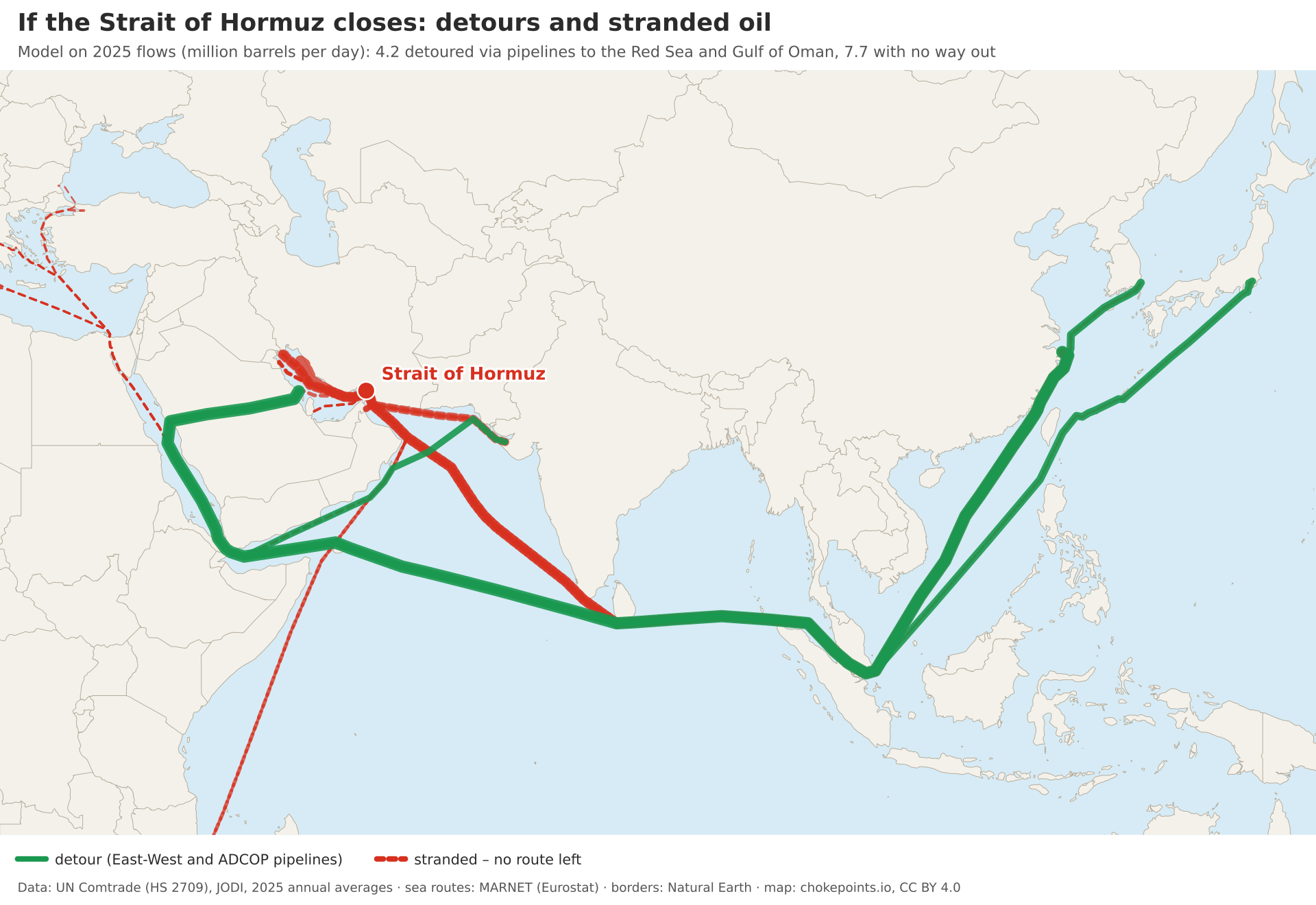
During the Iran-Iraq War’s Tanker War from 1981 to 1988, 451 vessels were attacked according to U.S. Naval Institute records — Iraq responsible for 283 strikes, Iran for 168 — but the strait never fully closed to commercial traffic. The current confrontation has produced a proportionally greater commercial impact. Hormuz carried roughly a fifth of global seaborne oil before the conflict, and the sustained reduction in transits has forced importers across Asia and Europe to seek costlier alternative supply routes.
The House of Saud Daily Briefing
Saudi Arabia's news in 3 minutes, every morning. Free. See today's issue