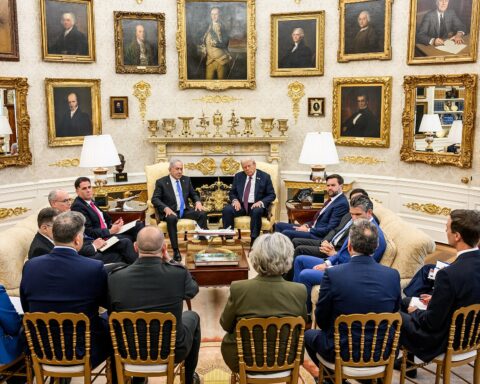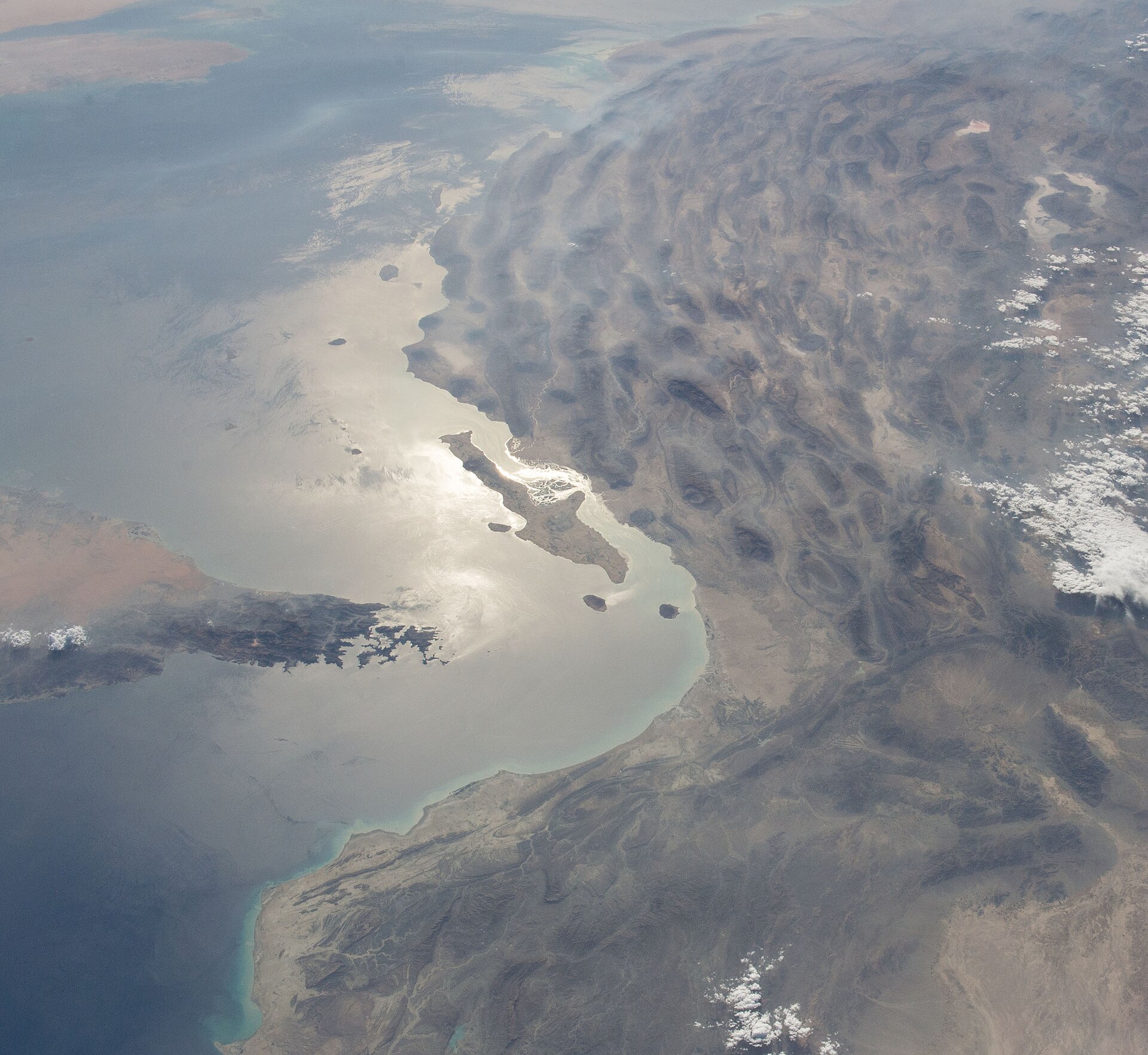

WASHINGTON — The United States has neither accepted nor rejected Iran’s revised two-day plan to reopen the Strait of Hormuz, leaving the offer unanswered on the same day that President Donald Trump’s informal moratorium on strikes against Iran expires and American voters head to the polls for midterm elections. Iran’s Foreign Minister Abbas Araghchi proposed the compressed timeline on November 2, replacing the seven-day roadmap Tehran submitted through Qatar in September, and Supreme Leader Mojtaba Khamenei granted his negotiating team expanded authority to close a deal — yet as of the morning of November 3, no formal US response has been reported by any wire service or outlet.
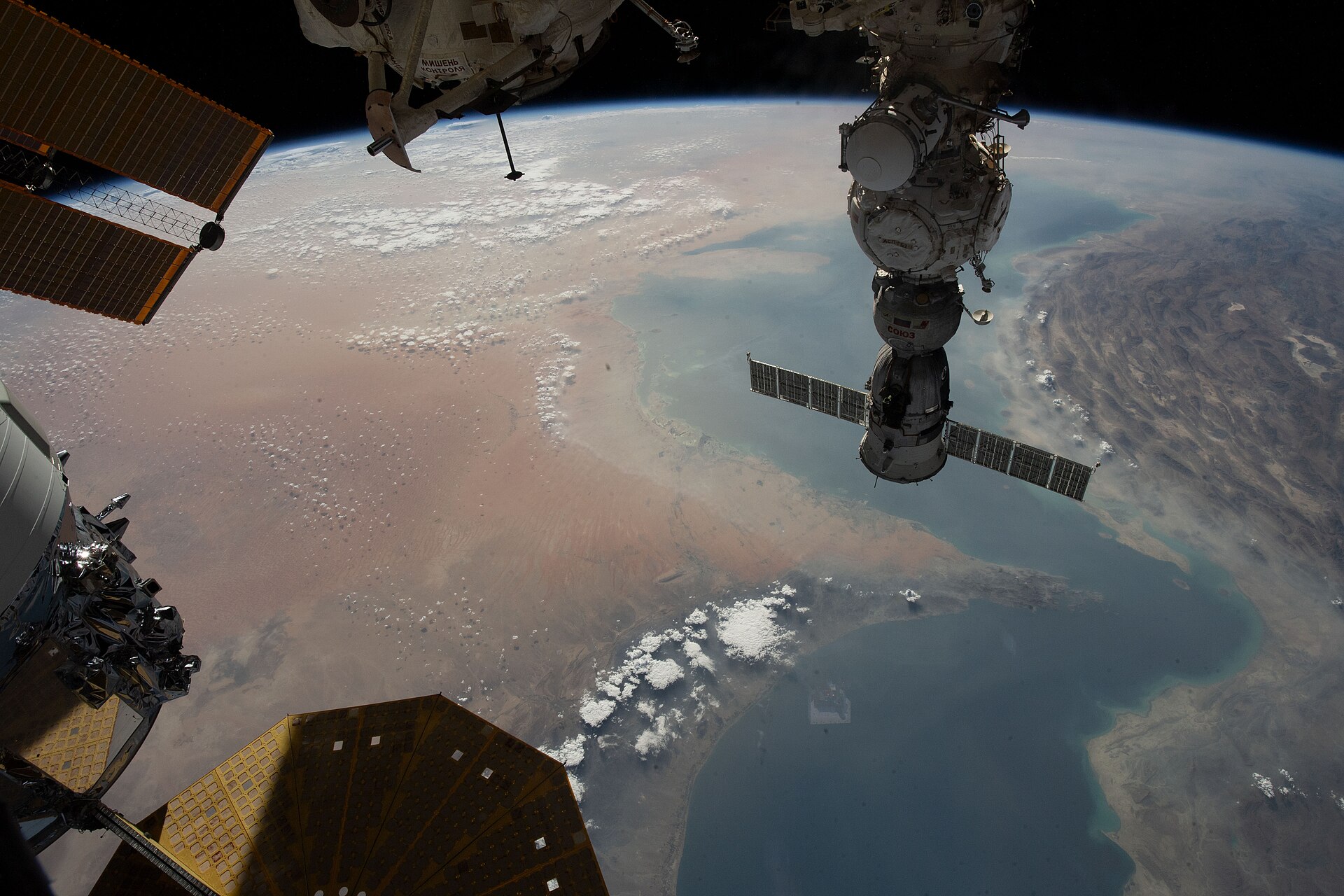
For Saudi Arabia, the cost of Washington’s indecision is not abstract. Both the Hormuz corridor and the East-West pipeline remain degraded by months of attacks and blockade, and every hour that the strait stays contested is an hour in which Saudi crude either sits in storage or takes the longer, more vulnerable overland route to Yanbu. Oil markets on November 2 priced in a deal that Washington has not agreed to: Brent dropped roughly 7% on the session.
The House of Saud Daily Briefing
Saudi Arabia's news in 3 minutes, every morning. Free. See today's issue
Table of Contents
Iran’s Two-Day Offer and What It Demands
Araghchi’s revised proposal, reported by Euronews on November 2, compresses what had been a seven-day phased reopening into two days: the United States would take the required measures on day one, and the Strait of Hormuz would reopen on day two. The original seven-day roadmap, submitted via Qatar on September 25, asked for a US naval withdrawal, sanctions waivers, and approximately $12 billion in frozen Iranian assets, according to Al Jazeera. Washington rejected that plan, and the WSJ reported at the time that Trump expected renewed bombing after the midterms, according to Hurriyet.
The shorter timeline does not come with shorter conditions. Iran’s foreign ministry spokesman Esmaeil Baghaei told CBS News on November 2 that “everything depends” on Washington accepting Iran’s terms, calling the compressed offer “another indication of Iran’s good-faith approach.” Iran’s Supreme National Security Council secretary Mohsen Rezaei said each of the seven main conditions carries two or three sub-conditions, according to Euronews — meaning the actual checklist runs to somewhere between 14 and 21 items. Rezaei received a letter from Vice President JD Vance proposing new talks, according to Axios, but had not replied as of November 2, according to Fox News.
The seven conditions themselves, as reported by Euronews on November 2, amount to a demand for a wholesale reversal of US posture in the Gulf: ending the war on all fronts, unfreezing Iranian assets abroad, lifting sanctions on Iran’s oil sector, ending the US naval blockade of Iranian ports, accepting a new Oman-brokered transit route, reducing US troop numbers in the region, and removing sanctions imposed since August 2026. Iran’s deputy Foreign Minister Kazem Gharibabadi traveled to Doha to help draft a preliminary agreement, with Qatar acting as mediator, Euronews reported.
Why Has Washington Not Responded?
The simplest explanation is the calendar. November 3 is midterm election day, and the Trump administration’s attention is split between a foreign policy crisis that has no clean resolution and a domestic contest that will determine the composition of Congress for the next two years. Trump’s informal moratorium on strikes against Iran, announced on October 8 when he said the US “will not be attacking Iran at any time prior to the midterm elections,” expires today, according to The National. There is no legal mechanism behind the moratorium — it was a verbal commitment, and its expiration creates a window in which military options are technically back on the table, even as diplomatic options remain open.
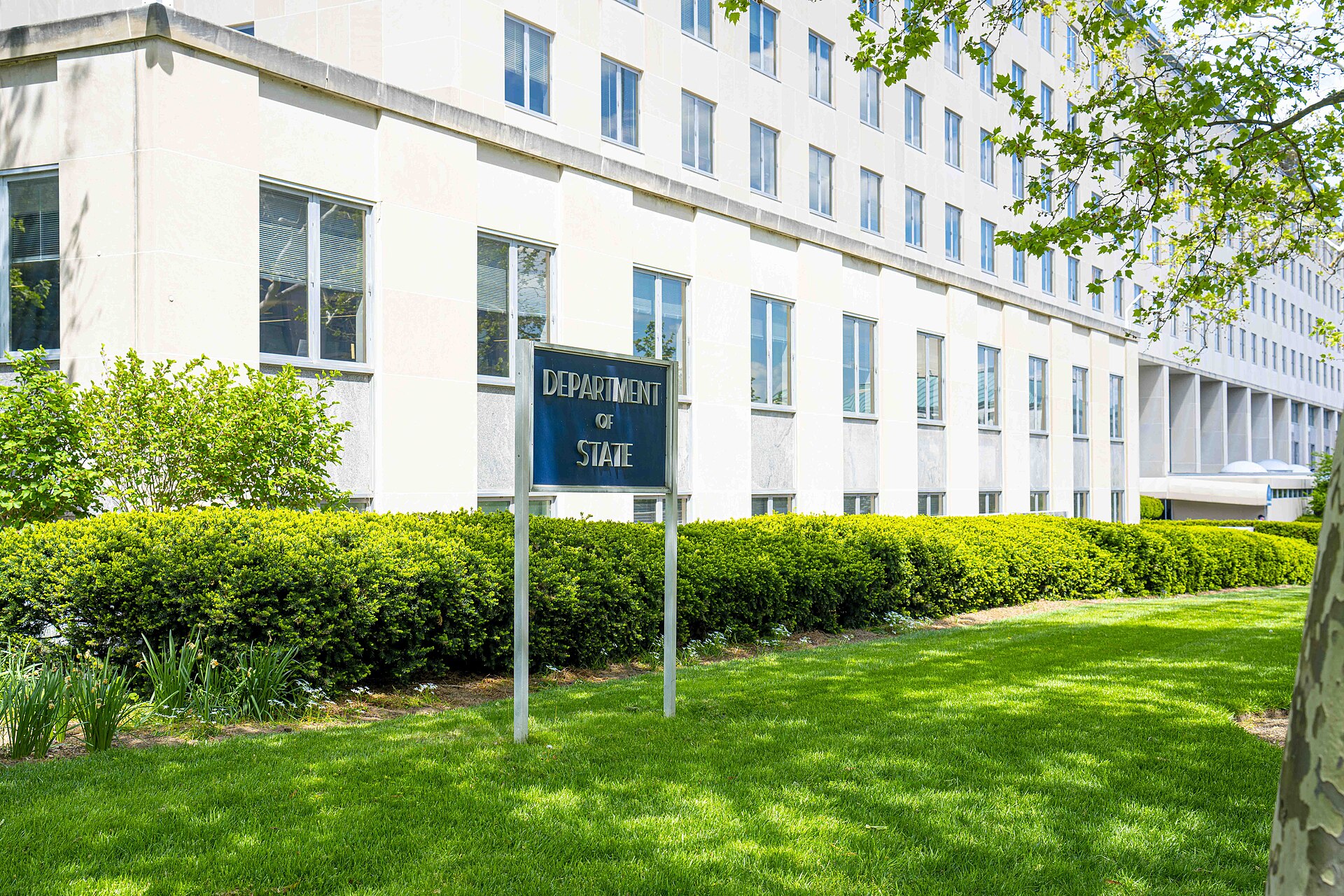
Secretary of State Marco Rubio said on November 1-2 that Trump “hasn’t made a decision” on whether to resume strikes, adding: “We have everything we need to be successful, and we would prefer to do it peacefully,” according to CNBC. Trump himself, on Truth Social at 5:29 PM on November 2, wrote: “Iran wants a settlement, as soon as possible. It could happen!” according to CBS News. At his final scheduled midterm remarks he said it was “not really a war because there had been no fighting for months,” CBS News reported.
The contradiction between these statements — a president who says it was “not really a war,” a secretary of state who says the administration has “everything we need” to act militarily, and a Truth Social post expressing optimism about a settlement — is itself the message. Washington is keeping both tracks alive without committing to either, and the ambiguity serves domestic purposes on election day even as it leaves allies in the Gulf without a clear signal. Saudi Vice FM Waleed ElKhereiji said on October 31 that “people in this part of the world want to bring peace back to the region,” according to Fox News.
The Qeshm Strikes and the Signal They Sent
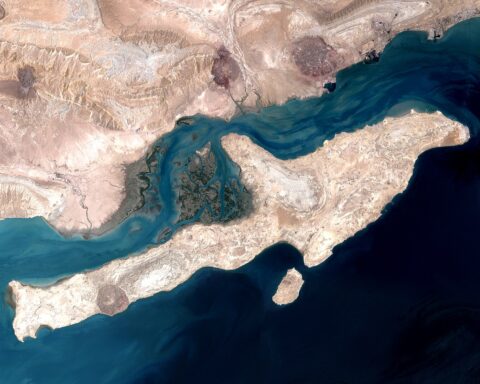
The ambiguity is not purely diplomatic. The Wall Street Journal reported on November 3, citing US officials, that the United States carried out strikes on Iran’s Qeshm Island — characterized by those officials as “limited defensive” strikes targeting Iranian surface-to-air missile capabilities after Iran fired on a US aircraft, according to Iran International and CNN. The strikes were kept quiet to avoid signaling a resumption of major combat, the WSJ reported. Qeshm Island hosts an underground missile site, a naval base, and a desalination plant, with up to 6 blasts reported, according to Iran International citing the WSJ.
Iran’s foreign ministry called the strikes contradictory. Baghaei said the US carrying out “defensive strikes” while claiming to seek peace undermined its credibility, according to CNBC. Iran accused the United Kingdom of allowing US forces to use RAF Fairford and Diego Garcia for the operation, CNBC reported. The IRGC separately claimed Iranian forces downed and captured two US MQM-170 drones near Qeshm Island, according to Euronews and Iranian state media. The gap between Washington’s quiet confirmation to the WSJ and its public silence on Iran’s two-day offer defines the current moment: the US is willing to strike and willing to talk, but unwilling to say which it prefers.
Trump told reporters on November 2 that the US “had a war with Iran. We won,” according to CBS News. Asked whether he was considering further strikes, he said “no” — though US officials told the WSJ he was still weighing options, including a potential strike on what Trump called “Pickaxe Mountain,” described as a suspected nuclear complex, Iran International reported. The distance between “no” and “still weighing options” is the space in which Trump’s earlier threat to “give Iran the hammer” remains operative.
The Vance-Rubio Negotiating Track
Vice President Vance told reporters on November 3 that “we’ve certainly made some progress,” adding that he and Trump were “optimistic” about an agreement, according to CBS News. Axios reported that Vance had sent a letter to Rezaei about possible new talks — a direct channel between the US vice president and Iran’s top national security official that runs parallel to the Qatar-mediated track on which Gharibabadi is working. Araghchi, for his part, told Al Jazeera on October 31 that Iran sees “no need to meet with the Americans at present,” a position that coexists awkwardly with Gharibabadi’s presence in Doha drafting terms for exactly that meeting.
Rubio’s role has been to hold the line between threat and negotiation. His statement that Trump “hasn’t made a decision” functions simultaneously as reassurance to the diplomatic track (the decision hasn’t been made yet) and as pressure on Iran (the decision hasn’t been made yet). Trump told Right Side Broadcasting on November 1: “We’ll put it away very soon, one way or the other. Either they’ll make a deal, or we’ll just end it,” according to the outlet. Treasury Secretary Scott Bessent said on October 31 that Hormuz traffic was near prewar levels “minus Iranian barrels” and that “Iran cannot live without oil exports,” according to Fox News — framing the blockade as more punitive to Iran than to Gulf allies, a characterization that Saudi Arabia’s export data does not support.
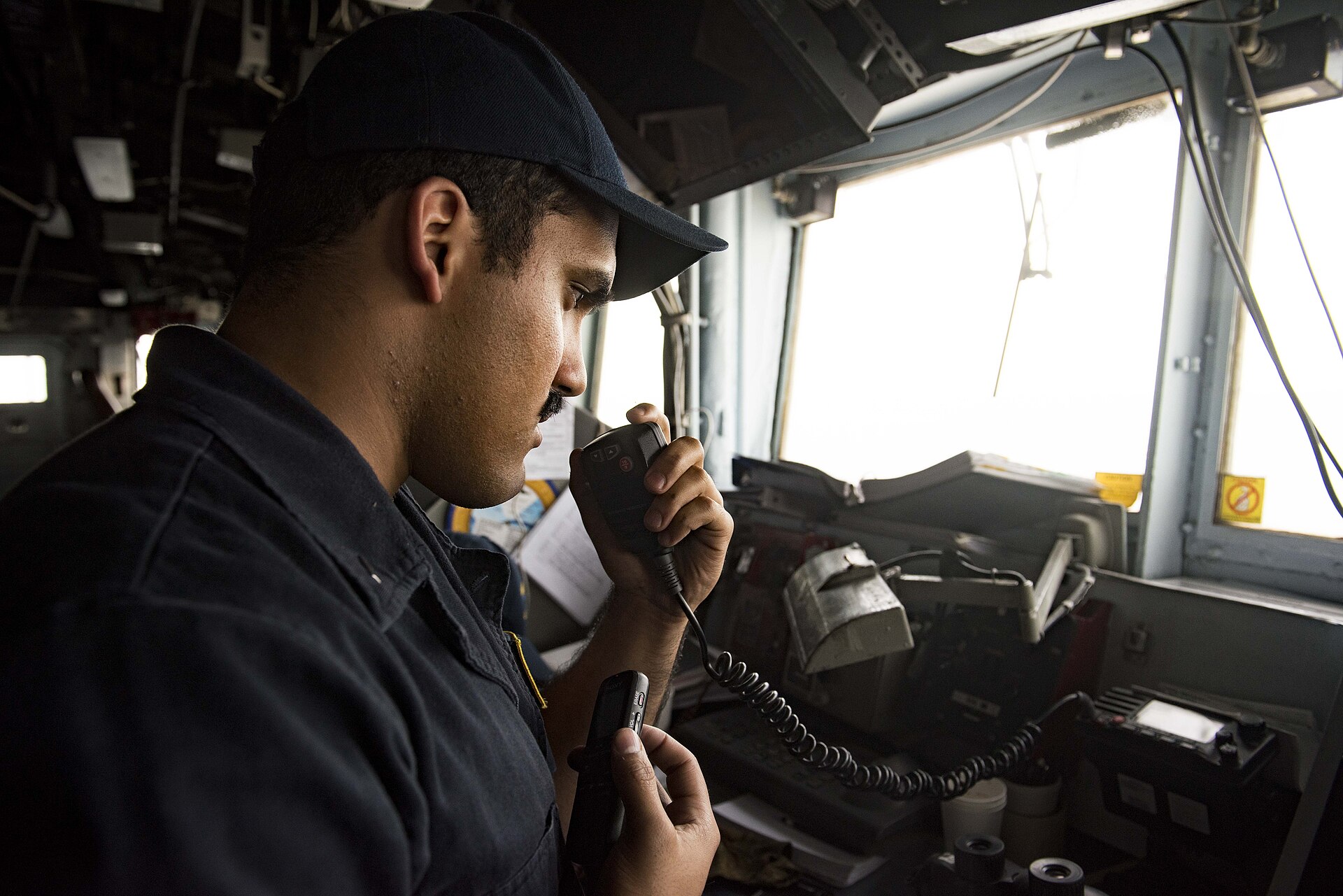
CENTCOM commander Admiral Brad Cooper said in a video statement released on October 30, based on an aerial observation conducted on October 25, that all primary transit routes through the Strait of Hormuz remained “free and clear” and that he saw no Iranian navy vessels, according to CBS News. CENTCOM had redirected 144 commercial vessels through the US counter-blockade as of October 31, Fox News reported. Yet Iran warned that mines remained in the strait even after IRGC surface vessels withdrew, and the IRGC claimed on November 2 that two tankers hit mines and caught fire in Hormuz, according to Al Jazeera — a claim that, if true, would undermine Cooper’s “free and clear” assessment from just two days earlier.
What Does the Delay Cost Saudi Arabia?
Saudi oil exports at 5.52 million bpd represent a reduction of roughly 1.5 million bpd from the pre-crisis level of approximately 7 million bpd, with both export routes degraded, according to Saudi government data and Fortune citing Robin Brooks of the Brookings Institution. Brooks estimated Saudi Arabia’s annualized export revenue at approximately $210 billion as of September 2026, up from $150 billion before the war — a windfall of more than 6% of GDP driven by elevated oil prices, Fortune reported. The paradox of the current crisis is that Saudi Arabia is earning more per barrel while exporting fewer barrels, and the net effect depends entirely on how long the Hormuz disruption lasts.
The Brent price fall of roughly 7% on November 2, to approximately $104.77, was driven by optimism over Iran’s two-day offer, CBS News reported. If a deal materialises and Hormuz fully reopens, prices will likely fall further as Iranian barrels re-enter the market — meaning Saudi revenue per barrel drops at the same moment export volumes recover. If no deal materialises and the moratorium’s expiration leads to renewed US strikes, prices will spike but export routes may deteriorate further. Either outcome has costs; the current limbo has costs of its own, and Riyadh’s National Security Adviser Musaid Al-Aiban carried a message from Crown Prince Mohammed bin Salman to Chinese President Xi Jinping on November 2, with China’s Foreign Minister Wang Yi calling for Hormuz security — a signal that Saudi Arabia is not waiting for Washington alone.
Dan Hoffman, a former CIA station chief and Fox News contributor, warned on October 31 that renewed US strikes could bring Iranian retaliation against US bases and energy infrastructure in Saudi Arabia, Bahrain, and the UAE, according to Fox News. The US Embassy in Saudi Arabia went to emergency staffing as of November 1, a move that preceded the moratorium’s expiration and suggested Washington was preparing for the possibility that diplomacy fails.
Khamenei’s Dual Mandate
Mojtaba Khamenei’s intervention on November 2 sent two messages that were designed to be read together. He granted Iran’s negotiating team expanded authority to conclude negotiations, according to CNBC — a step that removes one of the procedural obstacles to a rapid deal if Washington engages. He also ordered an “immediate, impactful, and geographically unrestricted response” to any threat level, with US and Israeli assets described as “within the reach of the Armed Forces,” CNBC reported. The twin mandate grants permission for peace and war simultaneously, leaving the choice to Washington’s next move.
Araghchi reinforced the duality by telling reporters, as cited by Iran International and the WSJ, that “everything depends on the political rationality of Washington.” Baghaei’s phrase — “the ball is in the US court” — is the diplomatic version of the same point, according to CBS News. Iran has positioned itself as the party that made an offer, shortened its timeline, sent a deputy foreign minister to Qatar, and received expanded negotiating authority from the supreme leader, while Washington has struck Qeshm, kept the strikes quiet, posted optimistic messages on Truth Social, and gone to the polls.
The seven conditions Iran attached to Hormuz reopening remain the structural barrier. Even with expanded authority, Iran’s negotiating team cannot concede those conditions without a direct order from Khamenei — and they amount, collectively, to a demand that the United States reverse its Gulf posture in exchange for reopening a waterway that Iran closed. Whether Washington sees that as a negotiation or an ultimatum will determine what happens when the midterm votes are counted and the moratorium is no longer a constraint.
Background and Context
The Hormuz blockade resumed on July 14, 2026, after an earlier closure that began April 13. Iran first submitted its seven-day reopening roadmap via Qatar on September 25, according to Al Jazeera; the US rejected it, and the WSJ reported Trump expected renewed bombing after the midterms. Araghchi met US envoy Steve Witkoff on the sidelines of the UN General Assembly in September, according to Al Jazeera, but the encounter produced no agreement. Rubio and Saudi Foreign Minister Prince Faisal met at the State Department on September 28, and Rubio said on October 5 that “we intend to live by” the US-Saudi defence agreement, according to The National.
Trump’s October 8 moratorium, a verbal commitment with no legal mechanism, functioned as a diplomatic pause that gave both sides time to explore terms without the threat of escalation, according to The National. Iran used that window to shorten its offer from seven days to two and to secure Khamenei’s expanded negotiating authority; the US used it to conduct quiet strikes on Qeshm while publicly emphasising optimism about talks. The Hormuz baseline before the crisis was 138 ships per day transiting the strait, according to the Joint Maritime Information Center.
FAQ
What happens if the US accepts Iran’s two-day plan?
Under the proposal as reported by Euronews, the US would take unspecified “required measures” on day one — likely including some form of sanctions relief or asset unfreezing — and Iran would reopen the strait on day two. The practical challenge is verification: neither side has proposed a mechanism to confirm compliance within a 48-hour window, and the 14 to 21 sub-conditions attached to the seven main demands, as described by Rezaei to Euronews, would need to be sequenced into what amounts to a single day of US action. No precedent exists for a sanctions-relief agreement executed in that timeframe.
Has Israel weighed in on the Iran deal?
Israeli Prime Minister Benjamin Netanyahu pressed Trump to launch strikes on Iran immediately after the midterm elections, according to an Axios report cited by CBS News on November 2. Trump reportedly favoured letting negotiations play out. The Netanyahu-Trump dynamic adds a third variable to the decision: even if the US and Iran reach terms, Israeli pressure for military action could complicate implementation, particularly given Netanyahu’s argument that the post-midterm window is the optimal moment for strikes before Iran rebuilds its air defences.
What is the Makkah Joint Defence Pact’s role in this?
The Makkah pact, which brings Saudi Arabia, Pakistan, Turkey, and other signatories into a collective defence framework, has been ratified by Pakistan as of October 23, according to Dawn. Turkey’s parliamentary committee approved it on October 27 but no full General Assembly vote had taken place as of November 2. The pact provides Saudi Arabia with a multilateral security backstop that does not depend on the US, but its operational readiness remains unproven — a point highlighted by the absence of a joint command structure, as reported in coverage of the pact’s implementation gaps.
Could Iran reopen Hormuz without a US deal?
Iran’s seven conditions are framed as prerequisites, but the decision to close or open the strait is operationally Iran’s alone. Khamenei’s “geographically unrestricted response” order, as reported by CNBC, suggests the military option remains active regardless of diplomacy. A unilateral reopening without conditions would undermine Iran’s negotiating position and is considered unlikely by the standards of Iranian strategic signalling — Tehran has historically used Hormuz as its primary point of economic pressure and has never reopened it without extracting concessions, dating back to the tanker wars of the 1980s.
Why did Iran shorten the Hormuz reopening timeline from seven days to two?
No Iranian official has publicly explained the compression. The original seven-day roadmap, submitted via Qatar on September 25, built in sequential verification checkpoints that gave Iran time to confirm US compliance before full reopening. Shortening to two days removes that buffer — which suggests Iran either judges that Washington lacks the leverage to drag out compliance, or is testing whether Trump will engage before the post-moratorium military window reopens. Rezaei confirmed to Euronews that the conditions themselves are unchanged; only the timeline has accelerated.
The House of Saud Daily Briefing
Saudi Arabia's news in 3 minutes, every morning. Free. See today's issue