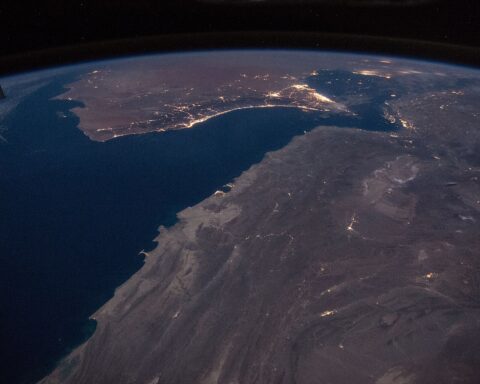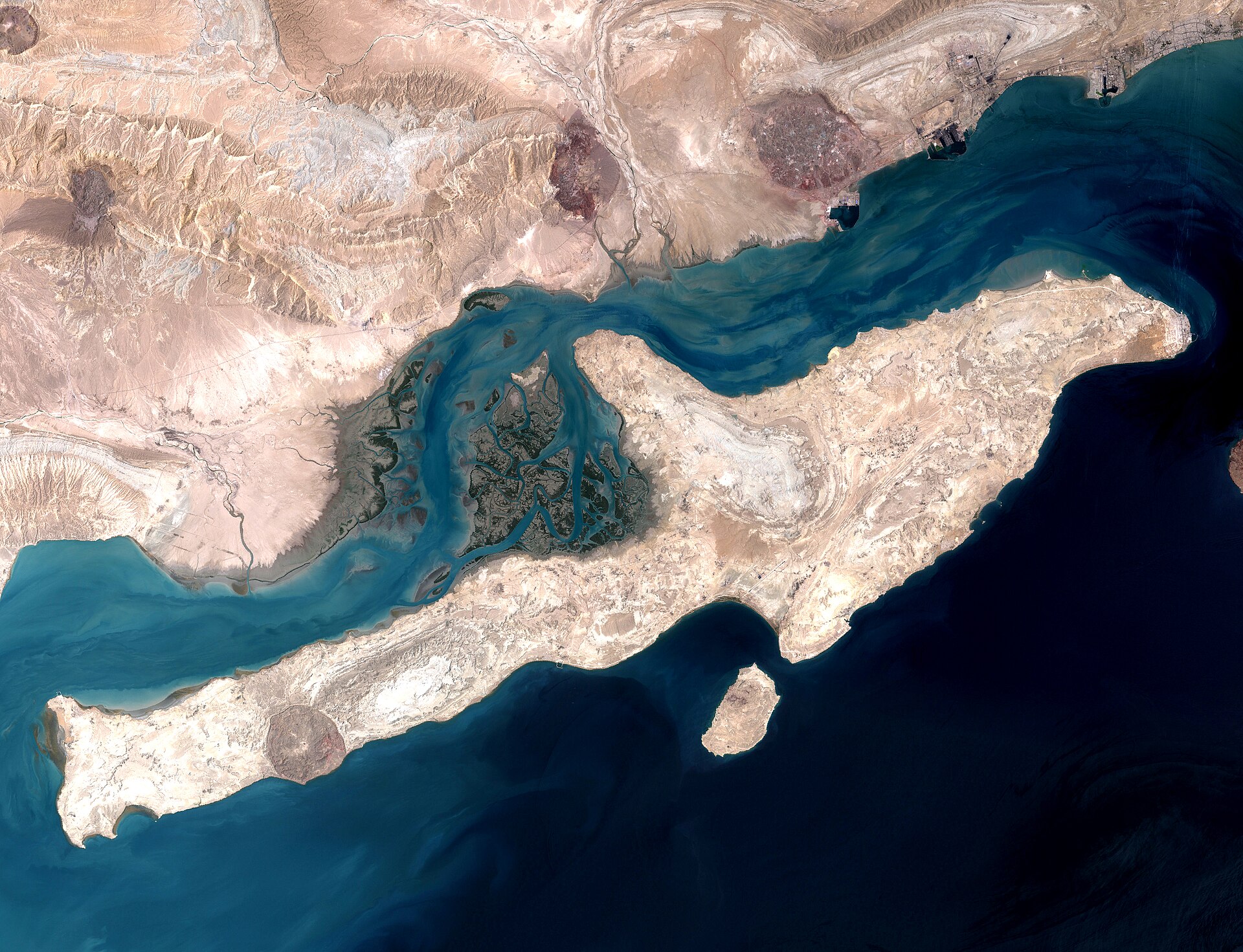

TEHRAN — Up to six explosions struck Iran’s Qeshm Island on Monday evening — home to the IRGC’s principal naval and drone infrastructure for Hormuz operations — during the final hours of President Trump’s self-imposed strike moratorium, and by early Tuesday no government had officially claimed or confirmed responsibility; the Wall Street Journal subsequently reported on November 3, citing US officials, that the attack was conducted by the United States. The blasts arrived on the same evening that Qatar-mediated talks in Doha ended without agreement, on the same day Trump told Axios he was in no rush to consider new strikes on Iran, and less than 24 hours before the November 3 midterms removed the political constraint he had cited for holding fire.
For Saudi Arabia, whose oil exports have dropped to 5.52 million barrels a day with both the Hormuz and pipeline corridors degraded, the absence of attribution is not a diplomatic curiosity — it is the mechanism by which Washington, Tehran, and Tel Aviv all avoid committing to what happens next. Somebody struck the most heavily armed island overlooking the strait, on the most politically charged night of the year, and nobody wants credit.
The House of Saud Daily Briefing
Saudi Arabia's news in 3 minutes, every morning. Free. See today's issue
Table of Contents
- What Happened on Qeshm Island on November 2?
- Why Has Qeshm Been Hit Before and Never Officially Attributed?
- Who Benefits From the Ambiguity?
- What Is the IRGC’s Military Footprint on Qeshm?
- The Moratorium That Expired Without Consequence
- Where Does This Leave Saudi Arabia’s Hormuz Reopening?
- The Insurance Problem That Ambiguity Cannot Solve
- Frequently Asked Questions
What Happened on Qeshm Island on November 2?
Iran’s state news agency IRNA reported five explosions in rapid succession on the evening of November 2, describing the cause as unclear and the casualty count as zero, according to NewsCord. Residents told IRNA they had observed two aircraft flying over the island at the time of the blasts — a detail the agency included without editorial comment, leaving the implication to the reader.
IRIB, the state broadcaster, offered a sharper framing: it described the events as “aerial attacks” in Qeshm, Sirik, and the mainland port of Bandar Abbas, and counted as many as six explosions on Qeshm alone, with further blasts heard in Bandar Lengeh along the coast. The divergence between IRNA’s measured “cause unclear” and IRIB’s more assertive “aerial attacks” may reflect different editorial judgments within Iran’s state media apparatus, but the gap between them is instructive — even inside the regime’s own information system, the framing had not been reconciled by the time the reports went out. Fars News, the semi-official outlet with IRGC ties, took a middle position, describing the cause simply as “unknown.”
Israeli broadcaster N12 reported that a US strike had hit an air defense system on Qeshm, according to InvestingLive, framing the claim as sourced from Iran rather than as an independent finding — an attribution chain that cannot be verified and has not been confirmed by either Washington or Tehran. Iranian air defenses were activated on the island after the blasts, according to JFeed, and the IRGC — which controls Qeshm’s military infrastructure — issued no statement on the explosions themselves, though it separately claimed to have downed an MQ-9 Reaper drone east of the strait and seized two MQM-170 reconnaissance drones near the island using electronic-warfare systems. US Central Command called the IRGC’s aerial drone claims false.
Reuters, the Associated Press, and the BBC had not published coverage of the November 2 Qeshm blasts as of the early hours of November 3 — a striking absence for an event confirmed by multiple outlets, and one that leaves a gap in the attribution record every party can exploit. Iran can interpret the blasts as foreign aggression without naming the aggressor, the United States can decline to comment without confronting specific evidence, and Israel — which has said nothing at all — faces no questions.
Why Has Qeshm Been Hit Before and Never Officially Attributed?
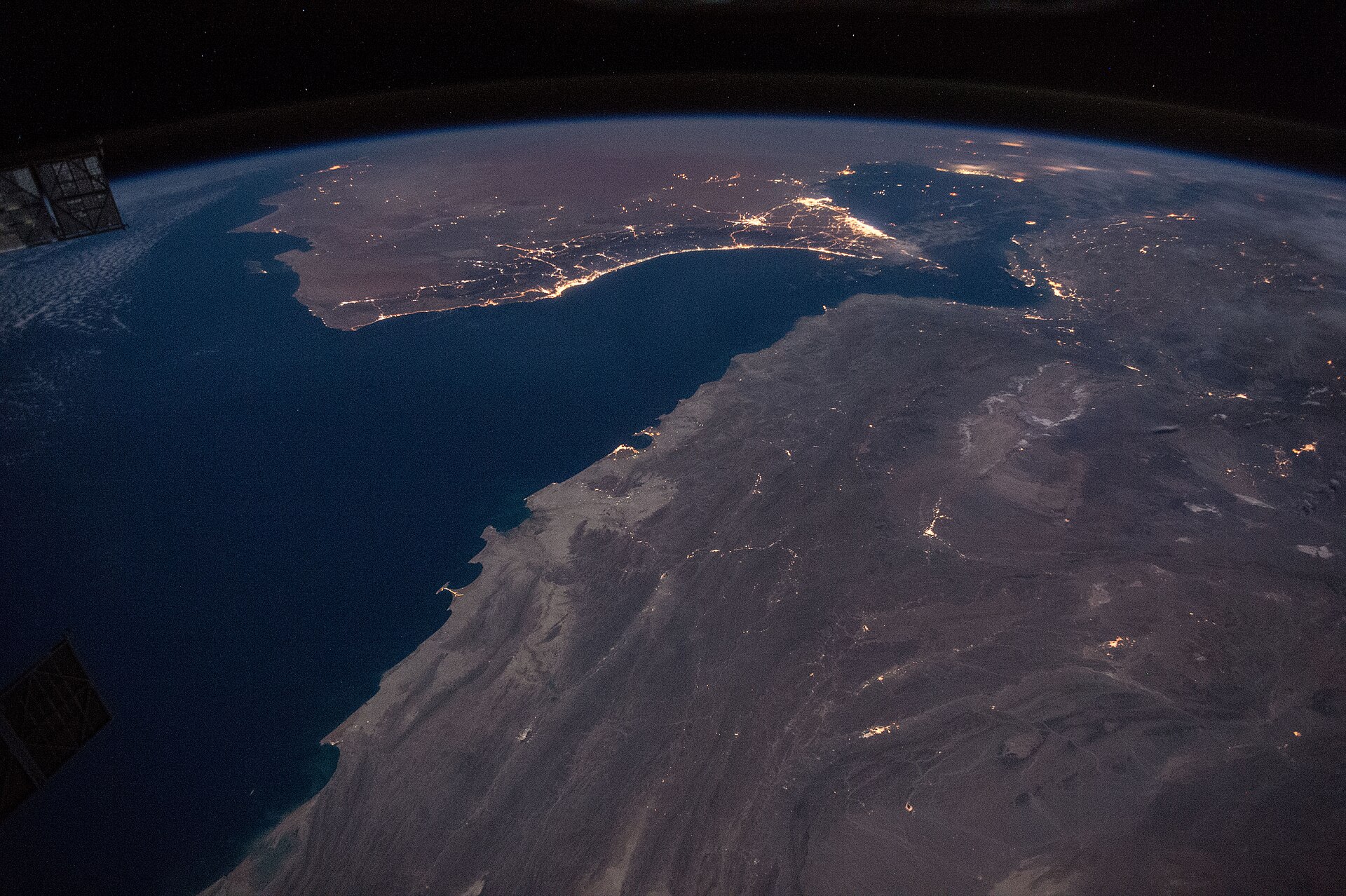
The November 2 blasts fit a pattern that has been running since the early weeks of the US-Iran war, one in which Qeshm gets hit, nobody takes the blame, and the explanations rotate between the implausible and the absurd. On March 7, Iran accused the United States of bombing a desalination plant on the island, cutting the water supply to 30 villages; the US, Israel, and the UAE all denied responsibility, and the incident settled into the diplomatic record with no resolution. On May 19, explosions shook the island again, and Iranian authorities told Reuters the blasts were the result of “neutralization of unexploded enemy ammunition” — a category of explanation that accounted for the sound without addressing the cause. On July 14, the day the IRGC resumed its Hormuz blockade, AFP reported that strikes had hit Qeshm, and Iranian state television confirmed the report.
The pattern has a consistent architecture: the blasts are real, the damage is undisclosed, the attribution is absent, and the official response is calibrated to avoid the domestic political consequences that would follow from either admitting vulnerability or naming an attacker. If Iran confirms that the United States struck Qeshm, the regime faces pressure from hardliners and from the IRGC’s own rank and file to retaliate against a superpower — a confrontation that Mojtaba Khamenei’s government does not want at a moment when its nuclear programme is under negotiation and its economy is under maximum-pressure sanctions. If the United States confirms it struck Qeshm, it collapses the diplomatic track through Doha and hands Tehran a casus belli for escalation in the strait. And if neither side speaks, the status quo holds: the infrastructure gets degraded, the deterrent message is received, and the negotiating table remains intact.
| Date | Event | Iranian framing | Attribution |
|---|---|---|---|
| March 7 | Desalination plant bombed, water cut to 30 villages | Iran accused US | US, Israel, UAE all denied |
| May 19 | Explosions across the island | “Neutralization of unexploded enemy ammunition” | None |
| July 14 | Strikes hit island; state TV confirmed | Confirmed by IRIB | None confirmed by any government |
| November 2 | Up to 6 explosions; blasts in Sirik, Bandar Abbas, Bandar Lengeh | IRNA: “cause unclear” / IRIB: “aerial attacks” | None; Israeli N12 reported US strike, unconfirmed |
Nineteen buildings have been destroyed across Qeshm’s UAV airfield and the adjoining IRGC naval base since the start of major combat operations, according to Alma Research and Education Center analysis of Copernicus Sentinel-2 satellite imagery. The steady attrition of IRGC assets on the island — accomplished, apparently, by nobody — is the physical evidence of a campaign that all parties have agreed to treat as a rumour.
Who Benefits From the Ambiguity?
The short answer is everyone except Saudi Arabia, and the mechanics are worth tracing through each actor’s position because the symmetry of their incentives is what makes the silence self-sustaining. For the United States, unattributed strikes on Qeshm allow the continued degradation of the IRGC’s Hormuz-facing infrastructure — the fast attack craft, the anti-ship missiles, the drone hangars — without the political or legal burden of a declared military operation against a country with which Washington is simultaneously negotiating through Qatari intermediaries. Trump pledged on October 8 that the US would not attack Iran “at any time prior to the midterm elections” on November 3, according to The National. If the Qeshm blasts were American, they occurred within the moratorium’s final hours and would constitute a breach of that commitment; if they were Israeli, conducted with American knowledge, the moratorium is technically intact but functionally hollow; and if they were something else entirely — an internal accident, a sabotage operation, an autonomous Israeli action — the White House owes no accounting. Vice President Vance, speaking on November 2, said the United States had set no deadline for resuming strikes and that progress had been made in talks, according to JFeed — language that preserves both the kinetic and the diplomatic track without committing to either.
For Iran, declining to name an attacker avoids the escalatory spiral that attribution would trigger. The IRGC has built its domestic legitimacy on the claim that it can defend Iranian territory and project power through the strait, and acknowledging that a foreign air force struck its most fortified naval and drone complex with impunity would invite questions about air-defence readiness, about command failures, and about the viability of the Hormuz closure that Tehran presents as a strategic victory. By reporting the blasts through IRNA as “cause unclear” and through IRIB as “aerial attacks” without naming the responsible party, the regime preserves the ambiguity that protects its deterrent image — while simultaneously claiming, through the IRGC’s separate drone-capture statement, a defensive success that CENTCOM has called false.
For Israel, silence is the default mode for operations it may or may not have conducted, and the Qeshm blasts sit comfortably within the pattern of Netanyahu’s documented pressure on Trump to strike Iran after the midterms. N12’s report of a US strike on a Qeshm air defense system — attributed to Iranian rather than Israeli sources — may reflect a selective briefing designed to signal involvement without confirming it, a tactic Israel has employed in Syria for years. Israel benefits from IRGC degradation on Qeshm because the island’s anti-ship missiles and drone fleet threaten Gulf shipping lanes that feed global energy markets, and any sustained disruption to those lanes raises the oil prices that fund Iran’s proxy network and Hezbollah’s reconstruction.
The result is a stable equilibrium of non-attribution in which every actor benefits from the current silence and no actor has an incentive to break it. What makes the Qeshm case distinctive is that the non-attribution applies to kinetic events on a contested island that controls access to the world’s most consequential oil chokepoint, at a moment when the parties are simultaneously negotiating the conditions for reopening that chokepoint — talks that proceed as if the strikes are not happening, while the strikes proceed as if the talks are not relevant.
What Is the IRGC’s Military Footprint on Qeshm?
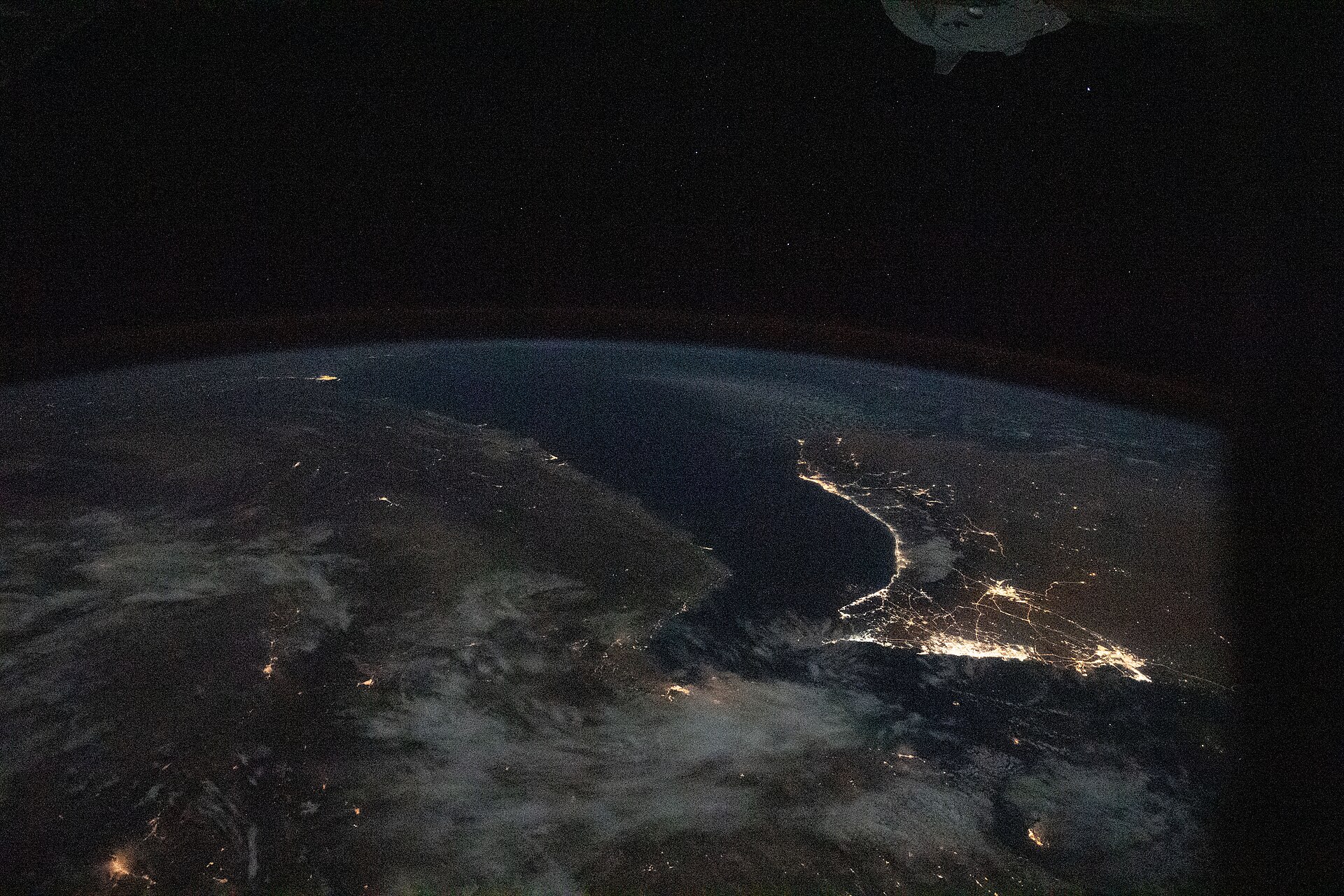
Qeshm is not a random target — it is the IRGC Navy’s primary forward operating base for the southern approach to the Strait of Hormuz, and any strike on the island is a strike on the infrastructure that makes the blockade operationally possible. The IRGCN 112th Naval Combat Brigade is stationed at coordinates 26°41’28″N, 55°54’58″E, operating fast attack craft and missile catamarans designed for swarming tactics against commercial tankers, according to Grey Dynamics geospatial analysis. A suspected drone base at approximately 26°43’N, 55°58’E has been observed housing Shahed Saegheh unmanned combat air vehicles, along with Mohajer-6 reconnaissance drones, Shahed 171 UAVs, and mobile ground control stations, per analysis from the Alma Research and Education Center.
The anti-ship weapons deployed from Qeshm include Fajr-3 rocket systems with a 43-kilometre range and Noor anti-ship cruise missiles capable of reaching targets 120 kilometres away, according to Grey Dynamics — ranges that cover the entirety of the commercial shipping lane through Hormuz and well into the waters where Saudi-loaded tankers transit. Al Jazeera has reported on an underground tunnel complex built to protect anti-ship missiles, Nasir underwater drones, mines, and small attack craft from aerial targeting, a hardened storage network that makes any single night of bombing insufficient to eliminate the island’s offensive capacity. The IRGC 112th Zolfaghar Surface Combat Brigade — distinct from the naval brigade — is also garrisoned on the island, and the IRGC Navy established its UAV base there in 2013, giving it more than a decade of fortification and dispersal planning.
The above-ground destruction documented by satellite imagery represents a visible erosion of Qeshm’s capacity, but the tunnel complex and mobile launchers mean the island remains operationally dangerous even after repeated strikes. For the shipping industry, which does not measure risk by destroyed buildings but by the weapons that survive underground, the distinction between a degraded Qeshm and a neutralised one is the difference between a strait that might reopen and one that cannot.
The Moratorium That Expired Without Consequence
Trump’s October 8 pledge, reported by The National, was specific: the United States would not attack Iran “at any time prior to the midterm elections” on November 3. The pledge was always a political instrument rather than a military one — it gave voters reassurance that the Gulf conflict would not escalate into a direct US-Iran war before they cast their ballots, and it gave Iran a window of implied safety that Tehran used to maintain its Hormuz blockade, advance its two-day reopening proposal through Araghchi, and continue the Doha negotiations without the imminent threat of American bombers overhead.
The Qeshm explosions on November 2 — the last full day before the moratorium expired — exposed its structural weakness: the commitment constrained the United States only to the extent that the United States chose to be constrained, and unattributed operations fit through the gap. If the blasts were American, the moratorium was breached in its closing hours with the kind of plausible deniability that rendered the breach unfalsifiable. If they were not American, the moratorium was irrelevant to whatever happened on Qeshm, and the question shifts to why someone else chose the eve of the moratorium’s expiry to strike. Either way, the political function of the pledge — a signal to voters that the president was managing the conflict with restraint — had already been served by November 2, because the midterms were hours away and early voting had concluded.
What followed on November 2 was more revealing than the explosions themselves. Vance said the United States had set no deadline for resuming strikes on Iran and expressed optimism about a deal, even as the administration continued to signal that military options remained on the table. Trump, posting on Truth Social, said oil was “dropping like a rock” because people expect no war with Iran, and that Iran “wants a settlement, as soon as possible. It could happen!” Asked by reporters whether he was considering strikes, Trump said no, per Reuters and NBC News. The moratorium expired, and the underlying policy did not change — which left three interpretations available: the moratorium had always been theatre, the Qeshm blasts were not American, or the United States had struck and then decided that the post-midterm moment was not yet right for escalation. The ambiguity over the moratorium, like the ambiguity over the explosions, is a feature rather than a defect.
Where Does This Leave Saudi Arabia’s Hormuz Reopening?
Saudi Arabia’s fundamental problem is that it needs the Strait of Hormuz open to survive as an oil exporter at anything close to pre-war volumes, and every actor with the power to reopen it is currently invested in a version of ambiguity that prevents commitment. The IRGC declared Hormuz closed on October 26, the latest in a series of closures that began with the resumed blockade on July 14. Before the blockade, approximately 138 ships a day transited the strait, according to the Joint Maritime Information Center. By mid-October, CENTCOM reported that 135 ships had been turned around since the blockade began, according to CBS News — a figure that preceded the IRGC’s formal closure declaration on October 26 and has almost certainly risen since. CENTCOM’s Cooper stated in a video published October 30 that the IRGC was gone from the strait, but Iran warned that mines remained — and the International Maritime Organization had estimated in June that approximately 80 mines were still present in the historic shipping lanes, according to gCaptain.
Iran’s Foreign Ministry spokesman Esmaeil Baqaei said on November 3 that Hormuz cannot reopen until the United States ends its naval blockade, and that the ball is in Washington’s court, according to Gulf News. Araghchi’s two-day reopening proposal — the latest iteration of a seven-day plan he submitted on September 25 — remains on the table but has produced no agreement; the Doha talks on the evening of November 2 ended without one. The conditions Iran has attached to any reopening — US withdrawal from the blockade, sanctions waivers, and the release of approximately $12 billion in frozen assets — are demands that the United States has shown no willingness to meet, and the Qeshm explosions, by degrading the very IRGC infrastructure that enforces the closure, may have reduced Tehran’s negotiating position for a reopening it can no longer fully guarantee.
Trump’s characterisation of the oil market on November 2 — that prices were “dropping like a rock” because people expect no war with Iran — captures the gulf between the futures market narrative and Saudi Arabia’s physical reality. Oil futures may have softened on the expectation that the moratorium’s expiry would not produce a broader conflict, but Saudi Arabia’s production constraints are structural rather than speculative: the East-West pipeline has faced repeated disruptions through October after an initial shutdown on September 11 and a brief resumption around September 22, Hormuz is closed, OPEC+ held December output at 31 million barrels because members cannot produce more, and the 5.52 million barrels a day that Saudi Arabia is managing to export represent a fraction of pre-war capacity. The Makkah Joint Defence Pact still lacks an operational joint command as of November 3, and Riyadh has no bilateral mechanism with Iran capable of producing a Hormuz reopening independent of Washington — which means the kingdom’s export recovery is hostage to a negotiation between parties who are simultaneously, and unaccountably, bombing each other’s assets.
The Insurance Problem That Ambiguity Cannot Solve
In August, CENTCOM Commander Admiral Brad Cooper declared the Hormuz shipping lanes mine-free in a video covered by gCaptain. US allies privately warned that the lanes were not fully cleared, and the shipping industry’s response was not to argue about mines but to pose a different question: whether the strait was insurable and commercially viable, regardless of what Washington declared.
“Bottom line, today, international shipping lanes are open and momentum is building.”
— Admiral Brad Cooper, CENTCOM commander, August 27, 2026, per gCaptain
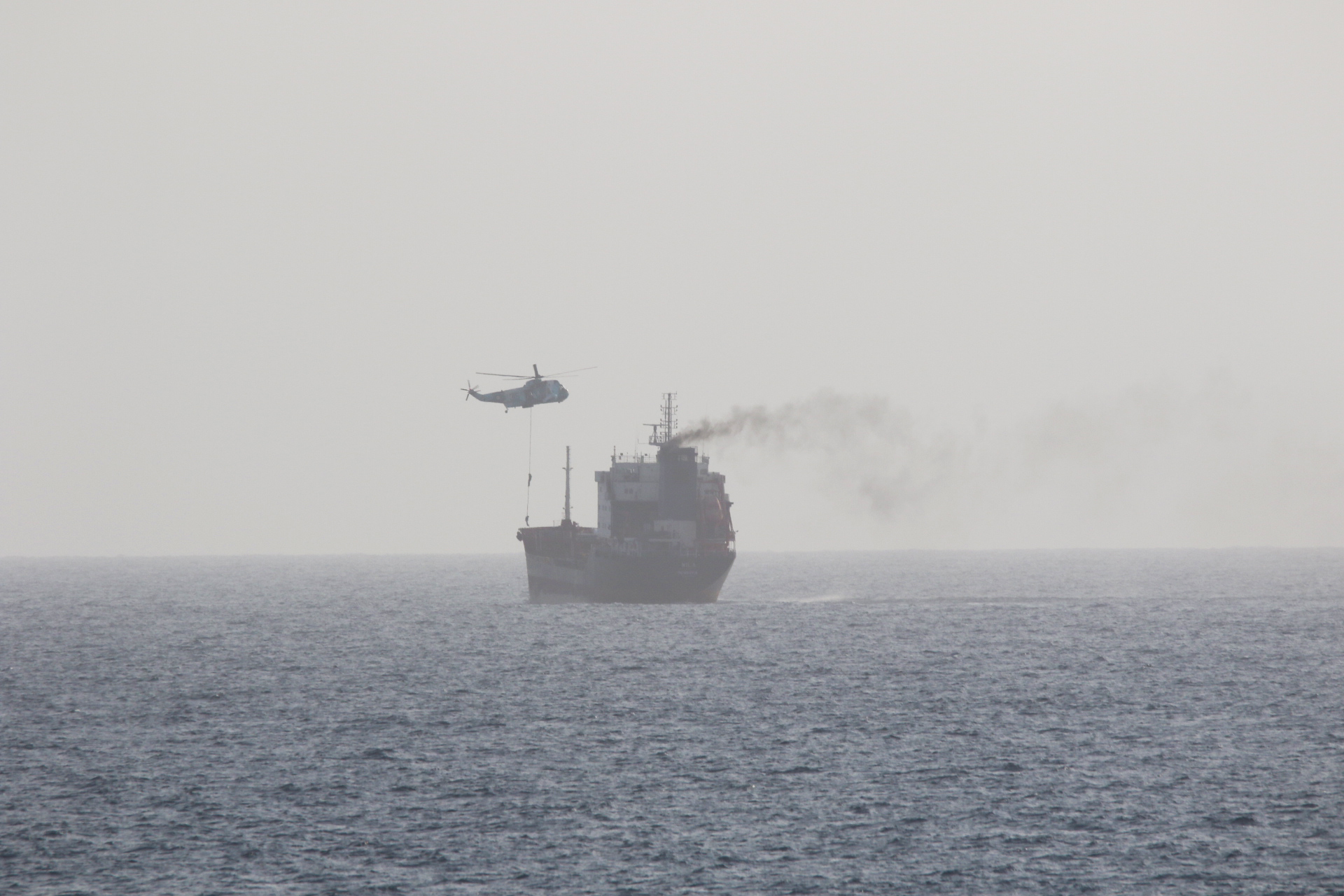
That question has become sharper since the Qeshm blasts, because the strategic ambiguity that serves Washington, Tehran, and Tel Aviv is precisely the condition that makes risk underwriting impossible. Insurers price war-risk premiums based on the identity of the belligerents, the predictability of the threat environment, and the credibility of assurances from the parties controlling the waterway. When nobody will confirm who is striking the island that controls access to the strait — when the IRGC claims drone captures that CENTCOM calls false, when IRNA says “cause unclear” while IRIB says “aerial attacks,” when Israeli television attributes responsibility to the United States and the United States says nothing — the underwriting models collapse, because the risk is real but the inputs required to price it are unknown.
War-risk premiums for Gulf-bound tankers have climbed to between 6 and 10 percent of hull value, according to brokers cited by the Financial Times in October 2026. Those premiums will not fall until the threat environment becomes attributable — until somebody admits what is happening on Qeshm and in the strait and commits, publicly and verifiably, to stopping it. The ambiguity that protects the military and diplomatic positions of three governments is, for the tanker operators and their insurers, the functional equivalent of a permanent closure: tankers are being struck within the strait and off Saudi waters, and the cost of transiting has risen to the point where the commercial question has answered itself, even if the political one has not.
Frequently Asked Questions
Has Iran retaliated for previous Qeshm strikes?
Iran has not conducted confirmed retaliatory strikes against the United States or Israel in direct response to any of the four Qeshm incident clusters documented in 2026. Tehran’s strategy has been to avoid formal attribution of the attacks, which removes the domestic political trigger for a named retaliatory response. The IRGC’s posture has instead treated the Hormuz blockade itself as the retaliatory framework — effectively maintaining offensive pressure on Gulf shipping rather than responding to individual strikes with tit-for-tat escalation, an approach that preserves the IRGC’s image as an offensive force rather than a reactive one.
Could the November 2 explosions have been an internal accident?
Iran has not characterised the November 2 events as an accident, and IRIB’s use of “aerial attacks” makes that framing unlikely to emerge in hindsight. In May 2026, however, Iranian authorities attributed a separate round of Qeshm explosions to the “neutralization of unexploded enemy ammunition,” a framing Reuters reported without additional confirmation. The island’s extensive weapons storage — including mines, anti-ship missiles, and drone munitions held in underground tunnels documented by Al Jazeera — means that accidental detonations are not physically implausible, even if the timing of the November 2 blasts, their scale, and the reports of aircraft overhead make the accidental explanation difficult to sustain.
What would change if the US officially confirmed a Qeshm strike?
Official confirmation would force Iran to choose between retaliating — risking a direct confrontation with a superpower while its Hormuz blockade is already under strain — and absorbing the strike publicly, which would damage the IRGC’s deterrent credibility among its own constituency. For the Doha diplomatic track, a confirmed US strike would almost certainly end the negotiations, as Iran’s domestic politics would not permit continued indirect talks with a country openly bombing its territory. Confirmation would also remove the legal ambiguity that currently shields US operations from congressional scrutiny under the War Powers Resolution, a consideration that may weigh as heavily in Washington’s silence as any strategic calculation.
How many times has Qeshm been targeted in 2026?
At least four distinct incident clusters have been reported on Qeshm Island in 2026: the March 7 desalination plant bombing, the May 19 blasts attributed by Iran to ammunition disposal, the July 14 strikes reported by AFP and confirmed by Iranian state television, and the November 2 explosions. March was the only instance in which Iran named an attacker — the United States, which denied it — and none of the four has received an officially confirmed attribution from any government. The physical toll on Qeshm’s above-ground facilities has been extensive, with satellite imagery confirming sustained damage to the UAV airfield and naval base infrastructure.
Does the Makkah Defence Pact cover Iranian attacks on Gulf shipping?
The Makkah Joint Defence Agreement, signed in August 2026, does not have an operational joint command as of November 3 and has not been invoked for Hormuz maritime operations. Turkey’s parliament cleared the pact in committee on October 27 but has not held a full General Assembly vote, and Pakistan ratified on October 23. The pact’s text was published by The National and Dawn on October 21, but its operational framework remains incomplete — meaning Saudi Arabia cannot currently rely on it to mount a multilateral naval response to either the Hormuz blockade or the attacks on its export infrastructure, leaving Riyadh dependent on bilateral coordination with the United States and the coalition resources it can assemble independently.
The last time nobody admitted to striking Qeshm — March 7, the desalination plant — it cut the water supply to thirty villages and nobody apologised, because nobody had done anything. Eight months and four incident clusters later, Saudi crude sits behind the same silence, and the tankers idling off Fujairah will stay there until somebody claims the explosions — because until someone does, nobody is under any obligation to make them stop.
The House of Saud Daily Briefing
Saudi Arabia's news in 3 minutes, every morning. Free. See today's issue