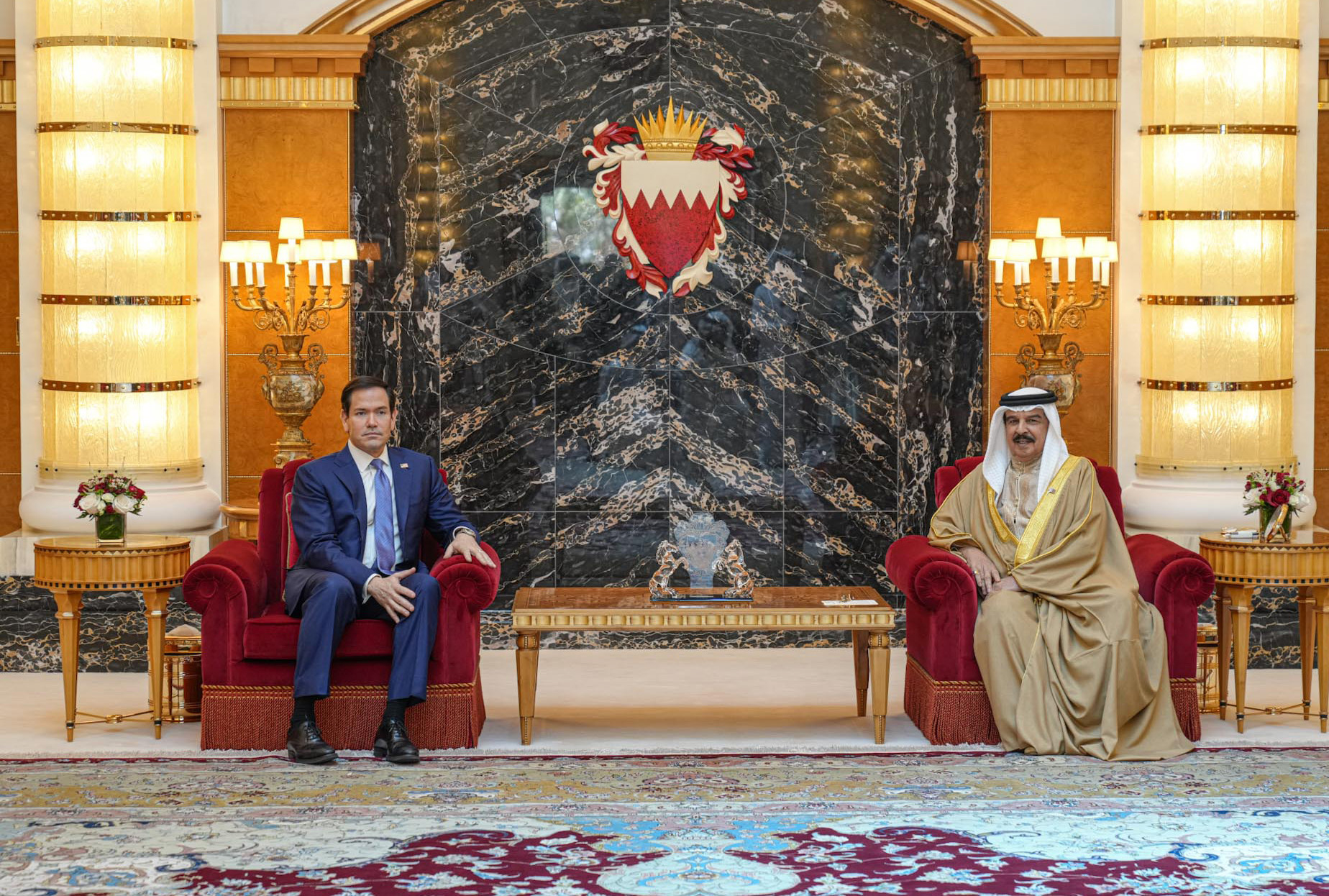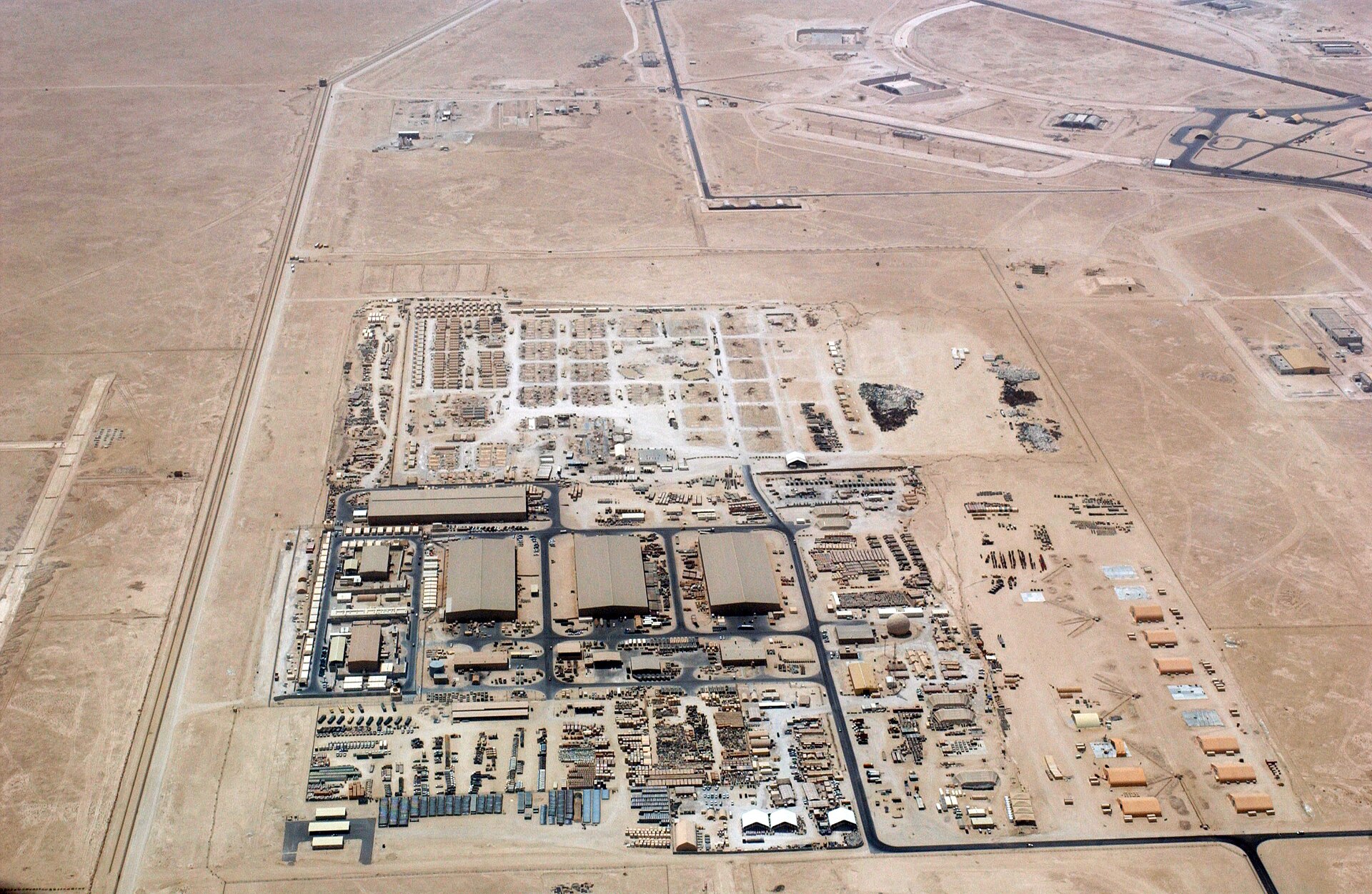

DOHA — JD Vance confirmed on June 26 that an IRGC officer and a CENTCOM counterpart are physically co-located in a deconfliction cell in Doha — a revelation he delivered, in an UnHerd interview recorded while flying back from Switzerland, with the observation that Iran had agreed to “send somebody from the IRGC to go hang out in Doha with somebody from CENTCOM” to settle disputes under the MOU framework. The same day, GCC Secretary General Jasem Al Budaiwi told The National that the $300 billion Iran reconstruction fund outlined in the agreement had never been discussed with Gulf states — “It was not introduced to me nor to other GCC countries. We don’t know anything about it” — and at the State Department in Washington, the United States, Israel, and Lebanon signed a trilateral framework for IDF withdrawal from southern Lebanon without a Saudi Arabian signature, seat, or presence in the room.
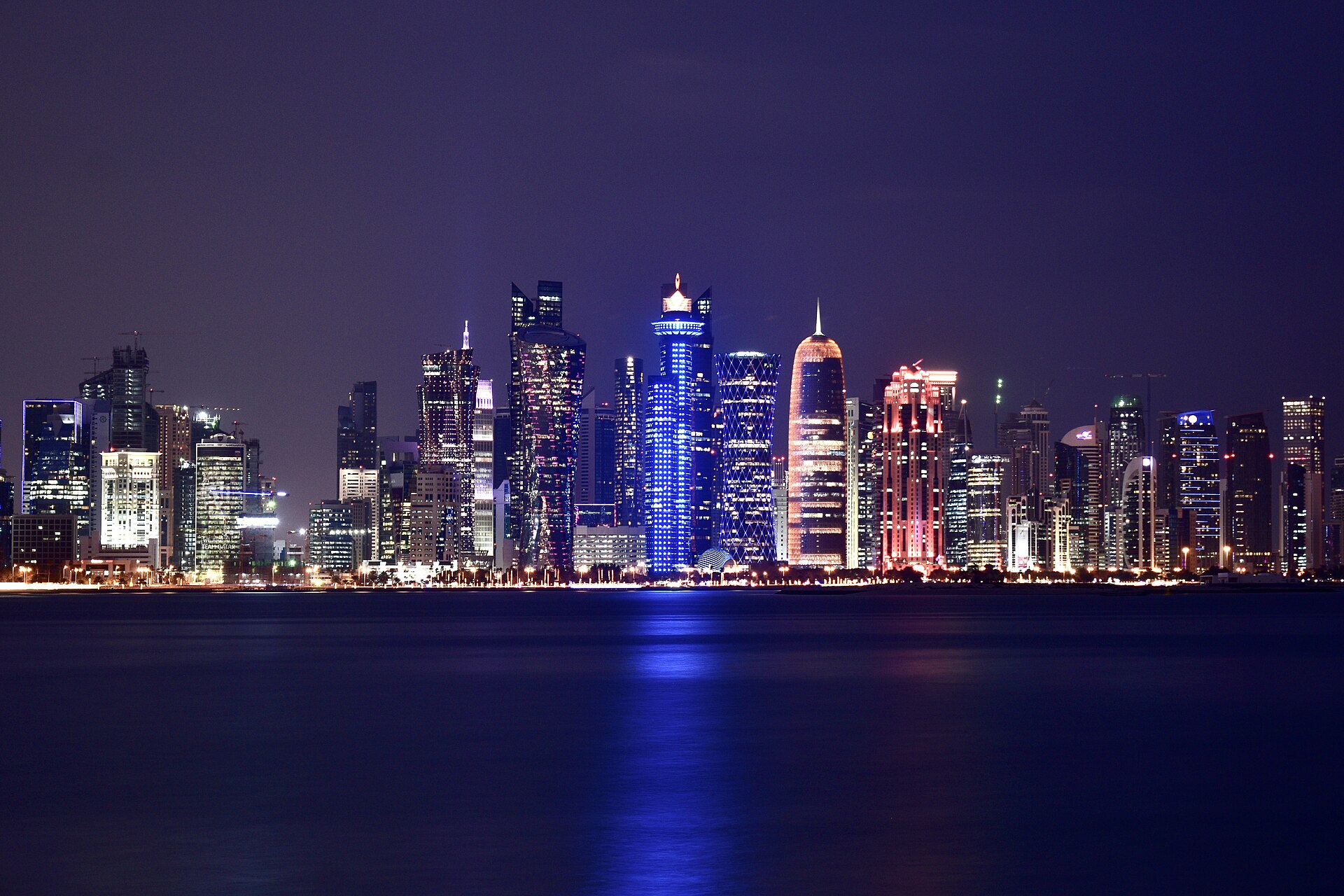
Three tracks now define the institutional architecture of the US-Iran relationship — nuclear, military, and Lebanon — and each of them runs through Doha. Qatar’s prime minister sat at the Bürgenstock table as co-mediator when Phase 2 nuclear talks restarted June 21-22, alongside Pakistan, while Saudi Arabia’s only input on the enrichment question remains a single sentence delivered at a think-tank event in Vienna. Qatar is a named member of the Lebanon deconfliction mechanism established June 22, which replaced every party from the November 2024 framework. And Qatar now physically hosts the bilateral military cell where IRGC and CENTCOM personnel coexist in what Vance, with studied casualness, described as people “hanging out” — an unprecedented direct military-to-military channel between two countries that were exchanging missile strikes four months ago.
Table of Contents
- ‘Hang Out in Doha’
- What Does Saudi Arabia Hold?
- How Did Qatar Become the Address?
- The Base Iran Struck Now Hosts the IRGC
- Why Did the GCC Secretary General Learn About the Fund From Reporters?
- The Lebanon Framework Saudi Arabia Did Not Sign
- Can Riyadh Reverse the Institutional Geography?
- Fifty-Two Days and an Address That Won’t Move
- Frequently Asked Questions
‘Hang Out in Doha’
Vance’s phrasing was remarkable not for what it revealed but for how deliberately it minimized what it revealed. In his UnHerd interview, the vice president described the IRGC-CENTCOM arrangement as though it were a casual introduction at a conference — “they were like, ‘OK, fine, we’ll send somebody from the IRGC to go hang out in Doha with somebody from CENTCOM,’ and that’s how we’re going to settle a lot of these disputes” — collapsing the distance between the Islamic Revolutionary Guard Corps and United States Central Command into the register of a hotel lobby encounter. The casual tone was deliberate: normalizing direct, standing IRGC-CENTCOM contact in language that resists scrutiny precisely because it refuses to sound serious.
What the cell covers remains ambiguous, and that ambiguity matters. Vance had previously announced two distinct deconfliction mechanisms under the MOU — one for freedom of navigation in the Strait of Hormuz, where the PGSA corridor and uncleared mine threat demand daily coordination, and a second for regional ceasefire maintenance, particularly the Lebanon framework where Iran’s proxies retain operational capacity south of the Litani. Whether the Doha cell consolidates both mandates under a single roof or addresses only one has not been publicly clarified, and the distinction is not procedural: a freedom-of-navigation cell manages shipping lanes, while a ceasefire-maintenance cell manages the conditions under which Hezbollah and the IDF operate in a buffer zone 10 kilometers deep.
What is not ambiguous is the location. The cell sits in Doha — inside or adjacent to the CENTCOM forward headquarters at Al Udeid Air Base, where Qatar invested more than $8 billion in infrastructure and where approximately 10,000 US military personnel are stationed. The IRGC-CENTCOM arrangement does not require new construction or a standalone diplomatic presence; it extends an existing American military geography that Qatar built, hosts, and controls access to, embedding Iranian military representatives into a facility that Saudi Arabia helped the United States conceptualize in the 1990s but cannot access for bilateral Iran engagement today.
What Does Saudi Arabia Hold?
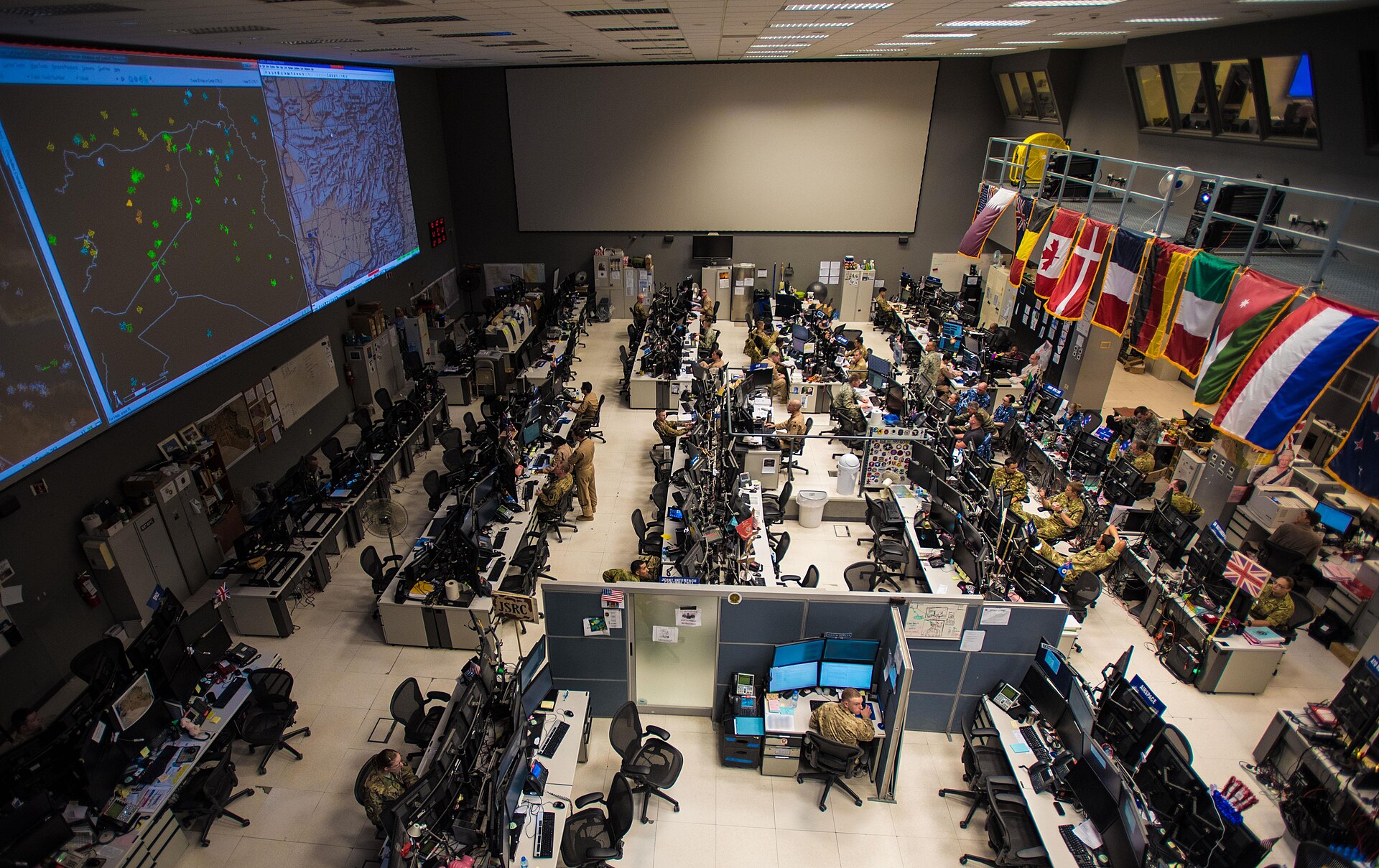
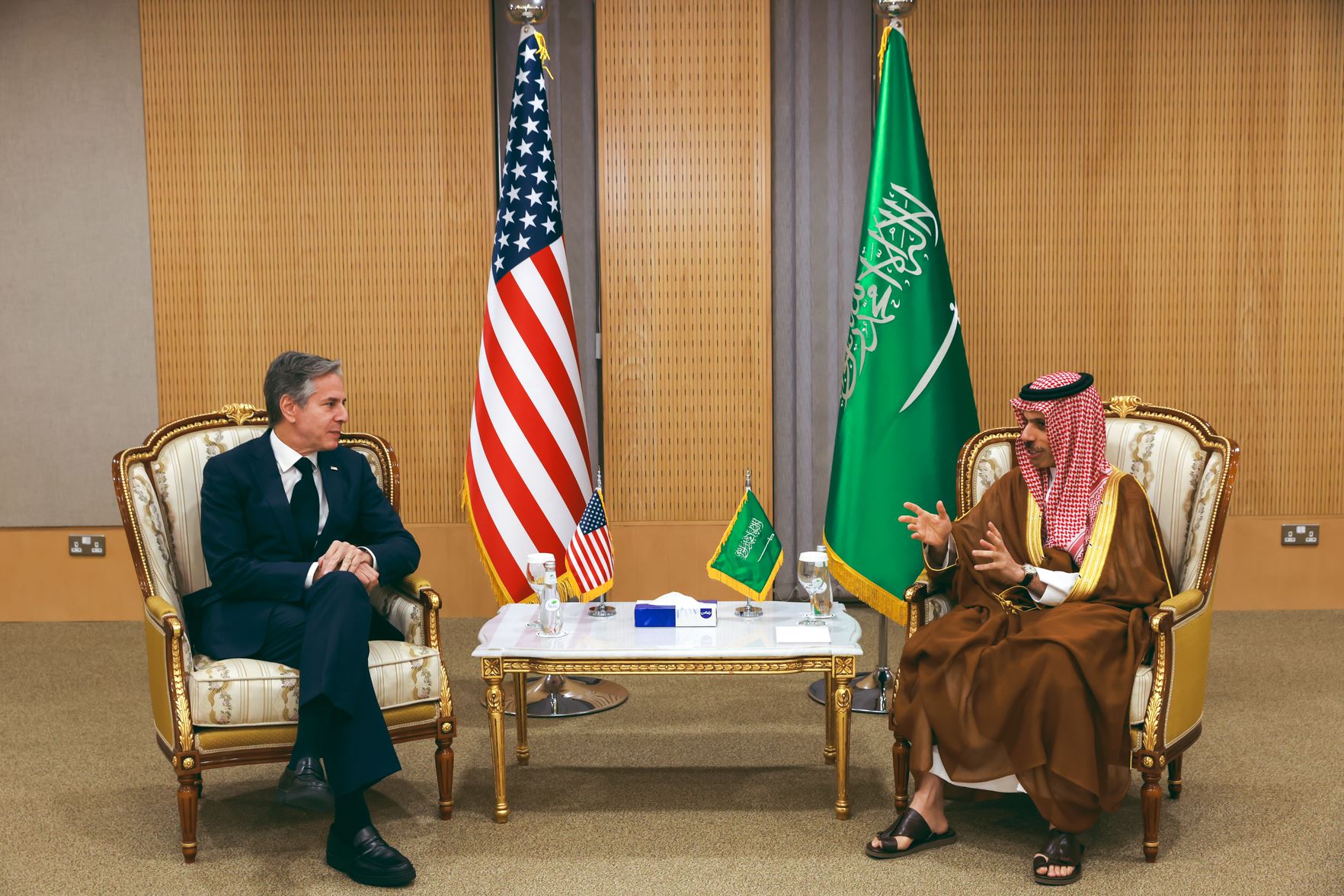
Saudi Arabia holds no seat in any of the three formal US-Iran tracks. It is absent from the Phase 2 nuclear table (where Qatar and Pakistan co-mediate), absent from the IRGC-CENTCOM military cell (housed in Doha), and absent from the Lebanon ceasefire mechanism (which names US, Iran, Lebanon, Qatar, and Pakistan while excluding Israel, France, and UNIFIL). What Riyadh holds is financial exposure — and bilateral instruments too narrow to convert that exposure into influence.
The Middle East briefing 3,000+ readers start their day with.
One email. Every weekday morning. Free.
| Track | Prior Architecture | Current Architecture | Location | Saudi Role |
|---|---|---|---|---|
| Nuclear (Phase 2) | JCPOA (P5+1, no Gulf seat) | US, Iran, Qatar, Pakistan | Bürgenstock / Doha | Absent |
| Military deconfliction | None | IRGC-CENTCOM bilateral cell | Doha | Absent |
| Lebanon ceasefire | US, Israel, France, UNIFIL, Lebanon | US, Iran, Qatar, Pakistan, Lebanon | Doha | Absent |
The PGSA corridor fee — currently waived during the MOU’s 60-day Phase 2 window but structured to revert to $1 per barrel on Day 61 — represents $5.5 million per day and roughly $2 billion per year in Saudi transit costs through Hormuz, a toll imposed by an adversary whose military officers now sit in a deconfliction cell fifty-two days from the deadline at which that fee returns. Saudi Arabia also holds the US-Saudi 123 Agreement, signed May 13, which established civil nuclear cooperation but omitted all three Gold Standard pillars — no enrichment restriction, no reprocessing ban, no prohibition on an independent fuel cycle — leaving it as a cooperation framework that confers no standing on the Iran enrichment question being negotiated at Bürgenstock and managed from Doha.
Foreign Minister Faisal bin Farhan’s sole input on the Phase 2 nuclear track remains a single sentence delivered at the European Council on Foreign Relations in Vienna on June 18: “Verification is key.” As The Enrichment Ceiling Will Be Set Without Riyadh in the Room documented, that statement constitutes Saudi Arabia’s entire public contribution to the question of whether Iran’s 440.9 kilograms of highly enriched uranium at 60 percent — unverified by the IAEA for more than eleven months — will be addressed in a deal Riyadh has no role in shaping. The verification that Faisal called “key” is the subject of an IAEA dispute Grossi described as a “war of statements” between the US and Iran, conducted between Washington, Tehran, Vienna, and Doha — four cities, none of them Riyadh.
How Did Qatar Become the Address?
Qatar became the institutional host of every US-Iran mechanism through a pattern Washington has repeated for more than a decade: when the US needs a channel to an adversary it cannot engage directly, it builds that channel in Doha, and the ally excluded from the room has historically had no power to relocate the arrangement. The template was set in 2013, when the US opened a Taliban Political Office in Qatar to negotiate directly while excluding its own ally — the Islamic Republic of Afghanistan — from the table.
That precedent matters because its consequences were architectural, not episodic. The Doha Agreement of February 2020 was negotiated entirely through the Qatar channel, the Taliban office became a permanent fixture of Doha’s diplomatic geography, and the excluded ally — the Ghani government — was presented with terms it had no role in drafting and no mechanism to amend. The United States has since repeated the pattern with hostage negotiations (Israel-Hamas, 2023-24), prisoner exchanges (Ukraine-Russia), and now the full range of Iran-related mechanisms that emerged from the 2026 MOU. The Christian Science Monitor observed in May 2026 that Qatar has remained “faithful to its core mission: mediation,” quoting Qatari officials who justified their proximity to Iran with the framing that “we will be neighbors with Iran for the future of humankind” — a statement that treats geography as an argument for permanent engagement rather than periodic convenience.
The 2017-2021 blockade, in which Saudi Arabia, the UAE, Bahrain, and Egypt severed diplomatic and economic relations with Qatar over precisely these Iran ties, tested whether Saudi pressure could force Doha to choose between GCC solidarity and Iranian engagement — and produced a definitive answer over three and a half years. Qatar refused all thirteen Saudi demands, which included downgrading diplomatic relations with Iran, closing Al Jazeera, and shutting a Turkish military base, absorbing the economic cost of the blockade rather than accepting the diplomatic constraints Riyadh sought to impose. The Al Ula Declaration of January 5, 2021, restored formal GCC relations, but the underlying tensions — Qatar’s Iran channel, Qatar’s Hamas ties, Qatar’s self-conception as a neutral mediator in conflicts where Saudi Arabia is a principal — were suspended, not resolved.
The sequence is worth stating plainly because it inverts Saudi Arabia’s original logic. Riyadh blockaded Qatar in 2017 to force Doha to choose sides, and Qatar chose mediation — and the United States subsequently chose Qatar as the venue for the most consequential set of Iran-related negotiations since the JCPOA. The blockade did not reduce Qatar’s diplomatic relevance; it demonstrated precisely the independence from Saudi pressure that made Doha attractive to Washington as a host for talks requiring distance from the parties most affected by their outcome. Five years after Al Ula, the mechanisms that Qatar’s refusal to sever Iran ties made possible are the mechanisms that now govern every formal dimension of the US-Iran relationship.
The Base Iran Struck Now Hosts the IRGC
On February 28, 2026, Iranian ballistic missiles struck Al Udeid Air Base, severely damaging the Combined Air Operations Center — the nerve center from which CENTCOM coordinates regional air operations across the Middle East. Qatar’s own air defenses engaged the incoming missiles, and Qatari forces participated in the defense of the facility, but the attack inflicted significant damage on the infrastructure that serves as CENTCOM’s forward headquarters. Qatar had previously told the United States it would not permit attacks launched from Al Udeid against Iran — a constraint the Foundation for Defense of Democracies flagged in January 2026, weeks before the strike, warning that “by concentrating American military assets in Qatar, the United States grants Doha leverage over American decision making — a reality made more dangerous by Qatar’s warm relationship with the Islamic Republic.”
“By concentrating American military assets in Qatar, the United States grants Doha leverage over American decision making — a reality made more dangerous by Qatar’s warm relationship with the Islamic Republic.”
— Foundation for Defense of Democracies, January 16, 2026
Four months after IRGC missiles damaged CENTCOM’s operations center, IRGC personnel are co-located with CENTCOM personnel at the same Doha facility under the deconfliction cell Vance confirmed on June 26. The chronological compression is without precedent in American military-diplomatic practice: the organization whose missiles struck CENTCOM in February now has authorized representatives working alongside CENTCOM officers in June, in the same city, under a framework the vice president describes in the idiom of people “hanging out.” The MOU’s first week had already produced a drone strike on a commercial vessel in the Hormuz corridor, and the cell is supposed to manage precisely the kind of escalation that such strikes represent — raising the question of what “deconfliction” means when the party being deconflicted with is simultaneously conducting attacks in the waterway the mechanism is designed to stabilize.
For Saudi Arabia, the Al Udeid situation compounds exclusion with a bitter historical irony. The kingdom was central to the original construction of Gulf-based US military infrastructure — Prince Sultan Air Base hosted CENTCOM operations during the 1990s and the early 2000s, and Saudi Arabia’s post-9/11 decision to restrict American basing contributed directly to the migration of US military assets to Qatar. The infrastructure Saudi Arabia helped push out of its own territory became the infrastructure Qatar built, funded at more than $8 billion, and now controls access to — including access for IRGC personnel engaged in bilateral deconfliction with the American military that Saudi Arabia once hosted exclusively. Riyadh does participate in MEAD-CDOC, the multilateral air defense cell CENTCOM opened at Al Udeid in January 2026 with Gulf state involvement — but MEAD-CDOC coordinates radar tracks and defensive intercepts, not the diplomatic and military relationship with Iran that the bilateral cell above it is designed to manage.
Why Did the GCC Secretary General Learn About the Fund From Reporters?
Because the $300 billion Iran reconstruction fund outlined in the MOU was never presented to the GCC for consultation, notification, or even a courtesy briefing. Al Budaiwi confirmed on June 26 that the fund did not come up in Secretary Rubio’s meetings with Gulf ministers in Manama — meaning the US discussed regional security with Gulf states at the same time it was finalizing a $300 billion commitment involving Iran, without mentioning the commitment in the room.
“It was not introduced to me nor to other GCC countries. We don’t know anything about it.”
— Jasem Al Budaiwi, GCC Secretary General, June 26, 2026
US officials subsequently described the fund as a “private investment vehicle with no government grants” — a characterization that, if accurate, raises its own set of questions about who capitalizes a $300 billion private vehicle for a country under extensive sanctions, and whether Gulf sovereign wealth funds will be expected to participate in a fund they were not consulted on. The Jerusalem Post reported in June that Saudi Arabia, the UAE, and Bahrain “feel that the fund risks rewarding aggression and undermining deterrence,” a formulation that captures the Gulf states’ objection without indicating any channel through which that objection has been formally registered. As Faisal’s Trust Condition and the $300 Billion Fund Saudi Arabia Cannot Block analyzed, the fund represents a commitment whose scale — $300 billion would exceed the Marshall Plan in inflation-adjusted terms — was negotiated between two parties while the states most likely to bear its strategic consequences learned about it from news reports.
Al Budaiwi’s admission also exposes the gap between the GCC’s formal institutional purpose and its actual relevance to the decisions being made about Iran. The GCC exists, at least nominally, to coordinate Gulf state responses to shared security challenges, and the Iran nuclear and military portfolio is the defining shared security challenge of the past two decades. That the organization’s secretary general learned about a $300 billion commitment involving Iran from journalists — and that the fund was not raised even during Rubio’s direct meetings with Gulf ministers — confirms that the GCC’s exclusion is not an oversight or a timing issue but a feature of the architecture, one in which the institution designed to represent Gulf security interests has no informational access to the arrangements determining Gulf security outcomes.
The Lebanon Framework Saudi Arabia Did Not Sign
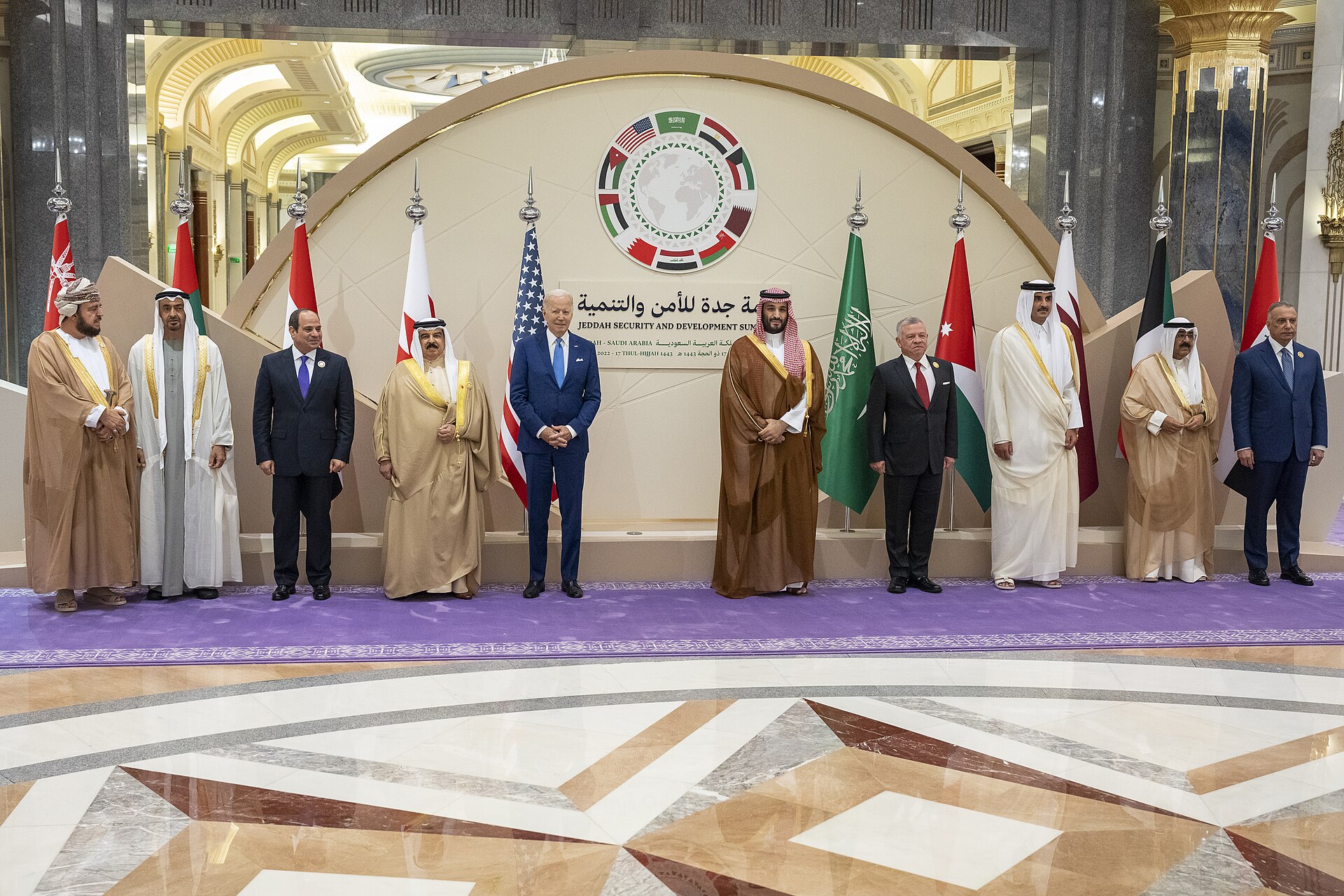
On the same June 26 that Vance confirmed the Doha cell and Al Budaiwi disclosed the GCC’s exclusion from the reconstruction fund, the United States, Israel, and Lebanon signed a trilateral framework agreement at the State Department providing for IDF withdrawal from two “pilot zones” in southern Lebanon. The signing was conducted by State Department Counselor Daniel Holler, Israeli Ambassador Yechiel Leiter, and Lebanese Ambassador Nada Hamadeh — not foreign ministers, a level of representation that matched the framework’s deliberately modest scope. Secretary Rubio characterized it as “the beginning of the beginning” and added that “this first step sometimes is the hardest one,” while Hamadeh called it “the first step on the road to restoring Lebanese sovereignty and territorial integrity.”
The framework operates alongside — and is functionally dependent on — a Lebanon deconfliction mechanism announced June 22 that replaced every element of the November 2024 ceasefire architecture. The prior framework, negotiated during the Biden administration, included Israel, Lebanon, the United States, France, and UNIFIL — five parties with direct operational roles on the ground. The June 2026 mechanism dropped all of them from its deconfliction function and inserted Iran, Qatar, and Pakistan alongside the US and Lebanon, explicitly excluding Israel from the body monitoring a ceasefire on its own border and removing France and UNIFIL despite their physical presence in southern Lebanon. The replacement was structural, not incremental: the entire cast of the Lebanon file changed in a single announcement, and the new architecture routes through Doha rather than through any channel Saudi Arabia has access to or influence over.
Benjamin Netanyahu rejected the new mechanism’s operational threshold on the day the framework was signed, stating that “the directive that the defense minister and I have given the IDF is clear and has not changed: our forces in southern Lebanon have full freedom of action to thwart any direct or emerging threat.” The prior framework used “emerging threats” as the trigger for Israeli military action; the new mechanism narrows the threshold to “imminent threats” — a distinction that, if enforced, would significantly constrain IDF operations in the buffer zone. Netanyahu’s public rejection means the deconfliction mechanism’s credibility depends on whether the US, Iran, Qatar, and Pakistan can enforce a threshold that Israel’s prime minister has already stated he will not observe, producing an arrangement that mirrors the pattern of each Lebanon ceasefire clearing a path Iran can still block while simultaneously creating a path Israel refuses to walk.
Saudi Arabia’s absence from both the trilateral framework and the deconfliction mechanism is consistent with its absence from the Phase 2 restart at Bürgenstock, where Vance attended a quadrilateral meeting with Iran, Pakistan, and Qatar on June 21-22. Riyadh’s historical role in Lebanon — significant financial support for reconstruction after the 2006 war, diplomatic engagement through the Taif Agreement framework, influence through the Hariri political network — has no institutional expression in the current architecture. The Lebanon file, like the nuclear file and the military deconfliction file, now runs through Doha, and Saudi Arabia’s historical investments in Lebanese stability have produced no standing in the mechanism currently managing Lebanese security.
Can Riyadh Reverse the Institutional Geography?
Reversing institutional geography requires either building a competing venue that attracts the same parties, or securing a seat within the existing venue — and Saudi Arabia’s current instruments are insufficient for either. The kingdom’s bilateral tools consist of a 123 Agreement that confers no nuclear-track standing, a multilateral air defense cell that manages threats rather than diplomacy, and PGSA fee exposure that gives Riyadh standing as a cost-bearer but not as a participant in the mechanisms generating those costs.
The 123 Agreement, signed May 13, illustrates the gap. It established civil nuclear cooperation “consistent with strong nonproliferation standards,” but as the Washington Institute and Brookings both noted, it omits all three Gold Standard pillars — the enrichment, reprocessing, and fuel-cycle restrictions detailed in the section above — which means Saudi Arabia secured a framework simultaneously too permissive to serve as a nonproliferation credential and too limited to confer any role in determining what Iran retains. The enrichment ceiling being negotiated at Bürgenstock will be set by the US and Iran, mediated by Qatar and Pakistan, and monitored by the IAEA — four parties and an international agency, none of them Saudi.
The Stimson Center’s 2026 analysis, by researcher Nour Eid, concluded that Saudi nuclear hedging may intensify regardless of the Iran deal’s outcome, driven by “eroding US security guarantees” — a formulation that captures the structural problem rather than the specific one. The specific problem is not that US security guarantees are eroding in the abstract; it is that the US is constructing the next generation of Iran-related security architecture in a city and through a partner that Saudi Arabia’s own blockade policy failed to discipline, and that the bilateral mechanisms emerging from the MOU framework contain no Saudi-shaped vacancy that Riyadh could fill even if invited. The nuclear track has its co-mediators, the military track has its deconfliction cell, and the Lebanon track has its mechanism — all three are staffed, located, and operational, and none includes a role that is being held open for a late Saudi entry.
MEAD-CDOC — the Middle Eastern Air Defense Combined Defense Operations Cell that CENTCOM launched at Al Udeid in January 2026 — is the sole institutional structure in Doha where Saudi Arabia participates alongside the United States. It is a genuine multilateral achievement, coordinating air defense across Gulf states in a region where ballistic missile threats are measured in minutes of flight time. But MEAD-CDOC sits beneath the bilateral IRGC-CENTCOM cell in the hierarchy of consequence: one tracks incoming missiles, the other manages the relationship with the country launching them, and Saudi Arabia’s presence in the defensive layer provides no access to the diplomatic layer operating above it at the same address.
Fifty-Two Days and an Address That Won’t Move
The Phase 2 clock — which started June 17, when the MOU’s 60-day negotiation window opened — had approximately 52 days remaining as of June 26, placing Day 61 around August 17. On that date, the PGSA’s $1-per-barrel corridor fee reverts by default, reimposing roughly $2 billion per year on Saudi crude exports through Hormuz. The nuclear talks at Bürgenstock may or may not have produced a framework by then; the Lebanon deconfliction mechanism may or may not have survived Netanyahu’s public rejection of its threshold; the IRGC-CENTCOM cell may or may not have resolved the freedom-of-navigation questions raised eight days into the MOU when a drone struck a vessel in the Hormuz corridor.
What will not have changed is the address. Deconfliction cells, once established, do not relocate on diplomatic timelines — they accrete staff, institutional memory, and working relationships that resist reassignment to unfamiliar venues, and the parties operating through them develop habits of engagement that outlast the mandates that created them. Iran’s parliament speaker, Mohammad Bagher Ghalibaf, offered what may be the most concise summary of how Tehran reads the arrangement: “The only crop we’re harvesting is what you planted — decades of mistrust.” The mistrust Ghalibaf described was not planted in Doha; it was planted in the decades of Saudi-Iranian competition that Qatar navigated by refusing to participate in, and which the United States has now channeled into a set of Doha-based mechanisms that manage that competition rather than resolve it — with Saudi Arabia bearing the costs and Qatar hosting the conversations.
When the United States needed a channel to the Taliban in 2013, it built one in Doha, and the ally Washington excluded from that table — the Islamic Republic of Afghanistan — spent eight years contesting a process it could observe but not influence. The IRGC-CENTCOM cell confirmed on June 26, 2026, is a different mechanism in a different conflict, but it shares with the Taliban precedent the feature that matters most to Riyadh: the United States built it in Qatar without Saudi involvement, and institutional inertia — the same force that kept the Taliban office in Doha for thirteen years and counting — will resist any effort to move it.
Frequently Asked Questions
Has Saudi Arabia publicly responded to the IRGC-CENTCOM Doha cell?
As of June 26, the Saudi Ministry of Foreign Affairs has not issued a public statement addressing either Vance’s confirmation of the deconfliction cell or its location in Doha. This follows a consistent pattern: Riyadh did not publicly comment on its absence from the Bürgenstock Phase 2 restart, the Lebanon deconfliction mechanism, the G7’s endorsement of the MOU text, or any of the prior US-Iran negotiation rounds. The kingdom’s public diplomatic output on the Iran file has been limited to Foreign Minister Faisal bin Farhan’s single ECFR Vienna statement — “verification is key” — and its participation in the GCC-US Manama joint statement, which addressed regional security without referencing the bilateral US-Iran mechanisms that now define it.
What is the difference between MEAD-CDOC and the IRGC-CENTCOM deconfliction cell?
MEAD-CDOC (Middle Eastern Air Defense Combined Defense Operations Cell) is a multilateral air defense coordination mechanism CENTCOM launched at Al Udeid in January 2026, with participation from multiple Gulf states including Saudi Arabia. It coordinates radar tracks, tracks airborne threats, and synchronizes defensive intercepts — a military-technical function focused on incoming missile and drone threats. The IRGC-CENTCOM cell confirmed by Vance is bilateral (US and Iran only), focused on political-military deconfliction under the MOU framework, and covers freedom-of-navigation and ceasefire-maintenance disputes that no air defense cell is designed to address. Both operate at or near Al Udeid, producing the situation in which Saudi Arabia participates in the defensive layer designed to intercept Iranian weapons while being excluded from the diplomatic layer designed to manage the Iranian relationship — two mechanisms at the same physical address serving opposite functions and operating at different levels of strategic consequence.
Could the deconfliction cell relocate from Doha?
Any bilateral mechanism can theoretically be relocated by mutual agreement, but historical precedent and logistical reality argue against it. The Taliban Political Office that Qatar opened in 2013 remains operational more than thirteen years later, having survived the US withdrawal from Afghanistan, the collapse of the government it excluded, and four changes in US administration — each of which might have prompted relocation but none of which overcame the institutional inertia of established diplomatic infrastructure. The IRGC-CENTCOM cell benefits from the same dynamic at greater scale: it operates within CENTCOM’s existing forward headquarters, uses Qatar’s secure-facility infrastructure, and depends on Qatar’s unique position as a state that maintains working relations with both the US military and the Iranian government simultaneously. Moving the cell would require CENTCOM to establish new secure facilities, Iran to agree to a new host country, and that host to offer the combination of US military infrastructure and Iranian diplomatic access that currently only Doha provides — a combination no other Gulf capital can match, since Saudi Arabia, the UAE, and Bahrain have no equivalent Iranian diplomatic channel, and Oman lacks the US military footprint.