Table of Contents
- What Did the Sakhir Declaration Promise Two Days Ago?
- The Dawn Strikes on Bahrain, Kuwait, and Jordan
- Why Did Saudi Arabia Offer Solidarity Instead of a Shield?
- Iran’s Framing: A US Base, Not a GCC State
- How Does the June 17 MOU Apply to Strikes on GCC Territory?
- The Cost of Defending Bahrain
- Frequently Asked Questions
MANAMA — Forty-eight hours after the GCC declared at Bahrain’s Sakhir Palace that the security of its member states was indivisible, Iranian drones struck Bahrain, Kuwait, and Jordan at dawn on Saturday. The IRGC called it retaliation for American strikes on a Qeshm Island desalination plant earlier that morning. Saudi Arabia condemned the attack within hours, reaffirmed its solidarity with Bahrain, and joined a seven-nation statement — but made no military commitment and invoked no collective defense mechanism. It did not mention the Peninsula Shield force it sent across the King Fahd Causeway in 2011 when an internal uprising, not an external state attack, threatened the Al-Khalifa government.
The gap between the language at Sakhir and the response from Riyadh two days later is the structural fact of June 27. The GCC’s own Secretary-General, Jasem Mohamed Albudaiwi, condemned what he called Iran’s “treacherous drone attacks against Bahrain” — language harder than anything Saudi Arabia’s Ministry of Foreign Affairs produced, according to the GCC Secretariat and Gulf Times. Prince Faisal bin Farhan‘s ministry described the strikes as a violation of international law and the UN Charter and expressed “full support for all measures taken by the island kingdom to safeguard its sovereignty, security and stability,” according to Arab News and the Saudi Press Agency. That is diplomatic solidarity. It is not a defense commitment, and no amount of parsing will turn it into one.
What Did the Sakhir Declaration Promise Two Days Ago?
The 46th GCC Summit convened at Sakhir Palace in Bahrain on June 25 — the same island that would be struck forty-eight hours later. It adopted the Sakhir Declaration, which stated that the stability of member states is indivisible and that any violation of a country’s sovereignty constitutes a direct threat to the bloc, according to the GCC Secretariat. The declaration was signed in the same city where its first test would arrive before the weekend was over, by the same kingdom whose troops crossed the causeway the last time Manama faced a crisis it could not manage alone.
The Center for Strategic and International Studies noted in a June 2026 assessment that relief at the emerging Iran deal is “tempered by a large dose of trepidation.” Bahrain and Kuwait, it found, “absorbed the heaviest Iranian strikes relative to their size” and sit closest to the calls for “accountability and stronger collective defense mechanisms.” The Sakhir Declaration was supposed to be the institutional answer — the formal articulation that an attack on Bahrain was an attack on the bloc. What it produced on its first test was a set of condemnations calibrated to avoid any binding follow-through.
The Dawn Strikes on Bahrain, Kuwait, and Jordan
Bahrain’s Ministry of Foreign Affairs confirmed that the island was targeted by “a number of Iranian drones” in the early hours of Saturday, June 27, 2026. It described the attack as “a flagrant violation of Bahrain’s sovereignty, a blatant threat to the safety of its citizens and residents, and a clear breach of international norms and conventions.” The IRGC simultaneously claimed strikes on Kuwait and Jordan, which the GCC ministerial council condemned as “treacherous Iranian attacks on Bahrain, Kuwait and Jordan,” according to Gulf News. Saudi Arabia, Bahrain, Jordan, Kuwait, Qatar, the UAE, and the United States issued a joint statement condemning Iran’s drone and missile attacks, according to the Saudi Press Agency.
The IRGC’s stated target in Bahrain was the US Naval Support Activity in Juffair, Manama — headquarters of the US Fifth Fleet and Combined Maritime Forces, and the largest permanent American military installation in the Gulf. The IRGC claimed the Juffair base had been used that morning to launch strikes against a desalination plant on Iran’s Qeshm Island, and described the US military as “American terrorist forces,” according to Middle East Eye and the Times of Israel. CENTCOM denied damage to the Fifth Fleet headquarters, consistent with its posture throughout the campaign; after a June 5-6 IRGC strike claim, CENTCOM stated that “Iranian claims of damaging the US 5th Fleet headquarters in Bahrain are false,” according to GlobalSecurity.org.
The Middle East briefing 3,000+ readers start their day with.
One email. Every weekday morning. Free.
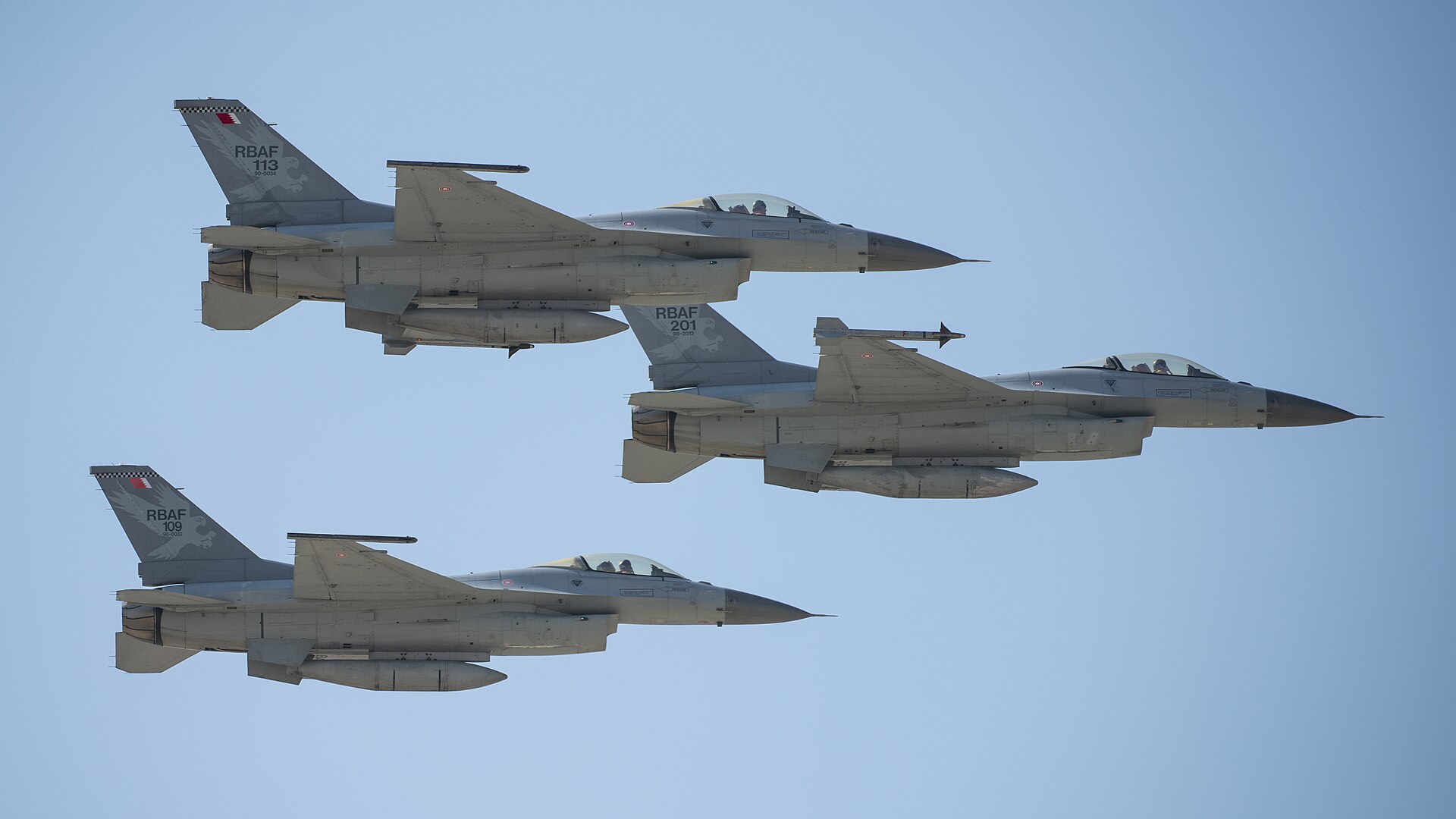
The drone platform was the Shahed-136, the same one-way attack loitering munition that Iran has fired at Bahrain since the war began on February 28. Bahrain’s F-16 Block 70 fighters scored combat kills against Shahed-136s during earlier engagements, according to Army Recognition. By June 11, Bahrain’s Defence Force had intercepted 112 ballistic missiles and 186 drones since the start of the campaign, suffering three fatalities and more than fifty-one injuries, according to Bahrain Ministry of Defence release data. Iran had fired at least 132 missiles and 234 drones at Bahrain by March 18 alone, making the island — with a population smaller than Houston’s — the most intensively targeted GCC state relative to its size.
Why Did Saudi Arabia Offer Solidarity Instead of a Shield?
Saudi Arabia’s response on June 27 followed a template that has been consistent since the war began in February. The Ministry of Foreign Affairs strongly condemned the attack, called it a violation of international law and the UN Charter, and reaffirmed the Kingdom’s “solidarity with Bahrain” and “full support for all measures taken by the island kingdom to safeguard its sovereignty, security and stability,” according to Arab News and SPA. It said the attack “undermined international efforts to restore security and stability in the region.” There was no language of collective defense. No military mechanism was activated. The Sakhir Declaration, adopted forty-eight hours earlier, went unmentioned.
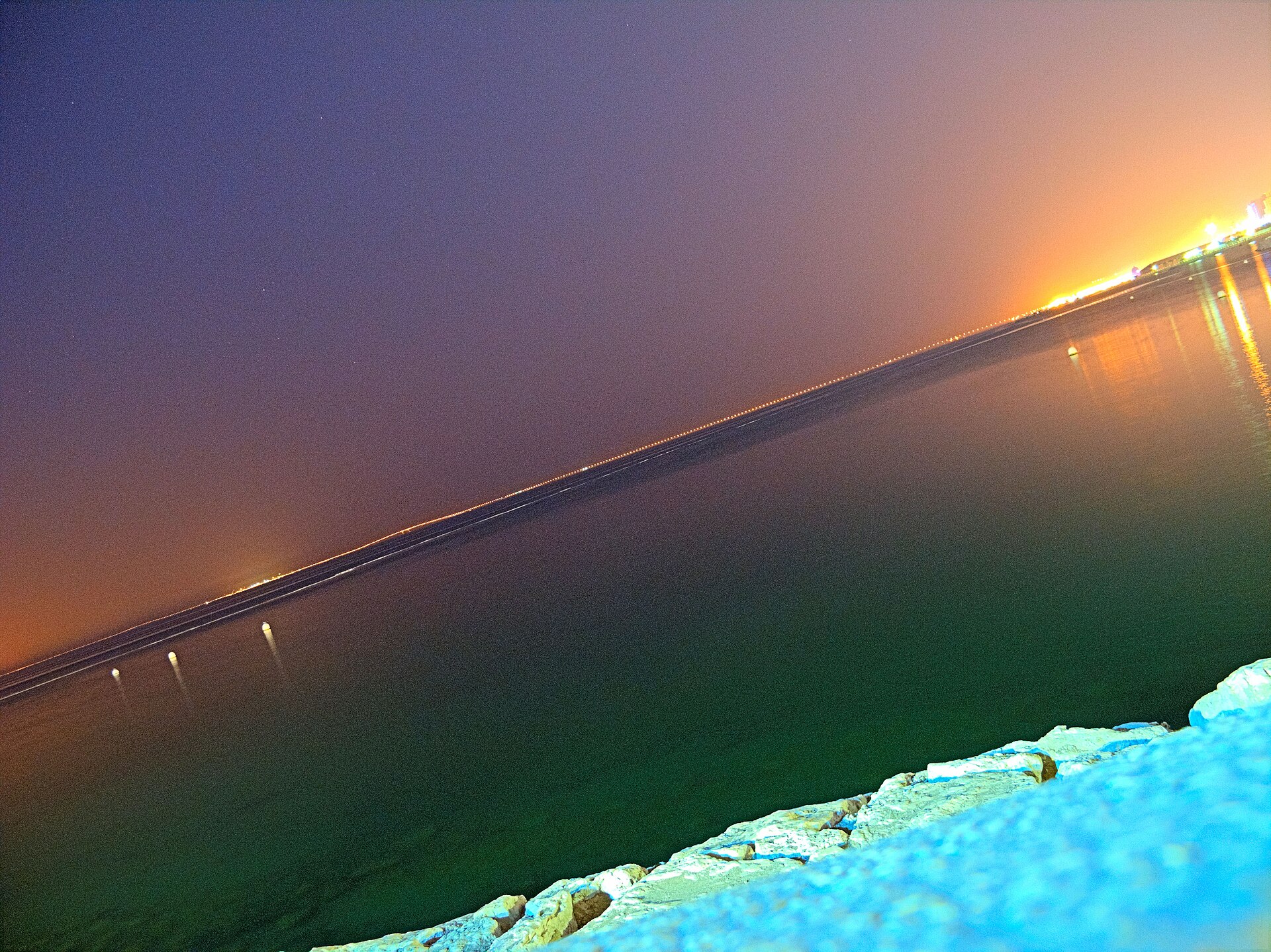
The contrast with 2011 is structural, not incidental. When Bahrain’s Shia population rose against the Al-Khalifa government in February 2011, the GCC agreed within weeks to deploy Peninsula Shield Force troops. Saudi Arabia sent approximately 1,000 to 1,200 soldiers with armored vehicles across the King Fahd Causeway, and the UAE dispatched around 500 police officers — a ground intervention launched in response to an internal uprising that Riyadh framed as Iranian-backed destabilization. In 2026, Iran itself — not a proxy, not a protest movement, but the Islamic Republic’s own Islamic Revolutionary Guard Corps — struck Bahraini sovereign territory with military ordnance. The response from Crown Prince Mohammed bin Salman‘s government was a press statement whose language was interchangeable with dozens of previous condemnations issued since February.
There is a precedent for Saudi military action during this war, and it runs in one direction. The Royal Saudi Air Force secretly struck Iranian drone and missile-launch sites inside Iran and hit Iranian-backed militias in Iraq during the 2026 campaign, according to reporting by Reuters and Middle East Eye. Saudi territory has absorbed at least 38 missiles and 435 drones since February 28. Riyadh calibrated its military response exclusively to threats against its own soil — strikes on Bahrain, even by a state adversary using military ordnance against sovereign GCC territory, have not crossed the threshold that triggers Saudi force. The Kingdom built a response framework around its own borders, not around the GCC’s collective perimeter.
The GCC Secretary-General’s language on June 27 was harder than Riyadh’s by a visible margin. Albudaiwi condemned “in the strongest terms Iran’s treacherous drone attacks against Bahrain,” stating the Iranian regime’s “continuous targeting of civilian facilities and critical infrastructure” was designed “to undermine and obstruct all such efforts” toward regional peace, according to the GCC Secretariat. “Treacherous” is not a word that appears in Saudi MOFA statements about this war. The institutional voice of the bloc out-condemned the member state that funds, anchors, and largely defines it.
Iran’s Framing: A US Base, Not a GCC State
The IRGC did not frame the Bahrain strike as an attack on Bahrain or on the Al-Khalifa government. It framed it exclusively as a counter-strike on American military infrastructure that happens to be located on Bahraini soil — a distinction that Tehran has maintained throughout the campaign and one that serves a specific legal and diplomatic function. The IRGC statement described the target as the Juffair base from which “American terrorists” had launched that morning’s attack on the Qeshm desalination plant, and warned that “if the aggression is repeated, our response will be broader than this,” according to CBS News and Al Jazeera.
Iran’s Foreign Ministry reinforced the self-defense framing through spokesman Esmaeil Baqaei. He stated on June 27 that “Iran’s national security and dignity are matters that brook no compromise or condition; just as the inherent right to legitimate self-defense is not open to discussion, the means of this defense cannot be subject to bargaining or concession with any party,” according to CBS News. The framing is deliberate and internally consistent. By treating the Juffair base as a US military asset on Bahraini soil rather than as Bahraini sovereign territory under attack, Tehran avoids acknowledging that it struck a GCC member state — an acknowledgment that would trigger exactly the collective defense obligations the Sakhir Declaration was written to formalize.
Iranian military adviser Mohsen Rezaei went further, accusing the United States of violating Article 1 and Article 5 of the June 17 memorandum of understanding. “America, by supporting the actions of its proxy forces in the region, has violated the first article of the memorandum of understanding, and by continuing to create tensions in the Strait of Hormuz, has violated the fifth article,” Rezaei said, according to Al Jazeera. The deconfliction infrastructure that Washington has presented as progress does not appear to exist in the form described. IRGC spokesman Hossein Mohebi called claims about a direct communication line “completely false,” according to Euronews — on the same day Vice President JD Vance posted on X that Iran could “pick up the phone” if it disagreed with how the MOU was being implemented.
How Does the June 17 MOU Apply to Strikes on GCC Territory?
The June 17 memorandum of understanding addressed shipping lanes through the Strait of Hormuz and the terms under which Iranian enrichment and US sanctions would enter a Phase 2 negotiation. Whether it covers Iranian drone strikes on US military installations in Bahrain, Kuwait, and Jordan is a question neither Washington nor Tehran has formally answered — and the retaliatory chain that produced the June 27 strikes makes clean attribution of the first violation difficult to establish.
The sequence ran across three days and three escalatory steps. On June 25, an IRGC drone struck the Ever Lovely, an 8,500-TEU Singapore-flagged Evergreen Marine container ship, 7.5 nautical miles southeast of Dahit in the Oman corridor — a strike that prompted President Trump to call it “obviously a foolish violation of our ceasefire agreement,” according to CNBC. On June 26, US and CENTCOM forces struck Iranian targets in response. On June 27, Iran struck back at what it described as American military installations across the Gulf. Each side claims the other violated first, and neither has identified a neutral arbiter or enforcement mechanism within the MOU text itself.
Vance’s response on X framed the issue as binary: “Iran signed a ceasefire agreement. We have honored it… If they have disagreements about how the MOU is being applied, they can pick up the phone. But violence will be met with violence,” according to The Hill. But the phone Vance referenced may not connect to anyone — the IRGC denied the deconfliction hotline’s existence, and the MOU contains no formal escalation ladder for retaliatory exchanges that fall outside its Hormuz-focused scope. The ongoing IAEA verification gap — 440.9 kilograms of highly enriched uranium at 60 percent U-235 remaining unverified since June 10 — adds a nuclear dimension to the atmosphere of mutual accusation, with roughly fifty-one days remaining before the Phase 2 deadline.
For Saudi Arabia, the MOU’s ambiguity carries a direct cost. The Kingdom is absorbing an estimated $5.5 million per day in Persian Gulf Security Administration fees on Hormuz transit, layered on top of a collapsing oil price and an OPEC+ framework under strain. It was also excluded from the negotiations that produced the agreement whose scope now determines whether strikes on its security protectorate are covered or not. Brent crude closed at $72.86 on June 27, down from $75.50 the previous session, reflecting market confidence in Iranian supply reaching buyers while Saudi Arabia’s own exports remain constrained by mine-clearance timelines, war-risk insurance premiums, and PGSA corridor requirements.
The Cost of Defending Bahrain
The economics of each engagement favor Iran by a ratio that compounds with every wave. Each Shahed-136 costs approximately $30,000 to produce, according to Defence Security Asia — while the air defense interceptors used to destroy it, fired from Patriot, THAAD, and NASAMS batteries, cost roughly $4 million per engagement, according to CSIS analysis of drone campaign economics. That is a 133-to-1 cost asymmetry on every successful intercept, and the campaign has now stretched across four months with no ceiling on Iranian launch capacity in sight.
The Congressional Research Service, in report R48971 published June 3, 2026, noted that Iran’s attacks “may be raising pivotal questions in the Gulf about U.S. security commitments to the Gulf states and future U.S.-GCC security partnership.” Those questions land differently in Manama, where the drones arrive, than in Riyadh, where the response is diplomatic. At least 28 people have been killed and hundreds injured across GCC states since February, according to Amnesty International’s June 2026 report, which documented strikes on civilian infrastructure — including a Bahraini shipyard and a Saudi labor camp — and assessed that several likely constitute war crimes under international humanitarian law.
Chatham House observed in a June 2026 analysis that Gulf states are seeking assurances they “will not remain exposed to repeated pressure on their infrastructure and shipping routes.” The Sakhir Declaration was written to provide one such assurance — a formal statement that the bloc’s security was a single, indivisible thing. It lasted forty-eight hours before its first operational test, and the response it produced was indistinguishable from the one that would have come without it. The deeper structural question — why the GCC’s 167th Ministerial collective defense invocation produced no military activation — is examined in The GCC Declared ‘Attack on All’ — Not One Soldier Moved. The following day, Iraqi Foreign Minister Fuad Hussein issued a formal invitation to all six GCC states and Iran to attend an eight-party regional security summit in Baghdad — an offer that put Saudi Arabia’s silence in a new frame, as analyzed in Baghdad Sent the Invitation Saudi Arabia Cannot Answer.
Frequently Asked Questions
Has Bahrain severed diplomatic relations with Iran before?
Bahrain cut diplomatic ties with Iran in January 2016, following the storming of Saudi diplomatic missions in Tehran and Mashhad after Saudi Arabia executed Shia cleric Sheikh Nimr al-Nimr. Bahrain has consistently accused Iran of supporting Shia opposition groups on the island and of conducting covert operations aimed at undermining the Al-Khalifa government. The two countries have not restored diplomatic relations, and the 2026 strikes represent the most severe escalation in a relationship that was already formally non-existent at the ambassadorial level.
What is the Peninsula Shield Force and has it been deployed before?
The Peninsula Shield Force is the GCC’s joint military force, established in 1984 and headquartered at Hafar Al-Batin in northeastern Saudi Arabia. Its only significant operational deployment was to Bahrain in March 2011. Approximately 1,000 to 1,200 Saudi soldiers with armored vehicles crossed the King Fahd Causeway to help suppress the Shia-led February 14 uprising, alongside roughly 500 UAE police officers — a combined force of around 1,700 personnel. The force was created to defend against external aggression, but its sole use was to address an internal security situation that Riyadh and Manama characterized as Iranian-instigated. The GCC has no formal Article V-equivalent treaty that would bind members to automatic mutual defense in response to an external military attack.
What specific war crimes has Amnesty International documented from Iranian strikes on GCC states?
Amnesty International investigated two attacks in detail in its June 2026 report. The first was a March 2 strike on the MT Stena Imperative oil tanker at the Arab Shipbuilding and Repair Yard (ASRY) in Bahrain, which killed one shipyard worker and injured two. The second was a March 8 strike on a labor camp in Al-Kharj, Saudi Arabia, which killed three people and injured more than ten. In both cases, Amnesty identified Shahed drone impact signatures and concluded the strikes caused disproportionate civilian harm, stating they may constitute war crimes under international humanitarian law. The organization called for an independent international investigation into Iran’s use of loitering munitions against civilian infrastructure across GCC states.
Has Saudi Arabia taken military action during the 2026 Iran war?
Saudi Arabia conducted military operations during the conflict, but exclusively in response to strikes on its own territory — a posture that reflects the absence of a binding GCC collective defense treaty. Unlike NATO’s Article 5, the GCC Charter contains no automatic mutual defense obligation: the 1994 GCC Security Agreement allows member states to request assistance but does not compel it, and the document remains unratified by all six members in its security provisions. That legal gap is what allows Riyadh to offer “solidarity” in response to strikes on Bahrain while holding its own forces to a strictly territorial standard — and Iran has shown consistent awareness of that gap throughout the campaign.
What is the current status of the US-Iran deconfliction hotline?
The channel’s existence is in active dispute, as covered above. What is worth noting is how this compares to prior US-Iran crisis communication frameworks: during the 2019 Gulf tanker attacks, Washington relied on Swiss intermediaries and UN back-channels rather than any direct military-to-military line. No formal direct US-IRGC communication mechanism has ever been publicly confirmed by both sides simultaneously. The Doha-based format the US described in 2026 appears to have been a unilateral American characterization — the IRGC’s denial on June 26 was categorical, not conditional, suggesting the channel either does not exist at the military level or operates in a form Iran’s military arm refuses to acknowledge. That leaves the retaliatory cycle that produced the June 27 strikes with no confirmed institutional pathway for interruption short of a political decision by Tehran’s civilian leadership. How Iran publicly framed those same strikes — not as escalation but as MOU enforcement — is detailed in Iran Struck Four Bases and Called It Compliance. The structural logic behind Saudi Arabia’s persistent silence — why Riyadh has no available counter-proposal — is examined in depth in Iran’s Peace Offer Arrived While Its Missiles Were Still in the Air. The following morning, June 28, a separate incident added to the day’s toll: an Aramco helicopter crashed at Ras Tanura, killing all 14 aboard — the deadliest single incident at the world’s largest crude export terminal since the war began.