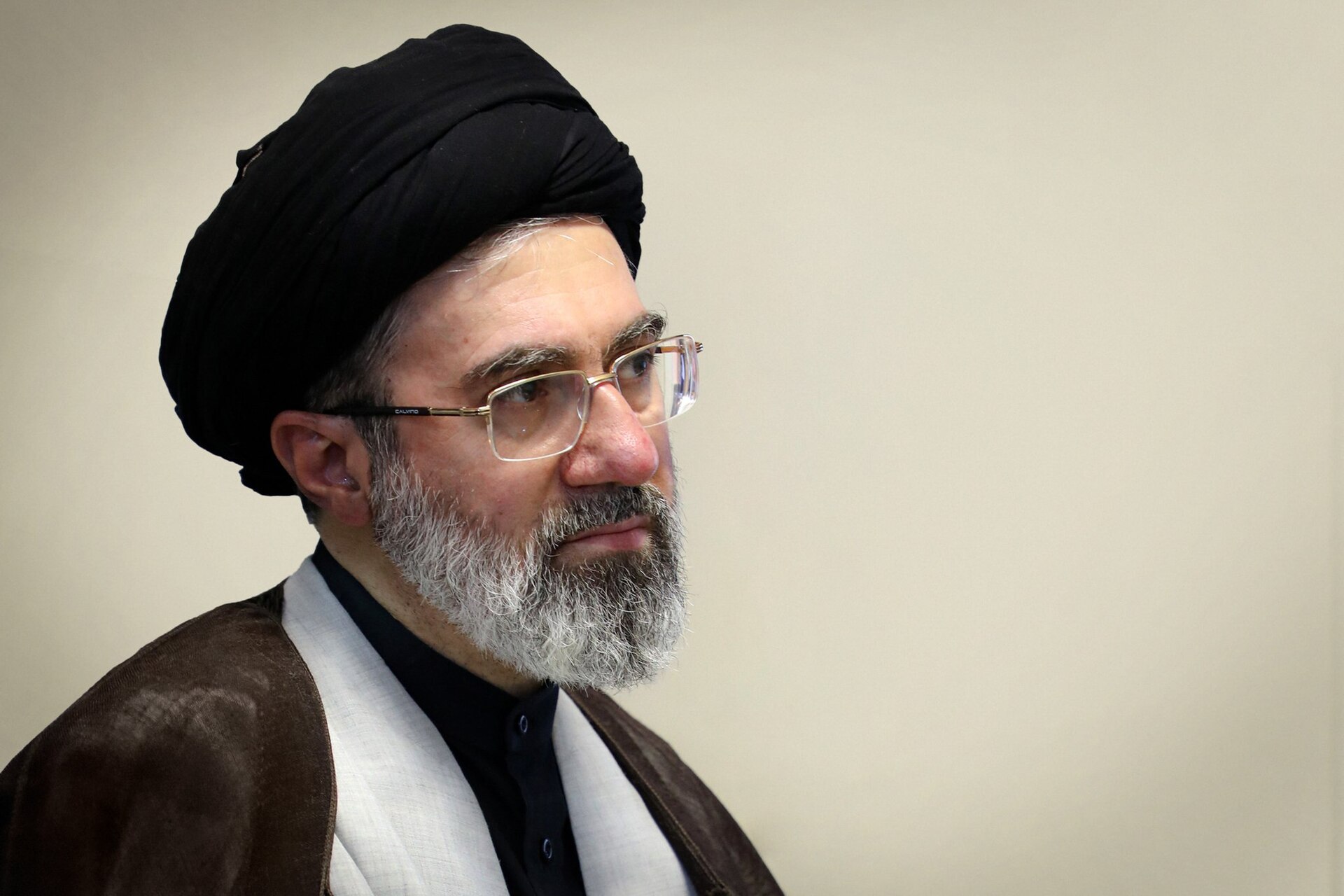

TEHRAN — Mojtaba Khamenei’s conditional approval of the US–Iran memorandum of understanding — issued June 18, one day after the deal was signed — is the only mandate Iran’s negotiators carry into the Islamabad talks opening July 11, and it is a veto dressed as consent. The conditionality is on record, its author has not appeared in public for 127 days, and no mechanism exists in Iran’s constitution to declare it satisfied or violated. Mojtaba required President Masoud Pezeshkian to “safeguard the rights of the Iranian nation and the Resistance Front” — a phrase undefined enough that any concession at Islamabad can be declared a breach, with no authority in Tehran empowered to rule otherwise.
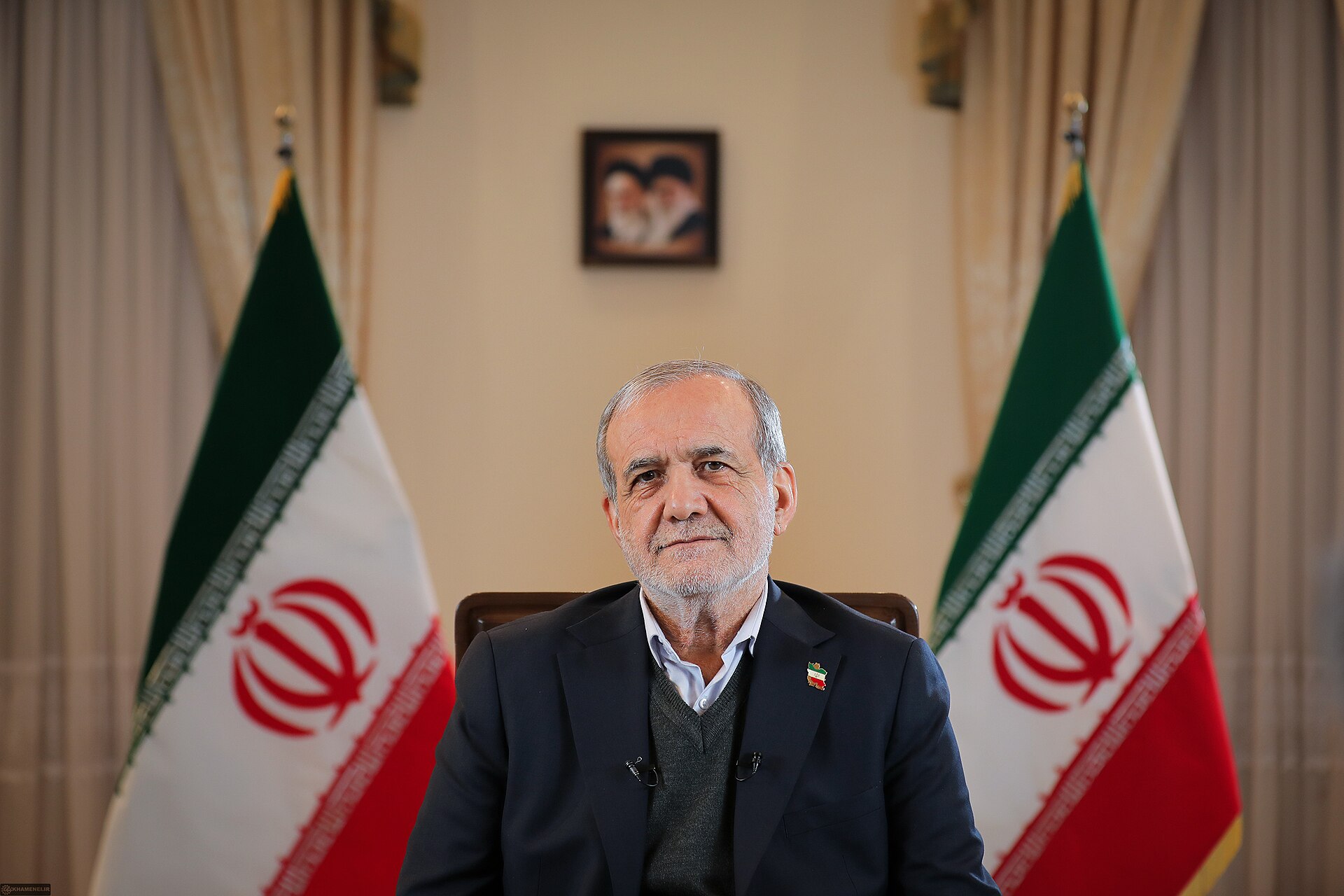
Pezeshkian accepted that responsibility on behalf of the entire Supreme National Security Council, giving a personal assurance to a man who did not attend his own father’s funeral, has been publicly unreachable since the statement was issued, and has left Iran’s negotiating mandate constitutionally suspended. Every hardliner faction — the Paydari Party, the 63 Assembly of Experts members who signed the June 29 red-line demand, the Jalili camp — understands what Mojtaba’s absence delivers: a procedural veto on round three that can be invoked against any outcome, at any point, with no one able to overrule it.
Table of Contents
- The Permission That Isn’t
- Who Revokes a Condition When Its Author Has Vanished?
- The SNSC Cannot Adjudicate Its Own Mandate
- What Does Islamabad’s Agenda Activate?
- Can 440 Kilograms of Uranium Survive Round Three?
- The Sixty-Three Signatures
- Where Does Jalili Fit in the Islamabad Lineup?
- Forty-One Days to Expiry
- Frequently Asked Questions
The Permission That Isn’t
Mojtaba’s June 18 statement, published through Iranian state media, was structured with a precision that reads less like approval and more like a liability waiver. “I, as a matter of principle, held a different view,” he wrote. “However, out of the commitment that the esteemed president — as the head of the Supreme National Security Council — gave to me on his own behalf and on behalf of the other members regarding the safeguarding of the rights of the Iranian nation and the Resistance Front, and his explicit acceptance of that responsibility, I granted my permission.”
“I, as a matter of principle, held a different view; however, out of the commitment that the esteemed president — as the head of the Supreme National Security Council — gave to me on his own behalf and on behalf of the other members regarding the safeguarding of the rights of the Iranian nation and the Resistance Front, and his explicit acceptance of that responsibility, I granted my permission.”
Mojtaba Khamenei, written statement carried by Iranian state media, June 18, 2026
Three things are embedded in that sentence. First, Mojtaba placed himself on record as opposing the MOU in principle — meaning any negative outcome can be retroactively attributed to his prescience rather than his leadership. Second, he transferred all responsibility for results to Pezeshkian and the SNSC, creating an accountability firebreak between the supreme leader and the negotiating team. Third, the conditionality — “safeguarding the rights of the Iranian nation and the Resistance Front” — is deliberately undefined, with no metric for satisfaction and no mechanism for adjudicating a breach.
The Middle East briefing 3,000+ readers start their day with.
One email. Every weekday morning. Free.
The statement arrived on June 18, one day after the MOU was signed in Doha on June 17 (Al Jazeera, CNN). It was reactive, not pre-authorizing — Mojtaba did not approve the deal before it was struck but retroactively permitted its existence after the fact. He added a second line that hardliners have since quoted in every factional communiqué: “Future negotiations do not mean acceptance of the enemy’s position” (Tribune India, June 18). That is not the language of consent. It is the language of a leader preserving every available exit while ensuring that no one else has one.
The closest precedent is Ali Khamenei’s handling of the 2015 JCPOA. When Ali Khamenei allowed the nuclear deal to proceed, he used strikingly similar language — reluctant consent, transferred responsibility, preserved opposition. But Ali Khamenei was a 26-year supreme leader with unquestioned institutional authority, an active SNSC under his direct oversight, and a parliamentary review process that gave the deal domestic legal standing. Mojtaba has been in office for approximately 120 days. He has no enforcement track record, the SNSC has not confirmed ongoing consultation with him since June 18, and the MOU has no parliamentary ratification pathway of any kind.
| Ali Khamenei — JCPOA (2015) | Mojtaba Khamenei — MOU (2026) | |
|---|---|---|
| Tenure as Supreme Leader | 26 years | ~120 days |
| Public visibility at time of approval | Regular public appearances | 127 days absent |
| Parliamentary ratification | Structured Majlis review | None |
| Confirmed SNSC consultation | Active, ongoing | None since June 18 |
| Enforcement mechanism | Direct supreme leader override | None confirmed operational |
| Conditionality language | “I allowed but did not approve” | “I held a different view… granted permission” |
Pezeshkian’s formal acceptance of responsibility added a wrinkle that has drawn less attention than it deserves. He gave his assurance as head of the SNSC, not as president — making the obligation institutional rather than personal (The Hill, June 2026). The entire council is bound by his commitment. But a body bound to safeguard rights it cannot define, to the satisfaction of an authority it cannot reach, is a body operating in a constitutional void that has no precedent in the Islamic Republic’s 47-year history — a void Ghalibaf has already exploited to build structural vetoes of his own.
Who Revokes a Condition When Its Author Has Vanished?
No one in Iran’s current institutional framework can. The constitution provides no mechanism for adjudicating a supreme leader’s conditional approval, and Mojtaba — the only authority who can declare his own conditions satisfied or violated — has not appeared in public for 127 days as of July 6. He did not attend his father Ali Khamenei’s funeral ceremonies from July 3 to 5, where three of his brothers were photographed at the coffin and Mojtaba was absent. His only substantive public communications since February 28 have been written statements, of which the June 18 conditional approval is by far the most consequential.
The absence predates the mandate it now paralyzes. Mojtaba’s last confirmed public appearance was approximately February 28 — ten days before the Assembly of Experts selected him as supreme leader on March 8–9, reportedly under IRGC pressure. He was chosen while already invisible. Iran’s government maintains he is in “full health,” but that claim has been accompanied by zero visual evidence for over four months, and his absence from the funeral — the most public obligation a son can owe — destroyed what remained of its credibility.
For the MOU conditionality, the absence is not merely embarrassing but structurally disabling. Mojtaba’s June 18 statement was personal: the assurance was given to him, by Pezeshkian, on behalf of the SNSC. Satisfying the condition requires Mojtaba’s personal judgment that his terms have been met. Breaching it requires his personal declaration that the terms have been violated. Both require a supreme leader who is present, reachable, and functioning in his institutional role — none of which can be confirmed as of his non-attendance at his own father’s funeral.
The negotiating team heading to Islamabad on July 11 is therefore operating under a mandate whose author cannot be consulted. Every concession Pezeshkian considers — on enrichment timelines, on HEU removal, on sanctions relief sequencing — must be measured against a conditionality whose satisfaction criteria were never specified by a leader who has never clarified them and cannot currently be reached to do so. The mandate is valid. Its author is gone. And no one in Iran’s constitutional order can fill the gap between those two facts.
The SNSC Cannot Adjudicate Its Own Mandate
Article 176 of Iran’s constitution establishes the Supreme National Security Council with three functions: determining national security policy, ensuring domestic policies align with security needs, and marshalling resources against threats. The president chairs it. The supreme leader’s representative sits on it. All SNSC decisions require the supreme leader’s ratification to take force — a requirement that, in the current interregnum, has no functional pathway.
This creates a structural impossibility for the MOU conditionality that no amount of diplomatic creativity at Islamabad can resolve. Pezeshkian gave his assurance to Mojtaba as SNSC chairman — making the obligation institutional, not merely personal. The SNSC as a body is bound by the commitment. But the body that is bound cannot adjudicate whether its own obligation has been met, because the only authority empowered to make that judgment — the supreme leader — is the person to whom the obligation is owed, and that person is unreachable through any confirmed institutional channel.
The Assembly of Experts holds supervisory authority over the supreme leader under Article 107 of the constitution, but that authority extends to selecting and potentially removing a supreme leader — not to interpreting the internal terms of a conditional approval he placed on a security agreement. Iran’s constitution was designed around a supreme leader who governs actively and visibly, issues regular guidance, and maintains direct oversight of the SNSC. It contains no procedure for a conditionality placed by a supreme leader who does none of these things.
The practical consequence is that the conditionality defaults to factional contestation rather than constitutional procedure. Hardliners — the Paydari Party, the 63 Assembly of Experts signatories, the Jalili faction — do not need Mojtaba to formally declare a violation. They need only to claim that any concession Pezeshkian makes at Islamabad breaches the terms of a commitment whose author is unavailable to confirm or deny the claim. The burden of proof falls entirely on the negotiating team, and the only witness who could exonerate them has issued no public communication of any kind for 18 days.
What Does Islamabad’s Agenda Activate?
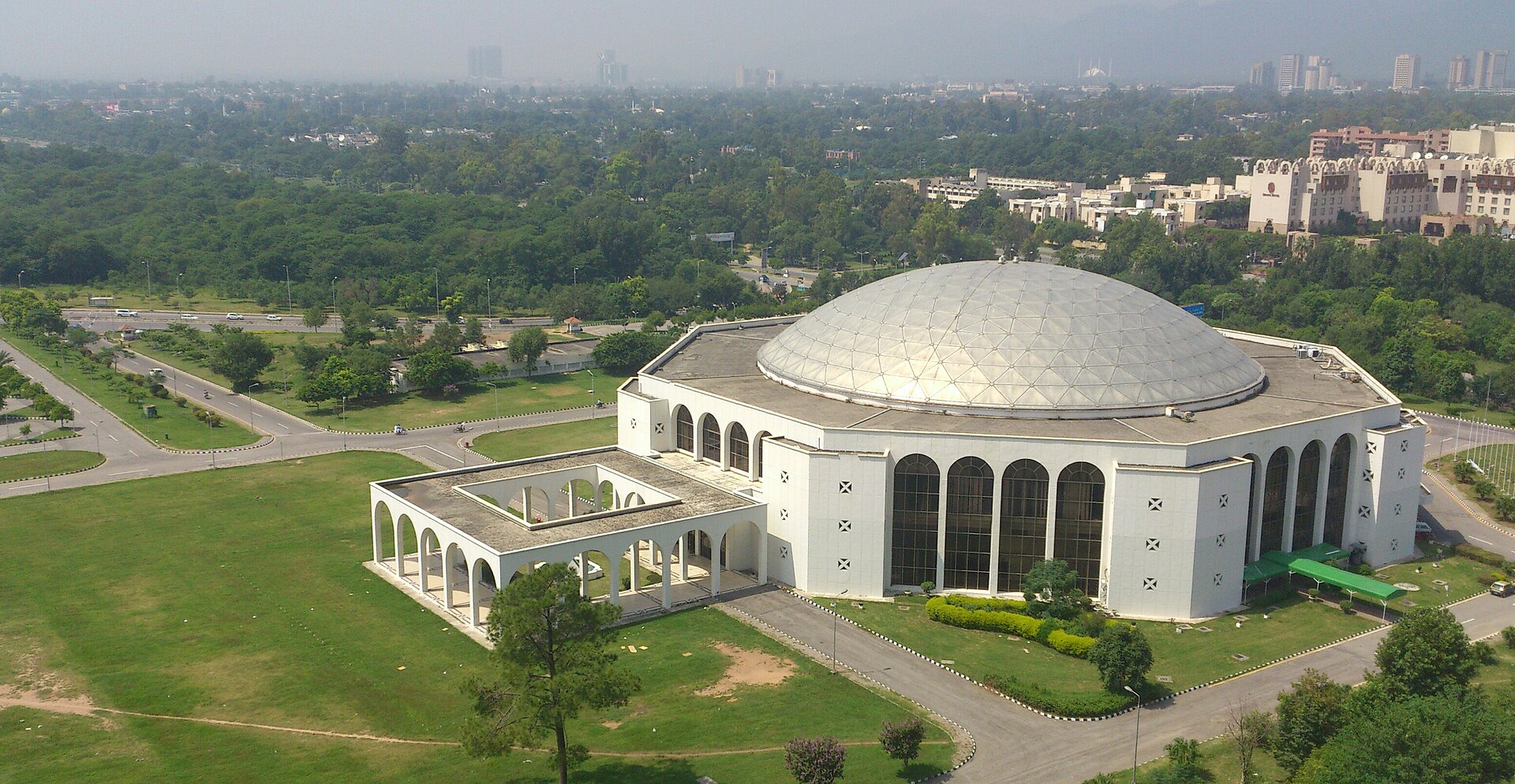
Every major item on the table. The July 11 Islamabad talks — confirmed by Al Arabiya and Al Hadath, with Army Chief General Asim Munir attending — place nuclear issues, frozen funds, and sanctions explicitly on the agenda. Each of these tracks directly overlaps with the undefined terms of Mojtaba’s conditionality, and each creates a tripwire that hardliners can invoke to declare the mandate breached.
| Islamabad Agenda Item | Conditionality Trigger | 63-Member AoE Red Line | Current Status |
|---|---|---|---|
| Enrichment suspension | “Rights of the Iranian nation” | “No negotiations on nuclear rights” | US: 20-year suspension / Iran: 3–5 years |
| HEU removal (440.9 kg at 60%) | “Rights of the Iranian nation” | “No negotiations on nuclear rights” | US: physical removal / Iran: in-country down-blending |
| IAEA verification access | “Rights of the Iranian nation” | Implied by nuclear-rights clause | Barred by 2 domestic laws; 121-day blackout |
| Frozen assets ($6B Qatar) | “Resistance Front” (proxy sanctions) | “Sanctions removal” demanded | Goods-purchase only; no cash transfer |
| Sanctions architecture | “Resistance Front” | “Sanctions removal” demanded | No framework agreed |
| Hormuz fee regime | Not directly named | “No negotiations on Hormuz closure” | PGSA $5.5M/day from Aug 18; $253M outstanding |
The nuclear track is the most exposed. The MOU calls for downgrading Iranian uranium from weapons-grade to reactor-grade, but only after a final agreement — one that does not yet exist and whose terms remain wholly unresolved. The US has demanded a 20-year enrichment suspension (NPR, June 18). Iran has counter-offered three to five years (CNBC, June 26). No convergence exists. The 63 Assembly of Experts members who signed the June 29 red-line statement named “nuclear rights” as the first non-negotiable item, and Mojtaba’s conditionality — which references “the rights of the Iranian nation” — encompasses enrichment as a core national right in Tehran’s institutional vocabulary.
The frozen funds track is equally loaded. The Doha round established a goods-purchase mechanism for $6 billion in frozen Qatari assets — humanitarian goods only, no cash transfers. But any discussion of unfreezing additional Iranian assets triggers the sanctions relief debate, which triggers the question of whether sanctions on Resistance Front proxies — Hezbollah, the Houthis, the Popular Mobilization Forces — are on the table. Mojtaba’s conditionality specifically names “the Resistance Front” as a protected interest. If Pezeshkian discusses proxy sanctions in any configuration that hardliners interpret as a concession, the conditionality activates.
State broadcaster IRIB has already signaled where the institutional censorship lines sit. A pre-recorded interview with Ghalibaf was cut mid-answer as he addressed the unfreezing of Iranian assets — a direct intervention by an arm of the state that answers to the supreme leader’s office (RFERL). The Islamabad agenda places Pezeshkian’s team in front of every tripwire simultaneously — nuclear rights, Resistance Front proxies, sanctions sequencing — with the only person who could have disarmed them 127 days absent and 18 days silent.
Can 440 Kilograms of Uranium Survive Round Three?
Almost certainly not in its current form. The single most dangerous item on the Islamabad agenda is 440.9 kilograms of highly enriched uranium at 60% purity — enough for multiple nuclear weapons by IAEA estimates — sitting unverified inside Iran since inspectors were last granted access 121 days ago. The US demands physical removal of the stockpile from Iranian soil. Iran has agreed only to “monitored in-country down-blending,” a process that keeps the material in Iran under conditions Tehran defines and the IAEA cannot currently verify.
Ghalibaf closed the verification door on July 2. “Talk of IAEA access to bombed sites is false,” he told IRIB, stating that access to Fordow, Natanz, and Isfahan was barred “under any circumstances” by two domestic laws — a 221–0 parliamentary vote and a separate SNSC resolution. On the other side of the table, IAEA Director General Rafael Grossi has called for a “very strong system of verification” and “full access,” and has publicly stated that the MOU grants inspectors entry to all declared sites (UN News, CNBC, June 26). Tehran’s position is that the MOU does no such thing, and that two domestic laws override whatever the MOU text promises.
This gap — between what the MOU commits to and what Iran’s domestic legal framework permits — is where Mojtaba’s conditionality bites hardest. Any movement by Pezeshkian toward allowing IAEA access to the bombed sites would require overriding two laws that the SNSC itself approved. Overriding the SNSC’s own resolution requires the supreme leader’s authorization — the same supreme leader whose conditional approval already constrains the negotiating team’s room to move. The constitutional loop is closed: Pezeshkian cannot make the concession the US demands without authorization from the man whose conditionality is the reason he cannot make it.
The enrichment gap compounds the paralysis. Iran’s public position, broadcast on PressTV as recently as May 2026, is that “nuclear technology and enrichment are not on the agenda of talks with the US” (GlobalSecurity.org) — a statement that contradicts the MOU framework’s explicit requirements. Arms Control Association analysts have noted that the US appeared “ill-prepared for serious nuclear talks.” Foreign Policy argued in May that zero-enrichment demands are less realistic after the war than before it. Neither observation changes the structural reality: Mojtaba’s conditionality treats any enrichment concession as a potential violation of “the rights of the Iranian nation,” and no one in Tehran can authoritatively say otherwise.
The Sixty-Three Signatures
On or around June 29, sixty-three of the Assembly of Experts’ eighty-eight members — approximately 72% of the body that selects the supreme leader and holds constitutional supervisory authority over him — signed a collective statement demanding that negotiators not cross Khamenei’s red lines (Al Jazeera, June 30; Critical Threats, July 1). The statement named four non-negotiable positions: no talks on Iran’s nuclear rights, no negotiations over the Strait of Hormuz, war compensation from the United States, and complete sanctions removal as a precondition for any agreement.
Every one of those demands contradicts the MOU framework. The MOU requires nuclear concessions. It addresses the Hormuz fee regime. It offers phased sanctions relief, not unconditional removal. It makes no mention of war compensation. The 63 signatories are not rejecting specific negotiating positions — they are rejecting the entire structural premise of the agreement their supreme leader conditionally approved, and they are doing so from inside the institution that controls his constitutional standing. They have institutionalized Mojtaba’s personal reservation, converting a one-man conditional into a collective demand backed by the same hardliner infrastructure that was already working to exploit the funeral window.
The Assembly of Experts’ own presidium — its internal leadership body — issued what RFERL described as an “unusually sharp response” rebuking the 63-member statement. The split is extraordinary for an institution that prizes consensus: the body that unanimously selected Mojtaba as supreme leader four months ago is now publicly divided over whether the MOU he conditionally approved should be pursued at all. The division runs through the heart of Iran’s constitutional architecture, not along its periphery.
For Pezeshkian, the 63 signatures represent something more operationally dangerous than political opposition. They represent the procedural groundwork for declaring the mandate breached after Islamabad, not before it. If round three produces any outcome the 63 interpret as crossing a red line — and the red lines are drawn wide enough to encompass every agenda item — the statement provides institutional basis for a formal challenge to the SNSC’s negotiating authority itself. Iran’s armed forces have separately vowed a “swift response to any US violation in the Strait of Hormuz” (PressTV, July 2), ensuring that military and clerical pressure converge on the same set of constraints from different institutional directions.
Where Does Jalili Fit in the Islamabad Lineup?
As either Ghalibaf’s replacement at the negotiating table or as a factional veto wielded from outside it. Saeed Jalili, who finished second in the 2024 presidential election with 13 million votes on a platform of zero enrichment concessions (Fox News; Iran International, April 24, 2026), is expected to take over as Iran’s lead nuclear negotiator. His appointment would place the man who spent six years as SNSC secretary — from 2007 to 2013 — without granting a single enrichment concession into the chair at Islamabad where enrichment is the central agenda item.
Jalili’s record as SNSC secretary is the data point that matters. During his tenure, Iran expanded its enrichment capacity from roughly 3,000 centrifuges to over 19,000, installed advanced IR-2m centrifuges at the Fordow facility, and ran out the clock on three successive rounds of UN Security Council sanctions (Britannica; Arms Control Association). The P5+1 process under Jalili produced communiqués and process commitments but zero substantive concessions on enrichment — six years of talks with nothing conceded. His appointment to the Islamabad talks would be a personnel decision that doubles as a policy announcement: the concession window is closed.
Unconfirmed reports from mid-June, tracked by Iran scholar Raz Zimmt, indicated that Jalili had been removed from his position as the supreme leader’s representative on the SNSC and replaced by Ali Bagheri Kani. “If true, the move is likely related to Jalili’s and the Paydari Front’s” opposition to the MOU, Zimmt wrote on X. Sources close to Jalili denied the removal. The Paydari Party and Jalili’s faction have separately accused Pezeshkian and Ghalibaf of staging a “constitutional coup” through the Doha MOU (Iran International, June 30) — language that is not procedural complaint but factional declaration of war against the entire negotiating framework.
Whether Jalili arrives at Islamabad as lead negotiator, supreme leader’s representative, or neither, his pull on the talks is already fixed. He is the living embodiment of the conditionality — proof that “safeguarding nuclear rights” has always meant, in practice, conceding nothing. Pezeshkian’s negotiators will sit across from US counterparts in a room where Jalili’s 2007–2013 track record defines the outer boundary of acceptable movement, and Mojtaba’s absence means no one in Tehran can authorize crossing it.
Forty-One Days to Expiry
The MOU’s 60-day window expires approximately August 16 — 41 days from July 6. Day 19 of 60 has passed with no confirmed progress on any core dispute: enrichment timelines, HEU disposition, IAEA access, sanctions sequencing, or Hormuz fee structure. Two days later, on August 18, the Persian Gulf Shipping Authority’s fee suspension expires, activating charges of $5.5 million per day against Saudi-linked vessels, with $253 million already outstanding. A failed round three at Islamabad would simultaneously collapse the diplomatic track and activate the financial one in the same week.
Mojtaba’s conditionality was built for this convergence. If Islamabad produces movement, hardliners invoke the conditionality to declare any movement a violation. If Islamabad produces stalemate, the MOU clock runs out and the PGSA charges activate regardless. If Pezeshkian returns to Tehran with a framework requiring further concessions, the 63 Assembly of Experts signatures and the Paydari “coup” accusations provide the institutional infrastructure to block implementation. The conditionality permits only outcomes Tehran’s hardliners have already defined as acceptable, and rejects everything else by default. The July 14-15 technical round in Islamabad faces the same structural ceiling: why Islamabad’s July round cannot close the conditionality gap is the central question that neither the technical session nor the Doha principals track can resolve from inside the room.
The MOU did not survive long enough to test those constraints. Iran’s Foreign Ministry Spokesman Esmail Baghaei declared it operationally closed on July 13 — five days before Khamenei’s political repudiation on July 18. The mechanics of that five-day gap — how Baghaei’s “commitment for commitment” language constituted an operational void while the political declaration was still pending — is the sequence that converted Mojtaba’s conditional approval into a closed chapter without requiring a formal supreme leader decree.
Pezeshkian gave Mojtaba his personal assurance on June 18. Forty-one days from now, the MOU expires and the PGSA fee activates in the same week, and Mojtaba Khamenei’s conditional approval — the only document that determines whether 60 days of diplomacy was authorized — will still be the last thing anyone in Tehran heard from their supreme leader. It will still say nothing about what “safeguarding the rights of the Iranian nation” actually means.
Frequently Asked Questions
Has a Supreme Leader’s conditional approval ever been revoked in Iran?
Not through formal decree. Ali Khamenei conditionally approved the JCPOA in 2015 but never formally revoked that approval — instead, institutional erosion did the work. The Majlis passed the Strategic Action Law to Lift Sanctions in December 2020, which imposed domestic legal restrictions that functionally overrode the JCPOA’s terms without requiring a supreme leader decree. Khomeini’s 1988 acceptance of UN Resolution 598 ending the Iran–Iraq War — which he compared to “drinking poison” — was similarly never formally revoked despite widespread hardliner opposition. Iran’s system handles conditionality through institutional attrition rather than explicit revocation, which means Mojtaba’s June 18 statement could remain formally valid indefinitely while being functionally meaningless or functionally operative as a veto, depending entirely on which faction controls the narrative.
What constitutional mechanism exists if Mojtaba is declared incapacitated under Article 111?
Article 111 establishes a three-member council — the president, the head of the judiciary, and a faqih selected by the Guardian Council — to temporarily assume supreme leader functions in the event of incapacitation. This council has never been activated in the Islamic Republic’s 47-year history. If invoked, the council would inherit all pending supreme leader authorities, but its standing to adjudicate a personal conditionality — one given to Mojtaba as an individual, not to the office in the abstract — would be constitutionally untested. The Assembly of Experts would simultaneously begin succession proceedings, creating a period of overlapping uncertainty during which both the MOU conditionality and the supreme leadership itself would be in limbo.
Could the Majlis block the MOU independently of the Supreme Leader?
The MOU has no parliamentary ratification track, unlike the JCPOA, which went through a structured — if non-binding — Majlis review process. However, the December 2020 Strategic Action Law to Lift Sanctions includes provisions restricting any nuclear agreement that falls short of full sanctions removal, creating a potential domestic legal conflict between the SNSC’s executive approval authority and the Majlis’s legislative restrictions. Resolving conflicts between SNSC policy and Majlis legislation is constitutionally a supreme leader function, which returns the question to Mojtaba and to his absence. The Majlis has not formally invoked the law against the MOU, but the precedent is loaded and available.
What role does Pakistan’s military play in the Islamabad talks?
Army Chief General Asim Munir brings a dual credential that civilian diplomats cannot replicate. He maintained contacts with IRGC-linked figures during 2016–17 and personally attended Ali Khamenei’s funeral in Tehran alongside Prime Minister Sharif — a signal of military-to-military continuity that runs parallel to the foreign ministry track. Pakistan’s Inter-Services Intelligence has historically maintained separate Iran contacts from the civilian diplomatic apparatus, and Munir’s involvement in the Islamabad talks suggests the military channel is active for the nuclear portfolio specifically. This gives Pakistan a back channel into IRGC-aligned decision-makers who distrust the foreign ministry track Pezeshkian represents — a channel that could matter if the formal mandate collapses and informal assurances become the only currency available.
On July 11, after 127 consecutive days without a confirmed physical appearance, Mojtaba issued a written revenge declaration — his seventh statement as Supreme Leader. The veto he carried into the Islamabad process remained unresolved; his statement addressed the death of his father rather than the MOU mandate, leaving the authority gap this article describes structurally intact. See: Mojtaba Khamenei Called for Revenge After 127 Days Without Appearing. On July 18, Mojtaba’s categorical repudiation of the MOU framework — declaring Trump’s signature “utterly worthless and invalid” in a written statement read on state television — closed the authority gap this article left open. Mojtaba Voided the MOU from a Location No Official Can Name analyses what that declaration means for Saudi Arabia’s costs and the framework’s legal standing.