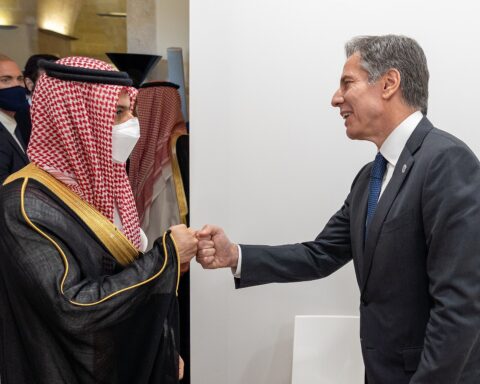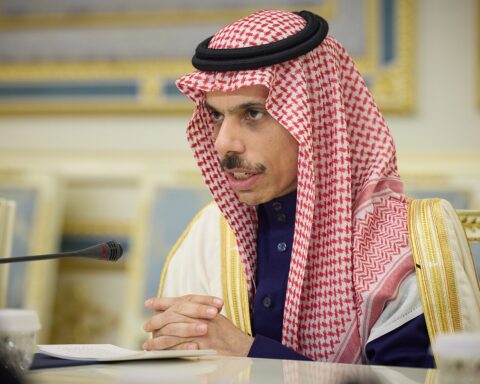

RIYADH — Saudi Foreign Minister Prince Faisal bin Farhan held separate phone calls on Saturday with Qatari Prime Minister and Foreign Minister Sheikh Mohammed bin Abdulrahman Al-Thani and Egyptian Foreign Minister Badr Abdelatty, the Saudi Press Agency reported, the latest in a fortnight of back-to-back coordinated calls with Riyadh’s two key Arab interlocutors.
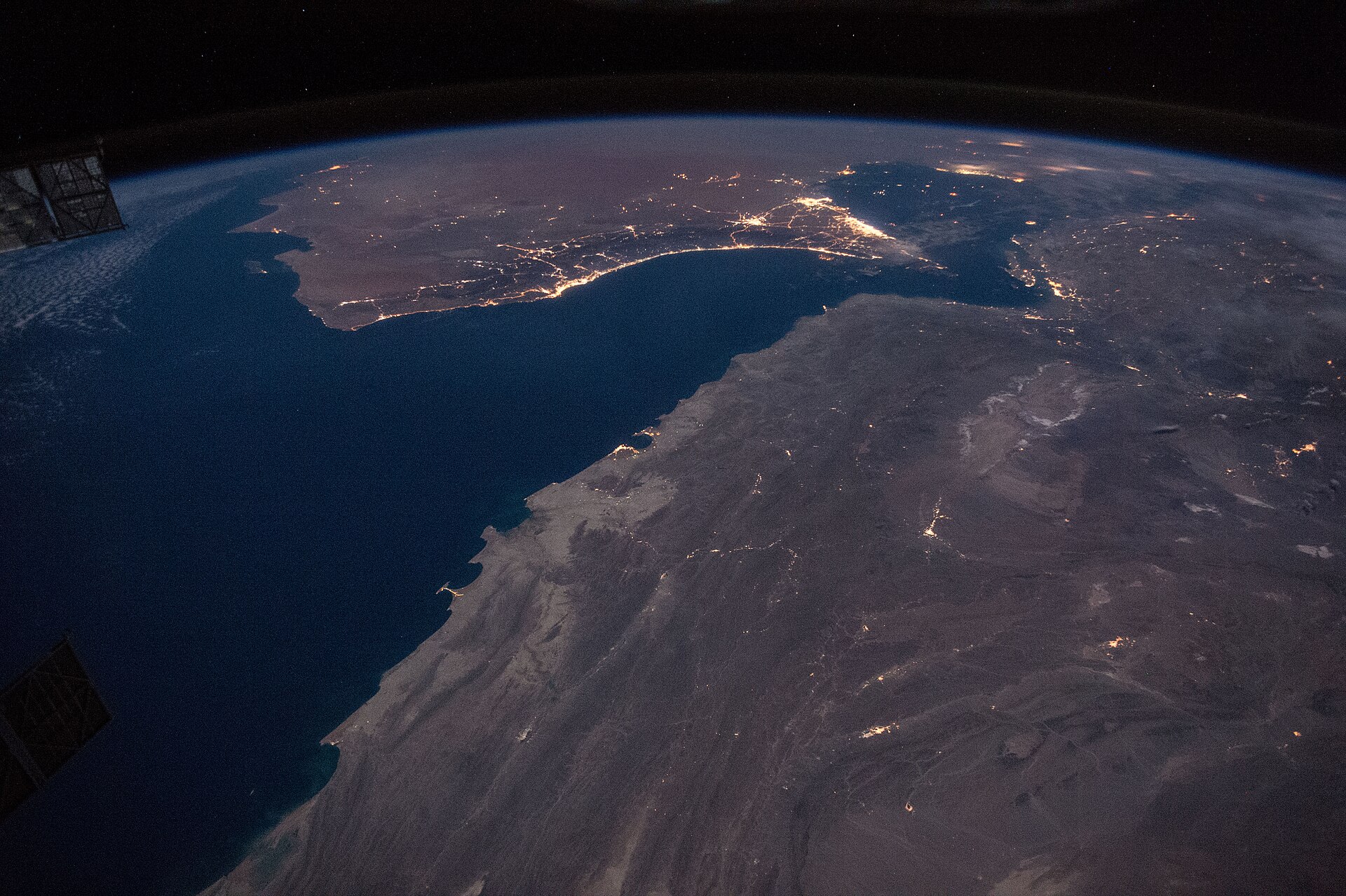
The calls came on the same day that Iranian Foreign Minister Abbas Araghchi, speaking to reporters in Islamabad, claimed a “10-country regional bloc” supports Tehran’s proposal to reopen the Strait of Hormuz within two days — and one day before Araghchi is due in Muscat for talks with Omani Foreign Minister Badr al-Busaidi on November 17. The pace of Riyadh’s lateral diplomacy with its two closest Arab interlocutors now tells a story the official readouts refuse to.
Table of Contents
Back-to-Back Saudi Calls to Qatar and Egypt Since November 2
Since November 2, Prince Faisal bin Farhan has spoken to his Qatari and Egyptian counterparts in rapid succession — on November 2–3, on November 4–5, on November 7, and now Saturday — according to Saudi Press Agency readouts reported by Arab News and Saudi Gazette. The intervals have compressed. The first gap was three days; the latest was nine — but in between, all three foreign ministers also took calls from Araghchi on November 5, with Iran describing those as addressing “the latest progress in diplomatic efforts to establish stability in the region,” according to Middle East Eye.
The House of Saud Daily Briefing
Saudi Arabia's news in 3 minutes, every morning. Free. See today's issue
Multiple rounds of near-identical calls in a fortnight, each producing near-identical communiqués, would normally suggest little progress. In this case, the repetition is the signal. Saudi Arabia is keeping two channels — Doha and Cairo — synchronized on a daily basis, a tempo that diplomats maintain only when something is moving or about to.
What the Readouts Say — and What They Do Not
The official language from Saturday’s calls follows a pattern that has held since the war began in February. The Qatar call covered “current regional developments and efforts aimed at de-escalation and maintaining security and stability in the region,” according to Arab News, citing the Saudi Press Agency. The Egypt call covered “Saudi-Egyptian relations and ways to expand cooperation” and “stressed the importance of continued coordination and consultation and supporting diplomatic efforts aimed at de-escalation,” Arab News and Saudi Gazette reported.
Nowhere in either readout do the words “Hormuz,” “ceasefire,” “humanitarian corridor,” or “Muscat” appear. Saudi readouts across all November rounds have used near-identical phrasing — “de-escalation,” “security and stability,” “coordination and consultation” — disclosing no specific demands or red lines. The discipline is deliberate. As Chatham House observed in its 2026 analysis of Saudi foreign policy, Riyadh has largely reverted to form — favouring caution and long-term positioning over short-term gains.
That caution extends to the choice of verb. Prince Faisal bin Farhan does not “demand,” “propose,” or “warn” in these communiqués. He “coordinates” and “consults.” The vocabulary itself is a policy statement: Riyadh is working the phones, not drawing lines in public.
Qatar’s Separate Track With Washington and Tehran
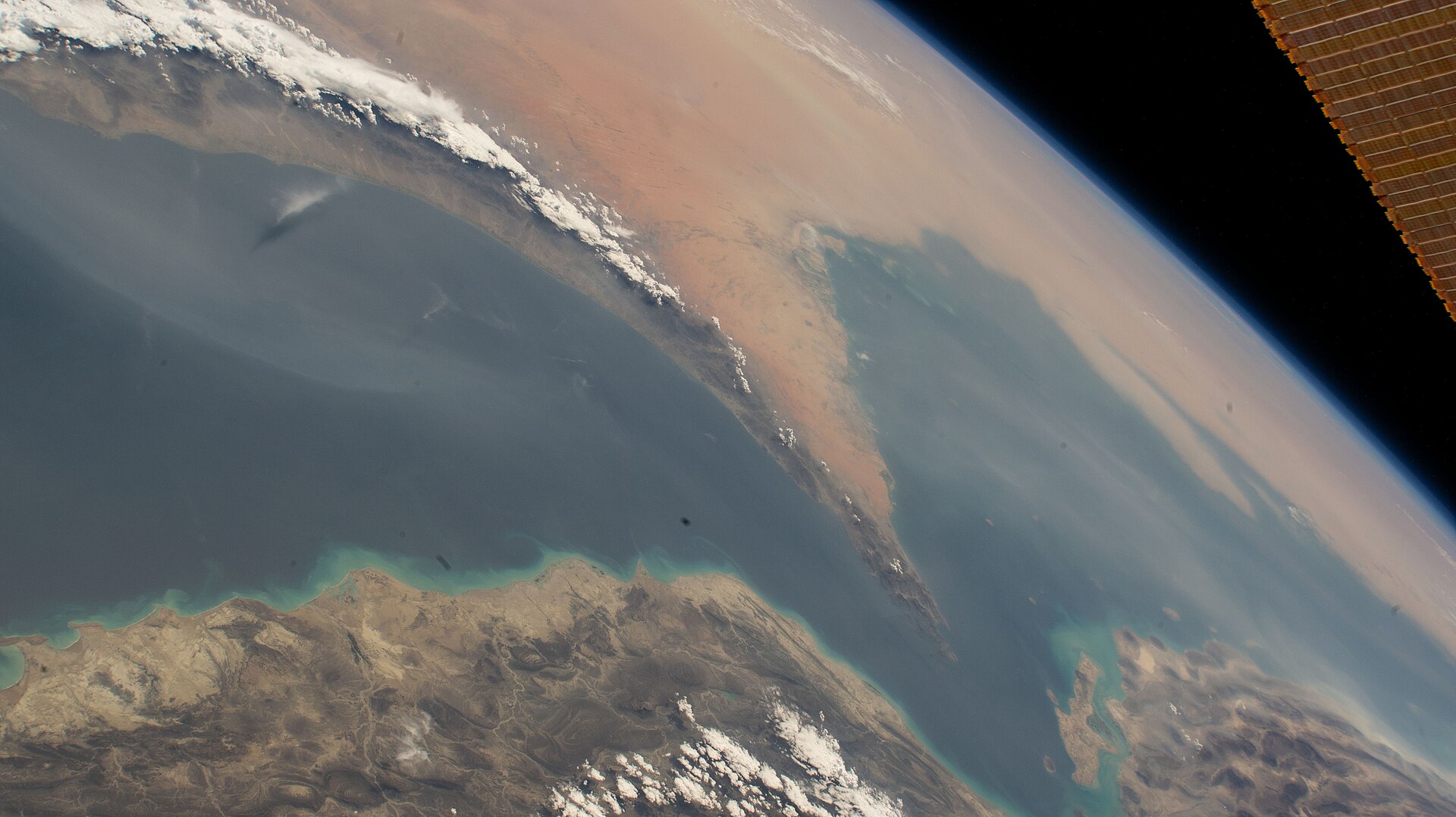
Of Riyadh’s two interlocutors, Doha has the more visible mediation role. Qatari Prime Minister Sheikh Mohammed bin Abdulrahman met President Trump and Vice President Vance around November 9 to discuss a new ceasefire framework and Iran nuclear negotiations, Axios reported. Qatar told Anadolu Agency in November that it had received “positive responses” from both the US and Iran regarding its ongoing mediation efforts.
Sheikh Mohammed himself has framed Doha’s approach in pragmatic terms. “We cannot wait to reach a perfect agreement; we hope to reach a good agreement,” he told Middle East Eye on the sidelines of a November 7–8 meeting. The remark captures both the urgency and the diminished ambitions of a mediation track that has seen its proposals rejected by one side or the other since at least April.
The April 2026 ceasefire framework and the June Islamabad Memorandum both collapsed. Iran rejected a Qatari peace proposal in late October, calling it containing “only unacceptable ideas,” according to Reuters. And yet Doha keeps returning to the table. Its value to Riyadh is structural: Qatar is the only Gulf state that maintains open channels with both Tehran and Washington at the foreign-minister level, and its role as a go-between survived even the rejection.
The question Saturday’s call likely addressed — without the readout ever saying so — is what Sheikh Mohammed heard from Trump and Vance a week earlier, and whether any of it can be translated into terms Iran would consider before the Muscat meeting.
What Does Egypt Bring to the Table?
Egypt’s role in this triangle is different from Qatar’s. Cairo is not a mediator between Iran and the United States. It is an Arab legitimizer — the largest Arab state by population, the host of the Arab League, and a country that Iran has not targeted directly since the war began. That makes Abdelatty a credible conveyor of Arab consensus positions in a way that a Gulf state under fire cannot be.
In the November 7 round of calls, Abdelatty reaffirmed Egypt’s “condemnation and rejection of any threat to the security of Saudi Arabia and Gulf states,” calling their security “an integral part of Arab national security,” according to Arab News and Saudi Gazette. The language echoed what Egyptian President Abdel Fattah al-Sisi told Crown Prince Mohammed bin Salman when they met in Cairo on September 15: “Saudi and Gulf security is inseparable from Egypt’s,” according to Asharq Al-Awsat.
Egypt’s parliament was asked to approve authorization for military support to Saudi Arabia as early as October 17, when Sisi requested parliamentary backing to help defend the kingdom if requested, Khaleej Times reported. Saudi Arabia, Egypt, Pakistan, and Turkey issued a joint condemnation of attacks on Saudi territory on October 11, according to CBS News. These are not idle gestures. They constitute a standing offer of solidarity that gives Prince Faisal bin Farhan a broader Arab mandate when he conveys positions through Doha to Tehran.
As CSIS noted in its 2026 analysis, Saudi leadership is unlikely to back an escalation of the conflict with Iran, since the kingdom and its Gulf neighbours would absorb Iranian reprisals. Egypt’s role is to reinforce that restraint with collective weight — to ensure that whatever message reaches Tehran carries not just Riyadh’s name but Cairo’s as well.
The Shadow of Muscat
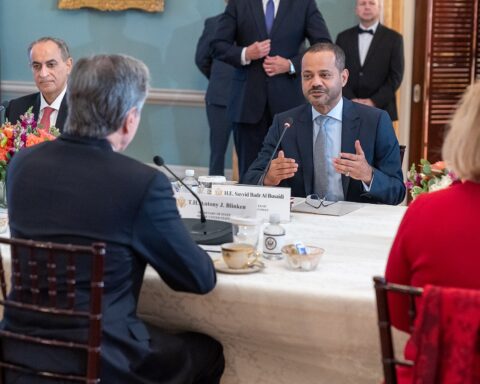
Sunday’s scheduled meeting between Araghchi and Omani Foreign Minister Badr al-Busaidi in Muscat gives Saturday’s calls their context. Iran’s Foreign Ministry spokesman Esmaeil Baghaei confirmed on November 15 that Araghchi would travel to Muscat for the talks, Al Arabiya reported. The Muscat Daily added that Araghchi is arriving from Islamabad, where he attended the 30th ECO Council of Ministers meeting on November 15–16.
Saudi Arabia is not a party to the Araghchi-Busaidi talks. Riyadh’s interest is indirect — channeled through Oman, which has served as the quiet corridor between Iran and the Gulf since the 1990s. What Riyadh wants from Muscat, based on the Saudi Cabinet’s November 11 statement that explicitly called for “an immediate end to threats in the Strait of Hormuz and Bab al-Mandeb,” is for Oman to press Iran on mine clearance and tanker safety as a precondition for any broader deal.
The timing is tight. Araghchi told reporters in Islamabad on November 16 that a “10-country regional bloc” supports Tehran’s proposal to reopen the Strait of Hormuz within two days, provided the US accepts Iran’s conditions, Samaa TV reported. Iran’s conditions have remained unchanged: the US must lift its naval blockade, and Iran will reopen Hormuz within two days. No ceasefire framework has been accepted by either side.
Whether Saudi Arabia is part of Araghchi’s claimed 10-country bloc is unclear. The claim, made the same day as Prince Faisal bin Farhan’s calls with Qatar and Egypt, may be an attempt to present Riyadh’s diplomatic engagement as endorsement of Tehran’s position — a framing Riyadh has not confirmed.
How Does Tehran Read These Calls?
Iranian state media has consistently framed Araghchi’s own calls with Saudi, Qatari, and Egyptian foreign ministers in a specific light. When Araghchi spoke to all three on November 5, Iran’s Foreign Ministry described the conversations as addressing “the latest progress in diplomatic efforts to establish stability in the region,” according to Middle East Eye. In May 2026, Iran’s Tabnak news aggregator went further in its coverage of Araghchi calls with the same counterparts, describing them as: Araghchi “detailed Iran’s ongoing initiatives to end the war imposed by the US and the Israeli regime” — framing the calls as Iran briefing its neighbors, not receiving Arab pressure.
Araghchi urged Saudi Arabia in October to “pursue diplomacy” over the Houthi conflict and said Iran is “ready to provide any assistance necessary to facilitate the start of dialogue between Saudi Arabia and Yemen,” according to Al Jazeera’s October 12 reporting — positioning Tehran as a peacemaker rather than a belligerent. The gap between that framing and the reality of IRGC claims of supertankers sinking in the Gulf and drone strikes on a US base in Bahrain is one that Riyadh’s diplomacy must navigate without publicly acknowledging.
As INSS observed in its 2026 analysis, Riyadh is pursuing dialogue with Iran while applying deterrence — and if necessary, military action — against Iran’s proxies. Saturday’s calls are an exercise in exactly that balance — coordinating with Arab partners on a war footing while maintaining diplomatic language that leaves room for the kind of deal that might emerge from Muscat.
The Iran-US conflict, which began with the US naval blockade of the Strait of Hormuz in April 2026 and Iran’s retaliatory closure of the strait the same month, has drawn the Saudi FM into multiple rounds of calls with Qatar and Egypt since the war’s early weeks. The Saudi FM’s parallel outreach to European allies in Brussels and the EU Foreign Affairs Council shows Riyadh working multiple diplomatic tracks simultaneously.
Araghchi presented a seven-day roadmap via Qatar in late September: Hormuz would reopen in return for the US lifting its blockade, sanctions waivers, and approximately $12 billion in frozen assets. Trump rejected the plan, Al Jazeera reported. The IEA’s finding this week that oil supply now tops demand for the first time since the war began adds an economic dimension: the pressure on all parties to resolve the Hormuz crisis is no longer purely strategic.
Meanwhile, the military backdrop has only intensified: the IRGC claimed multiple tanker strikes and a third US carrier reached the Middle East amid Iranian warnings of a first strike.
The pattern of calls — and the boilerplate that cloaks them — reflects a Saudi calculation: keep the lines open, keep the partners aligned, and keep the language vague enough that whatever emerges from Muscat or Doha has not been publicly foreclosed by Riyadh.
FAQ
How many times has the Saudi FM spoken to Qatar and Egypt’s foreign ministers in November 2026?
Saudi Press Agency readouts, reported by Arab News and Saudi Gazette, confirm calls on or around November 2–3, November 4–5, November 7, and November 16. Additionally, all three foreign ministers took calls from Iran’s Araghchi on November 5. Saudi FM’s November outreach also included meetings with European counterparts in Brussels on November 15, confirming Riyadh is working multiple parallel diplomatic tracks simultaneously — Arab, Iranian-adjacent, and Western.
Has Iran’s Araghchi spoken directly to Prince Faisal bin Farhan recently?
The last confirmed Iran-Saudi FM call was November 5, when Araghchi spoke to both Prince Faisal bin Farhan and Sheikh Mohammed bin Abdulrahman, according to Middle East Eye. No November 16 direct Iran-Saudi contact has been confirmed. Saturday’s Saudi calls were lateral — with Arab partners, not with Tehran.
What is the “10-country regional bloc” Araghchi mentioned?
Araghchi made the claim on November 16 while in Islamabad for the ECO Council of Ministers summit, Samaa TV reported. No second source has verified the bloc’s membership, and no Arab or Gulf state has publicly confirmed supporting Tehran’s Hormuz proposal under that framing. Saudi Arabia has not confirmed membership. Iran’s conditions for reopening Hormuz were formalised by the Supreme National Security Council in August 2026 — the lifting of the US naval blockade — and have not changed since.
What was the Qatari ceasefire proposal that Iran rejected?
Qatar, Egypt, and Pakistan reportedly proposed a 10-day Iran-US ceasefire that included full restoration of shipping freedom through the Strait of Hormuz, according to IntelliNews. Iran rejected the proposal in late October, calling it containing “only unacceptable ideas,” Reuters reported. Separately, Araghchi’s seven-day roadmap, submitted via Qatar in late September, proposed reopening Hormuz in return for the US lifting its blockade, sanctions waivers, and approximately $12 billion in frozen assets; Trump rejected it, according to Al Jazeera.
What is the significance of the Araghchi-Busaidi meeting in Muscat on November 17?
Oman has historically served as a go-between for Iran and Western interlocutors in past nuclear negotiations, giving the Muscat channel weight beyond ordinary bilateral diplomacy. Iran’s Foreign Ministry spokesman confirmed the November 17 meeting on November 15. What gives this meeting particular significance is timing: Araghchi arrives from Islamabad having just claimed a 10-country bloc backs Iran’s Hormuz proposal, while the IEA’s latest data shows oil supply has stabilised above demand — potentially shifting the economic pressure calculus for all parties at the table.
The House of Saud Daily Briefing
Saudi Arabia's news in 3 minutes, every morning. Free. See today's issue