WASHINGTON — The USS Theodore Roosevelt arrived in the US Central Command area of responsibility on November 15, 2026, a US official confirmed to The National, bringing the number of American carrier strike groups in the Middle East to three — a concentration of naval firepower the US has not maintained in a single theater since April. Iranian Deputy Foreign Minister Kazem Gharibabadi warned the same day that Tehran “will not wait for the US to attack first,” accusing Washington of using diplomacy to buy time for a new military operation, according to Investing.com citing Iran’s IRNA news agency via Fars.
The Roosevelt joins the USS George H.W. Bush and the USS George Washington, which together carry up to 144 front-line strike fighters across three carrier air wings, according to former Royal Navy commander Tom Sharpe in an assessment published by The National on November 6. That naval mass arrives nine months into a war that has seen Iran launch more than 7,000 missiles and drones at Gulf Cooperation Council states, per GCC data cited by Israel’s Institute for National Security Studies.
Table of Contents
- What Does a 3-Carrier Presence Mean for the War?
- Roosevelt’s Strike Group
- What Did Iran’s Deputy Foreign Minister Warn?
- The Wider Force Posture
- How Does This Fit With Trump’s Stated Restraint?
- Nine Months of Carrier Rotations
- Frequently Asked Questions
What Does a 3-Carrier Presence Mean for the War?
Three carrier strike groups give the US the most concentrated naval firepower in a single theater since the 2003 invasion of Iraq — the last time three or more carriers operated simultaneously in the Middle East before this conflict, according to Al Jazeera reporting on an April 2026 precedent. The buildup enables sustained strike operations, continuous air patrols, and the ability to surge sorties beyond what two carriers can generate.
The House of Saud Daily Briefing
Saudi Arabia's news in 3 minutes, every morning. Free. See today's issue
The US briefly matched this level in April 2026, when the Abraham Lincoln, Gerald R. Ford, and George H.W. Bush overlapped in CENTCOM. That grouping preceded the heaviest phase of coalition strikes on Iran that spring.
“That carrier movement is a major trigger for escalation,” said Megan Sutcliffe of the Sibylline intelligence firm, in comments to The National on November 6. “The only time that we see the US concentrating three aircraft carriers in one particular region” is before major combat operations.
Sharpe put the air power in concrete terms: three carriers give President Trump “a lot of strike options” and “a hell of a lot of firepower.” He linked the deployment to expectations of “an escalation in November, post midterms,” speaking before the November 5 US elections. INSS put the total number of fighters in the CENTCOM theater at approximately 200 as of its November 8–15 assessment — accounting for both carrier-based and land-based aircraft.
Not every analyst reads the buildup the same way. Dr. Lynette Nusbacher, a military analyst, told The National the deployment “should not be read as a sign of imminent combat commitment.” The Roosevelt was originally meant to relieve the George Washington, which is remaining in theater — meaning the three-carrier posture may be a rotation overlap rather than a deliberate surge.
Jonathan Hackett, a former US Marine officer, warned of “a strategic miscalculation on the Iranian side” — if Tehran reads the deployment as escalation, it could trigger exactly the spiral both sides claim to want to avoid. On the possibility of a more limited operation — such as seizing a Hormuz island — Sharpe described it as “a show of force.” Hackett called it “a highly wasteful and risky option”.
Roosevelt’s Strike Group
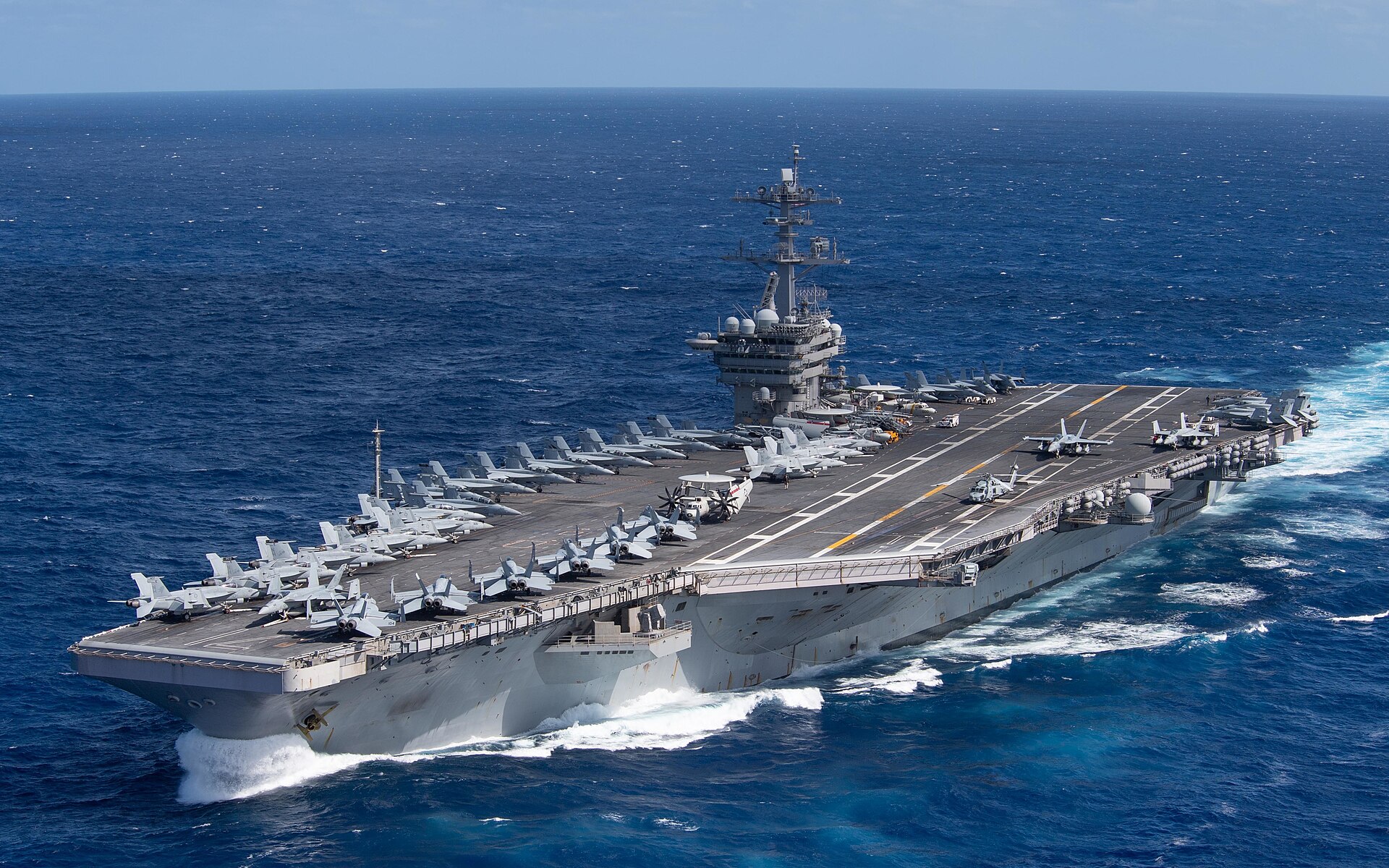
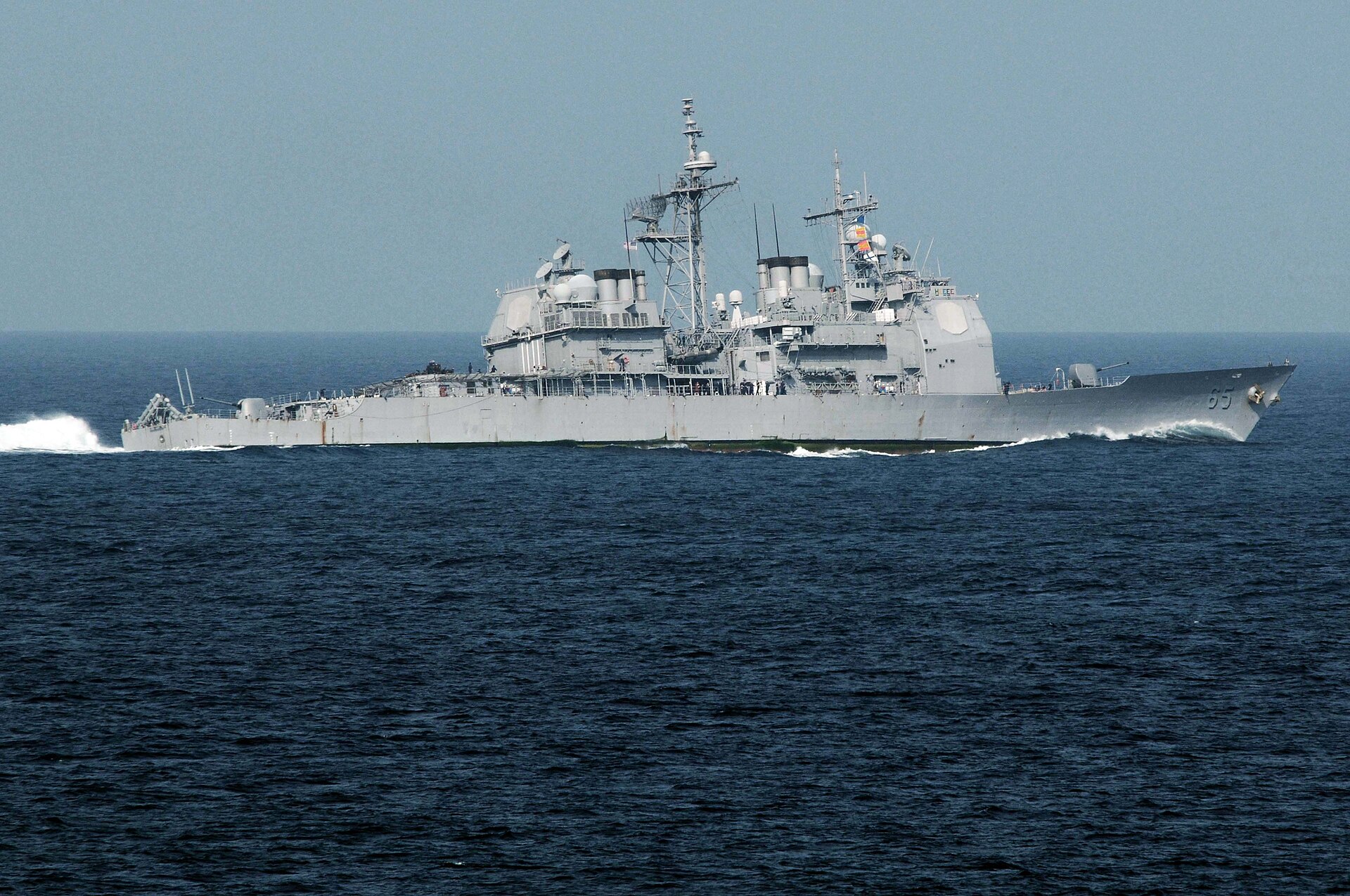
The Theodore Roosevelt deploys as the centerpiece of Carrier Strike Group 9. Its escorts include the guided-missile cruiser USS Chosin, guided-missile destroyers USS Decatur and USS Paul Hamilton, Carrier Air Wing 11, Destroyer Squadron 23, and Information Warfare Squadron 9, according to The War Zone, which reported on the group’s composition during a November 5 port call at Singapore’s Changi Naval Base — its last stop before entering CENTCOM.
The Roosevelt is the fifth aircraft carrier committed to Iran war operations since the conflict began on February 28, following the Gerald R. Ford, Abraham Lincoln, George H.W. Bush, and George Washington, according to Task and Purpose citing Chief of Naval Operations Adm. Daryl Caudle. Five of the Navy’s 11 carriers have now rotated through the theater in nine months.
Caudle said lessons from the Lincoln and Ford deployments are being applied to the Roosevelt, including logistics preparations — the ship maximised food, retail, and hygiene supplies before entering CENTCOM, according to Task and Purpose. The comment reflects a Navy adjusting supply chains for endurance rather than surge.
The George H.W. Bush, carrying Carrier Air Wing 7, had been deployed approximately 220 days as of November 4. The George Washington, carrying Carrier Air Wing 5, had been deployed approximately 167 days as of November 3, according to The War Zone. Whether the Washington departs before or after a formal rotation order remains unclear; no official timeline had been confirmed as of November 16.
What Did Iran’s Deputy Foreign Minister Warn?
Gharibabadi said on November 15 that Iran “will not wait for the US to attack first,” accusing Washington of “using diplomacy to buy time” to prepare another attack — a direct reference to the diplomatic track Secretary of State Marco Rubio has pursued alongside the naval buildup. The warning, delivered through an IRNA interview also broadcast on state television via Fars, is a direct first-strike warning from a senior Iranian official, according to Investing.com and Gulf News reporting on the interview.
The deputy foreign minister’s warning followed a series of escalatory signals from Tehran. Majlis Speaker Mohammad Bagher Ghalibaf said on November 15 that “if the US makes another mistake, Iran’s powerful Armed Forces will determine the geography of the battlefield,” according to Al Jazeera’s liveblog. IRGC Spokesman Brig. Gen. Hossein Mohebbi announced on November 7 that Iran’s self-imposed 2,000-kilometre ceiling on ballistic missiles “has been lifted for us,” with no new limit specified, as reported by Al Jazeera on November 10. SNSC Secretary Mohsen Rezaei separately warned that US bases from the Middle East to Europe would be targeted, according to INSS.
The rhetoric accompanies continued IRGC kinetic operations. The Corps claimed on November 15 that 6 drones targeted the US helicopter base at al-Rifaa in Bahrain, though CENTCOM said all were intercepted with no damage, according to The National. Days earlier, the IRGC warned of an “unlimited response” over the Strait of Hormuz, and it had previously launched drones at US forces in Bahrain after Trump ended direct talks with Tehran.
Iranian Foreign Minister Abbas Araghchi is visiting Muscat on Tuesday for talks with Oman’s foreign minister, according to The National — continuing the Omani diplomatic track even as Tehran’s military commanders issue first-strike warnings.
The Wider Force Posture
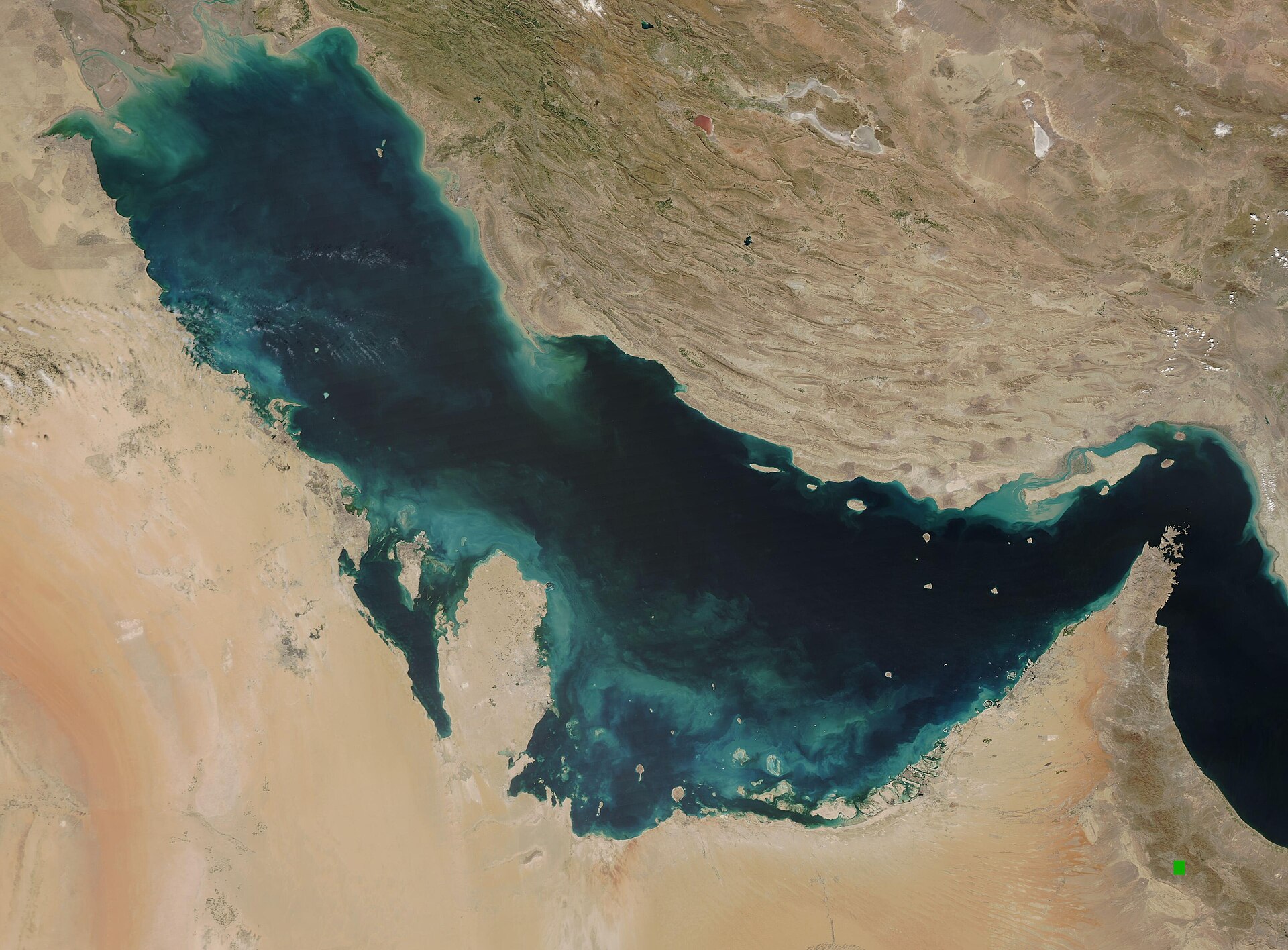
The carriers are the most visible element of a broader military presence. INSS assessed approximately 17 US warships in CENTCOM as of its November 8–15 situation report, including 13 destroyers and a cruiser, plus four destroyers in Sixth Fleet in the Mediterranean. More than 20 Navy vessels support the blockade of Iranian ports, according to Gulf News citing ABC News.
Air assets have also expanded. An open-source tracker cited by INSS counted 203 to 205 US aerial refueling tankers across the CENTCOM and European theaters as of November 11 — the highest number since June 2026. Tanker counts are a logistics indicator: they enable sustained long-range strike and patrol operations and reveal more about operational tempo than fighter numbers alone.
INSS identified a significant gap. No US strategic bombers had been present at RAF Fairford since October 4–5, and no F-22 stealth fighters had operated in theater since the summer. The institute assessed that both would need to return before the US could mount a strike campaign on the scale of the March operation that opened the war. The absence suggests the current posture is configured for sustained deterrence and force protection — or that preparatory deployments have not yet been publicly detected.
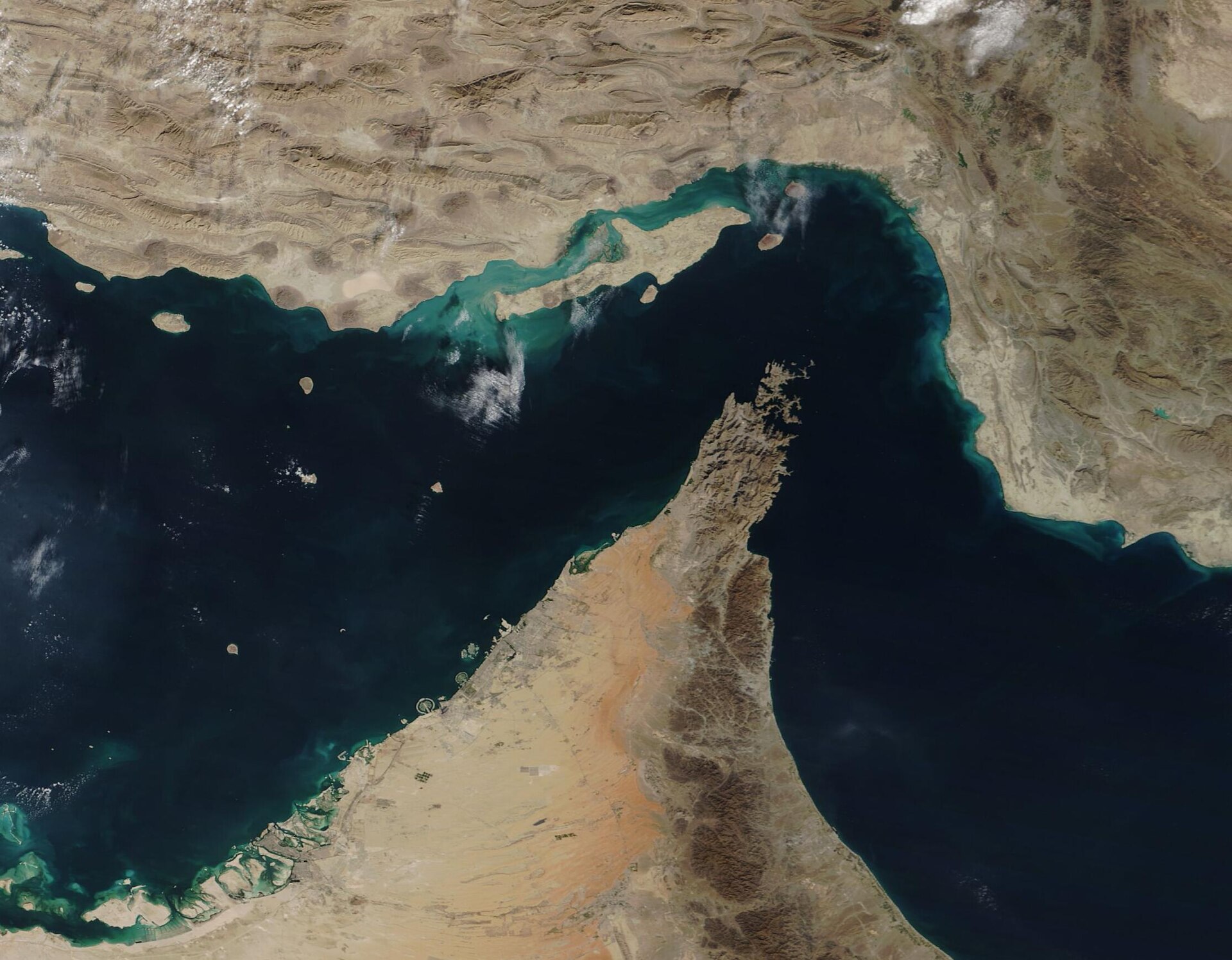
Maritime traffic through the Strait of Hormuz remains depressed. UKMTO has logged 163 maritime incidents in the Hormuz and Gulf area since February 28, according to INSS, and weekly counts by UKMTO and UANI show traffic roughly 65 percent below pre-conflict levels. The IRGC claimed on November 15 that a supertanker carrying more than 2 million barrels sank in the Gulf, adding to the pressure on maritime insurers and shipping firms. Separately, the IEA reported that oil supply topped demand for the first time since the war began — a development that could ease political pressure on the administration to reopen the Strait by force.
How Does This Fit With Trump’s Stated Restraint?
The administration is running a dual posture: naval blockade and economic pressure as the primary strategy, with three carrier strike groups ensuring a rapid transition to major strikes if Iran escalates. Secretary of State Rubio framed this explicitly at the G7 in Paris on November 9–10, saying the US does not need military strikes “if we’re achieving the same objective through economic means and economic pressure,” according to Baird Maritime.
Trump said in a White House interview earlier this week — with Stephen A. Smith on November 12 — that “Saudi Arabia has asked me” to show restraint, framing the decision not to launch new strikes as a response to allied pressure rather than strategic caution.
Structural constraints reinforce the restraint. Axios, cited by the Jerusalem Post, reported that the US would need Saudi Arabia to allow use of its airspace for major combat operations to resume — a permission Riyadh has not publicly granted. Saudi Foreign Minister Prince Faisal bin Farhan was in Brussels on November 15 seeking European naval escorts and pressure on Iran, a diplomatic approach that suggests Riyadh prefers multilateral containment over a new US strike campaign.
Trump is expected to meet Chinese President Xi Jinping and Russian President Vladimir Putin in Shenzhen on November 19, with Iran on the agenda, according to INSS. The three-carrier presence gives the US maximum leverage in those discussions — or maximum readiness if diplomacy collapses.
Nine Months of Carrier Rotations
The war that began on February 28, 2026 — when the US and Israel launched a joint attack on Iran’s nuclear programme — has drawn five of the Navy’s 11 carriers into the theater in nine months. The Roosevelt was sent as the Washington’s relief, according to The National, but all three are now present simultaneously.
Instead, all three are present simultaneously. The overlap reflects both the strain of continuous two-carrier operations and the operational logic of the moment: Houthi ballistic missiles struck at Riyadh’s airport on November 15, the IRGC has continued targeting US forces across the Gulf, and the Makkah Pact’s force structure is still consolidating — with Turkish ratification taking effect and Pakistani forces on the ground in Saudi Arabia.
The Navy has kept deployment timelines deliberately ambiguous throughout the conflict. No carrier has been publicly assigned a departure date, and none of the three is broadcasting its position via the Automatic Identification System. The only certainty is the strain: the Bush has been at sea more than seven months, the Washington more than five, and the Roosevelt is just beginning what could be an open-ended deployment in a theater where the operational demands show no sign of easing.
Frequently Asked Questions
Where exactly are the 3 carriers positioned?
None of the three carriers is broadcasting its position via AIS, standard practice for warships in a combat zone. Reporting places them within CENTCOM’s area of responsibility — which spans the Arabian Sea, Persian Gulf, and Red Sea — but their precise coordinates are classified. CENTCOM has not confirmed whether all three are operating in a single battle group or dispersed across different bodies of water, which would affect their ability to generate massed sorties versus provide continuous regional coverage.
Has Saudi Arabia officially reacted to the Roosevelt’s arrival?
No confirmed Saudi government statement specifically addressing the Roosevelt’s arrival on November 15 had been published as of November 16. Saudi diplomatic messaging has focused on Prince Faisal bin Farhan’s engagement with European foreign ministers in Brussels and the broader push for multilateral naval escorts, rather than on bilateral US force posture. More than 100 US military advisers were sent to Saudi Arabia to work within a joint forces command, according to CNN — a quieter form of cooperation that suggests the relationship operates below the level of public statements.
Could one of the carriers leave the theater soon?
The George Washington is the most likely candidate for departure, since the Roosevelt was originally scheduled as its replacement. The Bush, at roughly 220 days deployed, has exceeded typical deployment lengths. No official rotation order had been announced as of November 16, and the Navy has kept departure timelines deliberately ambiguous throughout the war — making it impossible for outside observers, or Tehran, to predict when the three-carrier window closes.
Does the Makkah Pact affect US carrier operations?
Turkey ratified the Makkah Pact on November 5 with a 279–119 vote in parliament, according to Anadolu Agency, and Pakistan — which ratified on October 23 — has approximately 8,000 troops in Saudi Arabia, according to Reuters. The pact creates a parallel security framework that could reduce US dependence on its own assets for Gulf state air and ground defense, potentially freeing carrier strike groups for offensive rather than defensive missions. Whether the Pentagon factors Makkah Pact deployments into its own force planning has not been publicly addressed.
Is Iran’s claim to have lifted its missile range cap verified?
IRGC Spokesman Brig. Gen. Hossein Mohebbi announced the removal of the 2,000-kilometre self-imposed ceiling on November 8, as reported by Al Jazeera. No independent verification of new Iranian missile capabilities has been published. Western intelligence agencies have not publicly commented on the claim.
The House of Saud Daily Briefing
Saudi Arabia's news in 3 minutes, every morning. Free. See today's issue