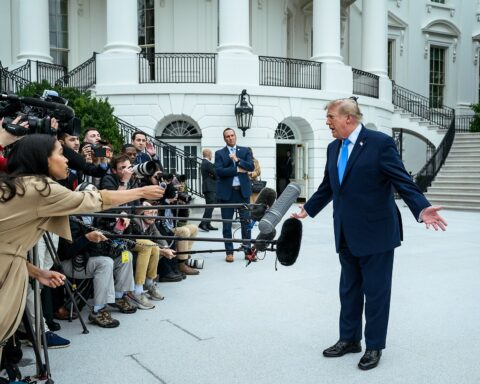

JEDDAH — Israeli Prime Minister Benjamin Netanyahu ordered the IDF to strike Hezbollah “with force” on April 25, 2026, just 48 hours after Donald Trump stood beside the Israeli and Lebanese ambassadors at the White House and announced a three-week extension of a ceasefire that the Saudi Crown Prince had personally lobbied to secure. The order followed two rocket launches into Israeli territory that triggered sirens in Manara, Margaliot and Misgav Am, a Hezbollah drone aimed at Israeli troops, and a separate Tuesday rocket attack — and it landed inside the opening days of Hajj 2026, the first wartime pilgrimage in Saudi history.
The Lebanese Health Ministry counted four dead by nightfall. The Israel Defense Forces said its targets were “three Hezbollah terrorists” on a weapons-loaded motorcycle, an armed operative on foot, two Hezbollah members in Bint Jbeil, weapons caches containing anti-tank missiles, and underground structures, according to the Jerusalem Post and JNS. Saudi Arabia, the country whose Crown Prince told Trump on April 15 that Lebanon’s inclusion was “critical to achieving that goal and ending the war,” issued no public statement on the strikes.
Why it matters
Mohammed bin Salman staked a public red line on Lebanon and now cannot defend it without a domestic blow-up during Hajj week. The April 16–17 ceasefire was the only deliverable Riyadh extracted from Trump’s Iran diplomacy that wasn’t bilateral or transactional, and it began unravelling within 24 hours of being extended. Iran has tied any further movement on US-Iran talks to the Lebanon track holding, which means every Hezbollah rocket and every IDF retaliation bleeds directly into the Hormuz file Saudi Arabia is trying to close.
The structural problem on display this week is that the Lebanon condition was real — MBS picked up the phone, called the US president, and got language inserted into a deal — but it was never bolted to enforcement architecture. There is no monitoring mechanism Riyadh controls, no Saudi troops on the Litani, no hold over Hezbollah, and no card to play against an Israeli prime minister who told the country on April 24 that “Hezbollah is trying to sabotage” the peace process and acted accordingly the next morning.
Table of Contents
What happened on April 25
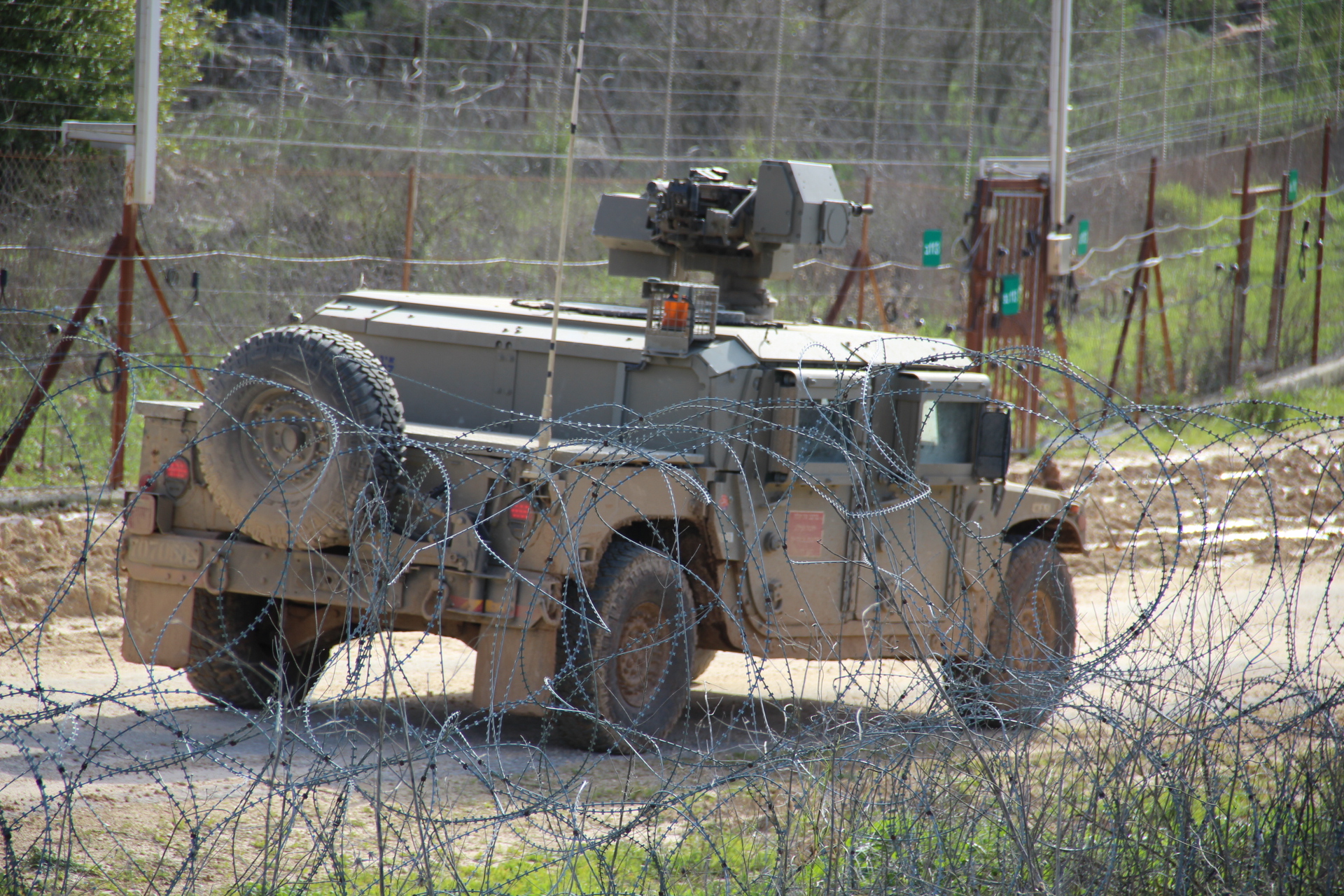
Two rockets crossed into northern Israel during the early hours of April 25, setting off sirens in three border communities, according to Times of Israel reporting. A Hezbollah drone followed, aimed at IDF troops operating inside the Israeli buffer zone, and the Tuesday rocket strike from earlier in the week sat unanswered on Netanyahu’s desk. The prime minister convened with Defense Minister Israel Katz and IDF Chief of Staff Eyal Zamir before issuing the “with force” instruction the Jerusalem Post reported within the hour.
The retaliation hit across southern Lebanon through the morning. IDF aircraft struck three Hezbollah operatives travelling on a motorcycle described as “weapons-loaded,” followed by a single armed fighter in open ground, according to JNS. A second wave killed two Hezbollah members in Bint Jbeil — the same village where six fighters died on April 24 — and hit underground positions and weapons caches that Israel said held anti-tank missiles. Lebanese Health Ministry figures put the day’s death toll at four; Israel’s count was three.
The Middle East briefing 3,000+ readers start their day with.
One email. Every weekday morning. Free.
Cumulative deaths since the April 16–17 ceasefire took effect now sit between nine and fifteen, depending on whether Al Jazeera or Haaretz figures are used. The wider war ledger from Wikipedia’s running tally is more brutal: 2,454 killed and 7,658 wounded since fighting resumed on March 2, with 1.2 million Lebanese displaced. Operation Eternal Darkness on April 8 killed at least 357 in a single day — the largest one-day Israeli toll of the war — and was condemned by the UAE, Kuwait, Oman, Qatar, Egypt, France, Turkey and Jordan, while Saudi Arabia did not appear on that list.
It is essential to point out that the ceasefire is meaningless in light of Israel’s insistence on hostile acts, including assassinations, shelling, and gunfire.
Hezbollah lawmaker Ali Fayyad, April 24, via Al Jazeera
Why is Saudi Arabia silent?
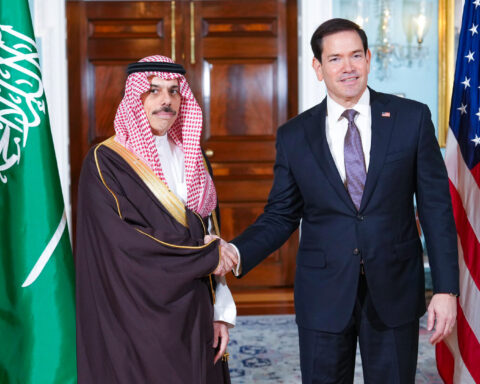
Saudi Arabia’s response to the April 25 strikes has run entirely through bilateral phone lines and closed-door diplomacy, with zero public statement on Israeli violations. Foreign Minister Prince Faisal bin Farhan called Lebanese Parliament Speaker Nabih Berri on April 23 to discuss “efforts to achieve a full cessation of Israeli attacks,” according to Qatari state outlet QNA. The call took place hours after the Trump extension and the same day the first post-extension Israeli strike killed two people.
Prince Yazid bin Farhan, Saudi Arabia’s envoy to Lebanon, flew into Beirut on April 24 to meet Prime Minister Nawaf Salam and President Joseph Aoun. The National’s read-out of the visit had Yazid emphasising the Taif Agreement, civil peace and internal Lebanese stability, with no mention of Israel by name. A Lebanese official quoted in the same paper framed it differently: “Saudi Arabia’s moves in Lebanon are a pre-emptive step ahead of regional understandings taking shape.”
Lebanese Ambassador to Riyadh Ali Karanouh credited the kingdom in Asharq Al-Awsat with using “the kingdom’s regional and international weight to secure Lebanon’s inclusion in a temporary ceasefire agreement,” and called Gulf states “the lifeblood of Lebanon.” That public framing is the diplomatic ceiling Saudi Arabia has accepted: praise for getting Lebanon into the document, no statement when the document fails. The piece on the Hajj-driven origins of the ceasefire condition walked through why insurance, not enforcement, was always the design brief.
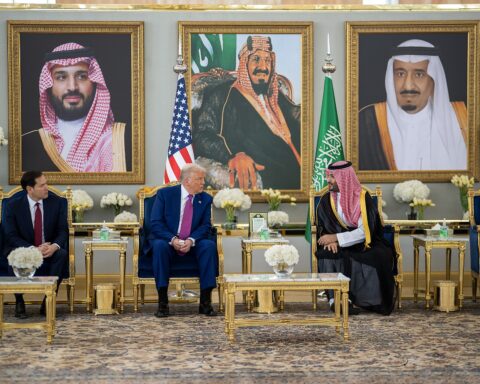
The MBS call Trump took on April 15
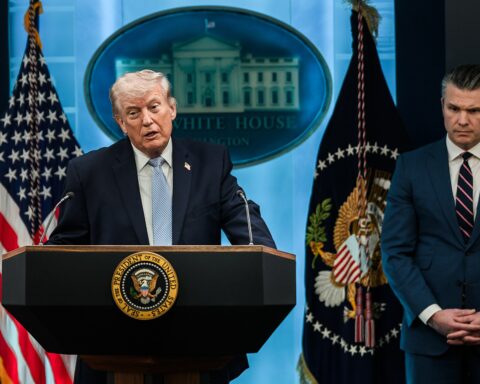
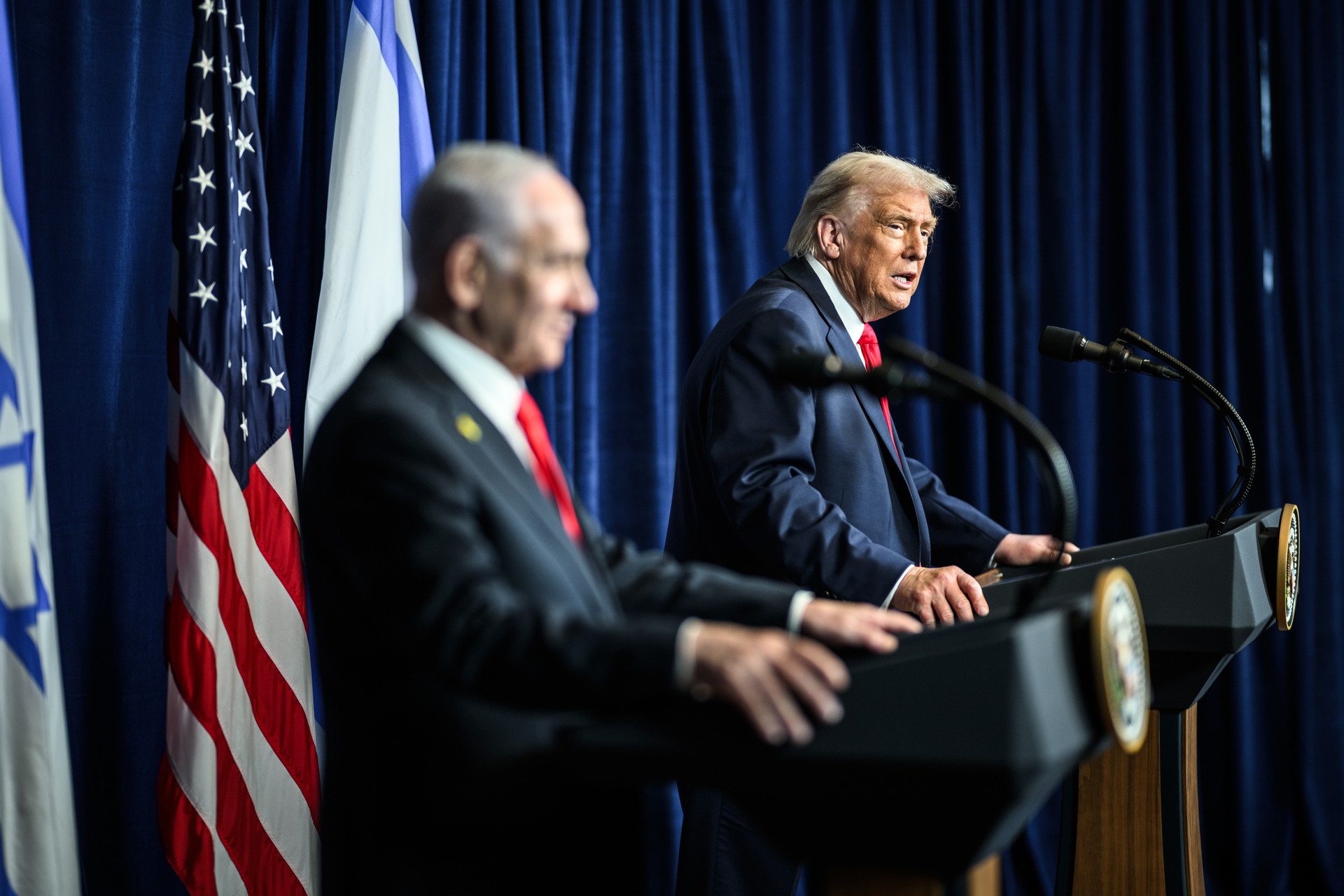
The day before the original ceasefire took effect, Mohammed bin Salman called Trump and pressed him directly on Lebanon. Middle East Eye reported a western official’s account of the conversation in which the Crown Prince told Trump that Lebanon’s inclusion was “critical to achieving that goal and ending the war.” Trump took the call, integrated the language, and the Israeli and Lebanese ambassadors stood at the White House on April 23 when he announced the three-week extension — a tableau that read in Riyadh as Saudi diplomacy delivering.
NPR’s coverage of the extension noted that Trump took questions on the same day Witkoff and Kushner cancelled their Islamabad trip. Asked why, Trump said: “We’re not going to spend 15 hours in airplanes all the time going back and forth to be giving a document that was not good enough.” Iran, he added, “offered a lot, but not enough.” The Islamabad cancellation as the closure of the only direct US-Iran diplomatic channel and the Omani back-channel that replaced it were covered earlier this week.
The Crown Prince’s call worked as advocacy and failed as architecture. Riyadh got a sentence in a press release; it did not get a Saudi seat on the tripartite monitoring body, a Saudi observer mission inside the buffer zone, or a written commitment from Israel to suspend strikes during the Hajj cordon. The November 27, 2024 ceasefire — which the current document leans on — gave Israel a written right to act against threats from Lebanon, and that clause is the legal scaffolding Netanyahu invokes every time he orders a strike.
Does Hezbollah hold a veto over Hormuz?
Hezbollah was not a signatory to the April 16–17 ceasefire — only the Lebanese state was — and senior party figures have said publicly they do not consider themselves bound. A prominent Hezbollah lawmaker told the Times of Israel the group “firmly rejects” the three-week extension, and the party’s security liaison Wafiq Safa said before the original deal even took effect that “we are not bound by what they agree to.” Ali Fayyad’s “meaningless” line on April 24 closed the loop, and Hezbollah has claimed more than 200 Israeli violations since April 16 as justification for its own attacks, per NPR.
The Iranian end of the chain is the part that matters for the Saudi file. Lebanese Prime Minister Nawaf Salam told reporters that “Hezbollah’s operations are commanded by IRGC officers.” The US Treasury said the IRGC Quds Force “transferred over $1B to Hezbollah” in 2026 alone. IRGC Quds Force commander Gen. Esmaeil Qa’ani put it in his own register on April 16: “If a ceasefire is achieved, it is the result of the steadfast resistance of Lebanon and the support of the Islamic Republic of Iran.”
Iran has explicitly conditioned further US-Iran movement on the Lebanon ceasefire holding, which the Council on Foreign Relations identified earlier this month as “an obstacle to US-Iran negotiations.” That makes every Hezbollah rocket a de facto Iranian instrument over the Hormuz negotiation track Saudi Arabia is trying to close, and it puts Tehran in a position to bleed Riyadh’s price-cap and shipping demands by proxy without ever sending a tanker through the strait. The piece on why Araghchi cannot reopen Hormuz even if he wanted to set out the authorisation ceiling that runs the same way in reverse on Lebanon.
We have begun a process to achieve a historic peace between Israel and Lebanon, and it is clear to us that Hezbollah is trying to sabotage this.
Israeli Prime Minister Benjamin Netanyahu, April 24, via Times of Israel
The Yellow Line nobody is policing
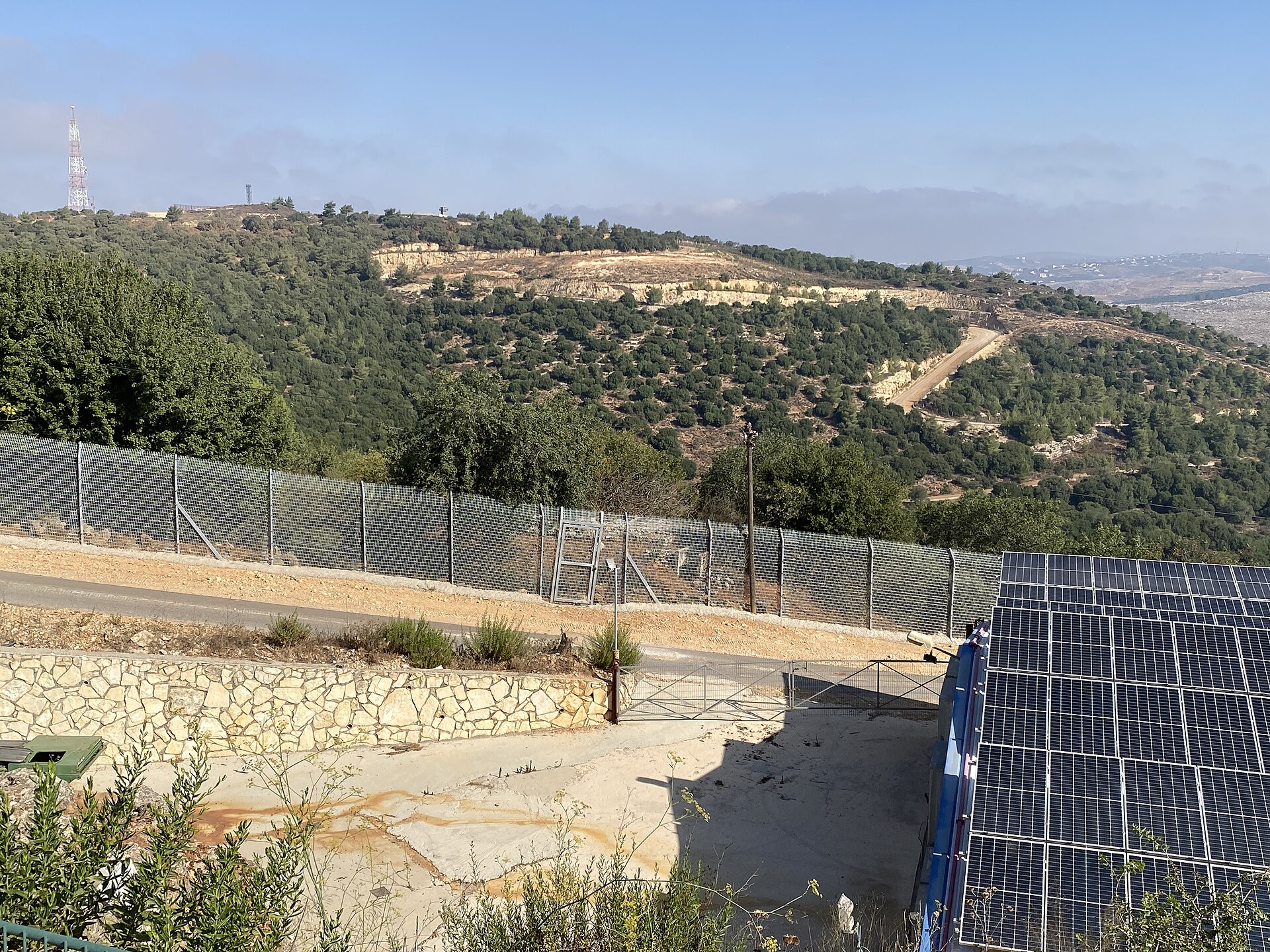
Within 24 hours of the April 16 ceasefire, Israel established a 10-kilometre buffer zone inside Lebanese territory covering roughly 500 square kilometres and 55 villages, which Defense Minister Katz publicly described as based on the “Beit Hanoon and Rafah models.” The line was drawn yellow on Israeli maps. Saudi Arabia had no enforcement mechanism to contest it, no observer presence inside it, and no clause in the deal that forbade unilateral Israeli zoning.
The April 25 strikes against Hezbollah operatives, along with the Bint Jbeil hits, all sit either inside that buffer zone or against targets Israel argues threaten it — which is the entire point of the legal architecture Israel constructed. The November 27, 2024 framework gave Israel a written right of response that the April 2026 extension did not modify, and every IDF action since April 16 has been justified by reference to that 2024 clause rather than the 2026 document Saudi Arabia helped shape.
The original deal also called for Hezbollah withdrawal north of the Litani River and Israeli withdrawal from southern Lebanon under tripartite monitoring. The monitoring committee includes the United States, France, the Lebanese Armed Forces and UNIFIL — Saudi Arabia is not a member. When Hezbollah disputes Israeli claims of buffer-zone violations, the adjudication runs through Washington and Paris, both of which have publicly backed Israel’s right of response. The structural deck was set in 2024, and the April 2026 Saudi intervention slotted Lebanon into a frame Riyadh did not draw.
Hajj week and the silence ceiling
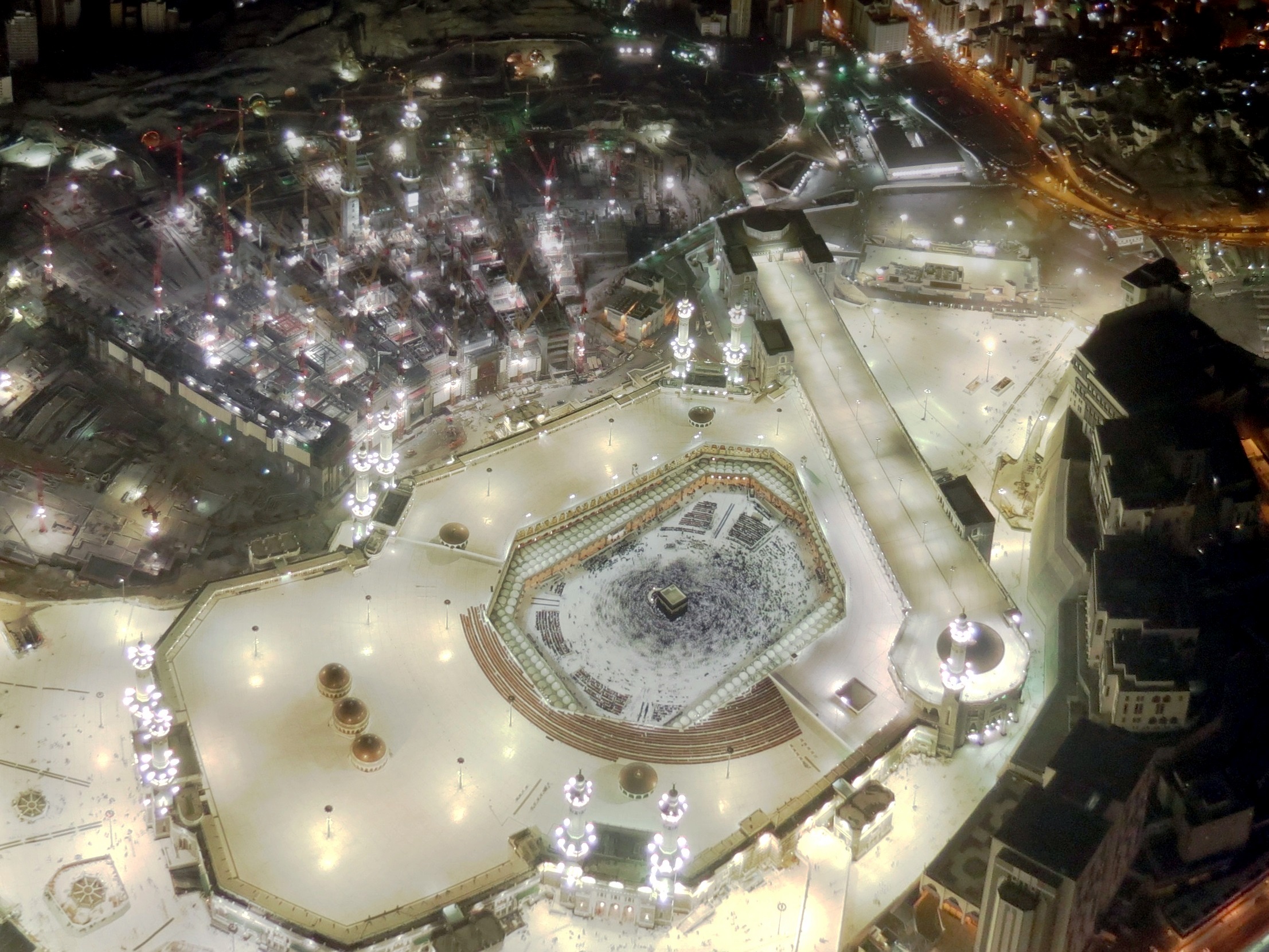
More than 48,000 pilgrims had arrived in Saudi Arabia by April 25, with 1.8 million expected by the Day of Arafah on May 26, according to Saudi Hajj Ministry figures. The first wartime Hajj in Saudi history is unfolding under air-defence depletion, a regional ceasefire architecture that includes Lebanon and the first-ever US travel advisory against Hajj attendance. The kingdom’s domestic political bandwidth for confrontation with Israel during this window is at a multi-year low.
Raising the temperature on Israel — through a Foreign Ministry condemnation, a Royal Court statement, or a public MBS intervention — would force the kingdom to either back the words with action it cannot deliver or absorb the credibility cost of empty rhetoric inside Hajj season. Staying silent during a wave of IDF strikes against an Arab country that Riyadh publicly demanded be included in a regional ceasefire carries a different cost: the Lebanon condition becomes optical, and every future Saudi red line gets discounted by counterparties. Both options are bad and both are running this week.
The dual track Saudi Arabia is running on Iran — set out in the piece on negotiating a separate peace rather than sitting out the war — and the structural exposure on the war-powers calendar in Trump’s May 1 authorisation deadline both compound this week. The Lebanon collapse hits both files at the worst possible moment for Saudi domestic politics.
Background: how the November 2024 deal became April 2026 cover
The original Israel-Lebanon ceasefire was brokered by the United States and France on November 27, 2024, under a 60-day halt requiring mutual withdrawal and a tripartite monitoring mechanism. The clause that has reshaped the current war was a side commitment from the United States to Israel granting written authorisation for Israeli action against threats originating from Lebanese territory.
Saudi Arabia’s Lebanon condition served three purposes for Riyadh: visible championing of an Arab cause that legitimised the kingdom’s broader Iran diplomacy; a pressure point for Hormuz reopening demands inside the same negotiation; and protection against the optics of facilitating a deal that left Arab Lebanon burning while Saudi exports moved. The condition was real diplomatically, the call to Trump was made, and the language went into the document. The enforcement layer — observer mission, monitoring seat, written Israeli commitment to strike-suspension during Hajj — never got built.
FAQ
How does the April 16–17 ceasefire compare to Hamas-Israel arrangements in Gaza? The Lebanon deal includes a tripartite monitoring committee with US, French, Lebanese Armed Forces and UNIFIL participation, which Gaza ceasefires have lacked, and it leans on the November 2024 written Israeli right-of-response — a clause with no Gaza analogue. The structural difference is that Lebanon’s deal recognises a state party (the Lebanese government) as the formal counterparty rather than the armed group doing the fighting (Hezbollah), which mirrors the 1949 armistice template and is part of why Hezbollah lawmakers reject being bound by it.
What is the Taif Agreement that Prince Yazid invoked in Beirut on April 24? The 1989 Taif Agreement, brokered in the Saudi city of the same name, formally ended the Lebanese Civil War and reorganised the country’s confessional power-sharing, capping the presidency for Maronite Christians, the premiership for Sunni Muslims and the parliament speakership for Shia Muslims. It also provided the constitutional basis for Hezbollah’s later integration into the political system, and Saudi invocation of Taif in 2026 signals a return to internal-balance framing rather than confrontation with Israel.
Has Saudi Arabia ever publicly condemned an Israeli strike on Lebanon during this war? Riyadh issued generic statements on civilian casualties through the Organisation of Islamic Cooperation framework, but did not join the bilateral condemnations after Operation Eternal Darkness on April 8. The OIC route allows Saudi Arabia to be associated with multilateral language without owning a bilateral position.
Who is Prince Yazid bin Farhan? He is the brother of Foreign Minister Prince Faisal bin Farhan and serves as Saudi Arabia’s primary envoy to Lebanon, succeeding the longstanding Riyadh practice of sending senior royal family members rather than career diplomats to Beirut. The pattern echoes earlier Bandar bin Sultan and Walid bin Abdullah missions, and signals a Royal Court track rather than a Foreign Ministry track for Lebanon files.
Why did the Witkoff-Kushner Islamabad cancellation matter for the Lebanon track specifically? The Islamabad channel was the only venue where the US could pressure Iran on Hezbollah’s behaviour without going through Israeli or Lebanese intermediaries, so with the channel closed, US pressure on Tehran over Hezbollah’s April 25 rocket and drone activity now has to route through Oman — slower, less direct, and more easily delayed. The Lebanon ceasefire’s three-week extension lapses in mid-May, and the diplomatic surface area to renew it has shrunk.
Lebanese Ambassador Karanouh’s line in Asharq Al-Awsat called Gulf states “the lifeblood of Lebanon.” On April 25, that lifeblood ran through bilateral phone calls, a royal envoy invoking a 1989 agreement, and a press desk in Riyadh that did not issue a statement.