JEDDAH — Saudi Arabia blocked a $1.5 billion Pakistani arms deal with Sudan and withdrew its financing commitment in March 2026, forcing Sudanese military leader General Abdel Fattah al-Burhan to fly to Jeddah on April 20 for a direct appeal to Crown Prince Mohammed bin Salman — an appeal he left without a commitment on.
The freeze, first reported by Al-Monitor citing a Reuters exclusive, exposes the structural limits of Saudi Arabia’s multi-front financial coercion of Pakistan. Riyadh is simultaneously using its financial hold over Islamabad to enforce compliance on the Iran ceasefire, to restrict Pakistani arms exports to Arab conflict zones, and to shape the military balance in Sudan’s civil war. The three demands are now competing for the same finite Pakistani compliance bandwidth, and the Burhan visit revealed which one Saudi Arabia is deprioritizing.
Table of Contents
What Was in the $1.5 Billion Package
The Pakistan-Sudan agreement, described by Al-Monitor as “effectively finalized” by early February 2026, was Pakistan’s largest-ever single defense export. The equipment list included 10 Karakoram-8 (K-8) light attack aircraft, more than 200 reconnaissance and kamikaze drones, HQ-9 and HQ-6 air defense systems, Super Mushshak trainer aircraft, armored fighting vehicles, MiG-21 engines, and potentially several JF-17 Thunder fighters, according to reporting by Middle East Eye and Defence Security Asia.
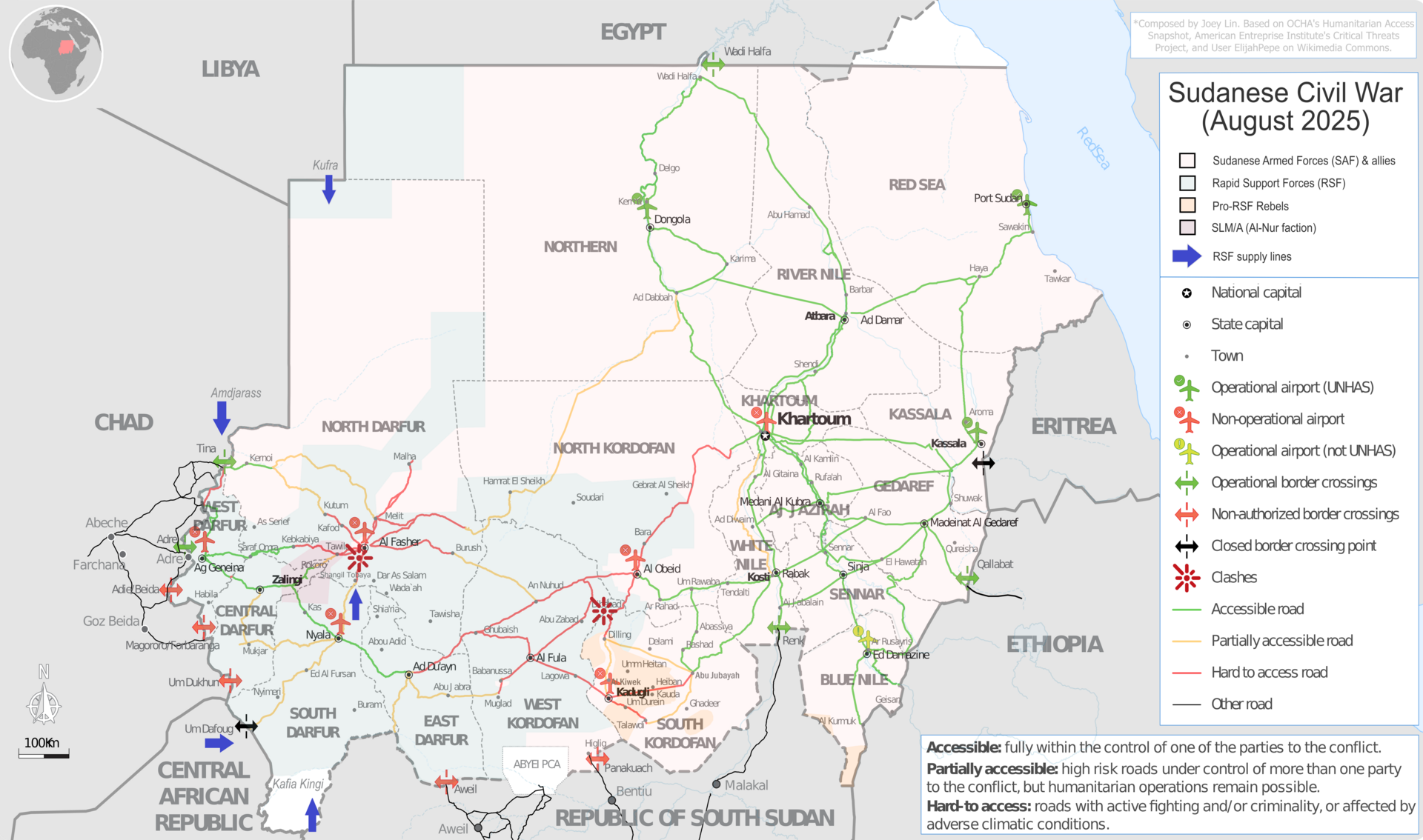
Sudan’s Armed Forces (SAF) cannot self-finance a package of that scale. Sudan’s economy has been in freefall since the civil war began in April 2023, and the SAF’s control of revenue-generating territory is limited to the eastern and central corridors it consolidated after retaking Khartoum by May 2025. Saudi Arabia was the deal’s financial guarantor — without Riyadh’s backing, the agreement had no mechanism for payment.
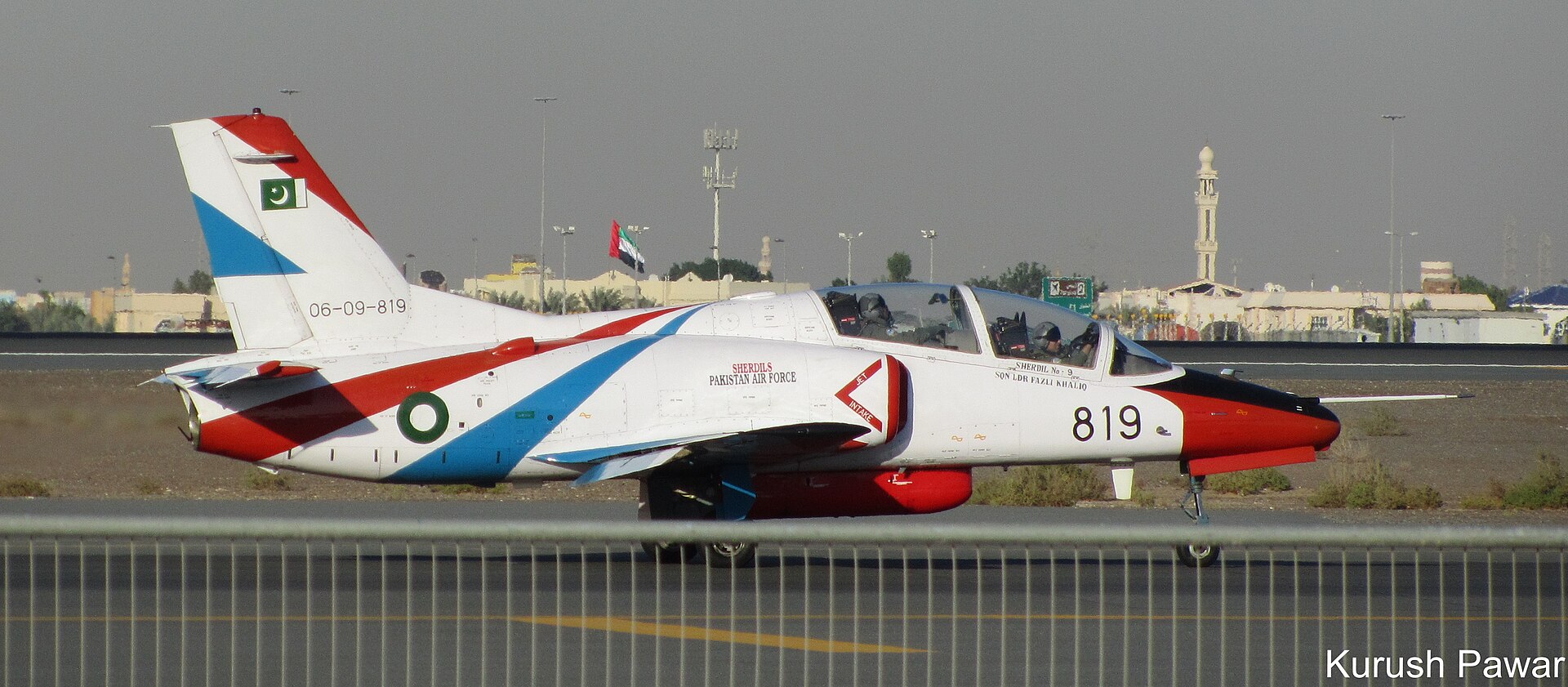
The equipment’s operational relevance was direct. The Soufan Center’s April 21, 2026 assessment, “Sudan at Three Years: A War Overshadowed, A Crisis Unmanaged,” identified air superiority as the SAF’s decisive operational gap. The RSF, which controls nearly all of Darfur and has been pressing into North Kordofan, has no air force. Ten K-8 light attack aircraft and 200-plus drones would have shifted the tactical balance in a war where neither side can achieve a knockout blow on the ground.
A March 2026 meeting between Sudanese military officials and Saudi authorities in Riyadh was the moment the financing was formally terminated, according to Al-Monitor and Profit Pakistan Today. The deal moved from “effectively finalized” to dead in roughly six weeks.
The Middle East briefing 3,000+ readers start their day with.
One email. Every weekday morning. Free.
Why Saudi Arabia Pulled the Financing
Profit Pakistan Today and IDRW reported that Saudi Arabia withdrew its Sudan financing within 48 hours of Pakistan Army Chief Field Marshal Asim Munir concluding a three-day visit to IRGC headquarters in Tehran in mid-April 2026. [Editor’s note: the 48-hour timing is sourced to Profit Pakistan Today and IDRW — IDRW is an adversarially-oriented Indian defense outlet. The precision of the interval should be treated as approximate.] Munir was the first regional military chief to visit Tehran since the Iran war began on February 28, according to Al Jazeera’s April 15 reporting.
The timing was not coincidental. Saudi Arabia had already deployed Pakistan as its primary enforcement mechanism for the Iran ceasefire. Under the September 2025 Strategic Mutual Defence Agreement (SMDA), Pakistan stationed fighter jets and troops at King Abdulaziz Air Base in Saudi Arabia’s Eastern Province, simultaneously with brokering the ceasefire in Islamabad. Al Jazeera published a piece on April 14 headlined “Can Pakistan juggle US-Iran mediation with Saudi defence commitments?” — the answer, from Riyadh’s perspective, was apparently no.
The financial architecture of Saudi control over Pakistan is multilayered. Saudi Arabia and Qatar announced $5 billion in combined financial assistance to Pakistan in April 2026, timed by Middle East Monitor to cover Pakistan’s $3.5 billion UAE debt repayment due at the end of April and a $3 billion Saudi loan maturing in June. Pakistan’s $7 billion IMF program depends on Gulf deposit rollovers. Approximately 2.5 million Pakistani workers in Saudi Arabia generate remittances that anchor Pakistan’s foreign reserves.
Saudi Arabia did not need to threaten Pakistan. It needed only to sequence its financial commitments. The Sudan deal freeze was a withdrawal of a benefit, not an imposition of a penalty — a distinction that allows Riyadh to deny coercion while exercising it.
Burhan’s Jeddah Visit and What He Left Without
General Burhan flew to Jeddah on April 20 for what Al-Monitor, Sudan Tribune, and MadaMasr described as a largely unannounced one-day visit. His purpose, according to Al Bawaba, was to press Saudi Arabia to “revive the stalled $1.5 billion Pakistan arms deal.”
The Saudi Press Agency readout of the MBS-Burhan meeting contained no reference to the arms deal or to Pakistan’s financing role. SPA reported that the two leaders “emphasized the importance of ensuring Sudan’s security and stability and preserving its sovereignty, unity and territorial integrity” and discussed “a truce in individual cities, humanitarian corridors, and aid access across the Chad border.”
MadaMasr, reporting on April 23, described Burhan’s Jeddah stop as seeking “political backing for state control of aid” — an ask broader than weapons but one that also went unanswered.
The Arab Progress Center for Policies reported that Burhan renewed a freeze commitment at the April 20 meeting. In practical terms, Burhan gave Saudi Arabia a second concession — an extension of whatever restraint commitment he had previously made — while leaving Jeddah without the arms he came for. After Jeddah, Burhan flew to Oman to meet Sultan Haitham bin Tariq, where Sudan Tribune reported the discussion focused on trade routes following the UAE’s August 2025 ban on vessels bound for Sudanese ports.
How the Iran Ceasefire Killed a Sudan Arms Deal
The structural logic is straightforward. Saudi Arabia has a finite amount of Pakistani compliance to spend. As HOS has previously reported, Saudi financial capture of Pakistan has been the enforcement architecture for the Iran ceasefire since the Islamabad Accord process began. Pakistan’s 27th Constitutional Amendment makes ceasefire diplomacy Field Marshal Munir’s operation, not the elected government’s.
When Munir visited IRGC headquarters in Tehran — a trip that served the ceasefire mediation Riyadh itself had demanded — Saudi Arabia responded by freezing the Sudan deal. The message was not that Pakistan should stop mediating with Iran. It was that Pakistan’s independent defense-export relationships in the Arab world exist at Saudi discretion. Munir returned to Islamabad to find his largest-ever arms deal cancelled.
A separate Pakistan-Libya deal worth approximately $4 billion, covering 16 JF-17 fighters and 12 Super Mushshak trainers, is also now under Saudi review, according to Profit Pakistan Today and Araweelo News Network. If both deals collapse, Pakistan stands to lose $5.5 billion in Arab-world arms exports — a figure that would reshape Pakistan’s defense industrial base and its strategic posture in the Middle East.
The Libya Pipeline Is Still Running
The Libya deal presents a complication for the coercion thesis. Middle East Eye reported on April 21 that Pakistan has already partially delivered weapons to Khalifa Haftar’s Libyan National Army — at least five cargo planes unloaded at Benghazi in March 2026. The Libya pipeline is operational while the Sudan pipeline is frozen.
The distinction matters. Libya’s Haftar has his own financing and does not depend on Saudi intermediation for payment. Sudan’s SAF does. Saudi Arabia’s gatekeeping power operates specifically through the financing layer, not through a blanket veto on Pakistani arms transfers. Where a buyer can pay independently, Saudi influence is limited to diplomatic pressure rather than financial control.
The Arab Progress Center for Policies noted that Pakistan’s simultaneous deals with Sudan and Libya position Islamabad “squarely within the growing Saudi-UAE rift.” Haftar has historically been a UAE client. Pakistan’s willingness to supply him while its Saudi-financed Sudan deal is frozen places Islamabad on both sides of the Gulf’s most consequential proxy rivalry — a position that Pakistan’s Iran mediation role was already making untenable.
Saudi-UAE Proxy Rivalry in Sudan
The arms freeze cannot be understood outside the Saudi-UAE competition over Sudan’s civil war. Since April 2023, the UAE has backed the RSF through gold trade networks — the RSF’s Rapid Support Forces control Darfur’s gold mines, with output flowing into Dubai. Saudi Arabia has aligned with the SAF and Egypt, issuing a formal joint statement with Qatar and Kuwait in February 2025 that rejected the RSF’s attempt to create a parallel government.
The Pakistan arms deal was Saudi Arabia’s most direct attempt to operationalize its SAF support. The freeze is therefore a reversal of Saudi Arabia’s own Sudan policy — or, more precisely, a subordination of that policy to the Iran file.
Saudi Arabia has not abandoned the SAF entirely. Horn Review reported in January 2026 that Turkish Bayraktar drones were transferred to Sudan via Saudi logistics corridors. The freeze appears to target Pakistani-origin transfers specifically, either to manage Western pressure on arms flows into Sudan’s conflict or as a bargaining chip with Islamabad on Iran.
The UAE’s response has been structural rather than rhetorical. Abu Dhabi has used Libyan and Somali logistics corridors for RSF resupply. Somalia cancelled its UAE military agreements in early 2026 after determining that the UAE was using Somali territory for RSF logistics, according to ADF Magazine. Saudi Arabia has separately pressured Haftar’s Libya to close UAE supply routes to the RSF — a request that sits uneasily alongside Pakistan’s active arms deliveries to Benghazi.
The net effect is a four-way entanglement: Saudi Arabia finances Pakistan, Pakistan arms both Sudan and Libya, Libya supplies the UAE’s RSF proxy, and Saudi Arabia opposes the RSF. Each actor’s bilateral relationship with Pakistan creates a contradiction with at least one other relationship in the network. The Sudan arms freeze resolves one contradiction — Saudi-financed weapons reaching a conflict zone while Riyadh demands Pakistani focus on Iran — while leaving the others intact.
IDRW, an Indian defense outlet, captured the Pakistani domestic reaction with a headline: “Saudi Snub Exposes Pakistani Establishment’s Hollow Arms Export Hype as $1.5 Billion Sudan Deal Vanishes Into Thin Air.” Pakistan’s official position has been silence. No government spokesperson has acknowledged the freeze, the Saudi withdrawal, or Burhan’s unsuccessful Jeddah visit. The strategic logic behind that visit — and what Saudi Arabia extracted in return — is detailed in Saudi Arabia’s Port Sudan Red Sea access strategy.
FAQ
What specific aircraft were in the Pakistan-Sudan deal?
The package centered on 10 Karakoram-8 (K-8) light attack aircraft, a Chinese-Pakistani joint production platform manufactured at the Pakistan Aeronautical Complex in Kamra. The K-8 is a subsonic jet trainer that doubles as a light ground-attack platform — effective against infantry and light vehicles but not designed for contested airspace. Sudan’s interest was in ground-support missions against RSF positions in open terrain, where the K-8’s 23mm cannon pod and unguided rocket capability would be operationally relevant without requiring the maintenance infrastructure of a fourth-generation fighter. The 200-plus drones in the package included both ISR and loitering-munition variants, according to Defence Security Asia.
Has Saudi Arabia frozen arms deals with other countries over policy disputes?
Saudi Arabia has historically used arms-deal financing as a policy instrument, but the Sudan freeze is unusual in its directness. The kingdom’s previous interventions in third-party arms transfers have typically operated through diplomatic channels — pressuring sellers or buyers privately. The Sudan case is distinctive because Saudi Arabia was the financial guarantor, giving it a contractual rather than merely diplomatic basis for termination. The SMDA framework, signed in September 2025, formalized a military-financial relationship that gives Riyadh structural control over Pakistani defense decisions in ways that predate and outlast any single arms deal.
What happens to Sudan’s military position without the Pakistani weapons?
The RSF has no air force but has demonstrated effective anti-aircraft capability using shoulder-launched systems supplied through UAE-linked networks. Without the K-8 aircraft and drone fleet, the SAF remains dependent on its aging Sukhoi inventory and whatever Turkish Bayraktar transfers Saudi logistics corridors continue to facilitate. The war’s fourth year is likely to see continued territorial stalemate in Darfur absent a step-change in SAF air capability — which the frozen deal was specifically designed to provide.
Could Pakistan bypass Saudi Arabia and finance the Sudan deal independently?
Pakistan’s defense export ambitions depend on Gulf financing not because Pakistani weapons are expensive by global standards, but because the buyers — Sudan, Libya — cannot pay upfront, and Pakistan cannot extend sovereign credit while its own reserves depend on Gulf rollovers. Islamabad is running a $7 billion IMF program whose continuation depends on Gulf deposit maintenance. The $5 billion Saudi-Qatar financial package announced in April was structured around Pakistan’s immediate debt obligations. Pakistan is not a creditor state and cannot act like one.
Is the $4 billion Libya deal also dead?
Not yet. Profit Pakistan Today reported the Libya deal is “under Saudi review,” but the operational picture is different from Sudan. Libya’s eastern government, unlike Sudan’s SAF, has independent revenue from oil exports and does not require Saudi financing for arms purchases. Saudi review of the Libya deal is about diplomatic signaling — whether Riyadh wants Pakistan supplying a UAE-aligned actor — rather than financial gatekeeping. The two deals test different aspects of Saudi control over PakistanThe two deals test different aspects of Saudi control over Pakistan’s defense export program.
#8217;s defense export program.
The same week Saudi Arabia withdrew financing from the Sudan package and pressured Islamabad on Libya, it transferred $3 billion to Pakistan to prevent a sovereign default — making the arms freeze and the bailout a single coordinated act. How MBS used financial rescue and export denial simultaneously to discipline Munir after his IRGC headquarters visit is examined in MBS Sent Pakistan $3 Billion and Froze $5.5 Billion in the Same Week.