
DUBAI — A 71-square-kilometre oil slick first detected by Copernicus Sentinel satellites on May 6 west of Iran’s Kharg Island terminal continued spreading southwest across the Persian Gulf on May 8, with maritime intelligence firm Windward projecting the leading edge could enter Qatar’s exclusive economic zone within 3.6 days. The cause and point of origin remain officially unknown as of May 9, with Iranian state media blaming a European tanker and the US Department of War declining to comment when AP asked about a possible recent strike near Kharg.
The slick is now the largest single environmental incident of the 70-day US-Israel war against Iran, according to Reuters, and it has surfaced four days before President Donald Trump arrives in Riyadh on May 13 to anchor a Gulf tour built around an energy-stability message. Kharg Island handles roughly 90 percent of Iran’s crude exports, mostly bound for China, and a contested attribution gives Tehran a civilian grievance narrative at the worst possible diplomatic moment for Washington.
Table of Contents
What the satellites show
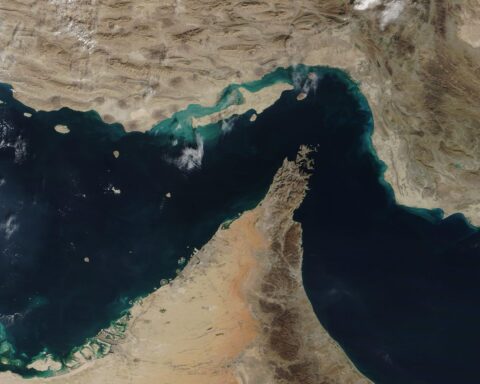
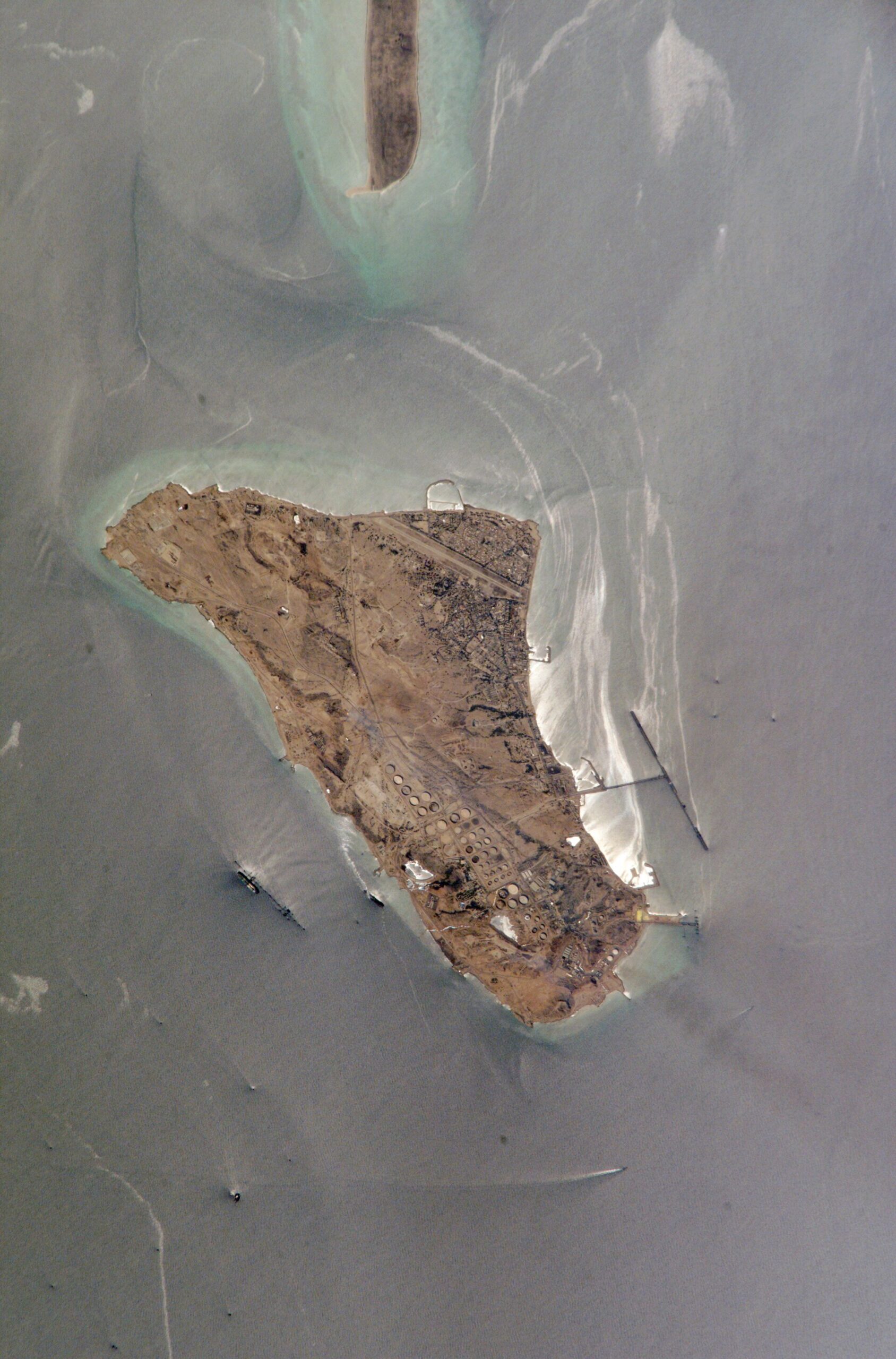
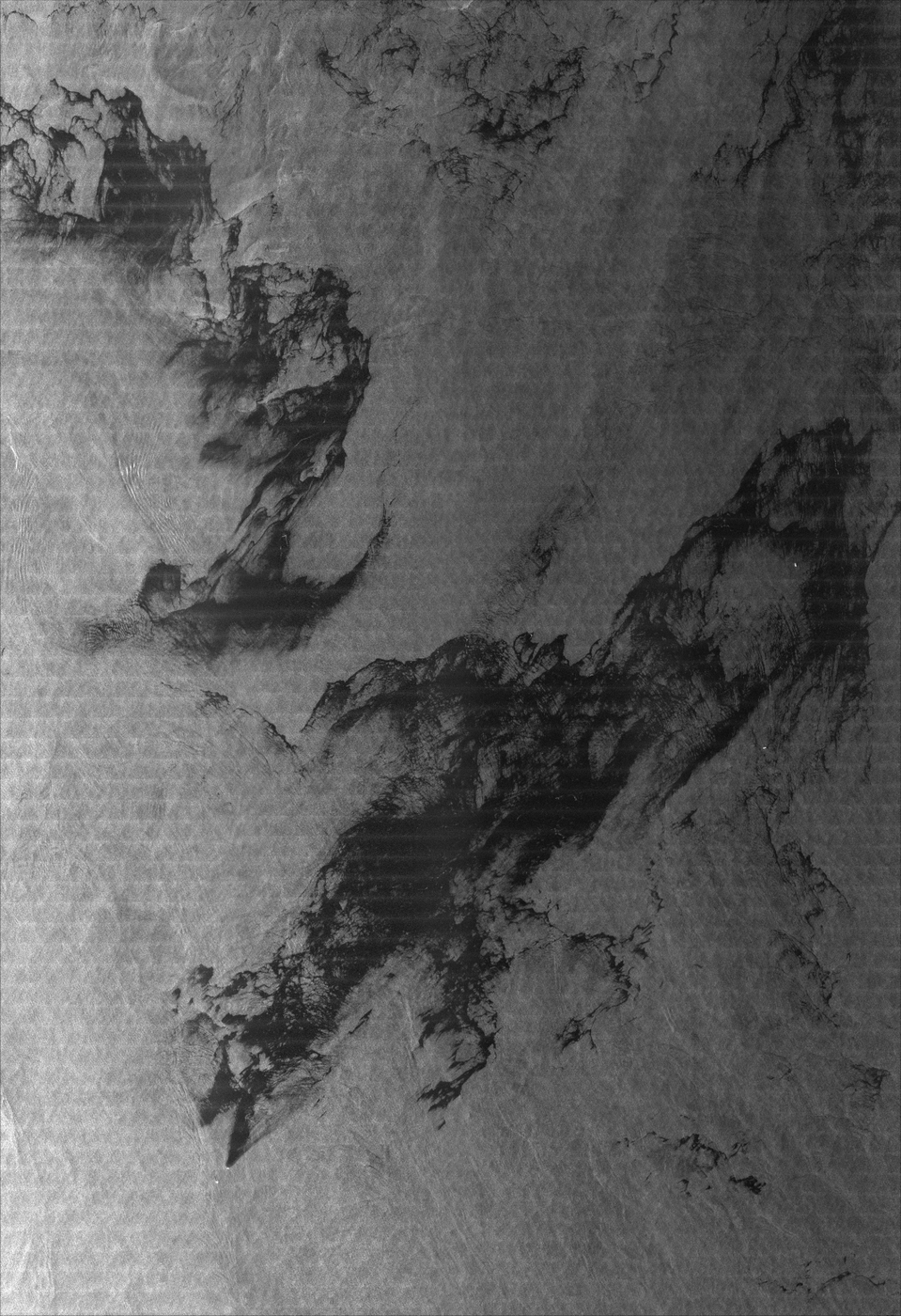
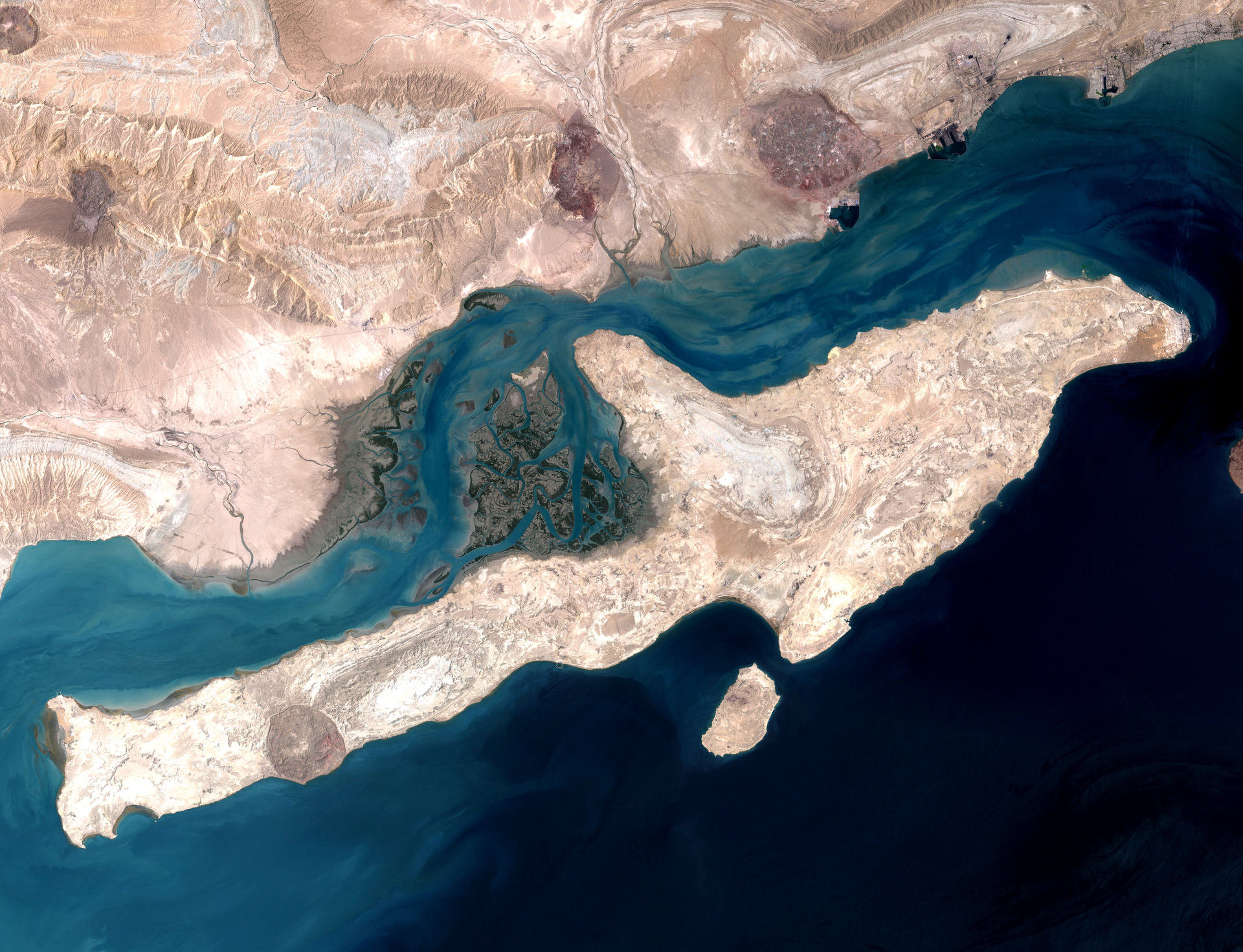
Copernicus Sentinel-1, Sentinel-2 and Sentinel-3 first picked up the slick on May 6, with imagery continuing to capture its expansion through May 8, according to Reuters and AP. Windward, the maritime risk intelligence firm tracking the spread, located the initial detection point approximately 1.27 kilometres off Kharg Island’s western coast — the side housing Iran’s Sea Island Terminal, where very large crude carriers normally load.
Leon Moreland, a researcher at the Conflict and Environment Observatory, told Reuters the slick covered around 45 square kilometres on May 8 and was “visually consistent with oil.” Orbital EOS, an oil-spill monitoring company, told the New York Times the same day that the affected area exceeded 52 square kilometres, or roughly 20 square miles. A later satellite pass cited by AP and Windward put the figure at approximately 71 square kilometres — an area larger than central Manhattan.
The slick is moving on a 150-degree heading at roughly 2 kilometres per hour, Windward told Xinhua and Fox News. At that speed and bearing, the projected path enters Qatari waters in 3.6 days and could make landfall near Al Mirfa on the UAE coast in roughly 13 days if the current and wind regime hold.
Moreland made one observation that matters more than any volume estimate. Imagery from May 8, he said, showed no evidence of an additional active spill source — meaning the satellites were watching a slick that had already been released, not one still pumping out fresh oil. That points to a single discrete event rather than ongoing seepage from a damaged pipeline or tank farm.
The Middle East briefing 3,000+ readers start their day with.
One email. Every weekday morning. Free.
Except AP’s analysts saw something different. The wire’s satellite review described images that “appear to show oil still leaking from the terminal” — a phrase that does the opposite work, locating the source on Kharg infrastructure and keeping it active. The two readings cannot both be right, and neither has been independently corroborated by a government agency.
Who spilled it?
Iranian state media moved first. An unnamed Iranian official told outlets including IRNA on May 8 that international coverage of the spill was “false” and amounted to “psychological warfare” by the enemy, and that the slick had “originated from oil tanker waste that was discharged into the sea by a European tanker, damaging the environment.” No vessel name, flag state or IMO number accompanied the claim.
Windward’s tracking turned up no vessel at the slick’s epicentre consistent with the Iranian account, and no third-party maritime authority — neither the International Maritime Organization, the European Maritime Safety Agency, nor any flag-state regulator — has confirmed a tanker dumping incident in the area on the dates in question. The Iranian attribution stands as a counter-claim only.
Tasnim, the IRGC-aligned news agency, told its readers the broader maritime situation had “calmed” but warned of further clashes “if Americans try to enter the Gulf again and cause trouble for Iranian vessels.” That framing — environmental denial paired with a kinetic warning — is the same template Tehran ran during the IRGC’s seizure of the MSC Francesca and the Epaminodas on April 22, as covered here.
The American silence is louder. The US Department of War declined to comment when AP asked specifically about a possible recent strike near Kharg, a refusal that contrasts with CENTCOM’s standard practice of acknowledging self-defence operations within hours. CENTCOM did publicly confirm strikes on May 7 against military targets at Bandar Abbas, Qeshm Island and Bandar Kargan — all on the eastern flank of the Gulf, and all in the same operational theatre as Kharg.
March 14, 2026 is the load-bearing reference point. That day US forces struck military targets on Kharg Island for the first time in the war, and Iranian state media confirmed at the time that no oil or gas facilities had been damaged, per NBC News and Al Jazeera reporting. The deliberate avoidance of crude infrastructure in March is what makes the silence about May 7 read as a tell rather than a routine no-comment.
Why do the volume estimates disagree?
The headline volume figures are 27 times apart. Orbital EOS told the New York Times that more than 3,000 barrels had been released. An unnamed analyst quoted by AP put the figure at approximately 80,000 barrels since detection on May 5–6.
The methodologies behind those numbers are not the same. Surface-area-times-thickness modelling — the approach reflected in Orbital EOS’s work — produces conservative volumes because the visible sheen on a satellite image is often thinner than the bulk of the spill underneath. AP’s higher figure assumes a thicker average layer and a longer release window starting on May 5. Both rest on assumptions that are unverifiable without a sample taken from the water.
The discrepancy matters for attribution. A 3,000-barrel release is consistent with a single tanker bilge dump or a moderate operational incident. An 80,000-barrel release — roughly the contents of a small product tanker — points toward infrastructure failure, deliberate release, or strike damage. The two scenarios carry very different legal and diplomatic consequences.
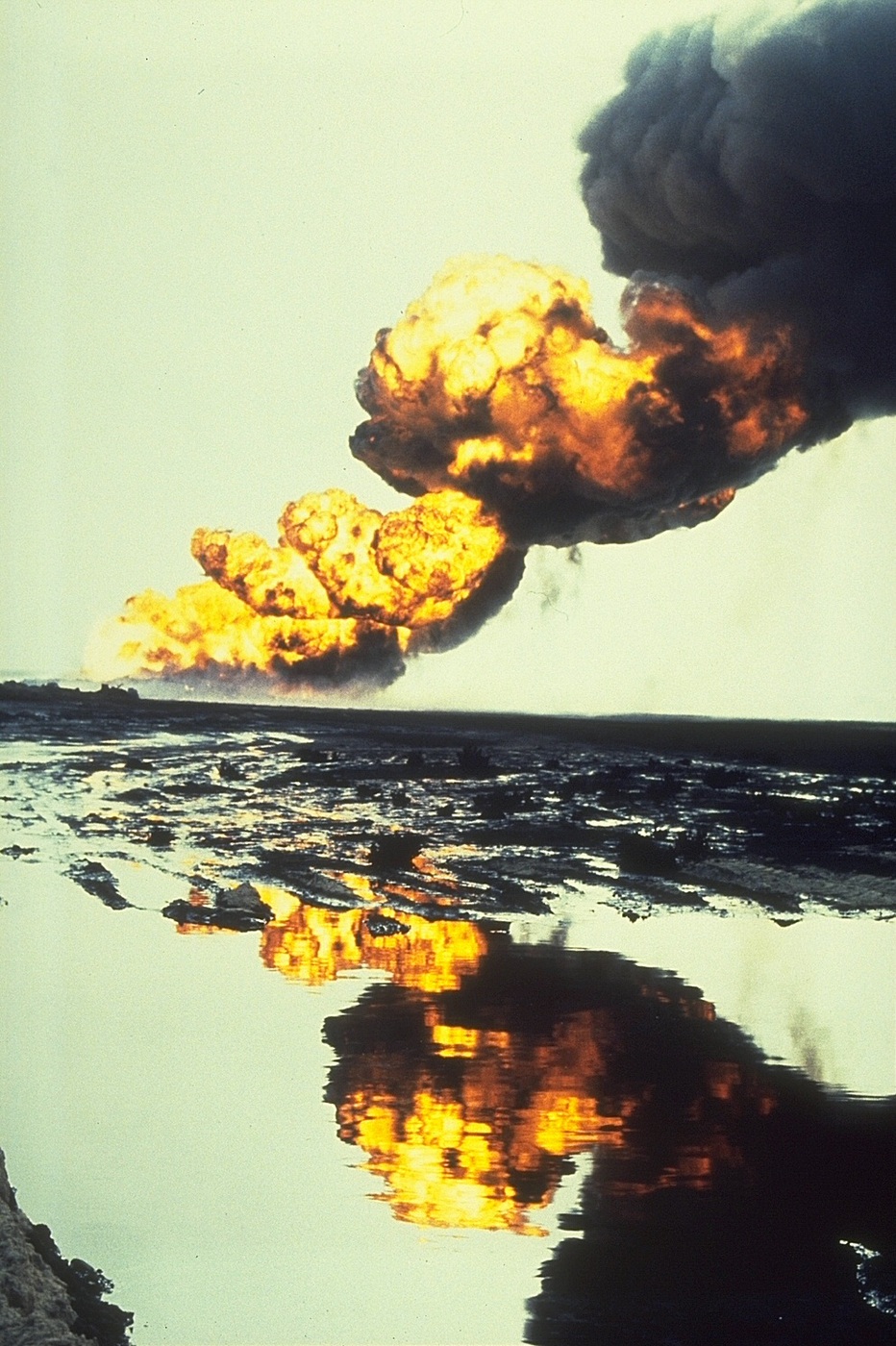
Neither figure approaches the comparator that Iranian commentators reach for instinctively. Iraqi forces deliberately released approximately 6 million barrels into the Persian Gulf in January 1991, the largest deliberate oil spill on record, in an attempt to foil a US Marine landing.
The blockade-pressure thesis
Miad Maleki, an Iran sanctions and energy expert at the Foundation for Defense of Democracies, gave Fox News the most concrete causal hypothesis on the record. He identified two plausible drivers: an operational failure in which “Iran failed to ramp down extraction fast enough and over-counted on empty tankers slipping the blockade,” and direct damage to infrastructure from strikes.
“Storage and evacuation capacity are out of sync with upstream output, and the Gulf is paying the price for that mismatch.”Miad Maleki, Foundation for Defense of Democracies, May 8, 2026
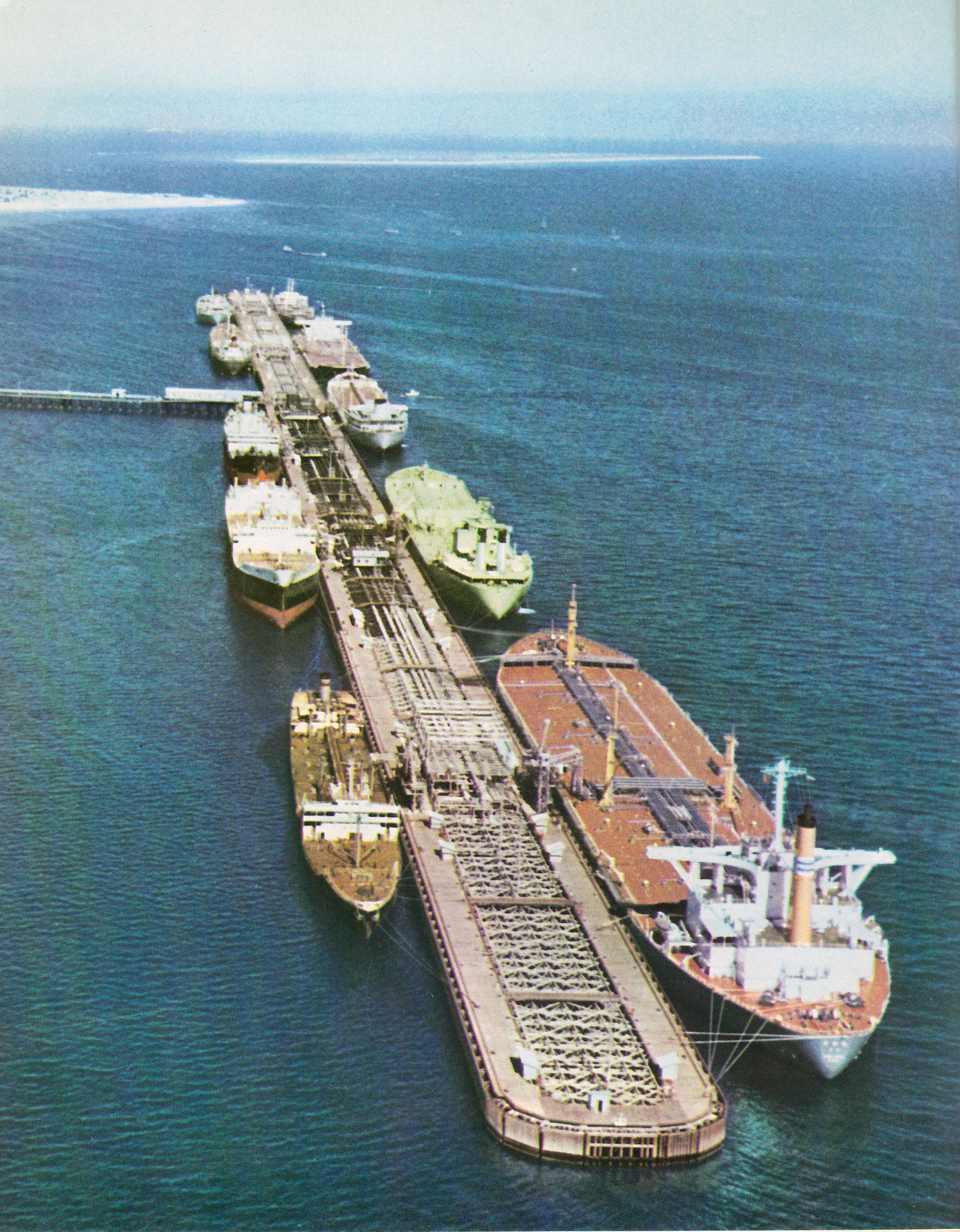
The arithmetic behind that sentence is unforgiving. Kharg’s above-ground storage runs to roughly 34 million barrels across more than 50 tanks, per Britannica and Windward background, and the US blockade — effective since April 13 — has turned the terminal into a one-way valve. PBS NewsHour and NPR reported on May 8 that the blockade had disabled at least four Iranian tankers, with two more disabled that day alone, and Treasury Secretary Scott Bessent told reporters last week that 49 vessels had been redirected, as covered here.
Iran’s storage ceiling has been a live concern in Tehran for weeks. As reported here on May 2, the storage clock was running roughly three weeks before tanks at Kharg and Sirri reached working capacity. May 9 is exactly seven days into that countdown. Maleki’s “out of sync” framing is the technical term for what happens when an oil exporter cannot stop pumping fast enough to match the rate at which it cannot ship.
The infrastructure-damage hypothesis is the harder one to dismiss. AP’s read of the satellite imagery — oil still leaking from the terminal — matches what a damaged loading arm or a fractured subsea hose at the Sea Island Terminal would look like from low Earth orbit. CENTCOM struck three Iranian sites on May 7. CENTCOM declined to discuss any operation near Kharg. The slick was first detected on May 6, before those announced strikes, but Sentinel revisit cycles and the geometry of the imagery archive leave room for an undisclosed action.
What the trajectory means for Gulf desalination
Qatar takes 99 percent of its drinking water from desalination plants. The UAE takes roughly 52 percent of its total water demand the same way. Those numbers, drawn from CSIS and Fortune analyses earlier this year, are the reason the Windward trajectory map matters more than any of the volume estimates.
A 3.6-day arrival at Qatar’s EEZ does not automatically mean a 3.6-day arrival at a desalination intake. Qatar’s main intake facilities sit on the country’s eastern Gulf coast, with screening, skimming and reverse-osmosis pre-treatment designed to handle hydrocarbon contamination at low concentrations. The Saudi Aramco-operated Ras al-Khair and Jubail desalination complexes on the Saudi Eastern Province coast have similar protections. None of them are designed for a sustained slick of the size now drifting south.
The 1991 Iraqi release is the operative precedent for what happens when those defences are overrun. Saudi Eastern Province desalination plants shut down for periods ranging from days to weeks, and the kingdom rationed potable water in some districts. The current slick is between roughly one-two-thousandth and one-seventy-fifth of the 1991 release by volume — but it is also closer to the Qatari coast than the Iraqi release ever was, and it is moving on a heading that takes it toward a thinner, more concentrated set of intakes.
Arab News flagged the threat to Saudi, Qatari and Emirati shores in its May 9 coverage. Voice of Emirates ran the story under a “potential environmental catastrophe” headline framed entirely around UAE coastal exposure. Neither government has issued an emergency advisory as of May 9, and there is no public indication that desalination operators have moved to alternative sourcing.
Trump arrives Tuesday
Donald Trump lands in Riyadh on May 13. The Gulf tour was conceived around a $600 billion Saudi investment package, a parallel UAE technology track, and a quiet confidence vote in the security architecture Washington built after the April 13 blockade. A drifting 71-square-kilometre slick of contested origin is not the photograph the White House prepared for.
The diplomatic timing favours Tehran’s narrative even if the underlying facts do not. An Iranian foreign-ministry spokesperson can stand at a podium on May 12 and ask Gulf publics whether a European tanker dumped waste off Kharg or whether Washington’s blockade pushed Iranian storage past its ceiling, and either answer indicts the United States. The more cynical version — that an undisclosed CENTCOM strike caused the release — sits underneath both.
Saudi Arabia’s room for manoeuvre on this is narrow. Riyadh has spent the war pushing the message that it is “indispensable, powerless, and not in the room” — a framing examined in detail here — and an environmental incident on its eastern coast forces it to take a position. Foreign Minister Faisal bin Farhan called Iranian counterpart Abbas Araghchi on April 13, the day the blockade went live, and the readouts of this week’s pre-visit calls show Riyadh has continued running a parallel diplomatic track. A Kharg-origin spill collapses that track.
The Chinese angle is the one Beijing has been working hardest to keep quiet. CNPC and Sinopec hold contracted offtake at Kharg, and Xinhua’s coverage of the spill carried Windward’s tracking data without editorial comment on causation — a notable restraint given that any prolonged disruption at Kharg lands directly on Chinese refining margins. Iran’s foreign-policy team got to Beijing first this month, as reported here, and a clean attribution to a European tanker would help Tehran keep the Chinese line uncomplicated.
Background: Kharg, the war, and the 1991 precedent
Kharg Island was developed as an oil-export terminal in the 1960s under Mohammad Reza Pahlavi and grew into the single largest crude-loading facility on the Persian Gulf. Iraqi air strikes battered the terminal repeatedly during the 1982–1988 Tanker War phase of the Iran-Iraq conflict, forcing Tehran to shift loading operations south to Lavan and Sirri islands while engineers rebuilt the Sea Island and T-Jetty installations.
The international legal framework governing wartime environmental damage is thin. Articles 35(3) and 55 of Additional Protocol I to the Geneva Conventions, drafted in 1977, prohibit methods of warfare expected to cause “widespread, long-term and severe damage” to the natural environment. The MARPOL convention governs peacetime pollution. Neither contains an enforceable liability mechanism for active armed conflict, which is the legal vacuum Iraq exploited in 1991 and which Tehran is positioned to exploit now if attribution lands on a CENTCOM strike.
The current war is approximately 70 days old. CENTCOM imposed the maritime blockade on April 13. Iranian missile and drone strikes on the UAE on May 8 — the same day the slick was estimated at 71 square kilometres — pushed Pezeshkian to call the attacks “madness” in a public break with the IRGC, as covered here. The authorisation ceiling separating Iran’s elected government from its military command remains the single largest variable in the war’s trajectory.
FAQ
How does this spill compare to a typical commercial tanker incident?
A standard chartered very large crude carrier loads roughly 2 million barrels. A bilge dump or operational discharge from a single tanker — the scenario Iranian state media has put forward — typically releases between a few dozen and a few hundred barrels. Even Orbital EOS’s conservative 3,000-barrel figure, the lower end of the public estimates, is an order of magnitude larger than a routine illegal dump. The 80,000-barrel figure cited by AP is roughly one-third of the 1989 Exxon Valdez release of approximately 257,000 barrels — but the slick covers a greater surface area because it is spread across open ocean rather than a confined Alaskan sound.
Could the slick affect Saudi Aramco’s loading operations?
The slick’s southwest trajectory at 150 degrees keeps it east of the main Saudi loading terminals at Ras Tanura and Yanbu, but Ras al-Khair desalination — which feeds Riyadh — sits several hundred kilometres west-southwest along the Saudi Eastern Province coast and could be exposed if the slick reaches the Saudi EEZ. Aramco has not issued a public statement on contingency sourcing as of May 9.
What does Copernicus Sentinel-1 actually see?
Sentinel-1 carries a synthetic aperture radar that detects oil on water by measuring how surface tension dampens the small-scale ripples a clean sea returns to the radar. Oil films flatten those ripples, so slicks appear as dark patches in the imagery. The technique is reliable for detecting a slick’s presence and extent but does not measure thickness, which is why the volume estimates for this incident vary so widely.
Has any government formally requested an investigation?
No state has filed a formal request through the International Maritime Organization or the Regional Organization for the Protection of the Marine Environment as of May 9. ROPME is the GCC-anchored body responsible for marine pollution response in the Gulf and has the operational capacity to launch a forensic sampling campaign — but its 1978 founding charter assumes peacetime conditions and has no protocol for sampling within an active conflict zone.
Why does the European-tanker claim matter even if it cannot be verified?
Attribution in the early days of an environmental incident often hardens whichever narrative is loudest. Iran’s counter-claim does not need to be true to be useful — it needs to circulate widely enough that Gulf publics arrive at Trump’s Tuesday landing in Riyadh with a competing story already running in their heads. The European framing also signals Tehran will pursue any future legal complaint through ROPME and the IMO rather than through bilateral channels with Washington.