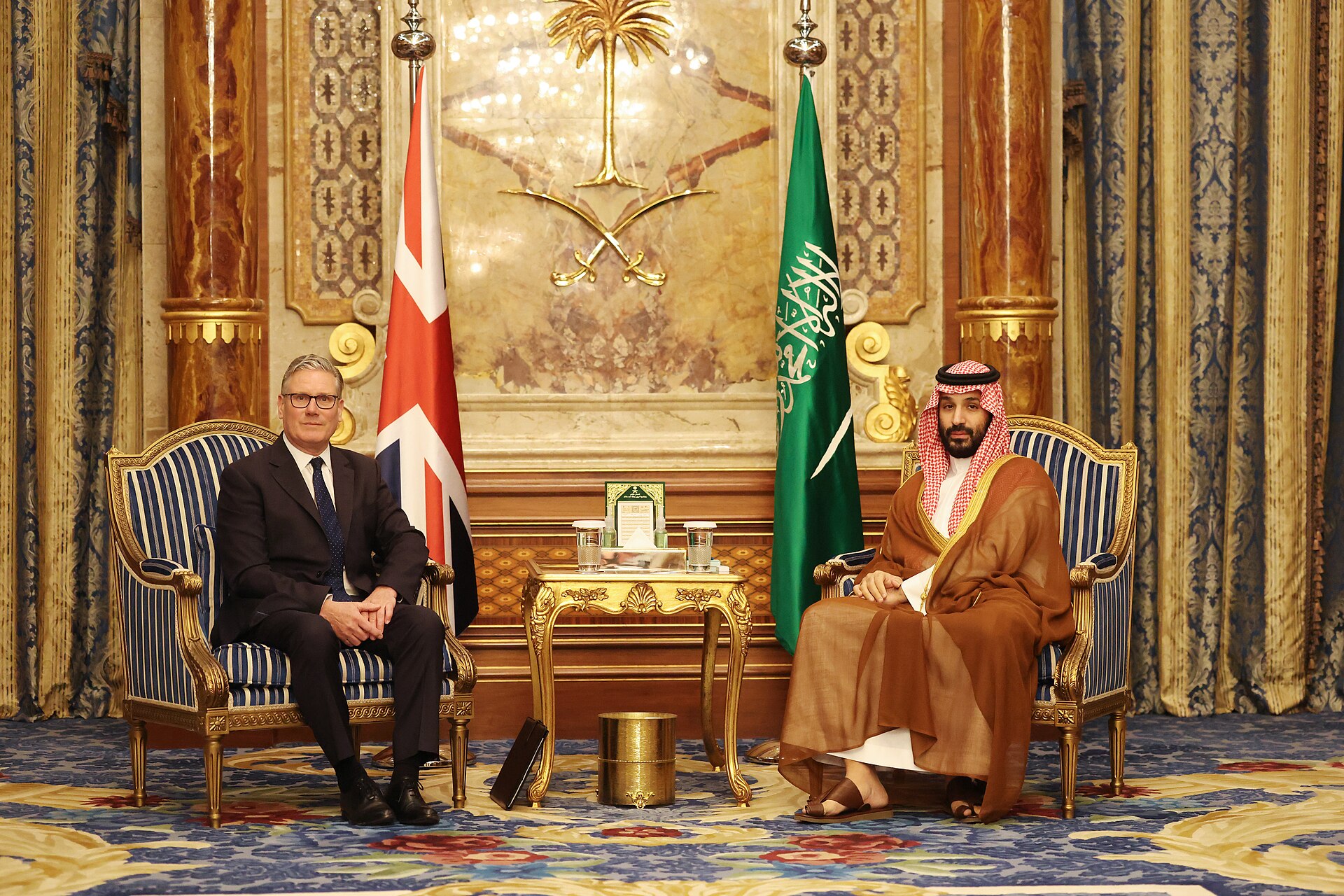

RIYADH — Mohammed bin Salman told American evangelical leader Mike Evans that he could recognize Israel “today” and that his father, King Salman, is the sole obstacle — a claim reported by the Jerusalem Post and not independently verified, but one that aligns with a pattern of private signals MBS has sent to Washington intermediaries for years. If taken at face value, it reframes Saudi Arabia’s Palestinian state prerequisite not as a policy position but as a dynastic holding pattern: a commitment that expires with the king’s life. The more important question is whether MBS wants it taken at face value, or whether invoking the king as a personal veto serves a different purpose entirely.
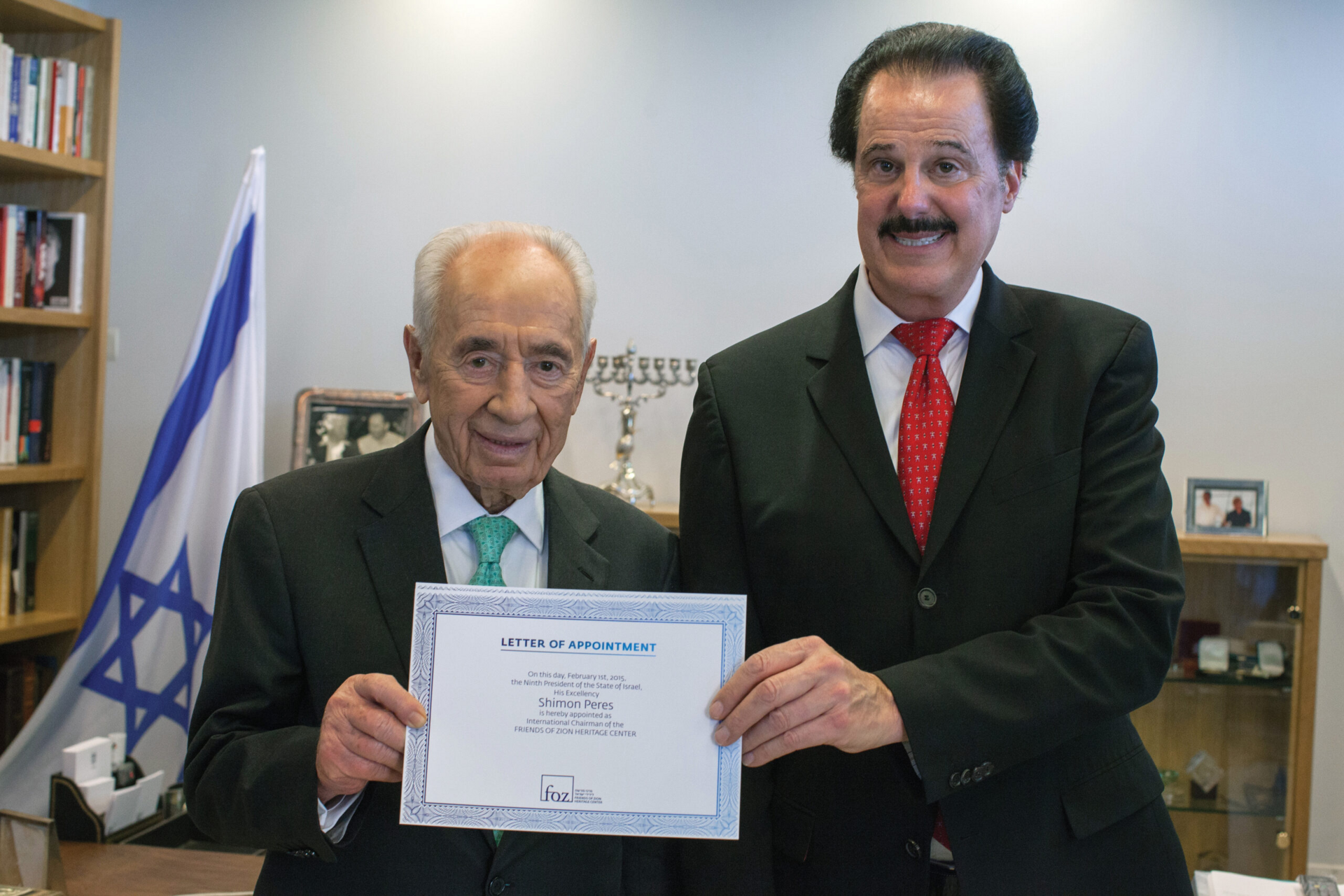
Evans, founder of the Friends of Zion Heritage Center and an informal adviser to Donald Trump, said the meeting lasted two hours. Present, according to Evans, were the crown prince, one of MBS’s brothers, and Saudi Foreign Minister Prince Faisal bin Farhan — an attendance detail that no outlet reporting the story has adequately examined.
Table of Contents
- What Evans Said and What He Didn’t
- Why Was the Foreign Minister in the Room?
- The Pattern of Private Signals
- What MBS Says When He Knows He’s on the Record
- Does King Salman Actually Hold a Veto?
- The 99 Percent Wall
- What Changes After the Succession
- The UAE Precedent and Why It Doesn’t Apply
- Who Benefits from the ‘Father Problem’ Narrative?
- Frequently Asked Questions
What Evans Said and What He Didn’t
Evans told the Jerusalem Post that “when I talked to the crown prince, he told me that he would acknowledge Israel today” and that MBS “said his problem was his father.” On the question of Jerusalem — the most symbolically charged element in any normalization framework — Evans recounted MBS saying “if there was ever two capitals in Jerusalem, it’d be a terror capital.” The Jerusalem Post noted it could not independently verify the account. Saudi Arabia has not responded to the Evans claims publicly.
Evans has a history of recounting dramatically pro-Israel statements from Arab leaders. In 2019, he told Middle East Monitor that “Saudi and UAE leaders are more pro-Israel than a lot of Jews.” He has previously claimed MBS told him “my mother is Jewish” — a statement that remains unverifiable and that no Saudi official has addressed. In January 2025, Evans predicted Saudi-Israeli normalization “within a year” under Trump, telling i24 News the process was imminent. That year has now passed.
None of this means Evans fabricated the account. It means the account arrives embedded in a record of maximalist claims about Arab-Israeli affinity that have not been borne out. The question is not whether MBS said something accommodating to a Trump-allied evangelical visitor — he almost certainly did — but what weight to assign to private remarks delivered to a figure whose public role is to relay them.
Trump subsequently deployed the Evans account as justification for his Accords demand — inserting normalization as the price Saudi Arabia must pay to participate in a war it was never invited to negotiate.
The Middle East briefing 3,000+ readers start their day with.
One email. Every weekday morning. Free.
Why Was the Foreign Minister in the Room?
Saudi foreign ministers do not attend courtesy calls. Prince Faisal bin Farhan’s presence at a two-hour meeting with a private evangelical figure running a heritage museum in Jerusalem points in one of two directions: either the Evans channel was elevated to something semi-official, or the foreign minister was there to manage what the crown prince said. Both readings matter more than the account itself.
The first reading: Faisal bin Farhan’s presence elevates the Evans channel to something semi-official — MBS wanted the foreign minister to hear, and to be seen hearing, a message that Riyadh intended to reach Washington through informal channels. The Evans meeting was a managed signal, not a personal conversation. The second runs in the opposite direction: Faisal bin Farhan was in the room to manage Evans’s impressions, ensuring the crown prince’s remarks stayed within bounds that the foreign ministry could work with — or disavow.
The same Faisal bin Farhan who publicly endorsed Trump’s demand that Iran surrender its highly enriched uranium — five days after Trump himself had dropped it — is a diplomat whose public statements have repeatedly lagged behind the positions they claim to support. His presence in the Evans meeting does not confirm MBS’s sincerity. It confirms that the meeting mattered enough to staff at the ministerial level.
The Pattern of Private Signals
The Evans account did not emerge in isolation. It fits within a documented record of MBS telling Western interlocutors, privately, that his personal views on Israel are more accommodating than Saudi Arabia’s public position.
In January 2025, The Atlantic reported that MBS told then-Secretary of State Antony Blinken during a meeting in al-Ula: “Do I care personally about the Palestinian issue? I don’t, but my people do, so I need to make sure this is meaningful.” MBS invoked the assassination of Anwar Sadat — the only Arab leader killed after making peace with Israel — as a personal cautionary example. A Saudi official told The Atlantic the account was “incorrect,” though the denial was not specific about which element was disputed.
The Blinken exchange and the Evans exchange share a structure. In both, MBS positions himself as personally willing but constrained — by his father in Evans’s version, by his public in the Blinken version. The constraint shifts depending on the audience. To an evangelical Trump ally, the obstacle is a 90-year-old king. To a sitting secretary of state, the obstacle is Saudi public opinion. Both constraints happen to be real, but the selective emphasis is itself a diplomatic instrument.
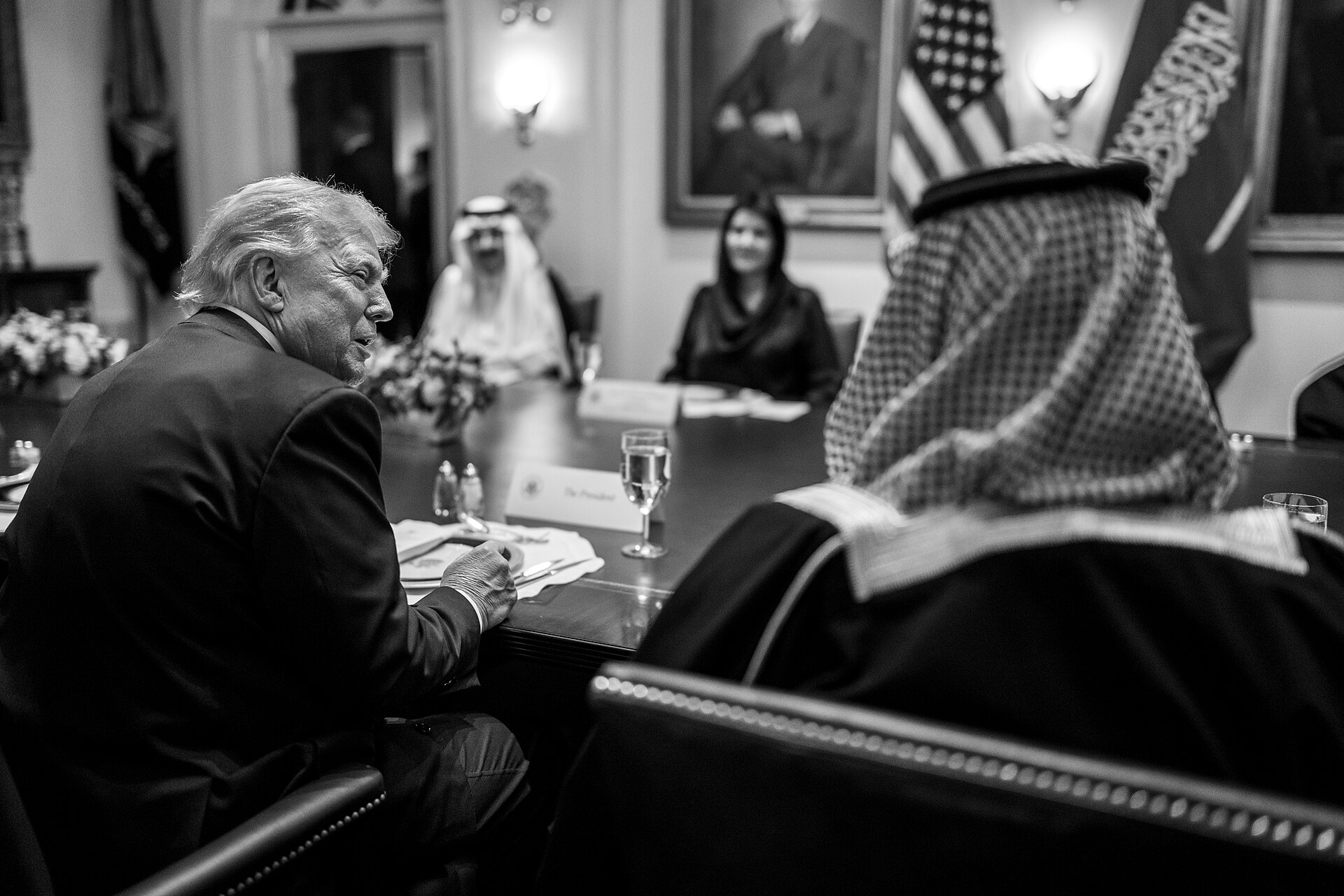
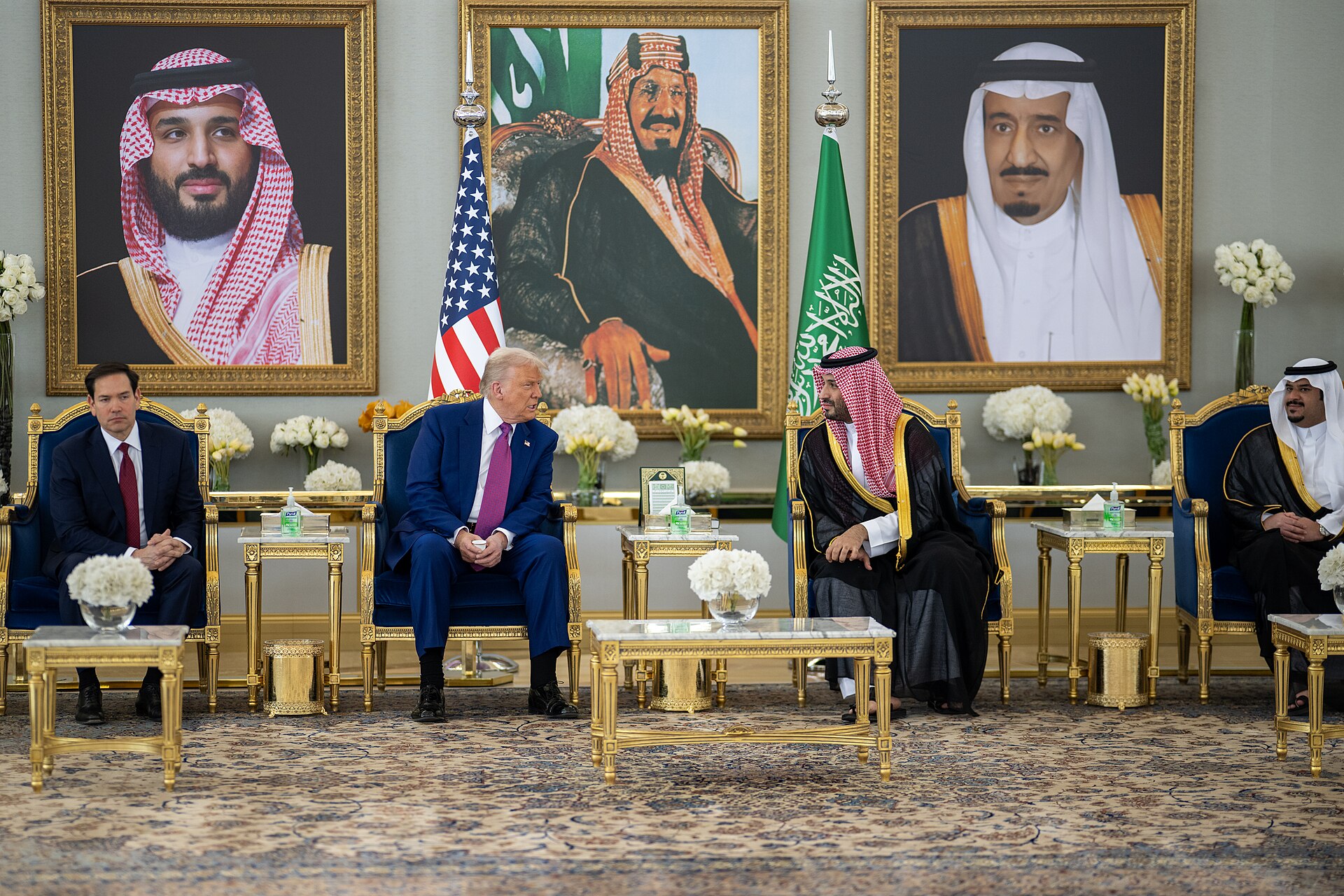
When Trump hosted MBS at the White House on November 18, 2025, the dynamic was different. There was no intermediary, no deniability, no flattering framing. An unnamed US official told Axios the meeting was “civil but difficult, tense” and that Trump was left feeling “disappointment and irritation.”
MBS told Trump directly that while he was “not against normalization in principle,” widespread anti-Israel sentiment following the war in Gaza made the move impossible. He said Israel would need to agree to an irreversible path toward a Palestinian state with a hard deadline. Trump, according to the official, “tried very hard to talk to him.” The best way to understand the Evans remarks is alongside this meeting — where MBS, face to face with the president and unable to delegate blame to his father, cited public opinion instead.
What MBS Says When He Knows He’s on the Record
MBS’s public position has been consistent and unambiguous. In September 2024, delivering a speech to the Shura Council on behalf of King Salman, he stated: “The kingdom will not stop its tireless work towards the establishment of an independent Palestinian state with East Jerusalem as its capital, and we affirm that the kingdom will not establish diplomatic relations with Israel without that.” The speech was carried on Saudi state media and distributed by the Saudi Press Agency without qualification.
In February 2025, the Saudi Foreign Ministry released a statement describing support for Palestinian statehood as “firm and unwavering” and the East Jerusalem precondition as “non-negotiable and not subject to compromises.” The language was among the strongest Riyadh had used since October 7, 2023.
On May 25, 2026, Trump called eight Muslim leaders — MBS among them — and pressed them to join the Abraham Accords, calling the step “mandatory.” The leaders were, according to The Week, “surprised and silent.” Trump reportedly asked: “Are you still there?” The following day, May 26, Saudi Arabia issued a formal public rejection of the Abraham Accords normalization framework, reiterating the Palestinian state prerequisite through official channels. The rejection came from the state, not from the king personally — a distinction that matters if MBS’s private claim is that the policy reflects his father’s wishes rather than his own.
The Institute for National Security Studies (INSS) in Tel Aviv, in its February 2026 assessment, offered the most analytically precise reading of MBS’s public positioning. It described MBS as having “made a calculated choice: to neutralize rivals by adopting a harder public line on Israel, embracing anti-Zionist sentiment among Saudi youth, and championing Palestinian statehood.” The INSS framing treats the Palestinian state precondition not as a sincere diplomatic red line but as domestic political armor — a position whose function is internal, not external.
Does King Salman Actually Hold a Veto?
MBS told Evans his problem was his father. The constitutional question is whether this is literally true — whether King Salman retains a formal mechanism to block normalization — or whether the “father problem” is a convenient fiction that lets MBS signal readiness without bearing responsibility for inaction.
Under Saudi Arabia’s Basic Law, diplomatic relations with foreign states are established by royal decree. The king’s signature is required. MBS, despite being appointed prime minister in September 2022 — an unprecedented exception to Article 56 of the Basic Law, which reserves the role for the king — does not hold unilateral authority over foreign recognition. The prime ministerial appointment transferred cabinet-level administrative authority to MBS, but the king retains formal signing power over decrees of state.
King Salman is 90 years old, born December 31, 1935. He has been largely withdrawn from public duties, described by multiple sources as an increasingly ceremonial figure. But “ceremonial” in the Saudi constitutional order is not the same as powerless. The king’s signature requirement is not a convention that can be waived; it is embedded in the Basic Law. If MBS sought to normalize relations with Israel tomorrow, the legal instrument establishing those relations would require King Salman’s decree.
There is a structural irony here. On the same day in June 2017 that King Salman named MBS crown prince — removing Mohammed bin Nayef from the succession — the king also issued a little-noticed amendment to Article 5b of the Basic Law. The amendment prohibits the king and crown prince from being drawn from the same branch of Ibn Saud’s descendants. King Salman was simultaneously elevating his son and constraining the precedent, ensuring that the lateral succession principle could theoretically be reasserted after his death. The father who is described as the obstacle also built the legal architecture that made MBS’s ascent possible.
The 99 Percent Wall
Even if the king’s veto were removed tomorrow, MBS would face a domestic constraint that has hardened dramatically since October 7, 2023. The Washington Institute for Near East Policy’s August 2025 survey found that 99 percent of Saudi respondents said establishing normal relations with Israel would be a negative step. In 2020, when the Abraham Accords were signed, 41 percent of Saudis viewed them positively. By 2023, that figure had fallen to 20 percent. By 2025, it was 13 percent.
| Year | Saudi public view of Israel normalization | Source |
|---|---|---|
| 2020 | 41% viewed Abraham Accords positively | Washington Institute |
| 2023 | 20% viewed Abraham Accords positively | Washington Institute |
| 2025 | 13% viewed Abraham Accords positively; 99% said normalization would be negative | Washington Institute, August 2025 |
| 2025 | 87% of Arab-world respondents opposed their countries recognizing Israel | Arab Opinion Index, Arab Center Doha |
The Arab Opinion Index for 2025, published by the Arab Center for Research and Policy Studies in Doha, found 87 percent of respondents across Arab countries opposed their countries recognizing Israel. Only 6 percent supported it. The Gaza war did not create Arab opposition to normalization, but it converted soft skepticism into near-unanimous rejection.
MBS acknowledged this reality directly in the November 2025 White House meeting with Trump, telling the president that anti-Israel sentiment in Saudi Arabia after Gaza made normalization impossible “at this time.” The same man who told Evans he could recognize Israel “today” told the president of the United States, in person, that he could not. Both statements may be subjectively true — MBS may personally be willing and politically unable — but the Evans framing, which locates the obstacle in one elderly man rather than in a society of 32 million people, is at minimum incomplete.
The INSS assessment noted that MBS faces “powerful enemies within the royal family who have not forgotten his consolidation of power, including imprisonment of rival princes during the 2017 Ritz-Carlton purge.” In this reading, MBS’s championship of Palestinian statehood is not just a response to public opinion but a defensive posture against succession rivals who would use any sign of Israeli accommodation as evidence of betrayal. The Palestinian cause is doing double duty — insulating MBS from public anger and from princely competitors simultaneously.
What Changes After the Succession
The INSS concluded, in language that Israeli security analysts rarely deploy so directly: “The likelihood of normalization with Israel will increase after King Salman dies, and certainly if his son, Crown Prince Mohammed, is appointed king.” The assessment treats the succession as a policy trigger, not merely a constitutional formality.
The logic runs as follows. King Salman hosted the 2018 Arab League summit in Dhahran where Palestinian statehood was the central organizing theme. He has been identified, throughout his reign, as a lifelong champion of the Palestinian cause — a position that predates the current crisis by decades. As long as King Salman lives, reversing the Palestinian state prerequisite would require a public repudiation of the king’s most visible foreign policy commitment. MBS, whatever his private views, cannot do that while his father holds the throne. The question of filial deference is politically indistinguishable from the question of constitutional authority.
After the succession, MBS would hold both the formal decree power and the political latitude to redefine the precondition. He could frame a normalization agreement as a new era, a new king’s prerogative. The Palestinian state requirement could be diluted from a precondition to a parallel track — “irreversible pathway” language that would satisfy Washington without requiring Israeli compliance. MBS as king would no longer need to perform deference to a predecessor’s position.
But the succession itself carries risks that complicate this timeline. The INSS noted that rival princes, sidelined since the 2017 purge, will seek to challenge MBS during the transition. In that environment, moving toward Israel would be the single most politically dangerous act the new king could take. The 99 percent opposition figure is not just a polling result; it is the terrain on which any succession challenge would be fought. A rival prince invoking betrayal of Palestine against a new king who had just recognized Israel would have near-total public sympathy.
The UAE Precedent and Why It Doesn’t Apply
When the United Arab Emirates normalized relations with Israel in August 2020, the decision was made by Abu Dhabi Crown Prince Mohammed bin Zayed (MBZ), who was the de facto ruler. The formal president, Sheikh Khalifa bin Zayed, was incapacitated following a 2014 stroke and played no role in the decision. The UAE’s decision architecture was unified: one man controlled both the de facto power and the formal authority. There was no king-level veto to navigate.
Saudi Arabia’s structure is constitutionally distinct. MBS holds the prime ministership and controls the day-to-day apparatus of government, but King Salman retains the formal authority that a royal decree requires. The two-layer system — aging king, de facto ruler son — has no UAE equivalent. MBZ did not need to wait for a succession event because there was no functioning authority above him to override.
The Carnegie Endowment’s November 2025 analysis offered a parallel insight from a different angle. When MBS visited Washington, Carnegie noted, he was “focused on normalization — but not with Israel.” His priorities were a US-Saudi defense pact and access to advanced AI chips. He secured commitments on both without making concessions on Israel. The Carnegie framing suggests that MBS has been using the normalization question as a bargaining instrument — keeping it perpetually on the table to extract concessions from Washington while never actually delivering it. If that is the case, then King Salman’s veto is not an obstacle MBS is trying to overcome. It is a constraint he is content to operate within, because it gives him a reason to take Washington’s offers without providing Washington’s ask. On Arafah Day, the Washington think tank that called Saudi Arabia’s conditions “voodoo diplomacy” published its verdict on those same conditions â a framing that treats the Palestinian state precondition as diplomatic theater rather than sincere policy.
“Do I care personally about the Palestinian issue? I don’t, but my people do, so I need to make sure this is meaningful.”
— MBS to Secretary of State Antony Blinken, al-Ula, January 2025 (reported by The Atlantic; described as “incorrect” by a Saudi official)
Who Benefits from the ‘Father Problem’ Narrative?
The Evans account, whether accurate or embellished, serves multiple parties simultaneously — which is precisely what makes it difficult to evaluate and useful to all of them.
For MBS, the “father problem” framing signals to Washington and to Israel that normalization is a matter of timing, not principle. It tells the Trump administration: don’t give up on Saudi Arabia; the current obstacle is biological, not ideological. It tells Netanyahu (who has stated publicly “there will not be a Palestinian state” — even at the cost of normalization with Riyadh) that the Palestinian prerequisite is a performance that will end. And it allows MBS to maintain the prerequisite domestically without appearing to own it. The policy is the king’s. When the king is gone, so is the policy. MBS’s hands are clean in all directions.
For Trump, the narrative justifies continued engagement. If Saudi normalization is one succession event away, then the investment of presidential attention — the phone calls, the “mandatory” language, the tense White House meetings — can be framed as patient cultivation rather than repeated failure. Evans, as an evangelical Trump ally, has an incentive to relay the most optimistic version of Arab leader intentions toward Israel. His audience is American evangelicals and the Trump inner circle, not the Saudi public.
For King Salman — or rather, for the institutional memory of the king’s reign — the framing is less favorable. It reduces the Palestinian state precondition to a personal preference of an elderly man rather than a policy with institutional weight. The February 2025 Foreign Ministry statement, with its language of “non-negotiable” principles, was issued by the Saudi state, not by the king personally. The same is true of the May 26, 2026 formal rejection. These are institutional positions with institutional authorship. The Evans narrative collapses them into one man’s stubbornness.
Hamas launched the October 7, 2023 attacks at a moment when most analysts concluded the Saudi-Israeli normalization track was advancing toward a conclusion. The Arab Center in Washington framed the attack as a deliberate effort to sever that track before it solidified. If MBS’s private signals are taken at face value, Hamas succeeded tactically — by triggering a war that made Saudi public opinion impassable — but may have only delayed a normalization that will arrive after the succession. The irony is that the Gaza war, by hardening Saudi public opposition to 99 percent, may have made King Salman’s veto more useful to MBS, not less. It gives him a second reason not to move: the first is constitutional, the second is democratic. Both expire on different timelines, but only one — the king’s — is predictable.
| Date | Event | MBS position stated | Audience |
|---|---|---|---|
| Date undisclosed | Two-hour meeting with Mike Evans | “Would acknowledge Israel today”; problem is “his father” | Evangelical Trump ally (private) |
| September 2024 | Shura Council speech | “Will not establish diplomatic relations with Israel” without Palestinian state | Saudi public, Arab world (televised) |
| January 2025 | Meeting with Blinken, al-Ula | “I don’t [care about Palestinian issue] but my people do” | US Secretary of State (private, leaked) |
| February 2025 | Saudi MOFA statement | Palestinian statehood “non-negotiable” | International community (official) |
| November 18, 2025 | White House meeting with Trump | Not against normalization “in principle” but Gaza sentiment makes it impossible | US President (private, leaked) |
| May 26, 2026 | Formal Saudi rejection of Abraham Accords | Palestinian state prerequisite reaffirmed | International community (official) |
Three readings of the Evans testimony remain available, and the evidence does not resolve among them. First, Evans accurately captured a private signal MBS deploys selectively with Washington allies — say what they want to hear, in rooms where deniability is built into the architecture. Second, MBS tells different audiences different things, and Evans received a flattering but non-committal answer designed to sustain evangelical engagement. Third, “King Salman is the obstacle” is diplomatic cover MBS deploys when he wants to signal readiness without commitment. The formulation is unfalsifiable — no journalist can interview the king to confirm or deny — deniable through Evans’s track record, and politically useful in all directions.
The foreign minister’s presence at the Evans meeting is the sharpest unresolved detail. A serving foreign minister does not attend a courtesy call. Prince Faisal bin Farhan was either there to validate the channel or to manage it. Either way, the meeting was not casual. Whether the message was sincere is a separate question from whether it was authorized. In Saudi diplomacy, those two things have never been the same. The gap between what Riyadh signals privately and what it commits to formally has been the defining feature of US-Saudi relations for three years. Evans received the signal. The commitment remains where it has always been: on hold, pending a death that no one in the room will name as a deadline.
Frequently Asked Questions
Did Saudi Arabia officially respond to Mike Evans’s claims about MBS and Israel?
As of May 26, 2026, Saudi Arabia has not issued a direct public response to Evans’s Jerusalem Post interview. The kingdom’s formal position was restated on the same day through a separate channel: an official rejection of the Abraham Accords framework reiterating the Palestinian state precondition. The non-response to Evans specifically follows a pattern — Riyadh has also never publicly addressed Evans’s 2019 claim that “Saudi and UAE leaders are more pro-Israel than a lot of Jews,” nor his unverified claim that MBS told him “my mother is Jewish.” The silence is consistent with treating Evans as an informal channel whose statements do not warrant official engagement.
What would legally need to happen for Saudi Arabia to recognize Israel?
Under the Saudi Basic Law, establishing diplomatic relations with a foreign state requires a royal decree bearing the king’s signature. The Allegiance Council, established by King Abdullah in 2006, governs succession disputes but has no formal role in foreign recognition. The Council of Ministers — which MBS chairs as prime minister since September 2022 — can recommend foreign policy actions, but the decree mechanism remains with the king. No provision of the Basic Law allows the prime minister to unilaterally establish diplomatic relations. After a succession, the new king would hold both the decree power and the cabinet authority, consolidating the decision in one person for the first time since MBS’s rise.
How does the Evans claim compare to other leaked accounts of MBS’s private views on Israel?
Evans’s account is one of at least three documented instances where MBS’s private remarks on Israel diverged from his public position, each shaped by its audience. The Atlantic’s reporting on the January 2025 Blinken meeting placed the constraint on Saudi public opinion. Axios’s account of the November 2025 Trump meeting cited post-Gaza sentiment. Evans’s version located it in King Salman personally. A fourth data point, less discussed, comes from the pre-October 7 period: in 2018, while King Salman was hosting the Arab League summit with Palestinian statehood as its central theme, MBS was on a concurrent US tour where he reportedly dismissed Palestinian leadership in private meetings — a simultaneous public-private split that predates both the Gaza war and the Evans interview by six years.
Could MBS normalize with Israel while King Salman is still alive if conditions changed?
Theoretically, yes — the king’s signature could be obtained for any decree the crown prince brings forward. The obstacle Evans described may be less about constitutional mechanics than about political will within the family. King Salman’s 2018 Arab League summit and his decades of Palestinian advocacy create a reputational constraint: a normalization decree issued in his name would contradict his most visible legacy commitment. Whether King Salman would refuse to sign is unknowable from outside the royal court. What is known is that MBS has not publicly attempted to redefine the precondition, even as he has consolidated nearly every other aspect of executive authority. The gap between his formal power and his inaction on this specific question is itself evidence that the constraint — whoever or whatever imposes it — is real.
Why did Hamas launch the October 7 attack when Saudi-Israeli normalization appeared close?
The Arab Center for Research and Policy Studies in Washington assessed that Hamas timed the October 7, 2023 attack to prevent Saudi-Israeli normalization from reaching a conclusion that would have further isolated Hamas from the Arab state system. In the months before October 7, US and Saudi officials had been negotiating a framework that paired normalization with a US-Saudi defense pact and a civilian nuclear cooperation agreement. The 123 agreement component — which would have given Saudi Arabia enrichment rights similar to those the UAE received in 2009 but did not exercise — was itself an obstacle, as Congressional approval would have been required. The attack succeeded in making normalization politically impossible in the near term; the Washington Institute’s polling shows Saudi public support for the Abraham Accords collapsed from 20 percent in 2023 to 13 percent by August 2025.