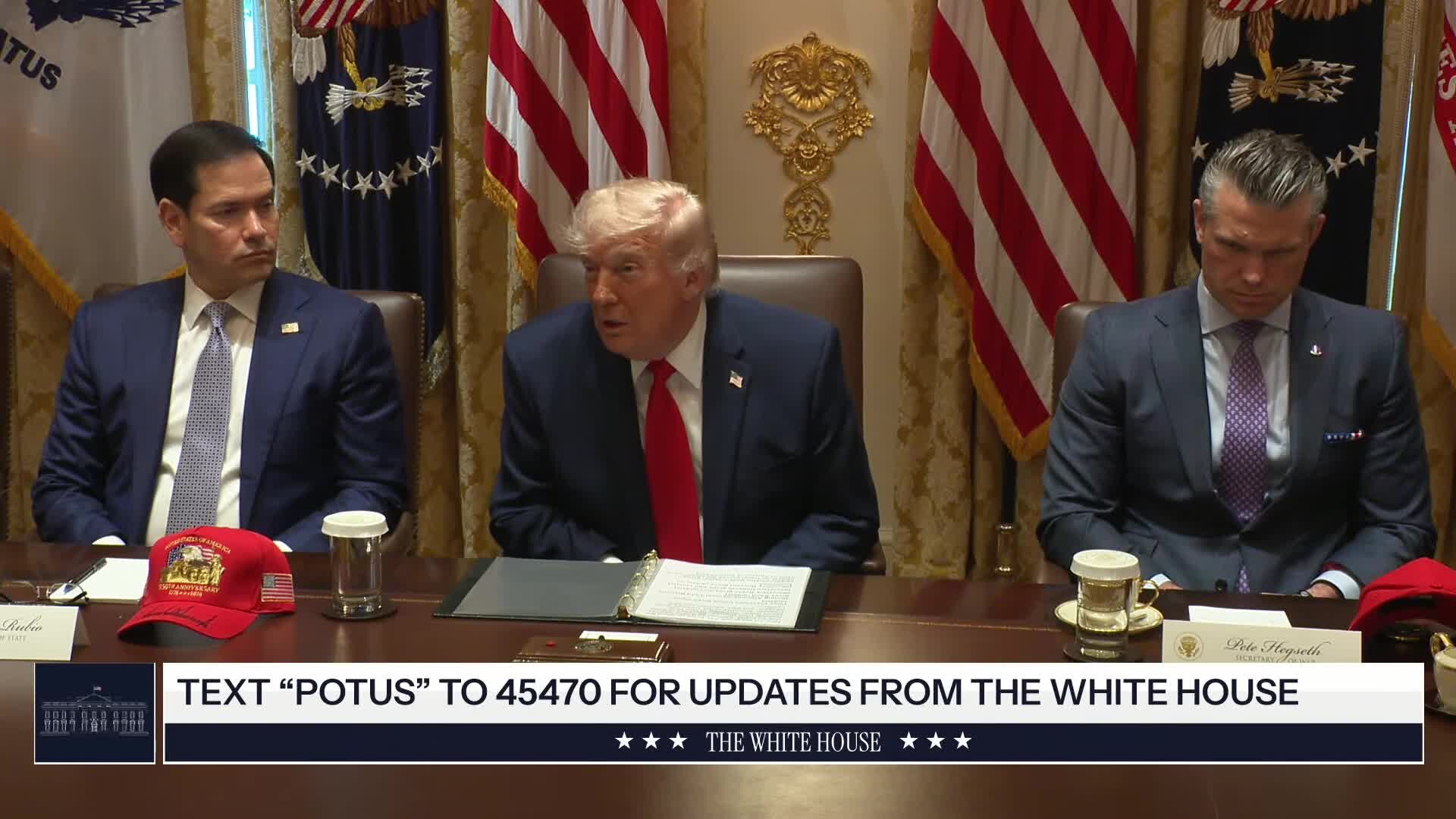

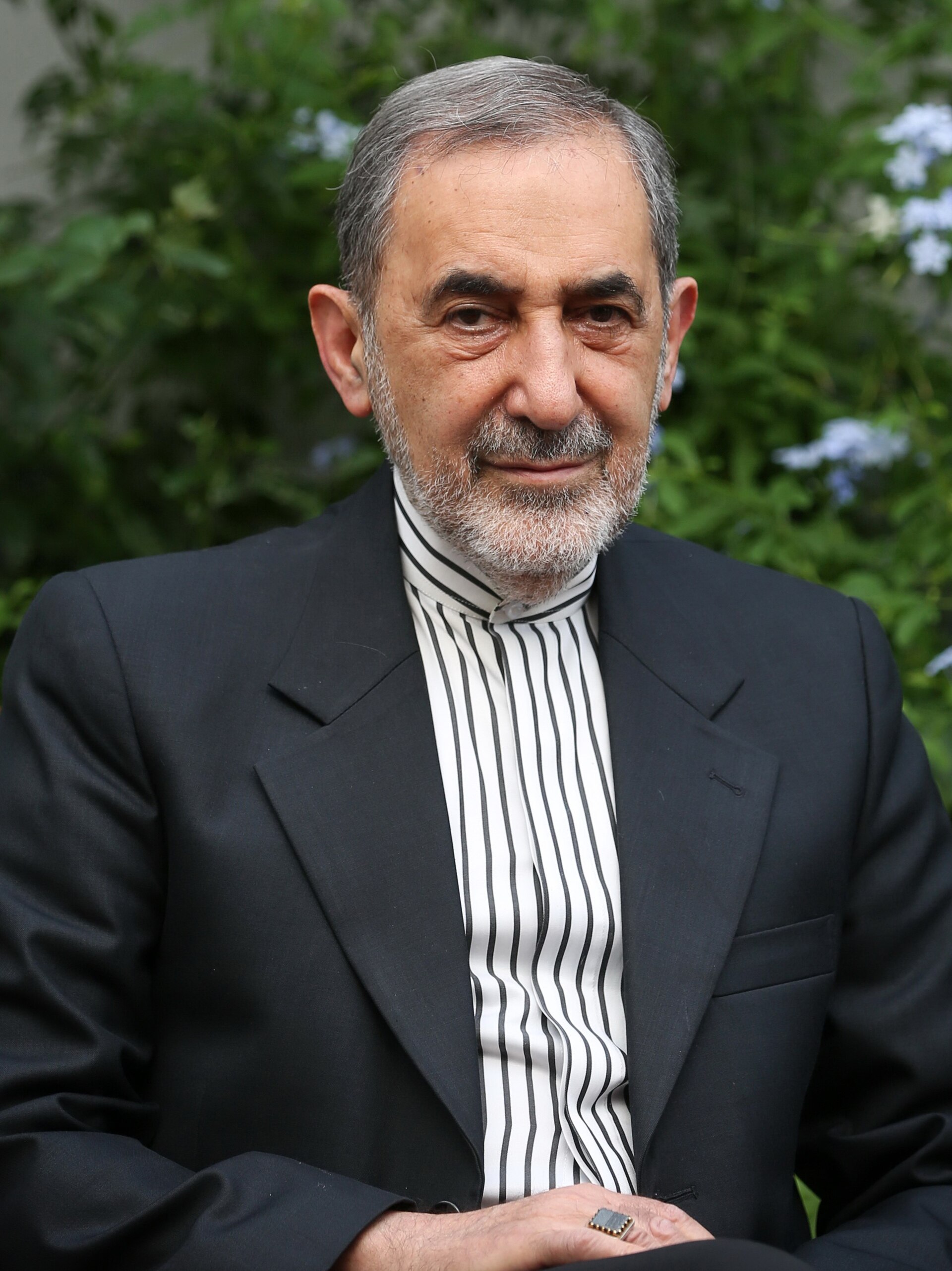
RIYADH — Ali Akbar Velayati, the most senior surviving foreign-policy voice inside Iran’s Supreme Leader advisory apparatus, declared on May 27 that the Strait of Hormuz — not signatures, not treaties, not diplomatic frameworks — is the “real guarantor” of any nuclear deal with the United States, a formulation that converts a temporary ceasefire variable into permanent deal architecture and traps Saudi Arabia inside a fiscal crisis it can neither negotiate its way out of nor afford to endure. “Papers and signatures are not guarantees,” Velayati posted, in a statement carried by IRNA and PressTV on the same day Iran’s negotiating delegation returned from Doha without signing an agreement and Donald Trump told his Cabinet he wanted “no sanctions, no money, no nothing” from Tehran. “The objective guarantee for preserving any agreement is the Strait of Hormuz.”
The distinction Velayati is drawing is not semantic, and it is not rhetorical — it is structural. If Hormuz governance remains what the leaked Axios draft of the US-Iran memorandum of understanding describes as a 60-day provisional reopening, then Saudi Arabia’s fiscal hemorrhage (a record $33.5 billion first-quarter deficit at Brent prices below its $108-111 breakeven) is transitional: painful, recoverable, finite. If Iran succeeds in embedding Hormuz governance as a permanent feature of whatever deal emerges — and every institutional signal from Tehran suggests this is exactly the intent — then the kingdom faces a fundamental reordering of the region’s energy architecture around a strait it cannot control, cannot afford to see reopened on Iran’s terms, and had no voice in designing. Saudi Arabia has been excluded from all five rounds of US-Iran negotiations spanning 106 days. It has zero input into how the permanent architecture of the strait that carries its economic survival is being drawn.
Table of Contents
- Who Is Velayati — and Why Does His Voice Outrank the Foreign Minister’s?
- What Velayati Actually Said
- Why Does the Temporary-vs-Permanent Distinction Matter?
- The PGSA Was Never a Bargaining Chip
- How Deep Is Saudi Arabia’s Fiscal Trap?
- What Would a Permanent Hormuz Toll Cost the Gulf?
- The Double Exclusion
- The IRGC Kill-Switch Problem
- Two Frameworks, One Strait — and Riyadh in Neither
- Frequently Asked Questions
Who Is Velayati — and Why Does His Voice Outrank the Foreign Minister’s?
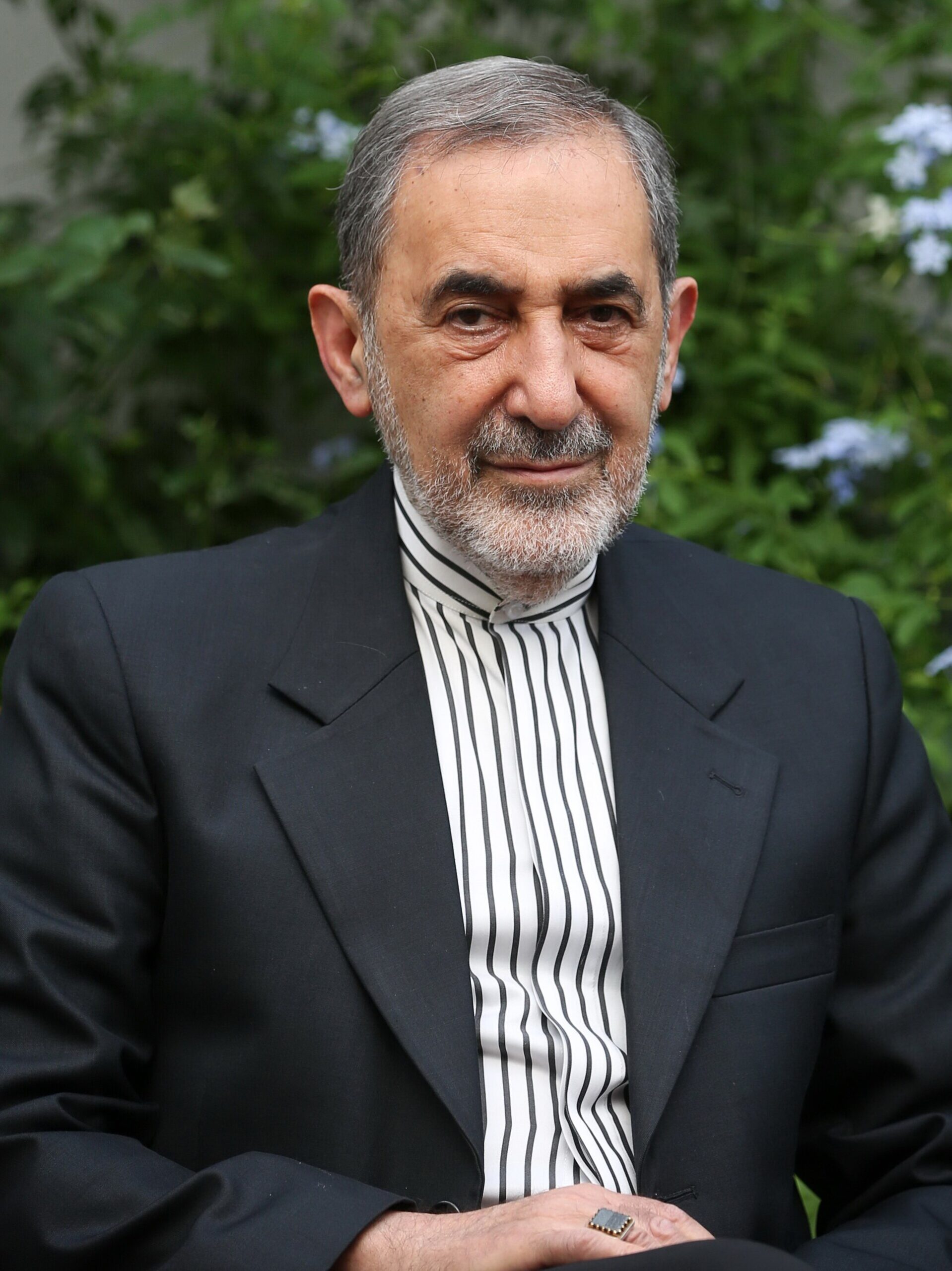
Ali Akbar Velayati holds three simultaneous institutional positions inside the Supreme Leader’s decision-making architecture — Senior Adviser to Mojtaba Khamenei on International Affairs, Expediency Council member since 1997, and president of the Center for Strategic Research — that place him above the foreign minister’s chain of command. When Velayati speaks on foreign policy, the parameters of any deal have already been set before Araghchi’s team boards a plane.
Ali Akbar Velayati is not a minister. He holds no cabinet portfolio. He commands no division. He was reappointed to the Expediency Council in September 2022; he serves concurrently as president of the Center for Strategic Research, the Expediency Council’s analytical and policy arm. When Velayati speaks on foreign policy, he is not freelancing — he is transmitting from the Leader’s advisory apparatus, where the real parameters of any deal are set before Araghchi’s negotiating team ever boards a plane to Doha or Islamabad.
His institutional legitimacy is rooted in tenure that no living Iranian diplomat can match: sixteen consecutive years as foreign minister from 1981 to 1997, the longest such service in the Islamic Republic’s history, spanning the entirety of the Iran-Iraq War and its aftermath. The US Treasury’s sanctions designation of Velayati in 2019 described him as part of “the Supreme Leader’s inner circle.” Critical Threats, the American Enterprise Institute’s Iran tracker, has called him “a window into the foreign policy of Iran’s Supreme Leader.” When the Supreme Leader’s office wants to signal a position that constrains what the foreign minister can agree to, Velayati is the instrument.
This matters now more than it has in years, because the man who would normally occupy the institutional space between the Leader’s advisory circle and the negotiating table — SNSC Secretary Ali Larijani — was assassinated on March 17, 2026. His successor, Zolghadr, was appointed a week later and carries neither the institutional memory nor the political weight Larijani wielded. Velayati is now, by default, the most senior surviving institutional voice in the Leader’s foreign-policy architecture — and he has chosen this moment to declare that the Strait of Hormuz, not the diplomatic process, is the real guarantee.
The Middle East briefing 3,000+ readers start their day with.
One email. Every weekday morning. Free.
What Velayati Actually Said
The statement, posted on X and carried by both IRNA English and PressTV on May 27, 2026, is worth reading in its component parts because each clause does specific institutional work. “This time, papers and signatures are not guarantees” — the phrase “this time” is a direct invocation of the 2015 JCPOA, which Iran’s institutional establishment considers a binding lesson in Western betrayal after Trump’s 2018 withdrawal. “The objective guarantee for preserving any agreement is the Strait of Hormuz” — the word “objective” is doing the heaviest lifting here: it positions geography as a fact that exists independently of diplomatic will, making Hormuz governance not a concession Iran offers but a reality any deal must accommodate.
The second statement extended the frame into historical permanence: “Geography does not lie, and it is the final judge of any written treaty.” And then the civilizational register: “Every aggressor who came seeking domination, from Alexander and Genghis Khan to Trump, was ultimately absorbed by Iran’s civilization.” This is not bluster from a mid-ranking official testing a talking point — it is doctrinal language from the Leader’s senior adviser, delivered in the same 48-hour window as Mojtaba Khamenei’s 14-page Arafah Day message declaring that “nations and lands will no longer serve as shields for American bases.” The coordination is architectural, not coincidental.
“Papers and signatures are not guarantees. The objective guarantee for preserving any agreement is the Strait of Hormuz.”
Ali Akbar Velayati, Senior Adviser to Supreme Leader Mojtaba Khamenei, May 27, 2026
Why Does the Temporary-vs-Permanent Distinction Matter?
If Hormuz reopening remains a provisional term — a 60-day confidence measure that expires and can be renegotiated — Saudi Arabia’s fiscal hemorrhage is survivable. If Velayati’s framing holds and Hormuz governance becomes the structural guarantee of the deal itself, the kingdom faces a permanent reordering of the region’s energy architecture it had no voice in designing and cannot afford to accept.
The US-Iran memorandum of understanding under negotiation, as described by Axios on May 24, frames Hormuz governance in explicitly provisional terms: a 60-day window during which “the Strait of Hormuz would be open with no tolls and Iran would agree to clear the mines it deployed.” This is ceasefire language — a confidence-building measure with a built-in expiry date, designed to create breathing space for the harder negotiations on enrichment caps, frozen assets, and the Lebanon clause. Max Boot of the Council on Foreign Relations proposed an “open for open” formula — both sides simultaneously lift blockades — framing Hormuz reopening as a ceasefire variable, not a governance settlement.
Velayati’s statement obliterates that framework. By declaring Hormuz the “real guarantor” of any deal — not a provisional term within a deal, but the guarantee that the deal holds — he is positioning the strait as permanent architecture. This is not a negotiating demand that can be horse-traded against enrichment caps or asset releases; it is a statement about the conditions under which any agreement exists at all. The difference between “Iran will reopen Hormuz for 60 days as a confidence measure” and “Hormuz is the permanent guarantor of whatever we sign” is the difference between a fiscal squeeze Saudi Arabia can outlast and one it cannot.
Consider Foreign Minister Araghchi’s own language from April 17, when he declared Hormuz “completely open for the remaining period of ceasefire.” The conditional framing — “remaining period” — explicitly acknowledged that Hormuz governance was not settled. Six weeks later, the Leader’s senior adviser has landed on a formulation that removes the conditionality entirely. The trajectory from Araghchi’s “remaining period” to Velayati’s “real guarantor” is the trajectory from temporary to permanent — and nobody in Riyadh was consulted at any point along it.
The PGSA Was Never a Bargaining Chip
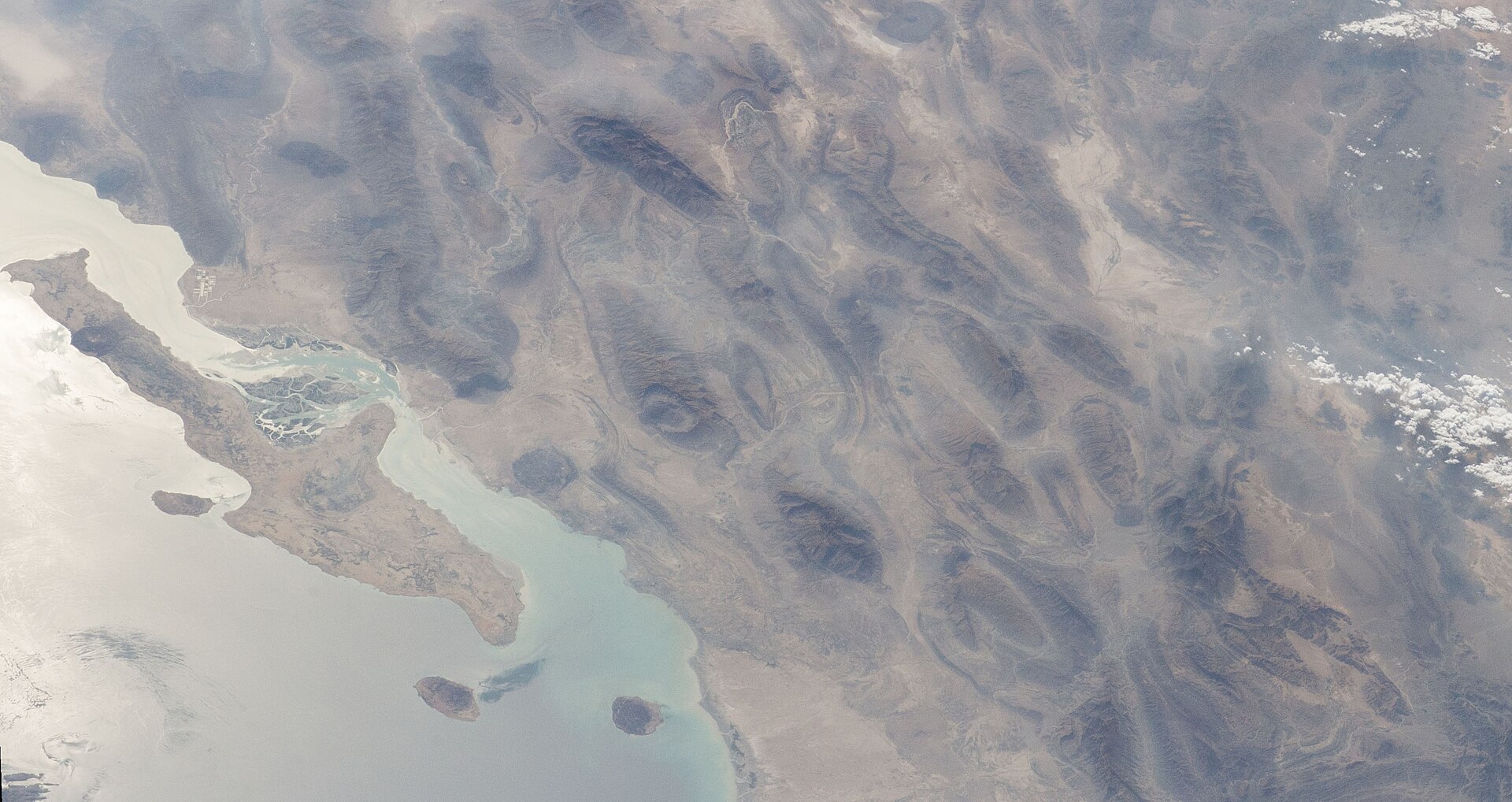
The Persian Gulf Strait Authority was formally established on May 5, 2026 — six days before Round 5 of US-Iran negotiations began. This sequencing detail, largely unremarked in Western coverage, is the single most important piece of evidence for Iran’s intent: Tehran did not create the PGSA during negotiations as a bargaining chip to be traded away. It created the institution before the current round of talks resumed, signaling that negotiators would inherit it as a fait accompli, not bargain over it as a concession. The PGSA launched its X account on May 18, the same day it began collecting what multiple reports describe as approximately $2 million per transit from vessels moving through the strait.
The administrative architecture is designed for permanence. The PGSA operates from a corridor entirely inside Iran’s 12-nautical-mile territorial sea — threading between Qeshm and Larak islands inbound, south of Larak outbound — converting what UNCLOS Article 38 defines as a “non-suspendable” transit-passage zone into sovereign waters where Iran claims the older, more restrictive “innocent passage” regime applies, requiring coastal-state permission for transit. Iran signed UNCLOS in 1982 but has never ratified it, declaring itself unbound by Part III — the very section that guarantees transit-passage rights through international straits. The PGSA’s legal foundation rests not on international law but on Iran’s rejection of it.
On May 21, Bloomberg reported that Iran and Oman were in talks to formalize a permanent toll system — the institutional next step beyond unilateral collection. Iranian Ambassador to France Mohammad Amin-Nejad articulated the revenue logic with diplomatic polish: “Those who wish to benefit from this traffic must also pay their share.” Trump’s response — “We want it open, we want it free, we don’t want tolls” — captures the American negotiating assumption: that the PGSA is something to be dismantled. Velayati’s statement captures the Iranian institutional position: that it is the guarantee.
How Deep Is Saudi Arabia’s Fiscal Trap?
Saudi Arabia’s Q1 2026 deficit hit $33.5 billion — 76% of its full-year target consumed in 90 days. Brent closed May 27 at $99.18 against a fiscal breakeven of $108-111 per barrel. Actual production stands at 6.879 mbpd against a quota of 10.291 mbpd, with the Petroline already at its 7 mbpd ceiling. Every pathway to closing those gaps runs through Hormuz — a strait Saudi Arabia has no role in governing.
The numbers describe a trap with two jaws, and both are closing. Saudi Arabia’s first-quarter 2026 deficit hit SAR 125.7 billion — $33.5 billion — the largest quarterly shortfall since 2018, consuming 76% of the kingdom’s full-year SAR 165 billion deficit target in just 90 days. Brent closed May 27 at $99.18, which sounds healthy until measured against Bloomberg Economics’ Saudi fiscal breakeven of $108-111 per barrel — the price at which the kingdom’s budget balances. Every dollar below that range is money Saudi Arabia borrows or draws from reserves to sustain the spending its social contract depends on.
The production side is worse. Saudi actual output in April 2026 was 6.879 million barrels per day against an OPEC+ quota of 10.291 mbpd — a gap of 3.41 million barrels driven entirely by Hormuz blockade physics. The East-West Petroline, the kingdom’s only alternative export route bypassing the strait, hit its 7 mbpd operational ceiling on March 11 and cannot be expanded under any near-term timeline. Any production recovery toward the OPEC+ quota means adding output that the Petroline cannot absorb and Hormuz must carry. The strait is not a diplomatic issue for the kingdom — it is the physical ceiling on every barrel of economic recovery.
| Metric | Figure | Source |
|---|---|---|
| Saudi Q1 2026 deficit | $33.5 billion (76% of full-year target) | Bloomberg, May 5, 2026 |
| Brent close (May 27) | $99.18/bbl | Trading Economics |
| Saudi fiscal breakeven | $108-111/bbl | Bloomberg Economics |
| Saudi April production | 6.879 mbpd | OPEC data |
| OPEC+ June quota | 10.291 mbpd | OPEC JMMC |
| Production gap (Hormuz-driven) | 3.41 mbpd | HOS analysis |
| Petroline capacity ceiling | ~7 mbpd (reached March 11) | Bloomberg, March 28, 2026 |
| China Saudi oil arrivals (Feb → Jun projected) | 1.6 mbpd → 600,000 bpd (-62%) | OilPrice.com |
| Arab Light OSP to Asia (Mar → Apr) | ~$2/bbl → $20/bbl premium | Discovery Alert |
The customer collapse is the sharpest indicator. Chinese arrivals of Saudi crude fell from 1.6 million barrels per day in February to a projected 600,000 bpd by June — a 62% volume collapse at the kingdom’s single largest buyer, driven by the combination of Hormuz transit risk and the Arab Light official selling price premium that spiked from roughly $2 per barrel in March to $20 in April. Saudi Arabia is producing less, selling less, receiving less per barrel than its budget requires, and has no physical route to increase any of those numbers without a strait it has no voice in governing.
What Would a Permanent Hormuz Toll Cost the Gulf?
J.P. Morgan estimated $70-90 billion annually for Iran from a fully operational Hormuz toll regime — a figure that, at the upper end, would exceed the combined defence budgets of every GCC state except Saudi Arabia. Ali Mamouri of Deakin University, writing in The Conversation, broke the Gulf-states component into its constituent arithmetic: approximately $1.4 billion per month in combined oil and gas tolls, with $14 billion per year falling on Gulf states alone, and Gulf producers bearing more than 80% of total payments given their crude accounts for the overwhelming majority of Hormuz-transiting volume. The conclusion his figures deliver: Saudi Arabia, as the Gulf’s largest single producer, would be the single largest payer in any permanent toll system it had no role in designing.
Karim Sadjadpour of the Carnegie Endowment for International Peace, speaking on NPR on May 26, identified the strategic logic that makes this revenue stream structurally sticky: “The Iranian government doesn’t really want to give up control over the Strait of Hormuz because they see that as a potential revenue stream and a potential deterrent to deter future attacks. So long as Iran’s government remains in power, they have the ability to close the strait because they’re going to be sitting right there — and it’s cheap for them to do so.”
Jane Darby Menton, also at Carnegie, named the inversion explicitly: “Ironically, the Strait of Hormuz has emerged as a more credible ‘nuclear option’ for Iran than its nuclear program.” The irony she identifies is real — Iran spent decades building a nuclear programme as a deterrent, only to discover during the 2026 war that a geographic chokepoint it already controlled delivered more coercive power than centrifuges ever did. Mohammad Ayatollahi Tabaar of Rice University’s Baker Institute confirmed the priority shift: “Replenishing Iran’s conventional capabilities, particularly its missile and drone programs, and maintaining control over the Strait of Hormuz are more pressing concerns” than the nuclear programme itself.
Mamouri delivered the assessment that should keep Saudi planners awake: “Iran has raised the cost of any future military action against it, creating deterrence through economic risk rather than purely military means. Tehran is now likely to make this control a core part of its long-term strategic thinking.” When four independent analysts at three separate institutions converge on the same conclusion — that Hormuz control has displaced nuclear capability as Iran’s primary strategic asset — the convergence is the signal.
The Double Exclusion
Saudi Arabia’s position contains a structural contradiction that has no precedent in modern Gulf diplomacy: the kingdom cannot afford an open strait on Iran’s terms, and it cannot afford a closed one on anyone’s terms, and it has been excluded from every forum in which either outcome is being decided. Five rounds of US-Iran negotiations over 106 days, and Saudi Arabia has not been present at any of them. A 40-nation UK-France coalition to govern Hormuz transit announced in May — Saudi Arabia absent from the Northwood command structure, absent from the 27-signatory list as of May 12, absent from the 51-nation Paris framework as of April 17.
The PGSA collects tolls on the strait that carries Saudi Arabia’s economic survival, and Riyadh has no seat in that architecture either. Mamouri’s calculation that Gulf states would bear 80% of any permanent toll burden means Saudi Arabia — the Gulf’s largest producer, with 6.879 mbpd flowing through Hormuz-dependent routes once the pipeline ceiling is reached — would be the single largest payer in a governance system it had no role in designing. The kingdom would pay Iran for access to the global market, without any formal mechanism to contest the rate, challenge the legal basis, or participate in the administrative structure.
The Saudi Ministry of Foreign Affairs has been silent for more than nine consecutive days as of May 28 — through CENTCOM strikes on Iranian missile sites from Saudi airspace, through the Doha trifecta returning empty-handed, through Trump’s Cabinet reversal on sanctions, and now through Velayati’s declaration that the strait governing Saudi Arabia’s revenue is the permanent guarantor of a deal Saudi Arabia has no hand in. The silence is not ambiguity. It is the sound of a state with no available move.
The IRGC Kill-Switch Problem
Even if the foreign-minister track produced an agreement that temporarily removed PGSA tolls and reopened Hormuz under international-law transit-passage norms, the constitutional fracture inside Iran’s governance structure means any such agreement could be operationally negated. IRGC Commander Vahidi, who has held the position since March 1, 2026, exercises an institutional kill-switch over foreign-minister commitments via Articles 150 and 176 of Iran’s constitution — the same dual-track architecture that allowed Qassem Soleimani to conduct military operations that directly contradicted Foreign Minister Zarif’s diplomatic undertakings throughout the JCPOA period. Zarif himself described this dynamic in a leaked recording in April 2021: “diplomacy paid the price for military activities.”
The PGSA is an IRGC-coordinated institution. Its enforcement — vessel inspections, permit requirements, toll collection — operates through IRGC naval assets in the strait. An agreement signed by Araghchi to dismantle or suspend the PGSA would require IRGC cooperation to implement, and the IRGC’s institutional interests run in the opposite direction: the toll revenue (potentially billions annually by J.P. Morgan’s estimate), the strategic weight (Sadjadpour’s “deterrent” function), and the doctrinal alignment with Mojtaba Khamenei’s Arafah Day message all give the IRGC every reason to sustain the authority regardless of what the foreign minister signs. Velayati’s statement — issued from above the FM chain, inside the Leader’s advisory apparatus — effectively pre-authorises that institutional resistance by framing Hormuz governance as the guarantee itself.
Two Frameworks, One Strait — and Riyadh in Neither
The 2015 JCPOA — the most comprehensive Iran nuclear agreement ever negotiated — contained zero maritime provisions, zero Hormuz governance terms, and zero references to Iran’s control of the strait. The framework was deliberately limited to nuclear enrichment, sanctions relief, and inspection regimes. Velayati’s “real guarantor” declaration is a categorical expansion beyond any prior Iran deal architecture — the first time any senior Iranian institutional voice has demanded that Hormuz governance be embedded as a structural component of, not a sidebar to, the nuclear negotiation.
This expansion creates two competing governance architectures for the same waterway, and Saudi Arabia sits in neither. The PGSA offers an Iranian unilateral model: toll collection, permit requirements, sovereign-waters jurisdiction, with Iran-Oman bilateral talks as the only external negotiating track. The UK-France 40-nation coalition offers a multilateral model: Northwood-based command structure, freedom-of-navigation framework, international-law transit rights. Saudi Arabia vetoed the multilateral coalition’s predecessor — Project Freedom — between May 4 and May 8, invoking sovereignty objections, only to find itself with zero standing inside the framework that replaced it. The kingdom rejected one architecture and was excluded from the other.
“The Iranian government doesn’t really want to give up control over the Strait of Hormuz because they see that as a potential revenue stream and a potential deterrent to deter future attacks. So long as Iran’s government remains in power, they have the ability to close the strait because they’re going to be sitting right there — and it’s cheap for them to do so.”
Karim Sadjadpour, Carnegie Endowment for International Peace, NPR, May 26, 2026
The Petroline is already at its 7 mbpd ceiling, which means every barrel of the 3.41 mbpd quota gap must transit Hormuz under whichever governance regime prevails — PGSA tolls, coalition freedom-of-navigation, or some hybrid neither side has yet designed. Any recovery toward the OPEC+ quota requires not just access to the strait but predictable, affordable, stable access on terms that do not include paying Iran billions of dollars annually for the privilege of reaching the global market. Velayati’s statement makes clear that Iran regards those terms as non-negotiable features of any deal, not temporary concessions to be unwound once the ceasefire hardens into peace.
Fars News Agency underscored the point on May 24, responding to Trump’s Truth Social claim that the deal was “largely negotiated” with an immediate correction that it was “incomplete and inconsistent with reality” — and the formulation that landed hardest: “The Strait of Hormuz would remain under Iranian management.” Not “during the ceasefire.” Not “pending further negotiation.” Under Iranian management, full stop. Velayati’s statement three days later provided the institutional and doctrinal frame for what Fars stated as operational fact.
The man the US Treasury designated as part of the Leader’s inner circle — a figure who has advised two Supreme Leaders on foreign policy for three decades — has declared that the strait on which all of this depends is not a ceasefire variable to be negotiated but the permanent guarantee that any deal holds. Mamouri, at Deakin, offered the assessment that serves as both analysis and epitaph for Saudi Arabia’s negotiating position: “Iran’s control over the strait is much easier to maintain than a US blockade in international waters.”
Frequently Asked Questions
What is the Persian Gulf Strait Authority and does it have international legal recognition?
The PGSA is a unilateral Iranian institution established on May 5, 2026, that administers transit permits and collects tolls from vessels passing through the Strait of Hormuz. It operates from a corridor inside Iran’s 12-nautical-mile territorial sea between Qeshm and Larak islands. The authority has no international legal recognition — the US Office of Foreign Assets Control (OFAC) has warned that payments to the PGSA could trigger sanctions exposure, and no Western-flagged operator has publicly acknowledged making a payment. So far, toll payments of approximately $2 million per transit have been made primarily by Chinese-linked shadow fleet vessels using yuan-denominated transactions.
Can any country legally challenge the PGSA toll system at an international court?
The options are narrow. The International Court of Justice requires state consent to jurisdiction, and Iran has not accepted the ICJ’s compulsory jurisdiction. ITLOS, the International Tribunal for the Law of the Sea, derives its authority from UNCLOS — which Iran has not ratified, making ITLOS proceedings unavailable. A UN Security Council referral is blocked by Russia and China, both of which have shadow-fleet financial interests in the PGSA regime. The practical result is that there is no binding international forum with unambiguous jurisdiction over Iran’s toll system, leaving affected states with unilateral or coalition pressure as their only enforcement tools.
Could Saudi Arabia build additional pipeline capacity to bypass Hormuz?
The East-West Petroline, Saudi Arabia’s primary Red Sea export alternative, reached its operational ceiling of approximately 7 mbpd on March 11, 2026. New pipeline construction of comparable scale would require 3-5 years of planning and construction under peacetime conditions, enormous capital expenditure at a time when Saudi Arabia is running its largest quarterly deficit since 2018, and routing through terrain that presents its own security challenges. The UAE’s ADNOC has the Fujairah pipeline (1.5 mbpd) bypassing Hormuz, but Saudi Arabia has no equivalent secondary route, and the OPEC+ quota gap of 3.41 mbpd means even a second pipeline of Petroline scale would not fully restore export capacity to pre-blockade levels.
Why did Iran accept no Hormuz provisions in the 2015 JCPOA?
Iran’s position in 2015 was that Hormuz governance was a separate sovereign matter — not a nuclear question — and that linking the two would legitimise outside interference in Iranian maritime authority. The Obama administration accepted this separation to keep the negotiating scope manageable. In 2026, Iran has inverted the logic: it is now Iran, not the West, demanding that the two issues be explicitly linked — but on terms that make Hormuz governance the guarantee of the nuclear deal rather than a concession within it. The strategic position has flipped entirely.
What is the OPEC+ JMMC meeting on June 7 and why does it matter?
The Joint Ministerial Monitoring Committee meets on June 7, 2026, to review production quotas. Saudi Arabia’s current quota stands at 10.291 mbpd against actual production of 6.879 mbpd — a gap of 3.41 million barrels per day that the kingdom physically cannot close without Hormuz access. The meeting will force a formal reckoning with the blockade’s production impact and may require Saudi Arabia to acknowledge publicly that its output gap is structural rather than voluntary — a politically damaging admission for a kingdom that has historically used production discipline as a tool of OPEC leadership, not a constraint imposed by a rival’s geographic chokepoint.