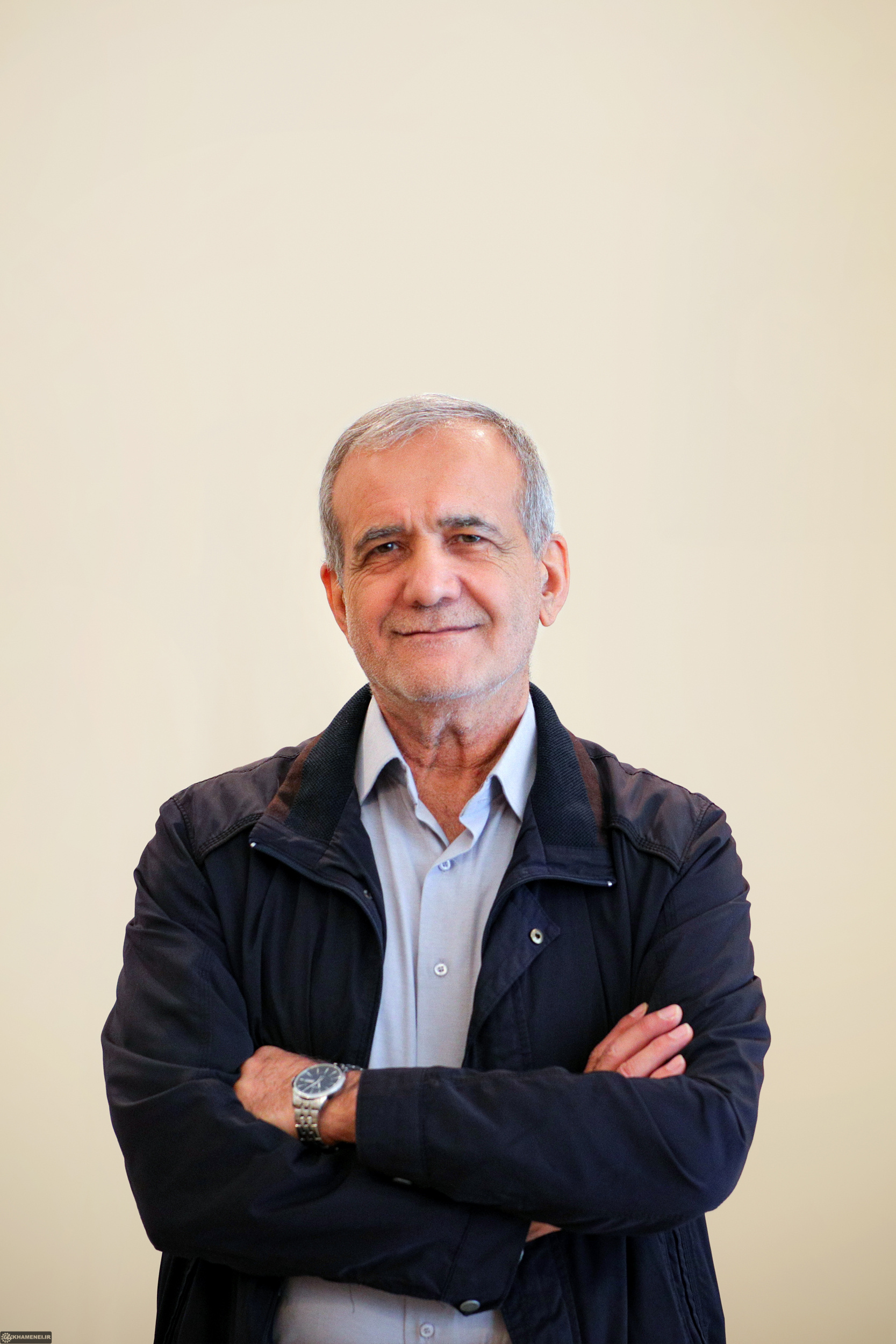

TEHRAN — Iran’s president may not have resigned, but the institution he nominally leads has already been emptied of the authority that would make his signature worth anything on a deal — and every diplomatic framework the United States and Saudi Arabia have built since February 2026 assumes that signature still carries weight. Iran International reported on May 31 that Masoud Pezeshkian submitted a formal resignation letter to the office of Supreme Leader Mojtaba Khamenei, citing the Islamic Revolutionary Guard Corps’ “total takeover” of governance and his own exclusion from “major and vital decision-making processes”; Pezeshkian denied the resignation the next day, appearing before his cabinet to declare “I will continue as long as I breathe,” but he did not deny the power loss the letter described, and the IRGC-affiliated Tasnim News Agency — the same outlet that carried Iran’s formal suspension of MOU negotiations on June 1 — was deployed to confirm that the president “continues to carry out his duties,” a formulation that answers the wrong question entirely.
The letter’s authenticity is, in a narrow sense, secondary to the structural diagnosis it contains, because that diagnosis has been confirmed by every institutional data point available since the war began: the IRGC commander who vetoes cabinet appointments, the military council that controls communication with the Supreme Leader, the foreign ministry that learns about missile strikes from television, and the MOU suspension announced not through diplomatic channels but through an outlet that answers to the Revolutionary Guard. Saudi Arabia’s fiscal recovery thesis — built on a deal that closes, Brent prices that recover from $91 toward the $108–111 PIF-inclusive breakeven, and an Iranian counterparty that can actually execute its commitments — now depends on whether the institution sitting across the table from American negotiators can bind the institution that controls the missiles, the uranium, and the Strait of Hormuz. The evidence, accumulated across 94 days of war, suggests it cannot.
Table of Contents
- The Denial That Confirmed the Diagnosis
- Who Speaks for Iran When the Foreign Ministry Cannot?
- Zarif Already Told Us the Answer
- The IRGC Veto Chain Since February 28
- Has the SNSC Become an IRGC Committee?
- What Broke at Islamabad and Why It Cannot Be Fixed
- The Counterparty That Cannot Execute
- Saudi Arabia Is Betting Its Budget on a Signature That Doesn’t Bind
- The Only Precedent That Worked Required a Different Iran
- FAQ
The Denial That Confirmed the Diagnosis
The resignation letter, as reported by Iran International on May 31, contained language that no sitting Iranian president has used about the IRGC in a formal document directed at the Supreme Leader’s office. Pezeshkian wrote that a “vacuum” had enabled “hardline factions within the IRGC to take control of affairs” and that under such circumstances he was “unable to run the government and carry out his legal responsibilities.” Iran International sourced the report to “a source familiar with the matter” and “anonymous officials,” and the outlet has stood by it as published.
The denial apparatus activated within hours, but its architecture revealed more than the letter itself. The presidential office called the report “ridiculous media games.” Deputy communications chief Seyed Mehdi Tabatabaei posted on X that Iran International had substituted “their own wishful thinking in place of reality” — a denial of the outlet’s motives, not a substantive refutation of the institutional power shift it described. Government spokeswoman Fatemeh Mohajerani told IRNA that the report was “a continuation of a pattern to spread instability,” deploying a template denial that could have been applied to any unfavourable story about any Iranian institution at any time in the last forty-five years.
Pezeshkian’s own words, delivered at a cabinet meeting on June 1, were the most telling element of the denial cycle. “I will continue as long as I breathe,” he told his ministers, according to PressTV. “Either we proceed with strength, or we are martyred — in either case, it is victory for us.” He denied the resignation; he did not deny the powerlessness, and the language he chose — martyrdom as a species of victory — is the vocabulary of endurance under siege, not of executive authority.
PressTV, the state broadcaster, framed the resignation report as “falsely claimed” by “the Israeli-backed Iran International network,” but its coverage of Pezeshkian’s cabinet appearance did not include any rebuttal of the specific institutional claims — the IRGC’s control of appointments, the military council’s communication cordon, the foreign ministry’s exclusion from strike decisions — that have been independently documented across multiple outlets since March 2026. The denial was of the foreign-media narrative, not of the institutional reality it described.
The Middle East briefing 3,000+ readers start their day with.
One email. Every weekday morning. Free.
Who Speaks for Iran When the Foreign Ministry Cannot?
On June 1, Iran formally suspended MOU negotiations, citing Israeli violations of the Lebanon ceasefire. The announcement came via Tasnim News Agency — an IRGC-affiliated outlet — not through Foreign Minister Abbas Araghchi, not through the presidential office, not through IRNA, and not through any diplomatic channel. A civilian government whose foreign ministry was a genuine counterparty in nuclear negotiations would have communicated the suspension through the foreign ministry, because the foreign ministry’s control over the negotiating channel is precisely what gives that channel credibility with the other side. Tasnim’s role as the vehicle of announcement was itself an institutional statement: the IRGC’s media arm is now the authoritative voice on war, on diplomacy, and — as of May 31 — on whether the president remains in office.
The same Tasnim that carried the MOU suspension was deployed hours earlier to deny the resignation: “Reports circulating in the international media were not true. Pezeshkian continues to carry out his duties.” The IRGC’s outlet is now simultaneously the entity that suspends negotiations and the entity that certifies presidential continuity — a combination that no diplomatic counterparty should find reassuring.
Aaron David Miller, the former US negotiator and Carnegie Endowment fellow, described the structural reality in terms that predated the resignation letter but anticipated it precisely. “We’ve gone from divine power to hard power,” Miller told Reuters in late April 2026. “From the influence of the clerics to the influence of the Revolutionary Guard Corps. This is how Iran is being governed.”
Zarif Already Told Us the Answer
The resignation letter, whether authentic or fabricated, describes a condition that Iran’s own former foreign minister documented in granular, damning detail five years ago. In a leaked audiotape published by Iran International in April 2021, Mohammad Javad Zarif — who negotiated and signed the JCPOA — delivered the most comprehensive insider account of the foreign ministry’s structural irrelevance ever recorded by a senior Iranian official.
“In the Islamic Republic the military field rules. … I have never been able to ask Soleimani to do something that would serve my diplomatic moves.”
— Mohammad Javad Zarif, leaked audiotape, April 2021
Zarif’s account went further than a complaint about personal exclusion. He described a system in which the IRGC operated a parallel foreign policy designed to undermine agreements the foreign ministry had signed: “From the time the nuclear deal was reached in June 2015 until the beginning of its implementation in December that year, IRGC commanders did all they could to derail the agreement.” Qassem Soleimani, Zarif said, made a visit to Moscow “coordinated without Foreign Ministry knowledge” as part of that effort. The foreign ministry’s role, in Zarif’s formulation, was “nil.”
The JCPOA was nonetheless signed, implemented, and sustained for three years — but it was sustained by the personal authority of Ali Khamenei, who endorsed the deal over IRGC objections because he judged the economic pressure intolerable. Mojtaba Khamenei, who assumed the Supreme Leader’s position on March 8, 2026, is described by Reuters insiders as “a figure of assent rather than command, endorsing outcomes forged through institutional consensus, rather than imposing authority.” The structural gap between Ali Khamenei’s capacity to overrule the IRGC and Mojtaba’s incapacity to do so is the gap through which Pezeshkian’s authority has disappeared — and with it, the assumption that the civilian government can deliver on any commitment the IRGC does not independently choose to honour.
The IRGC Veto Chain Since February 28
The power shift described in the resignation letter did not happen on May 31 — it accumulated across a documented sequence of institutional confrontations, each of which Pezeshkian lost. In April 2026, Pezeshkian proposed candidates for intelligence minister; every one was rejected by IRGC Commander Ahmad Vahidi, who stated plainly: “In wartime, the IRGC selects leadership, not the president.” The constitutional basis for this claim is nonexistent — Article 133 of the Iranian constitution gives the president authority to appoint ministers — but the constitutional basis was never the point, because the IRGC’s veto operates through institutional weight, not legal text.
On April 4, Pezeshkian took the extraordinary step of naming specific IRGC commanders — Vahidi and Ali Abdollahi — to IRGC intelligence chief Hossein Taeb as responsible for “acting unilaterally and driving escalation through attacks on regional countries,” telling Taeb their policies “had destroyed any remaining chance of a ceasefire” and were steering Iran toward “a huge catastrophe.” No sitting Iranian president in the Islamic Republic’s history had previously named individual commanders to the intelligence apparatus as agents of diplomatic destruction. The complaint was documented by Iran International on April 7; it produced no visible consequence.
A month later, the IRGC struck targets in the UAE. Pezeshkian’s response, reported by Iran International on May 4 and Israel Hayom on May 5, described the strikes as “completely irresponsible” and “madness,” carried out “without the government’s knowledge or coordination.” He requested an urgent meeting with Mojtaba Khamenei. The meeting’s outcome, if it occurred, has not been reported — but the strikes continued, the UAE strikes were not retracted, and Pezeshkian’s public language shifted from complaint to endurance within weeks.
| Date | Event | Pezeshkian’s Response | Outcome |
|---|---|---|---|
| April 2026 | Intelligence minister candidates rejected by Vahidi | Proposed alternatives | All rejected; IRGC retained selection authority |
| April 4, 2026 | Pezeshkian names Vahidi and Abdollahi to Taeb as escalation agents | “Destroying any remaining chance of a ceasefire” | No visible consequence; escalation continued |
| May 4–5, 2026 | IRGC strikes UAE without government knowledge | “Completely irresponsible,” “madness” | Requested urgent Mojtaba meeting; strikes not retracted |
| May 31, 2026 | Resignation letter reported | Denied resignation; did not deny power loss | Tasnim (IRGC outlet) certified presidential continuity |
| June 1, 2026 | MOU suspension announced via Tasnim, not FM | No public statement from Pezeshkian | IRGC outlet controls diplomatic communication channel |
Has the SNSC Become an IRGC Committee?
The Supreme National Security Council is the only body in Iran’s constitutional architecture that can legally ratify security commitments, and its decisions become binding only after confirmation by the Supreme Leader under Article 176 of the constitution. The president chairs the SNSC, but “chairs” is a procedural description that obscures the actual distribution of power within the body: the Supreme Leader appoints the SNSC secretary, designates his own representatives to the council, and the IRGC commander-in-chief sits as a standing member appointed by the Supreme Leader, not by the president. Pezeshkian cannot remove him.
The SNSC secretary is the operational pivot of the institution — the figure who controls the agenda, manages the flow of intelligence to the council, and maintains the institutional relationship with the Supreme Leader’s office. Ali Larijani, named to the position by Mojtaba Khamenei in early 2026, was the most consequential non-IRGC bridge figure in the security establishment — a former parliament speaker, a former SNSC secretary under Ali Khamenei, and a conservative with enough institutional credibility to mediate between the civilian government and the military. An Israeli strike killed Larijani on March 17, 2026. His replacement, announced in late April according to Reuters and the Soufan Center, is Mohammad Baqr Zolqadr — a former IRGC commander whose appointment further cemented IRGC primacy inside the one body that any MOU must pass through.
The Soufan Center’s IntelBrief of March 26 stated the structural consequence plainly: “Parliament Speaker Mohammad Bagher Ghalibaf and Foreign Minister Abbas Araghchi cannot make decisions without the IRGC’s approval.” A newly formed military council of senior IRGC officers has erected a security cordon around Mojtaba Khamenei, preventing government reports from reaching him through normal channels and enforcing communication through motorcycle couriers — a physical architecture of isolation that ensures the civilian government’s information reaches the Supreme Leader only after IRGC filtering, if it reaches him at all.
What Broke at Islamabad and Why It Cannot Be Fixed
The Islamabad talks, which represented the most advanced stage of US-Iran engagement on the MOU, exposed the counterparty problem in operational terms that no amount of diplomatic creativity can resolve. The Iranian negotiating delegation included Foreign Minister Araghchi and Parliament Speaker Ghalibaf — the civilian faces of Iran’s diplomatic apparatus. Ahmad Vahidi, the IRGC commander who holds effective veto authority over security commitments, was never at the table.
The structural consequence was documented by Gulf sources in contact with US negotiators: what American officials agreed with Araghchi was subsequently rejected by Vahidi. The negotiating team could commit to language; it could not commit to execution, because the entity that controls the Hormuz enforcement apparatus, the HEU stockpile location, and the missile inventory is not the entity that sat across from American diplomats. This is not a breakdown in diplomatic communication — it is a structural condition in which the civilian government functions as an interface without authority, capable of receiving proposals and transmitting responses but incapable of binding the institution that must actually comply with whatever is agreed.
The MOU draft itself, as reported by Axios, violates 8 of 10 conditions set by Mojtaba Khamenei for any agreement with the United States (according to Iran International’s May 29 reporting). The US and Iran are negotiating two different deals — Washington’s version assumes Araghchi can deliver; Tehran’s version requires Mojtaba’s endorsement, which requires IRGC assent, which requires conditions the US draft does not meet. The resignation letter, whether real or not, describes the gap between those two documents as unbridgeable from inside the Iranian system.
The Counterparty That Cannot Execute
A deal requires three things: a text both sides accept, a counterparty that can sign with binding authority, and an enforcement mechanism that ensures compliance. The MOU process has produced an evolving text but has failed on the second requirement, and the third depends entirely on the second.
The IRGC controls the Strait of Hormuz through the Persian Gulf Security Architecture (PGSA) toll system and its naval and drone assets deployed from Qeshm Island, Abu Musa, and the Sirik Island drone C2 facility. It controls the physical location of Iran’s 60%-enriched HEU stockpile — approximately 440.9 kg as of the last IAEA verification in June 2025, with continuity of knowledge formally lost after a 93-day blackout. It controls the missile inventory that has been deployed against Saudi, Kuwaiti, Emirati, and American targets since February 28.
Araghchi can sign a document. He cannot compel the IRGC to withdraw from Hormuz, surrender uranium it has declared a sovereign asset under Khamenei directive, or stand down missile batteries that the IRGC views as its primary instrument of deterrence. The gap between signature authority and execution authority is a feature of the Islamic Republic’s institutional design, one that existed under Ali Khamenei but was bridged by his personal authority and willingness (however grudging) to overrule military objections when the economic pressure became intolerable. That bridge no longer exists.
Washington appears to understand this, at least partially. A US intelligence assessment reported by the Washington Post on March 16 predicted “a weakened but more hard-line government in Tehran backed by the powerful Islamic Revolutionary Guard Corps security forces, despite withering airstrikes.” The assessment described the consequence of the war’s institutional reshuffling without drawing the diplomatic conclusion: if the hard-line government backed by the IRGC is the actual governing authority, then the civilian government is a counterparty in name only, and any agreement signed by the foreign ministry is a promissory note drawn on an account someone else controls.
Saudi Arabia Is Betting Its Budget on a Signature That Doesn’t Bind
The Saudi fiscal position has deteriorated from uncomfortable to structurally dangerous since the war began, and every element of the recovery thesis requires an Iranian deal that closes. Brent crude closed at $91.37 on May 29, down from $114.97 at the May 4 peak — a decline of more than $23 per barrel in less than four weeks, driven by deal optimism that assumes the MOU will be signed and Iranian oil will return to global markets. The PIF-inclusive fiscal breakeven sits at $108–111 per barrel, PIF liquid cash has fallen to $15 billion — a six-year low — and Q1 2026 deficit reached SAR 125.7 billion ($33.5 billion), consuming 76% of the full-year SAR 165 billion deficit target in ninety days.
Goldman Sachs analyst Daan Struyven has modelled Iranian production returning at 800,000 barrels per day within six months of a signed deal, with Brent at $90 by Q4 under current conditions and a “Quick Peace” scenario from Wood Mackenzie projecting $80 by end-2026 and $65 through 2027. Aramco’s Q1 2026 free cash flow of $18.6 billion already falls short of its $21.89 billion quarterly dividend — a coverage ratio of 0.85x that becomes structurally unsustainable if Brent stays below $100 for more than two quarters.
Every dollar of this exposure is priced against the assumption that the MOU will produce a deal, the deal will produce sanctions relief, sanctions relief will produce a Hormuz reopening, and the reopening will lift Brent toward a range that covers Saudi fiscal commitments. But the deal requires a counterparty that can execute — and if the entity negotiating the deal cannot bind the entity that controls the oil chokepoint, the uranium stockpile, and the missile batteries, then the fiscal recovery thesis is built on a contractual fiction. The market has not priced the counterparty risk because markets price political risk in binary — deal or no deal — rather than in the structural terms that determine whether a signed deal produces compliance.
The Only Precedent That Worked Required a Different Iran
The most instructive comparison is the one that offers the least comfort. The only successful ceasefire in the Islamic Republic’s history — the acceptance of UN Security Council Resolution 598 that ended the Iran-Iraq War in 1988 — worked because Ayatollah Khomeini appointed Akbar Hashemi Rafsanjani as acting Commander-in-Chief, vesting civilian and military authority in a single person who could simultaneously commit to terms and enforce compliance across the military apparatus. Khomeini described the decision as “drinking poison,” but he drank it because the alternative was the destruction of the state, and his personal authority was sufficient to compel IRGC compliance even against the Guard’s institutional preferences.
No equivalent mechanism exists in 2026. Mojtaba Khamenei lacks the personal authority to overrule the IRGC, and no figure in the current system holds the dual-hatted position that Rafsanjani occupied — the capacity to sit at a negotiating table and guarantee that every uniformed officer in the country will honour whatever emerges. The SNSC, which is constitutionally mandated to ratify security commitments, is now chaired by a president whose authority the IRGC does not recognise, staffed by a secretary drawn from the IRGC’s own ranks, and subject to confirmation by a Supreme Leader who endorses outcomes rather than imposing them. The MOU’s counterparty problem is not a negotiating obstacle to be overcome — it is a structural feature of an Iranian system that has been reshaped by war, assassination, and institutional consolidation into something the diplomatic frameworks of 2015 were not designed to accommodate.
The Cairo Agreement of September 2025 lasted ten weeks before collapsing. The JCPOA took two years of continuous negotiation, survived only because Ali Khamenei chose to overrule the IRGC, and was immediately subjected to IRGC sabotage from within. The 2026 MOU process is attempting to compress that timeline under wartime conditions, with a weaker Supreme Leader, a captured SNSC, and a civilian president whose own (alleged) resignation letter describes himself as unable to govern — and the market is pricing the outcome as if the only variable is whether Trump and Araghchi can agree on language.
The Diagnostic Gap
The resignation letter’s significance is not whether Pezeshkian actually tendered it — it is that the institutional conditions it describes are independently verifiable, extensively documented, and uncontested by any element of the Iranian system that has responded publicly. Every denial has addressed the letter’s existence, not its substance. Every counter-narrative has attacked Iran International’s motives, not the specific claims about IRGC control over appointments, military operations, and diplomatic communication channels. The IRGC’s own media arm — Tasnim — has become the authoritative source for both the suspension of international negotiations and the certification that the president remains in office, a dual role that makes the counterparty question not a theoretical concern but an observable structural condition.
Zarif said it in 2021 on a tape he never expected to become public: “In the Islamic Republic the military field rules.” Pezeshkian said it in April when he named Vahidi and Abdollahi as the commanders destroying the ceasefire. The US intelligence community said it in March when it predicted a hard-line government backed by the IRGC. The resignation letter, real or not, is the moment the diagnosis became a document — and the denial of the document confirmed the diagnosis, because nobody in Tehran bothered to deny the disease.
Frequently Asked Questions
Did Pezeshkian actually resign as president of Iran?
Iran International reported on May 31, 2026 that Pezeshkian submitted a formal resignation letter to Mojtaba Khamenei’s office. Pezeshkian appeared publicly on June 1 and denied resigning, but Article 130 of the Iranian constitution does not provide a mechanism for presidential resignation — it provides only for incapacity, death, or removal by the Supreme Leader. If the letter exists, its legal status is ambiguous, and the Supreme Leader’s office has not acknowledged receiving it. The denial focused on the resignation itself, not on the power dynamics the letter described.
Can the IRGC legally override the Iranian president’s authority?
The Iranian constitution does not grant the IRGC authority over civilian governance, but the constitution’s allocation of power has been overtaken by wartime institutional reality. Article 110 gives the Supreme Leader command authority over the armed forces, including the power to appoint and dismiss the IRGC commander. Under Mojtaba Khamenei, that command authority has effectively devolved to the IRGC itself, because Mojtaba operates — in Reuters’ description — as a figure of “assent rather than command.” The IRGC’s de facto veto power operates through institutional weight and the Supreme Leader’s deference, not through any constitutional provision.
What would happen to Saudi Arabia’s economy if the Iran MOU fails?
Goldman Sachs has modelled continued Hormuz disruption without a deal as a scenario in which Brent could spike above $120 before demand destruction sets in, but the more relevant Saudi risk is the extended mid-range: Brent between $85 and $95, well below the $108–111 PIF-inclusive breakeven, for four or more quarters. The 2015–16 oil price war offers the closest comparison, when Saudi Arabia drew down $145 billion in foreign reserves over eighteen months. NDMC, the Saudi debt office, has already consumed approximately 90% of its borrowing capacity before the Q1 2026 deficit overshoot, leaving limited fiscal buffer for a prolonged low-price environment.
Has any Iranian civilian leader successfully constrained the IRGC?
The closest precedent is Rafsanjani’s dual-hatted role during the 1988 ceasefire, but that arrangement was created by Khomeini specifically to bypass the IRGC’s institutional resistance. Khatami (1997–2005) attempted to assert civilian authority and was systematically blocked on security matters. Rouhani (2013–2021) achieved the JCPOA through Ali Khamenei’s personal endorsement but, as Zarif’s leaked tape revealed, the IRGC ran a parallel sabotage operation throughout implementation. No Iranian civilian leader has constrained the IRGC through institutional mechanisms alone — every successful constraint has required the Supreme Leader’s direct intervention, a resource unavailable under Mojtaba.
Why did Iran announce the MOU suspension through Tasnim rather than the Foreign Ministry?
Tasnim is editorially controlled by the IRGC, and its use as the announcement channel signals that the suspension decision was made within the IRGC’s institutional chain, not within the foreign ministry’s diplomatic apparatus. By contrast, Iran’s acceptance of the Islamabad framework was communicated through Araghchi, and the Cairo Agreement was announced through presidential channels. The shift in communication channel between acceptance and suspension mirrors the broader institutional displacement described in the resignation letter: the foreign ministry retains the authority to say yes, but the IRGC has claimed the authority to say no.