TEHRAN — Iran notified the United Nations on June 15 that non-hostile ships may transit the Strait of Hormuz in coordination with Iranian authorities — and on the same day, Iran’s Revolutionary Guard radioed a US Navy destroyer conducting mine clearance in the strait: “This is the last warning. This is the last warning.” Both transmissions arrived less than 24 hours after Tehran and Washington digitally signed a memorandum of understanding on June 14 that was supposed to reopen the waterway.
The split between Iran’s civilian diplomats, who issued the UN notification, and the IRGC Navy, which issued the warning, is how Iran’s government operates when its diplomatic and military branches answer to different audiences through different command chains — a pattern that has produced contradictory Hormuz signals at least once before since the conflict began. For Saudi Arabia, which transits approximately 5.5 million barrels per day through the strait and faces an estimated $2 billion per year in fees under Iran’s Persian Gulf Shipping Authority, the question is not which signal Iran intended but which one the IRGC enforces on the water.
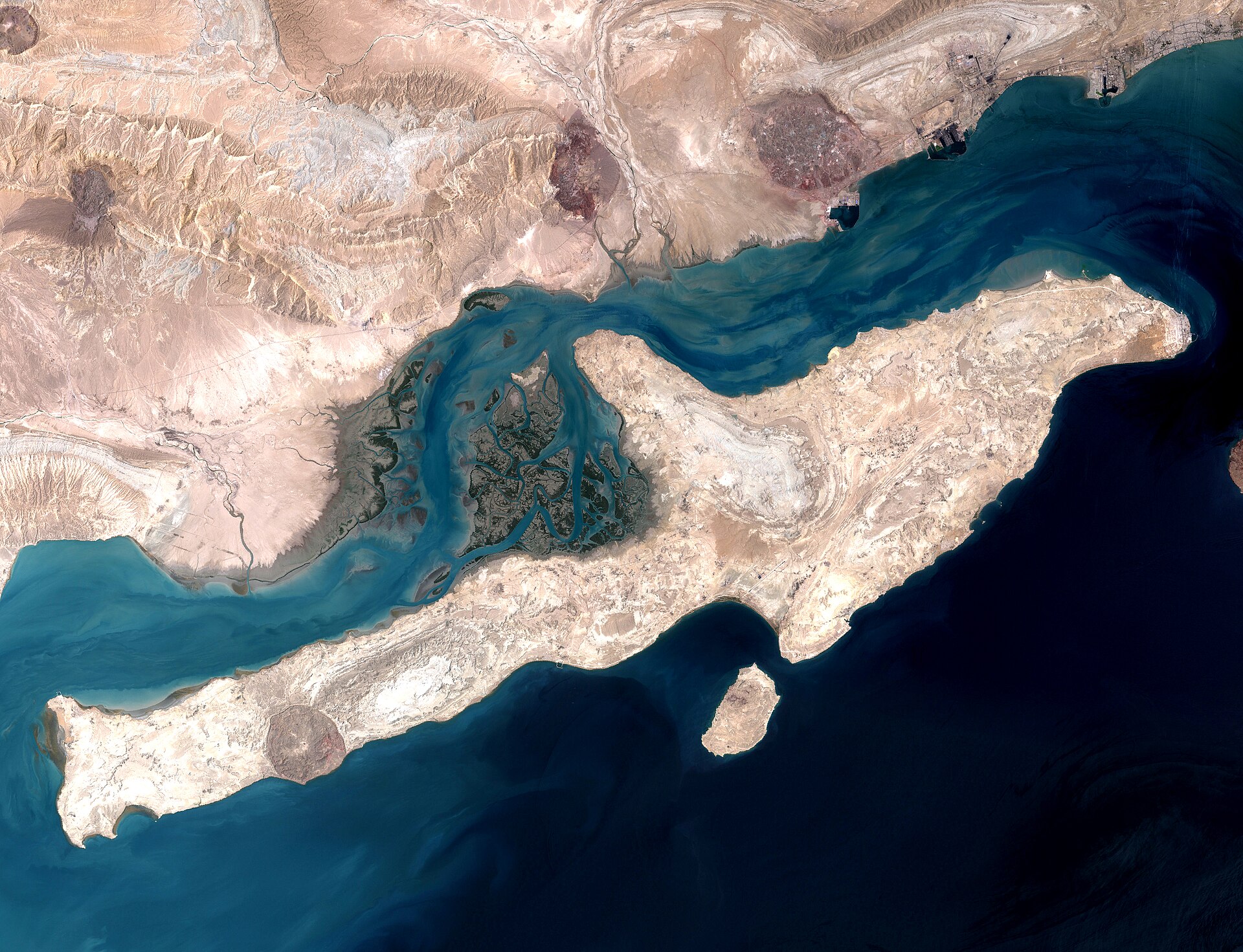
Table of Contents
The UN Notification
Iran’s Foreign Ministry originally sent its “non-hostile vessels” notification to the UN Security Council and Secretary-General António Guterres on March 22, well before the April 8 ceasefire and long before any MOU draft existed. The note conditioned safe passage on ships being “non-hostile,” not participating in “acts of aggression against Iran,” and fully complying with “declared safety and security regulations” — with transit to be conducted “in coordination with the competent Iranian authorities,” according to Reuters and Iran International, which first reported the notification on March 24. The notification was reactivated and recirculated after the June 14 digital signing of the MOU, positioning it as the diplomatic record of Iran’s compliance with the agreement’s requirement to reopen Hormuz.
But the phrase “competent Iranian authorities” does not specify which authorities. On May 30, the IRGC’s Khatam al-Anbiya Central Headquarters stated it controls all Strait of Hormuz traffic “with full authority,” according to GlobalSecurity.org and PressTV, and Fars News, an IRGC-affiliated outlet, separately reported that marine traffic “will be regulated by Iran in coordination with Oman” — a bilateral framing that excludes Saudi Arabia and every other Gulf state from any co-management role.
The notification is a legal instrument designed for the UN record, not an operational order delivered to port authorities or ship captains. It creates a paper trail that Tehran can cite as evidence it opened the strait — regardless of what happens in the water, where operations, not notifications, determine which ships pass and which are turned back.
What Did the IRGC Tell the US Destroyer?
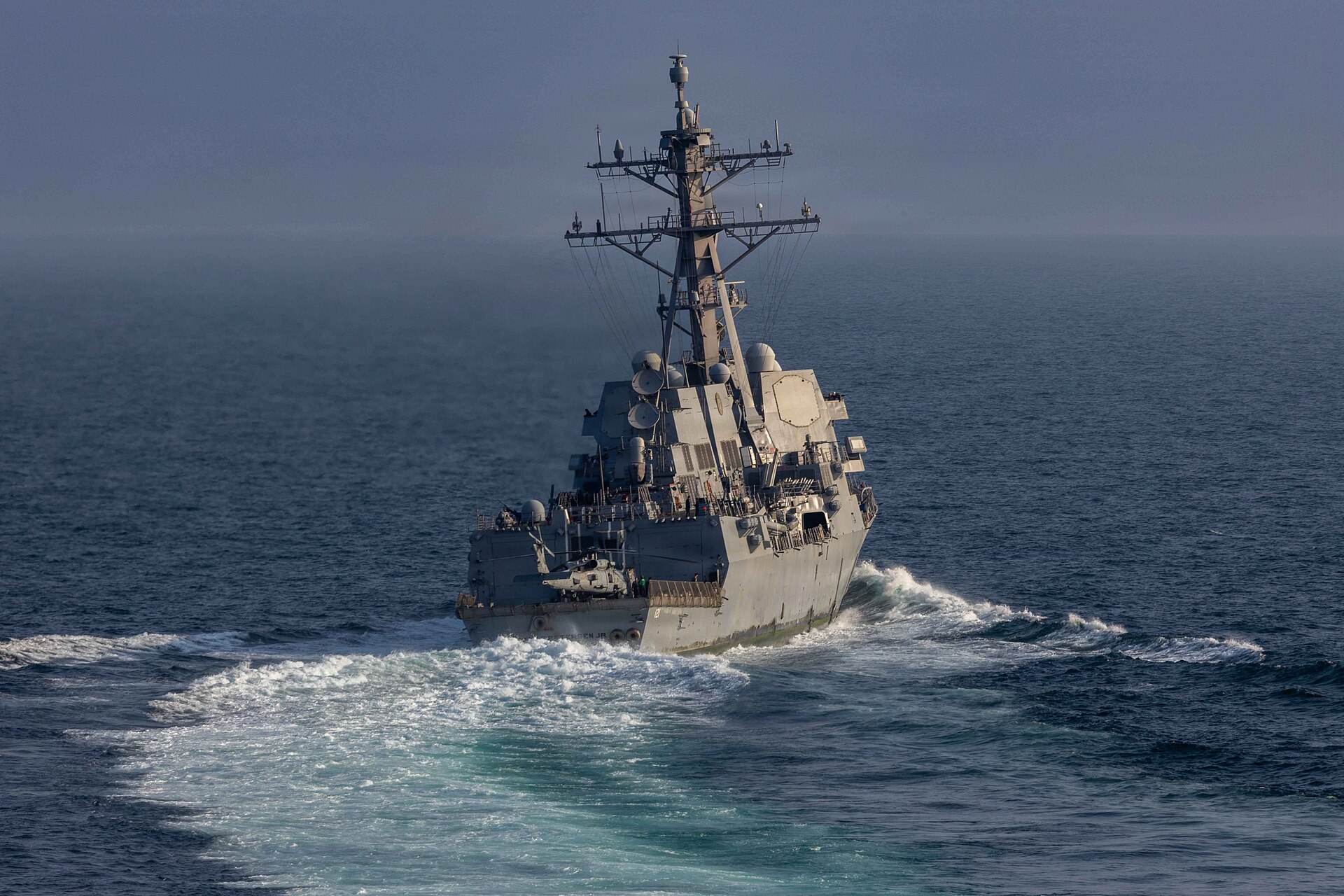
On the same day the Foreign Ministry’s notification circulated at the UN, the IRGC Navy radioed one of two US destroyers operating in the Strait of Hormuz during active mine-clearing operations. “This is the last warning. This is the last warning,” an IRGC operator transmitted, according to the Wall Street Journal, reported by The Hill on June 15. The Palestine Chronicle published IRGC-sourced video of the confrontation under a headline that left little to interpretation: “Turn Back or Be Targeted.”
The Middle East briefing 3,000+ readers start their day with.
One email. Every weekday morning. Free.
The two US destroyers — USS Frank E. Petersen Jr. (DDG-121) and USS Michael Murphy (DDG-112) — were deployed by US Central Command as part of mine-clearance preparations that Western maritime security sources assess could require 40 to 50 days before insurance companies, shipping firms, and oil majors have sufficient confidence to resume normal transits, according to the Times of Israel and the Globe and Mail. The IRGC’s warning to these vessels during active demining signals that Iran’s military command views mine clearance — the removal of Iran’s own enforcement infrastructure — as an act requiring IRGC authorization the US has not sought and is unlikely to request.
The warning did not arrive without precedent from the same week. On June 14 — the day the MOU was digitally signed — the IRGC broadcast on maritime radio to all vessels in the Persian Gulf and Gulf of Oman: “Refrain from any movement,” according to audio obtained by Xinhua from a crew member aboard a commercial vessel. The June 11 closure order from Khatam al-Anbiya Central Headquarters, which declared the strait “closed to all vessels” and warned that approaching it “will be considered cooperation with the enemy,” has not been formally rescinded — and the only previous time the Foreign Ministry declared the strait open, the IRGC overrode the announcement within hours.
The FM-IRGC Split Has Happened Before
On April 17, Foreign Minister Abbas Araghchi announced the Strait was “completely open” to all commercial vessels, as reported by The Defense News and Euronews. The IRGC promptly responded that the strait “reverted to its previous state of strict military control” and proceeded to fire on and harass ships attempting to cross — rendering the Foreign Ministry’s announcement operationally meaningless within hours.
The institutional split is constitutional rather than accidental, and its origins are recent. Following Ali Khamenei’s assassination in February, his son Mojtaba has communicated via courier with multi-day delays, according to TheDefenseNews.com — only senior IRGC commanders have direct access to his decision-making apparatus, while civilian leadership, including the Foreign Ministry, does not. The Foreign Ministry issues diplomatic instruments designed for international audiences; the IRGC Navy enforces its own operational posture in the strait, answering to a parallel chain of command that runs through Mojtaba’s inner circle rather than through the civilian government. The consistency of the IRGC’s operational dominance since April suggests the dual-signal pattern on June 15 follows the same logic: the FM handles the UN record, and the IRGC handles the water.
Who Decides What ‘Non-Hostile’ Means?
The UN notification conditions safe passage on ships being “non-hostile” and not participating in “acts of aggression against Iran,” but it does not define either term. The definition defaults to “the competent Iranian authorities” — and on the water, that authority is the IRGC Navy, which on June 11 declared that approaching the strait constitutes “cooperation with the enemy.”
Under that framing, a US destroyer conducting mine clearance is hostile by definition — mine clearance removes the physical infrastructure of Iran’s enforcement posture, and the IRGC’s June 15 warning was consistent with its own stated rules, not a violation of the Foreign Ministry’s notification. The FM and the IRGC are not addressing the same category of vessel: the FM’s notification speaks to commercial ships that meet its conditions, while the IRGC’s warning addresses military vessels it classifies as hostile under its own June 11 order.
The legal gap this arrangement exploits is unresolved. Under UNCLOS Article 38, all ships — including warships — enjoy an unimpeded right of transit passage through international straits, as noted by The Conversation and ASIL Insights, but Iran has never accepted this interpretation and demands prior authorization for warships, a position that directly contravenes Article 38. The Foreign Ministry’s notification to the UN does not concede transit passage rights — it offers conditional passage “in coordination with” Iranian authorities, a formulation that preserves Iran’s longstanding legal position while creating the appearance of MOU compliance.
For commercial vessels — the category that matters to Saudi Arabia — the question is not whether they qualify as “non-hostile” but what additional conditions the IRGC attaches to transit. Neither the FM’s notification nor the IRGC’s warning says a word about fees.
The PGSA Fee That Neither Signal Addresses
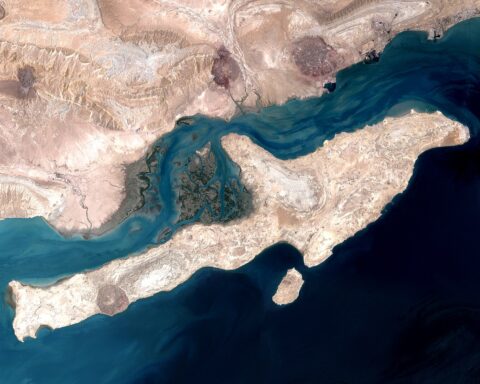
The Persian Gulf Shipping Authority, formally constituted on May 5, charges approximately $1 per barrel in a five-nautical-mile corridor between Qeshm and Larak islands — entirely within waters Iran claims as its own — with a single VLCC passage costing up to $2 million, payable in bitcoin or yuan, according to the Maritime Executive and Euronews. Iran’s parliament codified fee collection into domestic law on March 30 and 31, before the April 8 ceasefire, before any MOU draft existed, and before the June 14 signing. The MOU prohibits “tolls,” but Iran calls them “service fees” — and as House of Saud has previously reported, that distinction is the gap through which Iran’s fee collection survives.
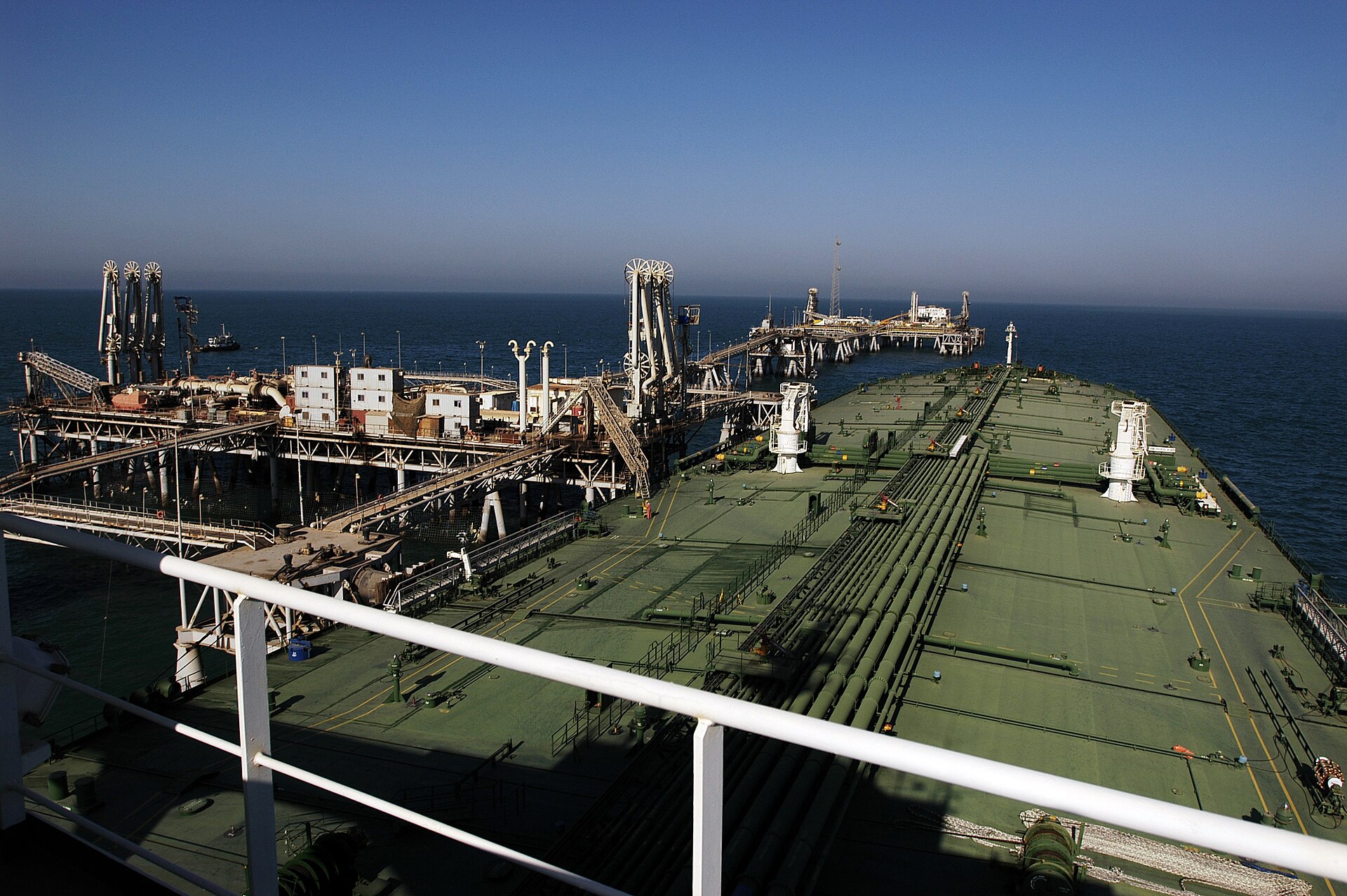
No post-MOU statement from Tehran has announced the suspension of PGSA collections, and the OFAC sanctions imposed on the PGSA on May 27 did not halt its operations. Saudi Arabia, at 5.5 million barrels per day — 38 percent of pre-conflict Hormuz crude volume — faces approximately $5.5 million per day, or roughly $2 billion per year, in PGSA fees, while Russia, China, India, Iraq, and Pakistan are exempt.
On a call with Araghchi on June 15, Saudi Foreign Minister Prince Faisal bin Farhan “welcomed the agreement reached between the Islamic Republic of Iran and the United States of America to end military operations and commence detailed negotiations to reach a permanent agreement, expressing the Kingdom’s aspiration to achieve peace,” according to Asharq Al-Awsat and Arab News. The readout contained no reference to the PGSA, the dual signals, or the question of whether Saudi-chartered vessels qualify as “non-hostile” — a silence consistent with the kingdom’s broader absence from the deal’s operational framework.
How Long Before Ships Actually Move?
Even if the diplomatic and operational signals were aligned — and as of June 15, they are not — the physical state of the strait prevents any near-term return to normal traffic. Bloomberg confirmed 29 verified ship crossings of the Strait of Hormuz from June 10 to 14, against a pre-conflict baseline of approximately 153 transits per day measured by the Center for Strategic and International Studies — fewer than four percent of normal throughput across a five-day window that included the MOU signing itself.
Kpler shiptracking data shows approximately 155 tankers carrying oil and chemicals in the broader Mideast Gulf area as of June 15, down from 201 at the end of May, while Oil Brokerage puts the count at 215, according to Bloomberg via US News and Claims Journal. As House of Saud reported earlier this week, the vessels are waiting — but what separates waiting from transiting is mines in the water, insurance underwriters refusing to cover the route, and an IRGC that has not stopped broadcasting warnings.
The next step is for shipowners to be reassured that transiting the Strait of Hormuz is not only permitted but also safe.
Jakob Larsen, Chief Safety and Security Officer, BIMCO, June 15, 2026
BIMCO, the world’s largest international shipping association, stated that mine-free routes must be established before it changes its guidance, which still classifies Hormuz transits as “highly risky,” according to US News and gCaptain. The World Trade Organization has recorded a 95 percent reduction in ships carrying crude oil to and from Persian Gulf ports and a 99 percent reduction in LNG carriers since the conflict began, according to the UK House of Commons Library.
Brent crude closed at $80.73 on June 15, down 4.89 percent — a price that reflects market expectations of eventual reopening but remains roughly $28 to $30 below Saudi Arabia’s fiscal breakeven of $108 to $111 per barrel, according to Trading Economics. The US Energy Information Administration projected Brent at $105 per barrel if Hormuz fully reopens, in its Short-Term Energy Outlook published June 9 — and the gap between $80.73 and $105 is the market’s measure of how much distance remains between what Iran told the UN and what the IRGC told a destroyer.
Background
The MOU between the United States and Iran was digitally signed on June 14 by President Trump, Vice President Vance, and Iranian Parliament Speaker Mohammad Bagher Ghalibaf, according to the Times of Israel, The Hill, and the Washington Examiner. Vance confirmed the signing publicly on June 15, with the full text expected within 24 to 48 hours and an in-person ceremony scheduled for June 19 in Geneva, where Vance is expected to be joined by special envoy Steve Witkoff and senior advisor Jared Kushner, according to CBS News and NBC News.
The MOU establishes a 60-day negotiating window for detailed nuclear terms, none of which appear in the initial agreement. Iran’s IRNA news agency reported that Iran “assumes no new nuclear obligations” under the MOU, and Foreign Minister Araghchi told Iranian state television that Iran “won the war” and claimed $24 billion in frozen assets would be released — a figure Washington has not confirmed. On June 12, the IAEA’s Board of Governors voted 21 to 10, with 3 abstentions, to find Iran in non-compliance — the first such finding in 20 years — with 440.9 kilograms of uranium enriched to 60 percent remaining unverified for more than 97 days and roughly 80 kilograms at the Fordow facility, where 70 percent of centrifuge capacity remained intact.
Since the conflict began, 46 shipping incidents have been verified and 14 merchant crew members have been killed, according to United Against Nuclear Iran’s tracker as of June 10. On June 15, Prince Faisal received Araghchi’s call and “welcomed” an agreement whose two signatories’ own institutions cannot agree on whether the waterway it addresses is open — one day after the kingdom’s Ministry of Foreign Affairs had been silent for more than 26 days.
A subsequent analysis examines the fiscal consequence of that split: Iran signed the MOU and kept the minefield in place, leaving Saudi Arabia’s $100 million daily loss dependent on whichever signal the IRGC chooses to enforce on the water.
Frequently Asked Questions
Has the IRGC formally rescinded its June 11 closure order?
No. As of June 15, the Khatam al-Anbiya Central Headquarters’ declaration that the Strait of Hormuz is “closed to all vessels” remains in effect, with no IRGC communiqué issued to replace or supersede the order. When Araghchi declared the strait “completely open” on April 17, the IRGC overrode him within hours — the only precedent for what happens when the FM and IRGC issue conflicting Hormuz directives, and it favored the IRGC.
What insurance conditions must change before commercial ships resume transit?
War risk premiums on Hormuz transits surged 340 percent during the conflict, according to Lloyd’s war risk market data, and BIMCO triggered its CONWARTIME clause, which allows shipowners to refuse to enter designated war-risk zones. The Lloyd’s Market Association Joint War Committee maintains a listed-areas designation for the Persian Gulf that elevates mandatory hull and cargo war-risk cover. BIMCO stated on June 15 that mine-free routes must be verified before its guidance changes — a process Western maritime sources estimate at 40 to 50 days.
Does the MOU text distinguish between Iran’s Foreign Ministry and the IRGC?
The full MOU text has not been released as of June 15 and is expected within 24 to 48 hours. Based on prior leaked drafts and the IRNA seven-point summary published in May, the MOU treats Iran as a unitary state actor without distinguishing the Foreign Ministry’s diplomatic authority from the IRGC’s operational command. No known draft has addressed the IRGC’s independent claim to be the “competent Iranian authority” that determines which vessels qualify as non-hostile.
What role does Oman play in post-MOU Hormuz management?
Bloomberg reported on May 21 that Iran and Oman have held bilateral discussions on co-administration of Strait of Hormuz traffic — a framework that gives Iran regional legitimacy cover while excluding Saudi Arabia, the UAE, and other Gulf states from any management role. Fars News reported that traffic “will be regulated by Iran in coordination with Oman,” suggesting the bilateral arrangement operates independently of the MOU’s provisions.
What is the PGSA’s stated legal basis under international law?
Iran invokes UNCLOS Article 26(2), which permits coastal states to charge fees for “specific services rendered” to ships in their territorial waters. Legal analysts writing in publications including the American Society of International Law’s ASIL Insights have questioned whether a blanket per-barrel charge meets the Article 26(2) threshold, which requires fees to correspond to actual services provided to individual vessels. The PGSA fees were codified into Iranian domestic law by parliament on March 30 and 31, before the ceasefire or any MOU draft existed, and no post-MOU legislation has modified or suspended the fee structure.