
RIYADH — Saudi Arabia holds no representation in any of the active venues where the United States-Iran memorandum of understanding and Strait of Hormuz reopening terms are being resolved before the June 19 Geneva signing ceremony — not in the Qatar-mediated Doha preparatory sessions that began June 15, not at the G7 Arab-leaders session French President Emmanuel Macron convened at Evian for June 16, and not in any of the three mediation tracks that produced the agreement, according to diplomatic schedules published by AFP, Arab News, and the Élysée Palace.
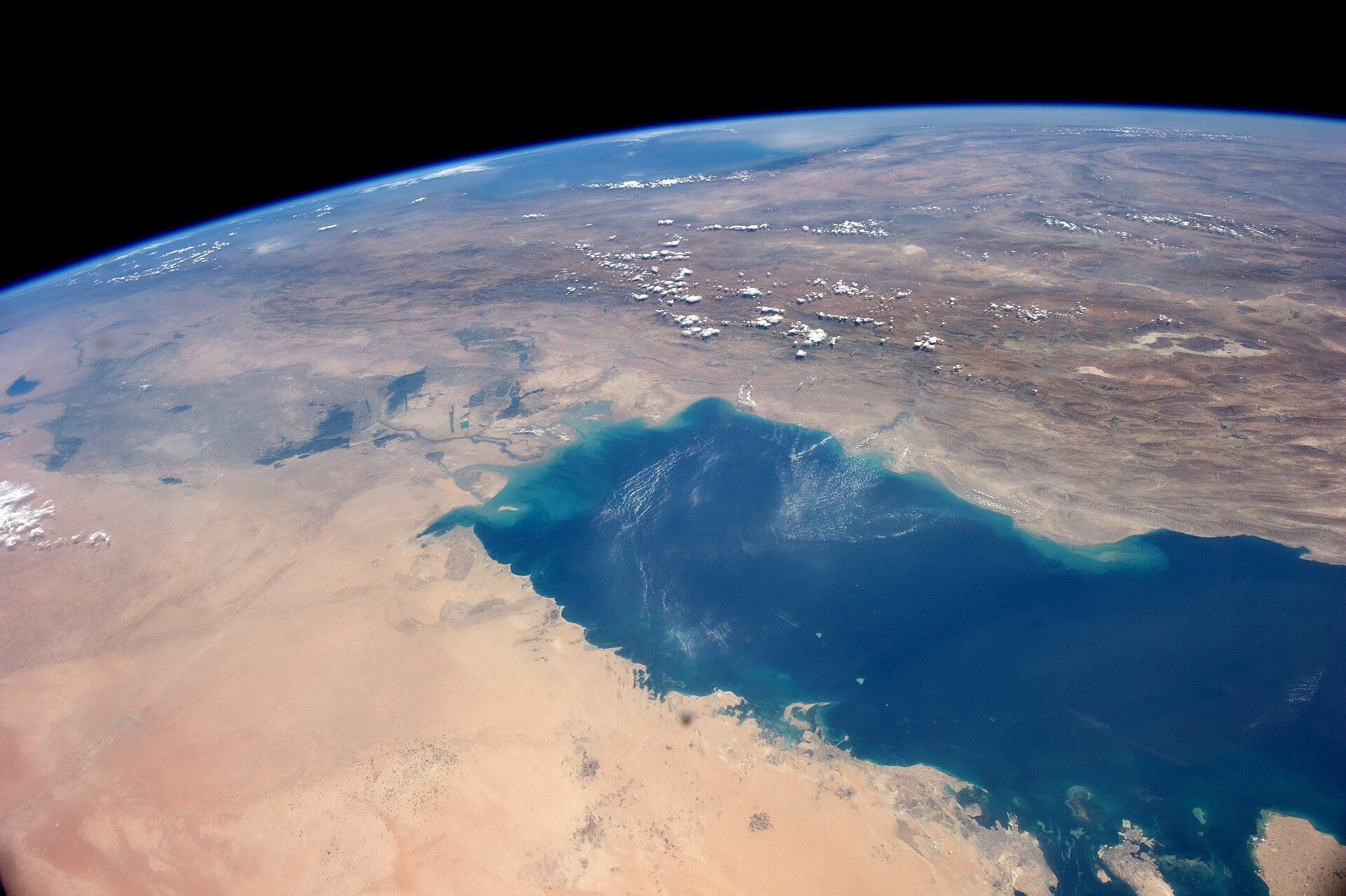
The kingdom transits 5.5 million barrels per day through the Strait of Hormuz — 38 percent of the strait’s pre-war volume — and faces an estimated $2 billion per year in liability under Iran’s Persian Gulf Shipping Authority fee regime, which Tehran has stated will apply regardless of MOU terms. Saudi Arabia’s fiscal breakeven sits at $108-111 per barrel, according to Goldman Sachs and the Arab Gulf States Institute. Brent crude fell 4.7 percent to approximately $83 per barrel on June 15, the day the deal was announced, according to IndMoney and NBC News. The country with the largest financial exposure to whatever terms emerge from Doha, Evian, and Geneva holds a seat in none of those rooms.
Table of Contents
- Doha: Qatar Shuttles Between Delegations Without Saudi Arabia
- Who Sits at Macron’s Evian Table on June 16?
- Three Mediation Tracks, Zero Saudi Seats
- What Terms Are Being Set Without Saudi Input?
- The Mine Clearance Mission Saudi Arabia Is Not Part Of
- Background: Three G7 Invitations, Three Refusals
- Frequently Asked Questions
Doha: Qatar Shuttles Between Delegations Without Saudi Arabia
Qatar began hosting separate bilateral sessions with US and Iranian delegations in Doha on June 15 to resolve remaining differences in the MOU text before the formal June 19 Geneva signing, AFP reported. The format is sequential separate bilaterals — Qatar meets with the US delegation, then separately with the Iranian delegation — with Qatari diplomats shuttling positions between the two sides. There is no joint room. The bilateral structure leaves no provision for a Saudi observer. Saudi Arabia has no delegation present in Doha, according to available diplomatic reporting from AFP and FXStreet.
The Doha sessions represent the final opportunity to alter MOU language before the Geneva ceremony. Iran’s Foreign Minister Mohammad Javad Araghchi stated on June 14 that Iran “will charge ships for services rendered” at Hormuz, a formulation that directly conflicts with the MOU’s prohibition on tolls, as reported by Energy News Beat. Whether that language gap is resolved in Doha — and how — will determine the annual cost to every state transiting the strait. Saudi Arabia, at 5.5 million barrels per day, is the largest transiting state not exempted from Iran’s fee regime.
Qatar operates three simultaneous roles in the MOU process: host of the Doha preparatory sessions, custodian of approximately $6 billion in credit lines extended to Tehran, and host of Al Udeid Air Base — the forward headquarters of US Central Command. Emir Tamim bin Hamad Al Thani is attending the G7 Arab-leaders session at Evian on June 16 and has a scheduled bilateral meeting with President Trump, according to the Washington Examiner. Crown Prince Mohammed bin Salman has neither.
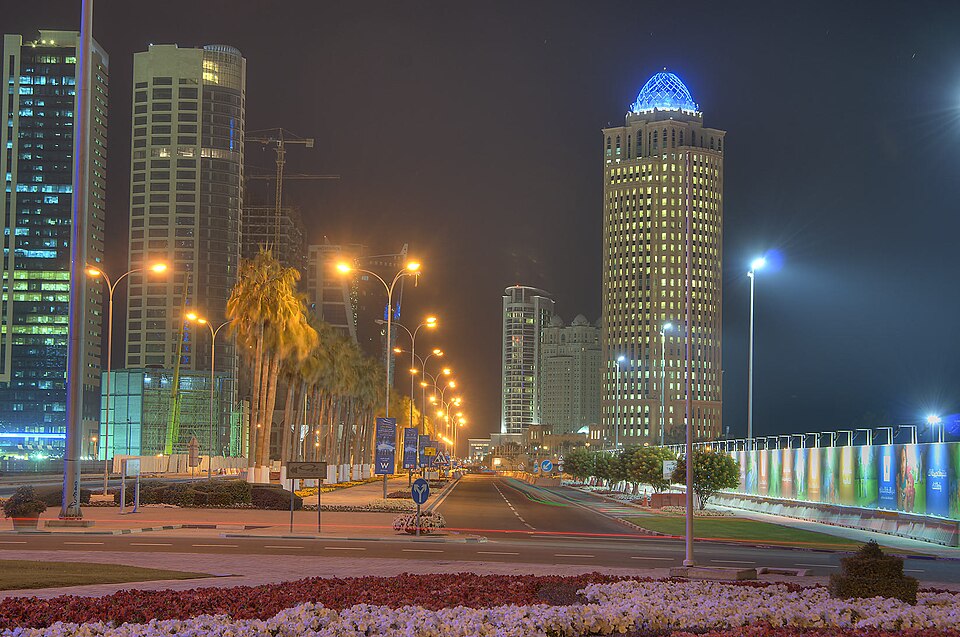
Who Sits at Macron’s Evian Table on June 16?
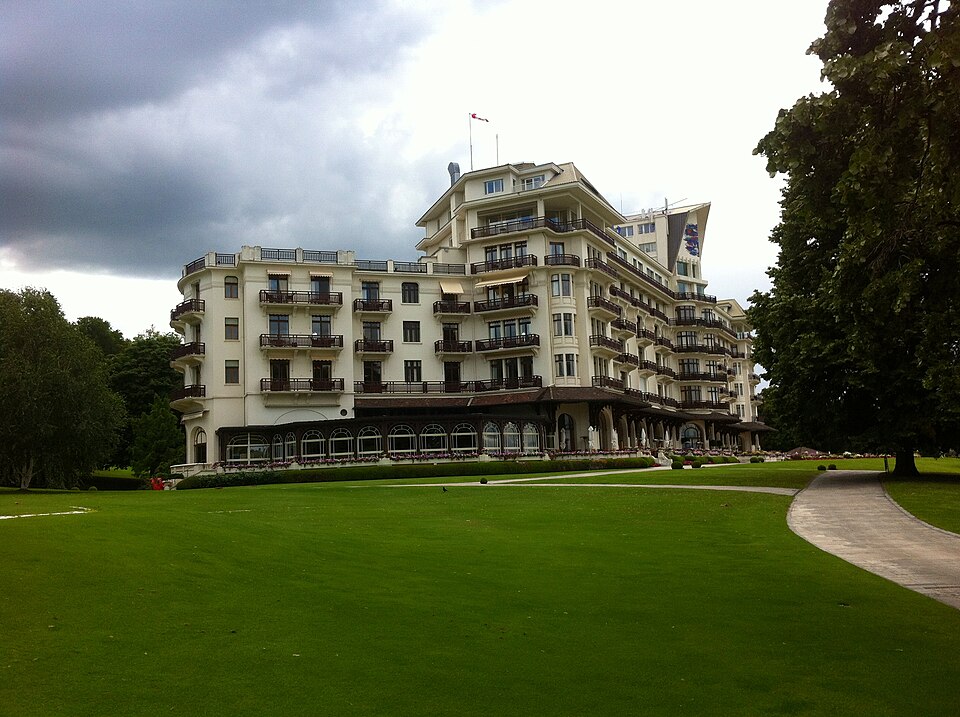
Macron invited the leaders of Egypt, Saudi Arabia, Qatar, the UAE, and Syria to a dedicated Arab-leaders session at the G7 summit in Evian on June 16, with an agenda he described as assessing “the implications of this agreement, support for Lebanon, the long-term reopening of the Strait of Hormuz, and, of course, reaching a deal on Iran’s nuclear and ballistic (missile) programs,” as reported by Ynet and France 24.
The Middle East briefing 3,000+ readers start their day with.
One email. Every weekday morning. Free.
Four of the five accepted. Egyptian President Abdel Fattah el-Sisi, Qatari Emir Tamim bin Hamad Al Thani, UAE President Mohamed bin Zayed Al Nahyan, and Syrian President Ahmed al-Sharaa all confirmed attendance, according to Asharq Al-Awsat and Arab News. Saudi Arabia is the only invited state that declined.
Al-Sharaa’s attendance marks Syria’s first participation in a G7 event since 1975, according to i24NEWS and Enab Baladi. The invitation was hand-delivered to Syria’s Finance Minister Mohammed Yisr Barnieh. Syria, a country that emerged from civil war within the past two years and exports no oil through the Strait of Hormuz, received a seat at the session Macron convened to discuss Hormuz reopening and Iran’s nuclear program. Saudi Arabia, which transits more crude through Hormuz than any other single state, did not.
Trump scheduled separate bilateral meetings at Evian with el-Sisi, Tamim, MBZ, and Indian Prime Minister Narendra Modi, according to the Washington Examiner. Saudi Arabia is not on Trump’s Evian bilateral schedule.
Crown Prince Mohammed bin Salman sent a letter to Macron citing “prior commitments” as his reason for declining, Arab News and Saudi Gazette reported. The letter did not specify the nature of those commitments. Hajj 2026, which Saudi Arabia cited as grounds for declining the 2024 G7 outreach in Apulia, Italy, ended on June 9 — seven days before the Evian session.
The resumption of maritime traffic, without restrictions or tolls, is an essential condition for regional stability and the global economy.
Emmanuel Macron, President of France, June 15, 2026 (Euronews)
Three Mediation Tracks, Zero Saudi Seats
The MOU that Saudi Arabia endorsed via Foreign Minister Prince Faisal bin Farhan’s June 13 phone call with Pakistani Foreign Minister Ishaq Dar — in which both men “welcomed” the deal’s “final stage,” as reported by WION — was produced through three distinct mediation tracks. Saudi Arabia holds no seat in any of them.
The first track is Pakistan’s civilian channel, in which Prime Minister Shehbaz Sharif and Special Envoy Rana Sanaullah Naqvi conducted shuttle diplomacy between Washington and Tehran, including delivering a formal letter from Sharif to Supreme Leader Ali Khamenei. The second is Pakistan’s military-IRGC back-channel, operated by Army Chief Field Marshal Asim Munir, who, according to Sharif’s own public statement reported by Al Jazeera on June 15, “was awake all day and night” and “sacrificed day and night to extinguish the flames of war.” The third is the Qatar channel, which produced the Doha sessions now underway.
Saudi Arabia maintains structural proximity to the Pakistan tracks through the Saudi Military Deployment Agreement, under which approximately 13,000 Pakistani troops serve in Saudi Arabia’s Eastern Province. The SMDA was signed September 17, 2025. The Stimson Center has described the agreement as “largely symbolic.” Despite this military relationship, Riyadh was not consulted in the formulation of MOU terms carried through either Pakistan channel. Saudi Arabia’s sole public engagement with the deal’s content was Faisal’s phone call to Dar — not to an American, Iranian, or Qatari counterpart.
Saudi Arabia’s closest historical indirect channel to Tehran — the Oman back-channel — narrowed under direct US pressure in May 2026, when Trump threatened Muscat over its role in facilitating Iran’s Hormuz co-management arrangement, according to prior reporting.
What Terms Are Being Set Without Saudi Input?
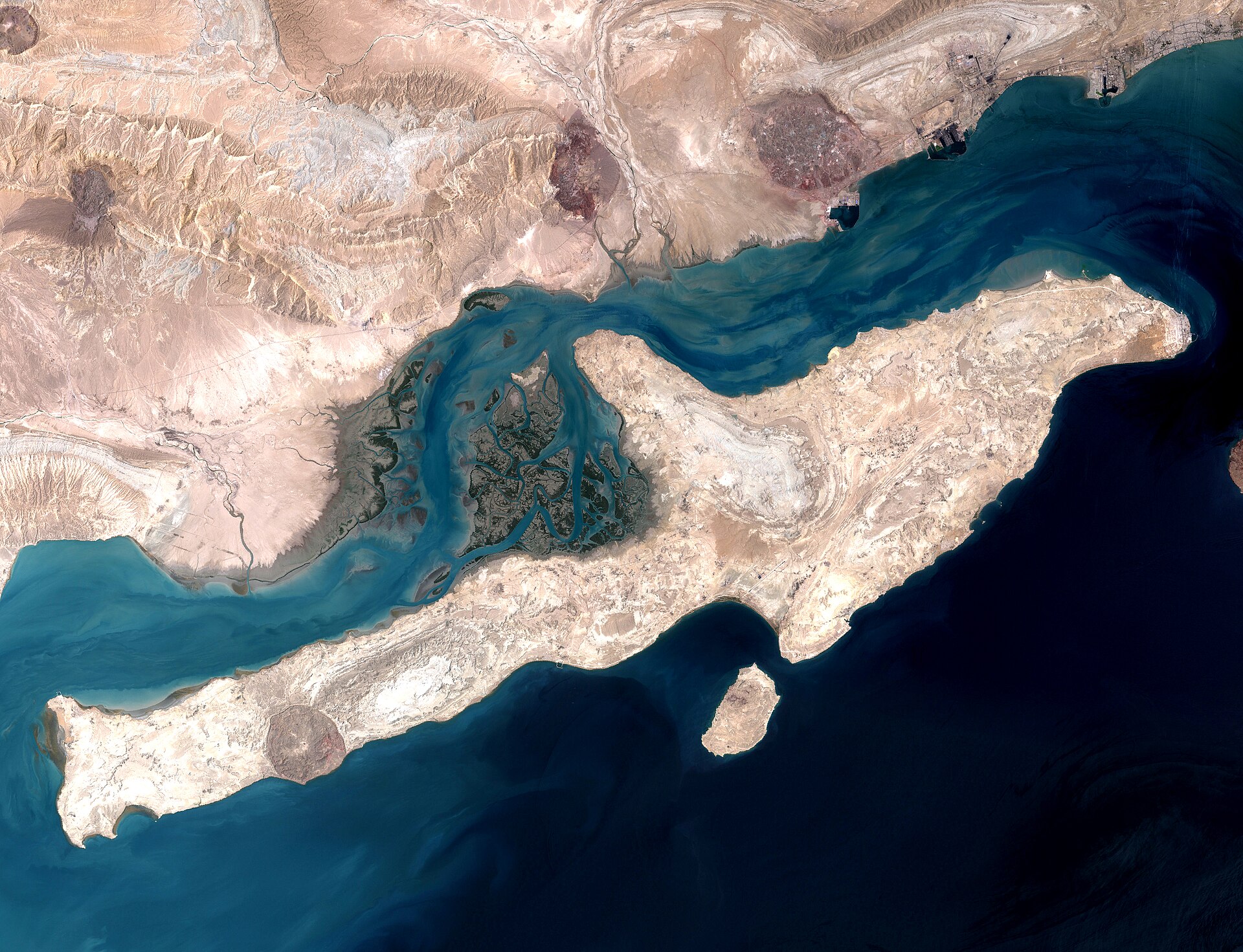
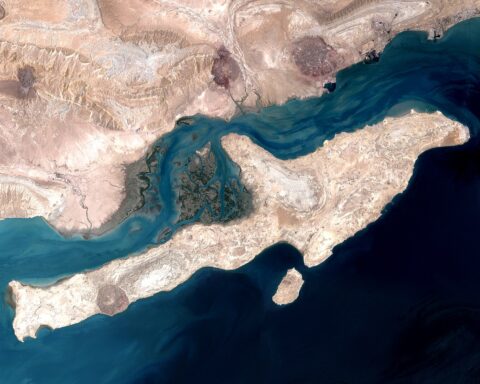
The MOU text, as described by US officials to ANI and NBC News, calls for Hormuz shipping to be “unrestricted” — no tolls, no harassment — with Iran required to remove all mines within 30 days of signing. Iran’s Persian Gulf Shipping Authority, constituted on May 5, 2026, charges approximately $1 per barrel for what Tehran calls “navigational services” through a five-nautical-mile corridor between Qeshm and Larak islands inside Iranian territorial waters. Iran’s Majlis codified the fee authority on March 30-31, before any MOU draft existed.
The MOU prohibits “tolls.” It does not prohibit “service fees.” Araghchi stated on June 14 that fees will be collected regardless of the MOU text, as reported by Energy News Beat. This gap — between the agreement’s “toll” prohibition and Iran’s “service fee” architecture — is among the open items the Doha sessions are expected to address. How the MOU was drafted to produce that gap — and how Saudi Arabia endorsed a text it had not read in its final amended form — is the subject of The MOU Banned Tolls and Built the Fee Collector.
At the PGSA’s stated rate, Saudi Arabia’s liability is approximately $5.5 million per day, or roughly $2 billion per year, based on its 5.5-million-barrel-per-day transit volume. Saudi Arabia is not among the nations exempted from PGSA fees. Russia, China, India, Iraq, and Pakistan are exempt. Saudi Arabia is not. The Saudi Ministry of Foreign Affairs has never publicly acknowledged the PGSA’s existence.
An Aramco executive warned, as reported by Energy News Beat, that if Hormuz disruption persists beyond mid-June, the oil market may not normalize until 2027. Saudi Arabia recorded a first-quarter 2026 fiscal deficit of SAR 125.7 billion ($33.5 billion), the largest quarterly deficit in the kingdom’s history, according to the Ministry of Finance. Subsidies rose 170 percent year-on-year; military spending rose 26 percent. The Public Investment Fund’s cash reserves stood at $15 billion — a six-year low — against $16 billion in outstanding NEOM exit obligations, according to AGSI reporting.
The Mine Clearance Mission Saudi Arabia Is Not Part Of
France and the United Kingdom have assembled a joint military mission for Hormuz mine clearance, and Macron confirmed on June 15 that “assets are in place and ready to be deployed,” according to Euronews and Arab News. The mission is seeking Trump’s approval at the G7 Evian summit to begin operations.
More than 15 nations are contributing military planners to the coordination effort, with up to 40 countries potentially involved, The Defense News reported. Saudi Arabia is not listed among the participants. The complexity of the mission was underscored on June 15, when the IRGC radioed a US Navy destroyer performing mine clearance with a final warning — even as Iran’s foreign ministry simultaneously notified the UN that non-hostile ships may transit.
Approximately 600 vessels remain static in the Persian Gulf and Gulf of Oman, according to Kpler data cited by Bloomberg — 300 loaded tankers inside the Gulf and 300 empty vessels in the Gulf of Oman, with some 250 additional vessels ballasting in the wider region. The pace and terms under which those vessels move again depend in part on the mine clearance timeline and the MOU’s 30-day window for Iran to clear ordnance from shipping lanes.
EU Commission President Ursula von der Leyen called for implementing the Iran deal “swiftly and fully,” Euronews reported on June 15. Saudi Arabia’s export terminals at Ras Tanura and Ju’aymah lie directly in the operational area; the kingdom holds no planning role in the mission that will clear the route to them.
Background: Three G7 Invitations, Three Refusals
Mohammed bin Salman has declined all three G7 outreach invitations extended to him as Crown Prince. At the 2024 G7 summit in Apulia, Italy, Saudi Arabia cited Hajj supervision as the reason for his absence. At the 2025 summit in Kananaskis, Canada, no public rationale was offered. At Evian in 2026, the Crown Prince cited “prior commitments” without specifying them, as Arab News and Saudi Gazette reported.
Under King Abdullah, Saudi Arabia attended G7 outreach sessions. The kingdom participated at the 2008 Toyako summit in Japan and the 2013 Lough Erne summit in the United Kingdom. The shift from attendance to systematic absence corresponds to the transition from Abdullah’s consensus-seeking foreign policy to MBS’s bilateral-first approach, which has prioritized direct relationships — particularly with Washington — over multilateral formats.
That bilateral-first strategy faces a structural problem when the bilateral itself is absent. Trump’s Evian schedule includes separate meetings with Tamim, MBZ, el-Sisi, and Modi. There is no Trump-MBS bilateral at Evian or anywhere else on the published June schedule. Saudi Foreign Minister Faisal’s last substantive public statement on Iran was at the EU Gymnich foreign ministers’ meeting in Cyprus on May 20 — 26 days before the Doha sessions began. The Saudi Ministry of Foreign Affairs has issued no statement on the Doha sessions, the G7 Arab-leaders session, the mine clearance mission, or the June 15 deal confirmation.
Al Jazeera’s June 15 analysis of the MOU — headlined “How Pakistan mediated a US-Iran agreement after more than 100 days of war” — mentioned Saudi Arabia only in the context of its foreign minister praising Pakistan’s role. No Saudi agency in the deal’s formation was described. AFP’s reporting on the Doha sessions did not mention Saudi Arabia. The Washington Examiner’s list of Trump’s Evian bilaterals did not include the kingdom.
He was awake all day and night… sacrificed day and night to extinguish the flames of war.
Shehbaz Sharif, Prime Minister of Pakistan, on Field Marshal Asim Munir, June 15, 2026 (Al Jazeera)
Frequently Asked Questions
Has Saudi Arabia formally objected to its exclusion from the Doha sessions or G7 Arab-leaders session?
No. The Saudi Ministry of Foreign Affairs has issued no public statement on either the Doha sessions or the G7 Evian Arab-leaders session as of June 15, 2026. The ministry’s last substantive public statement on Iran was at the EU Gymnich meeting in Cyprus on May 20. Crown Prince Mohammed bin Salman’s letter to Macron cited “prior commitments” for his Evian absence but did not address the Doha sessions, the mine clearance coordination, or the broader question of Saudi representation in MOU finalization venues. Saudi Arabia’s ambassador to France did not attend the Evian session in MBS’s place — a protocol option that was available and that the kingdom chose not to exercise.
Could Saudi Arabia join the Doha sessions or Geneva signing as a late addition?
The Doha sessions operate as sequential separate bilaterals between Qatar and the two parties — US and Iran — with Qatari diplomats shuttling between delegations, according to AFP. Adding a third-party observer would require the consent of both Washington and Tehran. Iran has not acknowledged Saudi Arabia as a party to Hormuz terms at any point during the conflict. The June 19 Geneva signing is structured as a bilateral US-Iran ceremony. Saudi Arabia is listed among 12 nations that “approved” the MOU framework, but no observer, witness, or co-signatory role for approving states has been announced by any of the three parties. The 2015 JCPOA precedent included EU representation at the signing table; no equivalent multilateral presence has been proposed for the Geneva ceremony.
What is the difference between a “toll” and a “service fee” under the MOU and UNCLOS?
The MOU prohibits “tolls” on Hormuz transit but does not use the term “service fee.” Iran’s PGSA, constituted May 5, 2026, charges approximately $1 per barrel for “navigational services” through a five-nautical-mile corridor between Qeshm and Larak islands. UNCLOS Article 26(2) permits charges for “specific services rendered to the ship,” provided they are non-discriminatory and proportionate. Iran argues its PGSA fees qualify under this provision. Whether a blanket per-barrel charge applied to all transiting vessels — with selective exemptions for Russia, China, India, Iraq, and Pakistan — meets UNCLOS’s non-discrimination and specificity tests has not been adjudicated by any international tribunal. No state has filed a challenge at the International Tribunal for the Law of the Sea. The distinction between “toll” and “service fee” is the legal gap the Doha sessions are expected to address before June 19.
Why is Syria attending the G7 Evian Arab-leaders session?
Syrian President Ahmed al-Sharaa’s attendance marks Syria’s first G7 participation since 1975, according to i24NEWS and Enab Baladi. The invitation — hand-delivered to Syria’s Finance Minister Mohammed Yisr Barnieh — reflects Macron’s interest in broadening the Arab-leaders table and France’s role in Syria’s post-civil-war diplomatic reintegration. Syria has no oil exports through the Strait of Hormuz and no direct financial exposure to PGSA fees. The Evian Arab-leaders agenda extends beyond Hormuz to include Lebanon reconstruction and support — areas where Syria shares a border and has direct interests. Al-Sharaa’s presence also serves a French diplomatic objective: demonstrating that Paris can convene Arab leaders whom Washington has not yet received bilaterally at the presidential level.
What role does Pakistan’s military deployment in Saudi Arabia play in MOU negotiations?
Approximately 13,000 Pakistani troops serve in Saudi Arabia’s Eastern Province under the Saudi Military Deployment Agreement, signed September 17, 2025. The Stimson Center has described the arrangement as “largely symbolic.” Pakistan’s Army Chief Field Marshal Asim Munir — who operates the military-IRGC back-channel that constitutes one of the MOU’s three mediation tracks — simultaneously commands troops deployed on Saudi soil and conducts direct negotiations with the IRGC from which Saudi Arabia is excluded. Pakistan’s dual-letter architecture — a civilian letter delivered by Special Envoy Naqvi to Khamenei and a separate military-channel communication through Munir to the IRGC command structure — was designed to reach both Tehran’s political and military-intelligence hierarchies. Saudi Arabia was not consulted on the content of either letter, according to available reporting. The SMDA gives Riyadh a Pakistani military presence but not a seat in Pakistan’s Iranian diplomacy.
That approval-without-attendance dynamic continued the following day at Evian: Saudi Arabia’s absence from the G7 Arab session on Hormuz confirmed that the pattern documented here was not incidental but structural — Riyadh endorsing frameworks whose sessions it declines to occupy.
The structural exclusion continued at the G7 closing press conference, where Trump’s decision to invoke Saudi Arabia’s missile holdings to justify Iran’s arsenal collapsed the threat premise of the $142 billion arms deal Riyadh had purchased — without Saudi Arabia being consulted, informed, or present. The same MOU that codified Saudi Arabia’s institutional exclusion also authorized a $300 billion Iran reconstruction fund whose “regional partners” clause could designate Gulf states as financing parties — a commitment Saudi Arabia endorsed without consenting to, examined in Faisal’s Trust Condition and the $300 Billion Fund Saudi Arabia Cannot Block.