
PHP Warning: Trying to access array offset on false in /var/www/html/wp-content/plugins/postman-smtp/Postman/PostmanOAuthToken.php on line 45
Warning: Trying to access array offset on false in /var/www/html/wp-content/plugins/postman-smtp/Postman/PostmanOAuthToken.php on line 45
PHP Warning: Trying to access array offset on false in /var/www/html/wp-content/plugins/postman-smtp/Postman/PostmanOAuthToken.php on line 46
Warning: Trying to access array offset on false in /var/www/html/wp-content/plugins/postman-smtp/Postman/PostmanOAuthToken.php on line 46
PHP Warning: Trying to access array offset on false in /var/www/html/wp-content/plugins/postman-smtp/Postman/PostmanOAuthToken.php on line 47
Warning: Trying to access array offset on false in /var/www/html/wp-content/plugins/postman-smtp/Postman/PostmanOAuthToken.php on line 47
PHP Warning: Trying to access array offset on false in /var/www/html/wp-content/plugins/postman-smtp/Postman/PostmanOAuthToken.php on line 48
Warning: Trying to access array offset on false in /var/www/html/wp-content/plugins/postman-smtp/Postman/PostmanOAuthToken.php on line 48
PHP Warning: Undefined array key “SERVER_NAME” in /var/www/html/wp-content/plugins/postman-smtp/Postman/Postman-Mail/PostmanDefaultModuleTransport.php on line 37
Warning: Undefined array key “SERVER_NAME” in /var/www/html/wp-content/plugins/postman-smtp/Postman/Postman-Mail/PostmanDefaultModuleTransport.php on line 37
PHP Warning: Undefined array key “SERVER_NAME” in /var/www/html/wp-content/plugins/postman-smtp/Postman/Postman-Mail/PostmanDefaultModuleTransport.php on line 37
Warning: Undefined array key “SERVER_NAME” in /var/www/html/wp-content/plugins/postman-smtp/Postman/Postman-Mail/PostmanDefaultModuleTransport.php on line 37
PHP Warning: The magic method OCDI\OneClickDemoImport::__wakeup() must have public visibility in /var/www/html/wp-content/themes/fox/fox/inc/admin/import/demo-import/inc/OneClickDemoImport.php on line 128
Warning: The magic method OCDI\OneClickDemoImport::__wakeup() must have public visibility in /var/www/html/wp-content/themes/fox/fox/inc/admin/import/demo-import/inc/OneClickDemoImport.php on line 128
PHP Warning: foreach() argument must be of type array|object, null given in /var/www/html/wp-content/themes/fox/fox/inc/admin/import.php on line 298
Warning: foreach() argument must be of type array|object, null given in /var/www/html/wp-content/themes/fox/fox/inc/admin/import.php on line 298
WordPress database error You have an error in your SQL syntax; check the manual that corresponds to your MySQL server version for the right syntax to use near ‘%rank_math_sitemap%’ at line 1 for query DELETE FROM wp_options WHERE option_name LIKE %rank_math_sitemap% made by include(‘phar:///usr/local/bin/wp/php/boot-phar.php’), include(‘phar:///usr/local/bin/wp/vendor/wp-cli/wp-cli/php/wp-cli.php’), WP_CLI\bootstrap, WP_CLI\Bootstrap\LaunchRunner->process, WP_CLI\Runner->start, WP_CLI\Runner->load_wordpress, require(‘wp-settings.php’), do_action(‘init’), WP_Hook->do_action, WP_Hook->apply_filters, WP_CLI\Runner->{closure}, wp_update_post, wp_insert_post, do_action(‘save_post’), WP_Hook->do_action, WP_Hook->apply_filters, hos_clear_rankmath_sitemap_cache, hos_do_clear_sitemap_cache
PHP Warning: Constant DONOTCACHEPAGE already defined in /var/www/html/wp-content/mu-plugins/setup-33500.php on line 14
Warning: Constant DONOTCACHEPAGE already defined in /var/www/html/wp-content/mu-plugins/setup-33500.php on line 14
HOS setup-33500: category set to 145, cache cleared.
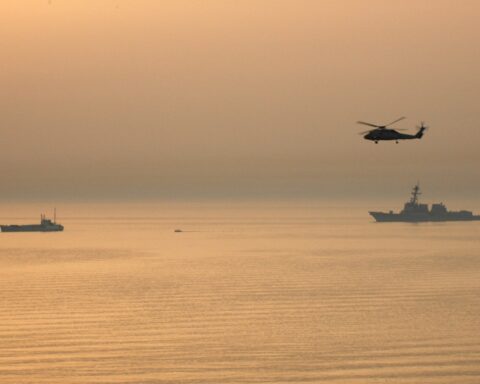
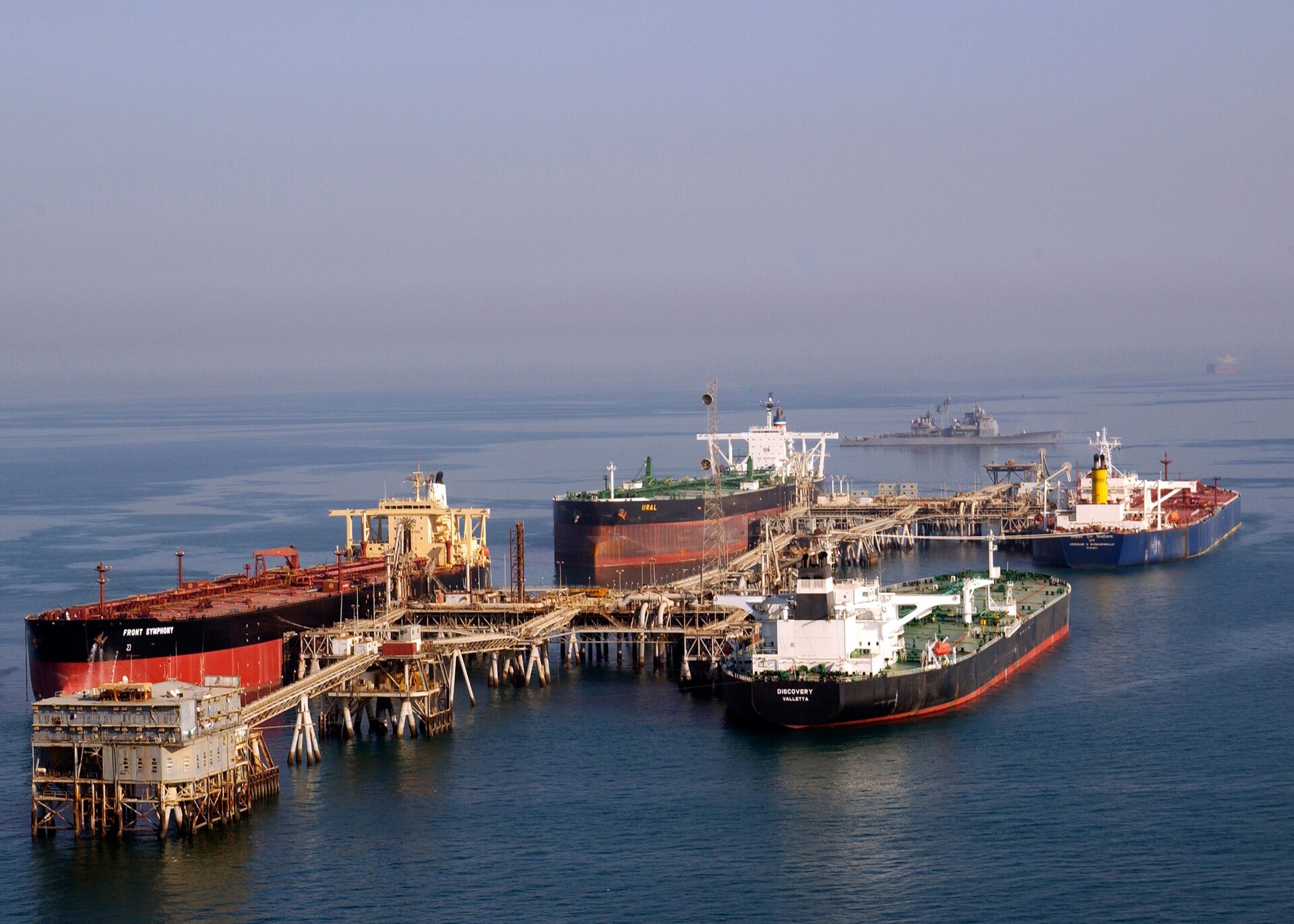
DHAHRAN — Three Bahri-controlled supertankers — Shaden, Jaham, and Awtad — carrying approximately 6 million barrels of Saudi crude switched on their AIS transponders in the Gulf of Oman on June 18, marking the first confirmed Saudi-owned crude tanker transit through the Strait of Hormuz since the war began on February 28. The passage occurred hours after President Trump and Iranian President Masoud Pezeshkian signed a 14-point memorandum of understanding committing Iran to reopen the strait within 30 days.
Brent crude fell 1.70% on the session to $75.49 per barrel, according to Trading Economics — between $33 and $36 below Saudi Arabia’s fiscal breakeven of $108 to $111, per Bloomberg Economics estimates. Neither Bahri, Saudi Aramco, nor the Saudi Ministry of Foreign Affairs confirmed whether the $1-per-barrel PGSA corridor fee was paid for the transit. The Saudi MOFA has issued no direct statement on the PGSA fee mechanism since the war began. The convoy’s passage coincided with a Faisal-Araghchi phone call that evening — the first direct Saudi-Iran FM contact since the barrels moved.
The same day the Bahri convoy cleared Hormuz, Kuwait Petroleum Corporation lifted force majeure and committed to ramping output to two million barrels per day within a week — adding 1.4 million bpd to a market already falling on deal-day expectations. Kuwait reached commercial recovery first, without absorbing any of the PGSA political cost Saudi Arabia paid.
Table of Contents
The Transit
Bahri — the largest VLCC and chemical tanker operator in the Middle East, with a fleet of 97 vessels including 50 supertankers — had taken what Rigzone described as “a conservative approach through the war, even as a growing number of more risk-tolerant owners moved tankers through the strait under cover of darkness.” Other operators had been running the PGSA corridor with AIS dark, transiting without publicly acknowledging the corridor’s terms. Bahri did not join them.
The June 18 passage was the company’s first since the conflict began 110 days earlier. Awtad alone carried 2 million barrels bound for South Korea, Bloomberg and The Standard reported. The three-vessel convoy represented the largest single-day volume of Saudi crude through Hormuz since the strait’s effective closure to Saudi-flagged and Saudi-chartered shipping in early March.
The Middle East briefing 3,000+ readers start their day with.
One email. Every weekday morning. Free.
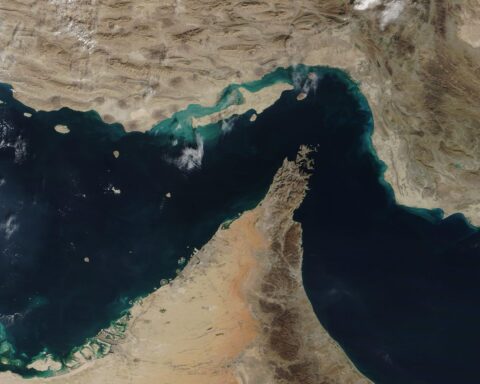
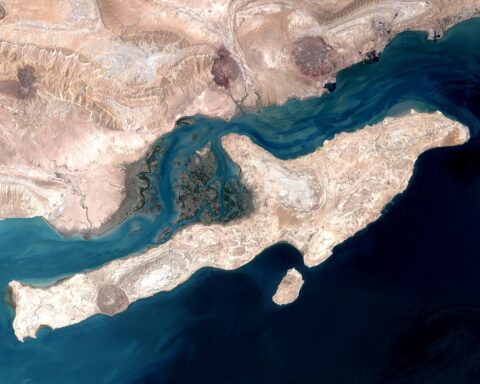
The vessels’ transponders appeared in the Gulf of Oman, not inside the strait itself. The PGSA corridor — a five-nautical-mile channel between Qeshm and Larak islands, entirely inside Iranian territorial waters — requires vessels to be hailed by VHF radio at the entry point for clearance-code verification and escorted by Iranian pilot boats. AIS is typically switched off during the controlled-corridor transit. The gap between corridor entry and Gulf of Oman emergence is the window in which any fee transaction, routing compliance, or Iranian coordination would have occurred, and no public vessel-tracking data covers it.
The passage followed the Joint Maritime Information Centre’s downgrade of the Hormuz threat level from “severe” to “substantial” on June 17, CNBC reported — one day before Bahri’s crossing. The downgrade placed the threat one step below its wartime peak. P&I clubs and war-risk insurers had not signalled any readiness to reduce premiums at the time the three tankers crossed.
Did Bahri Pay the PGSA Fee?
The PGSA charges $1 per barrel for transit through its corridor, payable in Chinese yuan via Kunlun Bank’s CIPS network or in bitcoin and stablecoins, according to the authority’s published payment framework. At 6 million barrels, the implied cost for the Bahri convoy is approximately $6 million — roughly $2 million per vessel. Saudi Arabia is not on the PGSA’s exemption list. Russia, China, India, Iraq, and Pakistan transit without charge, per the authority’s published corridor terms. Iran’s own NITC tankers — Diona and Hero 2 — moved 4.8 to 5 million barrels of Iranian crude through Hormuz on June 15 and 16 under that exemption and paid nothing.
No source — Bloomberg, Rigzone, The Hill, CNBC, or any Iranian state outlet — has confirmed or denied whether Bahri paid. The silence runs in both directions. If Tehran confirmed collection, it would publicly validate the PGSA mechanism against a named Saudi entity for the first time. If Tehran waived the fee, it would represent a carve-out Iran has never formally offered and that no Saudi official has publicly requested.
The GCC — five of its six member states, with Oman abstaining — sent a letter to the International Maritime Organization on May 21 explicitly instructing ships not to pay the PGSA fee. Saudi Arabia was among the signatories. Whether Bahri complied with that instruction or quietly overrode it to move barrels is an unanswered question that extends well beyond the $6 million at stake. If Bahri paid, the GCC-IMO letter is a dead letter for Saudi Arabia’s own national carrier. If it did not, the passage implies an Iranian acquiescence that Tehran has no incentive to formalize. At full Saudi export volumes — 5.5 million barrels per day at $1 per barrel — the annual exposure is approximately $2 billion.
Iran’s legal architecture around the fee was constructed to survive exactly this moment. Foreign ministry spokesperson Esmaeil Baghaei told Euronews on May 25 that Iran collects charges for “navigational services in addition to the measures necessary to protect the environment of the Strait of Hormuz, the Persian Gulf and the Sea of Oman.” The Majlis codified the fee regime on March 30 and 31 — weeks before any MOU negotiating text existed — making the MOU’s prohibition on “tolls” structurally inapplicable to what Tehran calls a service fee. MOU Point 5 waives the fee for only 60 days; after that, Iran’s parliamentary act governs by default. VP JD Vance told CNBC on June 15 that the US expects the strait to be open “toll free” long term, but offered no definition distinguishing a “toll” from a “service fee” under the MOU’s language.
What Does Aramco Net Per Barrel After Transit?
Aramco’s July official selling price for Arab Light crude to Asia — the grade most directly relevant to Bahri’s eastbound cargoes — was set at $9.50 per barrel over the Oman/Dubai average, Argaam reported. In May, the premium stood at $19.50. The $6-per-barrel month-on-month cut from June was the largest single OSP reduction since 2022, and the two-month collapse in the Asia premium — $10 per barrel, or 51% — has compressed Aramco’s realized revenue on every barrel moving east.
The cut reflected demand-side withdrawal across Aramco’s largest Asian accounts. Sinopec reduced Saudi crude purchases by 80%, according to industry data, and Rongsheng — China’s largest independent refiner — cut its monthly intake from 7 million barrels to 1 million. Aramco’s Q1 free cash flow covered 0.85 times its dividend obligation, a ratio that left no buffer before the July OSP reduction took effect.
At current benchmark levels, a barrel of Arab Light sold into Asia at the July OSP generates an implied revenue of approximately $85. If the PGSA fee was paid, subtract $1. War-risk insurance premiums — still running at 3% to 8% of vessel value per transit — distribute an additional cost across each VLCC’s 2-million-barrel cargo. Against Saudi Arabia’s fiscal breakeven of $108 to $111, the gap is $23 to $26 per barrel on a best-case basis, before insurance costs are allocated.
Brent had already fallen roughly 40% from its conflict peak of $126.41 by the time Bahri’s tankers crossed. The price did not collapse because of the transit. It collapsed in anticipation of it — and of the supply volume it signals. Each barrel that crosses Hormuz from the Saudi side is an increment to global supply that the market has been treating as imminent since the MOU’s outlines emerged in early June.
The Insurance and Mine-Clearance Gap
The JMIC’s June 17 threat downgrade moved Hormuz from “severe” to “substantial” — a distinction that may matter more to underwriters in London than to Bahri’s operations team. “Substantial” is not “moderate,” and the London market had not begun adjusting war-risk premiums when the three tankers crossed. The 340% surge in premiums since the conflict began, reported by Khaleej Times, translates to $3 million to $8 million per large tanker transit. For Bahri’s three VLCCs, the aggregate insurance cost for the single-day crossing could run between $9 million and $24 million — a figure that dwarfs the $6 million PGSA fee, if it was paid.
Jakob Larsen, head of maritime security at BIMCO, warned that “residual mine risks alone could delay a full restoration of commercial traffic” and that “a mine-clearance effort will most likely be needed to fully reopen the Strait,” according to Insurance Journal and Al Jazeera. The Pentagon’s estimate for full traffic separation scheme clearance remains up to six months. Saudi Arabia has no operational role in the mine clearance effort — the authority over swept lanes belongs to the US Navy, the Royal Navy, and the Marine nationale.
The EU designated the PGSA under sanctions on June 8, adding a compliance dimension to the insurance question. Approximately 95% of the global tanker fleet carries EU-backed insurance, according to industry estimates. If Bahri’s VLCCs are covered by EU-insured war-risk policies and the PGSA fee was paid, the transaction may raise sanctions compliance questions that neither Bahri nor its insurers have addressed publicly.
A Market Already Priced for Surplus
Goldman Sachs cut its fourth-quarter 2026 Brent forecast to $80 per barrel from $90 in a June 16 research note, citing faster-than-expected Gulf supply recovery. The bank now projects Persian Gulf crude exports returning to pre-war levels by end of July — a timeline that would add millions of barrels per day to global supply within six weeks. Goldman’s 2027 average forecast is $75, with a downside scenario below $70 in the fourth quarter of 2026 and below $60 in 2027 if the recovery accelerates.
The IEA’s projection of a 5-million-barrel-per-day surplus by 2027 compounds the supply-side pressure. The combination of Hormuz reopening, OPEC+ compliance erosion, and Iranian crude returning to market under PGSA exemption has produced a forward curve that treats additional Saudi supply as a price-negative event. Aramco CEO Amin Nasser told CNBC on May 11 that the “oil market won’t normalize until 2027 if Hormuz disruption persists.” The disruption is now easing. Whether the market that follows it can sustain Aramco’s fiscal position is the question Nasser did not answer.
Saudi Arabia’s Q1 2026 fiscal deficit was SAR 125.7 billion. At $75.49 per barrel, every additional barrel shipped through Hormuz generates revenue that falls $33 to $36 short of the price required to balance the national budget.
How Fast Does Commercial Traffic Return?
Kpler analysts project that tanker transits entering the Persian Gulf could increase to approximately 12 per day in the first 30 days of the deal, CNBC reported on June 15 — roughly 8% of pre-war levels, when 153 or more vessels transited daily. Lars Barstad, CEO of Frontline — which has five vessels stuck in the Gulf — told CNBC on June 11 that he was “actually very optimistic the minute the tide turns and the U.S. and Iran have found some sort of agreement, at least not to attack shipping, that those transits are going to resume pretty quickly.”
The constraints between Barstad’s optimism and a return to pre-war traffic are material. BIMCO’s Larsen cited residual mine risk as a standalone blocker. The IRGC issued a direct warning to USS Frank E. Petersen Jr. during minesweeping operations on the same day as the MOU signing, and Iran’s notification to the UN on June 15 stated that transit requires “Iranian coordination.” PressTV reported on May 28 that Iran forced back an American tanker attempting what Tehran described as an “illegal” Hormuz crossing. Bahri’s transponders-on, open-AIS approach — a departure from the dark transits other operators had used during the war — suggests some form of coordination with the PGSA corridor mechanism, even if neither side has said so.
The June 18 crossing included traffic beyond the Bahri convoy. Rigzone reported a fourth supertanker from the UAE among the day’s transits, along with a Qatari LNG tanker and a Chinese fuel tanker — the broadest single-day set of Gulf-state shipping through the strait since the war began.
Background
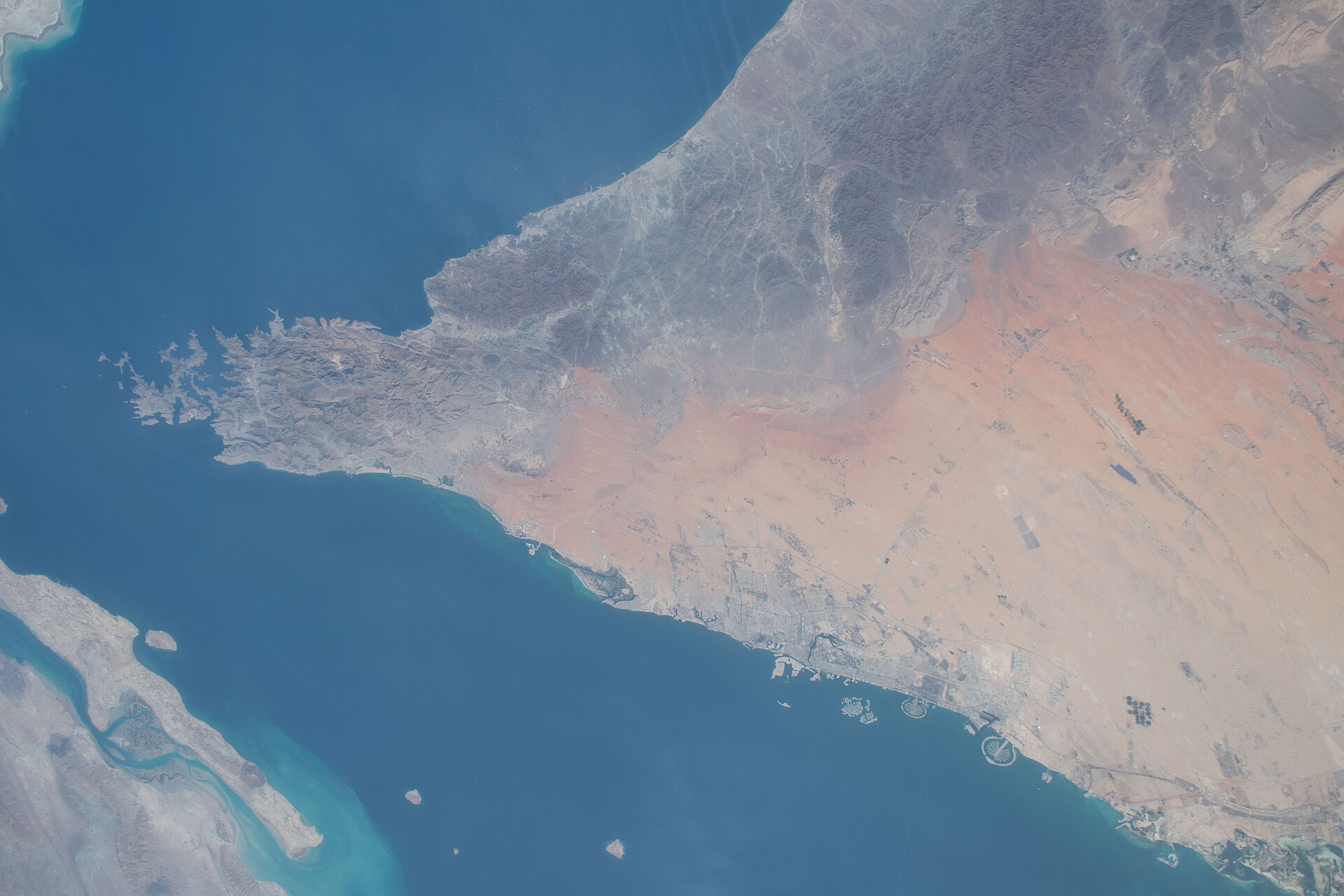
The Strait of Hormuz has been under effective Iranian control since the war began on February 28, 2026. The PGSA — formally constituted on May 5 and operational from May 18 — established a controlled transit corridor through Iranian territorial waters between Qeshm and Larak islands, requiring clearance codes, VHF hailing, and a per-barrel fee. Iran’s Majlis legislated the fee authority on March 30 and 31. During the war, Saudi Arabia rerouted a portion of its crude exports through the East-West Pipeline to the Red Sea terminal at Yanbu, which has a capacity ceiling of approximately 7 million barrels per day. Aramco cut output to approximately 8 million barrels per day — roughly one-third below its 12-million-bpd nameplate capacity — Bloomberg reported in March.
Bahri, formerly the National Shipping Company of Saudi Arabia, is Aramco’s primary marine transport contractor. The company chartered additional VLCCs during the war to haul crude from Yanbu, according to Bloomberg. The June 18 transit marks its return to the Hormuz route and the first test of whether Saudi crude can move through the PGSA corridor under whatever terms — paid, waived, or unacknowledged — currently govern Saudi-flagged shipping through the strait.
Frequently Asked Questions
What is Bahri’s ownership structure?
Bahri is listed on the Saudi Exchange (Tadawul: 4030). The Public Investment Fund holds a 21.81% stake, and Saudi Aramco holds a 20% stake. The company’s dual sovereign shareholder structure means its commercial decisions — including whether to pay the PGSA fee — carry state-linked implications that extend beyond the individual transaction.
Can Saudi Arabia permanently route all crude exports through Yanbu to avoid Hormuz?
The East-West Pipeline connecting Saudi Arabia’s Eastern Province fields to the Red Sea terminal at Yanbu has a capacity ceiling of approximately 7 million barrels per day. Saudi Aramco’s nameplate production capacity is approximately 12 million bpd, though pre-war output ran closer to 10 million bpd. At pre-war production levels, roughly 3 million bpd required Hormuz access. At nameplate capacity, that figure rises to 5 million bpd. Even at the wartime-reduced output of 8 million bpd, approximately 1 million bpd exceeded the pipeline’s western routing capacity.
Did any Saudi entity coordinate with Iran before the transit?
Neither Bahri, Saudi Aramco, the Saudi MOFA, nor any Iranian government body has confirmed direct coordination. The Bahri vessels’ open-AIS emergence — rather than a dark transit under cover of night, as other operators had done — implies some level of prior clearance or acknowledgment of the corridor protocol. Saudi Arabia has no direct diplomatic relations with Iran; intermediary channels, including Oman and Pakistan, have facilitated communication between the two governments during the crisis.
What happens at the Bürgenstock ceremony on June 19?
The formal multilateral signing ceremony for the MOU is scheduled for June 19, 2026, at Bürgenstock, Switzerland. VP JD Vance, Special Envoy Steve Witkoff, and Jared Kushner are expected to attend, with President Trump a possible addition. The June 18 bilateral signing between Trump and Pezeshkian preceded the formal ceremony by one day.
Has any P&I club or war-risk insurer reduced premiums since the MOU signing?
No. As of June 18, no Protection and Indemnity club or war-risk insurance underwriter has publicly announced any reduction in Hormuz transit premiums. War-risk insurance remains at 3% to 8% of vessel value per transit, up from 0.25% pre-conflict. Industry sources indicate that a JMIC downgrade to “moderate” — two steps below the current “substantial” — and a sustained period of incident-free commercial transit would typically be required before the London market considers premium relief.
The three Bahri VLCCs that made that crossing were operating on exemption terms that remain unavailable to commercial operators at scale: no P&I club has restored hull coverage or liability underwriting for routine Hormuz transits, a gap examined in why the JMIC downgrade to “Substantial” has not unlocked commercial insurance.
The PGSA published its full transit rulebook on June 19, with forty mandatory declaration categories including P&I club affiliation and crew nationalities — fields that map directly onto the sanctions exposure those Bahri VLCCs navigated. How the system functions when the fee is waived is detailed in Iran’s forty-category vessel declaration and the Hormuz permit architecture.
On June 27, Aramco returned to Ras Tanura with four Bahri VLCCs loading simultaneously — the terminal’s first loading since March 8 — but Iran re-declared Hormuz closed on the same day the convoy was loading, leaving an estimated eight million barrels stranded in hulls at the terminal with no available escort and no PGSA clearance confirmed.