
LONDON — Iran charged nothing for the first sixty days of Hormuz corridor transit, and eighteen of twenty vessels used the route on Day One — which was the point. The “insurance fee” Tehran plans to impose when the free window closes around mid-August is not a toll in softer language but a precise legal construction: an invocation of UNCLOS Article 26(2), the only provision in international maritime law that permits a coastal state to charge vessels during innocent passage, applied to a 5-nautical-mile corridor that Iran designed to ensure innocent passage — rather than the unchargeable transit passage regime through international waters — is the only available option.
The distinction is geographic before it is legal. The standard Hormuz Traffic Separation Scheme runs through international waters under UNCLOS Article 38, where fees are categorically prohibited — Article 44 bars strait states from “hampering” transit, and tolls are conspicuously absent from the permissible regulations in Article 42. Iran’s Larak-Qeshm corridor routes vessels inside its 12-nautical-mile territorial sea, switching the governing legal regime from transit passage to innocent passage, which carries a narrow exception for charges linked to “specific services rendered.” The entire architecture of the post-waiver fee rests on that five-nautical-mile shift, and Saudi Arabia — facing approximately $5.5 million per day in exposure at full throughput — has the least political room of any Gulf state to challenge it, because a formal challenge would grant the corridor the legal standing it currently lacks.
Table of Contents
- Five Nautical Miles Inside Iran’s Territorial Sea
- What Does UNCLOS Article 26 Actually Permit?
- The Insurance Label and the Article 26 Fit
- Why Can No Court or Institution Block This?
- How Did Ninety Percent of Vessels Comply Before a Fee Was Charged?
- The Treaty Iran Cites but Never Ratified
- Can Saudi Arabia Challenge the Fee Without Legitimizing the Corridor?
- What Iran Built While the Fee Was Free
- Frequently Asked Questions
Five Nautical Miles Inside Iran’s Territorial Sea
The Strait of Hormuz has operated under the UNCLOS transit passage regime — Article 38 — since the convention codified the rules for international straits in 1982. Under transit passage, ships and aircraft enjoy the right of continuous, expeditious movement through straits used for international navigation, and Article 44 places an explicit obligation on bordering states: they “shall not hamper transit passage.” Article 42 lists the regulations that strait states may lawfully impose — safety of navigation, pollution prevention, customs enforcement at loading and unloading points — and the omission of fees from that list, as the Dubai-based maritime law firm Hadef Partners noted in their May 2026 analysis via Lexology, “is deliberate.”
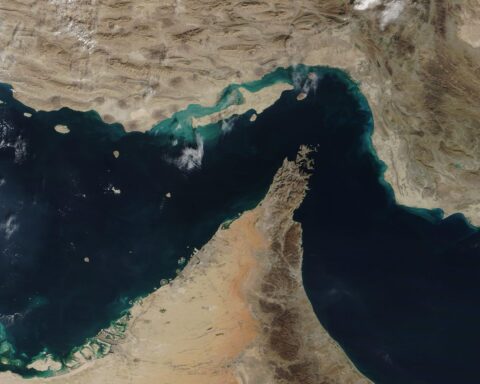
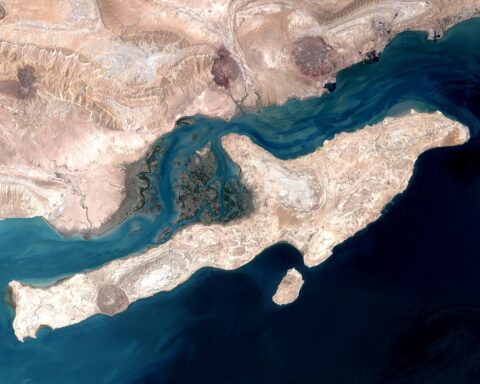
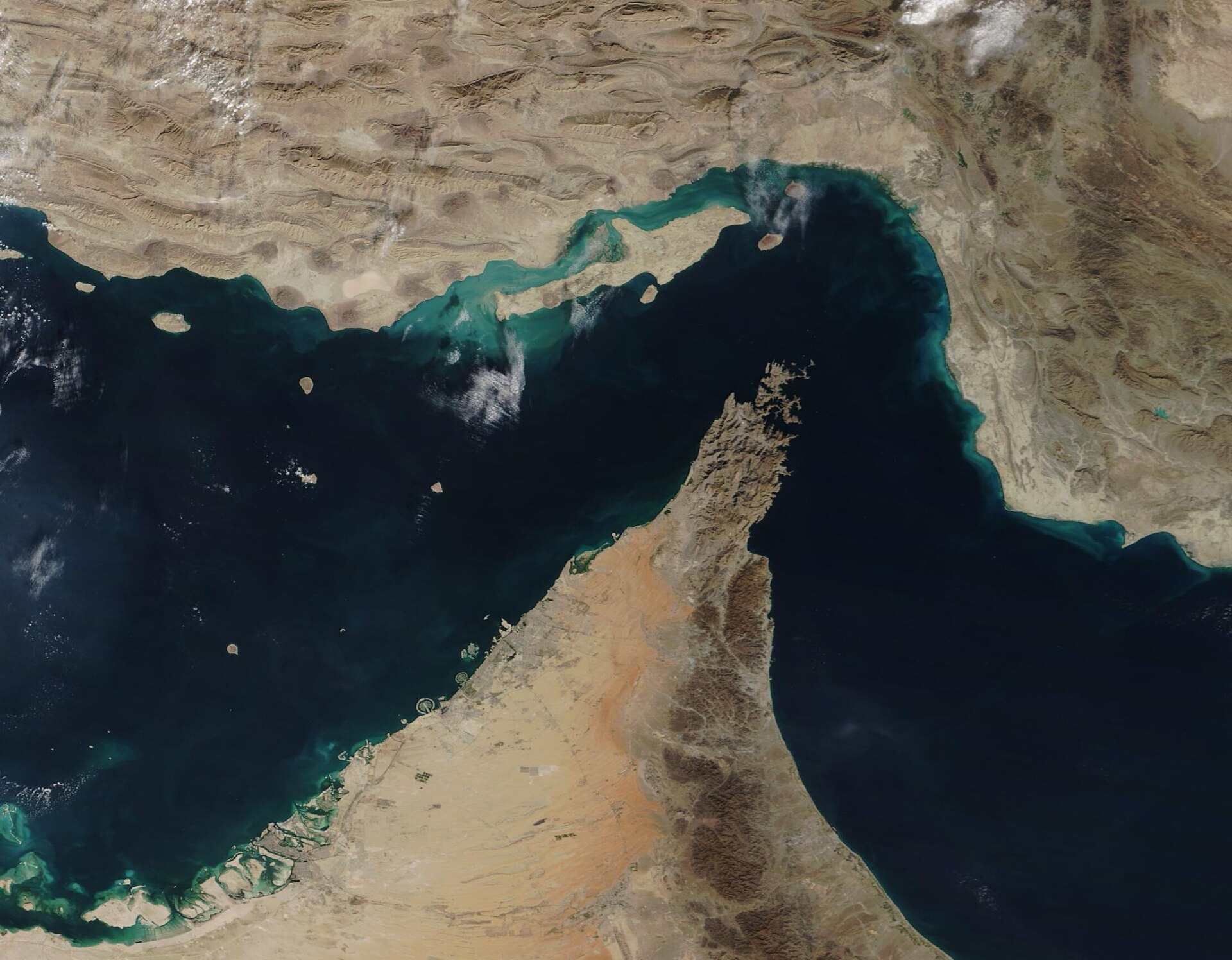
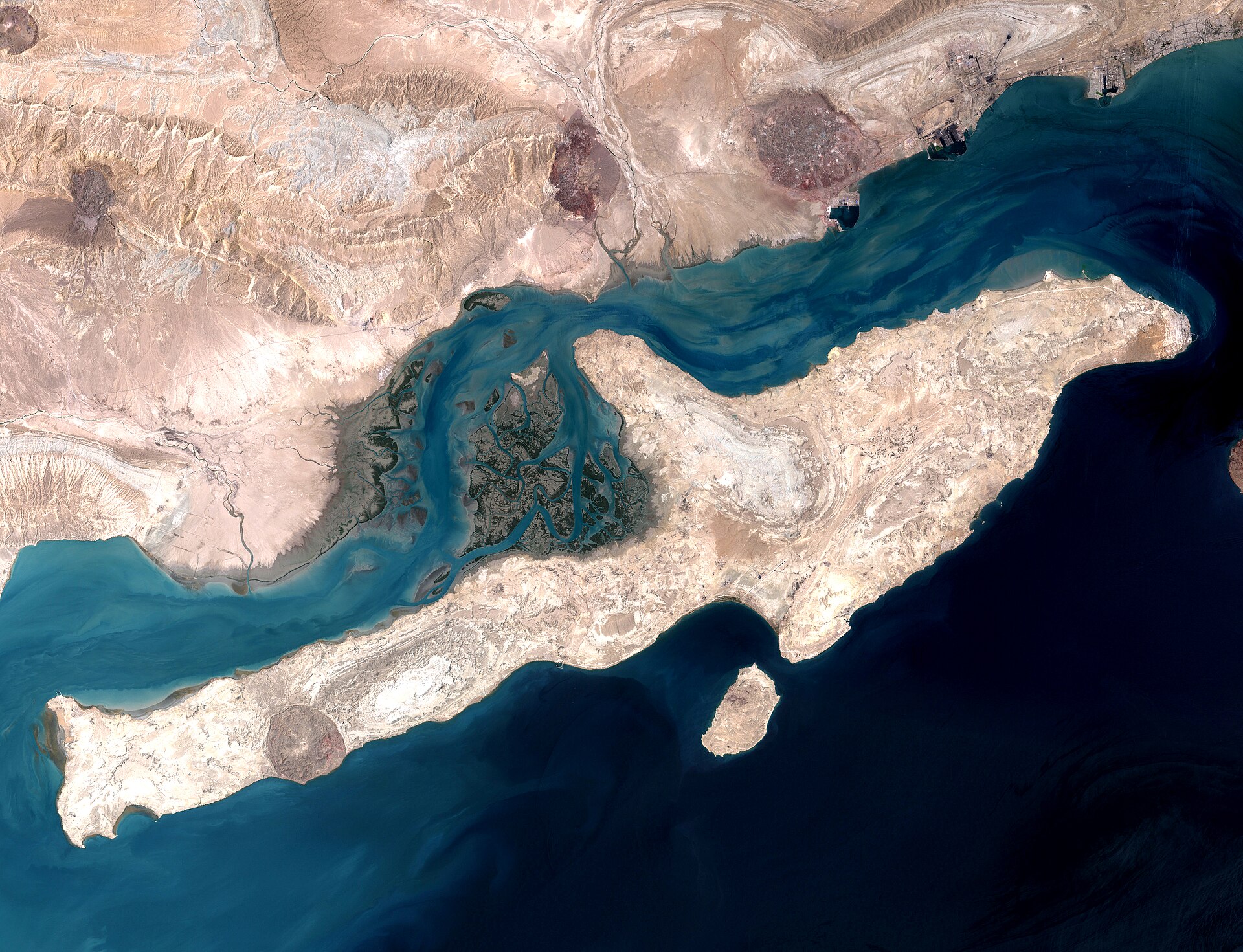
Iran’s Larak-Qeshm corridor changes the legal terrain by changing the physical one. The corridor — a 5-nautical-mile channel running between Larak Island and Qeshm Island — sits entirely inside Iran’s 12-nautical-mile territorial sea, placing every vessel that uses it under the innocent passage regime of UNCLOS Article 17 rather than the transit passage regime of Article 38. Innocent passage grants the coastal state substantially more authority over transiting vessels: the right under Article 25 to take steps “necessary to prevent passage which is not innocent,” broader regulatory scope under Article 21, and — under Article 26(2) — the power to impose charges for “specific services rendered to the ship.”
| Feature | Transit Passage (Art. 38) | Innocent Passage (Art. 17) |
|---|---|---|
| Fee authority | None — Art. 44 prohibits hampering | Art. 26(2) allows “specific services” charges |
| Suspension by coastal state | Cannot be suspended (Art. 44) | Can be temporarily suspended (Art. 25) |
| Applicable waters | International strait channel | Territorial sea (within 12nm) |
| Regulatory scope | Safety, pollution, customs only (Art. 42) | Broader — coastal state laws apply (Art. 21) |
| Vessel obligations | Continuous and expeditious transit | Must not be “prejudicial to peace, good order, or security” |
Hadef Partners stated the migration directly: “The regime of transit passage affords more rights to users of the strait than innocent passage — in most circumstances, innocent passage can be suspended by the coastal State; transit passage cannot be suspended.” By forcing vessels into the corridor, Iran has moved tanker traffic from the stronger legal protection to the weaker one, using geography as the instrument — and no mainstream outlet has articulated this shift as the jurisdictional migration it is, treating the PGSA fee as a pricing dispute rather than a legal-regime change engineered through routing.
The Persian Gulf Strait Authority, formally constituted on May 5, 2026, published its operational rulebook on June 19 with a 40-category “Vessel Information Declaration” requiring vessel identification, owner and charterer details, P&I club membership, full crew nationalities, and complete cargo manifests, all submitted 48 hours before transit. More than 300 non-Iranian vessels have filed since May, according to Lloyd’s List — establishing a pattern of regulatory submission that operates independently of whether a fee is ever charged, and that generates commercial intelligence of a kind no maritime authority has previously held for a natural international strait.
The Middle East briefing 3,000+ readers start their day with.
One email. Every weekday morning. Free.
What Does UNCLOS Article 26 Actually Permit?
UNCLOS Article 26(2) permits coastal states to levy charges on foreign ships during innocent passage only for “specific services rendered to the ship,” applied “without discrimination.” The charges must compensate for actual services delivered to individual vessels — not blanket per-volume levies calculated by cargo quantity. A flat $1-per-barrel fee scaled to cargo size rather than service delivered fails both conditions on its face, and no direct precedent exists for a strait state successfully invoking the exception.
The full text of Article 26(2) is narrow by design: “Charges may be levied upon a foreign ship passing through the territorial sea only as payment for specific services rendered to the ship. These charges shall be levied without discrimination.” Every qualifying word imposes a constraint that Iran’s fee structure does not meet. A $1-per-barrel charge applied uniformly to cargo volume bears no relationship to any service provided to the vessel itself — a VLCC carrying two million barrels pays approximately $2 million, per Windward.ai data cited by Discovery Alert, while a smaller Suezmax carrying one million barrels pays $1 million, and the “service” — whatever Iran defines it as — does not scale with cargo volume, because navigational guidance and environmental monitoring cost the same regardless of how much crude sits in the hold.
The “without discrimination” requirement fails separately. Lloyd’s List Intelligence reported that the PGSA’s access regime “varies according to the flag state’s relationship with Iran,” and Iran’s Majlis management plan bill explicitly prohibits vessels linked to the United States or Israel from transiting at all. Selective pricing or blanket denial by flag state is a textbook violation of Article 26(2)’s non-discrimination clause — a point Just Security’s legal analysis stated directly: “Iran’s $2 million transit fee violates the prohibition on charges levied upon foreign ships by reason of passage alone… the fee is neither linked to any service nor applied without discrimination.”
“Accepting Iran’s framing would imply that any bordering state engaged in armed conflict could suspend or reconfigure the legal regime of an international strait by unilateral fiat… a fee regime premised on bordering-state discretion to screen, price, and selectively deny passage would transform a legal right of passage into a purchased license.”
— European Journal of International Law: Talk!, “Codifying Coercion,” April 20, 2026
No direct precedent exists in international maritime law for a strait bordering state successfully imposing a fee regime under Article 26(2). The Suez Canal operates under the Constantinople Convention of 1888; the Panama Canal under the Torrijos-Carter Treaties of 1977; the Turkish Straits under the Montreux Convention of 1936. All three are governed by specific treaty frameworks that predate or exist outside UNCLOS Part III, and none provides a valid analogue for a natural international strait where transit passage — not treaty-based passage — is the governing regime. What Iran is constructing at Hormuz has no direct predecessor.
The Insurance Label and the Article 26 Fit
Iran’s terminology has evolved in a pattern that tracks directly onto Article 26(2)’s language. When Iran’s Majlis passed the Strait of Hormuz Management Plan in April, the bill listed four objectives — “ensuring shipping security, charging environmental polluters, collecting fees for guidance services, and establishing control” — according to Euronews reporting on May 25. The charges were officially described as “navigational services” fees, language deliberately framed around service delivery rather than transit taxation, with the pairing of “sovereignty” and “services” in the Majlis text reading like it was drafted for a future legal proceeding rather than a domestic press release.
By June 19, the framing had shifted further. Middle East Eye reported that Iran explicitly plans to charge “insurance fees” once the 60-day MOU window expires, packaging the charge as payment for security, safety, and environmental services rendered within the corridor. The word “insurance” is not incidental — it maps onto Article 26(2)’s “specific services rendered” with enough precision to suggest legal drafting rather than public relations, and it distances the charge from the “toll” language that the Geneva MOU explicitly prohibited.
The PGSA’s own published terms make the post-waiver intent contractually explicit. Lloyd’s List reported the language: “The PGSA reserves the right to introduce insurance fees in the future… Owners will then be required to purchase and renew coverage accordingly.” This is a pre-drafted legal position establishing the fee as a purchase of coverage rather than a toll for passage, because the former has a textual basis in Article 26(2) and the latter has none. The Geneva MOU banned tolls but preserved the PGSA as an institution, and the relabeling allows Iran to comply with the MOU’s toll prohibition while retaining the revenue mechanism under a different legal heading.
The question of what Iran collects when the fee is technically zero is answered not in the fee schedule but in the filing data — the hundreds of vessel declarations already submitted, each containing real-time cargo manifests, crew rosters, and ownership chains. The rebranding from toll to navigational services fee to insurance fee is iterative legal positioning, each label calibrated closer to the only UNCLOS exception that could withstand a formal challenge, and Farzin Nadimi of the Washington Institute for Near East Policy identified the broader pattern: the PGSA “builds directly on prewar naval drills held by the Islamic Revolutionary Guard Corps under the title ‘Smart Control of the Strait of Hormuz,’” meaning the institutional framework preceded the legal rationalization by months. The legal clothing arrived after the operational fact was already in the water.
Why Can No Court or Institution Block This?
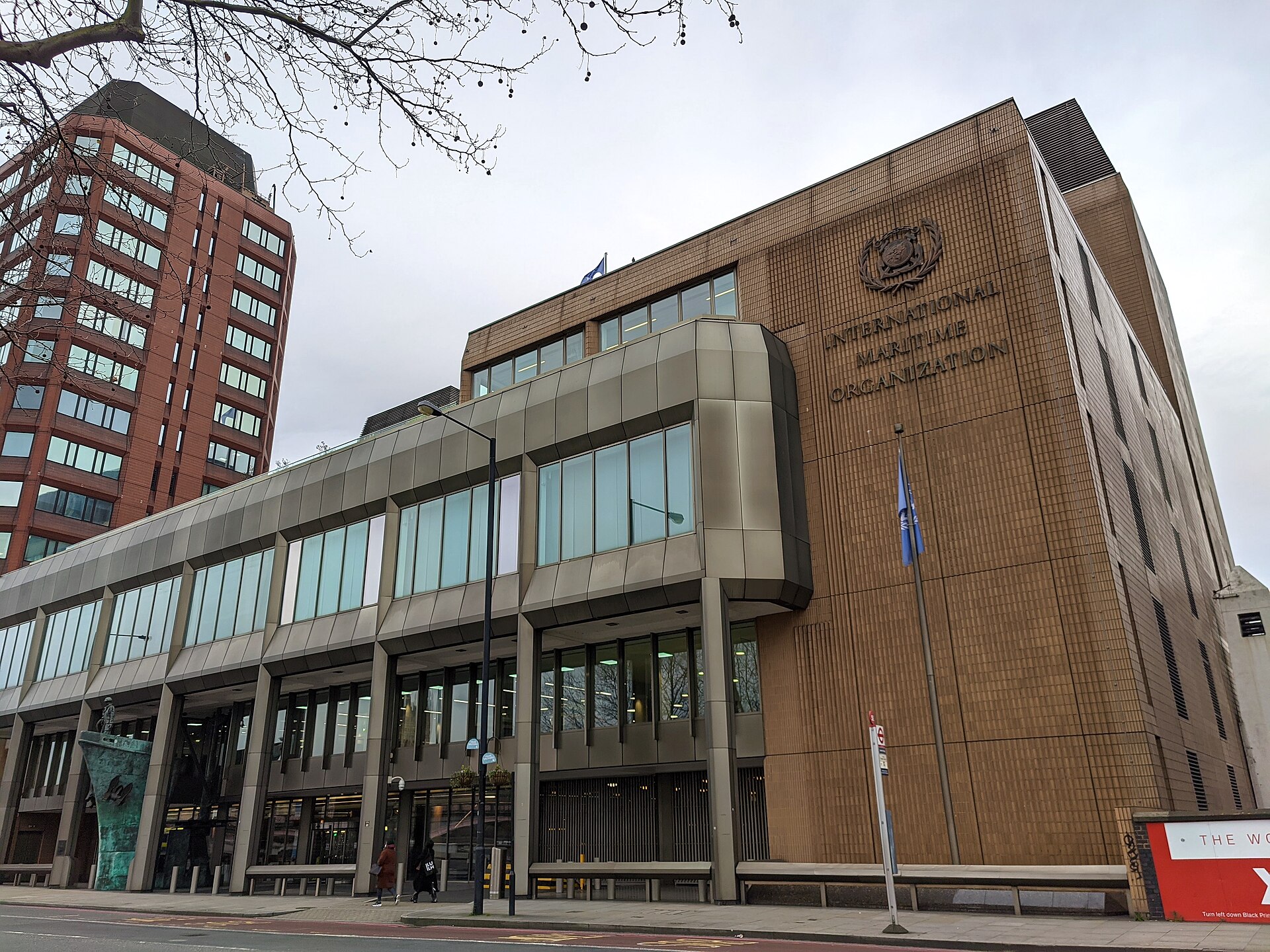
Neither the International Maritime Organization nor any international court can compel Iran to withdraw the fee. The IMO has no enforcement mechanism of its own. Russia and China vetoed a UN Security Council resolution on April 7, 2026, co-authored by the United States and Bahrain and co-sponsored by Saudi Arabia, the UAE, Kuwait, and Qatar. The International Tribunal for the Law of the Sea requires both parties’ consent under UNCLOS Article 287, and Iran — which signed UNCLOS in 1982 but has never ratified it — has not consented and is under no obligation to do so.
The enforcement architecture for international maritime law assumes state consent at every stage, and Iran has withheld consent at every stage that matters. ITLOS compulsory jurisdiction applies only to states that have ratified UNCLOS — a status Iran has avoided for forty-four years, long enough to confirm it as settled policy rather than legislative oversight. Just Security’s analysis confirmed the gap: ITLOS “requires consent of both parties under UNCLOS Article 287, which Iran — as a non-ratifying party — has not given and has no obligation to give.” No backdoor through advisory proceedings or provisional measures can bind a non-ratifying state to a convention it has spent four decades declining to join.
What remains is the GCC’s own protest. Five of six GCC member states — Oman declined to sign — issued a joint letter to the IMO on May 21 warning vessels not to comply with PGSA directives. Iran dismissed it. The IMO can issue advisories, but its advisories compete with an operational reality in which vessels choosing the IMO’s recommended Traffic Separation Scheme route face elevated war-risk insurance premiums of $3 to $8 million per vessel, uncleared mine remnants from the February-March hostilities, and — in some reported cases — direct VHF warnings from the IRGC Navy directing traffic toward the corridor.
The European Union designated the PGSA on June 8, adding to the OFAC designation on May 27 — yet the designations have not prevented compliance. Vessels have continued filing declarations with an entity under concurrent US and EU sanctions, routing submissions through payment channels built to circumvent SWIFT: yuan-denominated transfers via Kunlun Bank on China’s CIPS network, with Bitcoin and Tether available as alternative settlement options. The twenty-two-page joint advisory issued by BIMCO, the International Chamber of Shipping, Intertanko, OCIMF, Intercargo, and IMCA warned of “dangerous conditions,” but the industry bodies that signed it represent the same operators filing PGSA declarations — a gap between institutional opposition and individual compliance that Iran’s fee structure is designed to exploit. The PGSA legal architecture that becomes the default regime on Day 61 gained new visibility on June 29, when Macron announced a France-Oman demining coalition and Iran rejected it by citing Article 5 — illustrating how the MOU gave Iran exclusive control over mine clearance before the fee window even opens.
How Did Ninety Percent of Vessels Comply Before a Fee Was Charged?
On June 19 — the day the PGSA published its formal operational rulebook — eighteen of twenty transiting vessels used Iran’s Larak-Qeshm corridor rather than the IMO Traffic Separation Scheme route, according to situation map data. The 60-day fee waiver functions as a behavioral normalization window: vessels establish compliance routines while the charge is zero, and by Day 61 the operational patterns will have hardened into default behavior that post-waiver resistance cannot practically reverse.
The ninety-percent corridor adoption rate on Day One was not coerced in the conventional sense — no vessel was stopped, boarded, or turned back for choosing the TSS route. The corridor works because it is the path of least resistance: shorter, more predictable, and free of the insurance-premium ambiguity that surrounds the standard route, where P&I clubs have not fully recalibrated their risk models since the Joint Maritime Information Centre downgraded the strait from “severe” to “substantial” on June 17. Vessels choosing the PGSA corridor transit through a channel where Iran provides active navigational coordination; vessels choosing the TSS route transit through waters where mine remnants have not been fully cleared and where elevated war-risk premiums remain in force.
The fee-free window is the normalization mechanism. By the time the waiver expires around mid-August, two months of compliance data will have established the Larak-Qeshm corridor as the operational default — not because shipowners endorse Iran’s legal position but because their vessels have been filing declarations, following the routing, and receiving Iranian navigational instructions for sixty consecutive days. Soheil Golchin, an international law specialist writing in Volkerrechtsblog, noted that Iran’s measures must be “proportionate, temporary, reversible, and fall short of complete closure” to qualify as lawful countermeasures — and the 60-day waiver is Iran’s demonstration of “temporary” while the underlying infrastructure becomes permanent.
Total Hormuz transits on June 19 numbered just 25 vessels, compared to the 100-plus daily pre-war norm. The reduction itself serves Iran’s normalization logic: with fewer vessels transiting, the proportion using the corridor is higher, the sample of non-compliant outliers is smaller, and the appearance of universal compliance solidifies faster. Iran signed the deal and kept the minefield, and the minefield is doing as much work as the routing authority in driving vessels toward the corridor — operators do not need to agree with the PGSA to conclude that a mine-cleared, Iranian-coordinated channel is safer than a war-damaged, uncleared alternative.
The Treaty Iran Cites but Never Ratified
Iran’s legal position on the PGSA fee rests on a contradiction that would be disqualifying in most legal contexts but functions as a strategic asset in this one. Iran signed UNCLOS in December 1982 at Montego Bay and has never ratified it — meaning it is not bound by the convention’s obligations, including the transit passage regime codified in Part III. Simultaneously, Iran invokes Article 26(2) — a provision of the treaty it has not ratified — as the legal basis for the insurance fee, treating the convention’s service-fee exception as available authority while rejecting the convention’s transit passage obligations as inapplicable.
The EJIL: Talk! analysis published on April 20, 2026, identified three pillars in Iran’s legal defense. First, as a non-party to UNCLOS, Iran argues it is not bound by Article 38’s transit passage obligations and therefore not constrained by Article 44’s prohibition on “hampering” transit — a position that effectively claims the right to regulate strait passage as if the transit passage regime did not exist. Second, Deputy Foreign Minister Kazem Gharibabadi invoked a wartime exception, arguing that the San Remo Manual grants belligerents latitude to regulate neutral shipping through their territorial waters during armed conflict.
“We are now in a state of war, and wartime conditions cannot be governed by peacetime rules.”
— Kazem Gharibabadi, Iranian Deputy Foreign Minister for Legal and International Affairs
The wartime exception is the weakest of the three pillars. UN Security Council Resolution 2817, as Chatham House analyzed in April 2026, confirmed that Gulf littoral states — Saudi Arabia, the UAE, Kuwait, Bahrain, and Qatar — “are not parties to the hostilities,” establishing that only Iran, the United States, and Israel qualify as full belligerents. Applying wartime regulatory authority to vessels flagged by or carrying cargo for non-belligerent Gulf states contradicts the resolution’s own findings, and Iran did not veto it.
The third pillar — the services framing — is the most durable precisely because it does not depend on resolving the ratification contradiction. Iran can simultaneously claim it is not bound by UNCLOS and invoke Article 26(2) because no tribunal has jurisdiction to rule on the inconsistency, and no tribunal will acquire jurisdiction unless Iran consents. The contradiction is not a weakness in the legal position — it is the legal position, maintained deliberately for over four decades, and the PGSA fee is the first revenue-generating instrument Iran has built inside the gap it creates.
Can Saudi Arabia Challenge the Fee Without Legitimizing the Corridor?
Saudi Arabia faces the largest financial exposure from the PGSA fee — approximately $5.5 million per day, or roughly $2 billion per year, at full 5.5-million-barrel-per-day throughput — yet any formal legal challenge to the fee would require acknowledging the Larak-Qeshm corridor as a functioning legal regime, granting it precisely the legitimacy that such a challenge would aim to deny. The paradox is structural, and it explains why Riyadh’s response has been limited to a multilateral letter rather than a bilateral confrontation.
The fiscal arithmetic makes the cost of inaction severe. Saudi Arabia’s first-quarter 2026 deficit reached SAR 125.7 billion, with Brent crude trading around $80.59 against a breakeven price of $108 to $111 per barrel — a gap of $27 to $30 on every barrel sold, before the PGSA adds another dollar. A formal challenge filed at the International Court of Justice or through UNCLOS arbitration would require Saudi Arabia to specify which legal regime it claims governs the corridor — innocent passage under Article 17 or transit passage under Article 38 — and either answer creates a jurisdictional foothold that Iran does not currently possess in binding international jurisprudence.
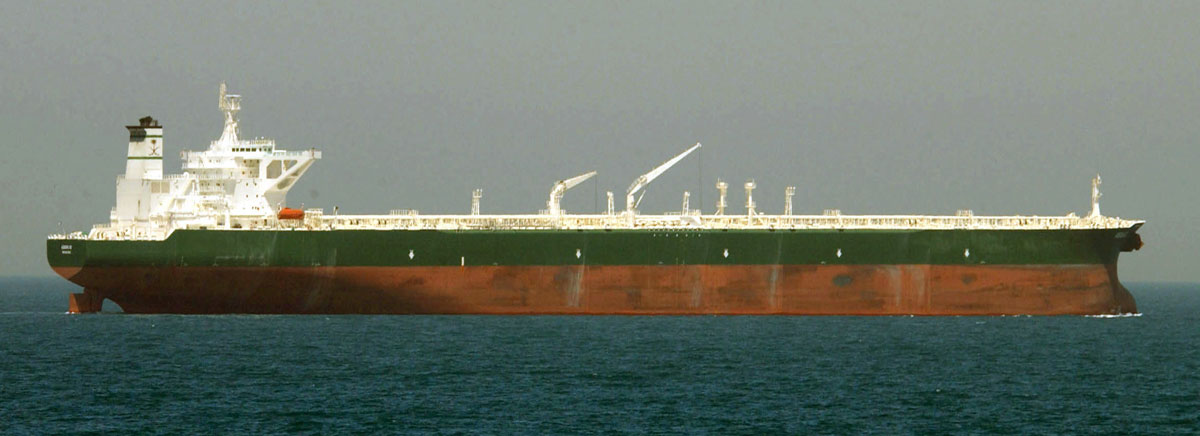
The Bahri convoy of June 18 made the paradox physical. Three Saudi supertankers — Shaden, Jaham, and Awtad, carrying approximately six million barrels — transited Hormuz with AIS transponders switched off during the passage through the Larak-Qeshm corridor. Whether Bahri paid the PGSA fee remains unconfirmed by Bahri, Aramco, or the Saudi Ministry of Foreign Affairs; Iran has not announced collection. But the convoy used the corridor — Saudi Arabia’s largest shipping company, carrying Saudi crude, routing through the channel Iran built, with commercial tracking invisible during the transit segment that matters most — and the implicit acquiescence to the corridor’s routing authority is more consequential than any payment or non-payment, because it adds three more vessels to the normalization dataset and three more declarations to the PGSA’s filing archive.
Mohammed bin Salman has skipped three consecutive G7 summits — the latest at Evian, where mine clearance, Hormuz reopening, and nuclear sequencing were the core agenda items for the Arab-leaders session — and Saudi Arabia was the only invited Arab state absent from Macron’s session on June 16. The Kingdom’s absence from every venue where the corridor’s legal status could be contested is consistent with a posture of non-engagement, but non-engagement during a normalization race is indistinguishable from consent. Every day that Saudi Arabia does not formally challenge the corridor is a day the corridor operates with one fewer objection on the record, and one more vessel filing its cargo manifest with the entity Riyadh told ships not to engage with.
What Iran Built While the Fee Was Free
The sixty-day waiver window expiring around mid-August is not a grace period but a construction period. The PGSA has used the fee-free interval to build institutional infrastructure that will survive any future legal challenge, diplomatic protest, or sanctions escalation, because the infrastructure’s value does not depend on whether the fee is ever collected — the data alone is worth more than the revenue.
Since May 2026, the PGSA has accumulated complete transit records for more than 300 non-Iranian vessels: ownership chains, charterer identities, P&I club affiliations, crew nationalities across all ranks, and itemized cargo manifests for every ship that filed the Vessel Information Declaration. This is commercial intelligence of a kind that no maritime authority outside the Suez Canal Transit Authority has ever held for vessels transiting a natural strait, and unlike Suez, the PGSA’s data collection carries no international treaty obligation requiring it or constraining how the information is used. Iran now has real-time visibility into who owns, charters, insures, crews, and loads every tanker that passes through the world’s most congested energy chokepoint.
Gharibabadi announced on April 2 that Iran and Oman were “in the final stages of drafting” a joint management framework for the strait — a bilateral institutionalization that would give the PGSA a legitimizing partner in the only Gulf state that did not sign the GCC-IMO protest letter. If concluded, the Iran-Oman protocol would transform the PGSA from a unilateral Iranian instrument into a jointly administered regime, a qualitative shift in legal standing that would make future challenges harder to mount because opponents would need to demonstrate that both administering states — not just Iran — were acting unlawfully.
The PGSA’s OFAC designation on May 27 and EU designation on June 8 have not slowed the operational build-out. The sanctions have accelerated the development of alternative payment infrastructure, with yuan-denominated settlements through China’s CIPS network and cryptocurrency channels offering a compliance pathway that sits entirely outside Western financial enforcement. Farzin Nadimi of the Washington Institute identified the objective with precision: Iran aims “to lock in facts on the ground, extract concessions, and normalize its veto power over global energy flows before any deal solidifies.” When the sixty-day waiver closes, the legal challenge that might have succeeded on Day One will confront an operational reality that has already absorbed 300-plus vessels, a bilateral Omani framework, and a financial settlement system built to survive the sanctions meant to prevent it.
Frequently Asked Questions
Has any other country imposed fees on vessels transiting a natural international strait?
Turkey collects pilotage and lighthouse fees for the Bosphorus and Dardanelles, but these operate under the Montreux Convention of 1936, which explicitly authorizes such charges outside the UNCLOS framework. Denmark collected Sound Dues at the Oresund strait for four centuries until an 1857 treaty abolished them in exchange for lump-sum payments from maritime nations. No state has successfully imposed a fee on a natural international strait under the UNCLOS Part III transit passage regime, making Iran’s PGSA the first live test of whether Article 26(2)’s “specific services” exception can support a strait-wide fee structure.
What options remain for vessels that refuse to use the Larak-Qeshm corridor?
Vessels may attempt the standard IMO Traffic Separation Scheme route through the main strait channel, but they face war-risk insurance premiums estimated at $3 to $8 million per vessel, uncleared mine remnants from the February-March hostilities, and potential IRGC Navy interdiction including reported VHF radio warnings directing traffic toward the PGSA corridor. No commercial vessel has been physically stopped for choosing the TSS route since the June 15 MOU, but the insurance-cost differential and mine-clearance uncertainty make the TSS route commercially unviable for most operators at present.
Could the United States enforce freedom of navigation unilaterally?
The US Navy conducts freedom-of-navigation operations globally, but a FONOP through the Larak-Qeshm corridor would challenge Iran’s territorial sea authority — not just its fee — and would risk military escalation during an active diplomatic process. The Trump administration blocked a fifteen-plus-nation allied demining coalition at the G7 in Evian on June 16, signaling a preference for the MOU framework over unilateral naval enforcement. Any FONOP would also need to reckon with the mine threat that the JMIC still rates as “substantial” rather than “moderate.”
What specific information does the Vessel Information Declaration collect?
The PGSA’s 40-category declaration requires vessel name, IMO number, flag state, dimensions, and draft; registered and beneficial owner; charterer identity; P&I club membership; complete crew manifest with nationalities at every rank; itemized cargo details including commodity type, volume, origin, and destination port; estimated arrival and departure times; and intended corridor routing. The 48-hour pre-submission window gives Iran actionable intelligence on every approaching commercial vessel before it enters the strait, creating an operational surveillance capability that persists regardless of whether the fee is charged or waived.
Can Gulf crude exports bypass Hormuz entirely?
Saudi Arabia’s East-West Pipeline to the Yanbu terminal on the Red Sea has a maximum capacity of approximately 7 million barrels per day, well below the Kingdom’s 12.5-million-bpd surge production capacity and insufficient to replace Hormuz for the combined Gulf exports of Saudi Arabia, the UAE, Kuwait, Qatar, and Iraq, which collectively exceed 17 million bpd. The UAE’s Habshan-Fujairah pipeline bypasses Hormuz for roughly 1.5 million bpd of Abu Dhabi crude, but total bypass capacity across all Gulf states covers less than half of the region’s daily seaborne oil exports.
On June 18, three Bahri supertankers — Shaden, Jaham, and Awtad — carried six million barrels through the Larak-Qeshm corridor with transponders dark, having filed the forty-category declaration with an OFAC-designated entity that Saudi Arabia’s own government told vessels not to engage with. The fee was zero; the filing was complete.
Iran’s PGSA framework pre-dated the MOU by 43 days and was never dissolved — a gap exposed when the IRGC struck the Ever Lovely in the Oman/IMO corridor on June 25, the day before Ras Tanura resumed loading on the same route.